
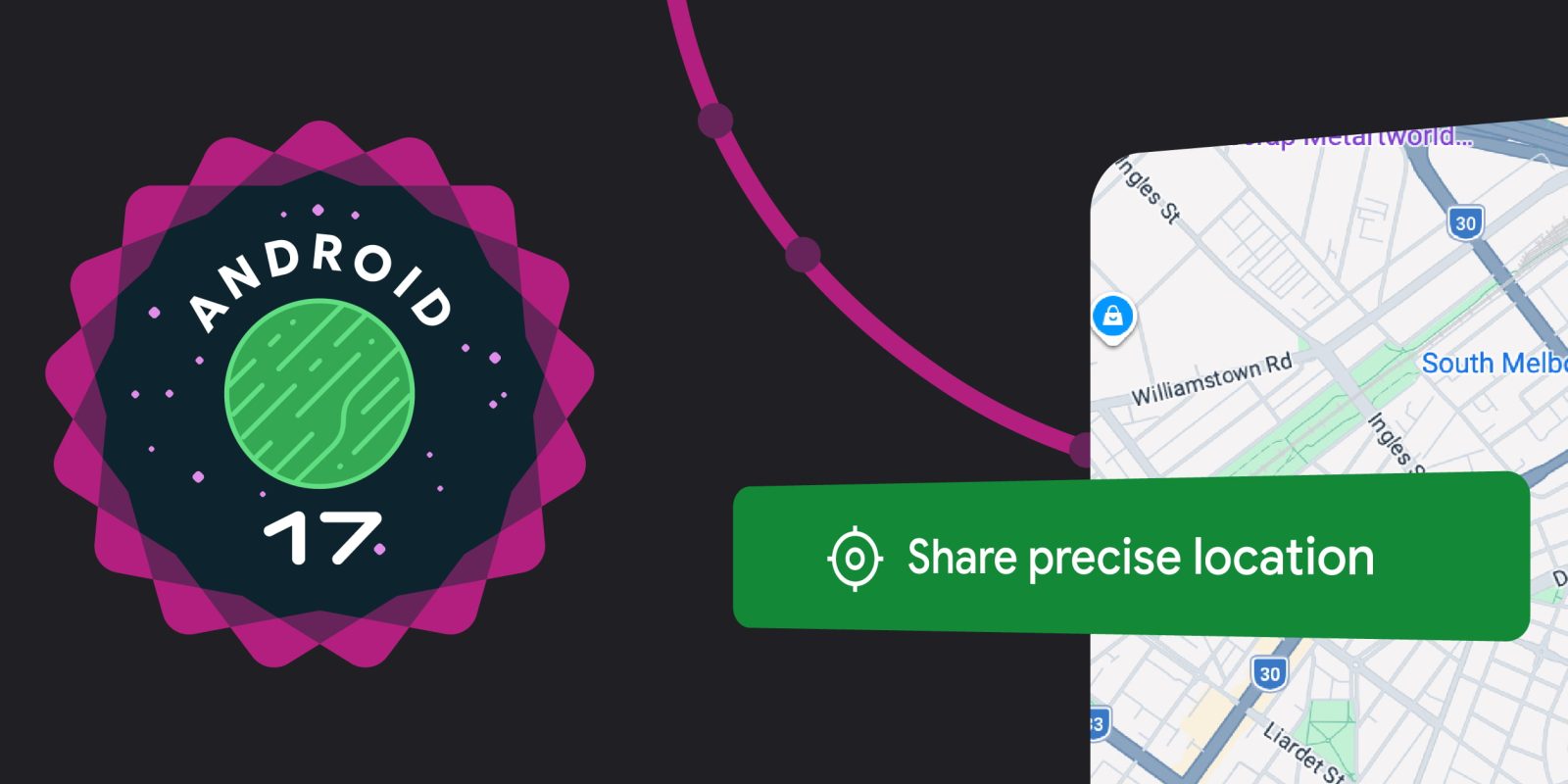
Android 17 features a number of location privacy updates, with the latest introduced in Beta 3 being the “location button.”
The new location button provides “simplified access for one time use,” with Google pointing out how “finding a nearby shop or tagging a social post” shouldn’t mean apps have “permanent or background access to a user’s precise location.” This is something industry partners and developers have requested to “bring a simpler, and more private location flow to their users.”
Specifically, this is a “new UI element designed to provide a well-lit path for responsible one time precise location.” Access will be available “until you close the app.”


Once consent is provided, this session based access eliminates repeated prompts for location dependent features. This benefits developers by creating a smoother experience for their users and providing high confidence in user intent, as access is explicitly requested at the moment of action.
Developers will be able to customize the button’s background and icon color scheme, outline style, and size and shape. Google will let them “select the appropriate text label from a predefined list of options.”
To ensure security and trust, the location icon itself remains mandatory and non-customizable, while the font size is system-managed to respect user accessibility settings.

Meanwhile, Android 17 Beta 3 introduces an “improved” runtime permission dialog for location. This redesign makes “Precise” and “Approximate” explicit checkboxes to be more visually distinct.
Beta 2 vs. Beta 3


More broadly, we’ve already seen Android 17 redesign the full location permission transparency indicator that was introduced in Android 16 QPR3. Matching Microphone and Camera, a persistent blue dot replaces the status bar icon “whenever a non-system app accesses their location.” Tapping in notifications or Quick Settings shows “which apps have recently accessed their location.”


The final location change Android 17 introduces is “improving the algorithm for approximate (coarse) locations to be aware of population density.”
Previously, coarse locations used a static 2 km-wide grid, which in low-population areas may not be sufficiently private since a 2km square could often contain only a handful of users.
The new algorithm “replaces this fixed grid with a dynamically-sized area based on local population density.”
By increasing the grid for areas with lower population density, Android ensures a more consistent privacy guarantee across different environments from dense urban centers to remote regions.


FTC: We use income earning auto affiliate links. More.



Comments