
Good morning. Today I’m finding some peace playing Lumines Remastered, deciding whether to get my kids one of the new 4th-gen Yoto players, and trying to figure out why everyone is freaking out about this recent Tom Cruise interview.
As a reminder, Inbox is the tech newsletter that goes beyond the news cycle. We cover the most important 9to5Google stories from the last couple of days along with a few highlights from around the web. We publish every Tuesday and Thursday, and if you like what you read, please subscribe.

Inbox is written by Daniel Bader. Read previous issues here, and then catch up with Ben Schoon’s excellent Weekender column published every Sunday.
⭐️ Starred
Over the past few months, I’ve been using MCP (Model Context Protocol) to connect with my bank, my to-do app (TickTick), my personal database (Obsidian), and anything else I can get my hands on. I find it intuitive to have a conversation with a chatbot about stacking tasks, performing a complex set of calculations, or just figuring out the answer to a difficult problem.
Now Google is getting in on the MCP action with Home MCP, a way to connect coding agents like Claude, Codex, Antigravity, Hermes, and OpenClaw to Google’s Home ecosystem and the products connected to it.
Right now, the tool is limited to Google Home Premium Advanced subscribers in the US, but it’s an ambitious first step toward making it easier to interact with what is usually a digital rat’s nest of brands, categories, and compatibility layers. Google has already rolled out Gemini for Home in an attempt to make automation more straightforward, but I commend the company for dipping its toe into the DIY space and seeing what happens.
According to Google, MCP “gives your favorite AI agent real-world physical context—allowing it to analyze and answer questions about home activity, summarize camera footage across rooms, manage devices on your behalf, or even create your own smart home dashboards using everyday language.” I’m totally going to use it to teach my Nest Cam Outdoor that the cat who wanders onto my driveway every morning isn’t, in fact, a person. Wish me luck.
✉️ Inbox
- GM just found the ‘sweet spot’ for supporting Android Auto & CarPlay. See, all it took was people loudly complaining for three years.
- MediaTek Dimensity 9600 Pro goes official with 2nm process and performance gains.
- SwiftKey ‘AI voice’ is Pixel 11’s Rambler voice-to-text for other Android phones, works offline. I have my doubts that this is any good — SwiftKey’s been awful for years — but I guess it’s good that this exists?
- Google just shared these fun Pixel 11 blueprint wallpapers. These are really fun.
- Samsung Gallery is adding Google Photos backup to replace OneDrive. Good, no one uses OneDrive anyway.
- Gemini 3.8 Live Extended Thinking powers Gemini Live, Gmail, & Keep. Google is the undisputed leader of text-to-speech, and Gemini 3.8 Live just extends its lead.
- The new Boox e-ink devices get Android 16 out of the box, including Palma 3. The Palma 3 looks like an actual gadget, no longer a plastic toy like the previous ones, and I must have it.
- Google confirms Pixel phones were exploited in ‘targeted’ attack related to modem. This is pretty concerning, especially because it was “zero-click,” but glad it’s been fixed.
- Philips Hue Bridge Pro is now $139, with even bigger price hikes globally. Woof.
Today in software updates:
- Android Canary 2609 adds ‘Require unlock for Quick Settings’ on Pixel.
- Google rolling out Android 17 QPR2 Beta 5 for Pixel
- Google rolling out Android 17 QPR1 for Pixel.
- Google rolling out September 2026 update for Pixel Watch 2, 3, & 4.
- Samsung starts rolling out Android 17 with One UI 9, confirms initial list of Galaxy devices.
- Android Auto update lets you customize your Google Maps ‘driving avatar’ via car display.
- September 2026 Pixel Drop: VIPs widget redesign, more Pixel Watch gestures.
- Google Home app brings battery-efficient widget, reduces gray device tiles
Today in bug fixes:
- YouTube’s login-breaking bug is getting a fix on TVs and consoles.
- Amazon fixes bug that caused problems with Fire TV app sideloading.
🍎 Roll call
It’s iPhone review season, and because this seems like an “S” year, the camera is rightfully getting the most attention. That’s why I watched basically every second of all the new iPhone 18 Pro reviews from channels like PetaPixel, Tyler Stalman, The Verge, and Matti Haapoja.
I’m still not sure what to think about the aperture control. Most reviews are saying that it has very little real-world utility, while others are claiming that it was the only way to offer an f/1.48 lens without sacrificing depth control (or overly relying on software bokeh). Either way, once Apple decides to offer a hardware feature it tends to stick around whether or not it’s any good (see Camera Control), so we’ll likely see a few more generations of this tech.
Sticking with the iPhone theme, two of my favorite podcasters convened this week to discuss the iPhone Duo and how it fares next to the multitude of Android competitors.
(And if you enjoy the conversation with Stephen Radochia and want to hear more from him, he and I host a little podcast called Old’s Cool that looks at new tech from a vintage point of view.)
➡️ FWD:
This section has some of our favorite stuff from around the internet. Great videos, weird memes, fun reads, recommended apps, whatever. Send us your recommendations!
- Tired of getting recorded against your will by other meeting attendees? Kalypta from Deveillance reportedly makes you “inaudible to AI” by “reshaping audio in real time” on your local machine. What a crazy world we live in.
- OpenAI’s “Project Lily” tasks real humans with reading ChatGPT transcripts in order to make inference better and more accurate. According to 404 Media, which broke the story, “OpenAI is hiring hundreds of contractors who read a massive stream of real users’ ChatGPT prompts, with the prompts sometimes including sensitive personal information.”
- Snap finally let people try its $2,200 Specs smart glasses, a bulky and unwieldy computer that it’s inviting developers to test. The gadget has a 4-hour battery and can run real apps like Spotify while relying on a proactive AI assistant to do everything else.
🤑 Action Items
Over the past couple of days, I’ve been trying out a new launcher on my Fold 8, a launcher unlike anything I’ve used on Android before. That’s because it’s defined by its adherence to the UX found on iOS — specifically the upcoming iPhone Duo.
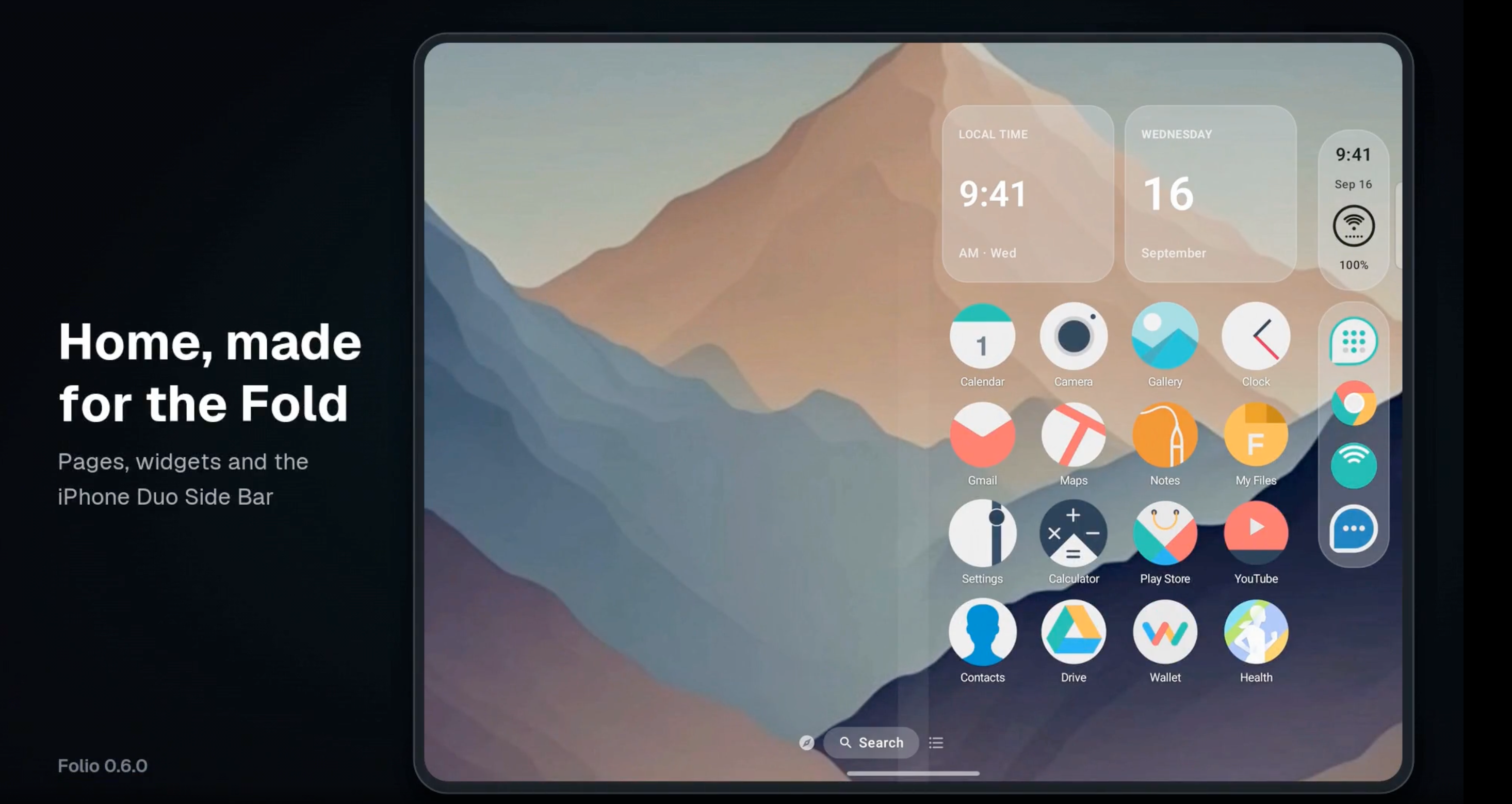
From the demented mind of Reddit’s u/wolftech029, Folio is a love letter (for better or worse) to the way Apple’s home screen drastically differs from the ones found on various Android phones. From predefined grids to Apple’s App Library to the Duo’s funky blur effect, Folio has it all.
I’m not sure it’s going to stay on my phone for long, but its existence (and the speed at which it was vibe-coded) is a testament to Android’s versatility and openness.

Like what you just read? Subscribe to Inbox today and get it in your email every Tuesday and Thursday morning. Got feedback? Send us an email.
You can also support us by becoming a 9to5Google Pro member, starting at just $5/month. You get bonus podcast episodes, access to our members-only Discord server, and lots more.
Thanks for reading, and have a great weekend. See you on Tuesday.
-Daniel


FTC: We use income earning auto affiliate links. More.


Comments