
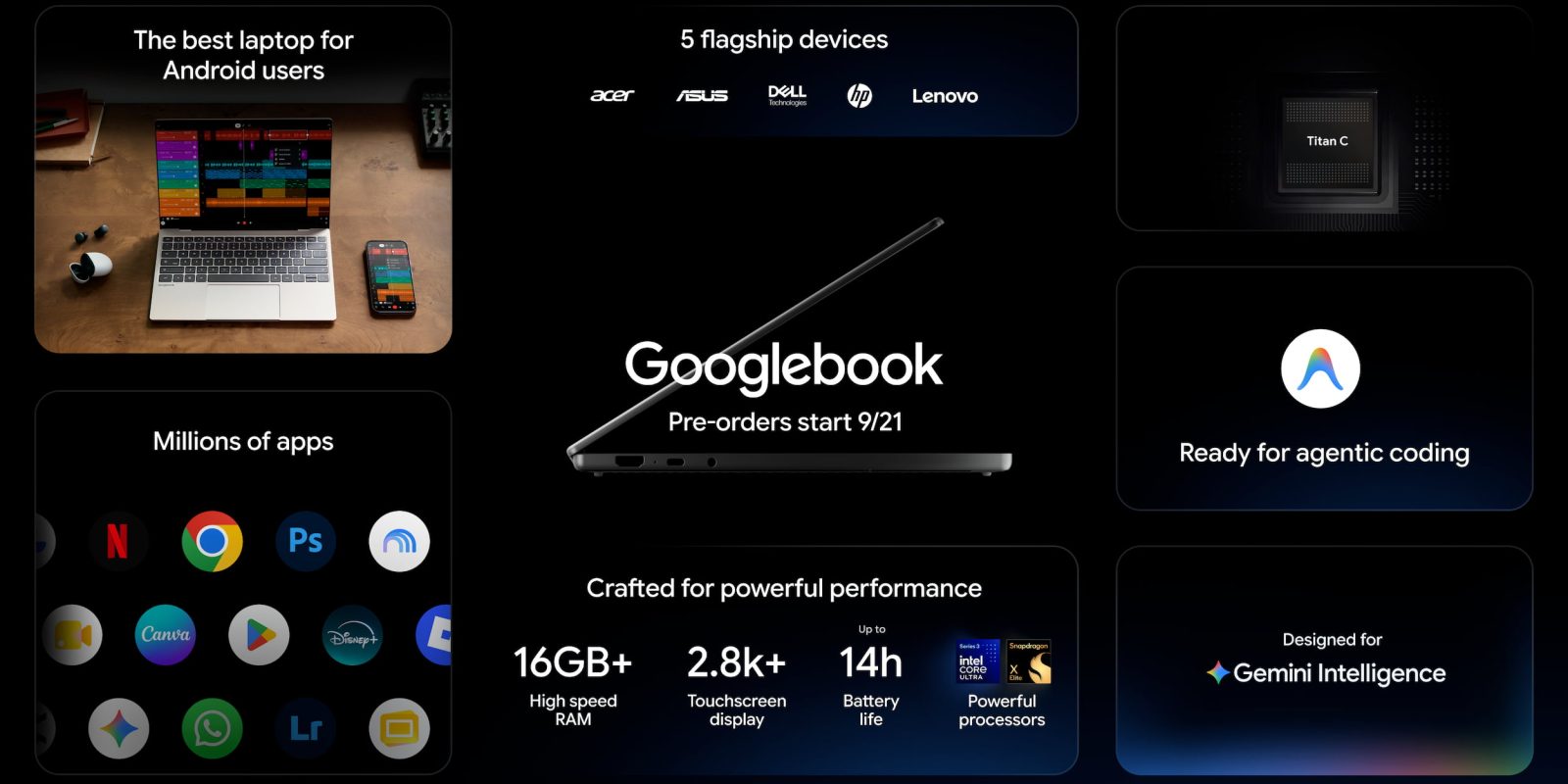
Following the May preview, Google today fully announced Googlebooks ahead of the consumer launch in October.
Googlebook OS hands-on: It’s Android, stupid
Software
Google’s main pitch is that Googlebooks should be the laptop of choice for those with Android phones:
Today, we often switch between starting tasks on our phones and finishing them on our laptops. To make that experience better for Android users, we teamed up with the best laptop makers in the industry to deliver top-tier hardware alongside Google’s software experience that connects effortlessly with your phone.
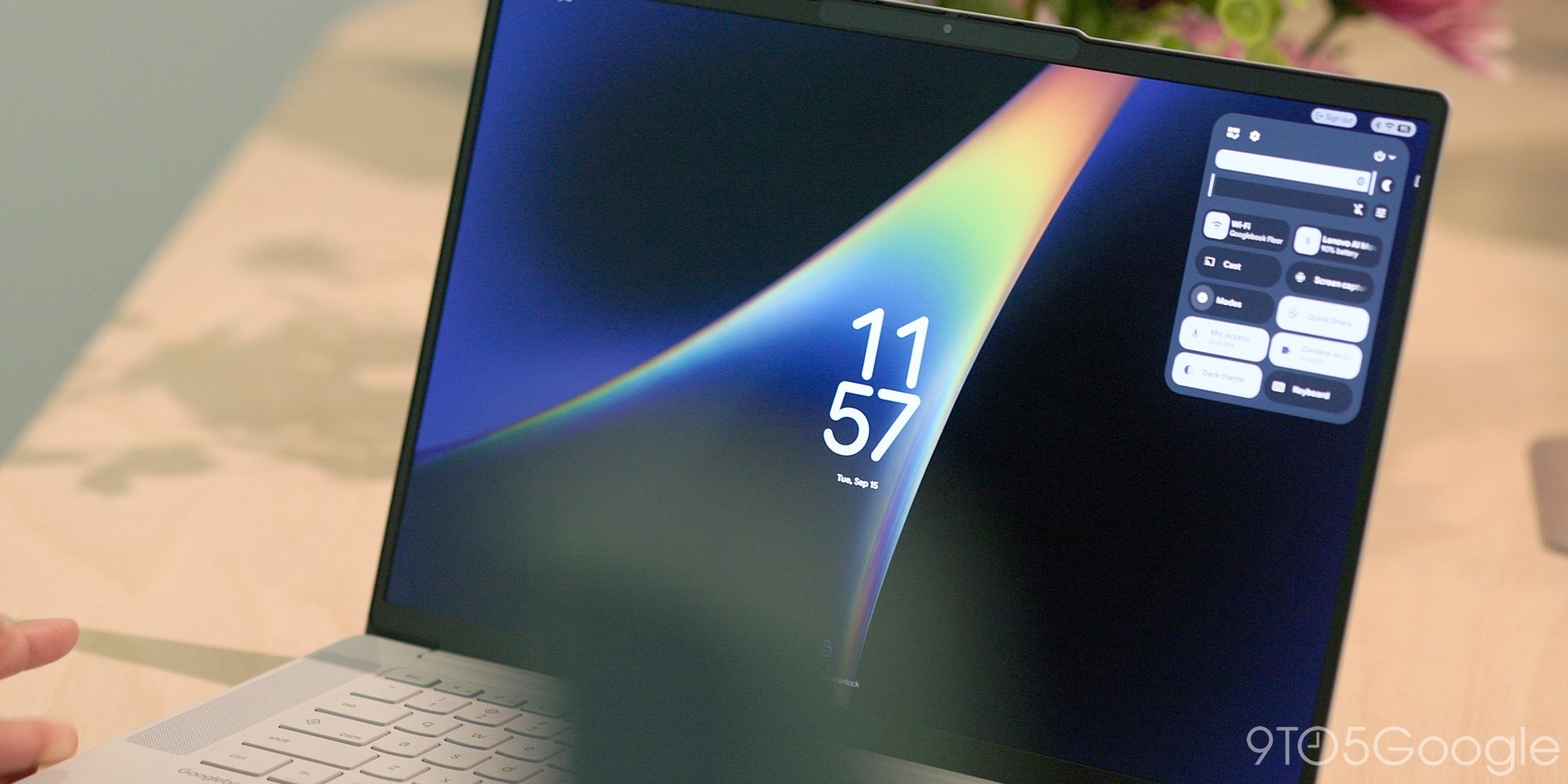
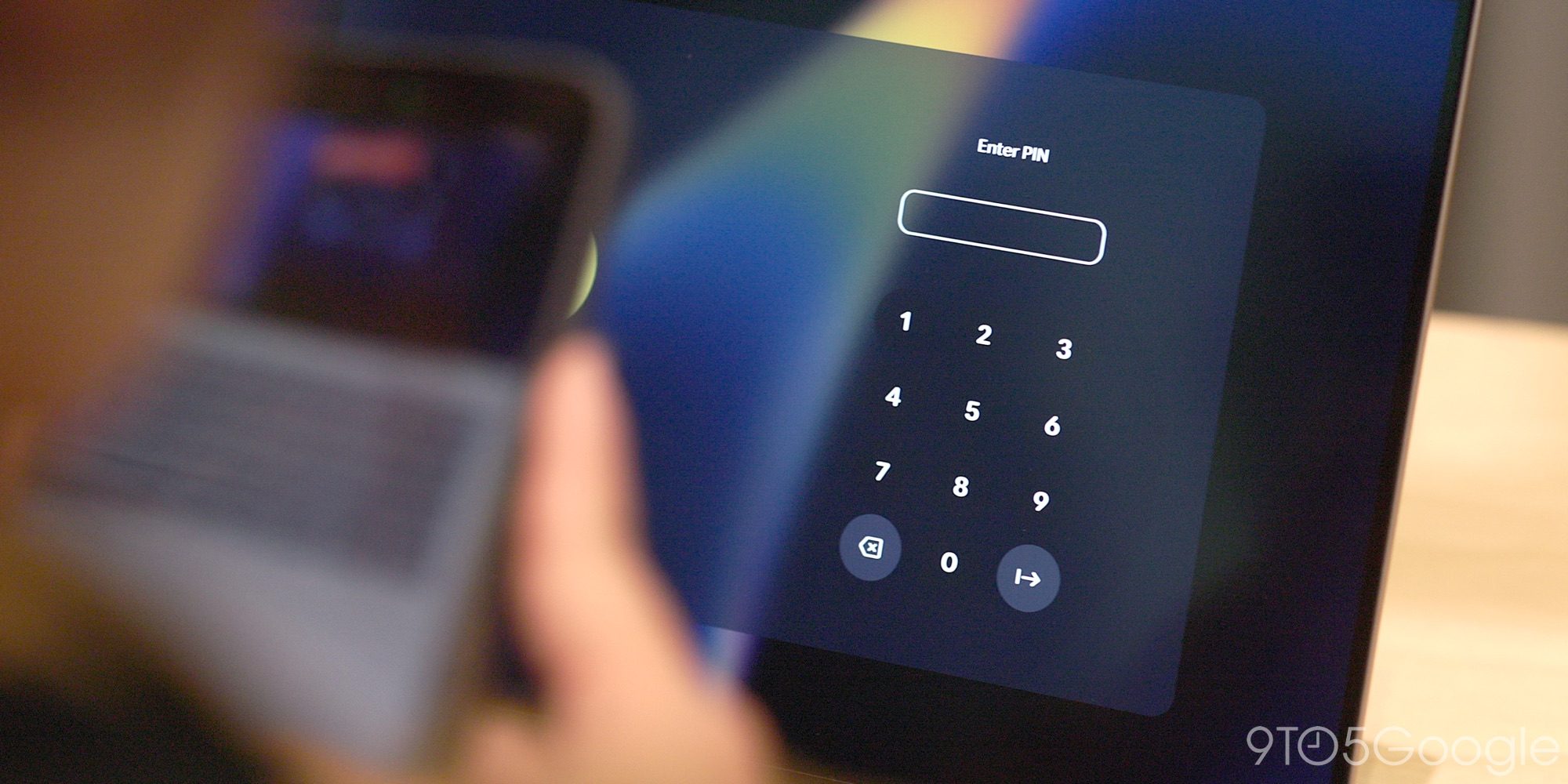
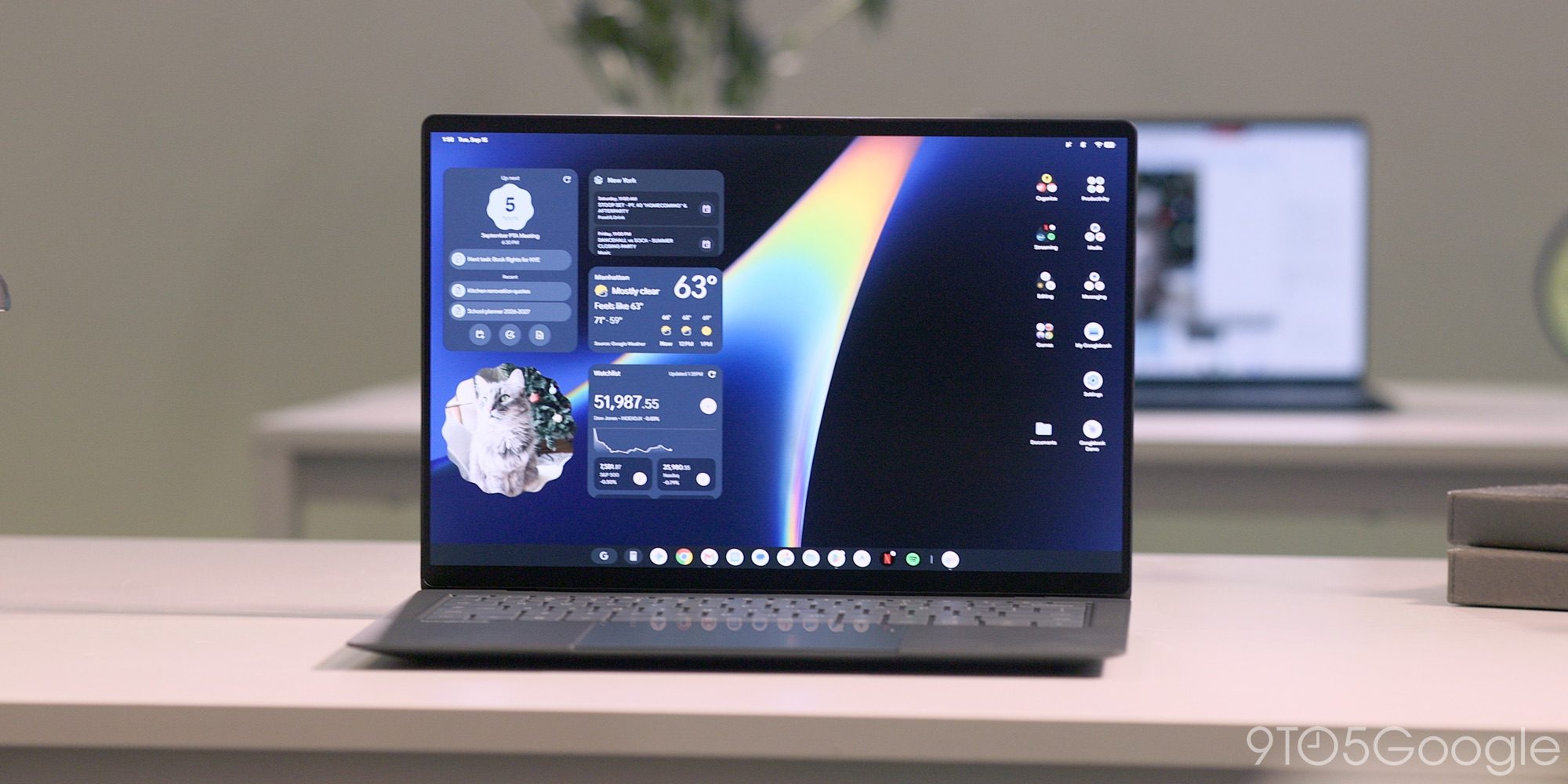
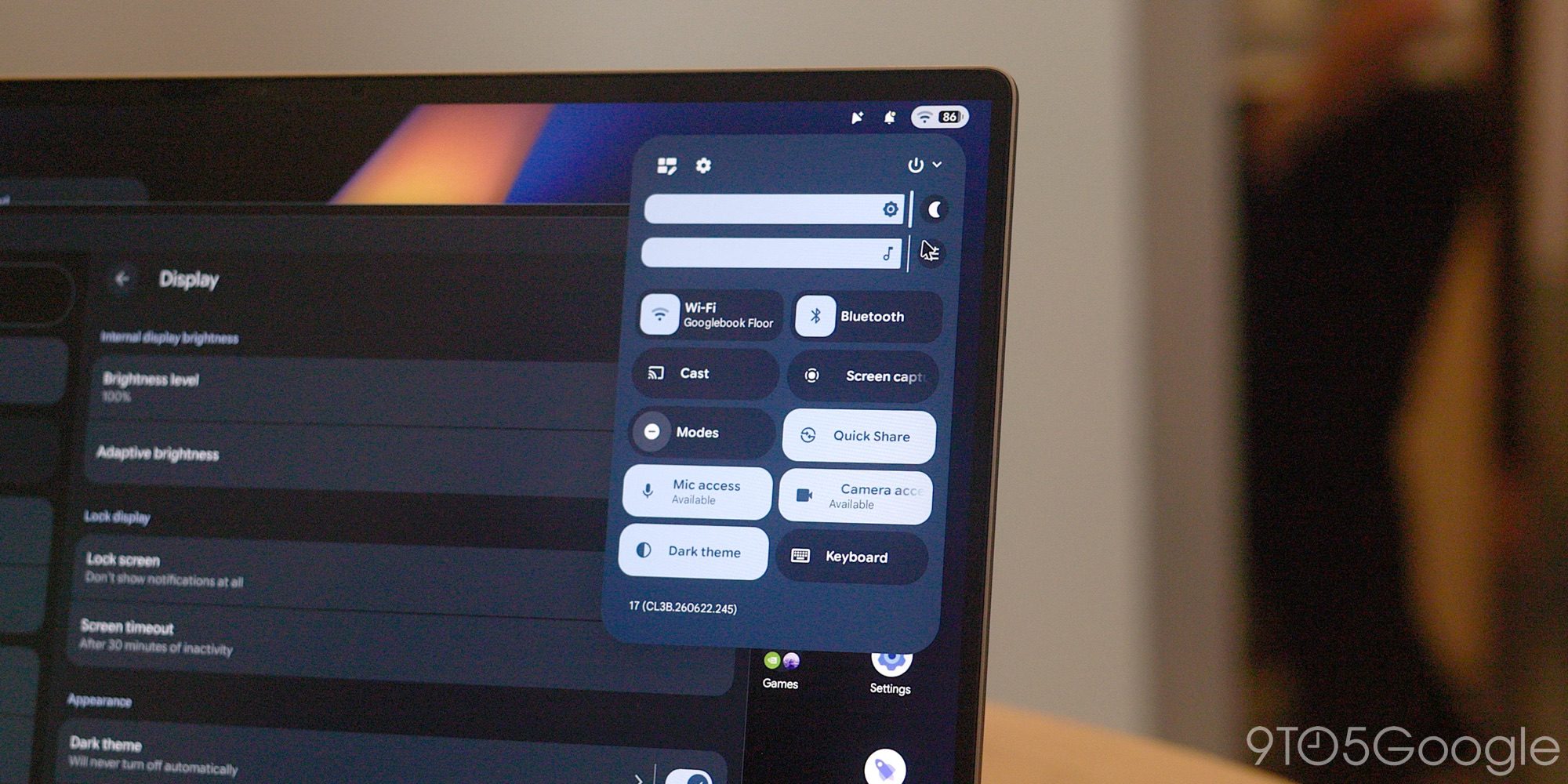
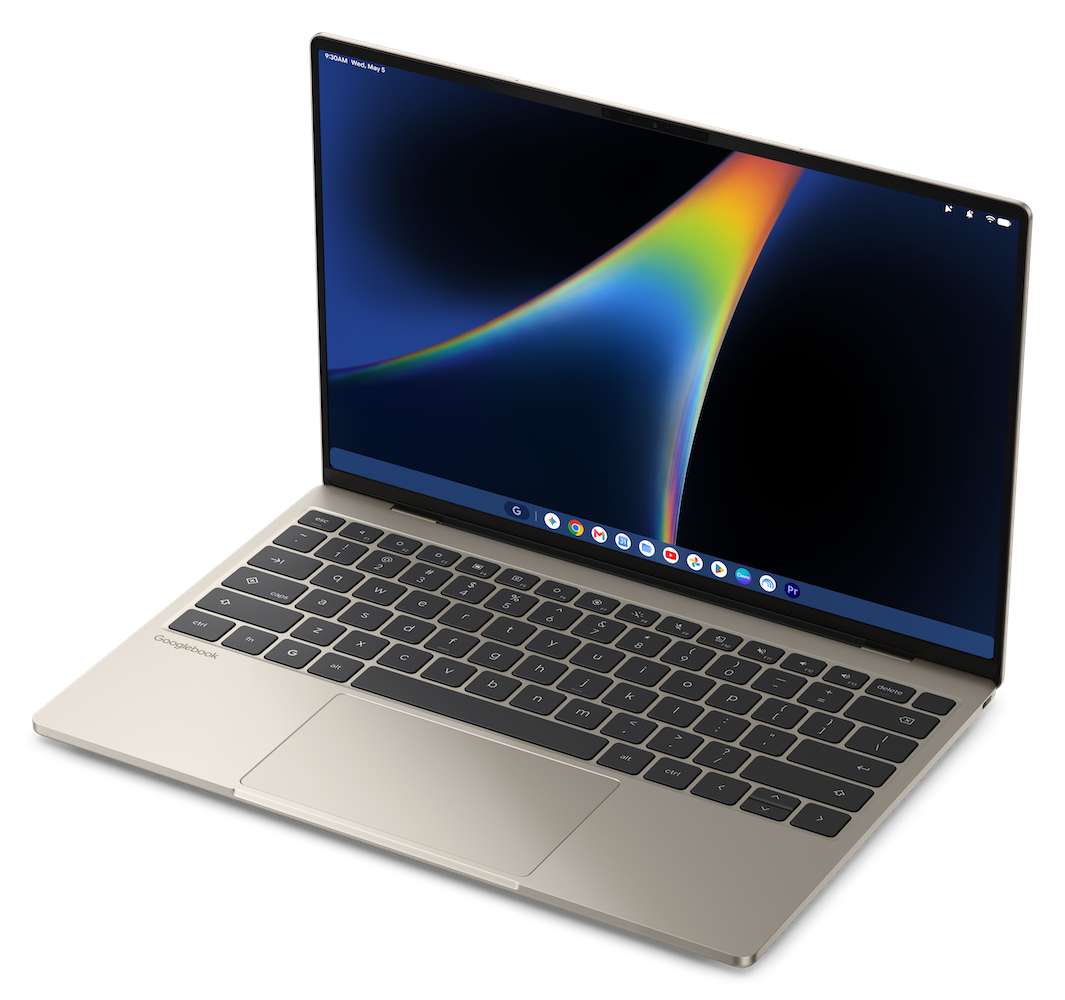
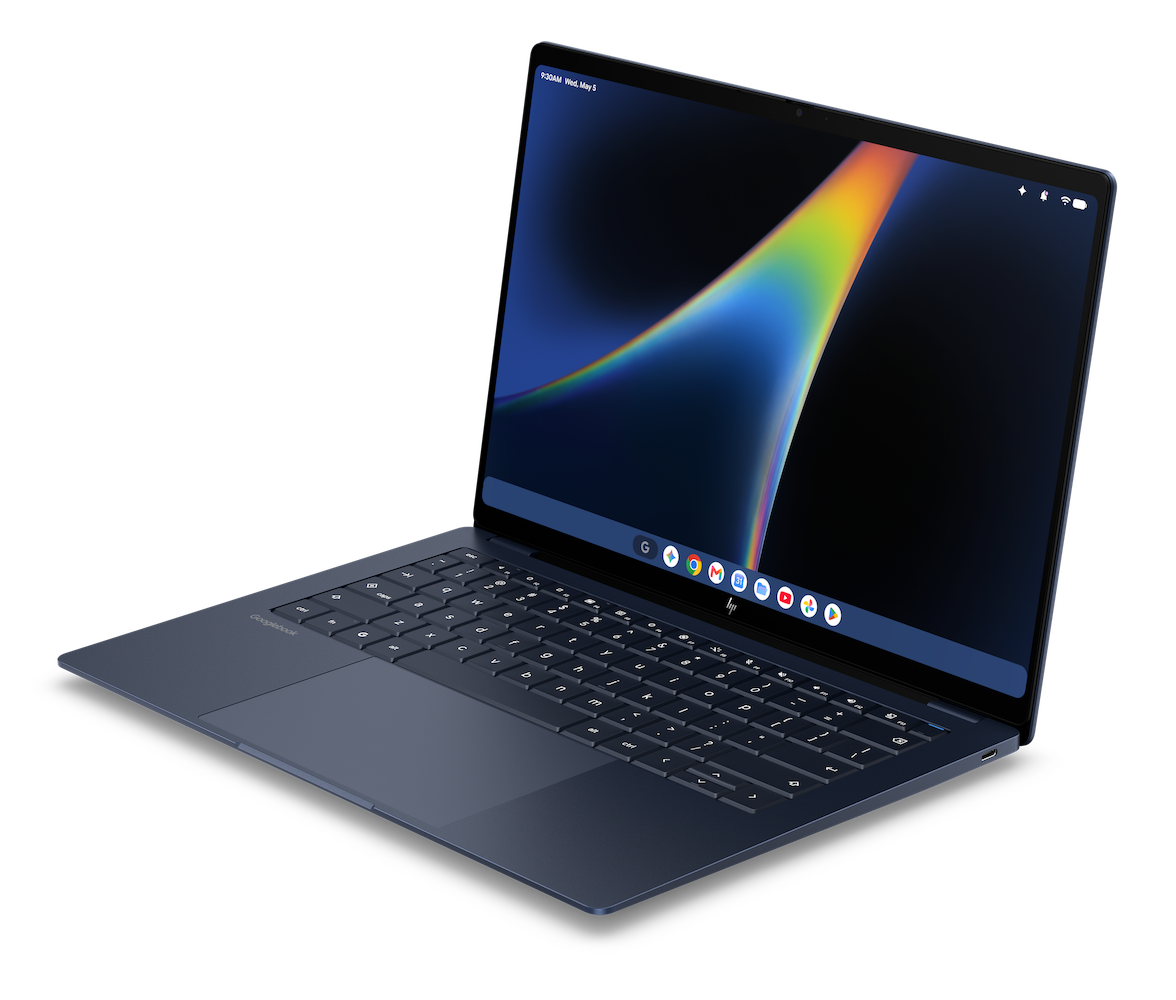
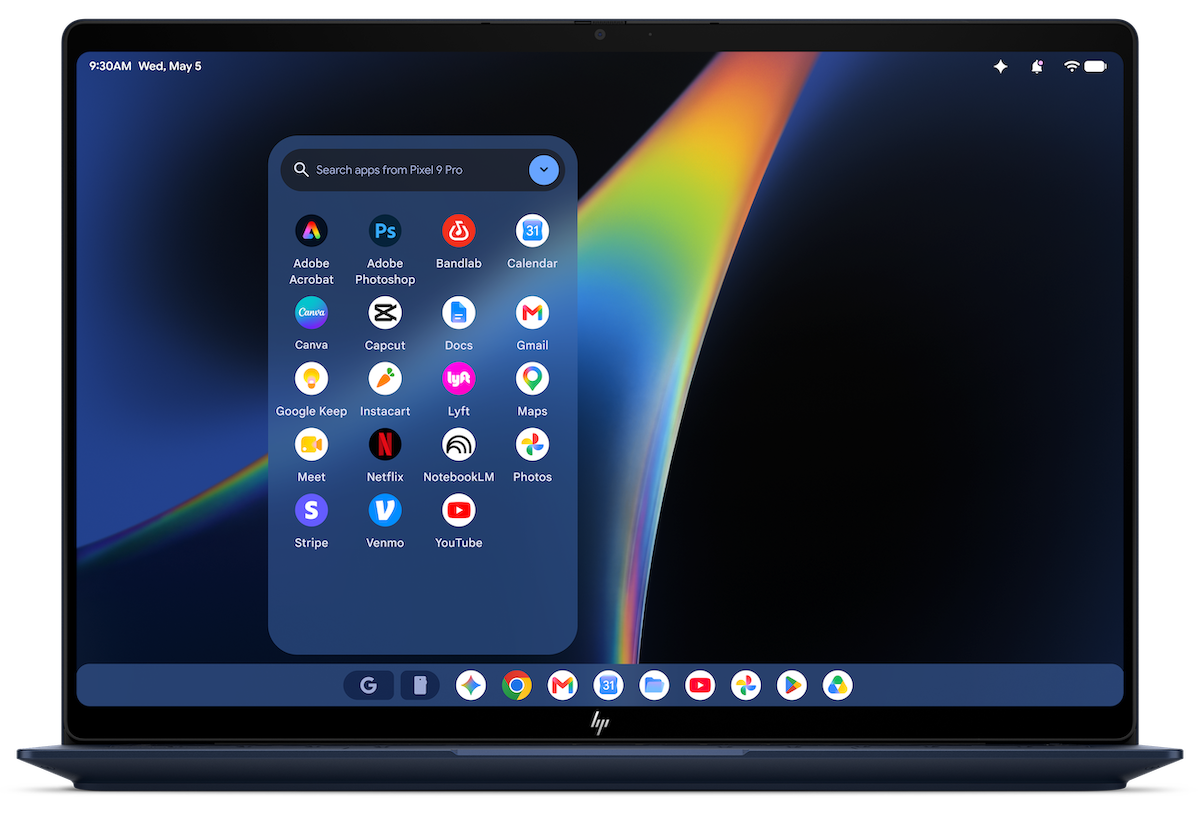
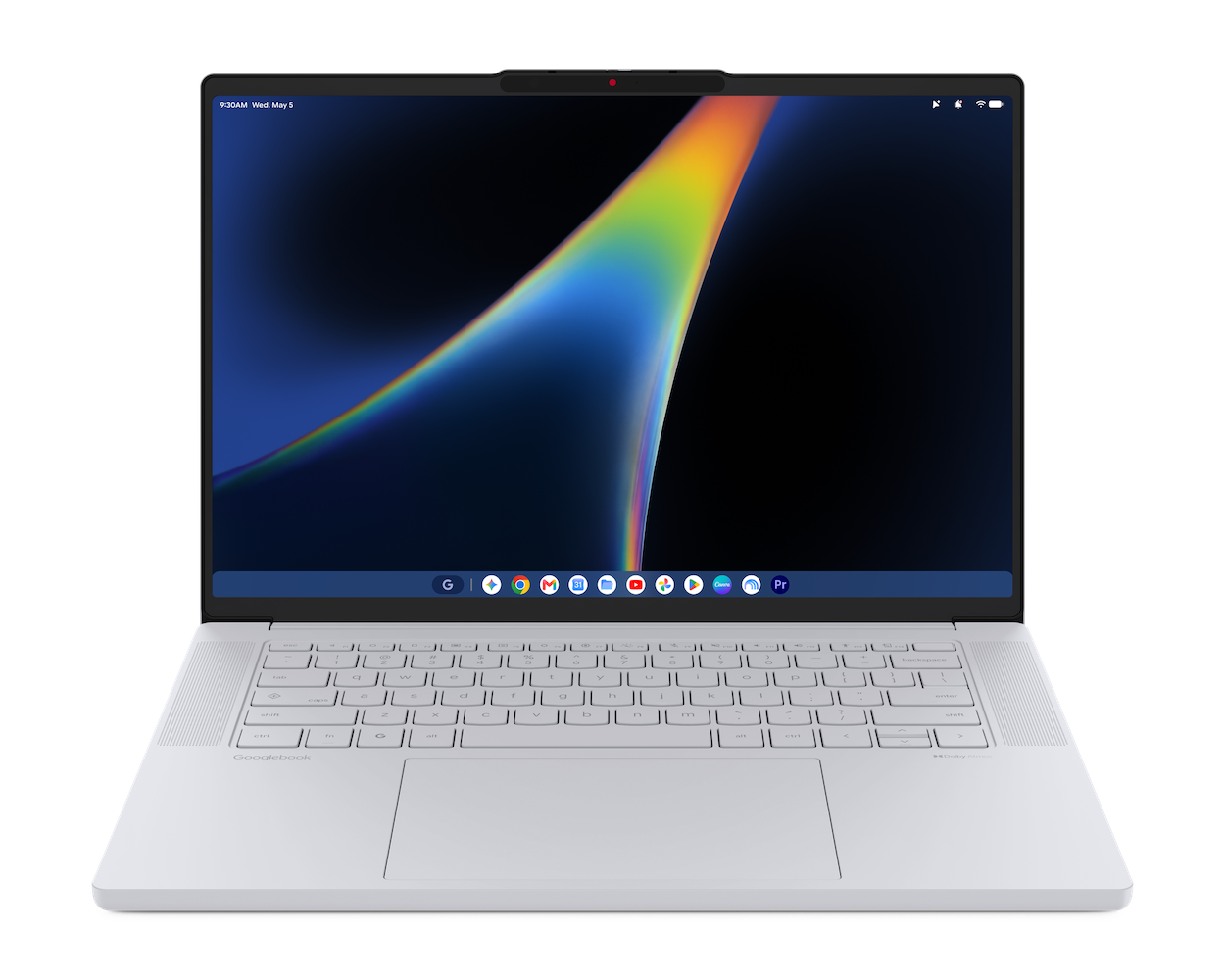
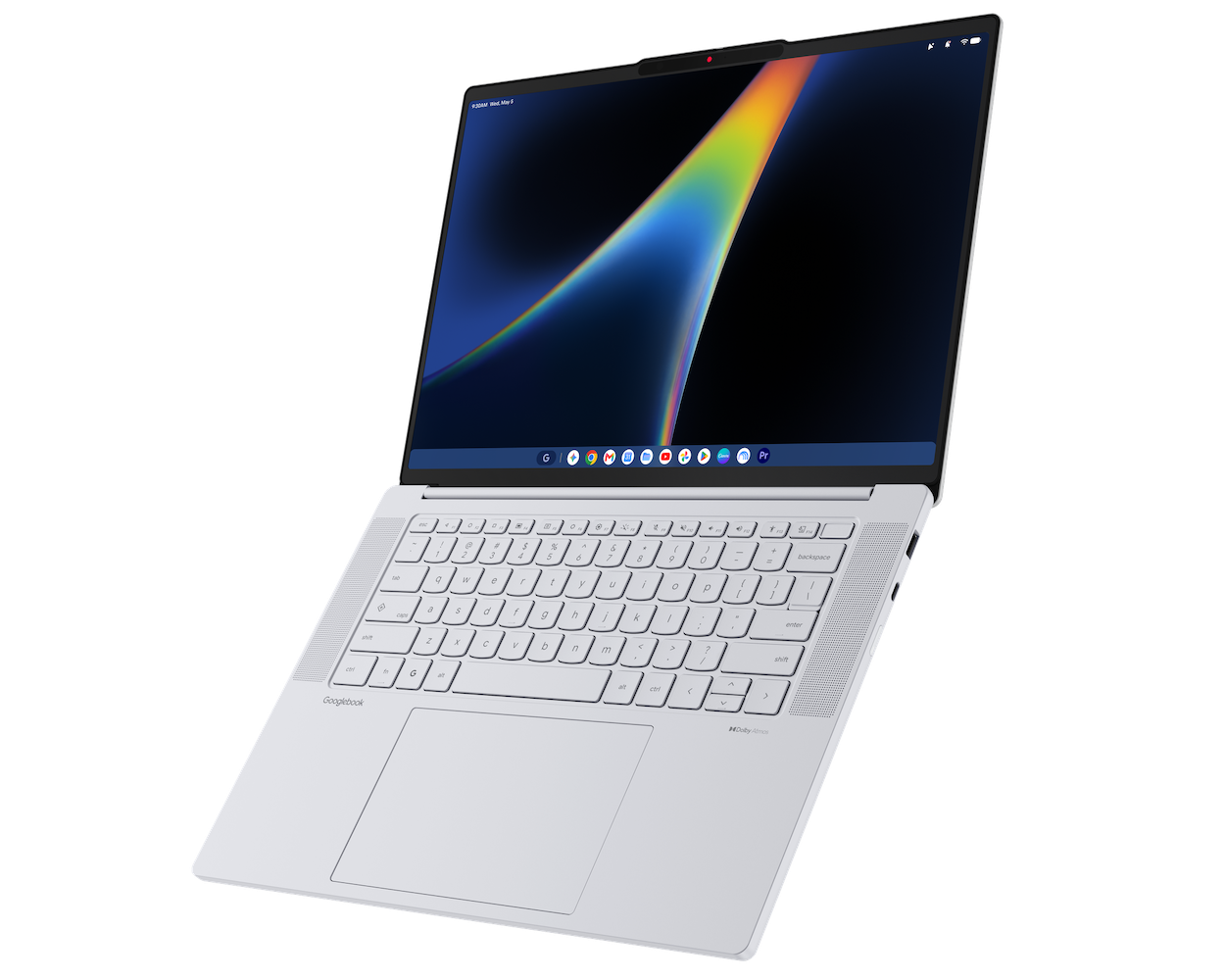
Following phones and watches, Material 3 Expressive is coming to desktops. Quick Settings and notifications, which are nearly identical in design to what you’d find on Pixel, can be found in the top-right corner, while you have the time and date at the left. The bottom dock is center-aligned with the ‘G’ opening your app drawer.
Upon signing in to a Googlebook, your Android phone’s settings, saved passwords, Wi-Fi, and messages will appear. Cross-device continuity includes Android 17’s “Continue On” capability and Cast My Apps if you don’t want to install the Android application on your laptop.
Additionally, Google touts a first-class Files app that can show what documents and photos are available on your phone. One good use of on-device AI is automatically generating file descriptions that aid search.
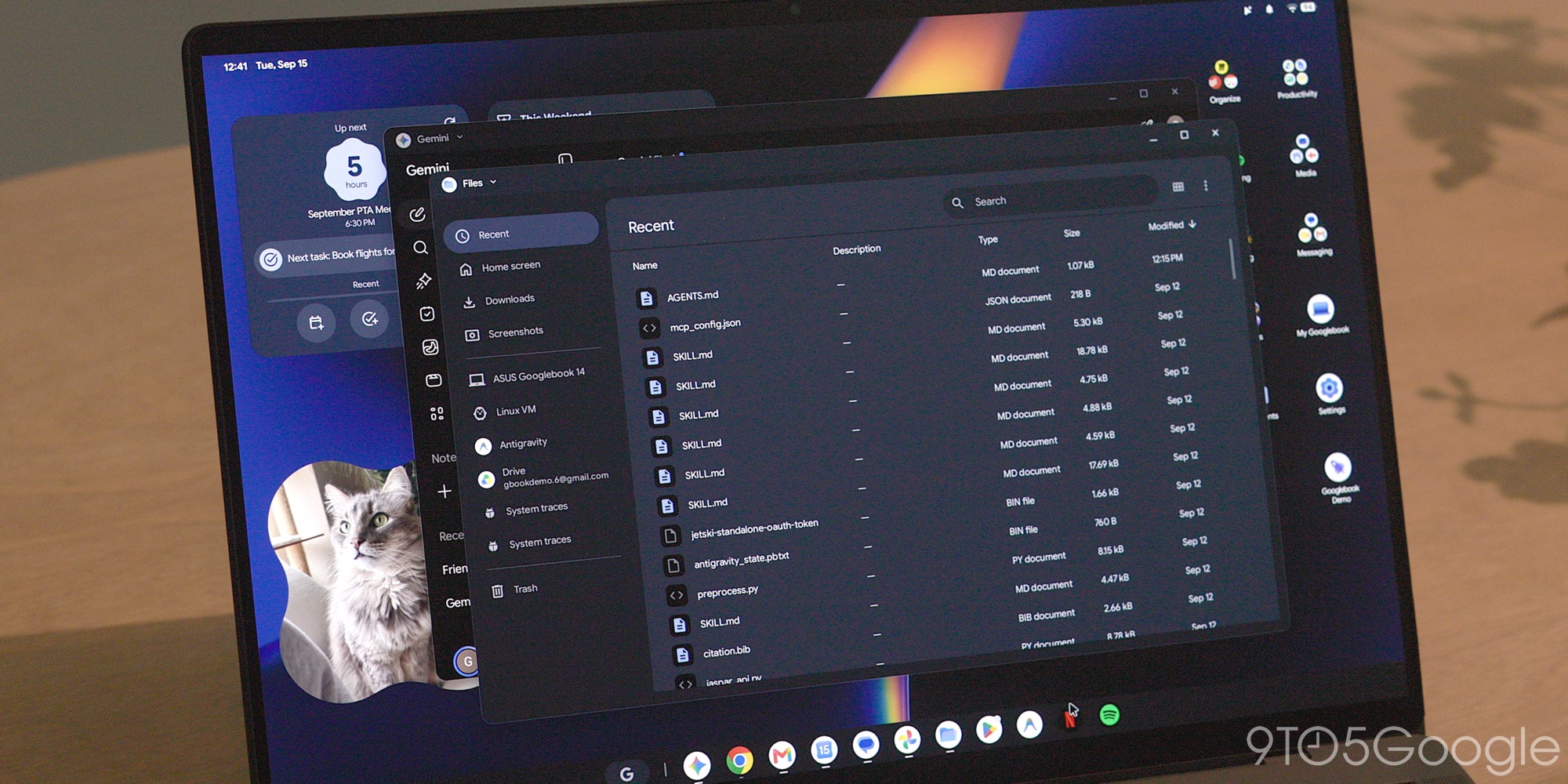
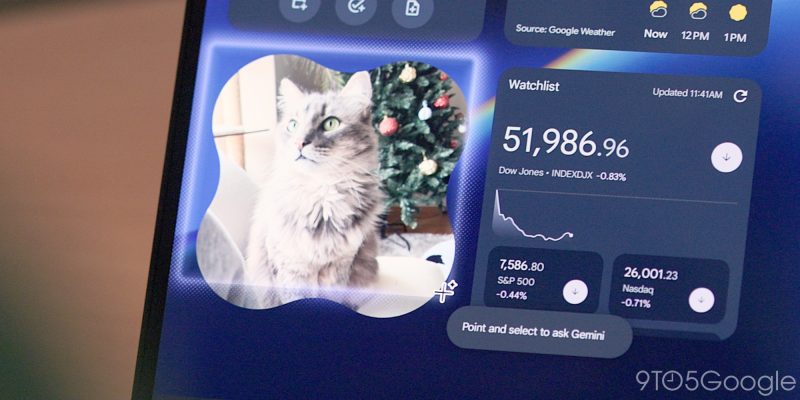
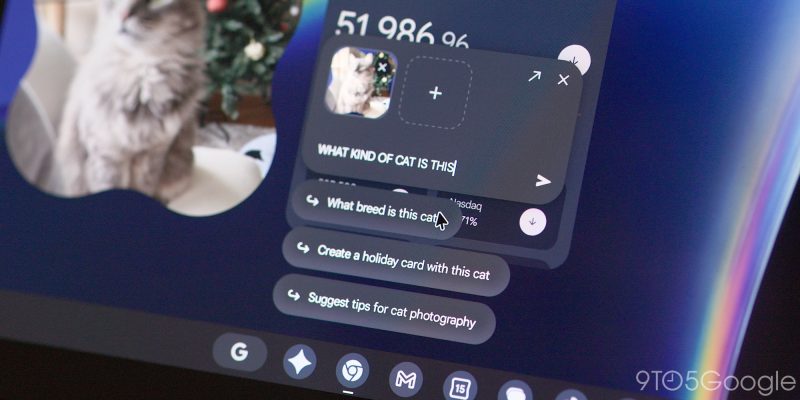
Gemini Intelligence is led by Magic Pointer and the wiggle gesture to bring up Gemini and enter a prompt, like adding dates to your Calendar. There’s also Rambler, like on the Pixel 11 series, to dictate a stream of consciousness, while Create My Widget is billed as letting you “customize your desktop by describing what you need in plain language.”
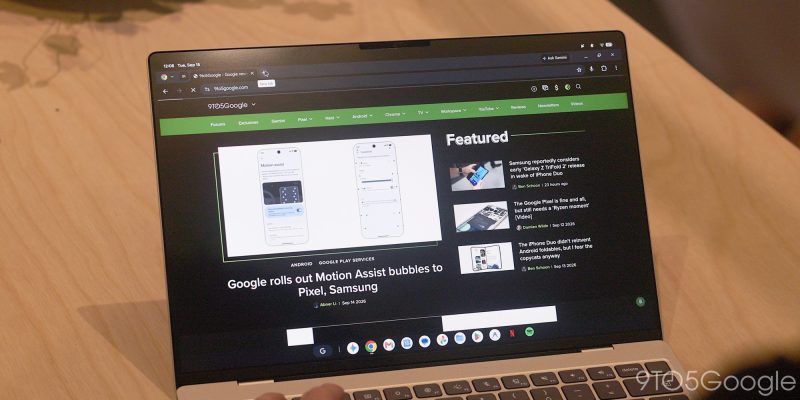
You get a “desktop-class” Chrome browser with support for extensions, the Gemini side panel, vertical tabs, and more. Most features found on Mac and Windows are available here.
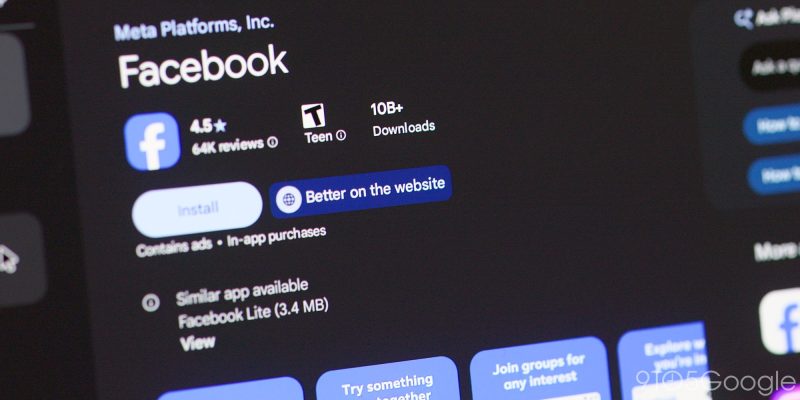
The application story is a combination of Android and the web, with Google noting how 70% of time spent on laptops is in a browser. The company ultimately thinks it is up to developers to choose whether an Android app or the web is better for their application. There is a growing number of desktop-class Android apps, and the Play Store will highlight them with a new badge.
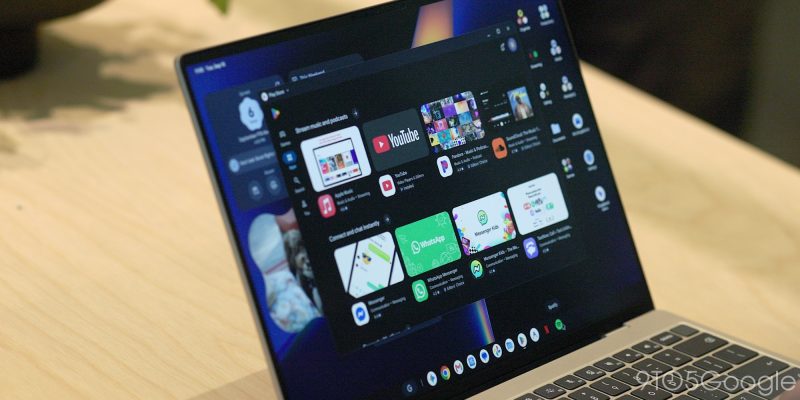
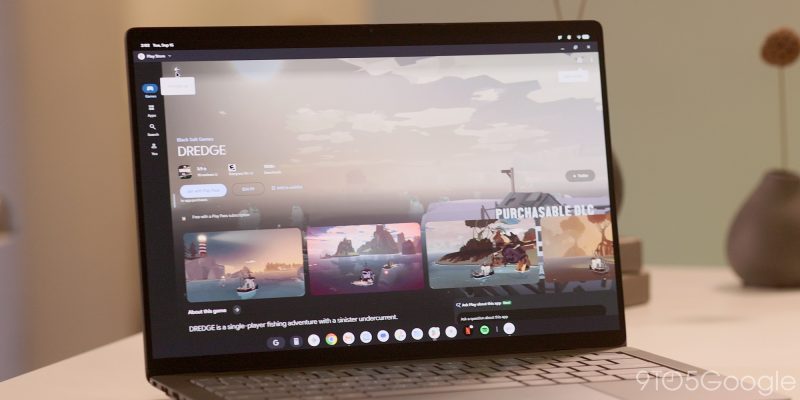
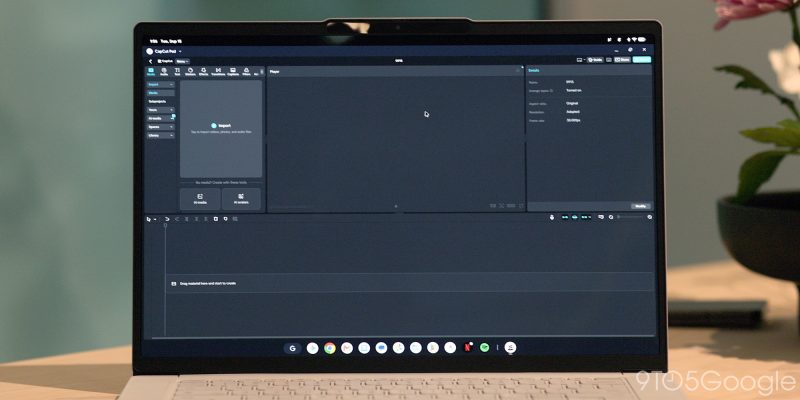
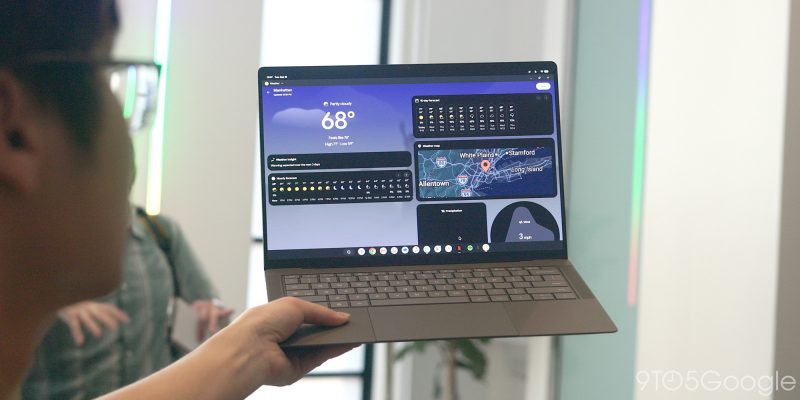
On the gaming front, 20,000 mobile and PC titles will run on Googlebooks. They are optimized for keyboard, mouse, and touchscreen, with Google’s existing Play Games Level Up program resulting in monthly title launches. For everything else, Google offers a year of Nvidia GeForce Now.
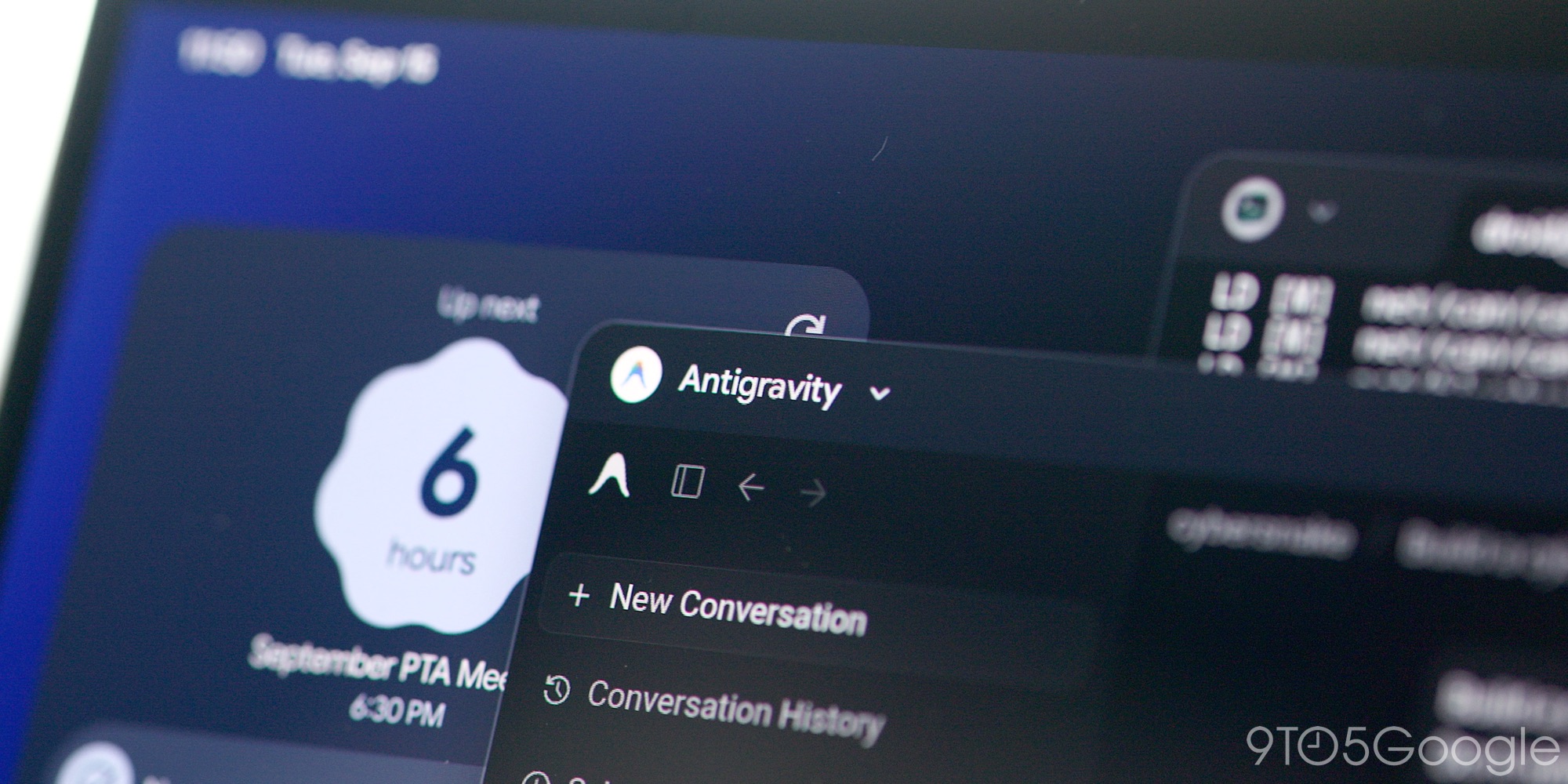
For developers, Google very notably created an Antigravity app for Googlebooks that offers a native UI and interacts with the Linux environment. You can also install the Linux version of Antigravity if you wish, along with Claude Code and OpenAI’s Codex. For Android app development, Antigravity allows you to deploy directly to the Googlebook.
Under the hood, Google is integrating the multi-window performance and full browser capabilities of ChromeOS with a native Android stack that offers power and battery efficiency.
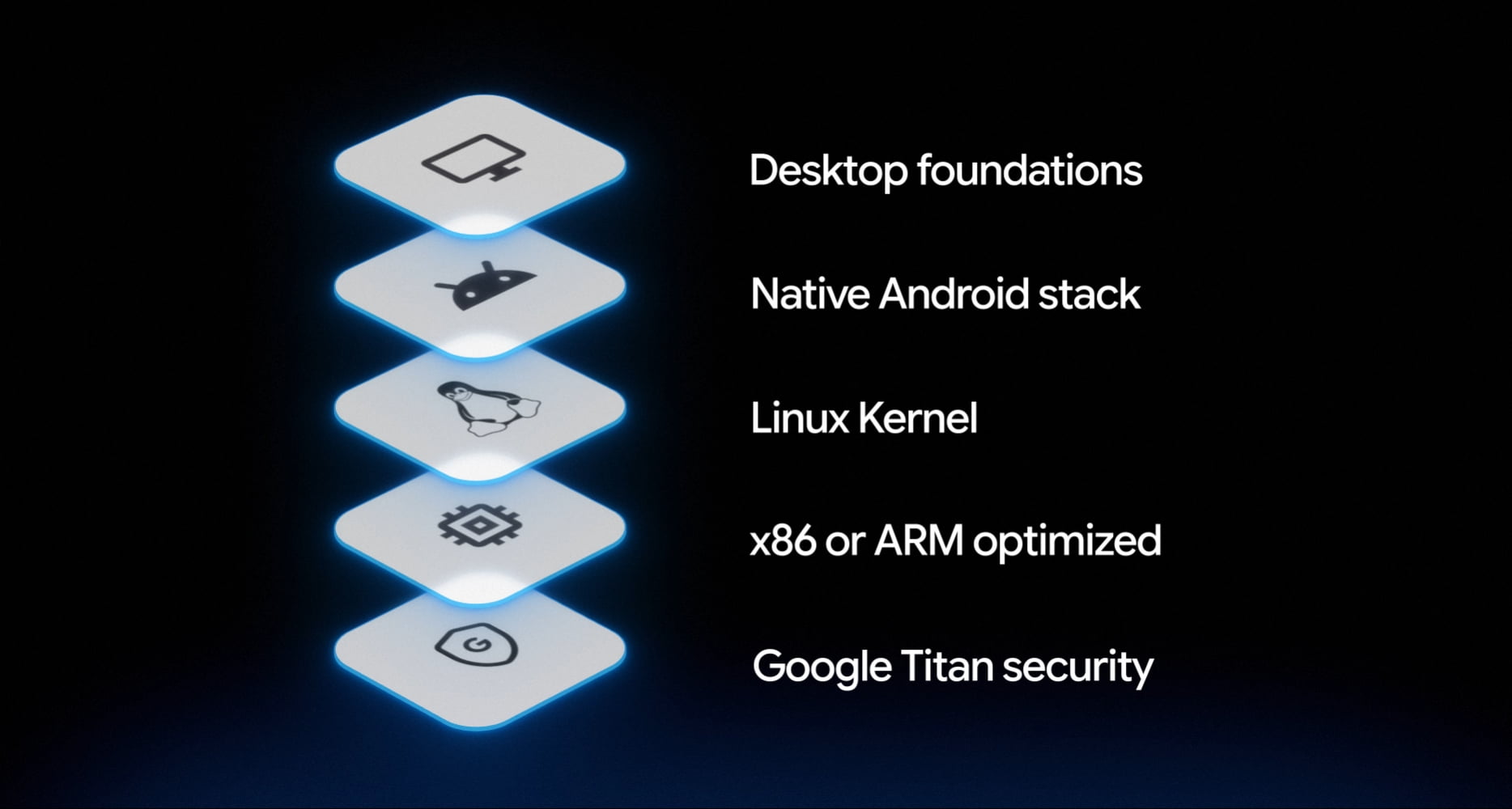
On the security front, Google touts the same security architecture as ChromeOS. There’s a Google Titan security chip and on-device malware detection. Additionally, a Level 5 security-certified hypervisor powered by pKVM isolation allows for the isolated Linux environment with full terminal access. This lets you “safely run any Linux developer tools, pull code repositories, access networks and the ports, or execute autonomous agents.”
Googlebooks get 10 years of automatic updates with quarterly feature drops similar to Pixel.
Hardware
On the hardware front, there are five flagship Googlebooks at launch, with Google mandating several key specs across the lineup. All devices are powered by Intel Core Ultra Series 3 or Snapdragon X Elite with NPUs (40+ TOPS). As such, Googlebook OS is optimized for ARM and x86, with MediaTek-powered devices coming in the future.
There’s a baseline of 16 GB of RAM with 32 GB variants available. All have a touchscreen with up to 2.8K LCD or OLED. Devices have up to six speakers with Dolby Atmos surround sound and “studio-quality, background noise-canceling” microphones.
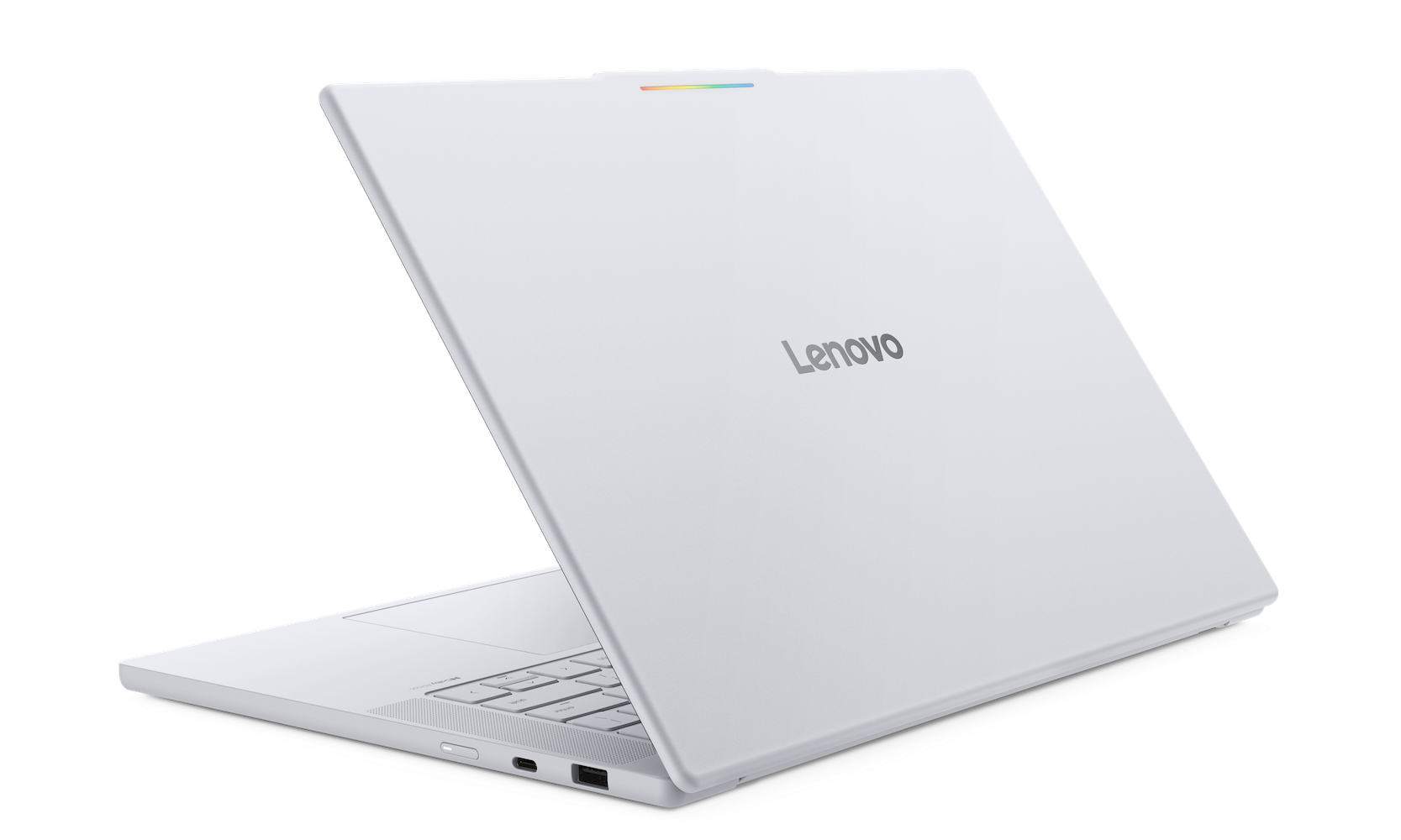
Googlebooks are made from “premium materials” like aluminum, magnesium, or carbon fiber.
There are also backlit keyboards and large glass trackpads with haptic feedback and support for gestures. Google touts up to 14 hours of video playback and 16 hours of web browsing.
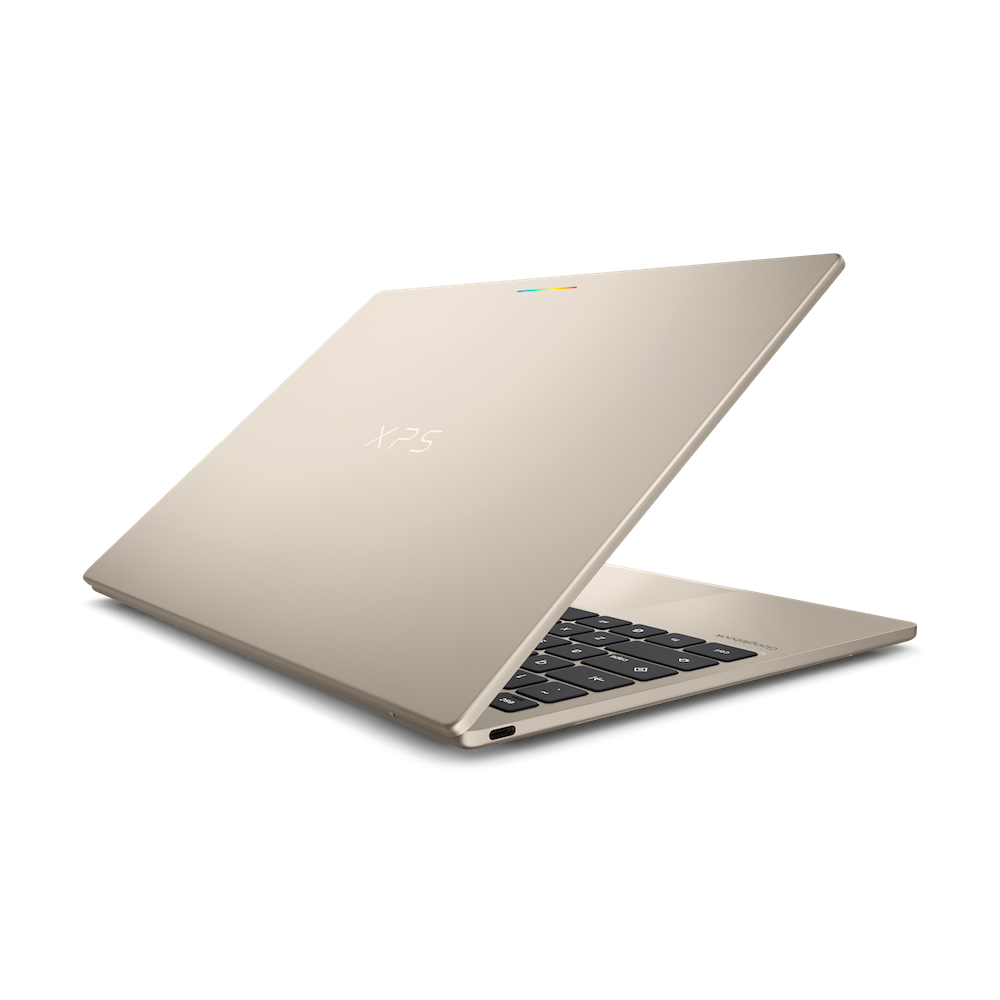
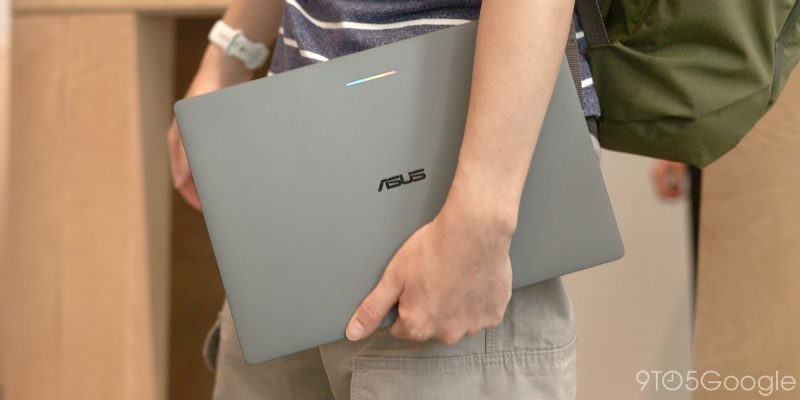
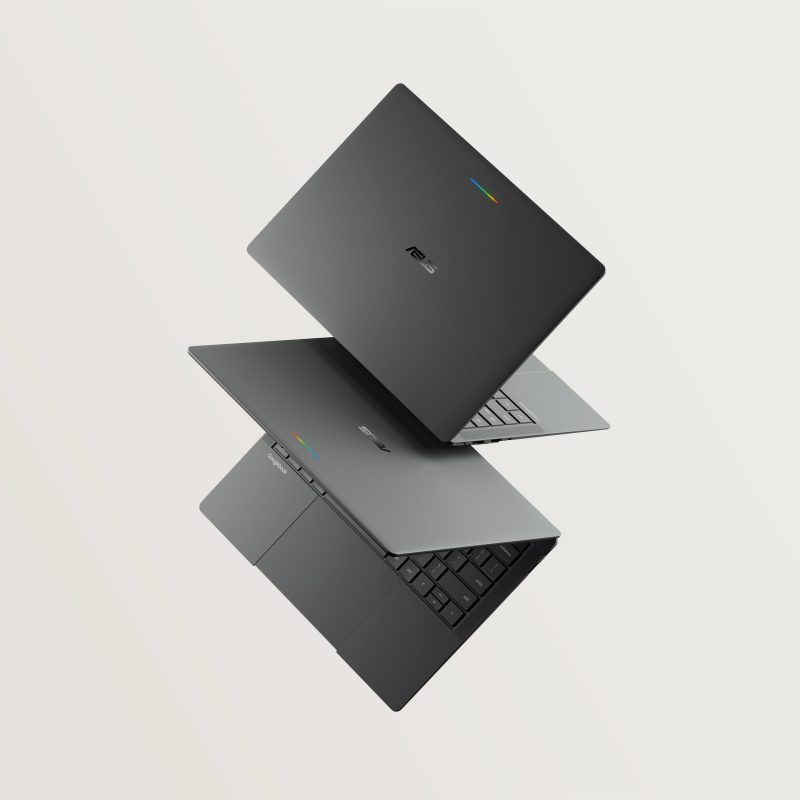
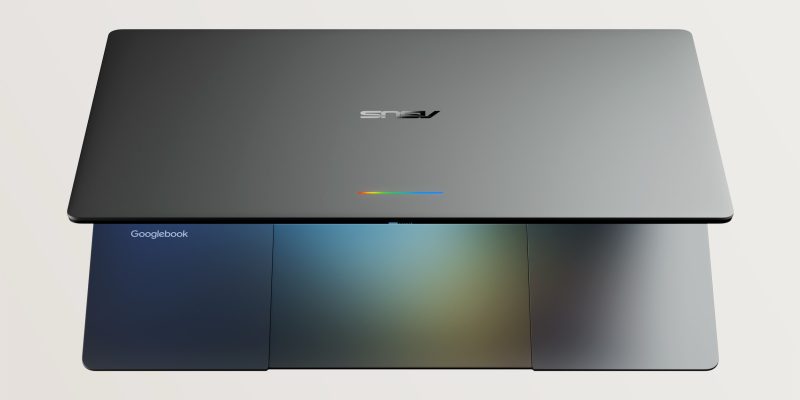
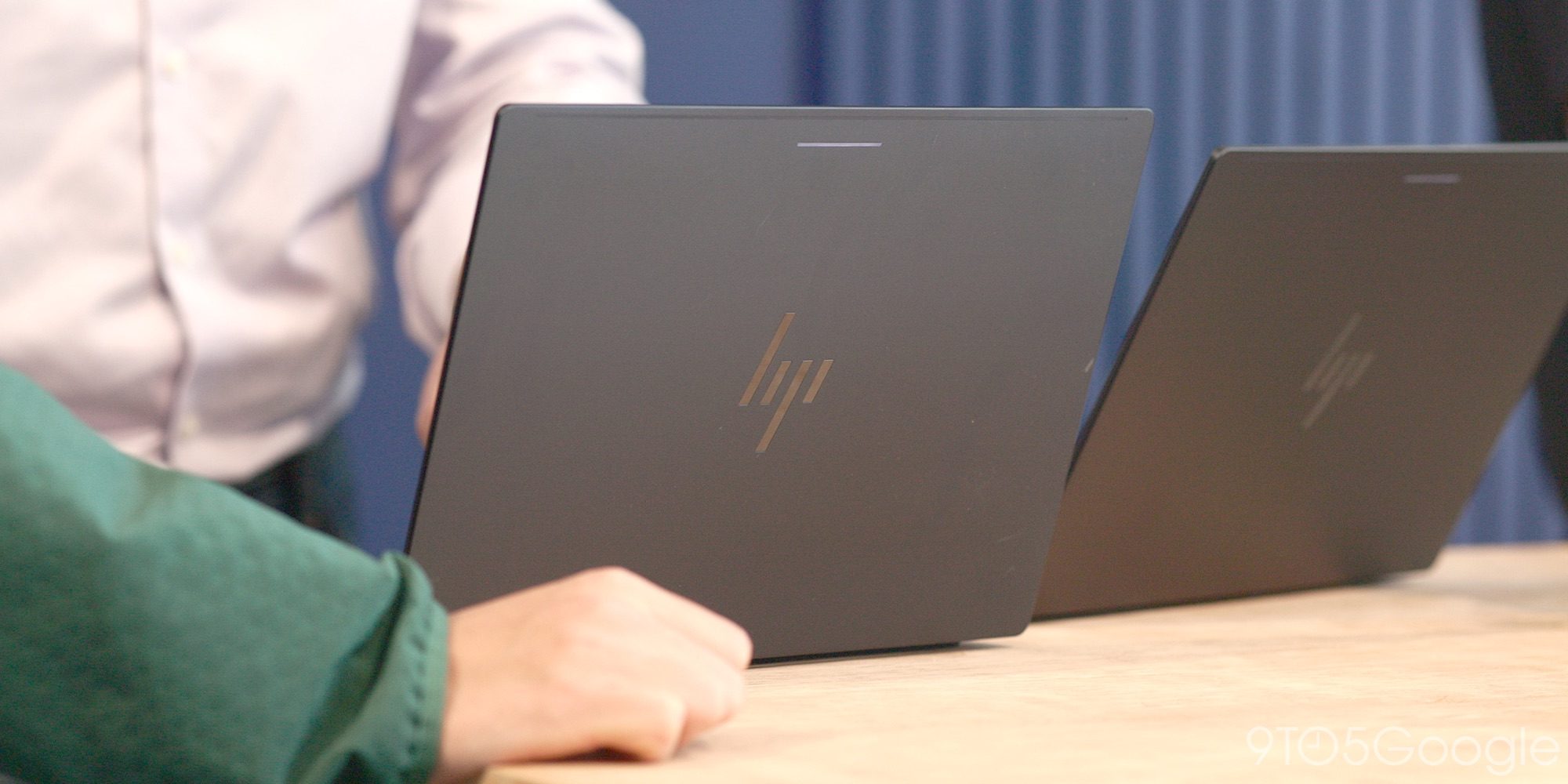
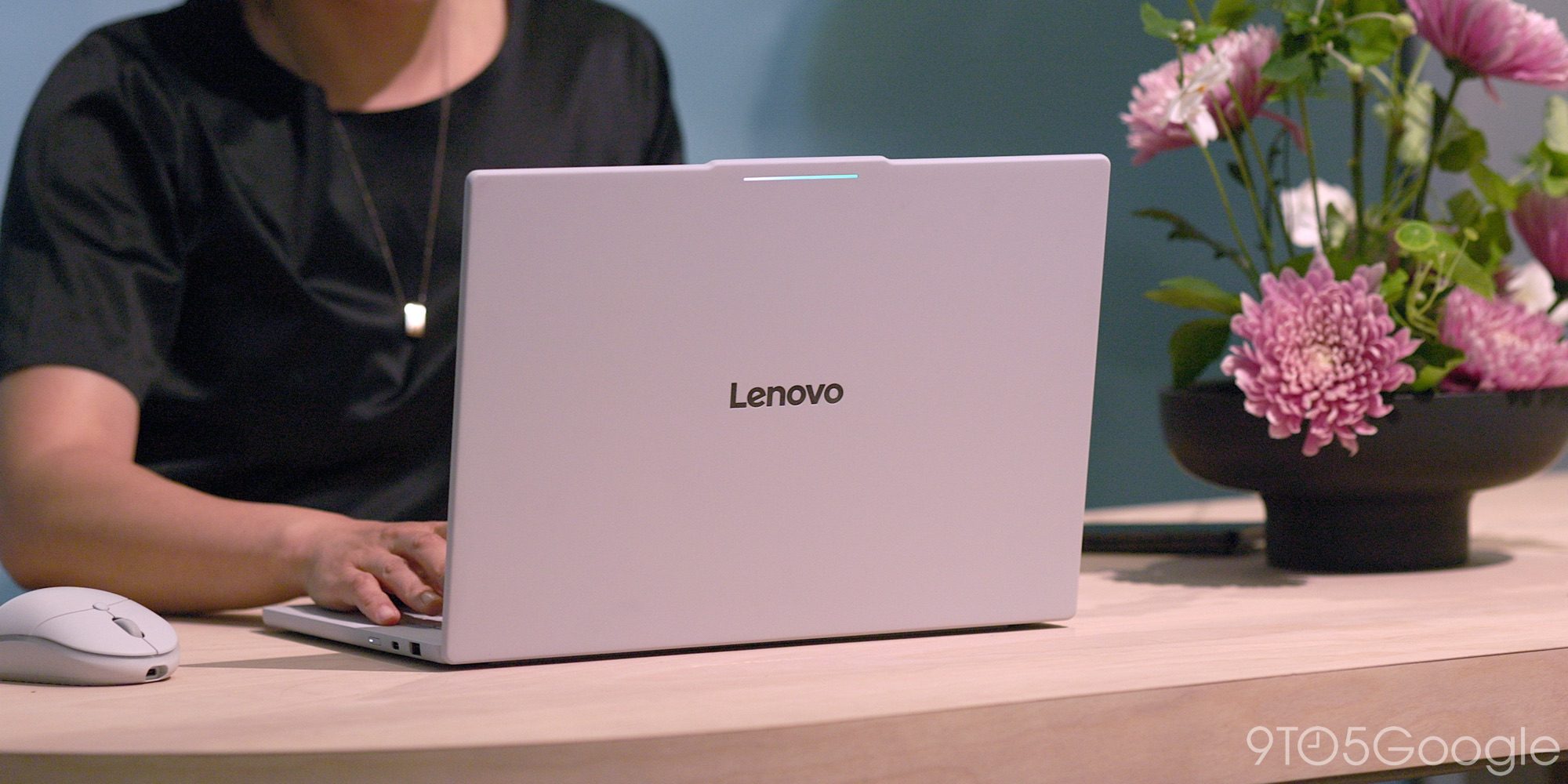
Finally, all devices have a Glowbar on the cover that lights up in the Google colors when you open and close the lid. When you plug in a charger, there’s a current charge level indicator and “playful” animation when you talk to Gemini. Notably (unlike Pixel Glow), third-party apps can access it to “build custom, interactive animations.”
Device list
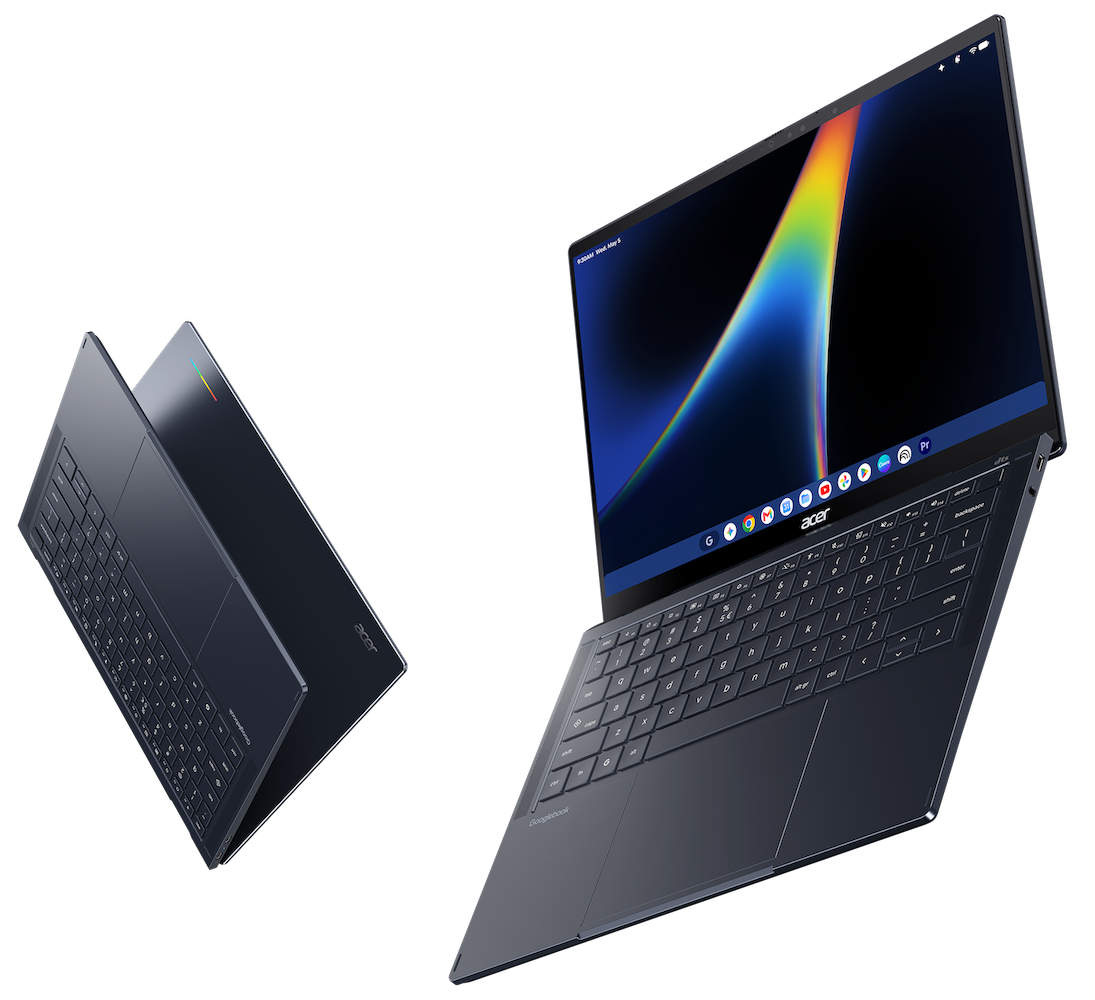
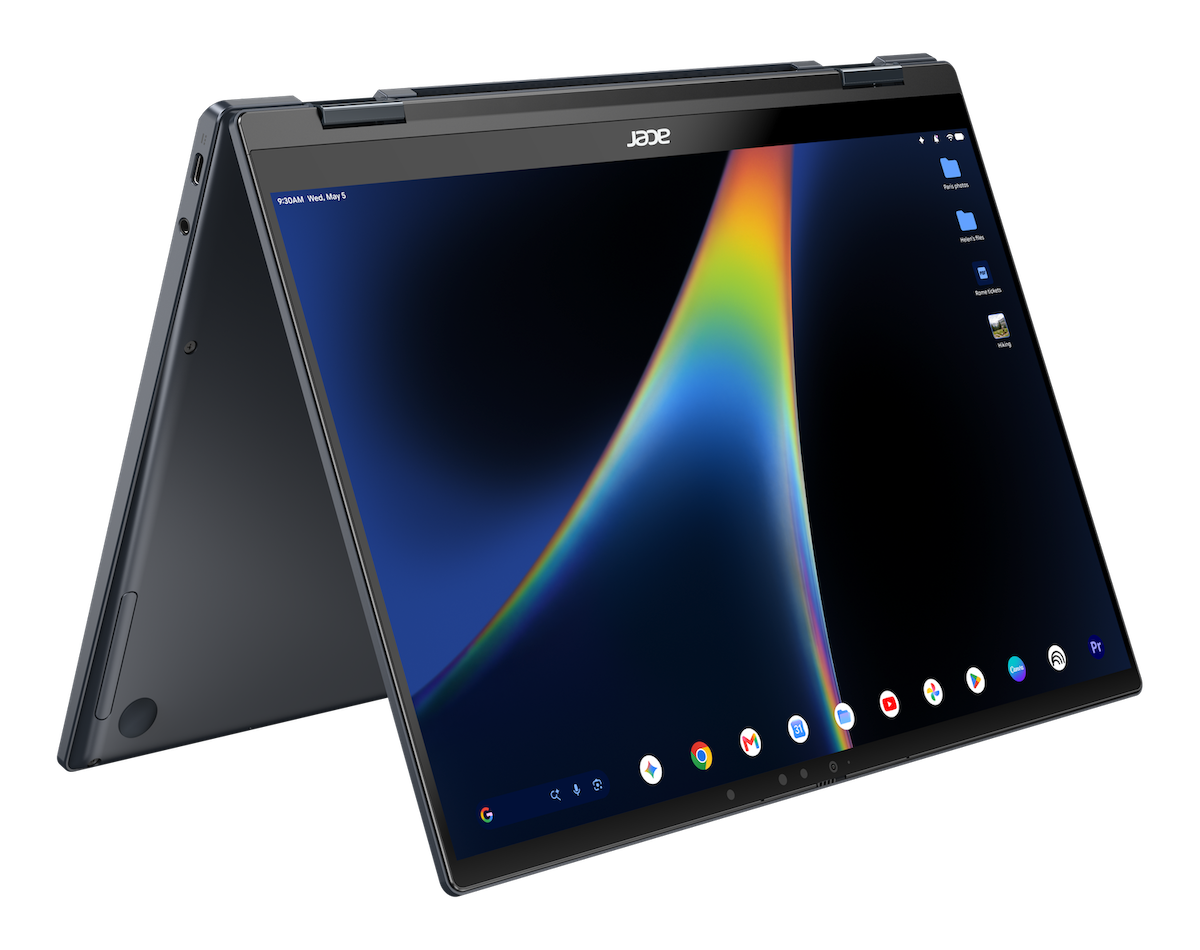
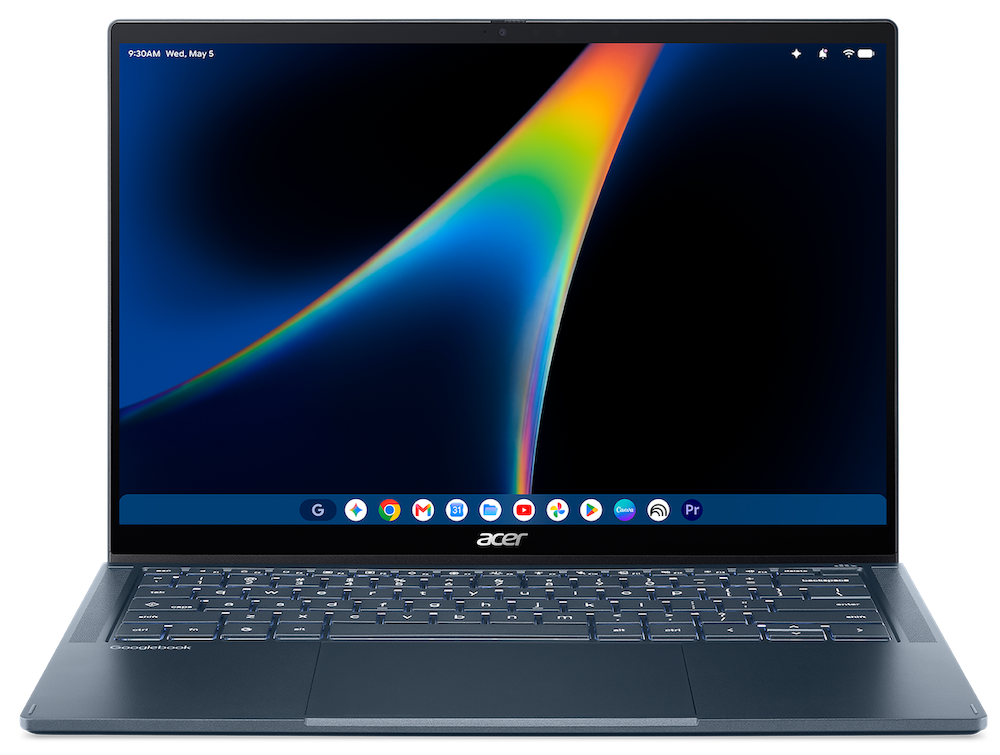
Acer Googlebook 14 | Starting at $899 | Google Store | Best Buy
- Intel Core Ultra 5/7 Series 3 (Panther Lake)
- 16 GB | 256 GB+
- 14” 2.8k OLED touch display, 500 nits
- 13.9mm, 2.5 lbs | 1.13 kg
- Aluminum and Magnesium chassis
- Fingerprint sensor
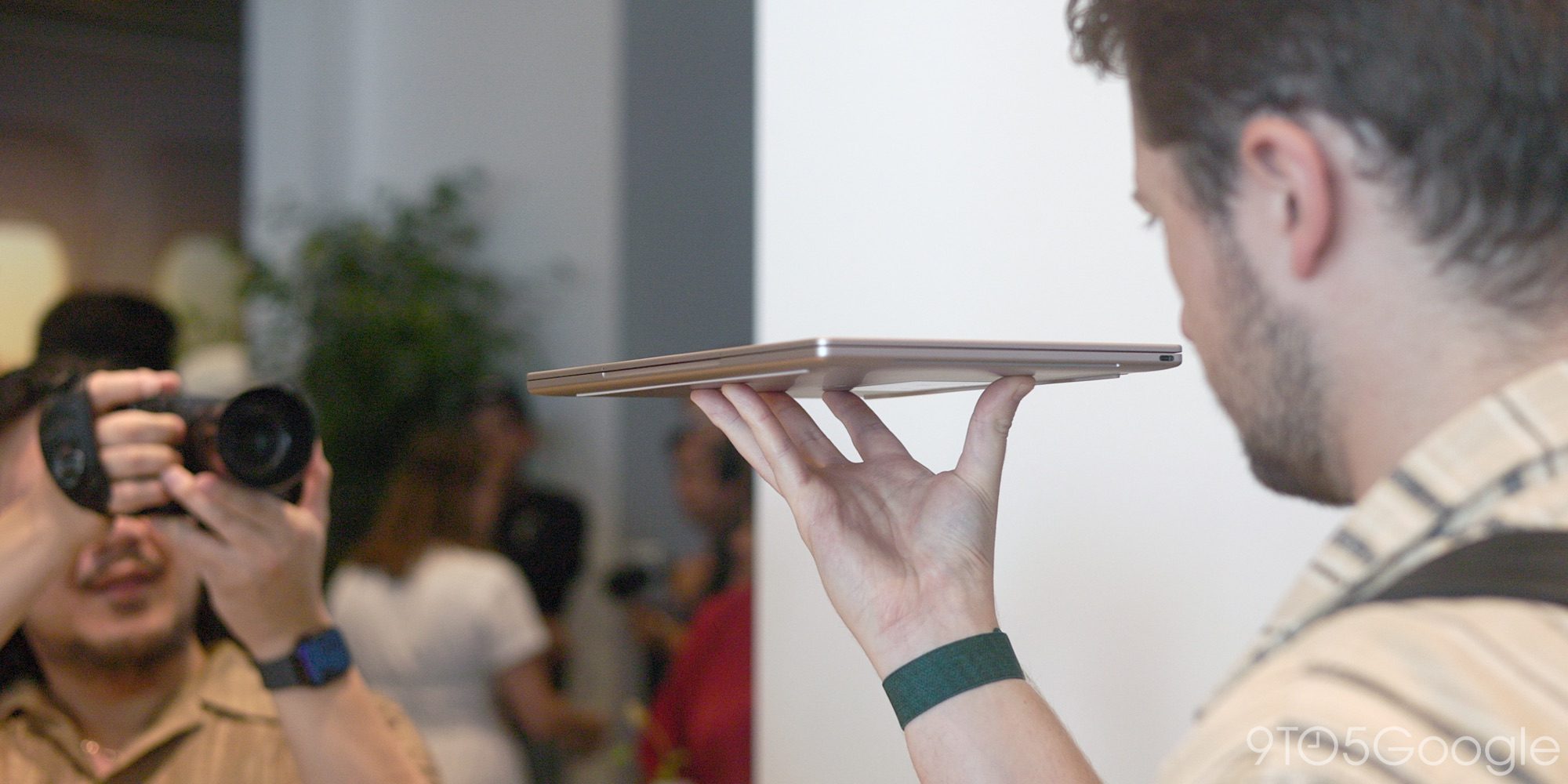
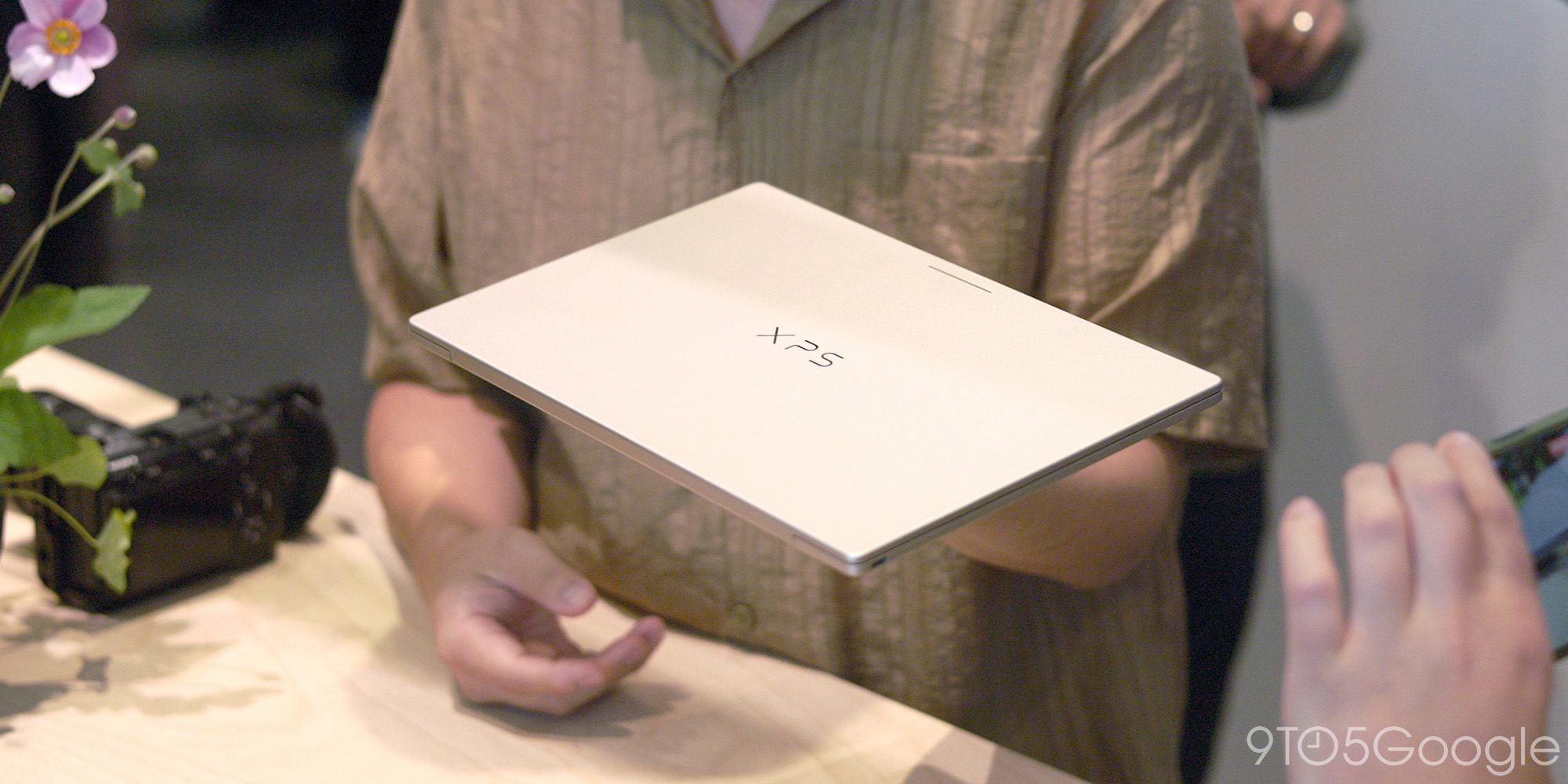
Dell XPS Googlebook | Starting at $999* | Google Store* | Best Buy*
- Qualcomm Snapdragon X Elite
- 16-32 GB | 512 GB+
- 13.4” 2.5k touch display, 500 nits
- 12.7mm, 2.2 lbs | 1.0 kg
- Machined Aluminum chassis
- Fingerprint Sensor
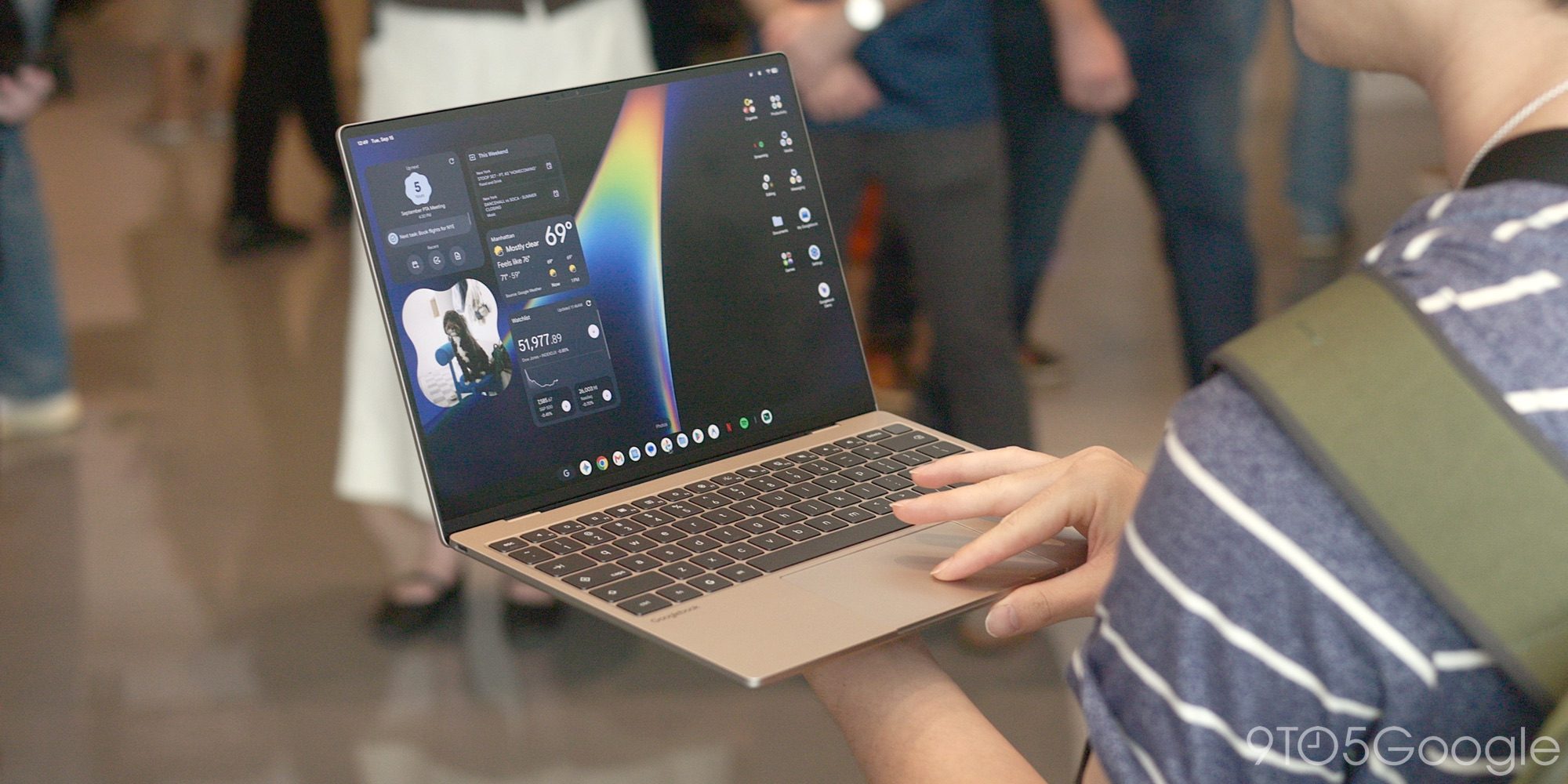
ASUS Googlebook 14 | Starting at $1,299 | Google Store | Best Buy
- Intel Core Ultra 5/7 (Panther Lake)
- 16-32 GB | 256 GB+
- 14” 2.8K OLED touch display, 500 nits
- 14.0mm, 2.2 lbs | 1.0 kg
- Aluminum and Magnesium chassis
- Haptic touchpad
- Fingerprint sensor
Top comment by Tiuri Elvander
Do you happen to know whether Google mandated the lack of an SD card? Or is that just something that these manufacturers all decided on by themselves??
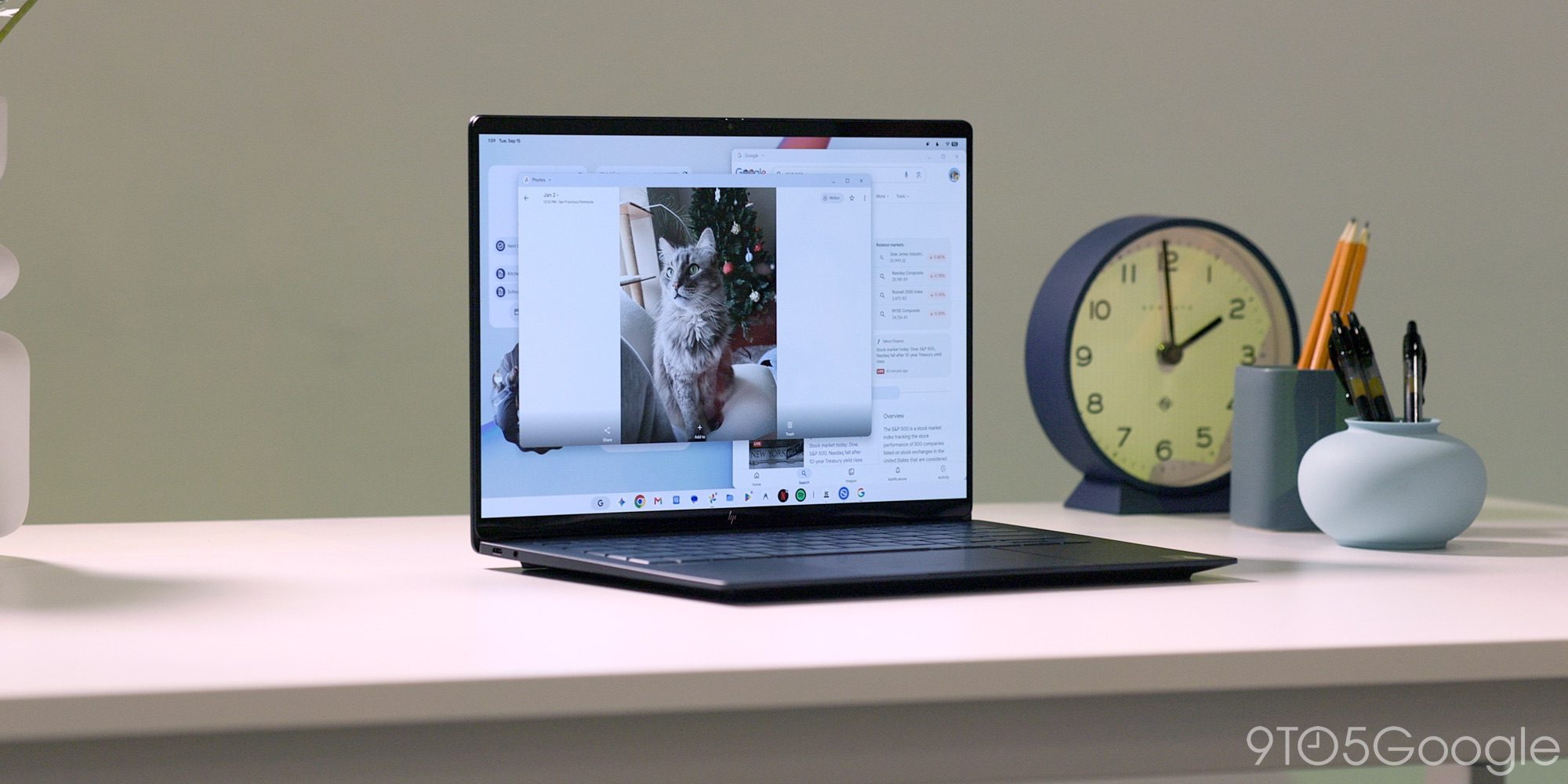
HP Googlebook 14 | Starting at $1,299 | Google Store | Best Buy
- Qualcomm Snapdragon X Elite
- 16-32 GB | 256 GB+
- 14” 2.8k OLED touch display, 500 nits
- 14mm, 2.74 lbs | 1.24 kg
- All-Aluminum build
- Haptic touchpad
- Fingerprint sensor & Face authentication
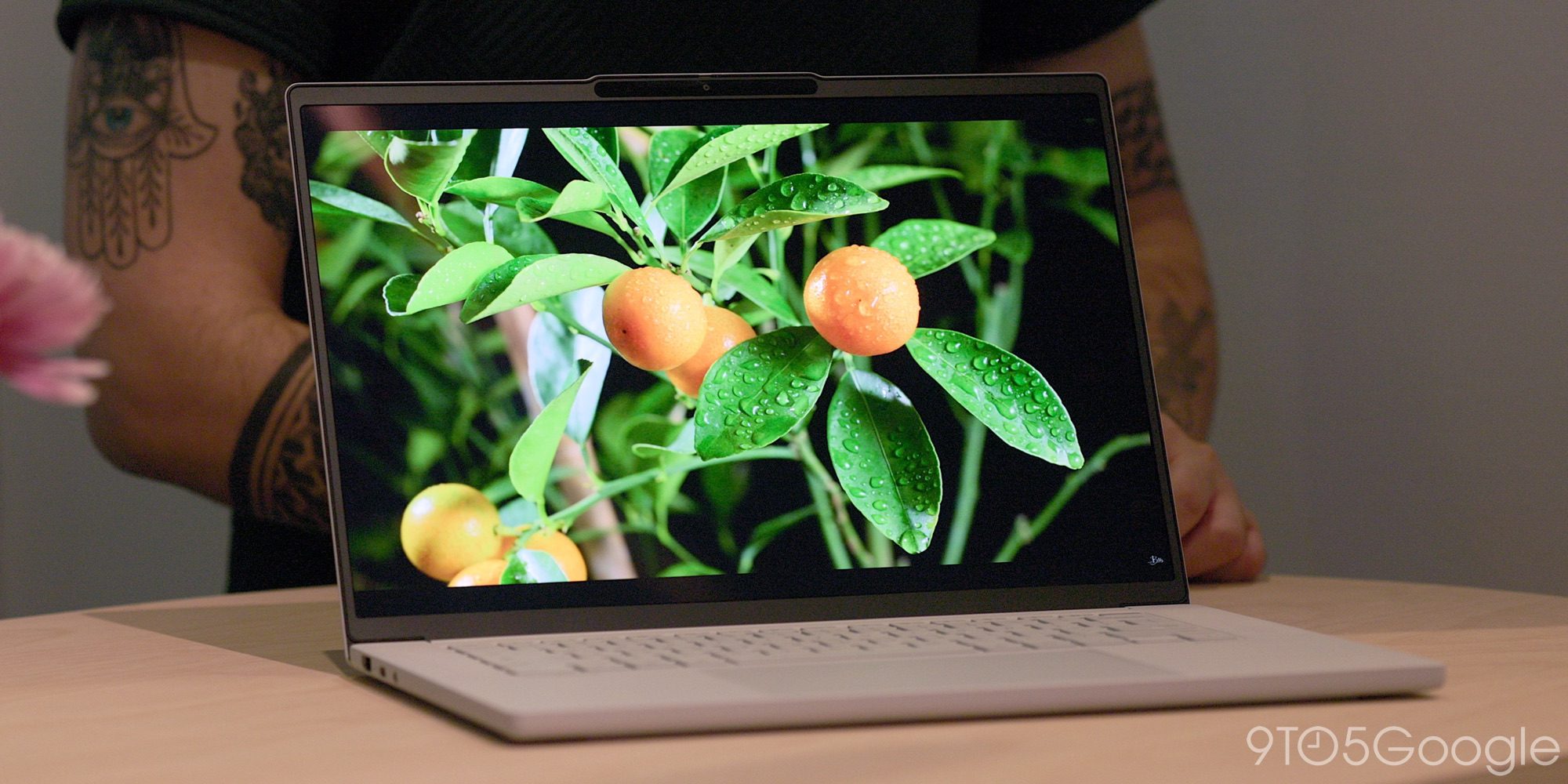
Lenovo Googlebook 15 | Starting at $1,299 | Google Store | Best Buy
- Intel Core Ultra 5 Series 3 (Panther Lake)
- 16 GB | 256 GB+
- 15.3” 2.8k OLED touch display
- Dolby Atmos
- 15.95mm, 2.84 lbs | 1.28 kg
- Magnesium-alloy and carbon fiber
- Haptic touchpad
- Face auth & Fingerprint Sensor
Googlebooks are now available for pre-order at the Google Store, Best Buy, and other retailers. Each purchase includes 12 months of Google AI Pro, 3 months of YouTube Premium, Adobe Photoshop, and CapCut.
The laptops will be in stores on October 4 in the US, with the UK, Ireland, France, Germany, and Australia following a day later.


FTC: We use income earning auto affiliate links. More.


Comments