
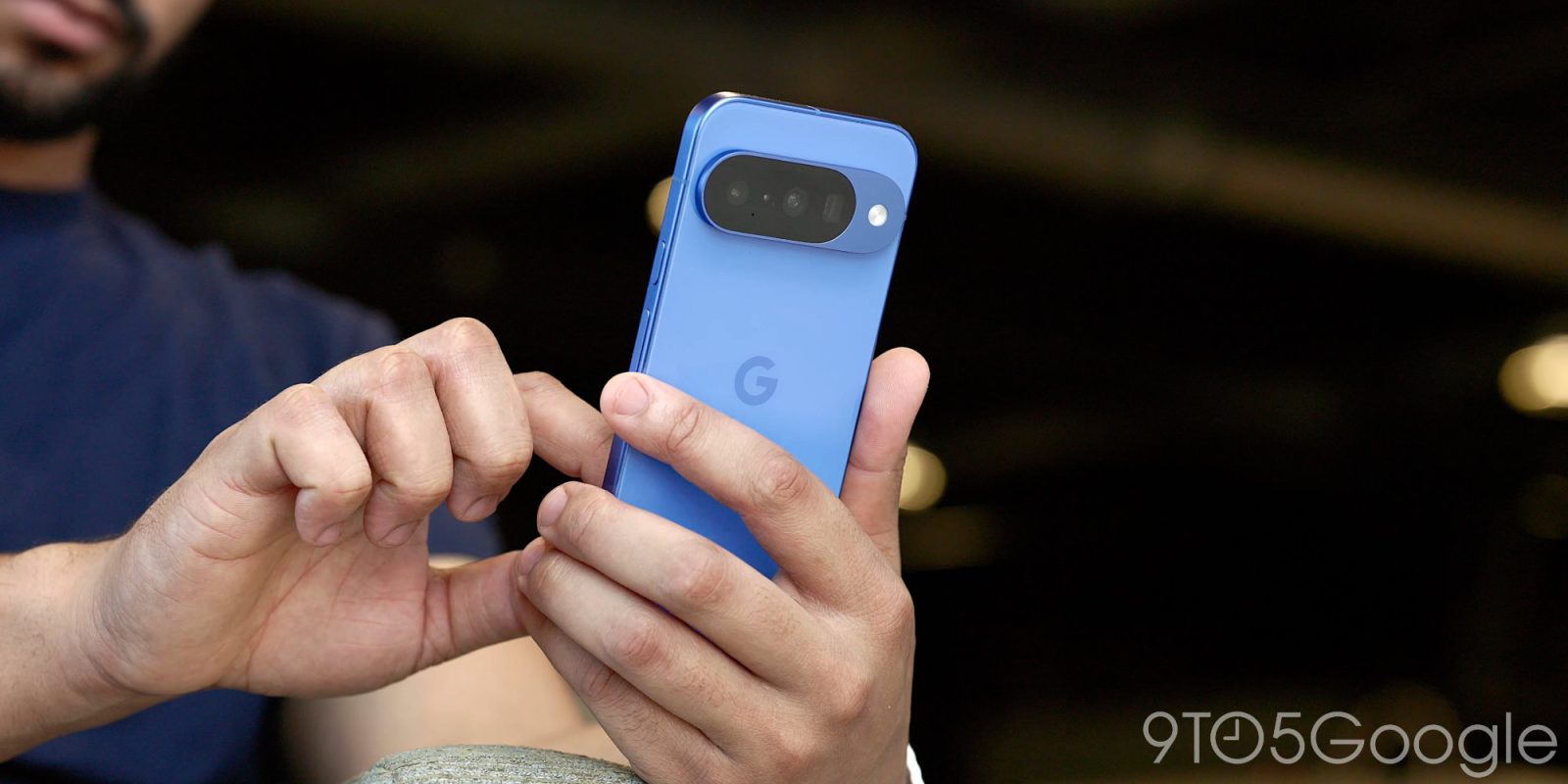
The smartphone market is likely to undergo more change as memory prices show no let-up, and recent data suggests devices like the Google Pixel series are positioned to get the most sales benefit out of another tough year.
Data shows that not only are memory prices not reducing, but they’re also continuing to increase. Projections like the latest from Counterpoint Research paint a clear picture, suggesting that BoM costs for devices will continue to bloat as memory prices rise. We’ve previously covered the increase in costs to OEMs, but the latest projections estimate a $150 or more increase in the final cost to manufacturers.
What that means is increased prices for users, and that could be somewhere in the range of 25%, or $200, to the final retail price of a device. That doesn’t account for an increase in other components, which appear to be rising as well.
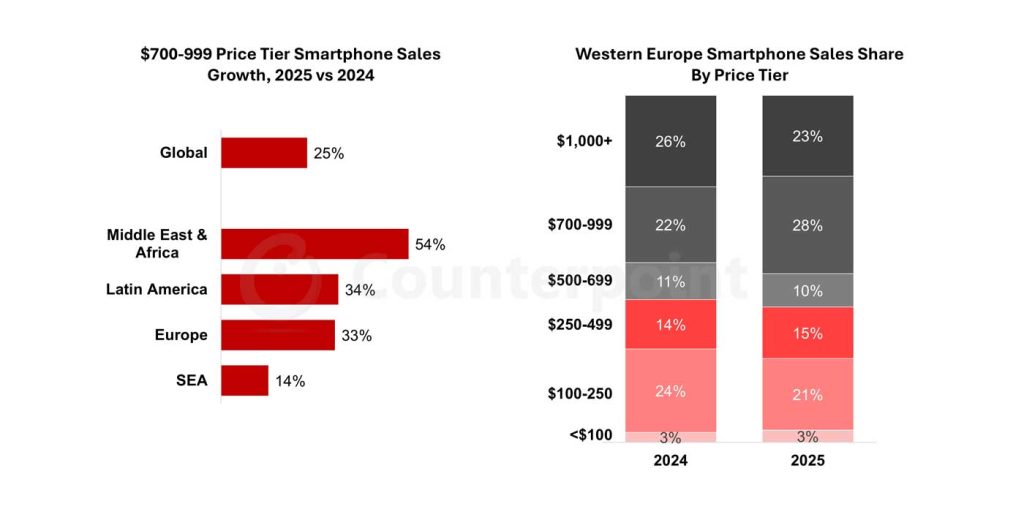
That data also shows that a stage is set where the devices that actually become profitable and successful are the “accessible flagships.” That includes phones priced between $700 and $999. This range covers phones that offer flagship-type specs at a price that doesn’t tip the scales towards luxury.
According to Counterpoint, those devices have seen a recent surge in popularity across regions such as the Middle East, Africa, Latin America, and Europe. Users are looking for phones that offer reliable, fast performance without the hyped up features that don’t matter in the long run. Those regions saw an increase in sales to such devices by as much as 54%.
One device series that happens to sit right in that sales volume sweet spot is the Google Pixel. It starts at $799 for the Pixel 10 right now, and goes past $1,000 for the Pixel 10 Pro XL. It’s often discounted further, like it is right now.
Excluding the largest variant, the Pixel 10 series offers a lot in comparison to competitors like the Galaxy S26 series and iPhone lineup. Even at $799, users are getting 12GB of RAM with a Tensor G5 processor and a 4,970mAh battery. Upgrading gives you more, obviously, and you still haven’t broken through the accessibility ceiling.
The most obvious comparison is a device like the Galaxy S26, which offered nearly nothing new to the consumer other than a boost in baseline storage and an increase in price due to that change. The Galaxy S26 Ultra is a different story, but it still far exceeds that accessible cutoff. For those premium offerings to settle into a position to lose the least sales volume, OEMs will need to offer significant value.
If Google continues to offer true upgrades to a device that sits at around $800, the data suggests it will be a more popular option for users on a global scale. That doesn’t discount other brands, though, in regions like the US, where one of the only other value competitors has little reach (Honor), Google stands to benefit the most.


FTC: We use income earning auto affiliate links. More.





Comments