
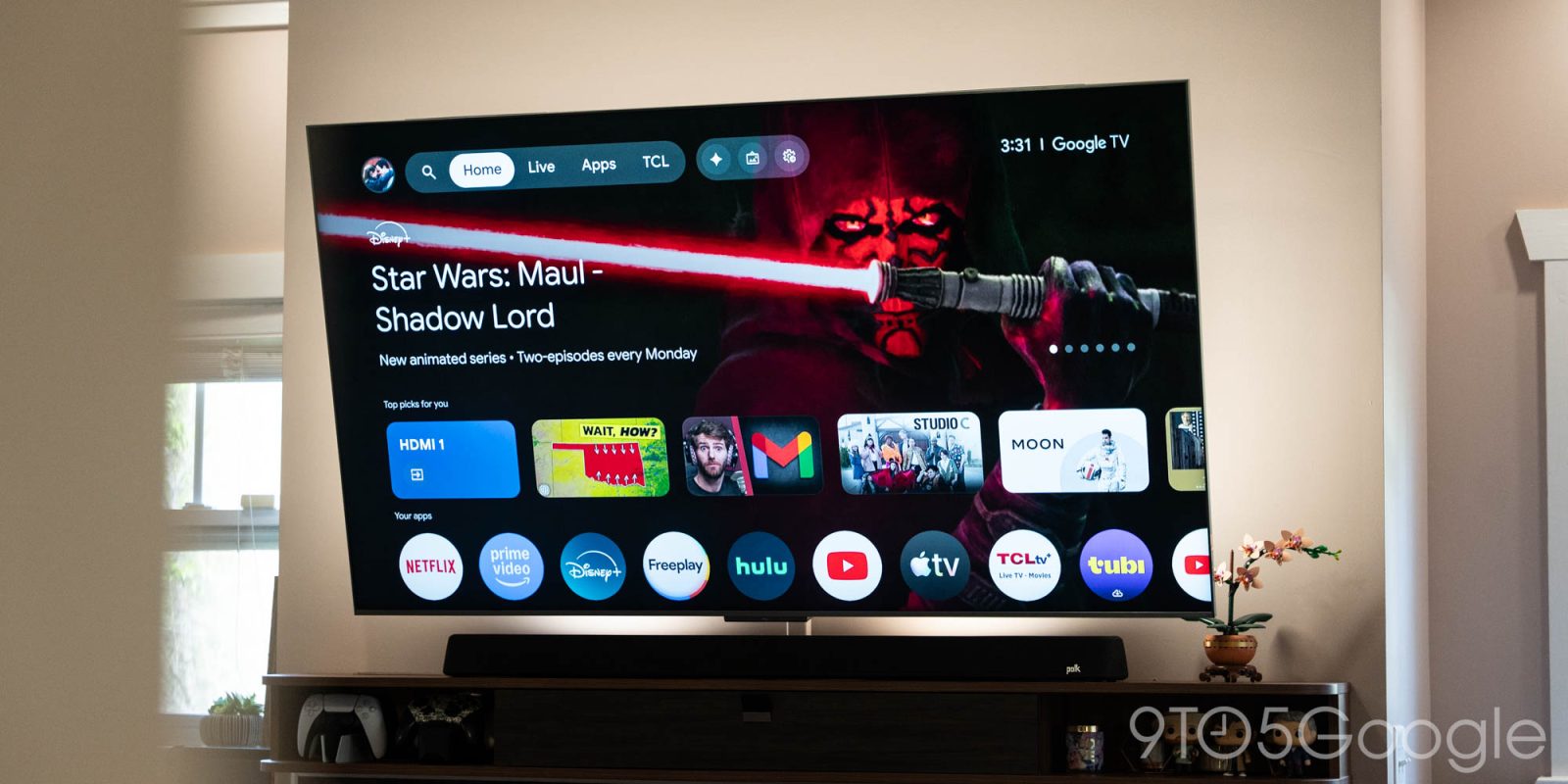
Smart TVs have been relatively static in terms of big new features for a while. Screen quality keeps getting better, software keeps learning new tricks, but it’s pretty uncommon to get a new hardware feature. That’s why I was pretty excited to check out TCL’s QM9K series and, after a few months using this flagship-tier Google TV set, its unique presence-sensing tech that turns on the TV whenever I walk in the room is still a mix of really cool, and perhaps a little pointless.
The TCL QM9K is, at its core, a flagship-level TV set. Running on top of Google TV, the set offers sizes ranging from 65-98 inches. I’ve been using the smallest option, that 65-inch sweet spot that most people use, for the past three months.
In terms of the actual TV set, the quality is excellent.
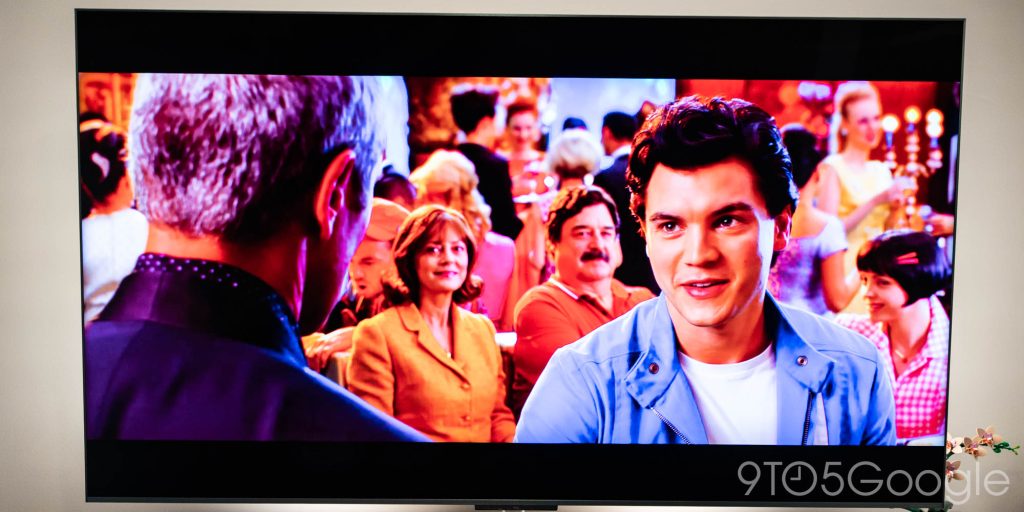
Using TCL’s stellar QD-MiniLED setup, the panel itself is of very high quality. It’s remarkably bright – up to 6,500 nits in HDR – and vivid, with dark blacks that continue to stave off my desire to try out an OLED TV. Over three months of everything from network TV to vivid movies, I’ve been very pleased with the overall quality. I did swap over to the — vivid mode rather than the default energy saver, which instantly boosts the colors and brightness so you can really enjoy the full potential of your new TV. Viewing angles are a highlight here, as you don’t really lose any color vibrance or brightness when viewing at an off-angle. In a living room like mine where someone might be sitting a good ways off to the side of the “ideal” viewing window, this is very much appreciated.
The hardware of the TV is also fairly thoughtful, if standard. It measures less than 2-inches thick and has thin bezels across each side, while offering a central base if you’re putting it down on a table surface. I opted for wall-mounting, and was pleased to see that the VESA mount here is in a “normal” position – in other words, you’re unlikely to put this TV up on an existing mount and find that it doesn’t fit in the same place as a prior TV, as was the case with a recent Hisense model I tested. The back is relatively flat, too, which is nice to mounting bias lighting strips (I’m using an option from Philips Hue).
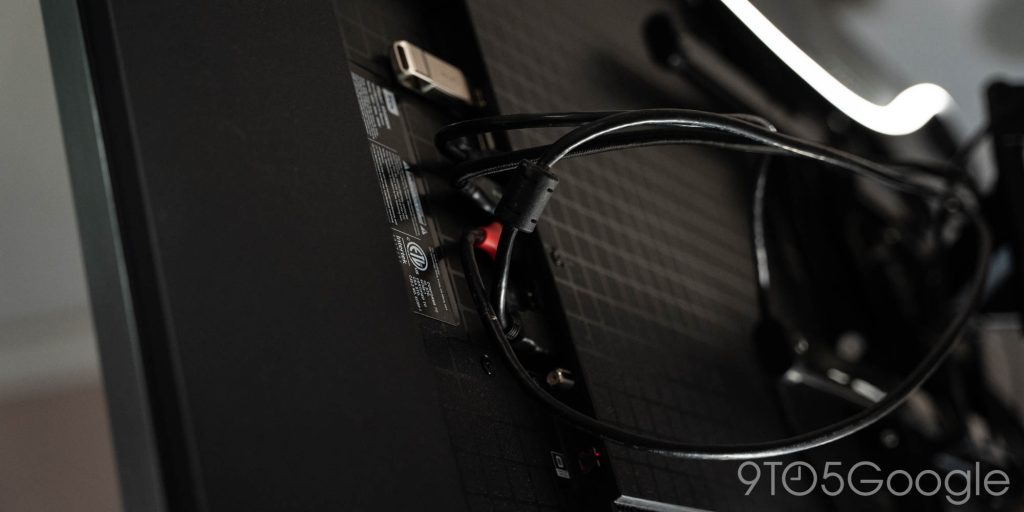
For ports and plugs, you’ve got four HDMI inputs – one with Arc, and — with full HDMI 2.1 bandwidth – as well as Ethernet, optical audio, a pair of USB ports, and a 3.5mm aux port. I do wish there was some USB-C here for easily plugging in a laptop or tablet for screen mirroring, but hopefully that’ll become more standard in time.
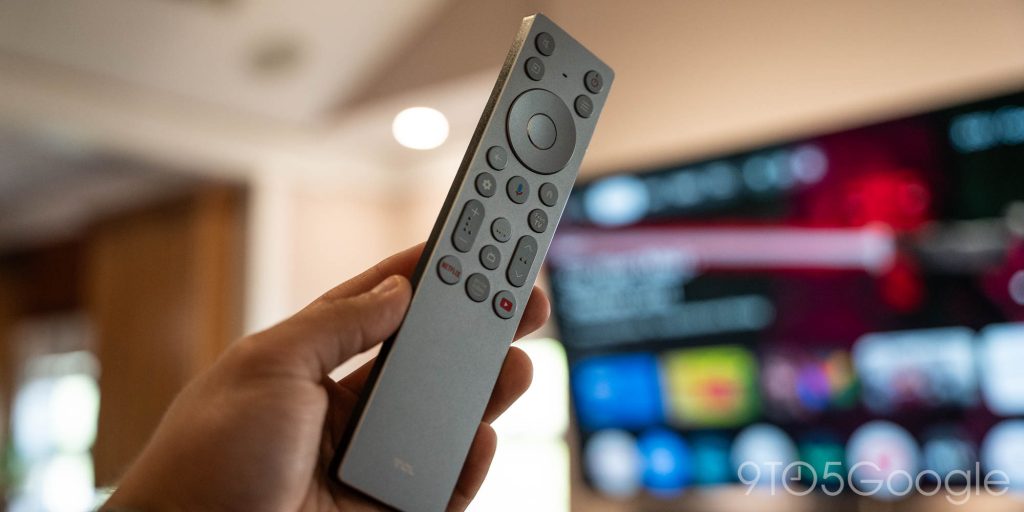
The remote is pretty standard, too, with a partially-metal finish that feels premium, and a layout that’s intuitive. You’d think every TV would get the latter correct at this point, but you’d be surprised how commonly a button will be in a place that you just can’t get your head around, so I appreciate that TCL’s layout is easy to just pick up and use without a second thought.
And then there’s Google TV.
As you’d hope from a flagship-tier TV, the onboard Google TV experience is fast and smooth, and roughly the same as you’d get from a Google TV Streamer. TCL preloads a few apps that are mostly ignorable (though all work well for their respective jobs), and also has its own Settings menu. TCL gets my kudos for the Settings overlay, which is speedy and well organized. I’ve never spent more than a second or two looking for an option to change, and it hands off to Google TV’s own Settings when appropriate.
TCL QM9K was also, notably, the first Google TV product to get Gemini when it launched last year. That’s since expanded to the Google TV Streamer, but it was never a “reason” to buy this TV in the first place – Gemini is replacing Assistant everywhere, and alll Google TV devices will make the switch eventually.
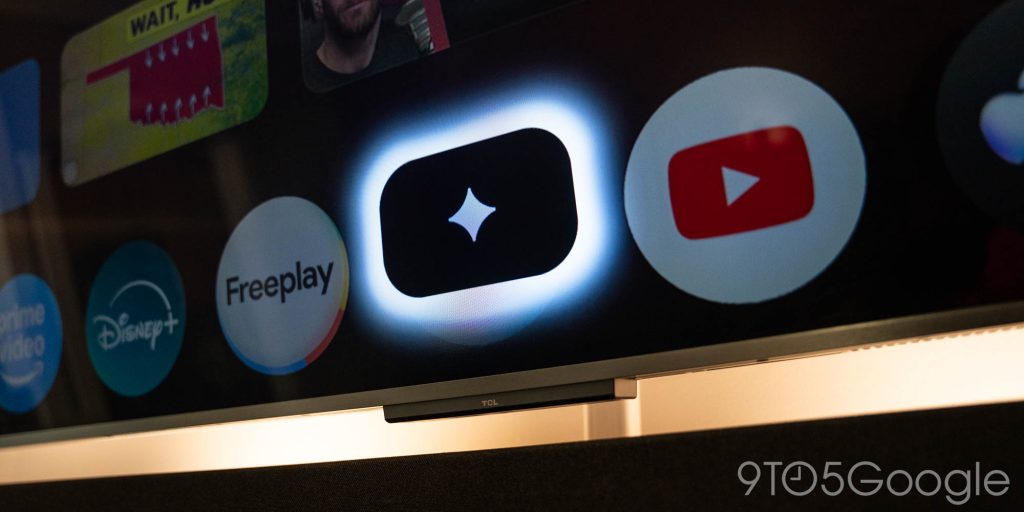
But the big story here is presence sensing, a Google TV feature that’s exclusive to the TCL QM9K series, and one that I was pretty curious about.
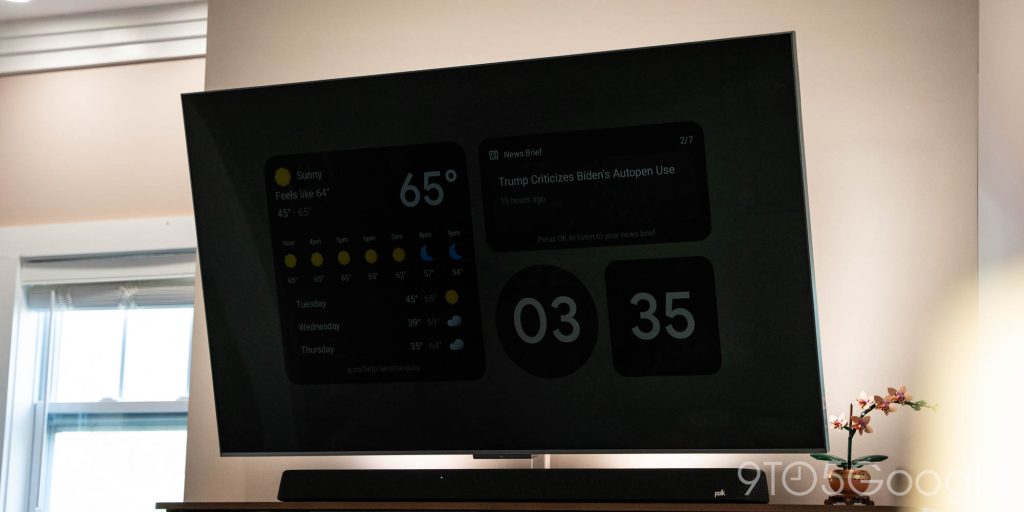
On the front of the TCL QM9K is a radar-like presence sensor that can detect a human in the room with it. The idea is to have a TV that you can interact with ambiently. Walk into the room and, with no buttons pressed, the TV activates to show the typical Google TV screensaver with your photos. Walk closer – say, to the couch – and the screen lights up shows a page with some potentially useful info such as the time, weather, and news. If no one is in the room, the whole thing shuts off completely. And you can turn this all off at night, too.
It’s a cool idea, but one that I’m still a little unconvinced by a few months into using it.
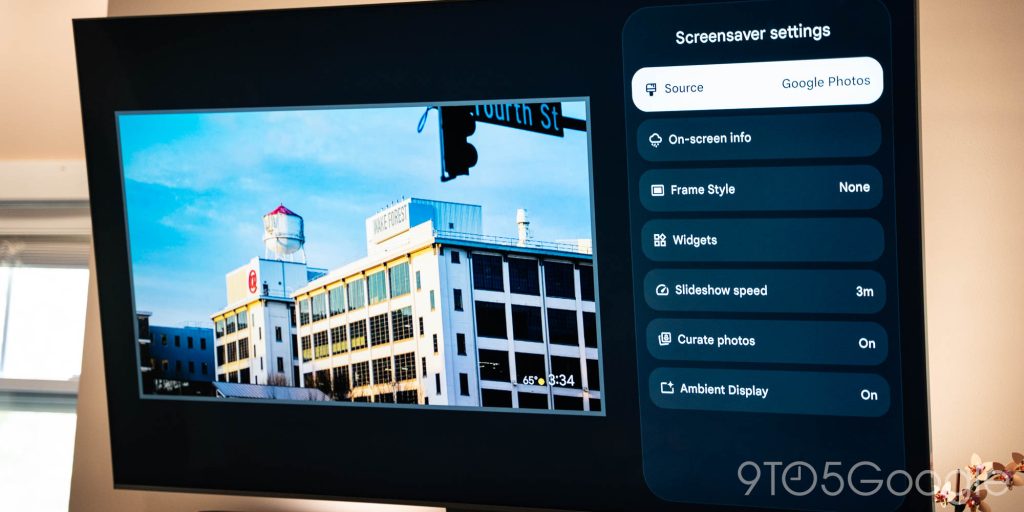
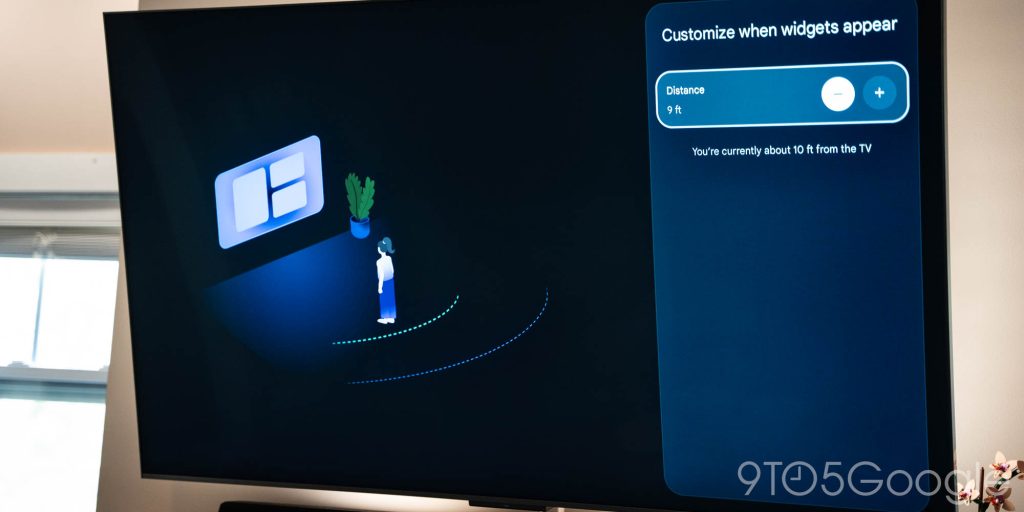
The good I’ve found is in automating on/off. Having the TV automatically turn on and turn off based on who’s in the room, no remote needed, is really nice. What really makes this useful, though, is that it’s not an “all or nothing” setup. Because this works like radar, you can set the exact distance at which the TV reacts. I have it set to turn on to the screensaver if someone is in the room, but it only enables widgets if they walk closer – specifically within 7ft, which is the distance in which you’re actually in the living room rather than just passing by.
But this has really only been a novelty, rather than all that useful.
The page of widgets can’t be adjusted – it only ever shows those three widgets, and frankly I’m not sure I always want news headlines on display, especially when I can’t control the topic. You also can’t do anything beyond activating your screensaver and this widget page. I’d love if the TV activated fully when I walk up to the couch, ready to be used by the time I sit down, but I still need to grab the remote to do that. I was pleased to find out, though, that this experience isn’t broken by using things other than the built-in Google TV software. Running an HDMI device like a Google TV Streamer or a console doesn’t have any effect on the presence-sensing features.
The idea of using presence sensing in your TV seems like it has a lot of potential but, after using it for a few months, I don’t think we’ve settled on the right idea just yet. Certainly not enough to hinge a buying decision on.
TCL hasn’t announced any other new TVs with presence-sensing hardware yet, and I suspect there’s a good chance this won’t return for a while. It just lacks the utility, at least for now.
The TCL QM9K series is available starting at $1,999, but is regularly on sale – currently $1,599 for the 65-inch model at Best Buy.
What do you think of presence sensing on a TV?
More on Google TV:
- Gemini for Google TV rolling out more prominent tab, richer visual responses, & sports briefs
- Instagram app launches on Google TV with Reels on the big screen [Gallery]
- Xbox Game Pass is finally coming to Google TV, at least for TCL
Follow Ben: Twitter/X, Threads, Bluesky, and Instagram


FTC: We use income earning auto affiliate links. More.



Comments