
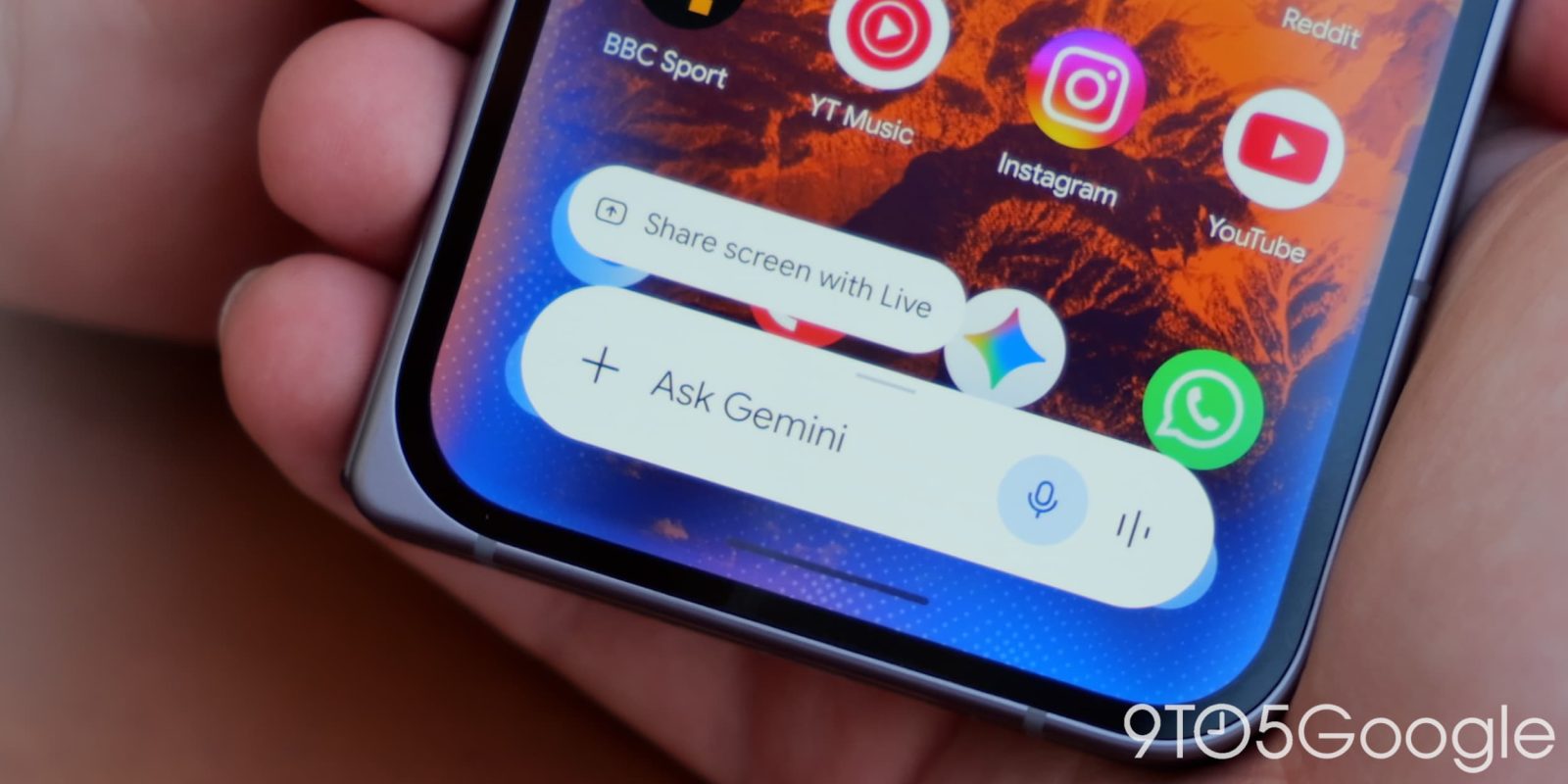
As a part of a massive slate of new AI announcements, Google this week also announced new compute-based usage limits for Gemini – existing users don’t seem too happy about it.
Limits haven’t really been much of a thought for Gemini users to date, but that’s changing following I/O 2026. Google has updated usage limits that take into account the length of chats, features used, and the overall complexity of a prompt. In other words, the more power that goes into your prompt, the more it counts towards your usage limits.
There’s an overall weekly limit, as well as usage limits that reset every five hours.
The change, Google says, is a “better way to allocate limits, because a simple text prompt uses far less compute than a complex video or coding prompt.”
There’s still a powerful, arguably generous free tier, but paid tiers are seeing the most shift. The $7.99/month AI Plus plan doubles your usage limits over the free plan, while the $19.99/month AI Pro plan doubles that again, 4x the limits of the free plan. The higher AI Ultra plans then 5x and 20x the limits of the Pro plan for $100 and $200, respectively, per month. Previously, Google didn’t directly advertise actual figures for the difference in usage limits on its AI plans, instead just using words like “more” and “higher.”
Google sent out an email to remind users of the change, which took effect on May 20. The email reads in part:
Usage limits in the Gemini app: For the Gemini app, we’re introducing compute-based usage limits that factor in the complexity of your prompt, the features you use, and the length of your chat. Your limit refreshes every 5 hours until you reach your weekly limit. As an AI Pro subscriber, you’ll enjoy a 4x higher usage limit than non-subscribers.
Early reactions to these limits are mostly opposed to the change.
Some users take issue with the wording Google has settled on here, specifically in that the section quoted above compares Pro to the free plan, rather than what the Pro plan previously offered, which did have a higher limit. Others are frustrated in the value, with AI Pro technically buying less usage per dollar compared to Plus – though the various other perks that come with AI Pro should absolutely be taken into account there.
For some, the fact that these usage limits are just stricter is the problem, despite that being an overall trend in the industry. Google’s support page shows the pretty drastic different in limits prior to the change versus what we see today.
As AI services see broader rollouts, the resources powering them are increasingly under strain, something not helped by the supply shortages around hardware used in AI (which, of course, were caused by AI in the first place). With that in mind, it’s not really a surprise that Google felt the need to impose these new limits, but it’s a big shift for those who were using the service before.
You can check Gemini’s usage limits at gemini.google.com/usage.
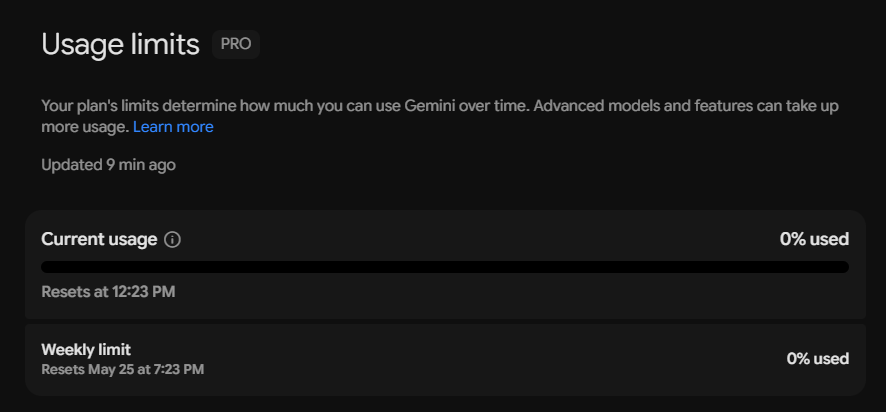
Google seems to have partially acknowledged the tighter restrictions and has raised rate limits in Antigravity by 3x permanently.
Top comment by Michael Ball
It feels like this wouldn't be such a problem if Gemini wasn't being shoved into every single app at Google's disposal. I don't think it's any coincidence these limits in the Gemini app are kicking in now when Google is literally rebuilding Search all around Gemini. The hit on its servers must be astronomical. And as far as I'm aware, AI mode doesn't have these limits that the Gemini app itself has.
This also comes as Gemini 3.5 Flash seems to be much harder on usage limits. Early data shows that Gemini 3.5 Flash is significantly more resource-intensive compared to the previous Flash model, and users point out that even a single prompt can take up a few percentage points of their 5-hour limit blocks.
What do you think of the change?
More on Gemini:
- Gemini Omni, the ‘create anything’ model, starts today with lifelike video
- Google is adding AI detection for photos, videos, and audio to Search and Chrome
- Gemini app rolling out ‘Neural Expressive’ redesign, 3.5 Flash, 24/7 Spark agent, & Daily Brief
Follow Ben: Twitter/X, Threads, Bluesky, and Instagram
Updated to include a support page on limits, clarify how Google previously advertised AI plan upgrades.


FTC: We use income earning auto affiliate links. More.


Comments