
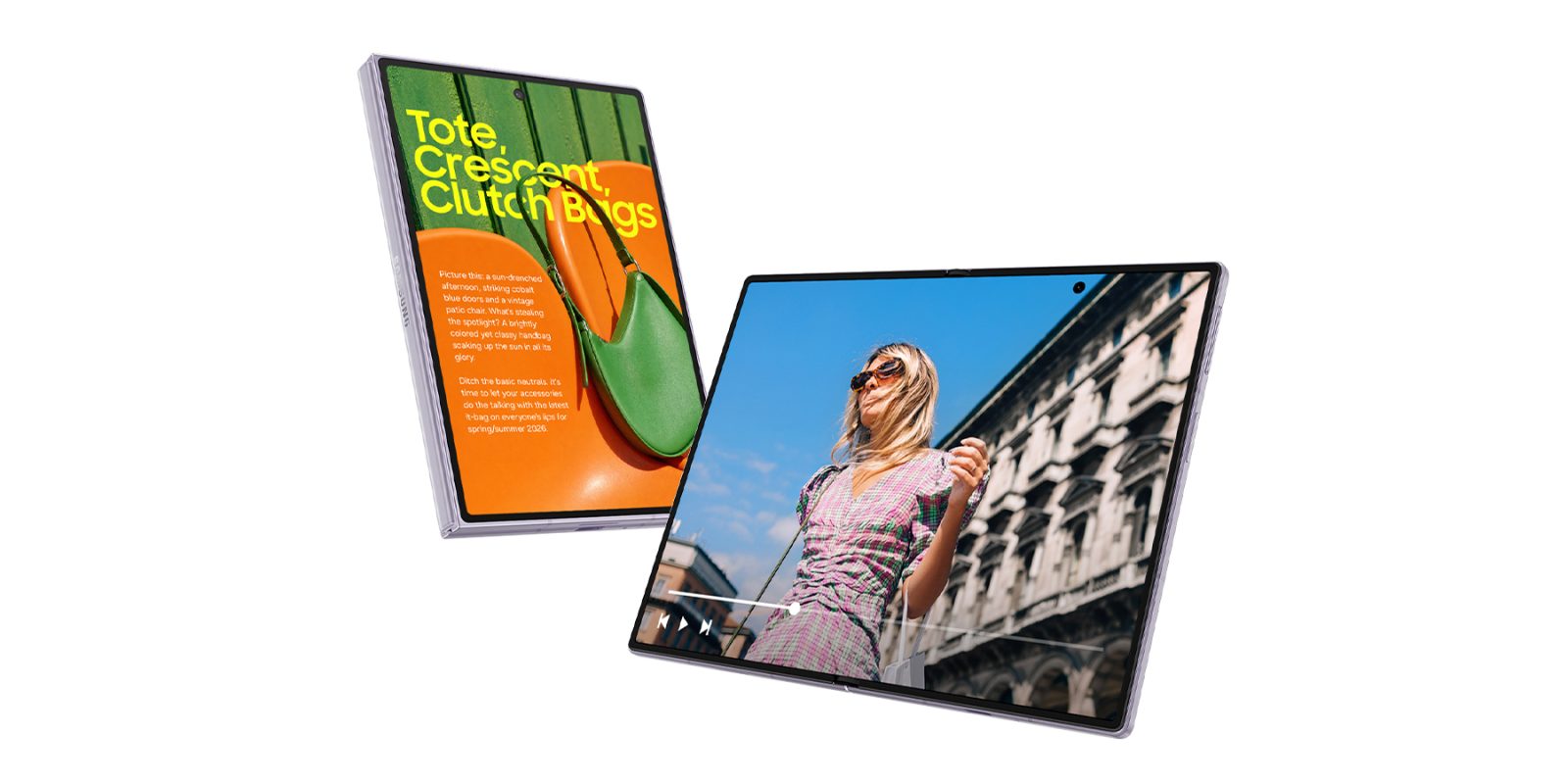
As Samsung’s pre-order perks for the Galaxy Z Fold 8 come to an end, the company continues to advertise its new form factor as a perfect fit for “full-screen” video, which is a pretty big departure from the reality of using this new foldable.
In a pair of new posts on its newsroom, as well as a boatload of marketing over the past two weeks, Samsung has been positioning the Galaxy Z Fold 8’s wider new form factor as a great content device. Specifically, Samsung calls it the “perfect device for your favorite content.”
Throughout the leak cycle, that’s more or less what we expected. Whereas existing foldables have square displays that aren’t much better than a normal slab smartphone for video content, the Fold 8’s wider display would be much better for video and other media. And, technically, it is. While we found that the actual space used by videos on the Fold 8 is roughly the same as the Fold 7 and Fold 8 Ultra, there is less wasted space and the form factor as a whole is more compact than those devices.
But Samsung is pretty heavily implying that this is a “full-screen” experience and, let’s be clear – it’s not.
As seen in the image above and through many other Samsung promotions, the video is shown to be completely full-screen, hitting all four sides of the display. Samsung says:
Galaxy Z Fold8’s display is designed to optimize the content you consume, shifting and expanding with your curiosity. The 10:16 cover screen is the ideal shape for messaging, browsing and short-form video to fill the screen, and the immersive 4:3 main screen is great for unfolding to enjoy full-screen movies and e-books1.
Unfortunately, that’s just not the reality of this product. The 4:3 aspect ratio of the inner display leaves letterboxing around virtually all video content, whether that’s a movie or a YouTube video, as you can see below and as we discussed on launch day.
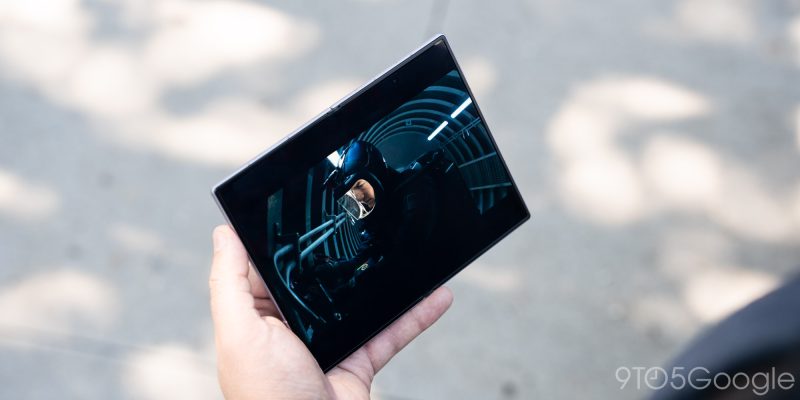
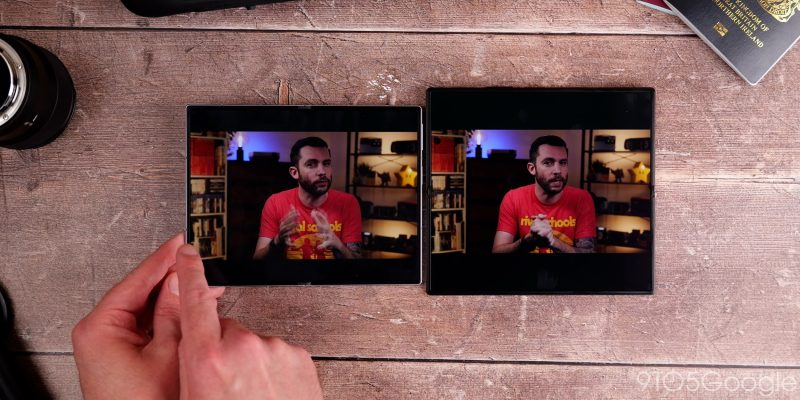
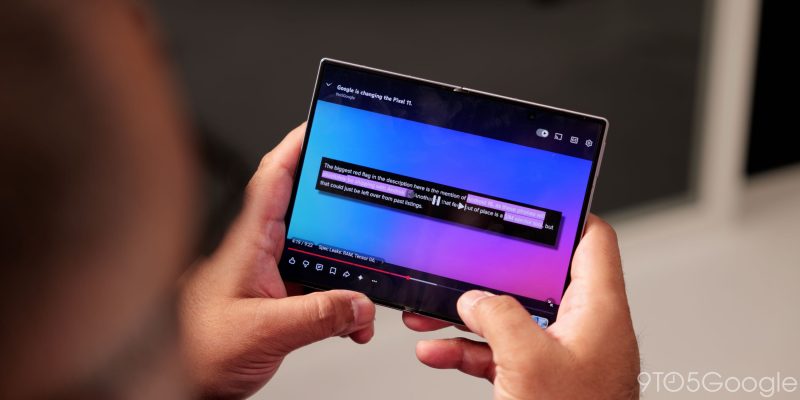
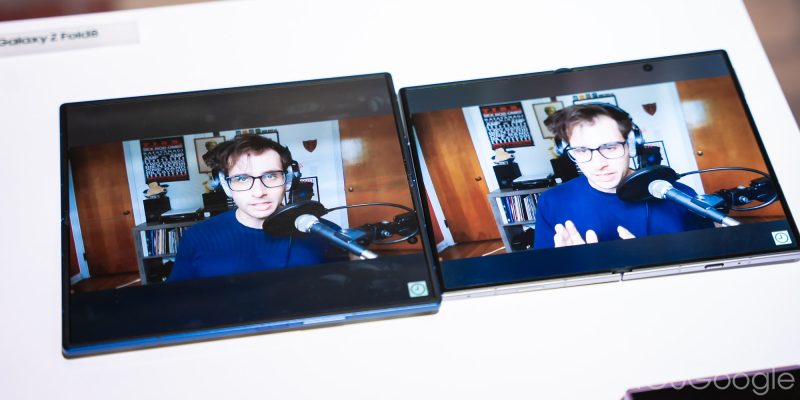
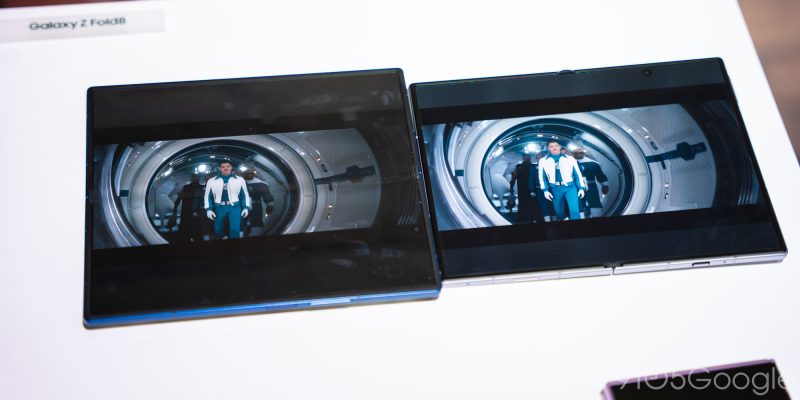
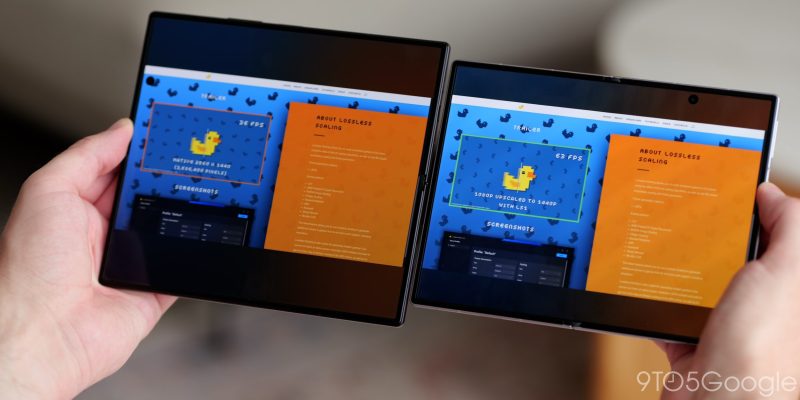
While there is 4:3 content out there, this is basically the whole The Odyssey debacle, just in reverse. Samsung’s new foldable, Apple’s iPad, and more all provide the 4:3 canvas, but there’s just not that much content out there ready to take full advantage.
The same goes for the cover screen, with the 10:16 aspect ratio leaving short-form videos letterboxed along the sides, though it’s certainly a lot closer to content aspect ratios that you might actually come across online.
Funnily enough, Samsung’s other post about how “perfect” these screens are for content mixes up the aspect ratios, calling the inner display 16:10 and the outer 4:3.
A device’s display ratio helps determine how much of the screen is used when viewing photos, videos, games and other content. Display ratios play an important role in how efficiently content uses the available screen space. Galaxy Z Fold8’s display ratios were chosen to reflect the way many people prefer to consume content today. The main screen features a 10:16 ratio — ideal for horizontal videos — while the cover screen features a 4:3 ratio — designed for vertical viewing. Both optimize the viewing experience for the content people naturally watch on each screen.
Even if you correct that error, though, Samsung’s marketing pitch here is still not fully reflective of reality.
Don’t get me wrong, this device is a lot closer than past generations, particularly in regards to the inner display, but all of the “full-screen” talk is stretching the truth quite a bit. As is referring to the outer display as “designed for vertical viewing.” We pointed out in our review that this is a definitively worse experience.
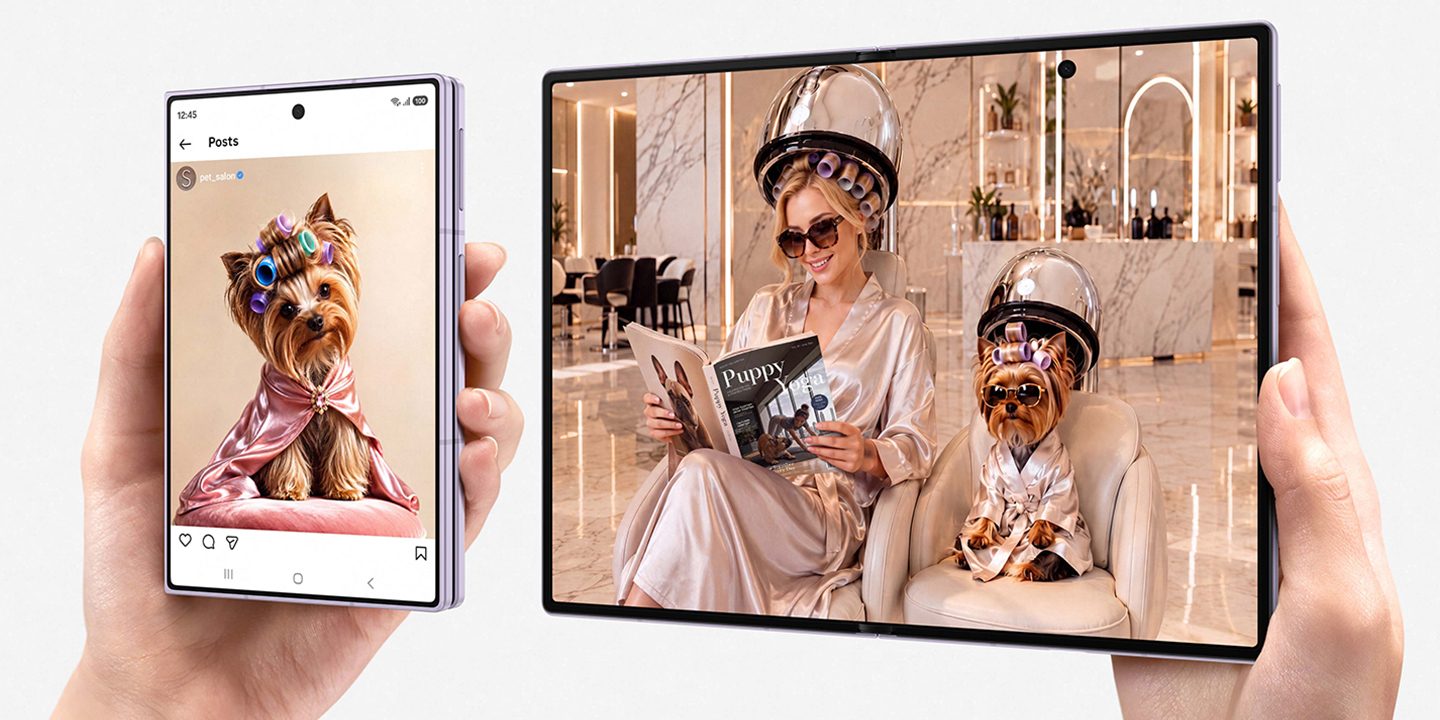
None of this is to say you shouldn’t get a Fold 8 or that it’s somehow bad for media consumption. Again, it is an improvement over past foldables, it’s just not as big of an improvement as Samsung wants you to think. With pre-orders for the Galaxy Z Fold 8 coming to an end later this week, don’t miss your chance if you’re intrigued about the device!
More on Galaxy Z Fold 8:
- Samsung says Galaxy Z Fold 8’s new shape exists because ‘one size does not fit all’
- Galaxy Z Fold 8 is a smash hit
- Review: The Galaxy Z Fold 8’s new shape isn’t for you – it’s for everyone
Follow Ben: Twitter/X, Threads, Bluesky, and Instagram


FTC: We use income earning auto affiliate links. More.


Comments