
Despite having effectively zero market share right now, there is an opportunity for Googlebook to do something that basically nobody else could do, but can they do it?
I’ll state right up top that I’m already cautiously optimistic. We need a competitor player to Mac and, in particular, Windows. Microsoft, as of late, has been nothing but combative with the people who use the firm’s operating system every single day. A new player is needed. I’m still not fully convinced yet by Googlebooks, but there is an opportunity, a big opportunity that hinges on quite a few things falling into place.
Considering how many new products are released every year, it’s quite surprising how few operating systems are unveiled. I suppose there is a caveat that Android has existed for a long time, but there have been no true attempts to make it work as a “proper desktop” experience, save Samsung’s DeX system, which was an internal attempt to make it work with Galaxy phones and tablets.
For more video content, subscribe to 9to5Google on YouTube.
DeX is a fine take on things, but it is limited by virtue of being an experience trying to emulate a desktop experience. Googlebook OS is Android reimagined for the desktop era.
I’m still not sure if this is too late or if there is enough interest. Google’s move comes at a very interesting time. Maybe its impending launch was the reason that Chrome OS has languished in recent years, having had lots of early promise and a surging user base, particularly in the education sector.
I have had the benefit of trying out Googlebooks, but in the lead-up to launch, I’ve been thinking more broadly about why now, and whether there is any real, tangible reason that Google would fully adopt Android across phones, tablets, and, now, desktops/laptops.
Bear with me, though, as a lot of assumptions have to be made for my points to fully hit home. I know that isn’t ideal, but just indulge me in this thought exercise at the very least.
The high-end might not be the ‘tip of the spear’
We’ve just seen a slew of expensive hardware unveiled under the Googlebook branding. These are the “optimum” hardware experiences, and I do think many are overpriced. That’s not where I see the benefits.
Compared to previous Chrome OS versions, Android devices are better optimized for low-power, low-resource use. A bad Chromebook is almost always worse than a bad Android device, at least in my experience. It’s harder to hide bad performance on a laptop or desktop because you’re used to certain power thresholds. On a tablet or phone, that isn’t as pronounced because things are almost always more lightweight.
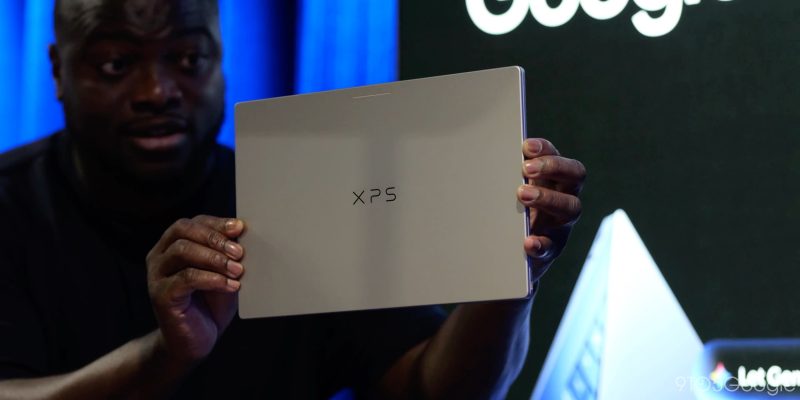
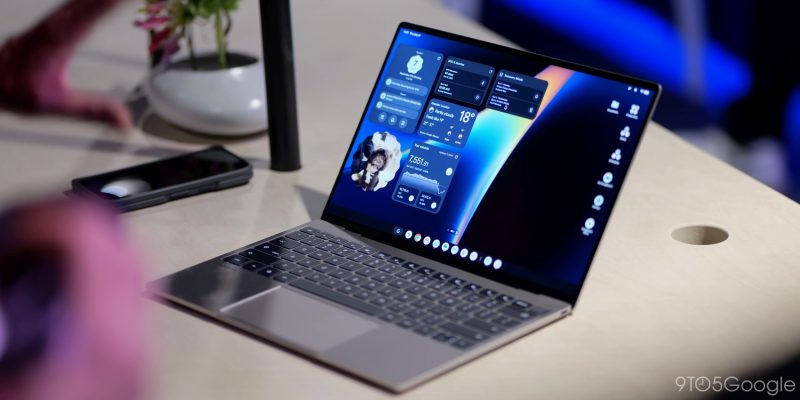
It helps that many Android SoCs are powerful enough now to rival mid-range desktop processors or at least those found in notebooks.
Android seems to scale much better now than a few years ago, but as Apple has shown recently, you can run desktop-level applications on mobile SoCs. I could easily see a laptop running absolutely fine with a Snapdragon 8 Gen 3 from a few years ago and doing so with very low power consumption.
Just a few years ago, when Google Stadia was still around, the idea of a “gaming Chromebook” felt silly and wasteful. Those machines relied entirely on the cloud, meaning you were paying a premium for a laptop that couldn’t actually play games without perfect Wi-Fi. However, if we get gaming Googlebooks these could be a very different prospect.
Hardware has evolved to the point where modern mobile processors easily outperform last-generation consoles like the PlayStation 4, bringing entry-level gaming power straight into a laptop chassis without needing an internet connection.
At the same time, the software side has improved drastically. Android gaming is no longer just for casual mobile apps; it now features massive, high-fidelity games that look and feel like console titles. Combined with the ability to emulate older PC and console games locally, a gaming Googlebook becomes a genuine, self-sufficient gaming machine you can actually take anywhere, and one that doesn’t require a wall outlet to play for hours at a time.
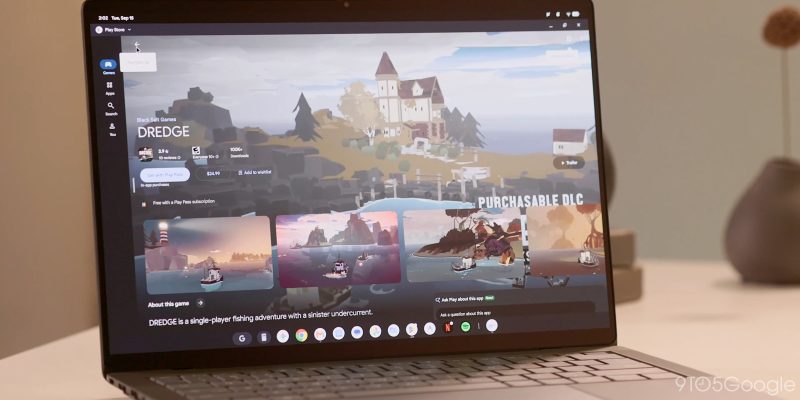
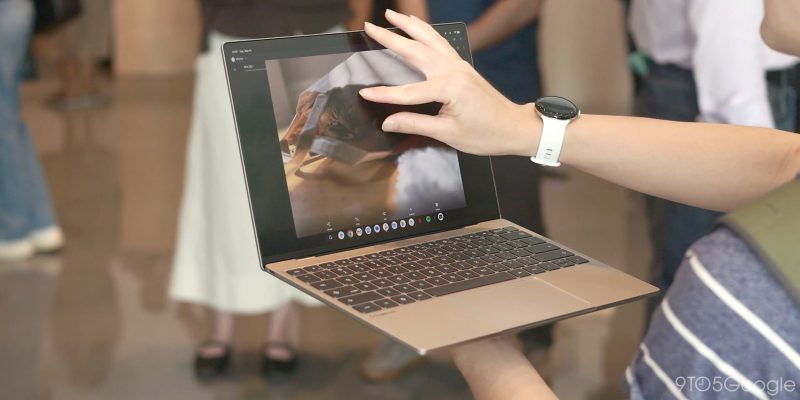
Unlike Steam Machines and the Steam Deck, Fortnite is there right from day one.
Something else to consider that I think has been glossed over by basically anyone, because we’re so accustomed to mouse and keyboard interactions with a laptop or desktop.
No other desktop-level operating systems have been developed from the ground up with touch interactions in mind. This is one of the other major USPs for Googlebooks; I’ve already said it multiple times in this rundown that Android only needs to close an application gap. That is exponentially easier than trying to shoehorn a legacy OS into a new form factor.
Apple has kept iOS, iPadOS, and MacOS all as separate OS builds. Google’s “everything is Android” approach could be a masterstroke. I’m resting heavy emphasis on “could” in that equation.
Why? Well, there is a generation of people out there who have grown up effectively “mobile first.” Kids who are now young adults, the “iPad kids” that are now getting to a stage where they are looking for a product that is familiar, comfortable, and does everything they need.
They’ve grown up already using tools like Capcut rather than Adobe. Playing mobile games or mobile ports of the biggest games, like Roblox. Traditional desktop paradigms have never catered to those young people. Googlebooks and the Android experience, rightly or wrongly, extend the familiar to a new form factor. It’s a play that I haven’t seen many discuss, but that could work if the price is right.
‘Desktop-level’ could bring even wider benefits
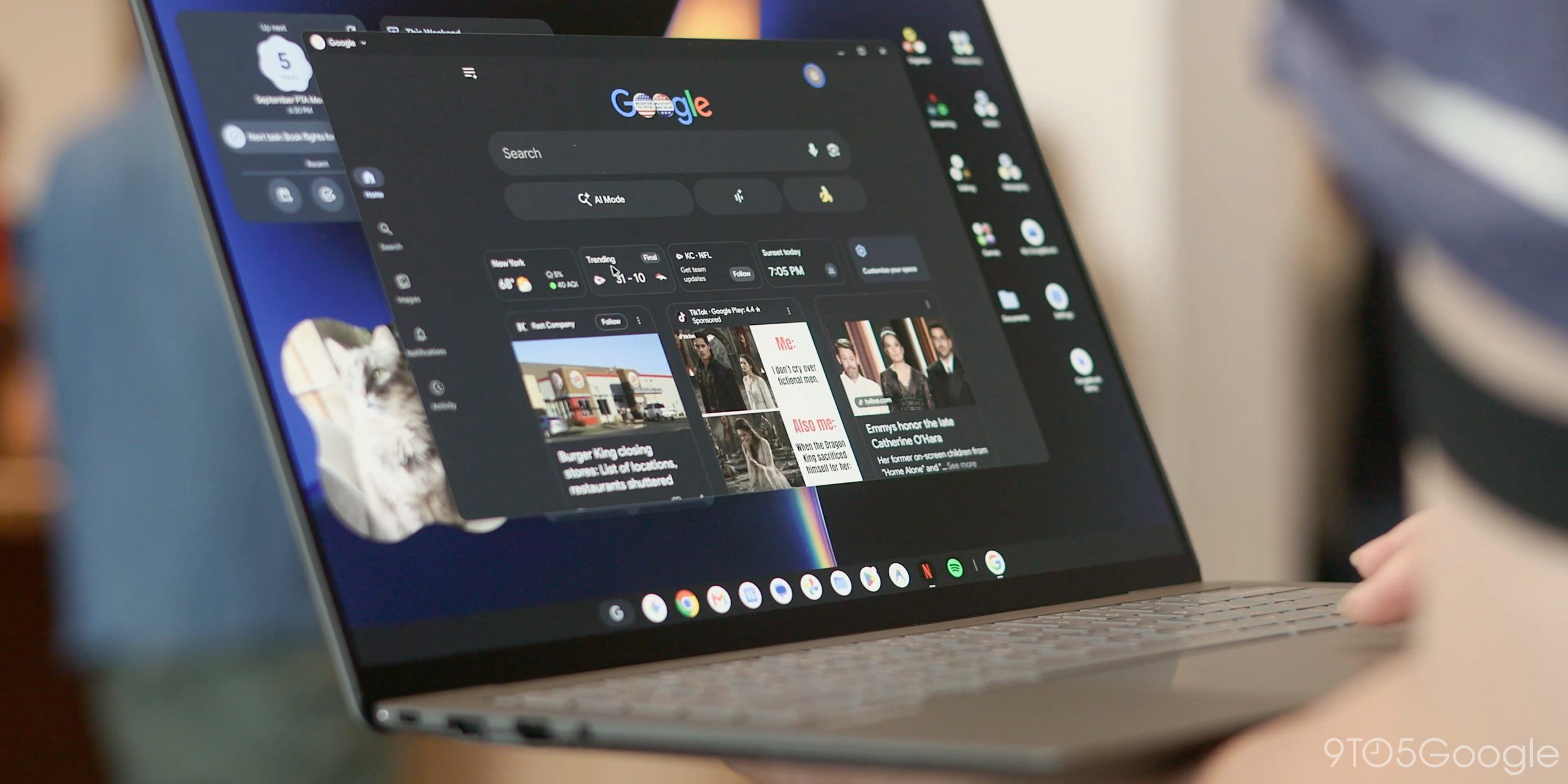
For the older folks, we have a bee in our bonnets about “desktop-level software”. It’s still essential that we get some things ported over sooner rather than later.
If, for instance, Blackmagic or Adobe port over their respective software packages, Davicini Resolve or Creative Cloud apps to Googlebook, that’s great.
There’s a hidden secondary benefit, though. The next wave of foldable phones with potential support for desktop apps or desktop app scaling now have access to professional-grade applications in a form factor that is multiple times more portable than a traditional laptop. This extends to tablets, too.
I’m quite bullish that Android tablets could be one of the biggest beneficiaries with the introduction of the Googlebook, that is, if the company is willing to allow more power tools to come to the other versions of Android that the Googlebook OS is based on.
You can rebuke much of what I have said for any number of reasons, but everyone can agree that so much hinges on which brands are willing to start building for Android. Closing this “app gap” is arguably the most important component of the Googlebook during its first year.
I’m cautiously optimistic about the Googlebook program. A fully flexible, malleable operating system that spans regular smartphones, foldables, tablets, laptops, and potentially desktops could do something no other OS has offered before. Scalable in ways that not even Apple has been able to do, but has half-stepped toward since making iPadOS a midway experience or bridge between iOS and Mac.
If Google invests in and enhances Android across the entire stack, every existing and future device will evolve at a rate that wasn’t possible before. Scalable for any screen size. Apps that can be desktop-level while still being mobile native.
There is a big “if” here, and that is the only reason I’m not fully invested yet. The current, glaring software gaps need to be plugged – and plugged fast.
There is a parallel that might prove to be a good omen. Linux has had a massive swell of users over the past year, driven by Valve and, in particular, Steam OS. The success of the Steam Deck has proven that an alternative to Windows can work for gamers.
I’m not sure if we’ll ever get a compatibility layer in Android for various Windows or Linux applications, but who knows. It is not out of the realm of possibility, and if it happens, it’s going to be a major turning point. Google just has to be sure that this is a long-term project, and improving on Chrome OS is a must.
Proton has done wonders for Valve over the past 3 or 4 years. This is a blueprint Google could follow. I do think getting native ports for a few of the biggest applications is all it will take to get more on board. A small swell could quite easily become a bigger wave of app conversion.
A few years ago, if you’d asked me if my gaming PC would ever run an OS other than Windows, I’d have said “never”. I sit here 18 months after ditching it in favor of Linux’s performance gains.
That experience has taught me to be less dismissive of Android on desktop than I was some months ago, and my time playing with the first run of Googlebooks has me excited for what might be coming next for Android.
Follow Damien: Threads, Bluesky, Instagram


FTC: We use income earning auto affiliate links. More.


Comments