
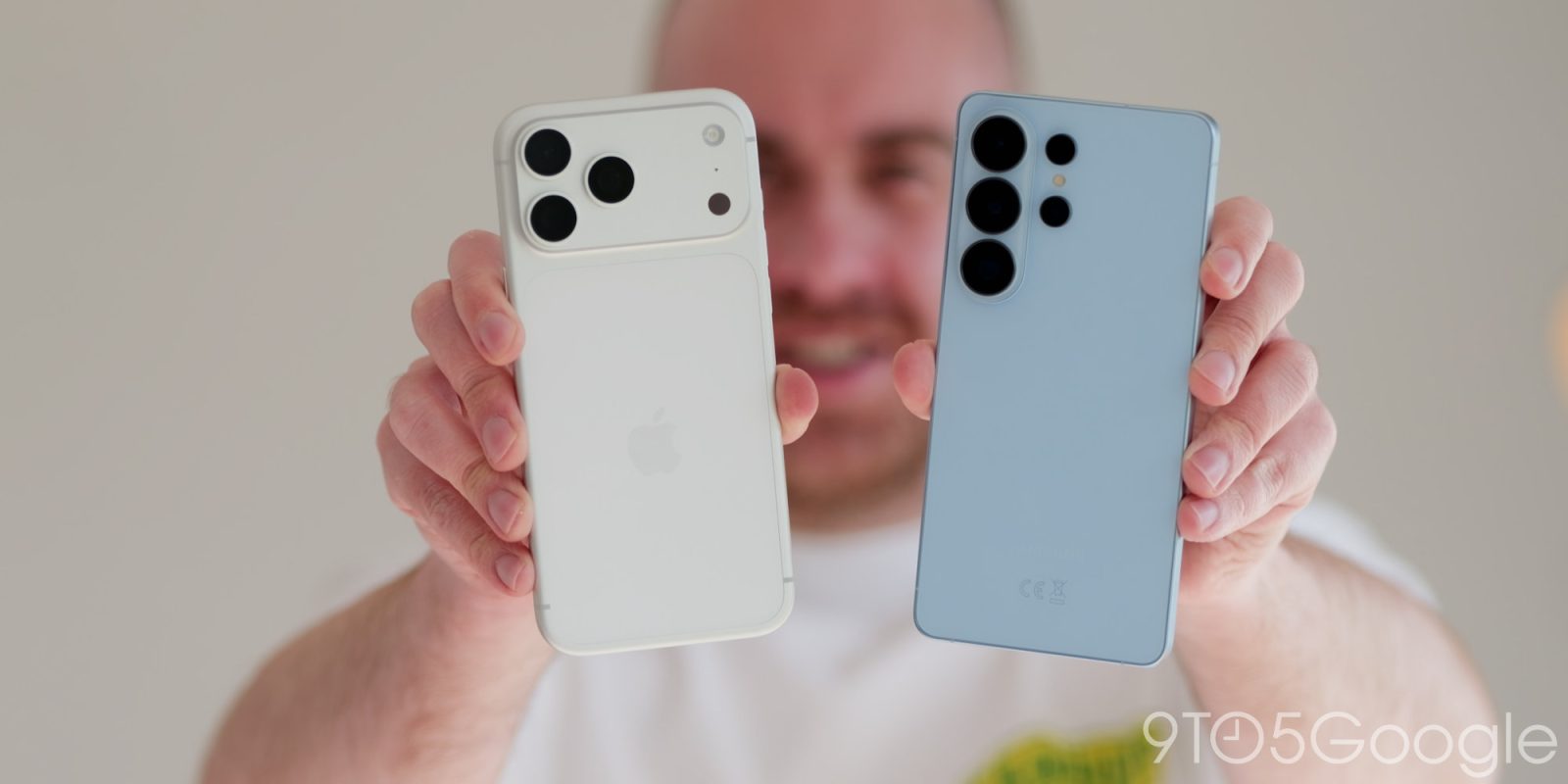
In a year where Apple has switched things up, and Samsung has barely moved an inch, just how does the iPhone 17 Pro Max stack up against the Galaxy S26 Ultra? Is there something Samsung can learn from Cupertino?
Before we really get into the weeds on this one, the landscape of smartphone development has been insane over the past few years, but it feels like we’ve reached a point where the pace of change has slowed to a crawl for some, while others are finally making leaps.
It’s easy to be a bit of a skeptic when it comes to “innovation” for the sake of it, but I think we have some solid reasons to look closely at these two titans. Over the next few years, things could get more “samey” before we see a big leap once again – if at all.
For more video content, subscribe to 9to5Google on YouTube.
Design and hardware
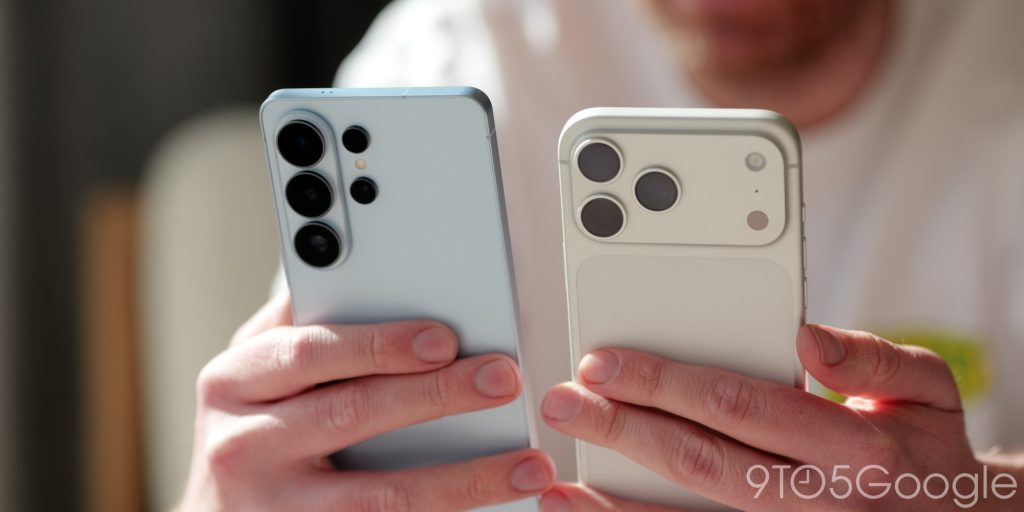
The honest truth is that the machining and build quality are excellent on the Galaxy S26 Ultra and iPhone 17 Pro Max. However, there is a fundamental difference in the philosophies today, which is a big shift compared to years prior.
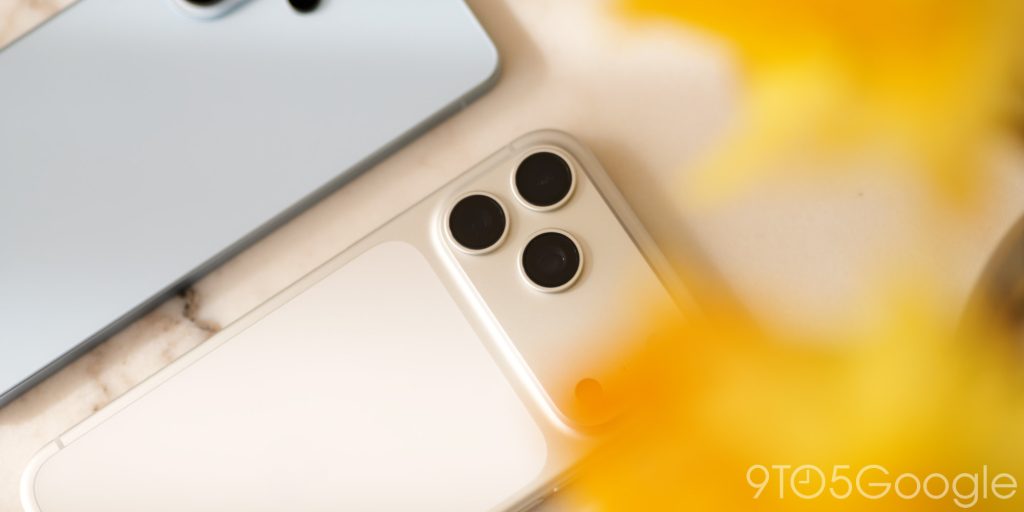
There are a few things that instantly stand out, and you don’t really need me to tell you what is going on here. Samsung stuck with last year’s looks, but with a few little touches and flourishes. Apple took a design that hasn’t been changed in almost 5 iterations and went for something completely new. The full metal chassis is very heavy, while the glass sandwich of the Samsung is thinner and lighter. The downside is that the S26 feels…unchanged. Not worse, just safe.
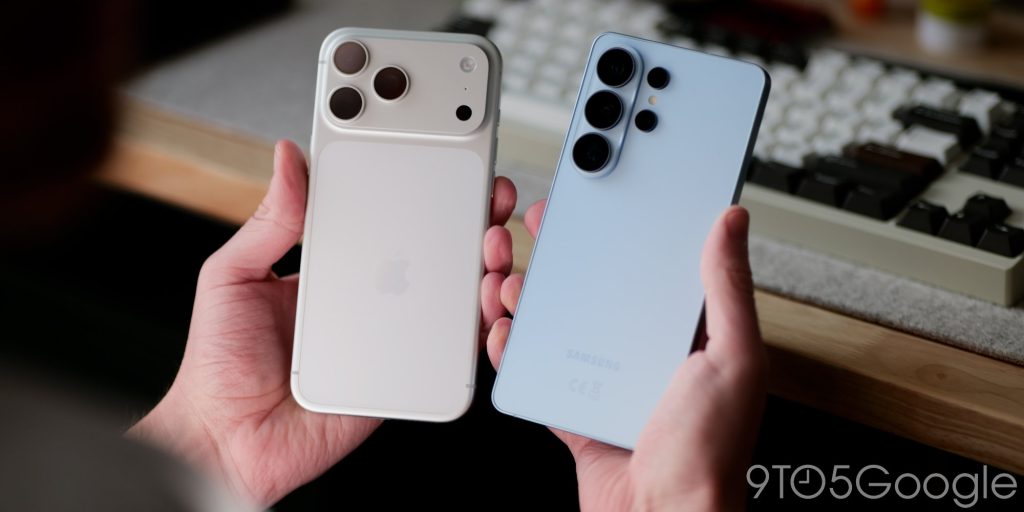
If you lined these two phones up on a table, nothing about them would feel out of place in 2026. As I noted; both are large, premium slabs of glass and metal, both are meticulously built, and both clearly sit at the very top of their respective platforms – not that Apple has any outside competition.
Sharp angles or soft corners. That is ultimately what it boils down to. How you feel about Samsung’s lack of change is ultimately up to you.
Samsung still leads in the display stakes, and not just on paper. The Galaxy S26 Ultra’s near edge-to-edge screen with a small punch-hole cutout simply feels more immersive than Apple’s Dynamic Island. Even though the Island is useful, it still interrupts content in a way Samsung’s design doesn’t.
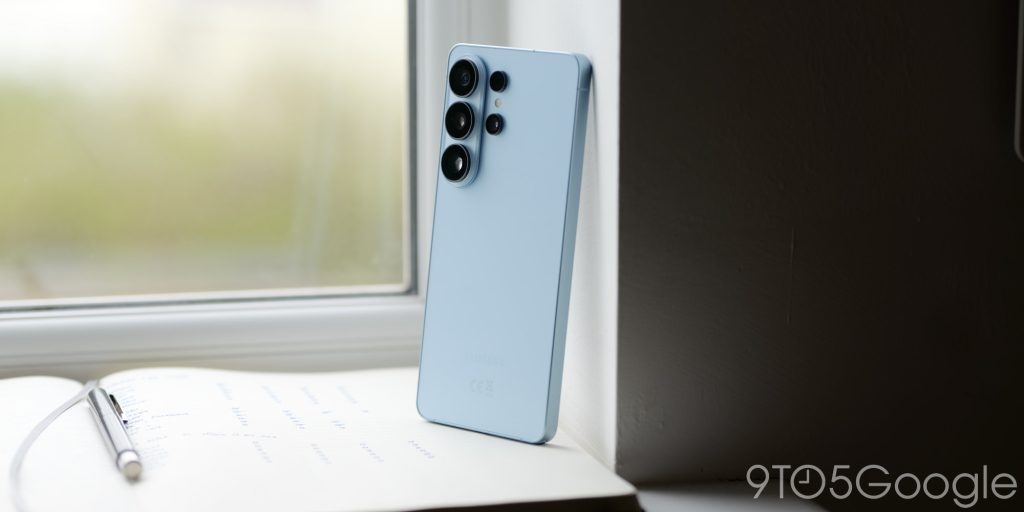
Then there’s the new “Privacy Display,” which is a genuinely unique feature that limits viewing angles for added security. It’s clever, and in certain situations (public transport, flights, cafés), it’s genuinely useful. But it does come with trade-offs, such as reduced brightness and reflectivity. Some might get eye strain, and the display quality technically worsens when you use it. It’s a trade-off function that adds value in specific circumstances.
There still isn’t any room for MagSafe on the Galaxy S26 Ultra, which isn’t a problem per se, but given Samsung sells cases with magnets, it feels like a silly omission.
Software and performance
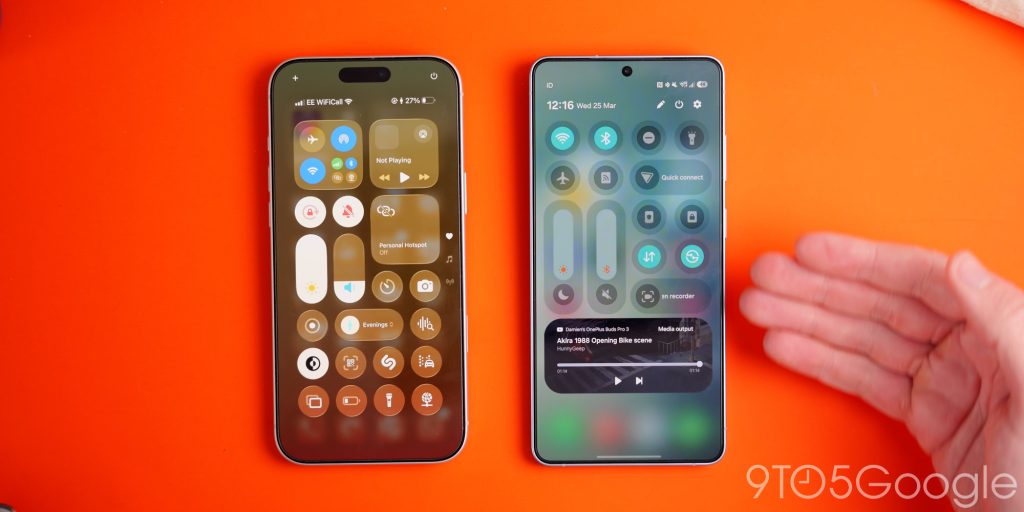
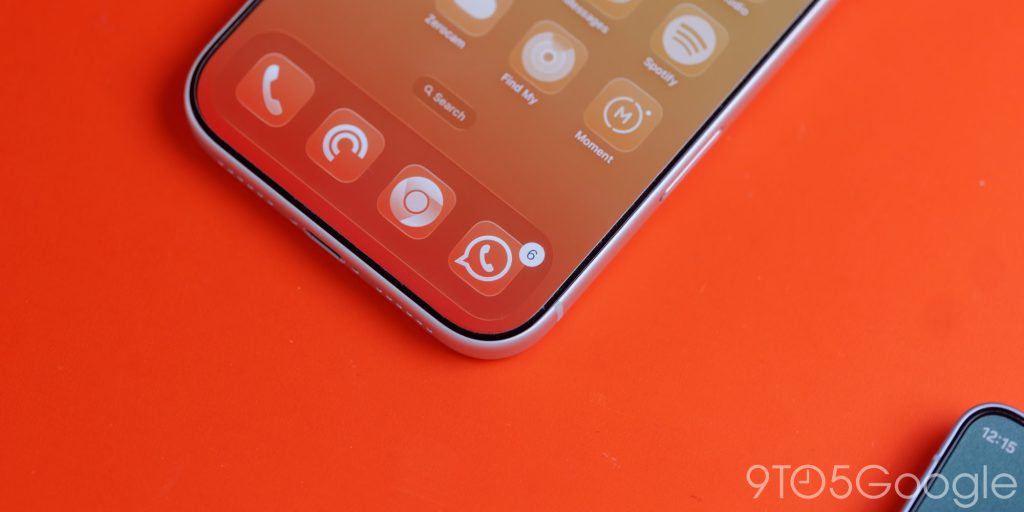
We’re not going to go into detail on the functional differences between iOS and Android, but there are some visual similarities that have crept over from Apple’s side of the fence to One UI in the past 5-6 months.
Honestly, the performance levels between these two phones within their respective software paradigms feel identical. There are some benefits to the Galaxy S26 Ultra; some things favor the iPhone 17 Pro Max. There is no real area of contention on either phone. That’s the stage we’re at in 2026.
What is more contentious is the visual design language used. I will always believe that Liquid Glass was a terrible design choice, but Samsung has decided that this is something to incorporate a little of into One UI 8.5.
Clear UI elements, more glassy touches, less frosted areas. Luckily, it’s not a complete overhaul, but there are some major similarities that fall into “homage” territory. True blue Android fans might dislike this lurch back into the old days of Samsung copycat territory, but it skirts a very fine line of “acceptable.”
The Galaxy AI suite, in tandem with some Gemini functions, puts the latest tech front-and-center on the S26 Ultra. It’s the tip of the spear when it comes to AI-powered mobile functions. Here are some useful powers at your fingertips that protect you like spam protection, live translation, and the Now Nudge feature, which automates things on your phone, provided you can deal with the Samsung Keyboard.
Apple’s AI, on the other hand, still feels like it’s in progress. It works, but it’s less flexible and less context-aware. Siri struggles with more complex or conversational tasks, which makes it feel dated in comparison.
Whether people use or care about AI on their phone beyond chatbots remains to be seen. The people behind the tech we use seem to think we will.
Battery and longevity
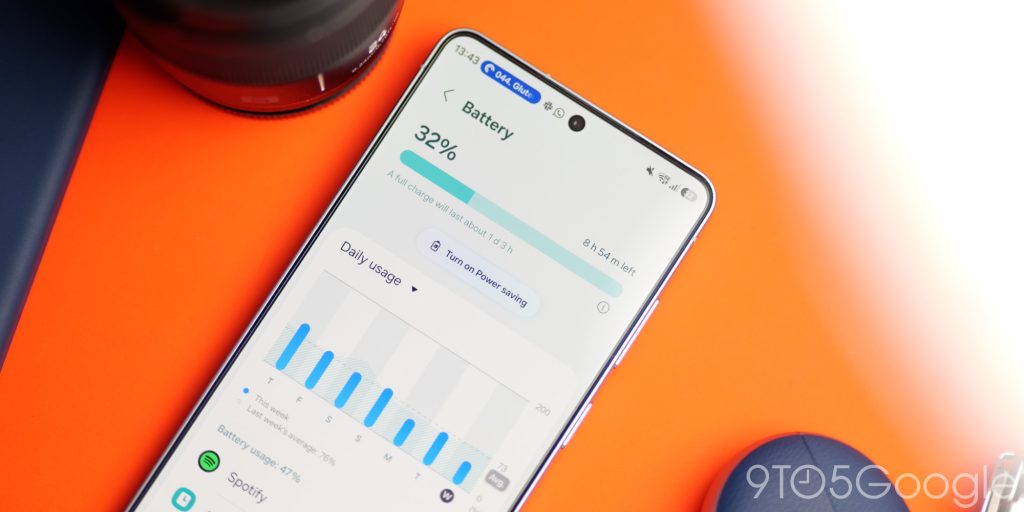
Battery life is one of the most practical aspects of any phone and one of the easiest to notice in daily use. The iPhone 17 Pro Max is simply put, more reliable in our testing. Under heavy usage, filming, navigation, social media, and multitasking, it tends to last longer. You can go through a full day without worrying too much about finding a charger.
Samsung’s Galaxy S26 Ultra doesn’t perform badly with lifespan, but it doesn’t match the iPhone either. In more demanding scenarios, it drains faster, and by late afternoon or evening, you may need to start managing usage if you’re a heavy phone abuser. That’s not necessarily ideal for a device at this level, but this is far from the worst. It’s good, just not excellent.
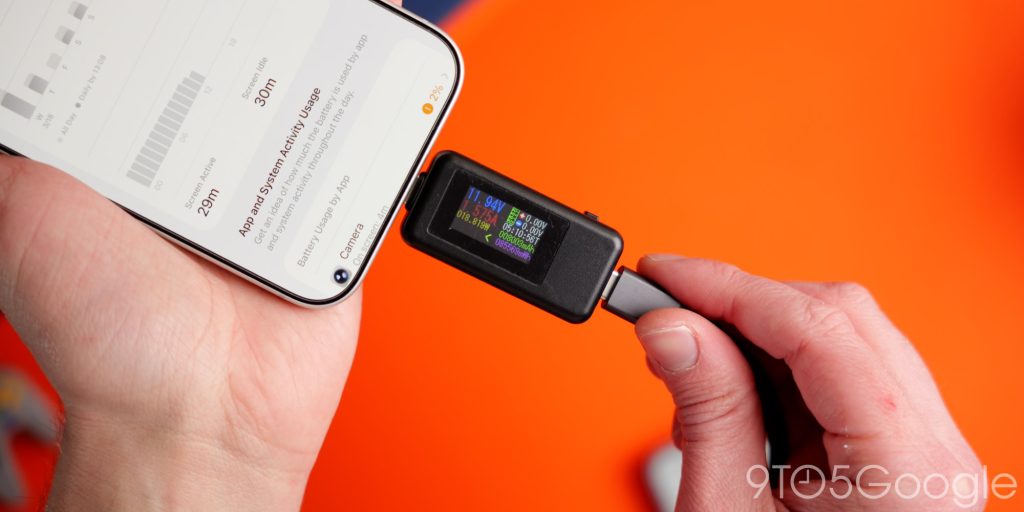
It feels in some ways like Samsung isn’t really trying to win the endurance war anymore; instead, it’s winning on recovery. The truth of the matter is that 60W charging is fast enough to fundamentally change how you use your phone on a daily basis. Instead of constantly worrying about whether your battery will last through a 16-hour day, you can just top up quickly and keep going. A quick 20–30 minute charge makes a massive difference, especially during those busy days when you’re hopping between meetings.
Apple’s slower charging is fine, but it’s much slower at a max of 40W. Although not “slow” in the traditional sense, it is not fast by modern metrics. That said, it can get you fully topped up within 45 minutes using a substantial power brick.
Camera
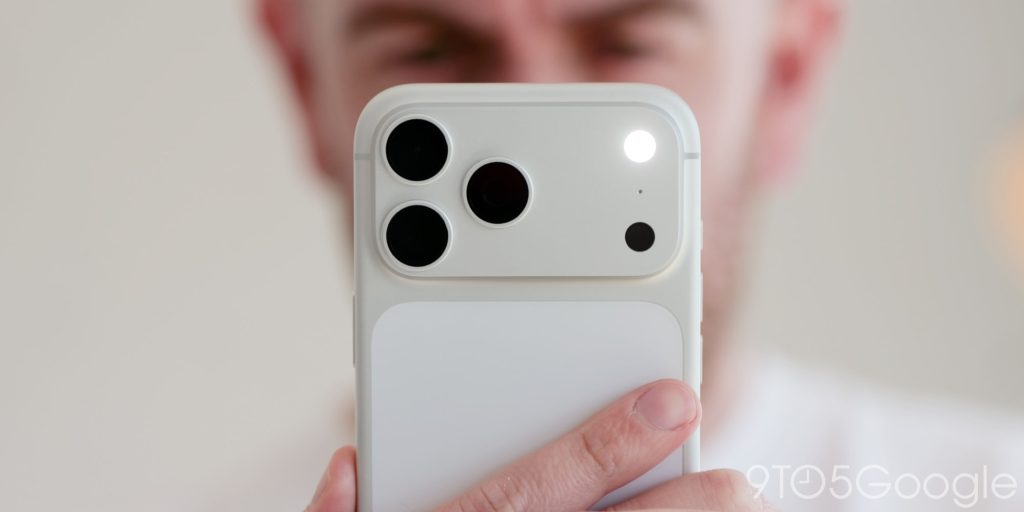
Without turning this into a direct camera comparison – because there are better objective examples of this available – the differences in the camera quality on the iPhone 17 Pro Max and Galaxy S26 Ultra boil down to tuning and visual hallmarks.
Apple prefers warmer tones and natural color profiles. Samsung phones now produce similarly natural images. I’d say they are slightly cooler with a tad extra sharpness, maybe some added detail here and there, but mostly this is a personal preference area. Which you like is ultimately up to you.
The iPhone 17 Pro Max carries over the “natural” look if you take photos at nighttime, too, while the Galaxy S26 Ultra uses long exposure and post-processing to remove noise and arguably take better images when lighting is troublesome.
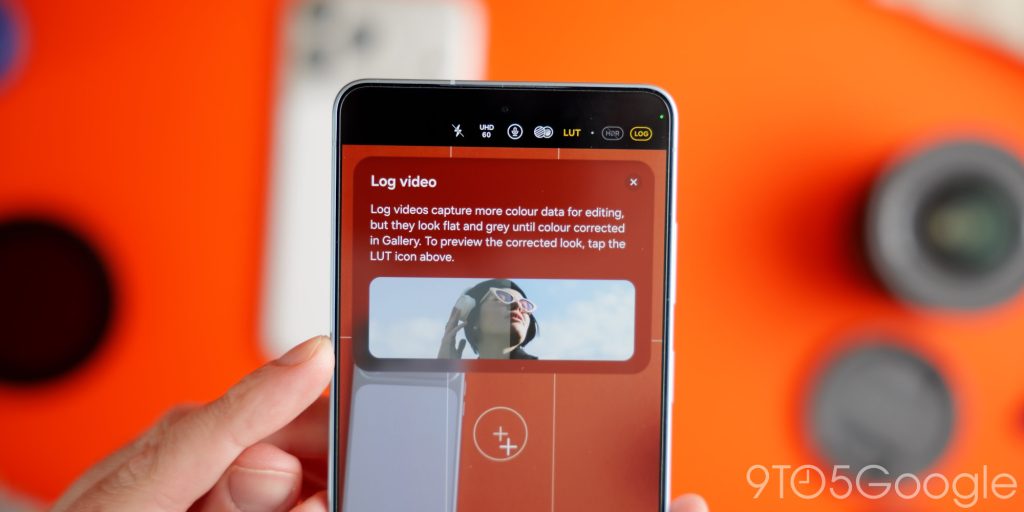
Comparing video capabilities is another toss-up. You get LOG video, LUT support, external SSD recording, basically everything you could need to use your phone as a B-cam in a professional shoot. Again, it’s a toss-up as to which video recording output you prefer. These are both very capable video systems with lots of room for growth.
Conclusion
About upgrading: 9to5Google often gives specific product recommendations. Sometimes, we may suggest not upgrading, due to various reasons including, but not limited to: increased device cost, negligible performance gains, or environmental impact. Whether to upgrade is always your call, but our aim is to help you make as informed a decision as possible.
Over the past three or so years, there was a little bit of a stalemate when it came to the best iPhone and the best Samsung. With the iPhone 17 Pro Max, that script has been thrown out of the window. Yes, there are lots of mostly software-related irksome issues with iOS, but Apple has made notable changes, and the company has tried to remix the previous recipe. The result is a phone that looks and feels very different from its predecessors.
Conversely, Samsung has kept to a tried-and-tested process and design, preferring to inch forward rather than rip up the existing playbook. It’s almost a dead cert that Samsung will continue to dominate the Android space on reputation alone, but the lack of innovation is starting to show. Whether you think Samsung has fumbled or if they’re just being “safe” is not only an interesting point of discussion, it’s somewhat obvious as of late.


FTC: We use income earning auto affiliate links. More.



Comments