
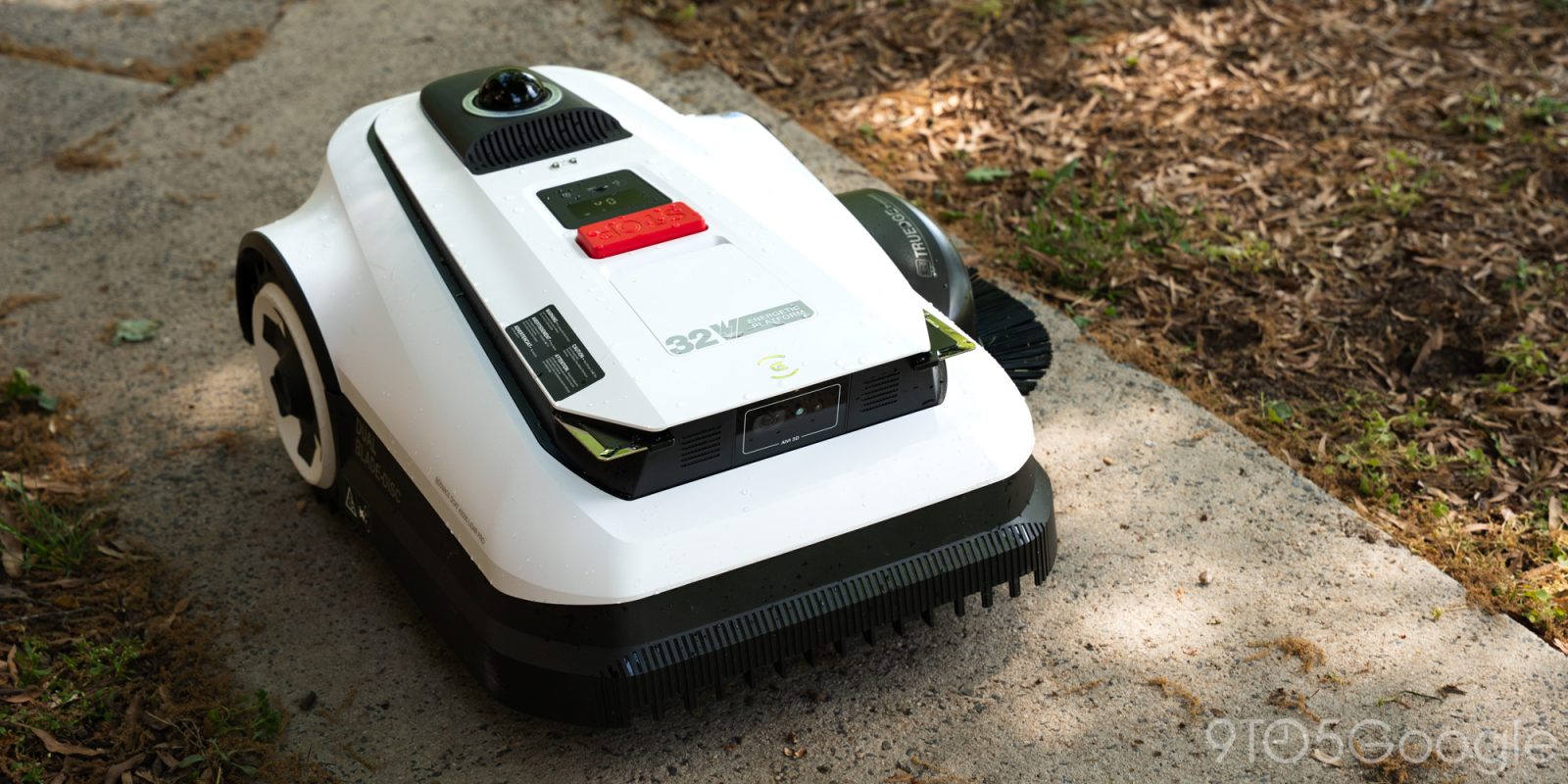
It only makes sense that if you’re going to develop a robot lawn mower, it should be able to trim, too. Ecovacs’ Goat A3000 Pro does just that, giving it an edge over others.
We’ve reviewed Ecovacs smart robots before, and we tend to like them very much. They operate well within the smart home and are perfectly fine outside of it. The Ecovacs Goat A3000 proved to be a good robot mower with a couple of setbacks, but the upgraded version from the company really seems to put those to bed.
Build – It trims now!
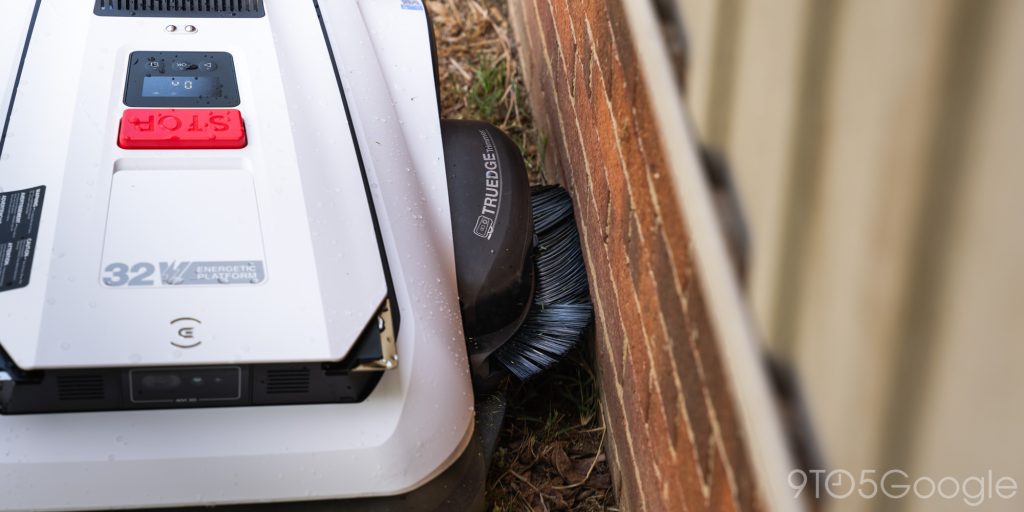
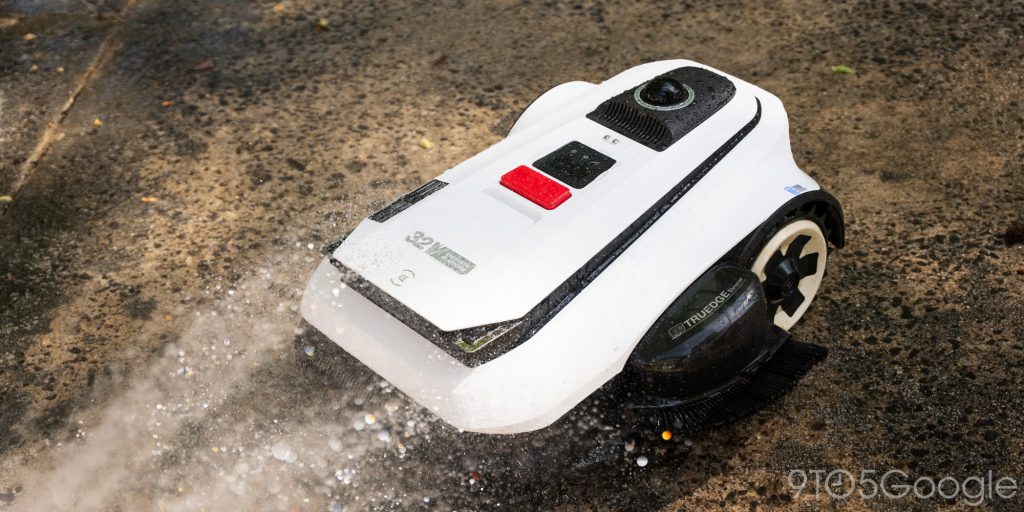
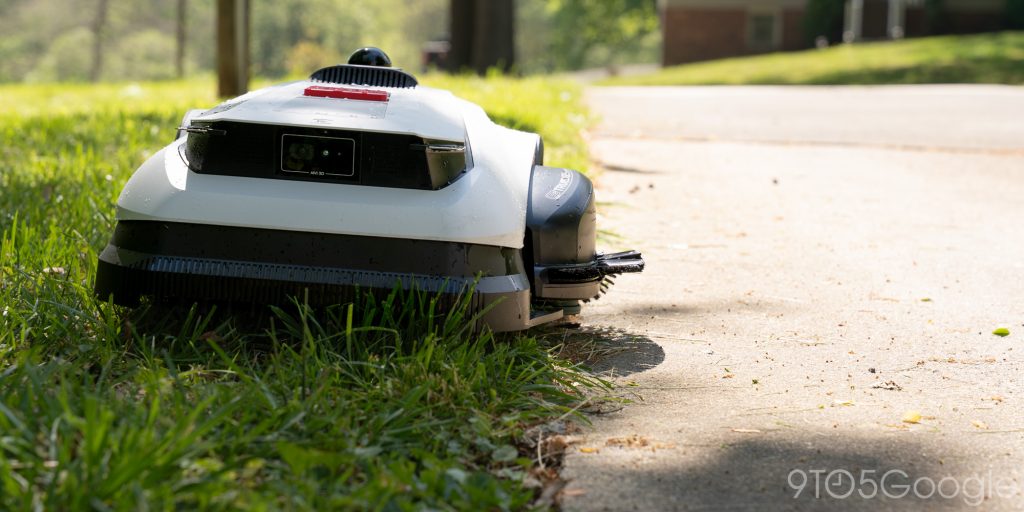
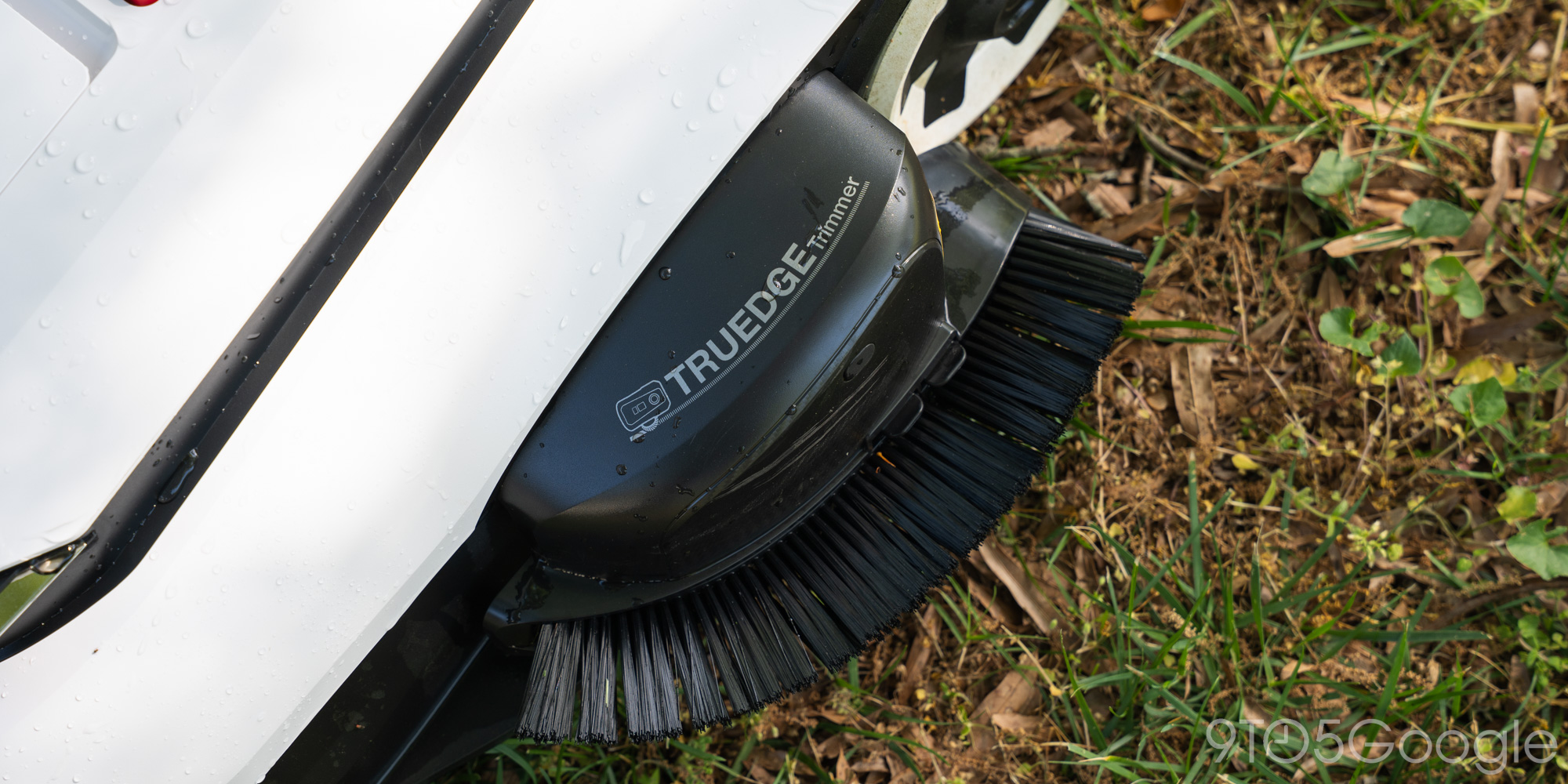
The biggest difference between Ecovacs’ previous model and the Goat A3000 LiDAR Pro is immediately noticeable. Sticking out of the side is a trimmer module that makes you wonder why it hasn’t been done before. It’s essentially a more aggressive version of the side brushes most robot vacuums come with. In this case, though, it uses a standard trimming line to handle edges that would otherwise be out of its reach.
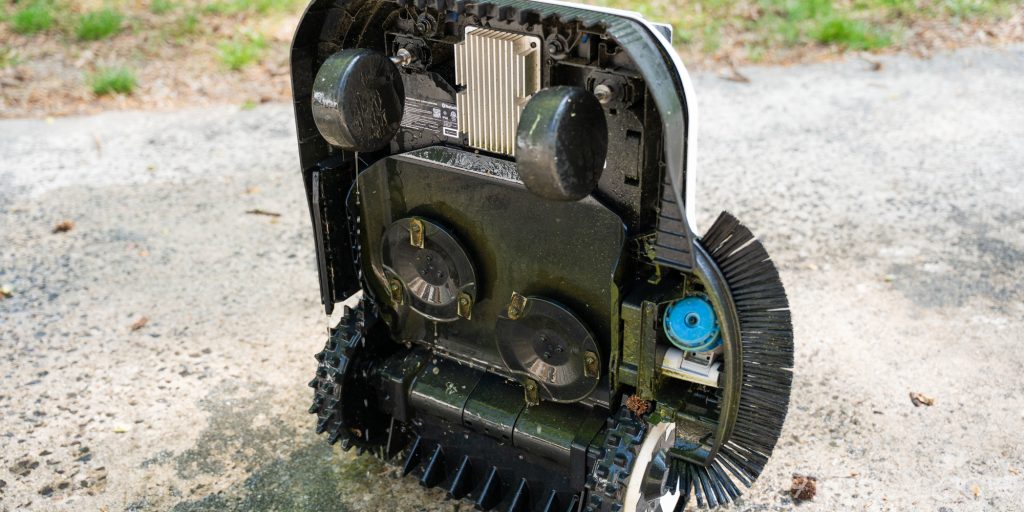
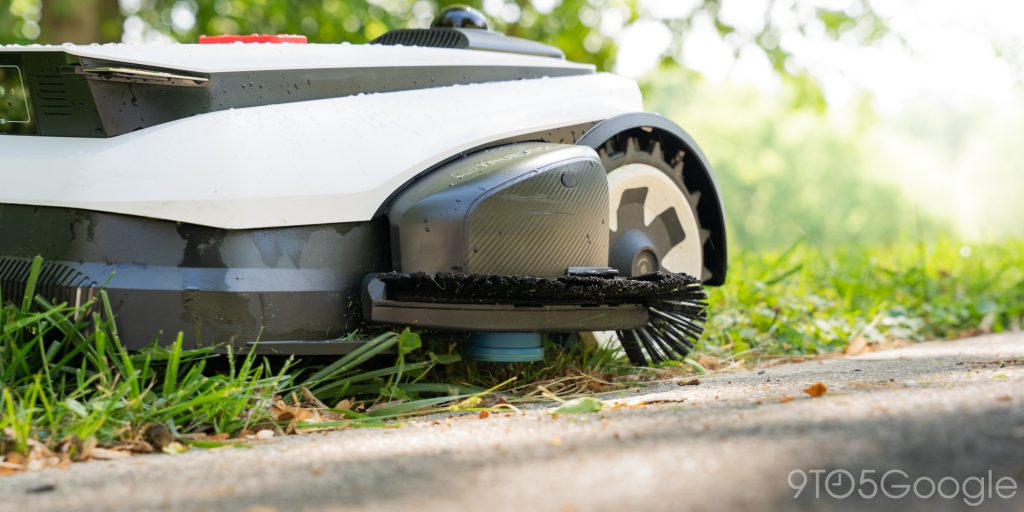
My initial concern was that Ecovacs would choose to make the system proprietary, requiring specialized line spools.
This is sort of a yes, and no. Fortunately, the system works like any weed-eater and takes a couple of minutes to replenish if you’re willing to rerun similar diameter line around the existing spool. If you want to buy pre-spooled line, Ecovacs sells plug-and-play packs of two for around $16. They seem to last around 6 weeks, but your mileage may vary.
If you do buy your own line and replenish the spool, you might need to get creative in attaching the start of the line, since the pre-run spool doesn’t have a reusable cinch or slot to secure the line tightly.
Other portions of the bot’s maintenance needs are easier, like blade replacements every six months or so. Outside of that and the occasional hose-down, there’s little reason to interfere.
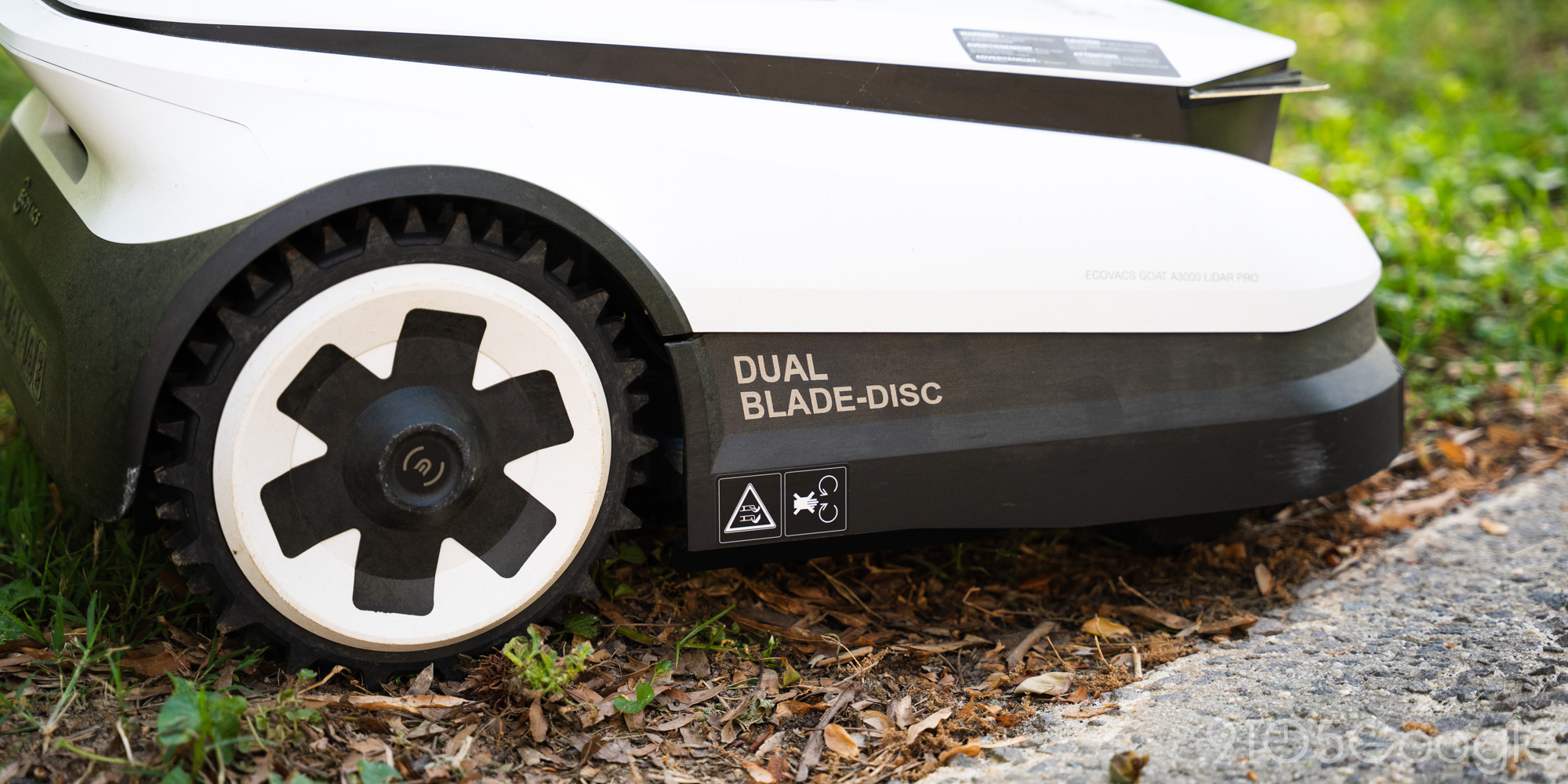
In total, there are six blades on two rotors with coinciding cutting paths. That design gives it wide coverage without a dead zone in the middle. As mentioned, those blades are cheap and easy to switch out, and it isn’t needed all that often. You can even sharpen them yourself, if you feel so inclined. If not, just flip them over to let the other side cut.
On this model, and the previous one, the bolt heads do tend to wear down. After enough time, you might find that a Phillips head no longer gets the old screw out. They’re wide enough at the top to grab with channel-locks, and I usually spin the entire rotor for some leverage. It’s not a big job – it’s just a matter of working around the design.
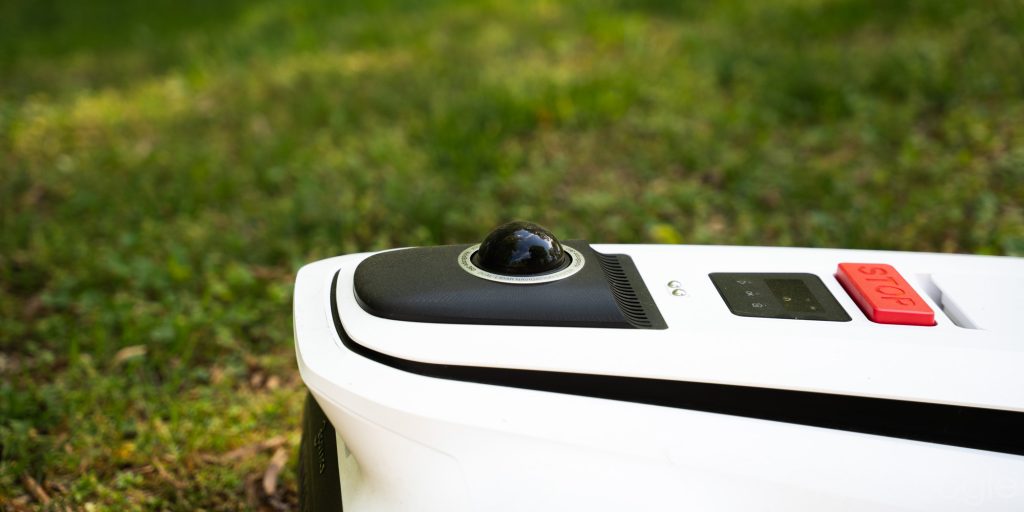
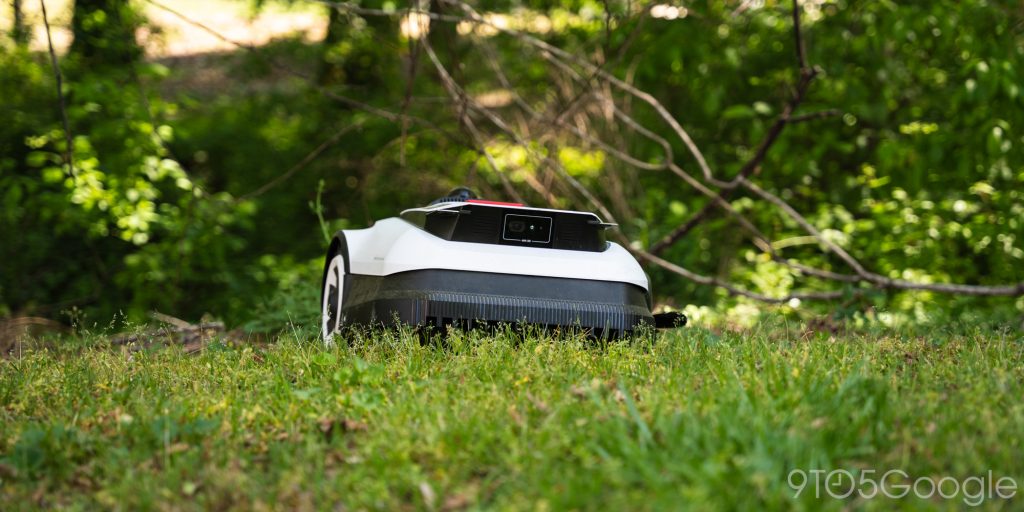
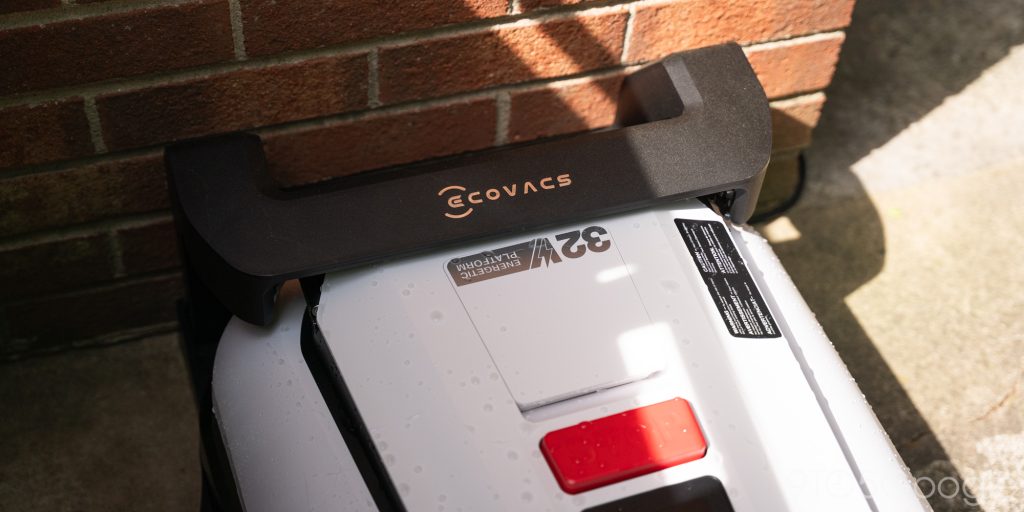
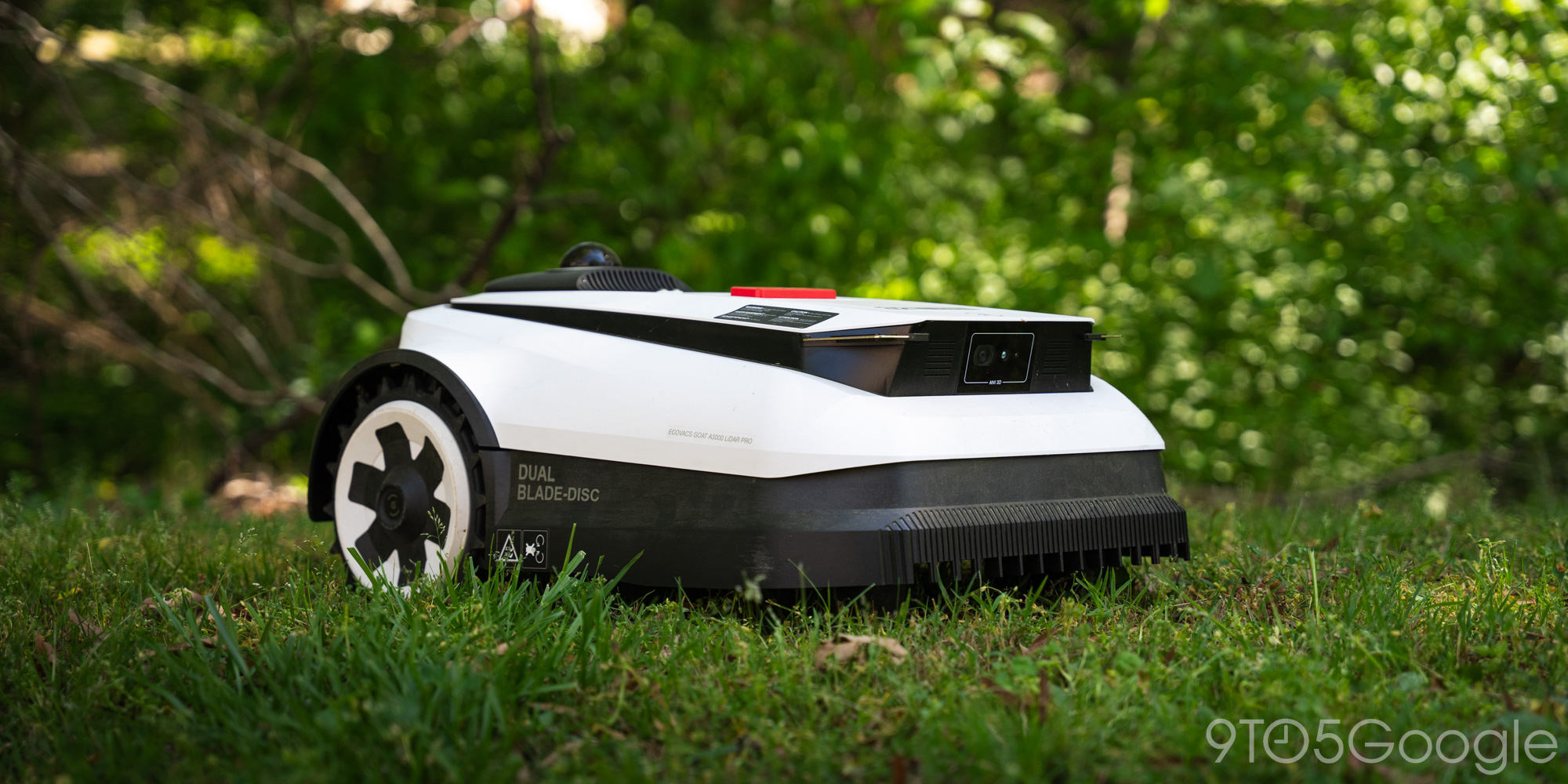
It carries a bulbous LiDAR sensor on the top of its body. The front houses Ecovacs’ camera system for intelligent object recognition. Much else of the design is taken from the Goat A300, including a small display on top, a “STOP” button, and heavily treaded wheels to get it where it needs to go.
Water isn’t an issue, either. I’ve given it a spray over and over, and it’s never had a problem. The official rating is IPX6 for water ingress. As long as you’re not dunking it in a pool and using a hose to shower it down, it won’t have any issues. In fact, it’s necessary to keep debris and dirt off the sensors and undercarriage.
Performance
With the trimmer handling anything at the edges and against walls, the Goat mower can get much more reach where the previous model couldn’t touch. I find it still bumps up against walls sometimes, but it keeps contact to a minimum. The trimmer also auto-feeds for a fresh cut. It does it a little more often than I’d like, but I can’t complain too much if it’s easy to replace.th
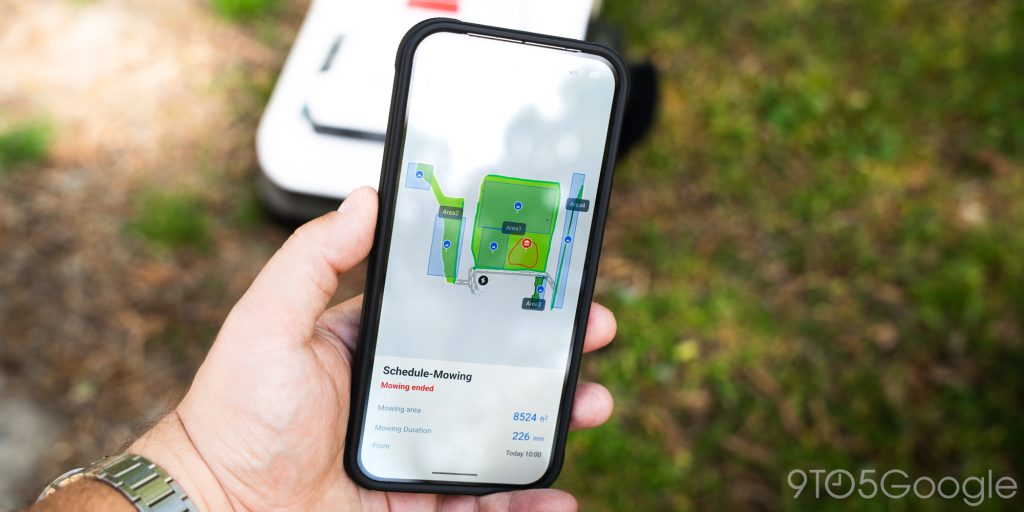
I also found that the Goat A3000 Pro does a better job of edge recognition, even though setup can be a little confusing. After mapping, there are a few options that need tweaking. One called “flush boundaries” tells the robot that it doesn’t need to mow beyond the boundaries because the edge of the grass stops where the mapped line is drawn. Edges marked as not flush allow the robot to seek out an edge and give it some leeway to get closer to a wall or something beyond the mapped line.
At least, that’s my assumption. I originally thought a flush boundary referred to height differences, like where my front lawn meets the road, and there’s a 2.5-inch drop. I don’t want the mower to travel with one wheel on the road and one on the grass, because it’ll scalp the lawn. Instead, marking it as a flush boundary seemed to tell the Goat to skirt the edge.
I could be completely mistaken, but I know that once I changed that setting, the bot performed better along the edge in some areas.
You also have to mark trimming boundaries, which is where Ecovacs’ Goat A3000 Pro will lower the weedeater and run the edges. This doesn’t happen after a mowing task, and it needs to be a separate scheduled event or action. Here’s where another difference between this and the older model lies: the robot can now finish tasks in the next scheduled slot if it didn’t complete the job in the last timeframe. This is a great change, since it means you can choose when the Goat shouldn’t be running, without splitting the tasks into chunks.
There is one downside, however. Continuous tasks can only be enabled if there are no trimming jobs scheduled. In that case, you’d need to manually start trimming tasks. That isn’t a massive deal-breaker, considering trimming doesn’t need to happen as often. Still, it doesn’t play into the “set it and forget it” mindset that products like these are supposed to abide by.
Once the area is mapped out and boundaries are set, the Goat A3000 Pro can do its job. And it definitely does it faster than its predecessor. The new version comes with a 7,500mAh battery. That’s enough to do my front yard (8,524 square feet) in 226 minutes. It needed to charge once towards the end, finishing up at 60% around 3 p.m. after starting the task at 10 a.m. The Goat A3000 (non-Pro) took at least an hour or two more to finish the job.
One small change that really made a world of difference was in app performance. Unlike the previous model that would need to refresh every time you unlocked your phone, sending you back to the main screen, the new Pro version operates in the app with zero friction. Connection it solid, and it responds with a better Bluetooth connection and internet link. Overall, it feels snappier to operate.
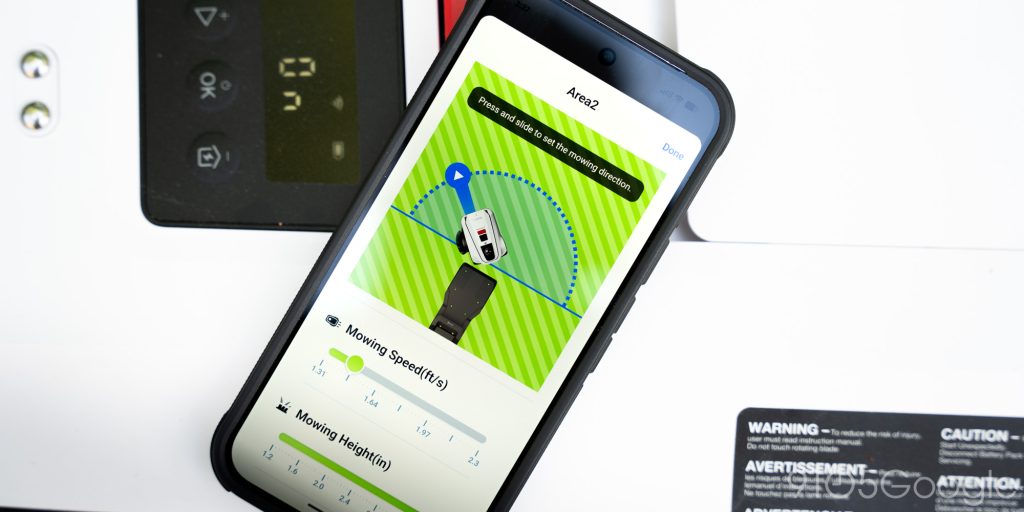
On the physical side, this model brings more speed options. Instead of fast or slow, Ecovacs now offers a slider in the app to adjust precise speed. At its slowest, it trudges along at 1.2-ft/s and tops out at 2.3-ft/s. For a mower, that’s relatively fast. Of course, the denser the grass and the lower the cut, the slower you’ll want to go. At a 3.5-inch cutting height, I default most of the individual sections of my lawn to somewhere in the middle of the top and low speeds.
Each area of the yard gets its own settings, including mowing angle relative to the charging station. With the option to flip the pattern on a weekly basis, the lawn stays healthy, and the Goat keeps those nice lawn lines intact.
I’ve also found that the new Pro model gets stuck less often, but that might be because you can now define areas where the Goat ignores tall obstacles. I found that even at the maximum obstacle height setting, the Goat A300 often avoided individual stalks of dandelions, opting to turn around and save that spot for last. This would add a ton of time and cause it to turn around in weird spots. Ecovacs’ Goat A3000 Pro, on the other hand, allows you to draw boxes over the map, where it’s able to ignore tall objects. Because of that, the majority of the lawn can be mowed without interruption.
That setting isn’t recommended if you have kids or obstacles sitting in your yard often. It essentially turns off the smart avoidance system and tells the Goat to feel it out with its bumpers. If it’s a low object like a hose or ball, the Goat might get stuck on it or try to mow it. It’s really recommended for areas that can trick the sensors.
Final thoughts
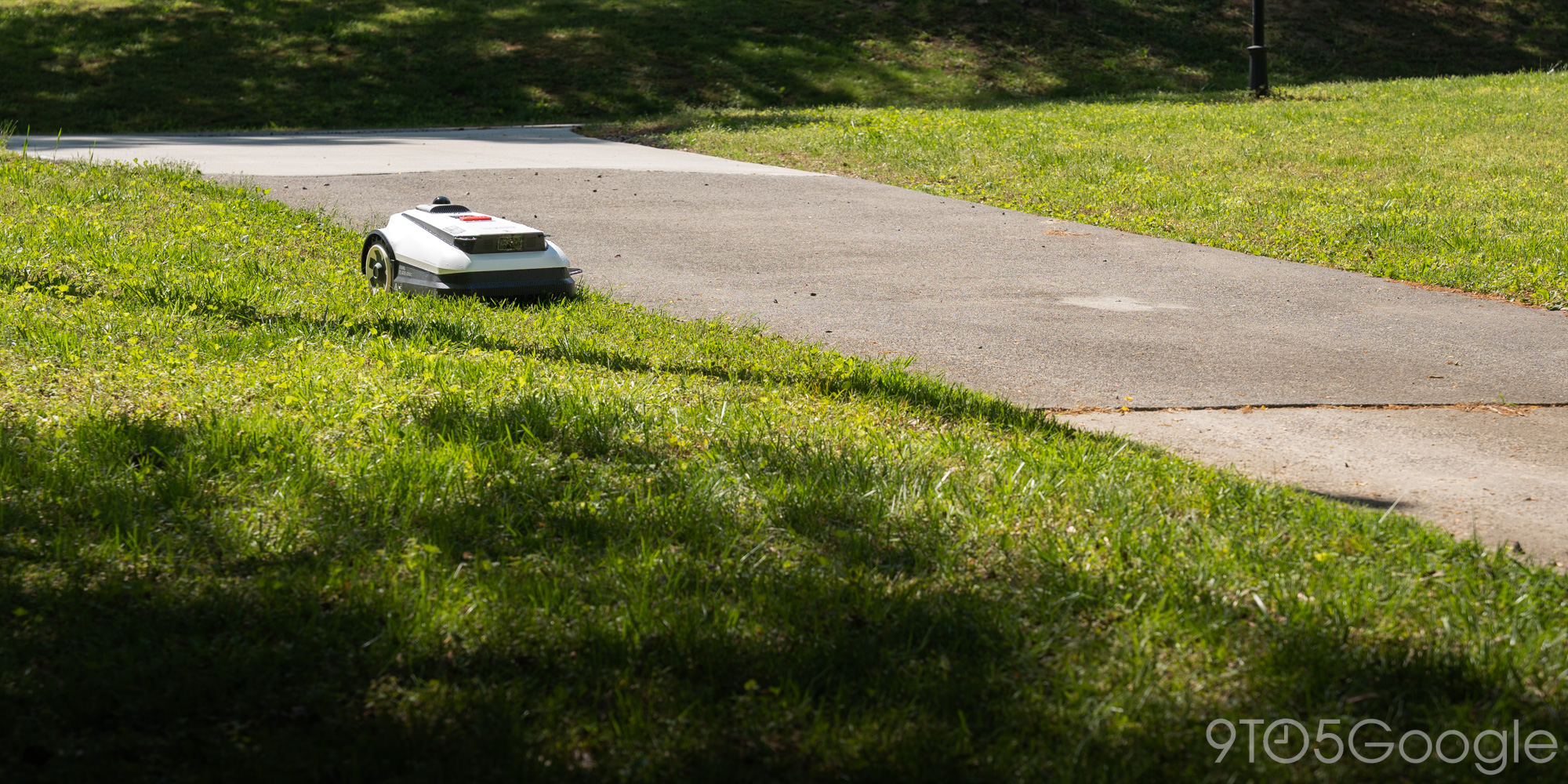
The Goat A300 Pro still needs to be set up for success. That means a (mostly) flat lawn without large divots or spots where it can easily get stuck. Even though those wheels have a healthy tread, they can dig into soft ground if the robbot gets stuck on something else. The Goat still has the inability to handle heavy slopes. I have a 40-degree slope on the side of my yard that I have to manually handle. The rest of the yard isn’t an issue.
As long as you meet it halfway, it takes a lot of the labor out of lawn care and frees you up to handle much of the detail work. That means making sure holes aren’t too big, mapping out no-go zones, and picking up larger sticks. But even some of the detail work is taken out of the equation, like weed-eating edges. I found that the initial setup and mapping make the biggest difference. I had to find unique ways to make sure the trimmer was getting every corner and edge. A little patience saves a ton of effort in the long run.
Trimming itself adds a ton of utility, and it’s worth the little maintenance needed for it to keep functioning. Once the setup process is complete and your space is ready for it to run without issue, the Goat A3000 Pro runs on a schedule and keeps everything maintained how you like it. Ecovacs recommends running it a couple of times a week, so it never takes on too much to handle. With how much faster this one feels, that’s a much easier task.
The Ecovacs’ Goat A300 LiDAR Pro is available on Amazon for around $2,500. Again, it’s not cheap, but it’s on par with hiring lawn maintenance.


FTC: We use income earning auto affiliate links. More.




Comments