
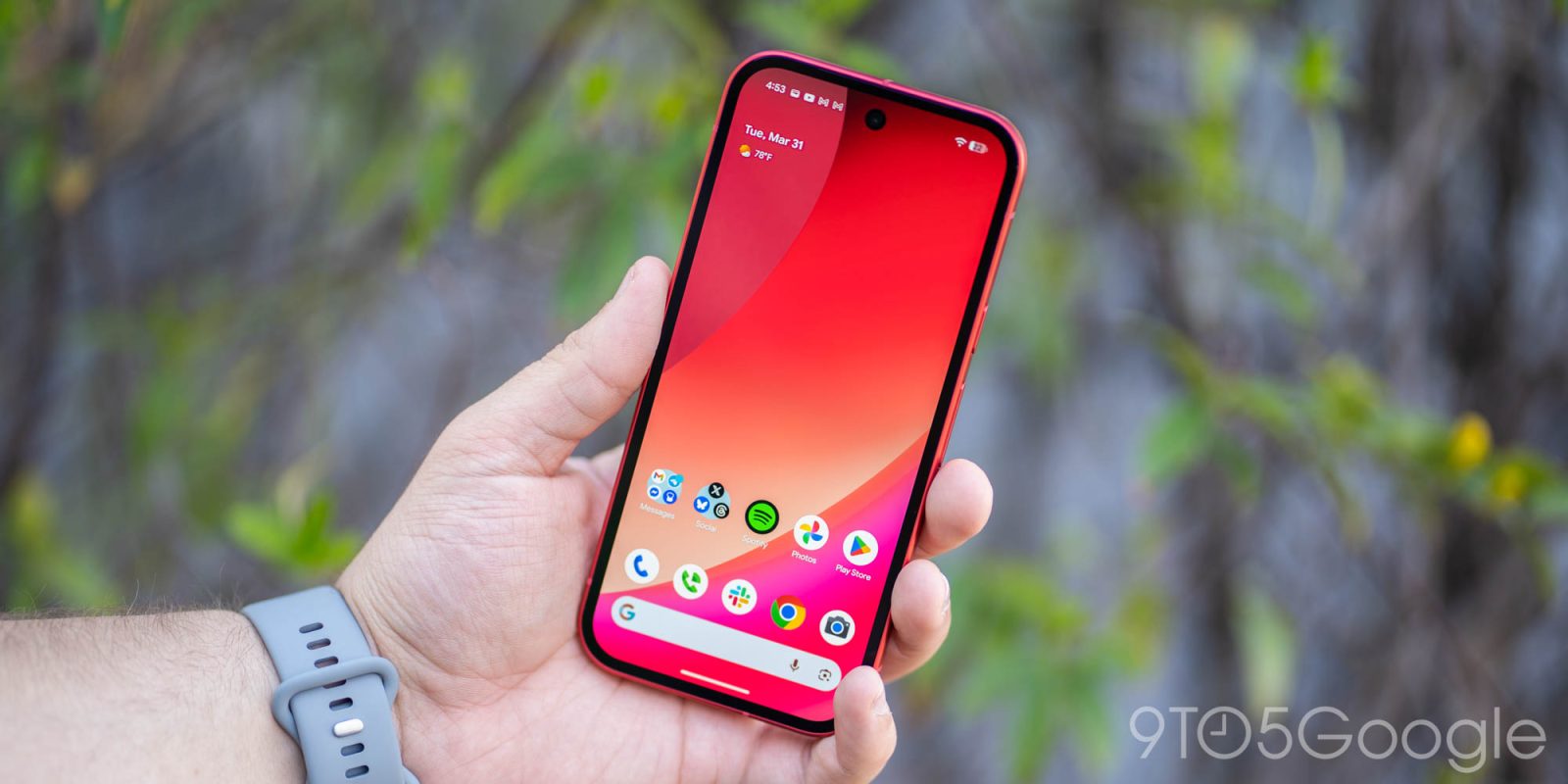
You can’t go anywhere on the internet today without running into AI. In some cases, that’s useful. AI can do some amazing things. On the other hand, it often feels like we’re watching someone reinvent the wheel. Now, word on the street is that OpenAI wants to build its own phone with an experience built around AI agents. Put simply, I think that sounds horrible.
9to5Google Weekender by Ben Schoon is a part of our free newsletter that also includes ‘Inbox,’ a twice-weekly roundup of key stories from around the web by Daniel Bader. Sign up here to get Weekender delivered to your inbox every Sunday along with ‘Inbox’ on Tuesday and Thursday. You can find past issues here.
OpenAI’s first smartphone is apparently in the pipeline, set to launch sometime around 2028. The device, analyst Ming-Chi Kuo says, would replace the traditional smartphone experience with one focused around AI agents that complete tasks for you. Kuo explained:
Users are not trying to use a pile of apps. They are trying to get tasks done and fulfill needs through the phone.
There’s a bit of truth to that. When we pick up our phones, we’re often trying to get something done, whether that be sending a message, ordering something online, or whatever else. Besides the fact that, equally as often, we’re just looking to have some fun or consume entertainment, I think this misses the point of what we want from our smartphones.
The idea that the phone in my pocket exists solely as a tool for me to get tasks done undermines the human aspect completely. This conceptual future where the smartphone is all about AI agents getting things done on your behalf just removes human experience from the picture altogether. Kuo’s concept image shows an “Agent Task Stream” that shows ongoing tasks that the AI agent is handling in the background – booking flights, compiling/summarizing data, drafting replies to emails, setting up plans for a family dinner, and showing the status of a policy renewal. To an extent, I can see myself using an agent on these tasks, though I’d be hard-pressed to use the same AI that just learned how to spell “strawberry” to book a flight on my behalf. But for this to be my phone’s entire experience?
Again, that just sounds bad.
All of this is to say, I don’t want AI to replace my phone. AI agents absolutely have a place in the future of the smartphone, and a growing one at that. But I only view them as a “part,” not the whole experience. Opening Gemini, or the agent of your choice, to view this “task stream” and check in on tasks you’ve assigned could be rather useful, but I want my phone to be built around my choice, my experience, not what works best for the AI agent.
Not long ago, Nothing CEO Carl Pei spoke on how services and apps will need to be redesigned to cater to these agents, and I still think this is missing the point. If we’re to have these AI agents, services and apps need to focus on both the human experience as well as how they talk to AI agents.
The response to this idea around OpenAI’s future smartphone has been all over the place. Many, especially on Twitter/X, are all-in for this future of a phone that’s basically just a physical AI agent. Others are the polar opposite, wanting a device that’s nowhere near this vision. I think there’s a middle ground, definitely, but it’s all going to come down to who’s behind it and what their priority is. I certainly worry about this, given how big tech seems to only care about AI right now, and not much else.
What do you think?
A message from our partner, Waterdrop Filter
We all try to appreciate my mom on a daily basis, but custom (and Hallmark) dictates that, once a year, we should appreciate her even more — ideally with a gift (or two).
Flowers are great; chocolate is delicious; but great-tasting water is great and delicious.
So this Mother’s Day, ditch the droopy roses or the cardboard chocolates and go with a gift that stands the test of time and taste. We’re partnering with Waterdrop Filter to showcase their “everyday care” products that promote wellness, health, and longevity. From under-sink Reverse Osmosis solutions to whole-home filtration, a Waterdrop Filter is an essential upgrade to your home’s water quality.
This Week’s Top Stories
Google Wallet expands passports and more
The idea of a digital ID is enticing, but far from reality for many. Google took some big steps in expansion recently, though, this week expanding passport support in Google Wallet to three more regions, and also opening up a new digital ID form in India.
- Google Wallet expands digital ID support on Android again
- Google Wallet adds support for three more digital passport IDs on Android
Motorola’s new Razr lineup is… boring
Motorola launched new Razr phones this week, but you’d be forgiven if you didn’t realize it. The latest generation feels identical to the last one because, for the most part, it kind of is. We also got a US release date for the Razr Fold, launching May 21 for $1,899.
- Motorola’s Razr (2026) lineup is a game of spot the difference where it’s mainly higher prices
- Motorola Razr Fold officially costs $1,899 in the US, available in May
- Here’s everything that’s actually new with Motorola’s 2026 Razr lineup — it’s not much
- Don’t bother with Moto’s new Razr Ultra — last year’s model is nearly half off and virtually identical
Google Health is on its way
With Google’s new Fitbit Air tracker on the way, we recently reported on the new “Google Health” logo that popped up and, by all accounts, looks to be replacing the Fitbit app.
More Top Stories
- Sundar Pichai teases I/O 2026 as Google starts selling TPUs and YouTube Premium grows
- Walmart’s new Google TV streamers are now available for some as wide launch nears
- Galaxy Z Fold 8 ‘Wide’ shows off its new form factor in side-by-side leak [Gallery]
- Tensor G6 reportedly bringing latest ARM CPU cores but outdated GPU to Pixel 11
- Google Messages read receipts redesign continues with old icons, swipe for time
- Samsung’s display-less Galaxy Glasses look slim and sleek in first leak
From the rest of 9to5
9to5Mac: Apple says iPhone 17 lineup is officially the ‘most popular’ in its history
9to5Toys: It’s official: The Steam Controller is coming as early as next month
Electrek: Here’s our first look at the Hyundai IONIQ 3 standard version [Video]
Follow Ben: Twitter/X, Threads, Bluesky, and Instagram


FTC: We use income earning auto affiliate links. More.


Comments