
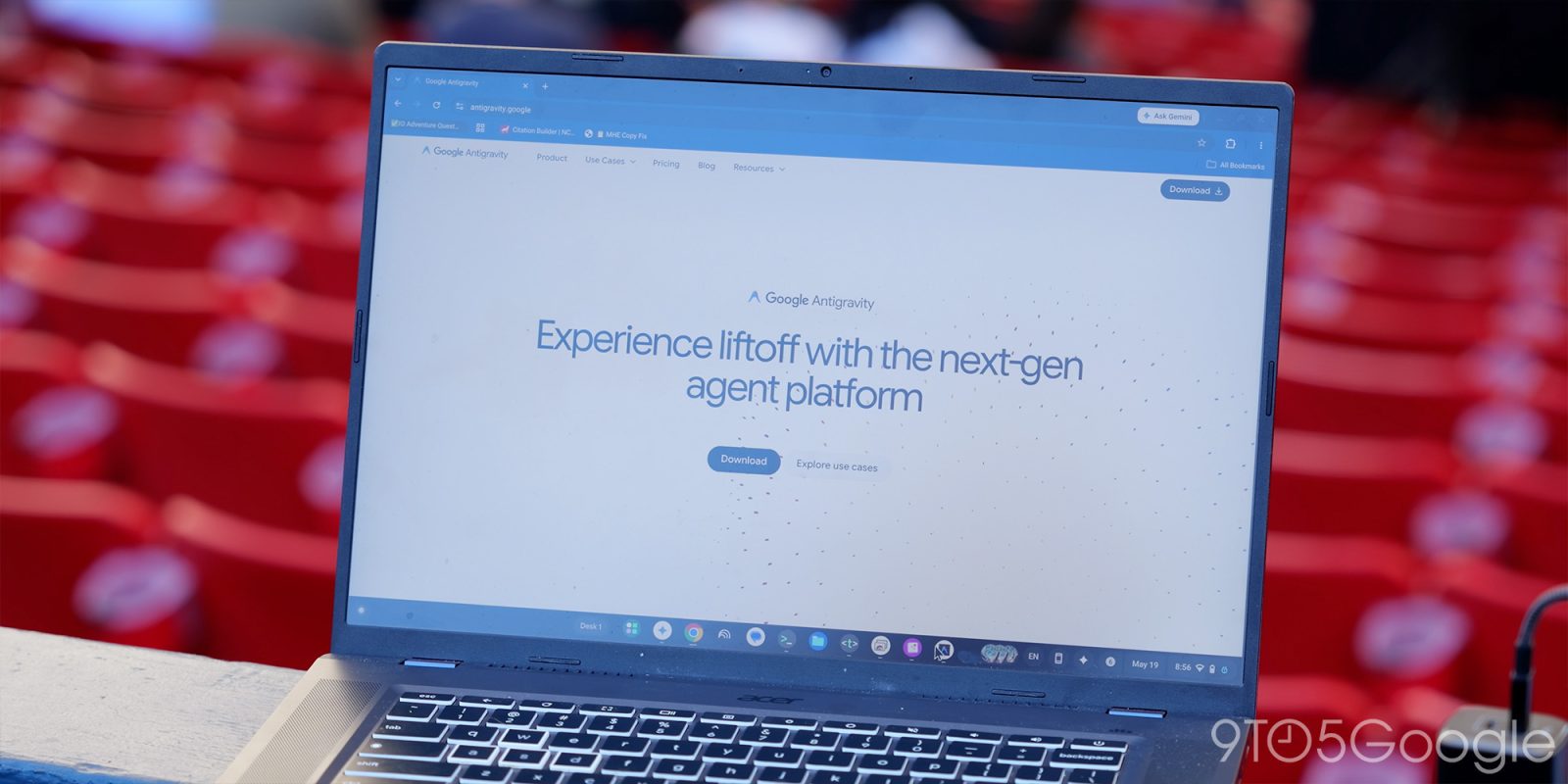
With Gemini 3.5 Flash doing frontier-level work at a fraction of the cost, Google’s Antigravity 2.0 is here to help build and manage your agents and let them loose on your latest projects. Meanwhile, AI Studio is gaining a dedicated Android app to execute on your ideas while on the go.
Google first introduced Antigravity last year at the onset of the vibecoding era. In the months since, Antigravity has existed as a dedicated application that borrows heavily from Microsoft’s VS Code but significantly integrates AI coding assistance. With this latest suite of announcements, Google has repositioned Antigravity as something of a unified brand for AI coding harnesses fit for the agentic future.
This starts with version 2.0 of the main Antigravity application, which puts agent orchestration front and center. Rather than performing one task at a time, you can set agents to work on several problems in parallel, multiplying your development velocity.
The Antigravity revamp also brings in new integrations across Google AI Studio, Firebase, and Android. For example, you can now export projects from AI Studio directly to your local Antigravity app, carrying over all of your context to resume agentic development locally.
Next up, for developers who would rather stay in their IDE of choice, Google is launching a new CLI for Antigravity. With it, you’ll be able to kick off new agents without leaving the terminal. Curiously, the Antigravity CLI is set to fully replace the previous Gemini CLI, meaning developers will need to migrate any of their existing agentic workflows to the new tool.
Taking things a step further, you can also use the new Antigravity SDK to create custom agents optimized for Gemini. Once built, you can deploy your Antigravity agents on the infrastructure that works best for your organization or use case. To streamline this process even further, Google is also launching a new “Managed Agents” feature in the Gemini API, offering your agents an “isolated Linux environment” in which to perform their work.
Of course, coding agents are more taxing on your token budgets than traditional chat experiences like Gemini. Developers may find themselves needing more than what the $20 per month Pro plan provides but unwilling to jump up to the top tier. To that end, Google is launching a new $100 per month tier of AI Ultra, offering 5X the usage limits in Antigravity compared to AI Pro. As a special offer for I/O week (until May 25, 2026), new and existing AI Ultra subscribers can claim $100 of bonus credits to help ensure work doesn’t cease if you run against your quota.
Overall, this expansion of Antigravity seems poised to help Google regain some ground in the battle for developer demand for AI tools. Google’s offerings should be especially enticing in light of the significant coding capability improvements of Gemini 3.5 Flash, as the model can perform many of the same tasks as frontier models at a fraction of the cost and output the code far faster. Multiply those speed gains across several Antigravity agents, and your ideas can come to life in minutes.
In related news, Google is also launching a dedicated Android application for AI Studio. Details are currently limited, but it seems you’ll be able to speak or type ideas into AI Studio or start from high-quality example apps. Once completed, you’ll be able to share apps directly with friends, bringing a social element to the experience. You can pre-register for AI Studio today in the Play Store.
Your next big idea is just a conversation away.
Inspiration doesn’t wait for you to be at your desk. It strikes on the couch, on the bus, or in the middle of the night. With Google AI Studio, you finally have a way to capture that spark and turn it into something real—right from your phone.
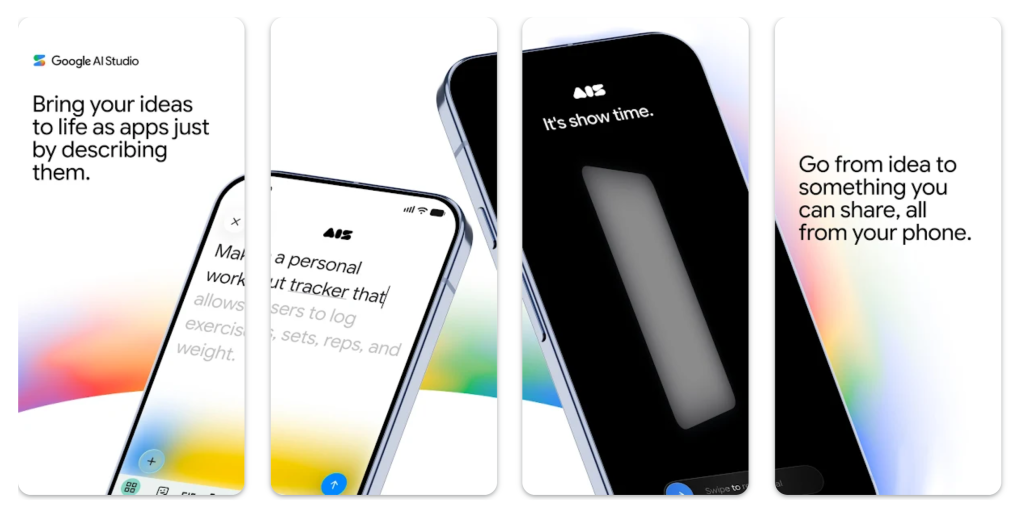
Bringing it all together, Google is enabling developers to act on their ideas from anywhere that inspiration strikes. Explain your vision to AI Studio on your phone and return home to find a full-fledged prototype. From there, you can export the project to Antigravity to launch more agents on your own machine. It’s a workflow that makes app development feel less like coding and more like project management, leading a team of Gemini-powered AI agents.


FTC: We use income earning auto affiliate links. More.


Comments