
As a lazy, lapsed programmer, I feel that tools like Antigravity and Codex have changed my day-to-day workflows and, despite some major foibles, I cannot recommend them highly enough.
For the better part of a decade, I have felt somewhat ashamed that I have allowed the skills obtained during my Computer Science degree study to wither and practically disappear. 100% it is a “me” problem, but like many graduates of my era (early 2010s), I never quite stuck in one area of the tech industry to utilize the programming skills I had built over the course of a 3-year University degree.
I’d worked on little projects here and there, but alas, I’m almost embarrassed to admit that I just don’t find programming all that fun or interesting. It has always felt like a grind. A means to an end. I liked the idea generation, the conceptualization, but I just ain’t about the implementation. I know, I know, maybe those ideas shouldn’t ever come to fruition you scream at your screen. That’s an incredibly fair criticism.
The very idea of a “vibe code” session does feel lazy – because in many ways it is. And yes, it does feel like maybe my mini projects don’t deserve to be made if I’m unable to get off my ass and put in the groundwork myself. The thing is, I felt like that until I used Codex and Antigravity just a few short months ago.
If these tools exist, and you know the limitations or at least have an idea of what you’re doing. I think of it like “delegation” to a developer, a developer who relies on very clear and structured information to do the right things, or you’ll end up with all kinds of problems. I wouldn’t throw a junior dev under the bus, but some of my developer friends liken these tools to junior devs – so please don’t shoot the messenger!
Custom apps for your everyday
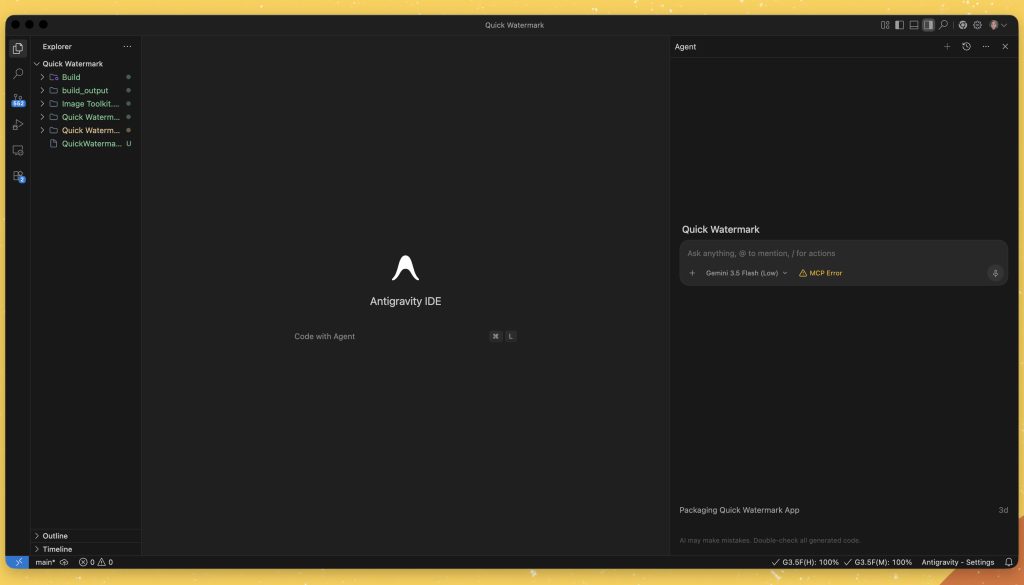
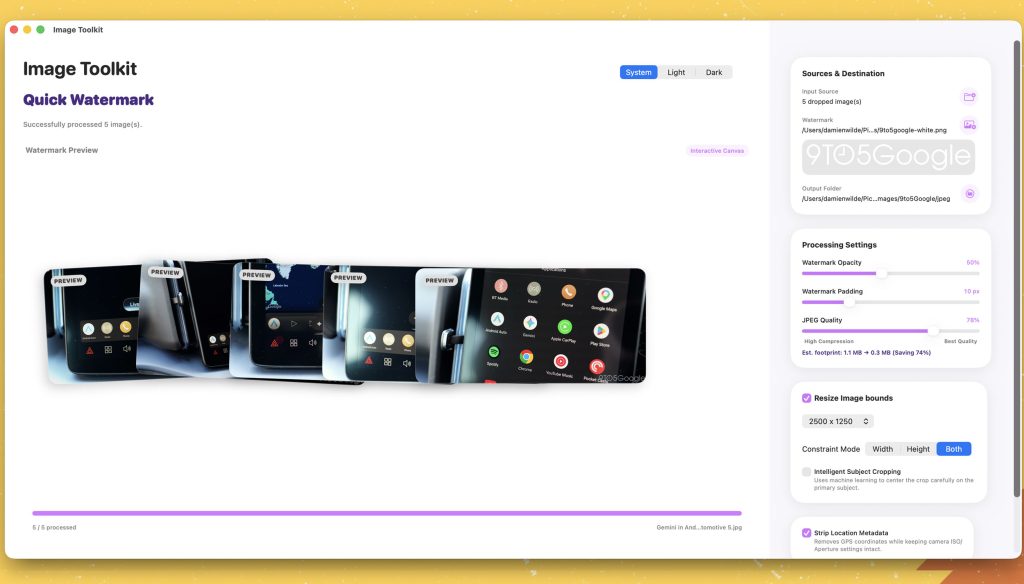
There are a number of reasons my opinion has completely flipped. As much as “productivity” can be a very toxic trait or used as a way to sell you some snake oil solution to your daily output, I can’t deny that one of the biggest roadblocks in my day is those repeat tasks you do multiple times and find annoying to do over and over again.
Think watermarking images, making adjustments in After Effects, compressing and converting files, adjusting colors in Photoshop, all those kinds of things, and more on top. In isolation, no problem. En masse, incredibly tedious and very time-consuming.
For years, I’ve looked for extensions, tools, apps, and scripts to try to automate the monotony. Then, after a regular conversation I have about all things process-related with my colleague Jeff Benjamin about this exact thing, he suggested, “Why don’t you try using Codex to build that for you?”
I was perplexed why I hadn’t thought of it. I figured I was switched on to what new tech can provide, but it had never crossed my mind to even test the waters on this. I’d tried getting Gemini to create a few scripts for some animation easing in After Effects to very mixed success a few times before, but found the chat-style UI just a bad experience for doing anything code-related. Could I really vibe code something to meet my expectations? It turns out you actually can.
A dedicated interface designed to help you conceptualize and build an implementation plan before letting AI loose to create that vision felt immediately more appealing. After a few hours of tinkering, it felt like I had opened Pandora’s box – in a good way at least.
I was enamored by the idea that I could get AI to build out a unique tool to suit my specific needs rather than buy a generic plugin or add-on for potentially hundreds of pounds or dollars. It blew my mind, and I have felt so stupid about something I ought to know, or at least try.
I want to note that I wouldn’t ever be foolish enough to claim that “I” built this. No, I effectively outsourced the idea to Gemini, ChatGPT, or Claude.
Half a year on, I have built multiple tools for personal use. Things that almost automate those annoying little tasks. I’ve honed processes, I’m regaining time to put into other areas of my job, or at least can spend more time in every area equally in ways I wasn’t able to prior.
Personal over product
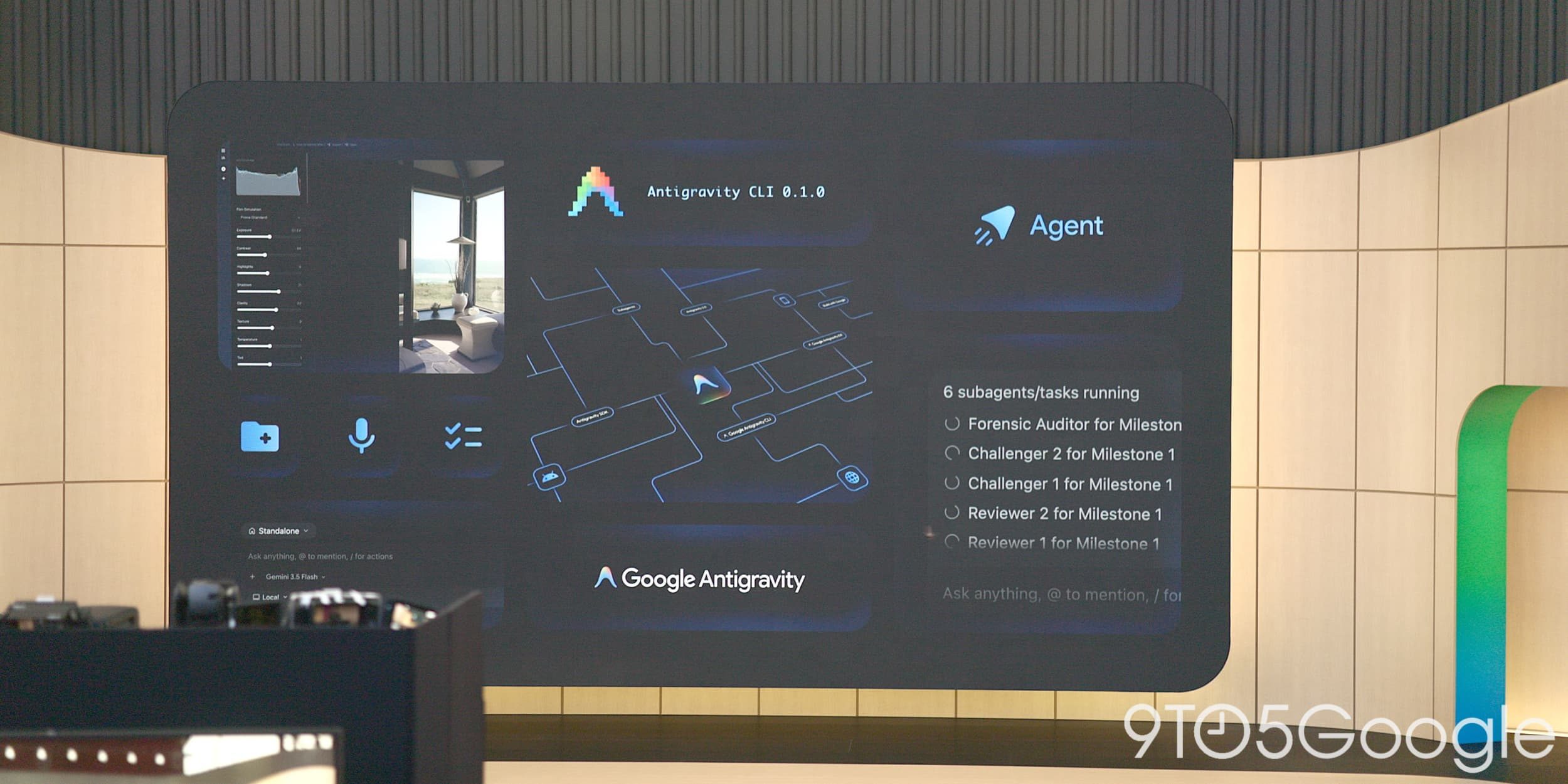
We’re largely told that vibe-coding for mass-launched products is possible. I’m 100% in agreement with most software developers that you probably shouldn’t be publishing vibe-coded applications unless you are able to go back with a fine-tooth comb and know exactly how your application works. Maybe not quite line-by-line, but having a grasp on the intricacies is very important for both troubleshooting and problem-solving.
Yes, you can come up with a prototype in minutes, but getting something that works might take a few hours, days, or even weeks. A lot of people might not have the patience to see a project through from start to finish, and that is a big pitfall. You can get 80-90% of a project “ready” and spend even more time fixing up the 10%. To be transparent, this is something that put me off old-school software engineering in the past; it’s just that guiding a tool to try to resolve those issues can be hit-or-miss.
That’s not without mentioning that there are issues with unleashing such powerful tools to those without the ability to truly understand what they’re doing with them, as vibe-coded apps can get out of control very quickly without strict guardrails and direction. Spaghetti code begets spaghetti code, but that isn’t as much of a problem as it could be if your project is only for personal or hyper-local usage. The inherent security risks are something you 100% should consider before trying to build things at any scale. Be mindful that you might not have any idea of the potential exploits. Hence, why my projects are only ever local.
Even with those pitfalls or pain points, I can’t help but recommend a little bit of vibe coding if you have an idea and want to make it come to fruition.
With the Googlebook set to launch later this year, there’s potential that vibe-coded applications could fill in the “app gap.” Maybe it’s a little hacky, but it might be a composite experience that’ll be better than the sum of its parts.
If that does end up being true, now might be the time to give Antigravity, Codex, or Claude Code a real shot if you haven’t already. I can’t recommend it highly enough.
Follow Damien: Threads, Bluesky, Instagram


FTC: We use income earning auto affiliate links. More.



Comments