
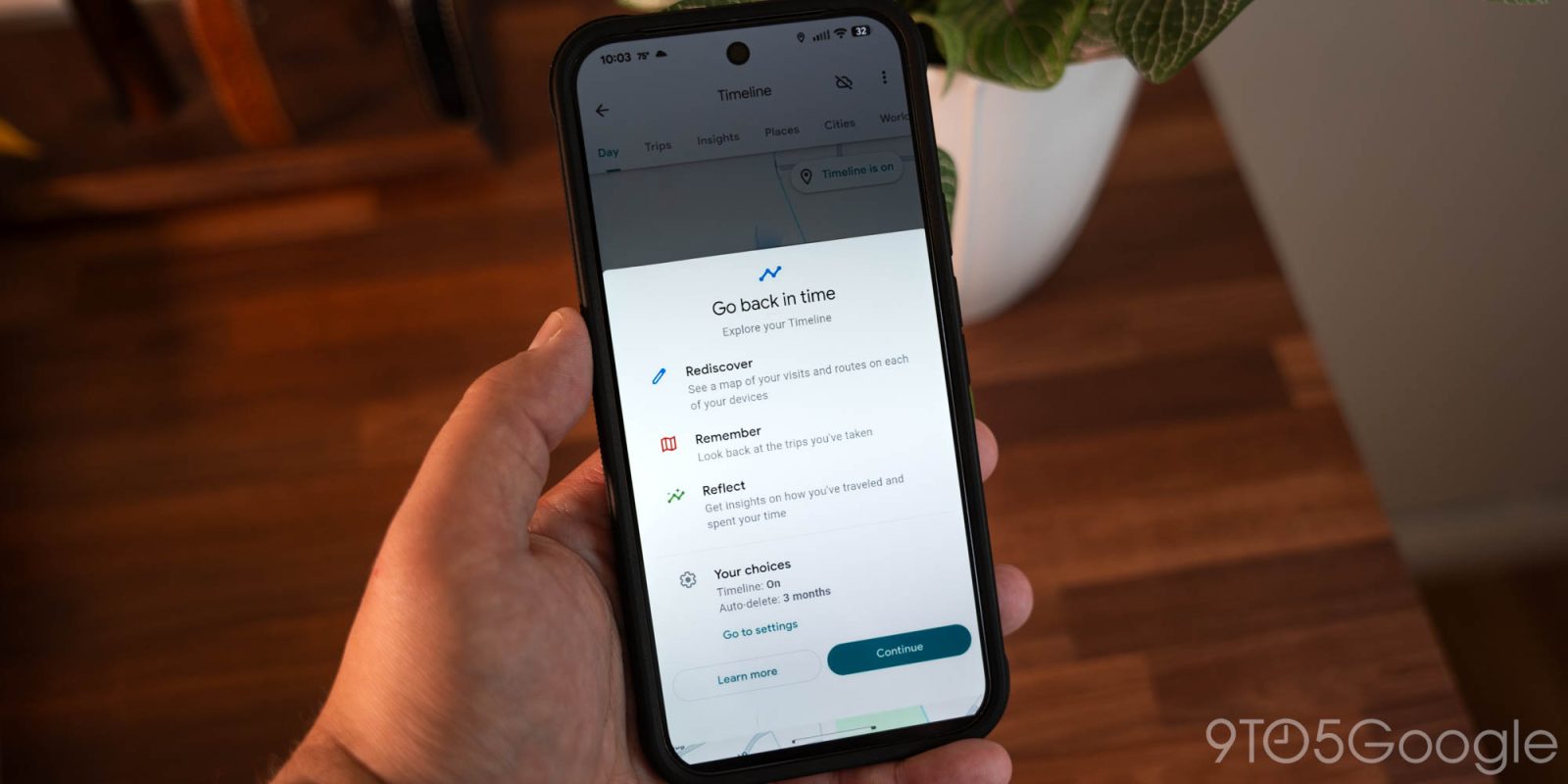
The Supreme Court rendered a decision this morning on a case debating whether or not people have an “expectation of privacy” from their government, even with always-available location tracking enabled on practically everyone’s smartphone, and to my pleasant surprise, the ruling actually fell in the general public’s favor.
As reported by Politico, the Supreme Court announced a 6-3 decision in Chatrie v. United States today, allowing and extending Fourth Amendment protections even to data willfully supplied to tech companies like Google and Apple, thus requiring police officers to go through the typical warrant process to obtain that data. This flies in the face of the current Justice Dept.’s arguments in court that users could not expect their location history to remain private when agreeing to, say, Google Maps’ timeline feature.
Previously, police officers have utilized broader search warrants pertaining to geofenced location data collected by large tech firms, circumventing the need to get specific, individual warrants for a single suspect. That’s the exact situation that led to Chatrie, which dates back to a 2019 arrest surrounding a geofencing warrant over a bank robbery. Justice Elena Kagan wrote the majority opinion; she was joined in her vote by Justices Roberts, Sotomayor, Gorsuch, Kavanagh, and Jackson. In her opinion, Justice Kagan stated:
“An individual has a reasonable expectation of privacy in records about his cell phone’s location, and police intrude on that constitutionally protected interest when they demand the information — even though for only a limited time, and from a third-party tech company.”
Google itself took some action on this front back in 2023 when it changed its Timeline feature to keep data logged on-device rather than in the cloud, which — while a welcome boost to my privacy — does remain the bane of my existence whenever I’m reviewing a new device. It also resulted in some fresh hiccups, like some users losing complete access to their on-device backups last year, with only a portion of those affected able to restore their original logs.


FTC: We use income earning auto affiliate links. More.




Comments