
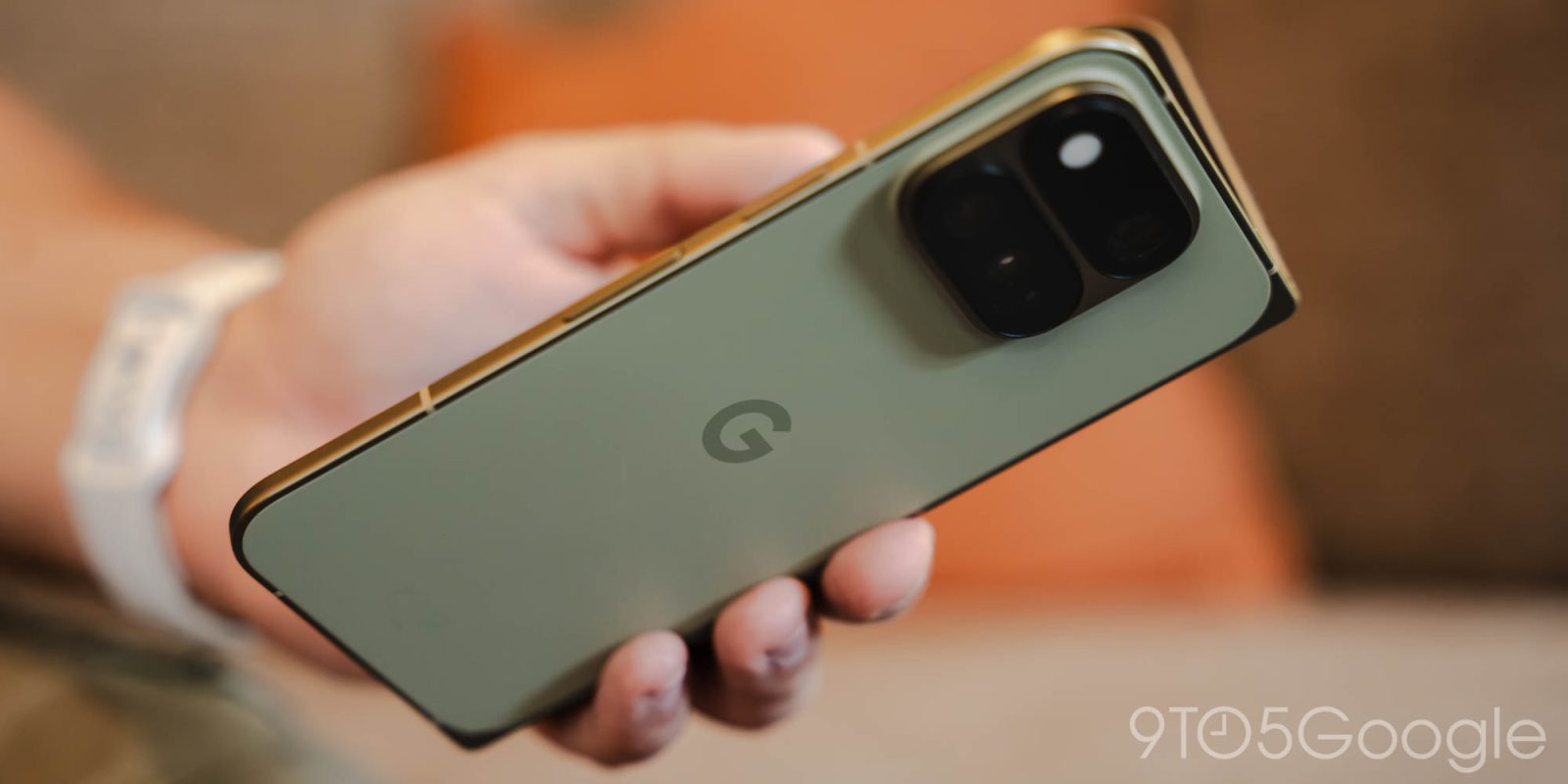
The foldable market has been moving fast, with hardware and software we saw just a few years ago having been completely rethought and drastically improved. In the middle of it all, the Pixel 11 Pro Fold feels like a concerted effort to make the best of a tough situation – Google’s new foldable tries its darndest to keep up with the competition, and it does just enough to deserve your attention, save for a couple of sore points.
Google Pixel 11 Pro Fold
Pros
- Clean software
- Consistent cameras
- Qi2 magnets
- Sturdy hardware, smooth hinge
Cons
- Not as thin as other foldables
- Mediocre battery life
- Acceptable crease, but behind the competition
Hardware |
Quiet refinements eclipsed by bigger upgrades elsewhere
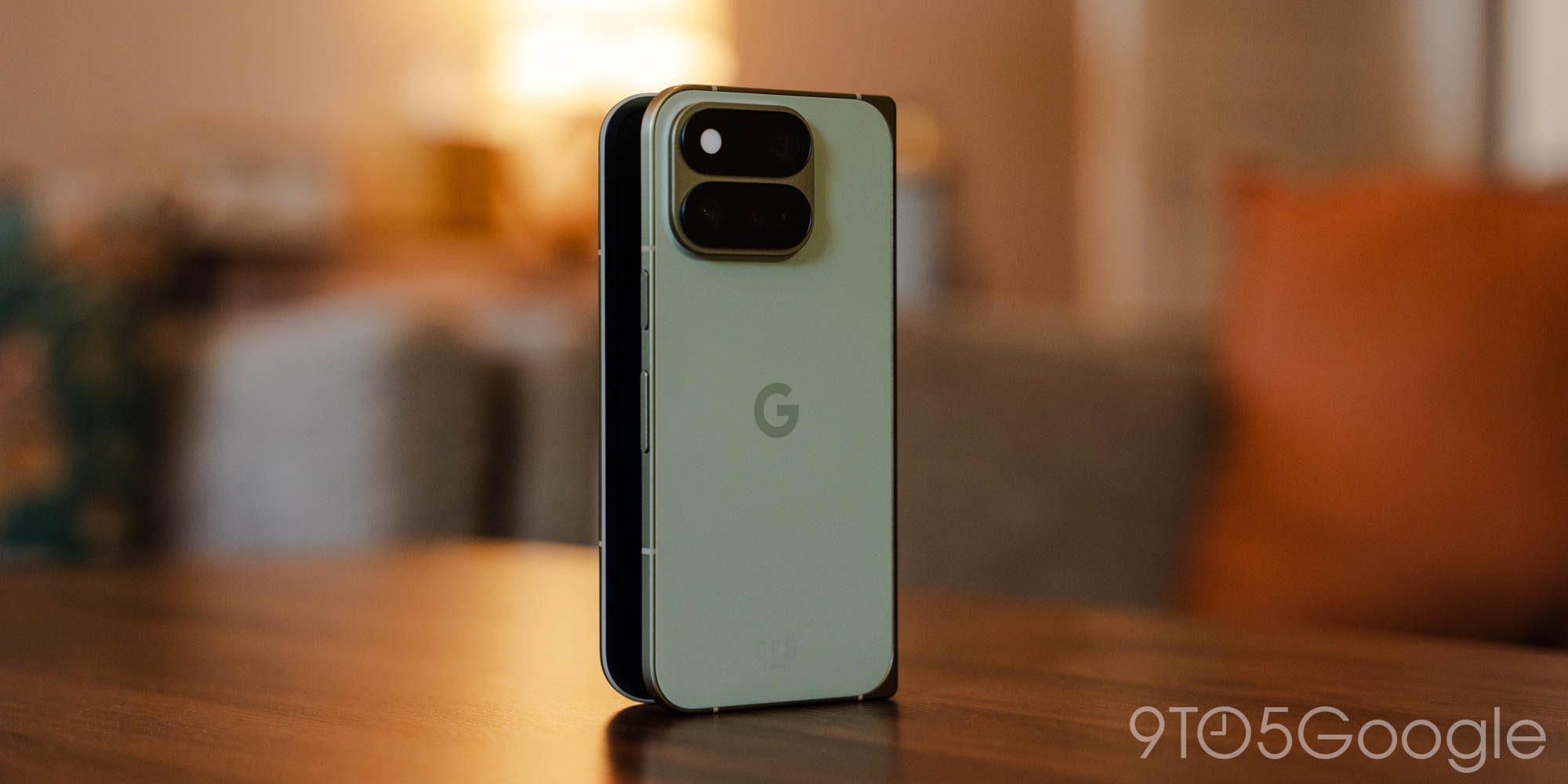
The Pixel 11 Pro Fold was never going to be revolutionary. It basically has the same design, recycled for year three. That said, it’s a good design and there are some welcome refinements here.
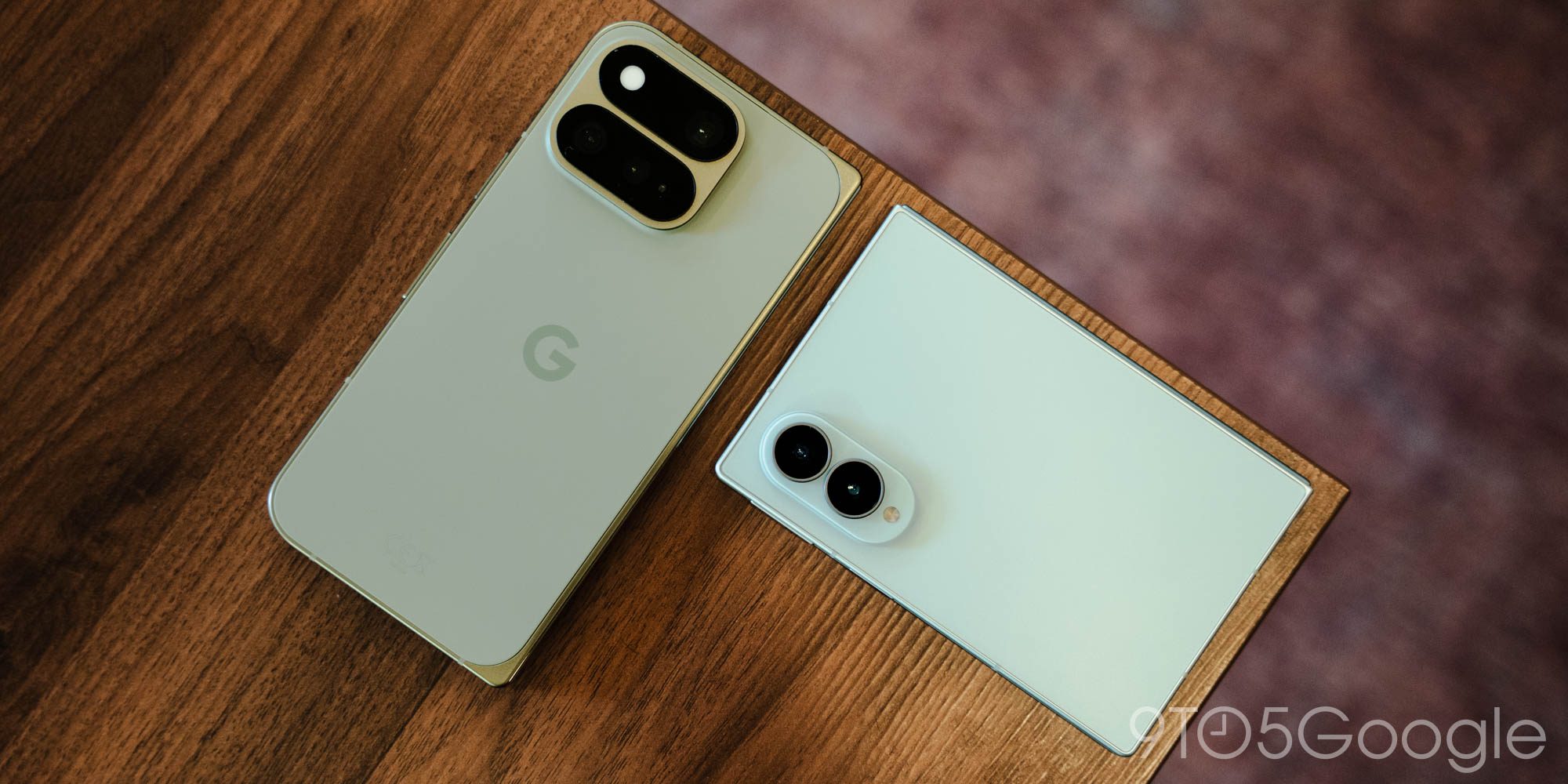
For one thing, it’s thinner. At 10.1mm when closed, Pixel 11 Pro Fold is Google’s thinnest foldable to date, and moving back in the right direction after the last generation put on a couple of millimeters. The “how” is a little wild, though, as Google opted to make one side thinner than the other, leading to an awkward profile and a little ridge you can feel when the device is opened. This is a complete non-issue – a visual oddity, sure, but a problem in no sense of the word. Anyone seriously looking at this phone who is put off by this is being far too petty in my opinion, and while I do wish the halves were symmetrical, I’m happy to accept this trade-off for a thinner overall device.
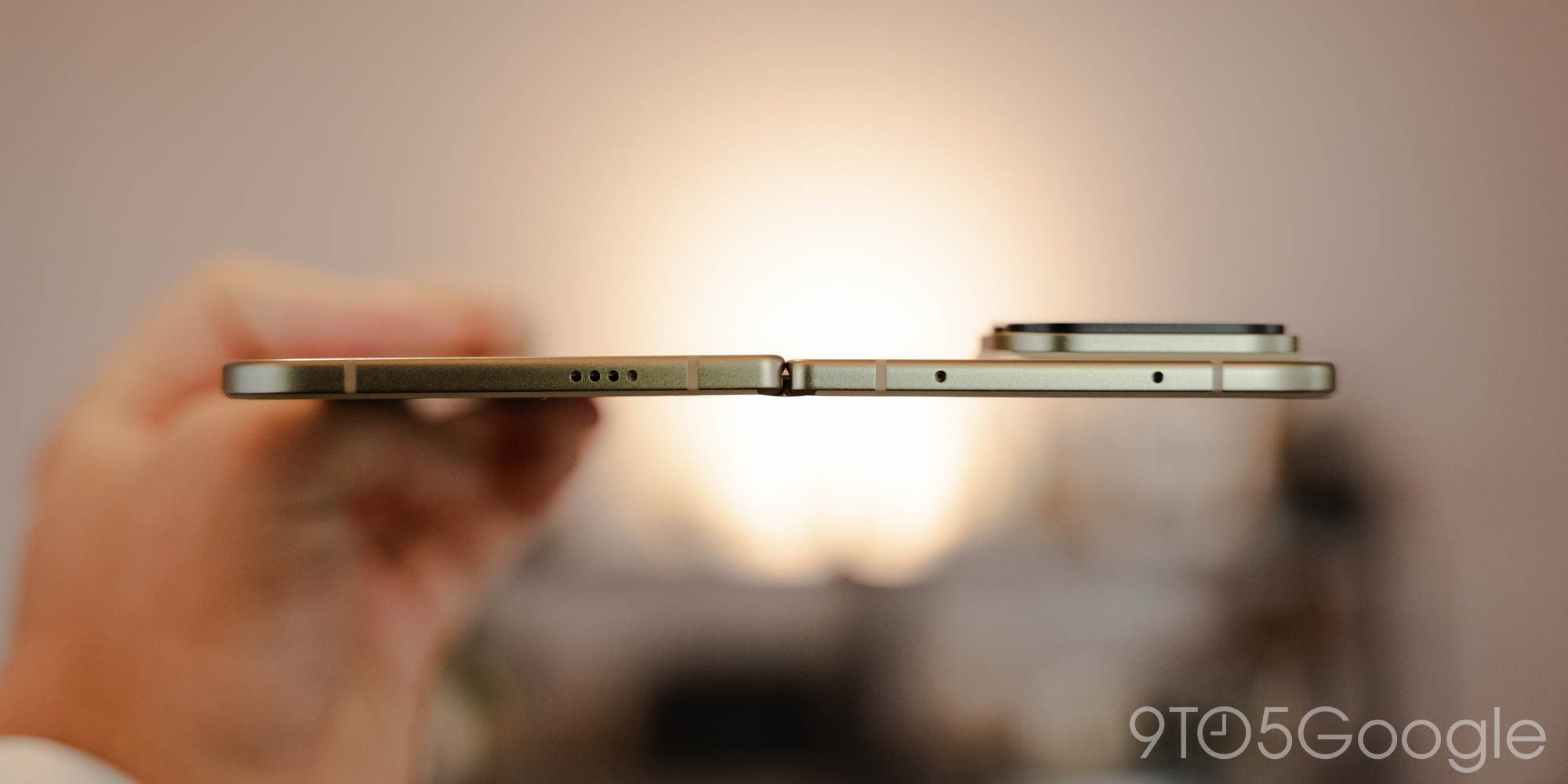
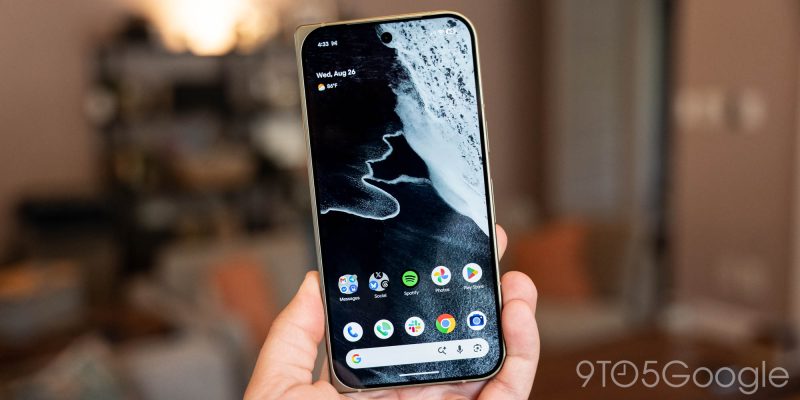
As far as the fit and finish goes, the Fold looks and feels the part. The metal frame feels sturdy and there are no obvious creaks or croaks as you’d find with earlier generations. Google’s work on refining this form factor has also paid off, as the outer display experience feels drastically better compared to the Pixel 9 Pro Fold I last used. The “Olive” color is subtle but good-looking, too.
Google’s big claim on the Pixel 11 Pro Fold is around durability. Like last year, this is the only mainstream foldable with an IP68 dust/water resistance rating, something that will really only prove its value in time. The same goes for Google’s improved hinge, which feels smooth and snappy so far.
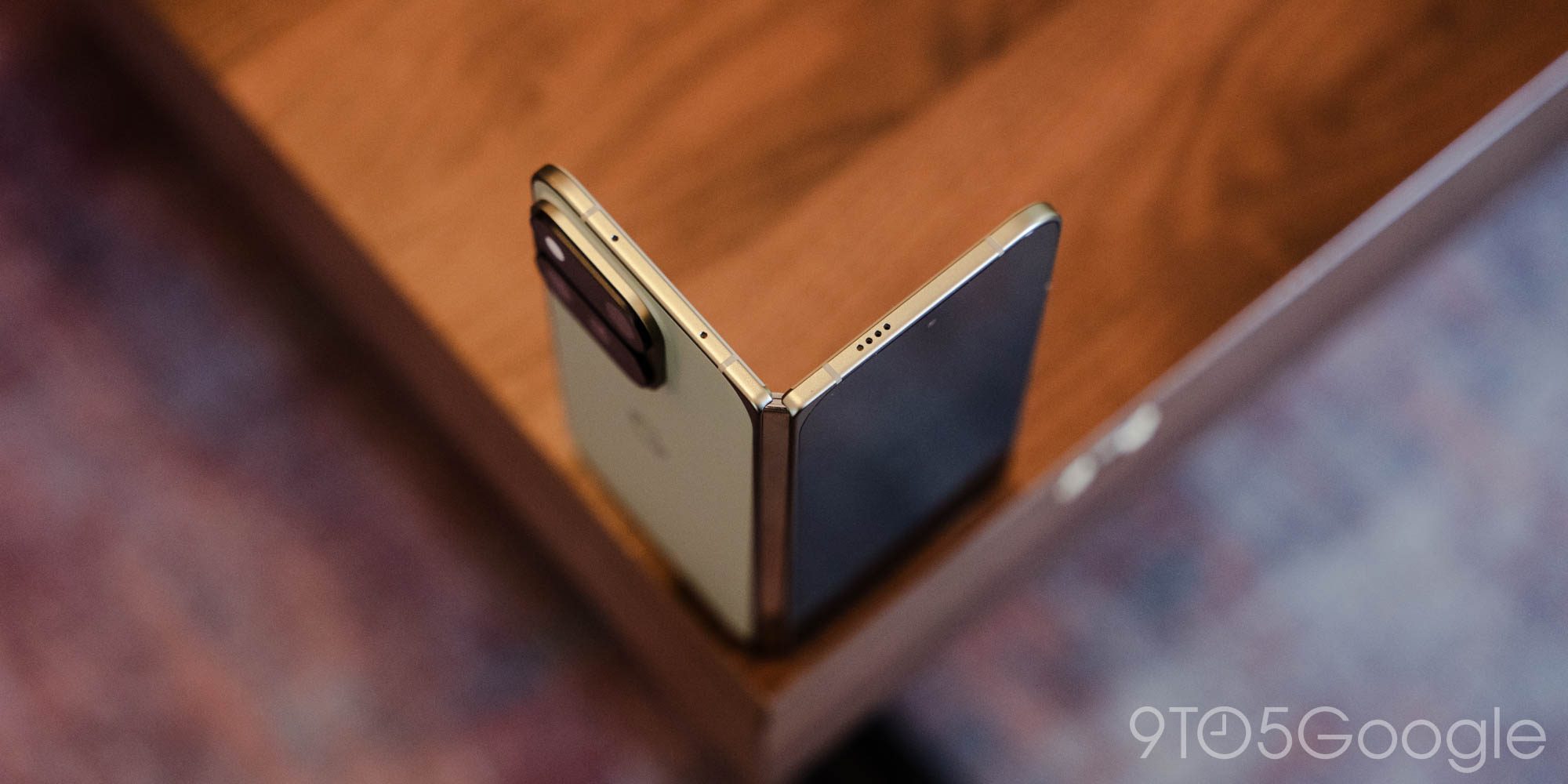
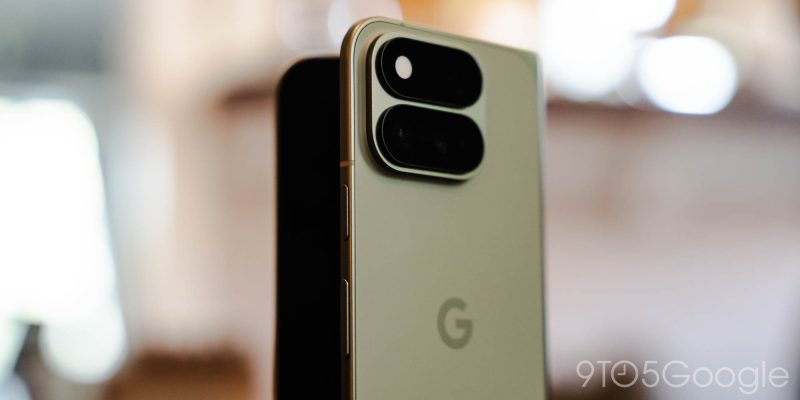
What I was far more keen to try out was the ceramic outer display covering and the “glass fiber composite” around back. The former has held up great so far, without a scuff or scratch to show for its time. The backing material is interesting. Google says that it will be “nearly impossible to crack,” and I do believe that because, well, it’s basically plastic. It feels better than plastic, but this definitely isn’t your typical frosted glass. I’m a bit worried to see how it holds up to scratches over time, but so far, it’s flawless. And those two really do bid well for longer-term use. Previous Pixels I’ve used have scratched within a week or two on the front, and my Galaxy Z Fold 7 scratched on its back panel in what felt like mere hours of use last year. I’m all for trying out new materials to solve this long-running problem, and I’m very excited to see how these hold up after a good start.
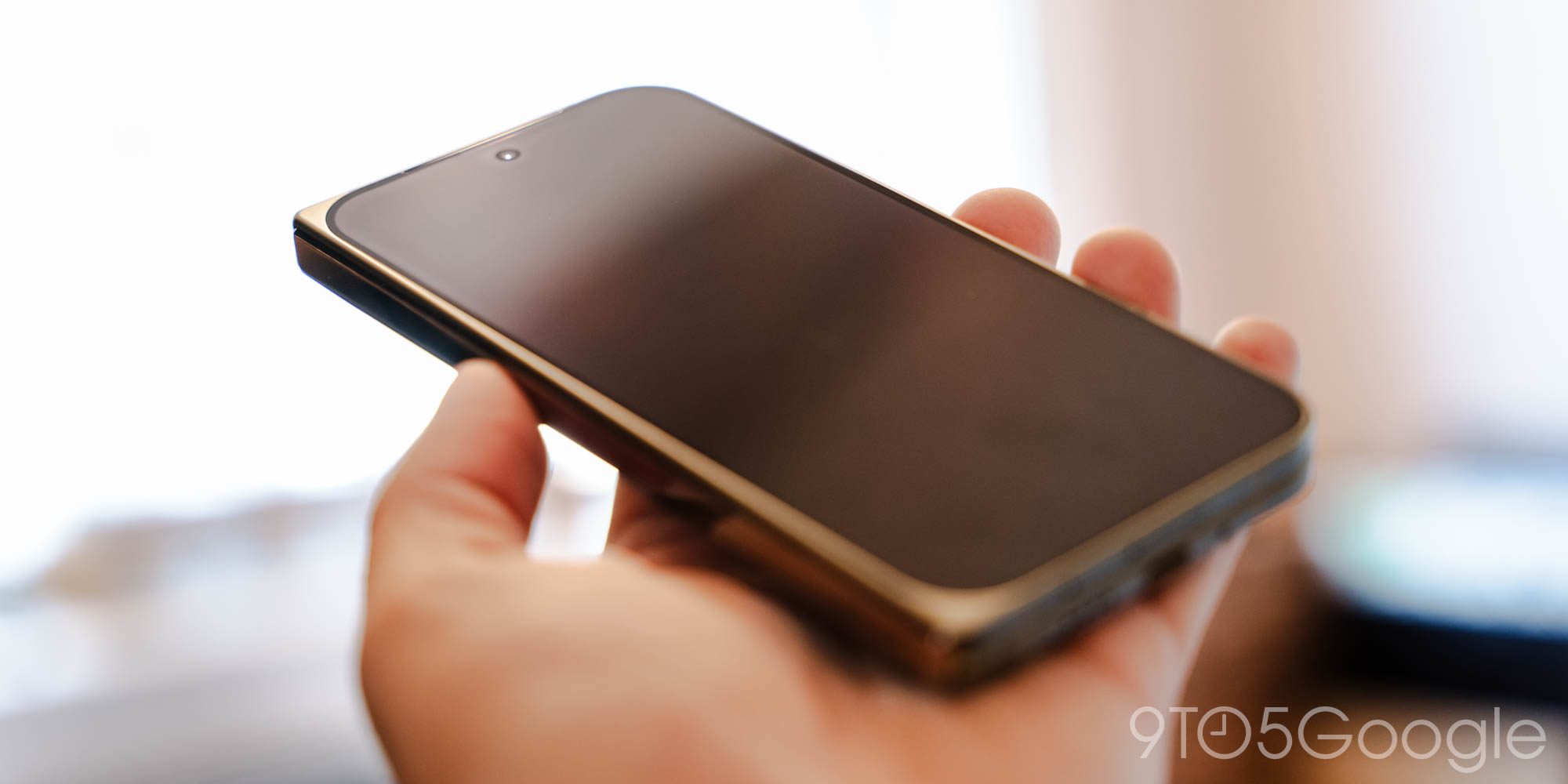
The flip side to Google’s pitch on durability is that there are still some glaring structural flaws in this design, for the third year in a row. Those likely won’t show themselves to the average person, but it’s a problem Google should solve to back up the rest of the claims around the strength of this device.
But, ultimately, the problem is that Google’s refinements aren’t enough to stand out. The Pixel 9 Pro Fold launched this design in 2024 into a market that was stagnant. By being a fair bit thinner, packing in decent camera hardware, and having a usable battery, it automatically stuck the landing. In 2026, you need more than that. Every other foldable brand has spent those same two years essentially eliminating every big foldable flaw – from massive batteries to creaseless displays, it’s all reality now. The Pixel 11 Pro Fold is just left to barely keep up. It’s good enough to be respectable, but it’s also a hard sell to anyone who took issues with those prior flaws.
If you’ll notice, we got through that whole section without talking about “HiLight.” That’s because, frankly, it’s pointless. Restricted to just a contact calling color and a meaningless Gemini status light, I was more annoyed by this feature’s result in making this phone a worse flashlight than I was pleased in its existence. Google needs to step up and give this some actual utility – and maybe take notes from the developer who outdid the tech giant on literally day one.
Excellent displays, crease aside
As mentioned earlier, the outer display is better this year. Google thinned out the bezels and area consumed by the hinge, bumping the device up to a 6.5-inch display that’s mostly edge-to-edge. The rounded look of Google’s design leads to a couple of metal corner bumpers on the left side, but I’ve been happy with it overall. And the panel underneath is quite good, getting very bright in outdoor use, even on the sunniest days.
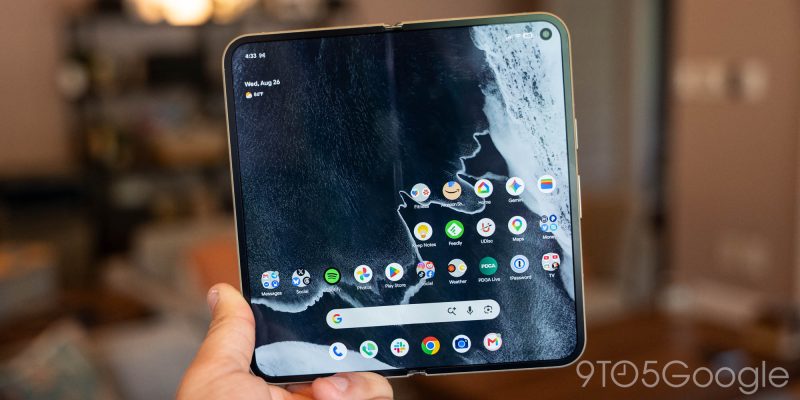
Inside it’s a similar story. The bezels are slim enough, and the 8.0-inch display is perfectly good for everything from videos to multitasking. I’m still very much a fan of the squarish form factor that the Galaxy Z Fold 8 is setting the stage for replacing, and Google’s design works as well, if not better than others. For instance, I love that the Pixel puts its inner display selfie camera cutout off to the corner instead of in the middle of a panel like Samsung’s foldables. It’s absolutely the better choice for media consumption.
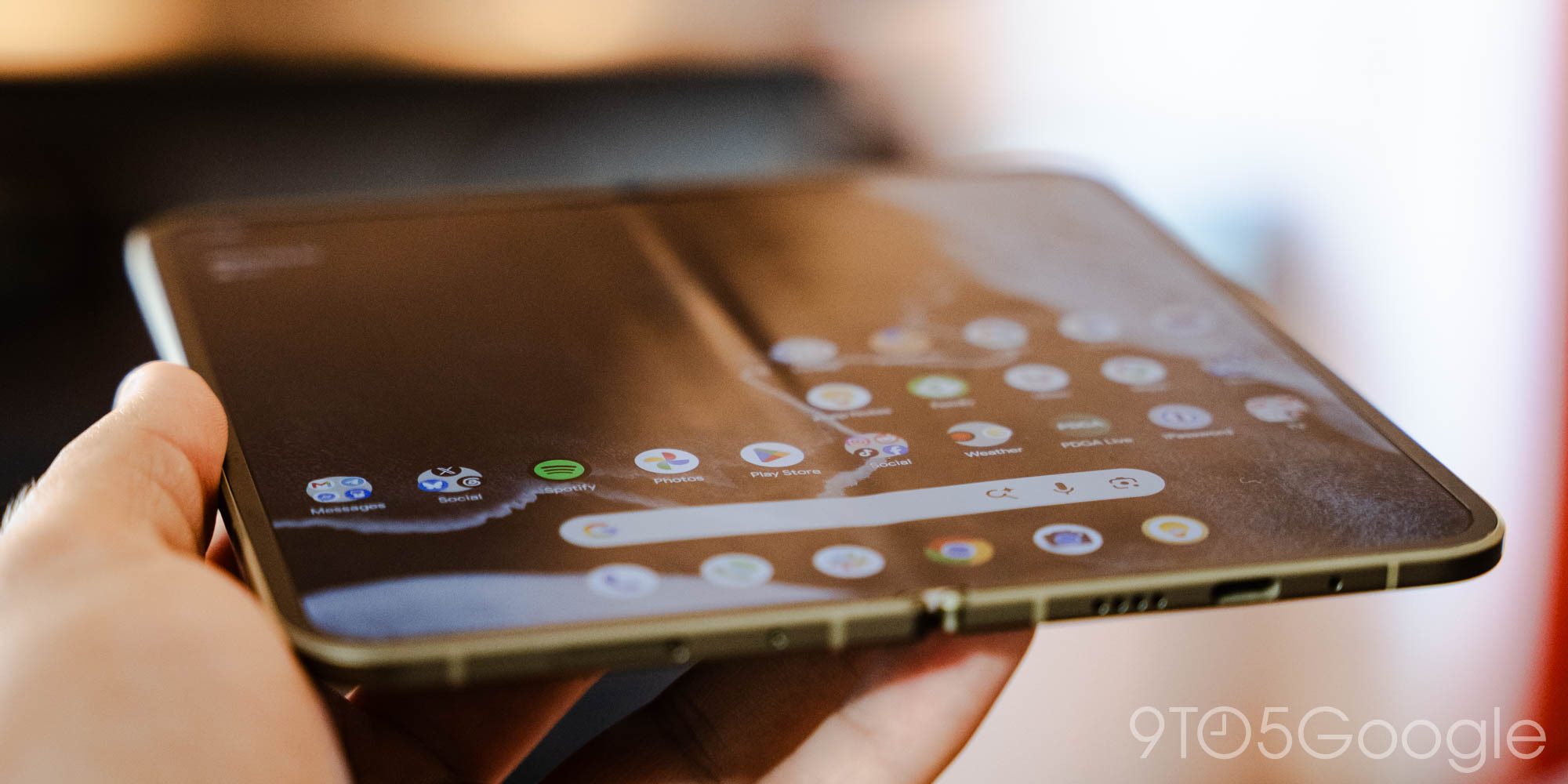
The display crease is, well, it’s there.
Google hasn’t made any drastic improvements here, but it’s completely usable and fine. Like any other foldable released in the past few years, the crease mostly fades into the background when you’re actually using the device. That said, Google needs to step up for the future, because with Samsung having solved this problem in Fold 8 and every other brand doing the same, the Pixel is going to stick out like a sore thumb if there aren’t improvements going forward.
Software & Performance |
Sometimes simple is best
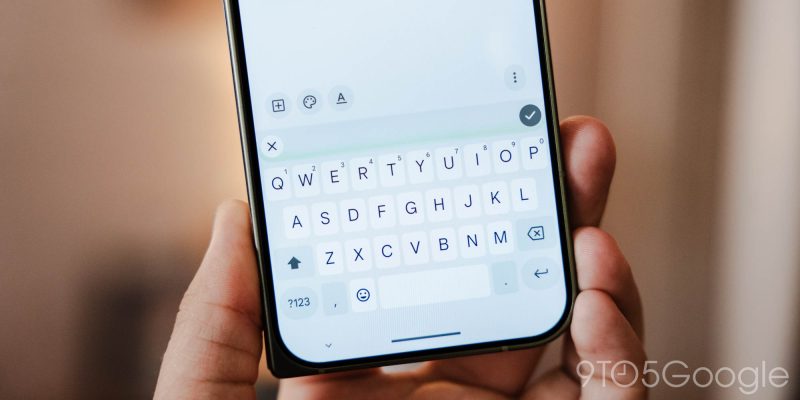
Foldables pin much of their existence on productivity, but Google takes a rather balanced approach to everything. If you’ve ever used a Pixel, you know what to expect here. New this year are Gemini Intelligence features of varying utility. App automation is something I still have no idea how to integrate into daily life, but Gboard’s Rambler has been a really nice addition. While I still wish it provided some level of live feedback, the voice-to-text feature has made it very easy to talk through a message without a second thought, and I’m impressed by how good it is at creating paragraph breaks or even inserting a bullet list. I’ve had my fair share of times where it got a message completely wrong, coming up with unrelated words that just make no sense, but it has a success rate a fair bit higher than traditional voice-to-text, especially from any other Android phone.
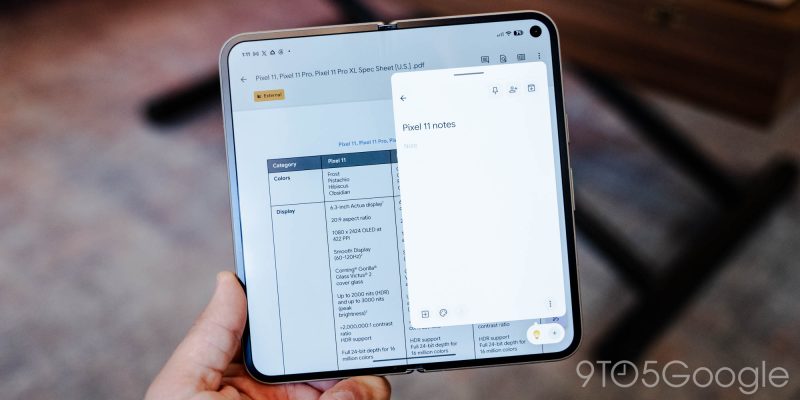
On the foldable side of things, Google’s big new feature is “App Handles.” This is essentially a docked window that lets you have a mini phone at the ready inside of your foldable. It’s a brilliant way to deliver a third app, and is the best new multitasking feature I’ve seen on a foldable in a few years.
Samsung’s “everything and the kitchen sink” approach to software is somewhat exhausting, and I really do appreciate the Pixel’s simpler solution. It’s clean and easy, just letting me focus on what I want to do rather than battle through a sea of settings.
On the performance side, Tensor G6 continues an upwards swing. It’s no Snapdragon and gaming performance is very much still a downside, but day-to-day use flies, the 16GB of RAM is plenty for multitasking, and the biggest improvement I’ve seen is in heat management. Where even my Pixel 10, the non-foldable one, heats up in the midst of a North Carolina summer, the Pixel 11 Pro Fold has kept its cool remarkably well even through a hot weekend spent almost entirely outside.
Somehow, one of the least ‘in your face’ AI phones
It’s been a minute since I’ve been able to fully focus on a Pixel, but something that stood out to me is that, compared to most other Android phones, Google’s approach to AI is one of the least “in your face” ones.
That’s not to say it’s not there. Gemini is present everywhere, but it’s either just at the ready, or working proactively. That’s opposed to basically every other device that tries to call itself an “AI phone” which will readily throw constant pop-ups and prompts trying to get you to use its AI feature. I think that mostly boils down to Google’s focus. Where all of these other brands are shelling out cash to have other companies, usually Google, to power their AI features, Google is building its phones with these features in mind. When they’re so deeply integrated, they don’t get in the way and actually have a chance to be helpful.
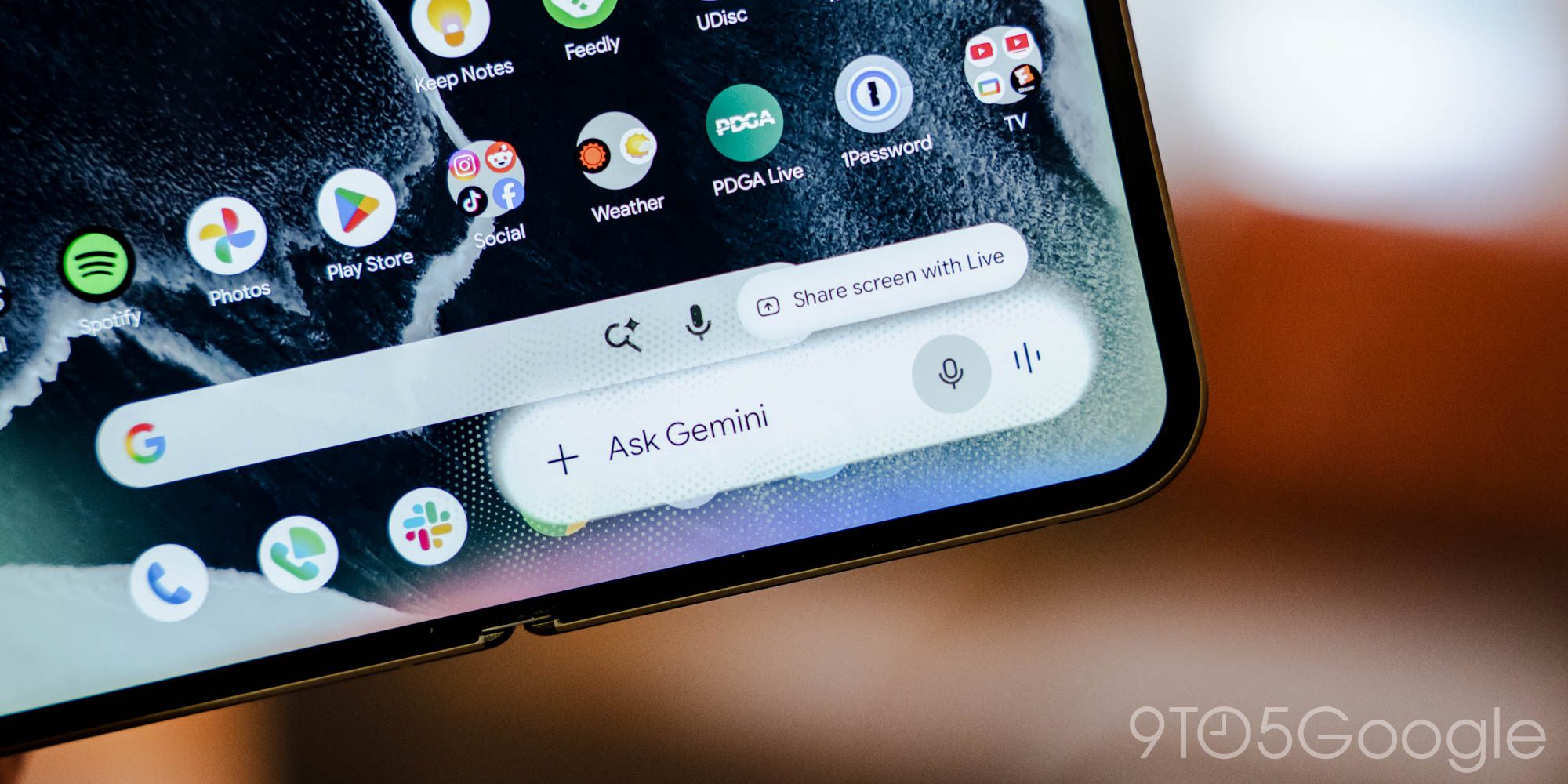
You can get a whole lot more on that from Abner’s Pixel 11 Pro review, but I just found it refreshing that Google doesn’t get in your way in this regard. I was just able to use my phone and, if an AI feature came in handy, that’s all for the better.
Cameras |
Consistent, but not class-leading
Physics. That’s the problem facing foldables, as cameras inherently suffer when you have an ultra-thin design going on. Google, to its credit, continues to improve. Pixel 11 Pro Fold gets a new 48MP main camera backed up by a 10.8MP 5x telephoto camera, 10.5MP ultrawide, and two 10MP selfie cameras. Combined with Tensor G6’s improved image signal processor, the results are pretty good, at least by foldable standards. I’d still put devices like the Oppo Find N6, Honor Magic V6, and even the Motorola Razr Fold ahead from a hardware perspective (including natural bokeh), but the Pixel delivers consistent results that look great. Plus, “Camera Looks” finally delivers a welcome way to add some life back to a camera that’s been increasingly neutral in recent years.
If I were to choose a foldable (in the US) purely on camera, it’d have to be the Pixel. Samsung is stubbornly set in its ways with processing, with motion issues still present after all these years, and the base Galaxy Z Fold 8 completely lacks a telephoto sensor to take things down another notch. The Motorola Razr Fold is good, as mentioned, but it lacks the consistency of Google’s setup.



Battery Life |
Not as bad as I thought
I was initially worried about the Pixel 11 Pro Fold’s battery life. First impressions left me with a device that could barely last the day, but I noticed that it got better and better with time. At this point, I’d call the Fold’s battery life decent, but still not very good. I can get through a day now, but I’m usually going to bed with Battery Saver mode active, especially if I was out on 5G for a while, or connected to wireless Android Auto, even if I didn’t cross 3 hours of screen-on time – I’m usually getting around 4-6, depending on the day.
Bring a battery bank or a charger, you’ll need it, but it could be a lot worse. This is way better than my Galaxy Z Fold 7 was towards the end of its life.
‘Extreme’ charging is pretty underwhelming – Qi2 isn’t
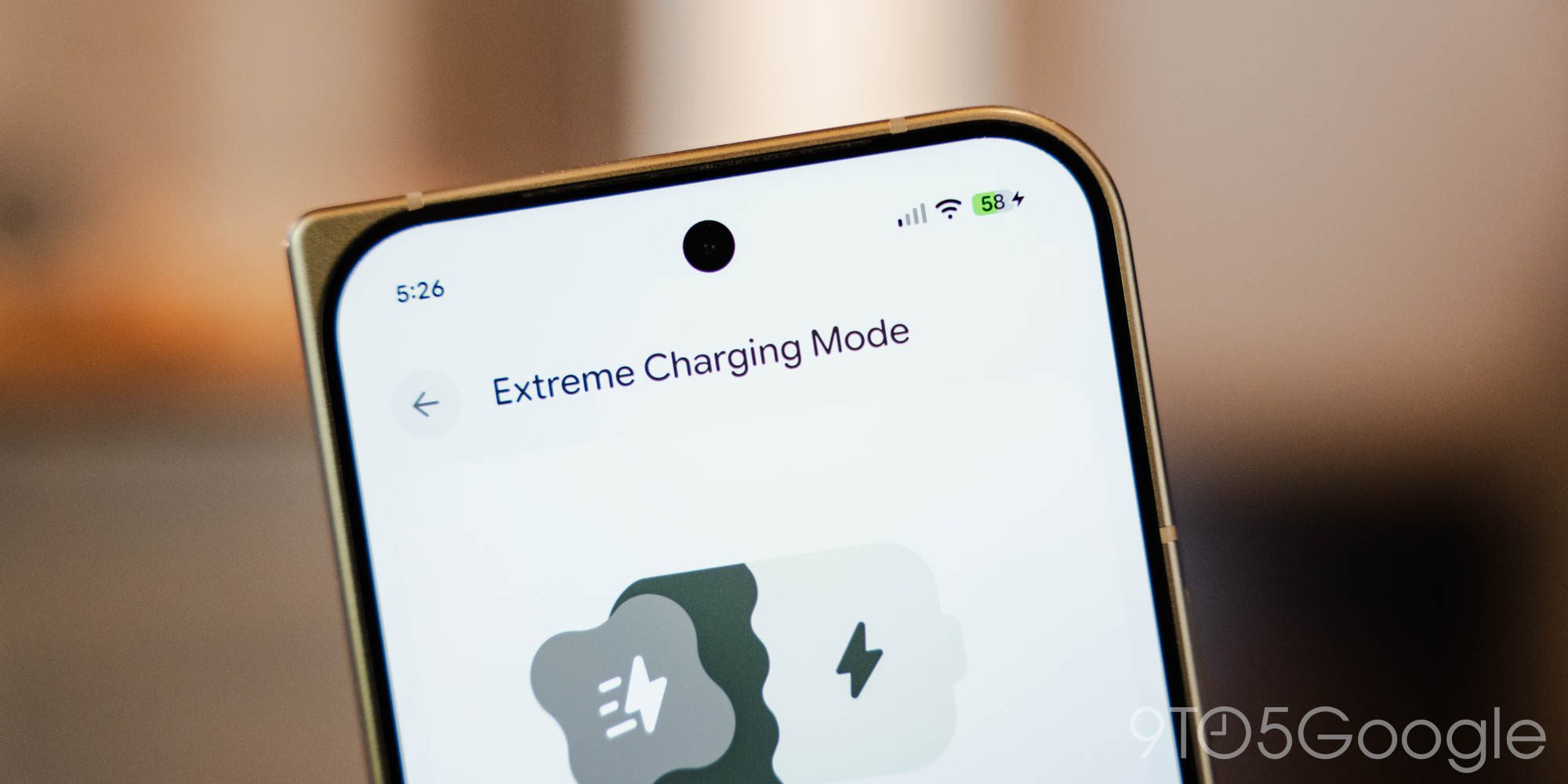
The good news? Google added faster charging this year. Not in terms of actual wattage, but in creating a new “Extreme Charging Mode” that’s able to optimize the charging curve so you can take full advantage of the 30W~ the Pixel 11 Pro Fold can take in.
That’s the pitch, anyway.
In real life, this mode does provide a nice boost to the first 50% or so of a top-up, but it’s still slower than the fast-charging setups found on other devices. It’s a bandage on underwhelming charging, but it’s better than nothing. I just hope there are bigger upgrades to come.
On the flip side, it’s so nice being on a phone with built-in Qi2 magnets, especially a foldable. While I’m all for a case on my phone in most respects, I tend to go without on a foldable, both because the device is typically already thicker in the first place, but also because I still say that anyone using a foldable should have insurance anyway. So after a year of dealing with clunky adhesive rings on my Galaxy Z Fold 7, using the Pixel 11 Pro Fold in a Qi2 ecosystem of chargers, batteries, and mounts has been excellent, especially now that charging speeds are boosted to the full 25W (you know, for a few minutes). It almost outweighs the battery life – almost.
Final Thoughts |
Not the best, far from ‘bad’
The Pixel 11 Pro Fold, on its own, is objectively a “pretty good” foldable. It has decent cameras, good screens, useful features, and durable hardware. The main place I found it lacking was in battery life, but even that isn’t that bad.
I came into this review trying to decide what my daily driver for the next year would be. It was always going to be a foldable, and it was really just between this and the Galaxy Z Fold 8. On paper, the Pixel 11 Pro Fold puts up a very good fight in that regard. After just shy of two weeks, I’m not sure I’ve made my personal decision just yet. There’s a charm to Samsung’s foldable hardware, especially the new form factor, that the Pixel is lacking but, at the same time, the Pixel delivers a consistent device with features I love, like Google’s simple software approach, “App Handles,” and Qi2, not to mention with better cameras too.
It’s a very tough call, one that I’m not sure I’m ready to answer for myself.
Top comment by Robert Sherman
I have a Pro Fold 11. The Battery has been great since day 1. Out of the box I got a day and 1/2. The software experience is great, and I have played Solo Leveling on it and it's smooth. Maybe not the best gaming phone, but good enough. Rambler is amazing, I haven't had any mishaps on it at all, maybe the author needs to annunciate a bit better? The screen is fantastic and very bright, the speakers are loud...idk what the author's beef is at all.
But for anyone debating between these two foldables, I think there are a few more points in Samsung’s favor, especially for someone new to the foldable world. The Pixel, though, absolutely has its audience. The better comparison is technically to the Razr Fold and, while I appreciate Motorola’s epic battery life, I’d take the Pixel’s consistent cameras and software over Moto’s awful track record on the latter.
That’s all it comes down to for me. The Pixel 11 Pro Fold isn’t the best, but it’s also not bad either. Sort of like how every smartphone has a good camera now and it all comes down to your priorities and taste, the same applies to foldables. You’re checking every important box with the Pixel 11 Pro Fold, but are you hitting the parts you care about most?
If so, Pixel 11 Pro Fold starts at $1,899.
- Google Store
- Amazon (+ $350 gift card)
- Best Buy (+ $350 gift card)
Follow Ben: Twitter/X, Threads, Bluesky, and Instagram


FTC: We use income earning auto affiliate links. More.



Comments