
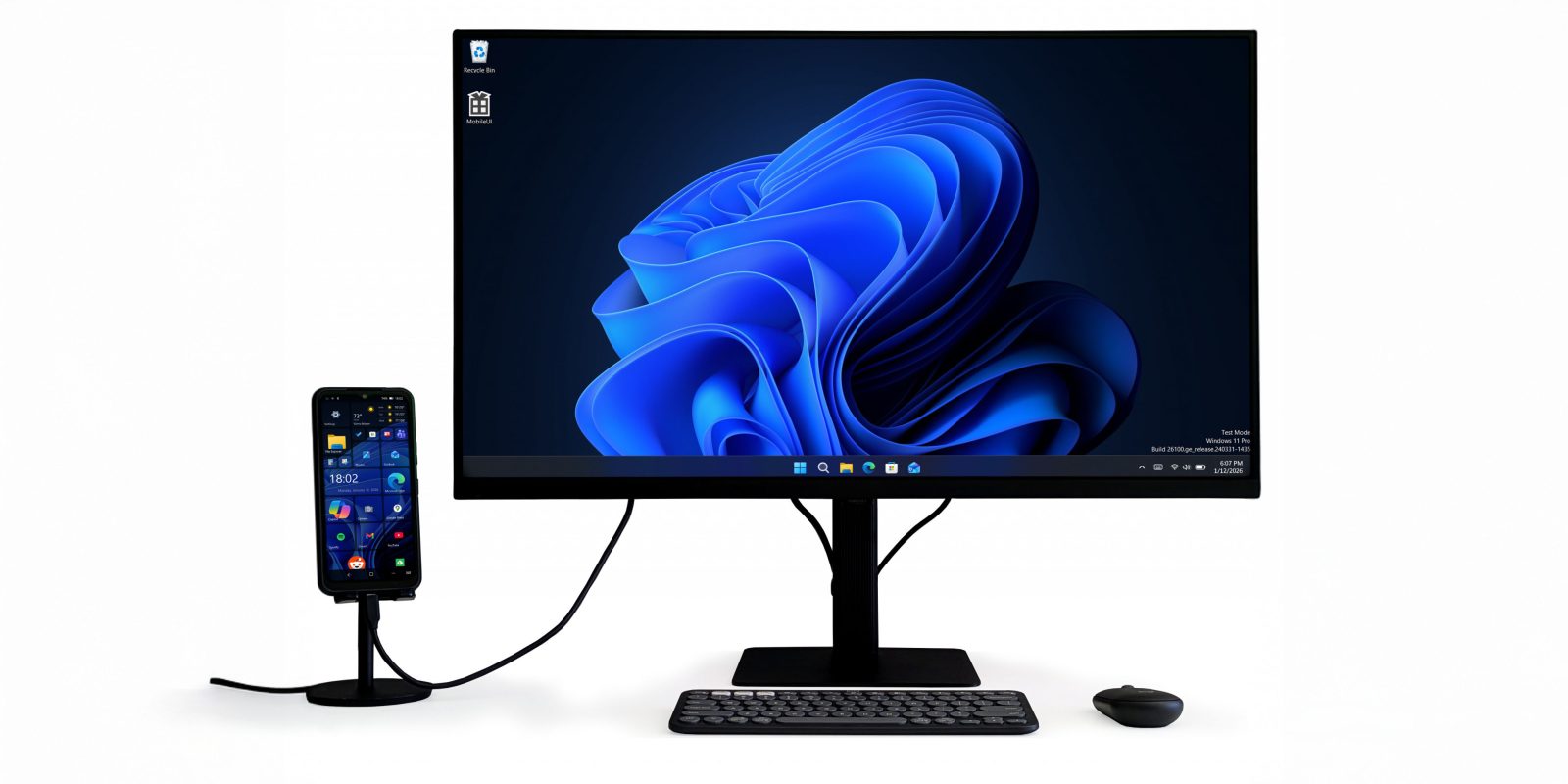
If you’ve been dreaming of a life that revolves around just a single device — your phone — capable of replacing your laptop, desktop, and more, a new piece of hardware might give you exactly what you’re looking for. Unfortunately, you’ll need to accept some cut corners to get there.
NexPhone is the next new piece of hardware from the crew behind the NexDock, a laptop-like shell that utilizes your existing device for all of its computing resources. The word of mouth on NexDock is, let’s say, mixed, but in our current ARM-centric world, it’s easy to see how the core concept of your smartphone being the sole computer you need in your life could be expanded to something like the NexPhone. Whether or not you’re going to want to use it, however, is an entirely different conversation.
At its core, the NexPhone looks like any run-of-the-mill budget-friendly Android phone from the late 2010s, with a specs sheet that isn’t too far ahead. Between the large bezels and its gray, rubberized body, it’s not a device that screams cutting-edge, and its 13.1mm, 256g chassis might have you wishing for something a little lighter. Still, though, there are aspects here to like, including a FHD+ 120Hz 6.58-inch display, a 64MP Sony IMX787 primary sensor, and 12GB of RAM.
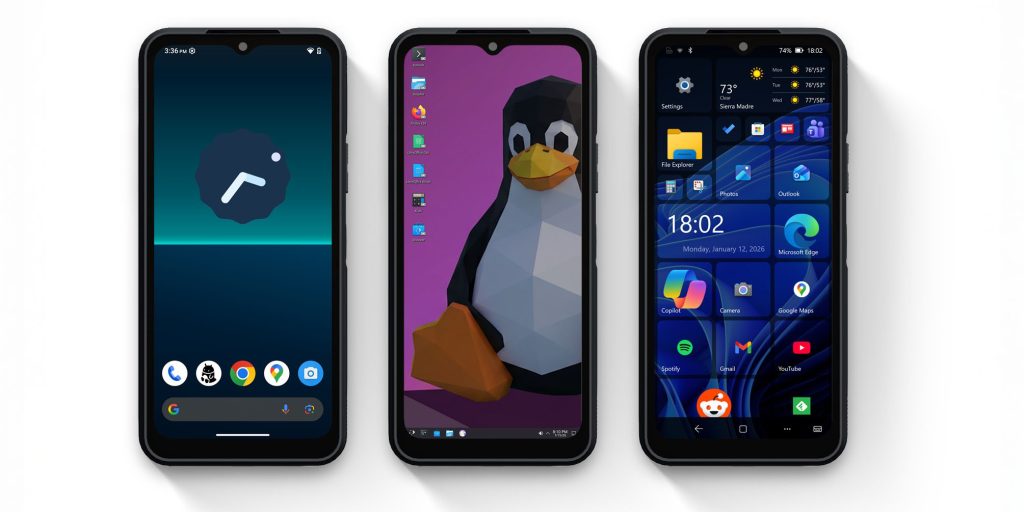
What sets the NexPhone apart, obviously, is its multi-boot configuration. In addition to shipping out of the box with Android 16 — another win for the specs sheet — the NexPhone includes Linux by way of Debian. Simply plug your phone into a monitor and you can launch Linux in all its glory. But why stop there? NexPhone is also capable of running Windows 11, and although it requires a reboot, the idea of carrying around a capable Windows device in your back pocket sure sounds appealing. You can even run Windows 11 in a mobile environment with the help of a custom Windows Phone-inspired UI.
So what’s the catch? Put simply, it’s the processor. The NexPhone runs on Qualcomm’s QCM6490 SoC. If you haven’t heard of it, that’s because it’s actually an enterprise-grade chipset designed for IoT and other similar products. If you have heard of it, that’s likely because it’s the processor that powered 2023’s Fairphone 5. It’s effectively a variant of the Snapdragon 780G, a mid-range 6nm chipset from late 2021. In other words, it’s not exactly the powerhouse you probably want to power your fully fledged Windows experience.
There are a couple of strengths to picking something like the QCM6490. It’s apparently supported by Qualcomm through 2036, which should allow for easy updates to Android moving forward, and the NexPhone store page says Microsoft lists it as an officially supported platform for Windows 11.
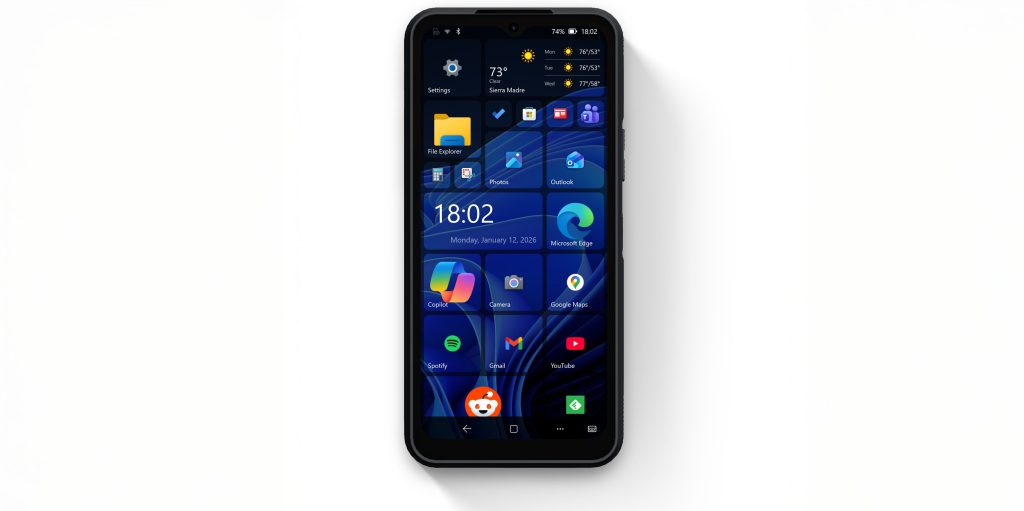
But running Windows at high performance is a much larger ask than, say, running Android or Linux, and even with 12GB of RAM, I just can’t imagine the experience feeling fast enough for much more than, say, checking your email occasionally. And while a decade’s worth of support sounds great on paper, I can’t say I would have much interest in using a low-end laptop from 2016 to run Windows today either. Even the ability to run Windows in a modified mobile environment sounds compromised — that 5,000mAh battery isn’t going to last you long if you have an entire desktop PC crammed into your jeans.
It’s a clever idea, and one I’ve been pushing since the launch of the Snapdragon 8 Elite in 2024. But if you’re really looking for an all-in-one smartphone experience that is capable of replacing everything else in your life, you’re probably going to need to wait for something like the Galaxy Z TriFold — complete with its DeX support — to really stick the landing. At the very least, the NexPhone won’t break the bank; you can pay $199 down right now to reserve its early $549 price tag ahead of a launch targeted for Q3 2026.


FTC: We use income earning auto affiliate links. More.


Comments