
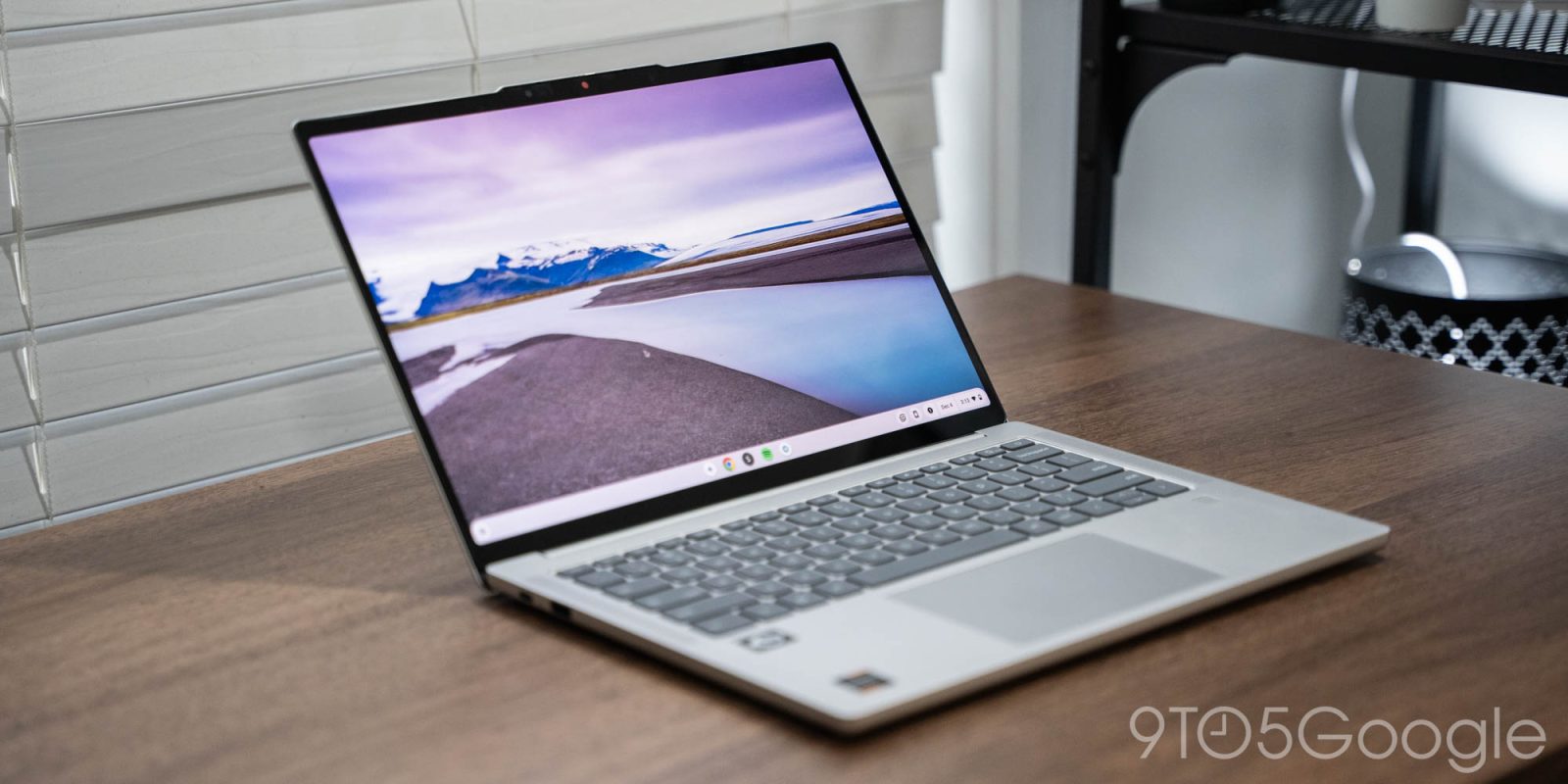
During The Android Show earlier today, Google revealed its “Googlebook” project that will replace Chromebooks, but with so much mystery around what’s to come, there are a lot of questions, but only a few answers. Here are a few additional details.
The biggest question around “Googlebook” and the replacement of ChromeOS is, “what happens to Chromebooks?” In a statement to 9to5Google, Google confirms that Chromebooks will continue to be updated throughout their lifespans, while some machines will be eligible to move to the experience found on Googlebooks.
Chromebooks have become an invaluable tool for educational institutions, businesses, and consumers throughout the globe, bringing powerful features, security, and simple-to-use management tools for commercial users. We absolutely intend to continue investing in those experiences and supporting those users. And of course, all Chromebooks will continue to receive support through their device’s existing date commitment, and many Chromebooks will be eligible to transition to the new experience. We’ll share more details closer to launch.
It’s unclear which models in particular will be supported, but Google says that “many” will be eligible.
A further interview between ChromeUnboxed and Google VP John Maletis – a lead on ChromeOS for roughly a decade now – offers a few more details.
On the software side of things, Maletis had no answer for what the OS on Googlebook will be called. The Android-based platform will apparently share a lot in common with Android’s desktop interface (when plugging in your phone), but there’s no actual name yet.
As far as the experience itself goes, ChromeOS users should prepare for both familiarity and changes. While attention has been paid to existing features, Maletis says that features may change, work differently, or be removed following the transition as Google is “rethinking so much of it.”
Made clear by Google’s teaser hardware, this new project is focused on premium hardware. This apparently includes chipsets from Intel, Qualcomm, and MediaTek. Qualcomm has been building out Apple-competitive desktop chips through the Snapdragon X series, but it’s not immediately clear what MediaTek will be bringing to the table beyond its mid-tier chips that have powered Chromebooks for years now. The mention of Intel confirms that this new platform will continue to support x86.
Maletis says that partner hardware has, so far, included “beautiful devices, incredible hardware,” adding that first releases are “super premium.”
Finally, there’s the Samsung-shaped elephant in the room. Despite leaks of an Android-powered Galaxy Book, Samsung’s logo wasn’t alongside brands like Dell and Lenovo. Maletis didn’t directly talk about Samsung, but confirmed that the list shown there was just the partners hitting Google’s initial launch window of Fall 2026.
Of course, it had to be asked. What about a “Google Googlebook,” aka first-party hardware. Unsurprisingly, there was no comment on this. But oh boy, what a name that would be.
As a little tidbit at the end, Maletis revealed that he’d performed the interview on a Googlebook.
The entire 45-minute podcast is available on YouTube.
More news from The Android Show:
- Everything announced at The Android Show: Gemini Intelligence, Googlebooks, and more
- Gemini Intelligence brings gen UI widgets, Gboard ‘Rambler’ to Android, debuting on Pixel & Samsung
- Android Auto is getting a redesign that takes up your whole display, adds widget support, more
Follow Ben: Twitter/X, Threads, Bluesky, and Instagram


FTC: We use income earning auto affiliate links. More.


Comments