
Hey there, it’s Thursday and that means we’re one day closer to the weekend. What are you up to? I’m currently deciding what color Fold 8 to buy, listening to the excellent (and weird) new Strokes album, and installing a 26B parameter Gemma 4 model on an 8GB MacBook Air.
As a reminder, Inbox is the tech newsletter you should be able to read in around 95 seconds. We cover the most important 9to5Google stories from the last couple of days along with a few highlights from around the web. We publish every Tuesday and Thursday, and if you like what you read, please subscribe.

You can find previous issues of Inbox here.
⭐️ Starred
One of my favorite moments in a truly superlative trip to Atlanta last summer was boarding my first Waymo. I’d called an Uber to take me and my wife to a restaurant and got the pop-up asking whether I wanted to swap out a human for a robot driver. The nerd in me melted into a puddle, and I bounced like a toddler waiting for the white Jaguar I-Pace I’d seen so many times in videos.
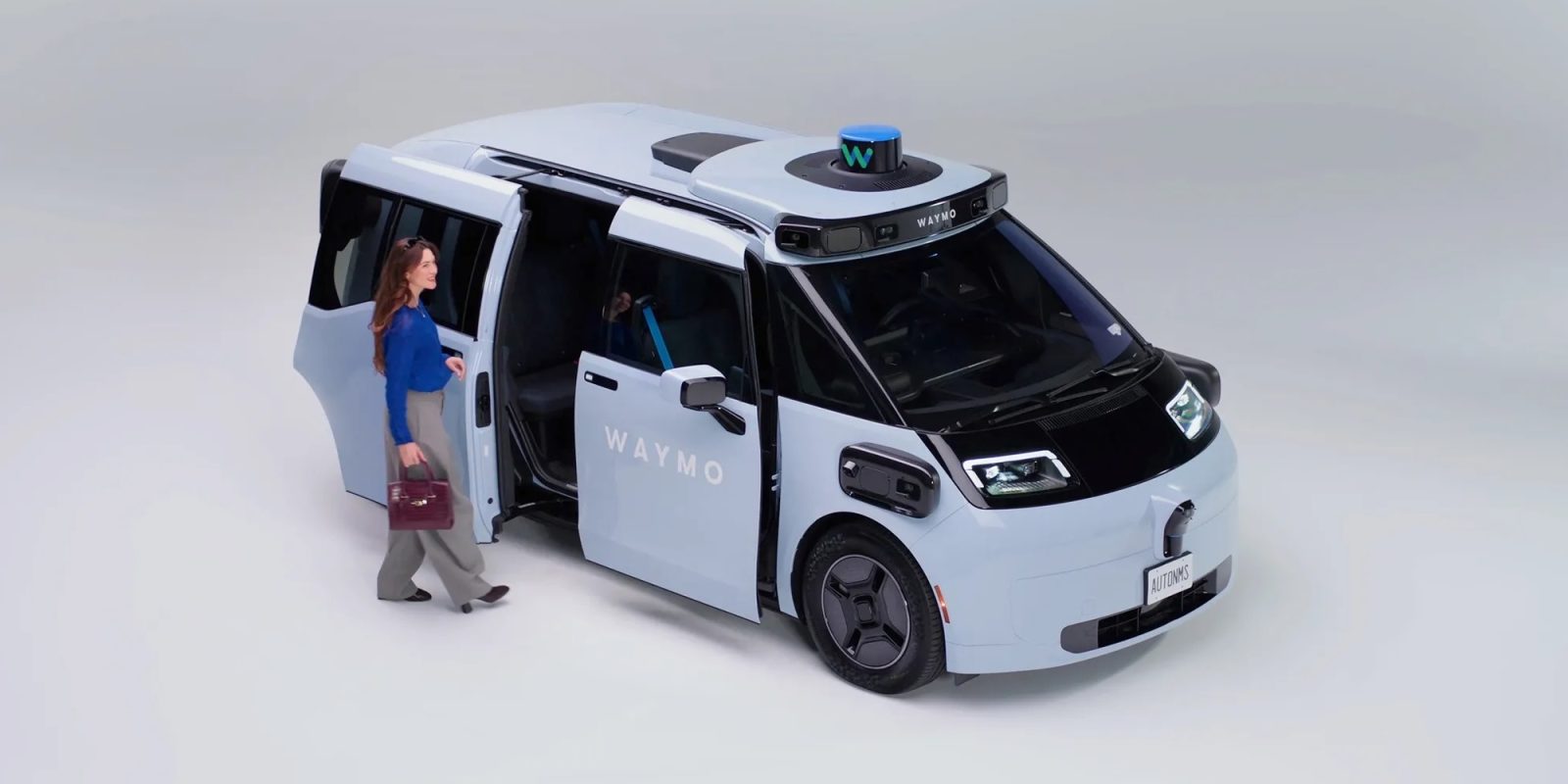
There’s nothing fussy or pretentious about the initial Waymo experience; aside from the automated voice and lack of driver, it feels very much like riding in a retrofitted sedan. But Waymo’s Ojai platform, built on Chinese automaker Geely’s Zeekr minivan base, is reportedly a whole lot more interesting. Launched back in May, while the new fleet of Waymos maintains the steering wheel, the company is going “premium” with its 6th-generation Driver by touting a “true living room on wheels.”
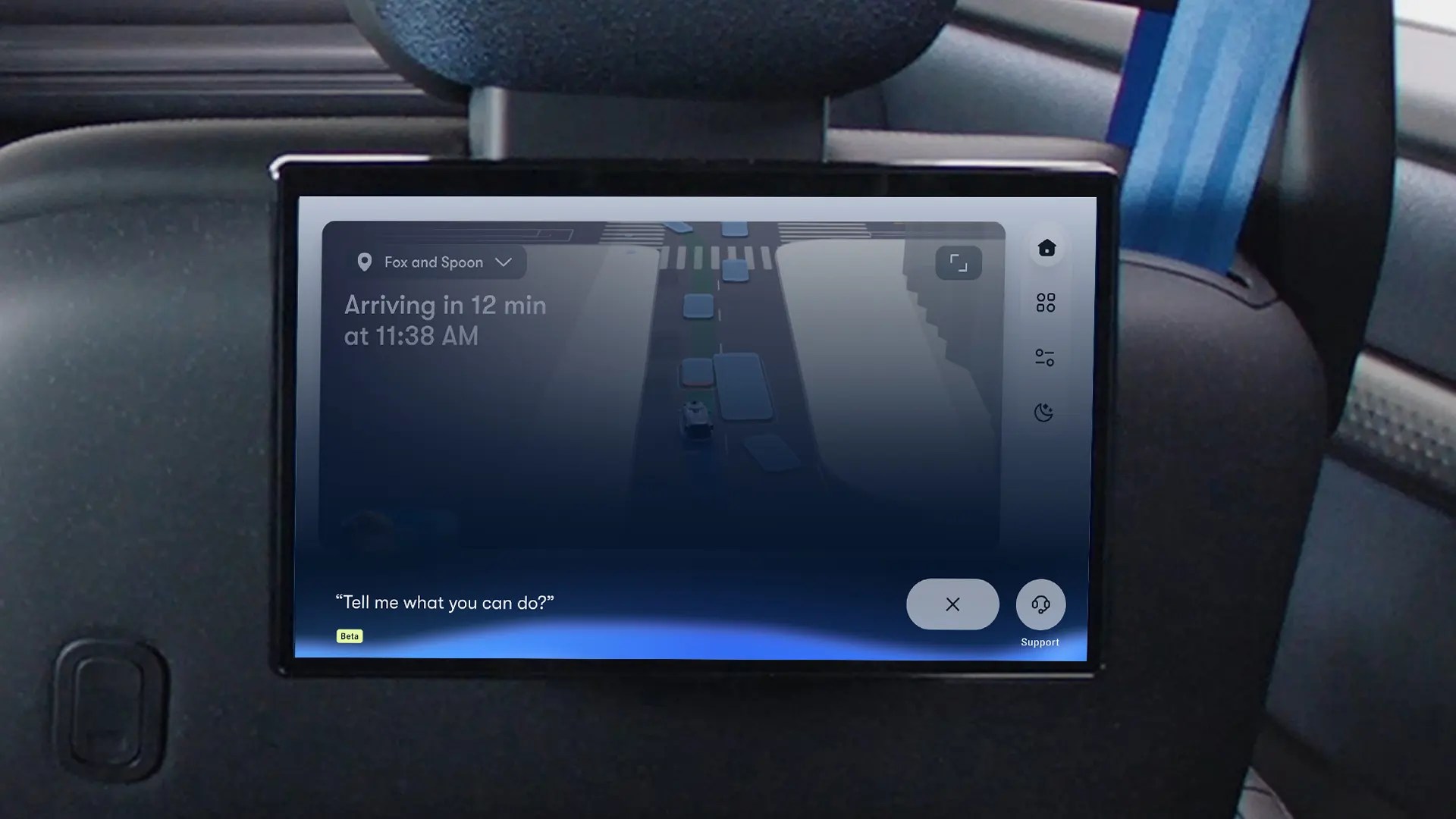
With its most recent announcement, Waymo is updating the UI across its three user-accessible screens, both with a “lean-back” touch interface that adapts to the number of riders in the car, and Gemini integration.
Google’s horizontal integration of Gemini across its various platforms continues apace, from Workspace to macOS to the living room, but the living room on wheels makes me particularly excited. There’s been a long legacy of voice-first smart car interfaces in science fiction, from Knight Rider’s KITT to the creepy Johnny Cab in Total Recall, and for good reason: when you need to keep your eyes on the road, it’s nice to have a smart conversational pal for company.
Google is touting Gemini in Waymo as a “conversationalist AI… a helpful passenger.” Combination tour guide and assistant, it can tell you about local landmarks, find a local book store, and turn up the temperature. Importantly, Gemini is a separate entity from the Waymo Driver; Google insists “you can issue a voice command to request a pullover, but Gemini does not otherwise control any aspect of the vehicle’s movement or routing and does not have access to real-time driving data.”
Gemini is already in the car (for better or worse), and Google’s platform dominance lets it extend to autonomous vehicles, too, putting it in a position to gather the quantity of data that other companies in this space can only dream about.
✉️ Inbox
- WhatsApp launches web calling alongside new features. Meta is taking on Google Meet with its latest suite of WhatsApp Web features, which include high-quality video calling, a waiting room, and transferring calls from one device to another. And who said innovation was dead?
- Samsung keeps pretending Galaxy phones have Qi2 magnets with new accessories. One of my biggest pet peeves about Samsung is not that it omits important, user-friendly features from its phones (though lack of Qi2 objectively sucks) but that it pretends it didn’t.
- Honor Robot Phone gets official camera specs, launches same day as Pixel 11. After months of teasing, Honor’s ridiculous gimbal-powered Robot Phone is finally launching — and it happens to be the same day as Google’s new Pixels. At least we now know just how massive that camera sensor is.
- Galaxy Z Fold 8 pre-orders selling faster than Samsung expected. In not-so-surprising news, Samsung’s latest Fold 8s are selling really well. Maybe it’s the great colors or the fact that the new form factor really is that wonderful.
- Android’s Find Hub app now lets you remove old Bluetooth headphones. Living out the Titanic “It’s been 84 years” meme in real life, Google finally now lets people remove broken or sold headphones from the Find Hub app.
- Some nice One UI 9 perks coming to (some of) your phones:
- Gemini for macOS rolling out voice control and Gboard Rambler-level transcription. I’m a big fan of Gemini’s macOS app, and adding the ability to speak naturally to it and have an agent perform tasks across multiple windows seems like a winner to me.
- Google TV is reportedly the #3 streaming OS in the US. Behind only Roku and Fire TV, Google’s play to become the default platform on many smart TVs, from TCL to Hisense, has proven successful.
- New Pixel 11 Pro teaser provides better look at Glow [Video]. We know Google’s adding a splash of color to its LED flash in the Pixel 11, and now it’s giving us a better idea of what it will do.
- Robot vacuums are included in the US robot ban. What was initially thought to be a ban on “humanoid” robots has proven to extend to all Chinese-built products in the category, including most robot vacuums from companies like Roborock, Dreame, Narwal, Ecovacs and more. Existing products aren’t affected, but new ones will need to apply for a special dispensation before entering the country.
🤑 Action items

I started using an e-paper tablet to journal and take notes way back in 2020 when I reviewed the Remarkable Tablet 2, and I’ve had one model or another positioned to the right of my mouse every day since. These days, it’s the Remarkable Tablet Pro Move, the smaller 7-inch color variant that’s much easier to travel with.
I like the feeling of writing on a digital tablet; it’s like paper but with a password. As 9to5Google senior editor Andrew Romero writes about the new Boox Go 10.3 Gen II Lumi:
The bigger story lies in how it performs, and man, do I love using it. This is where the tablet sees an upgrade from the first generation. The InkSense Plus stylus is a step up from the magnetic stylus Boox was using before.
It has several thousand levels of pressure sensitivity. I don’t have experience with how many levels make a stylus that operates well, but it’s somewhere around several thousand. The display’s paper-like texture and the stylus combine to make a wonderful writing experience. Little pressure differences translate into realistic pen strokes, but none of it feels so incredibly inauthentic.
But the major difference between something like the Remarkable Tablet and the Boox is that the latter runs Android:
At first, I rejected the idea of separating Android apps on an Android device, but as I’ve used the Go tablet more, I’ve come to appreciate the distinction. Even with the entire Google Play Store at my disposal, I tend to spend most of my time writing or reading. That’s what it’s for, but your mileage may vary tremendously. That’s the reason third-party apps are at one’s disposal.
At just under $450, the Boox Go 10.3 is, like the Remarkable Tablet, not a small investment, but it also seems like a perfect way to combine production with consumption in the best way possible.
🙃 FWD:
This section has some of our favorite stuff from around the internet. Great videos, weird memes, fun reads, recommended apps, whatever. Send us your recommendations!
TechAltar, the YouTube channel run by Marton Barcza, is one of my favorite places for deep dives into the whys and hows of emerging tech and its broad societal implications.
In his latest video, he travels to Seoul to see how its tech-forward culture has emerged as both utopia and dystopia. A fantastic overview of a fascinating country’s tense relationship with futurism, mobility, and surveillance.
🗑️ Trash
Big Tech is spending millions to train trade workers to help facilitate the massive proliferation of data centers:
The data center boom is on everybody’s mind at the Detroit Electrical Industry Training Center, where about 850 apprentices train between long days on the job. The megaprojects are pulling skilled trade workers into remote locations with some of the highest pay and bonuses that the industry had ever seen.
The next generation of electricians is also top of mind for the artificial intelligence companies spending hundreds of millions of dollars to ensure they have enough people to build and run their data centers.
Right now, the uptick of trainees is offsetting employment opportunities lost in the years after the pandemic.
There is no parallel in American history for the boom underway in the construction of data centers, fueled by companies with functionally unlimited cash that are racing to supply skyrocketing demand for their A.I. models.
The explosion has offset flagging activity in other sectors, like office construction, which never recovered after the pandemic. Housing has been depressed by high interest rates, and offshore wind felled by political opposition. Still, competition for labor — never mind land and materials — is starting to weigh on other parts of the industry.
At least we know the most ethical companies are participating:
In one of the largest efforts, Meta, the social media giant, has allocated $115 million for the first year of what it says will be a multiyear commitment to train construction workers, starting with about 5,000 participants.
Thanks for reading, and have a great weekend. See you on Tuesday.


FTC: We use income earning auto affiliate links. More.


Comments