
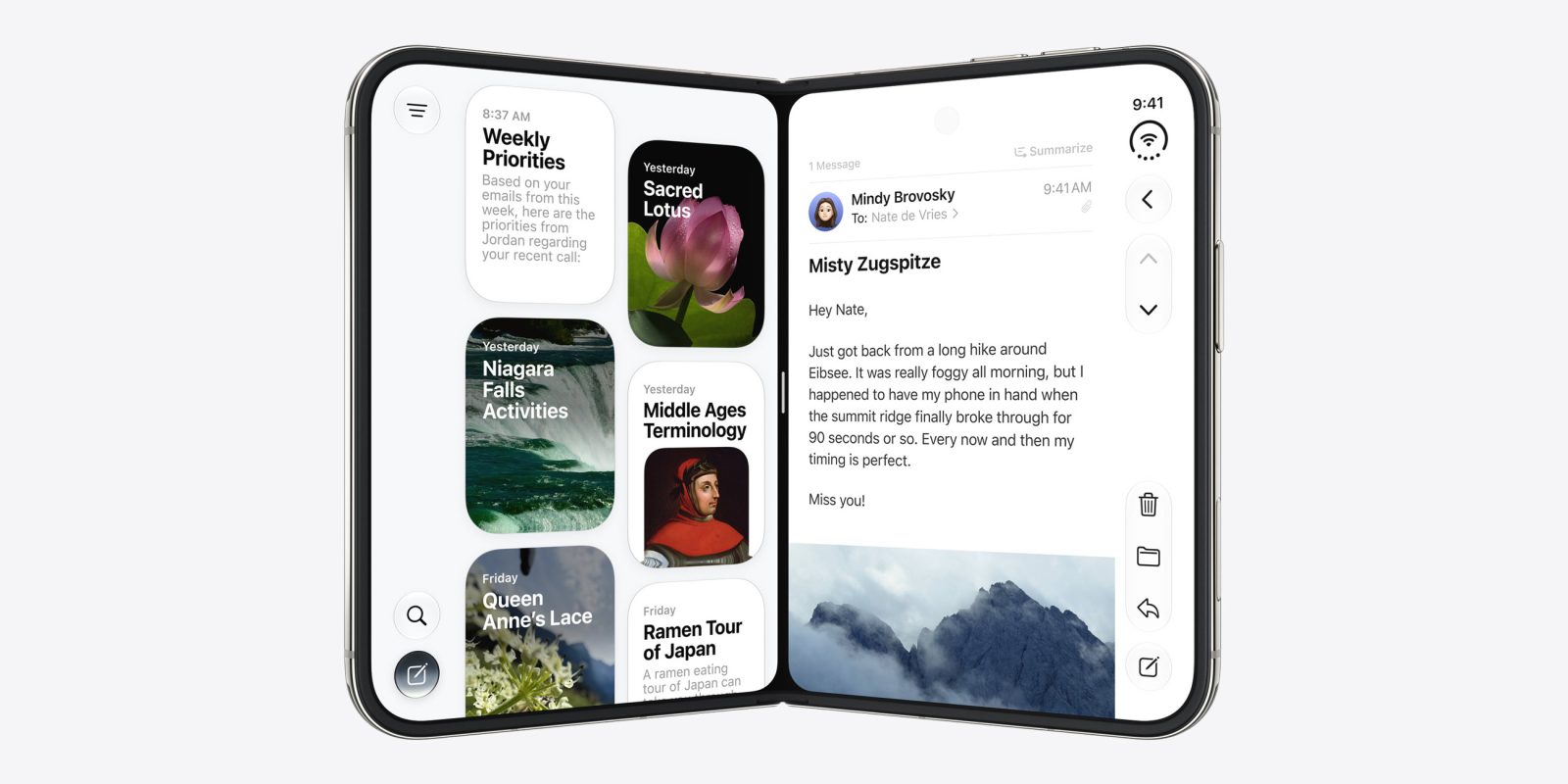
Apple’s first foldable is here and, shocker, it didn’t exactly reinvent the foldable, but the iPhone Duo did get some of the most important aspects right, and will give the Android side of the conversation some things to work on too.
This issue of 9to5Google Weekender is a part of our newsletter that highlights the biggest Google stories with added commentary and more. Sign up here to get Weekender delivered to your inbox every weekend, and catch our weekday roundups too!
Look, I promise we’ll stop talking about the iPhone Duo at some point. We’re not 9to5Mac, but Apple’s first foldable is a big deal for the Android side of the industry too. It’s not every day that an entirely new form factor built up by Android brands gets co-opted by the only real competitor.
And, despite Android’s several-year head start, Apple is immediately putting up a fierce competition with its iPhone Duo.
It’s a polished foldable across the board. A smart design with aspect ratios that should prove useful – and, based on the Fold 8’s popularity, resonate among customers – and a package that seems to deliver on everything it needs to. It’s thicker and heavier than basically every other current Android foldable, but it’s also not so far out of the ordinary as to be uncompetitive. Early reactions have been positive, though I’m certainly curious to see what people think after the typical Apple event psychosis wears off.
But, as good as the Duo looks, I think the biggest thing to walk away with is that Apple is not reinventing the foldable. It’s been speculated for years now that Apple would somehow crack open the formula on how to build a foldable in ways that no Android brand had figured out and, based on what’s been shown off so far, that’s simply not the case.
On the hardware side, Apple doesn’t seem to outdo existing hardware in any particularly meaningful ways. The matte display is the thing that has my attention most, as it seems to lessen even the visual appearance of a crease to essentially nothing – though, without that, I bet it’d be similar to the Galaxy Z Fold 8 and Oppo Find N6. But even that display doesn’t seem flawless, with the glossy dot over the selfie camera immediately catching my attention. Under-display cameras are already a tech that’s been shown to be of dubious worth, and with this visual oddity at play, I’m pretty surprised Apple adopted this one at all.
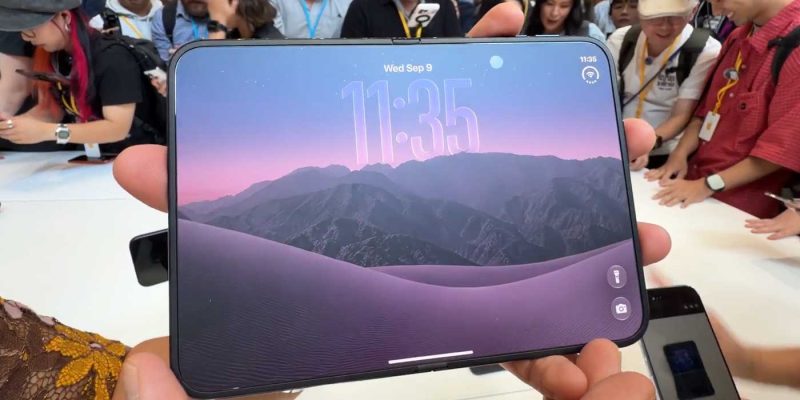
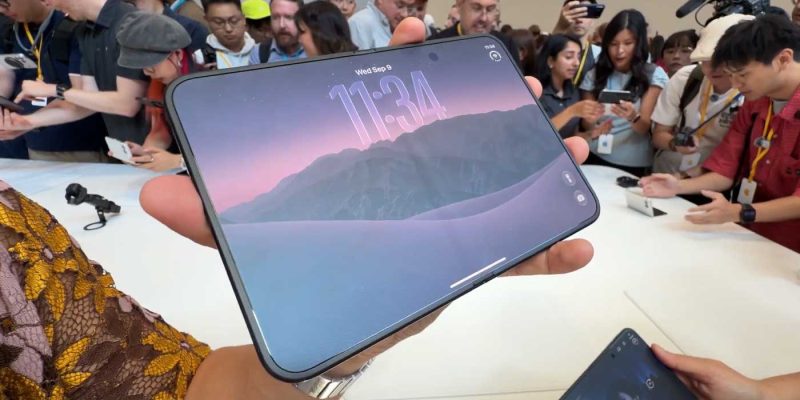
The software is where even I expected Apple to figure out ideas for a foldable beyond what we’ve seen but, really, there wasn’t much.
Split-screen looks mostly akin to the Pixel Fold, though with the two halves treated as independent by default and allowing you to go to the homescreen to grab another app. That feels very intuitive, even if Android has the same core functionality through its taskbar. The ability to put video windows on top of other apps looks useful and more polished than existing split-screen or picture-in-picture options on Android, but it’s still not exactly groundbreaking.
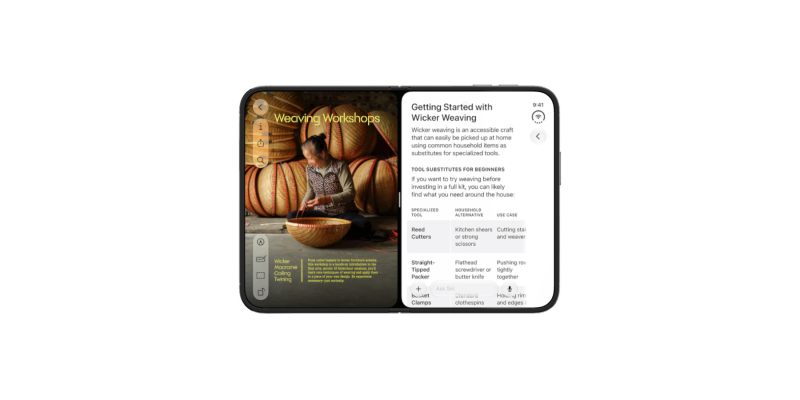
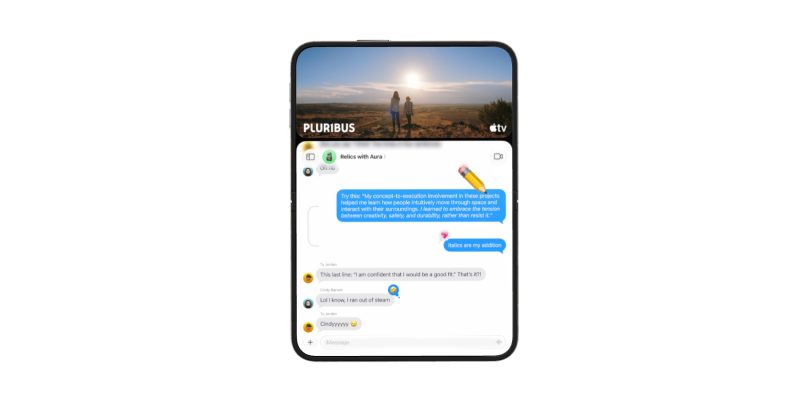
The most attention-grabbing additions in Apple’s software come from a neat animation that shows up when you open or close the device – almost certainly set to be copied in future software updates on Android devices – and a rethinking of navigation.
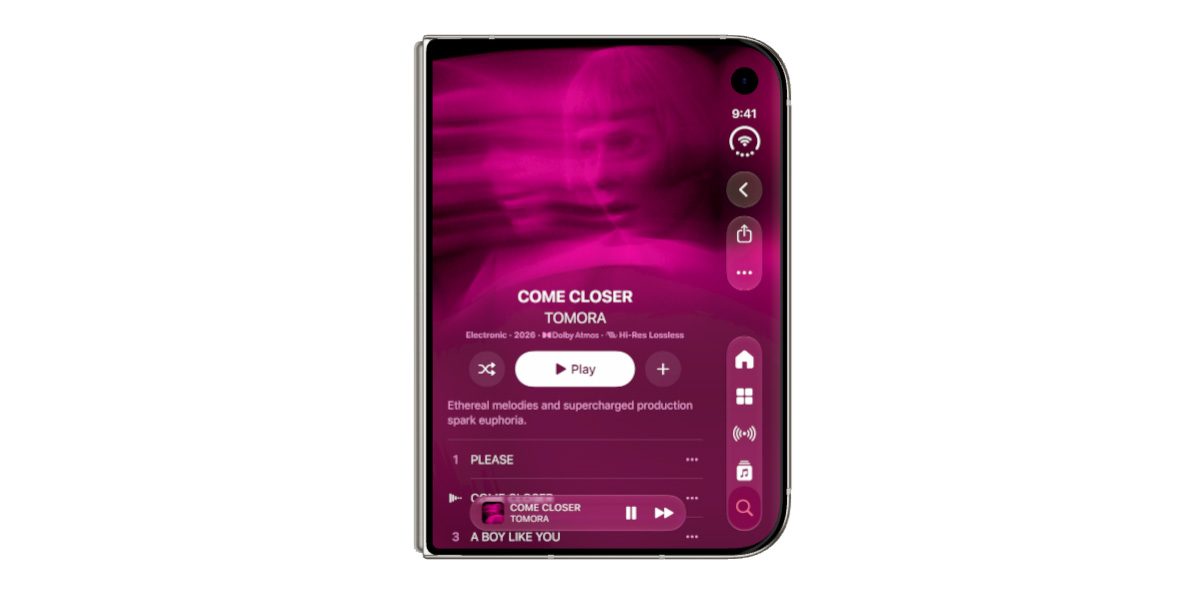
Apple is moving app controls and the status bar to the side of the UI rather than the top and bottom where they’re resided for ages now. It gives me mixed feelings. The utility of offloading those controls to the side of the display to make vertical content feel more at home on the wider aspect ratio makes sense, but it also looks wildly ugly to me, or unbalanced at the very least.
All of this is to say, Apple didn’t break any new ground here, and they still have to deal with many of the same problems.
Like every existing foldable, Apple has some different ideas to add into the core experience, but that core experience is essentially the same – it’s just based on iOS this time. Android “got it right” in terms of that core experience, and now everyone has a chance to sit down and think about where to take it next. In a way, it reminds me of the whole app drawer situation. Android got this right years ago, and Apple brought in its own version that’s the same core idea, just different (and much worse, but I digress).
What worries me is the idea that Android manufacturers are going to rush to copy what Apple has put out.
There’s nothing on the iPhone Duo, at least not yet, that feels worth copying – except maybe that aforementioned animation. The sidebar setup, for instance, acknowledges a problem that these new form factors are facing. Modern smartphones are all tall and narrow slabs, so wide designs aren’t a thought for developers. By offloading everything to the side, Apple is presenting a solution for the lack of space for content that devices like Fold 8 have to give up for the sake of top and bottom bars. I’m just personally not sure it’s the right solution. As just one example, this UI decision sounds awful for anyone who uses their phone in their left hand (which, hello, that’s me). At least the top and bottom bars are equally a little bit uncomfortable for everyone.
It’s a bold new chapter in the foldable market, and Apple is surely set to sell a lot of these. I’m perhaps most surprised that it’s competitively priced – cheaper than Samsung’s top foldable, too! On top of that, I think the Duo will be a net-positive for Android foldables in the long run. The creativity of iOS developers could bring some new ideas to Android in time as new eyes look at these form factors, and it’s also going to force accessory makers to finally take foldables seriously.
What do you think of the iPhone Duo and how it relates to Android foldables?
This Week’s Top Stories
RIP Pixel Tablet
Google’s sole Android slate, the Pixel Tablet, has officially been set to bed this week. The company pulled the tablet from its store not long after stock dried up, signaling that it’s been discontinued, all without a sequel.
This week’s Gemini updates
Google has a handful of new Gemini updates out this week, including making Daily Brief free and the launch of a Gemini app for Windows.
- Gemini app makes Daily Brief free in the US
- Google upgrades all Gemini side panels in Workspace to have the same features
- Google brings Gemini for desktop app to Windows
An interview with Fairphone
Following its US debut with the Fairphone 6+, our Will Sattelberg and Daniel Bader sat down with Fairphone’s Chandler Hatton to talk all things Fairphone and repairable smartphones in general on the latest episode of The Sideload.
More Top Stories
- Google Messages rolls out Keep Notes integration on Android
- Motorola teases wide Razr Fold as its ‘next move’ in response to iPhone Duo debut
- Xiaomi 18 Fold goes on sale with full specs and a Galaxy Z Fold 8 comparison [Gallery]
- Hands-on: Honor’s Robot Phone is probably the coolest phone you still can’t buy
- Boox Picco is exceptionally tiny for an e-reader, but it parts ways with Android and third-party apps
- Hands-on: Orbitkey elevated its time-tested key organizer with a built-in Google Find Hub tracker
- Google Maps speedometer disappears on Android Auto for some, traffic data still missing too
- Pixel 11 gets early September update, not Android 17 QPR1
- Google Chrome starts two-week release cycle with version 153
- Google Find Hub update brings new ‘Remembered’ tab with Gemini
- Galaxy Z Fold 8 is $1,599 with a free Galaxy Watch and more in new Samsung deal
From the rest of 9to5
9to5Mac: Hands-on with the foldable iPhone Duo [Gallery]
- iPhone 18 Pro officially announced: Here’s what’s new
- The race to build great iPhone Duo apps is about to begin
- iOS 27: Here are Apple’s full release notes
- iPhone 17, iPhone Air, and iPhone 17e just got more expensive
Electrek: Kia launches three new GT EVs, including an electric hot hatch and two SUVs


FTC: We use income earning auto affiliate links. More.


Comments