
Fitbit today announced a number of new features coming to the Public Preview, starting with improved sleep tracking.
Fitbit has improved sleep stage (REM, Light, and Deep) accuracy by an additional 15%. Work started last year with “advances in sleep science and machine learning” that have since rolled out to all users.
Now, thanks to “more advanced machine learning,” the models can “better distinguish between when you are aiming to sleep and when you are asleep.” Specifically, Google can “more accurately capture interruptions, naps and transitions between stages.”
They now do a better job of telling if you’re actually aiming for sleep or just relaxing with a book, giving a more accurate picture of how you’re utilizing your time in bed.
The algorithms are also better at middle-of-the-night interruptions, like recognizing a “fussy pet or a trip to the kitchen,” versus general restlessness. Nap detection has also been enhanced.

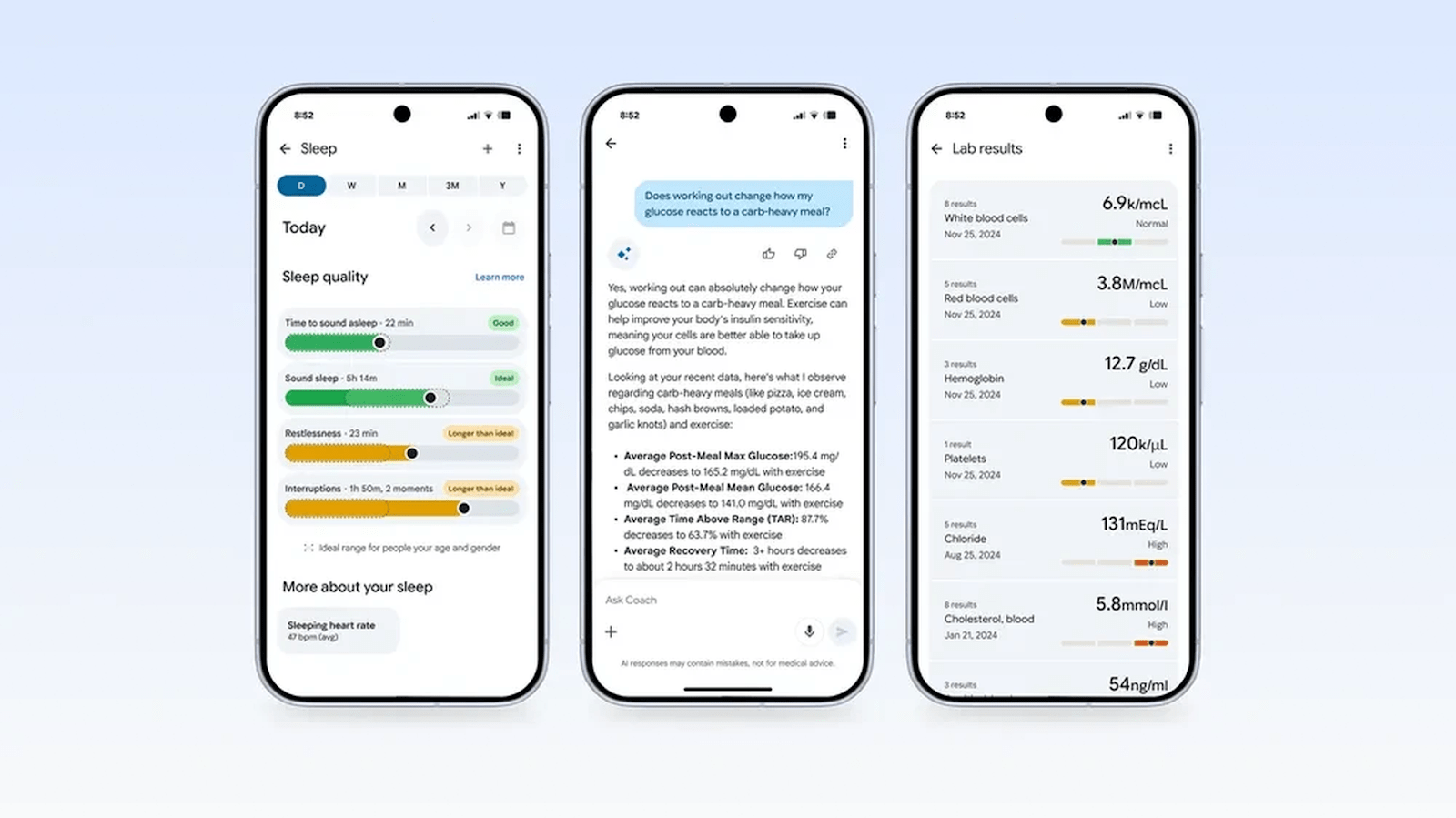
This results in a “reimagined, transparent Sleep Score designed to make your data more actionable.” Fitbit now better “evaluates specific aspects of your rest — not only how much sound sleep you got, but how long it took you to get there.”
This level of detail provides targeted coaching, helping you understand exactly where to focus your routine for better recovery.
The sleep tracking updates are rolling out over the next few days, while the new Sleep Score experience will be available in the coming weeks for Public Preview users.

Next month, US Public Preview users will be able to link lab results, medications, visit history, and other medical records with the Fitbit app. It will appear in the Health tab alongside existing metrics.
Top comment by TurboFool
Will this get us any closer to Smart Wake being available on the Pixel Watches?
Medical history results in coach “guidance becom[ing] safer, more relevant and more personalized.”
For example, instead of getting a generic answer about cholesterol, you can ask, “How can I improve my cholesterol?” The coach can then summarize your cholesterol labs, highlighting notable values and trends, and provide personalized wellness information based on your medical history and wearable data. In the coming months, you’ll be able to securely share your records and these summaries with your family or provider, using a Smart Health Link URL or QR code.
On the privacy front, medical records are stored securely and “not used for ads.” To add this data, Fitbit is “collaborating with partners like b. well and CLEAR.”
You can search for your healthcare provider and then link to their portal, or simply verify your identity with CLEAR and we will search for records on your behalf. By using IAL2-certified standards — requiring only a selfie and a valid ID — this enhanced security allows the app to automatically locate and sync your records across different providers (availability varies per provider).


In the coming weeks, a new “Get care now” Fitbit Lab research study will “assess how conversational AI can help you navigate your health during virtual visits.”
Public Preview users next month will also be able to add a continuous glucose monitor (CGM) via Health Connect and “ask your coach how a specific workout or even that slice of pizza actually impacts your glucose levels.”


FTC: We use income earning auto affiliate links. More.



Comments