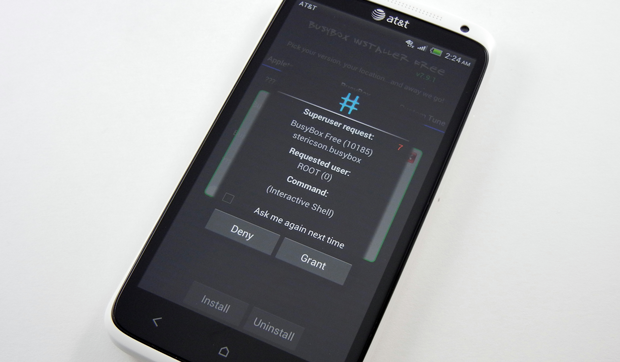
The AT&T variant of the HTC One X was given a one-click root this evening. Achieved by the folks over at the XDA Developers forum, per-usual, it is as simple as downloading a file and plugging in your One X. The full directions are below:
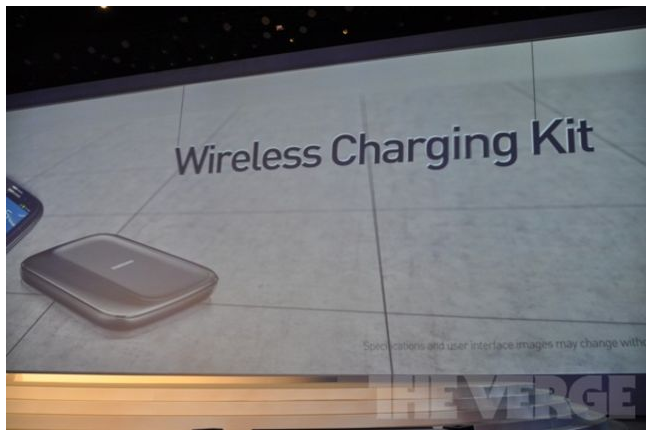
During the announcement of the Galaxy S III last week, Samsung also announced a Wireless Charging kit. A technology that first debuted on Web OS, the Wireless Charging kit is said to charge the phone by connecting an optional cover and setting it on top of a desk cradle to charge the device, rather than having to plug it in via a cord. According to a new report by SlashGear, United Kingdom-based retailer Mobile Fun confirmed today that Samsung does not plan to ship the wireless charging accessory until September —four months after the handset’s launch.
Samsung announced today that it acquired mSpot, a Palo Alto, Calif.-based mobile cloud contents service provider. Specifics of the deal were not disclosed, but Samsung said it made the acquisition to add a better cloud aspect to music and video services that are used on Samsung’s devices. A mSpot app will come pre-loaded on every new Samsung device announced in the future (will it be on the Galaxy S III?). Samsung will also most likely use engineers and technology from mSpot to work on a better entertainment offering to compete with Apple’s iTunes and Google’s Play store.
Google released a pretty substantial update to its Google+ for iPhone app this afternoon by adding a much crisper user-interface that actually makes the app a bit more enjoyable to use. The update is very welcomed, because the first version of the Google+ app was not very well received by the community. The release notes from Google:
We are huge fans of WordPress at 9to5, spending countless hours everyday using the blogging platform. And for others who enjoy it, and use Android in this case, you will be happy to know that version 2.1 of the Android app has officially released after wrapping up some time in public beta. Version 2.1 features:
Autosave timer while editing posts. Every 60 seconds the post will be autosaved.
Edit comments! You can edit comments while on the go now.
You can now set the width for linked images.
All new WordPress.com reader. Navigating posts is much faster and you can add comments to posts that you are reading. You can also share the post to other Android apps!
Small improvements to the UI, most notably that the delete post button has been moved to a less prominent spot to prevent accidental taps on it.
Reliability improvements
Translation updates
Updated app icon
You can grab this update on the Google Play store for both your smartphone or tablet.
When Google revealed its Project Glass last month, the team did not actually show what could be produced from the glasses. Sure, it announced the glasses would feature augmented reality and other smartphone-like apps, but nothing along the lines of an actual photograph taken. However, a few weeks ago, a Google X executive went on “Charlie Rose” to speak a little more about the glasses. During the interview, he posted a picture on Google+ actually taken with the glasses. While the picture does not feature groundbreaking quality, it is still cool to see something taken with the glasses.
Today, we got another look at a photo taken with Project Glass. One of the project leaders, Sebastian Thrun, posted on Google+ today a picture taken with the glasses. As you can see above, the quality seems better this time around, but that could just be due to better lighting.
The folks behind Project Glass are still working on getting the prototypes up and running, and it seems to be coming along nicely. At an event last month, Google co-founder Sergey Brin was seen rocking a pair, although, he made a comment at the time that the glasses were just rebooting and no actual features were working. As we reported a few weeks ago, Google is still up in the air about giving out pairs at Google I/O this summer. However, it looks like Google is starting to get some key features working. We cannot wait to hear more.
Vic Gundotra also tried Project Glass, as you can see after the break:
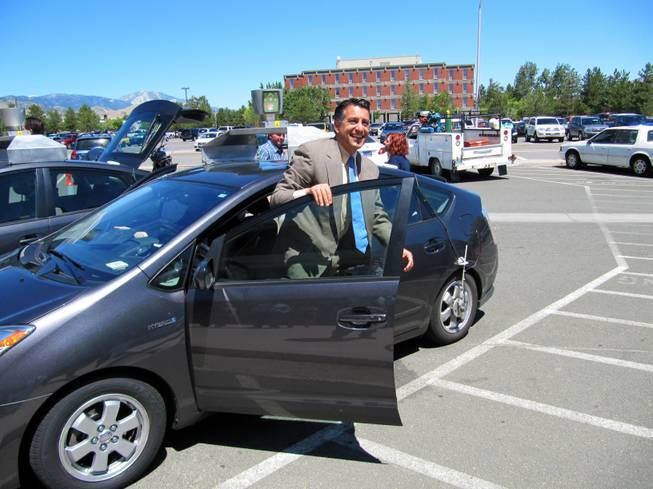
Google has been issued the first license to test an autonomous vehicle, which makes it the first license of such kind to be issued in the United States. The Las Vegas Sunreported that the license was issued earlier today after such legislation passed in 2011 to allow testing of the self-driving car. However, under Nevada law, someone must be present behind the wheel. Google’s self-driving cars will feature a red license plate and an infinity symbol on the left side. The Mountain View, Calif.-based Company is currently testing eight of these vehicles—six of which are Toyota Priuses (seen above), an Audi TT, and a Lexus RX450h.
Google received a ton of attention for its project, especially after one of its self-driving cars got in a fender-bender last year. But luckily, that was due to human error. It is going to be interesting to see what Google can make of these. Check out this inspirational video:
AT&T is currently holding a little shindig at CTIA in New Orleans. During the event, the company put a Galaxy Note on display running Ice Cream Sandwich. As you can tell in the video above, shot byAndroid Central, it does not look all that different—thanks to Samsung’s custom TouchWiz user-interface. The only real difference seems to be in the menus. At any rate, if you have held off for ICS on your Galaxy Note, it looks like the update is in the pipeline.
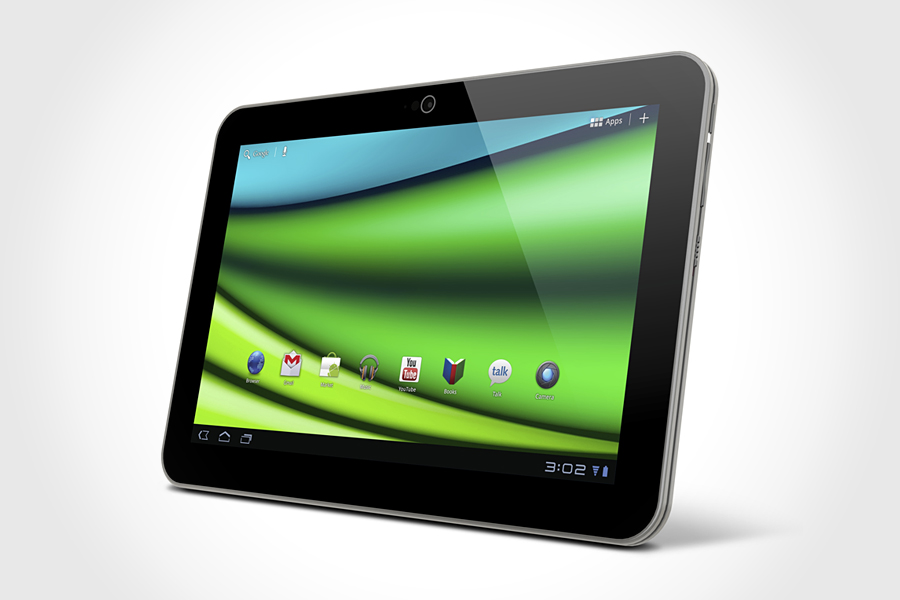
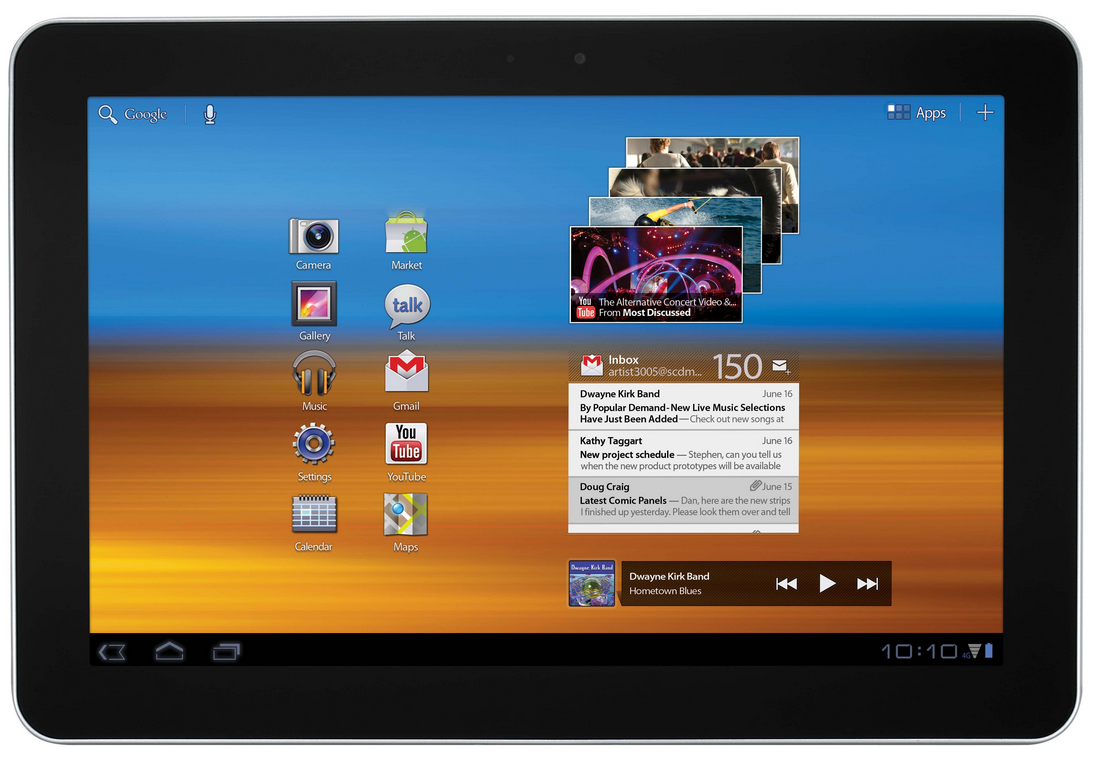
Nearly a month has passed since the announcement of the Excite 10 tablet by Toshiba, but today it has finally gone on sale at non-other than Amazon. The Excite 10 is packing Android 4.0, a quad-core NVIDIA Tegra 3 processor, and 1GB of RAM. In April, Toshiba also announced 7-inch and 13-inch versions, both packing similar specs, which are going on sale in early summer. Our own Seth Weintraub played with the 13-inch version at this year’s CES and said he was impressed. Is anyone excited?
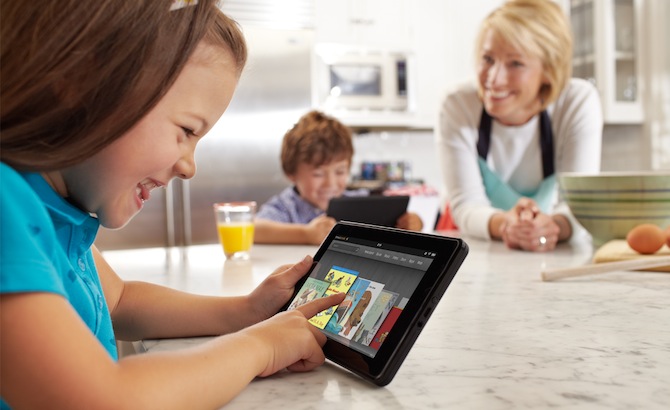
If you have a Kindle Fire, go ahead and fire up software update to grab Amazon’s latest update that it pushed out this afternoon. Version 6.3.1 is now available and features many upgrades that have been requested among users. The biggest, perhaps, is the ability to completely block the use of Amazon’s Silk Browser that allows for a safer browsing instance. Also on the subject of the browser, there is a new family setting that can keep youngsters off those, ya’ know… bad sites. Other new features include a new reading view, which is much like the reading view on Safari on both iOS and Mac. The reading view allows for clearer reading and ridding of any scripts that will put in content which just gets in the way. We have the full release notes after the break for your perusal. Check ’em:
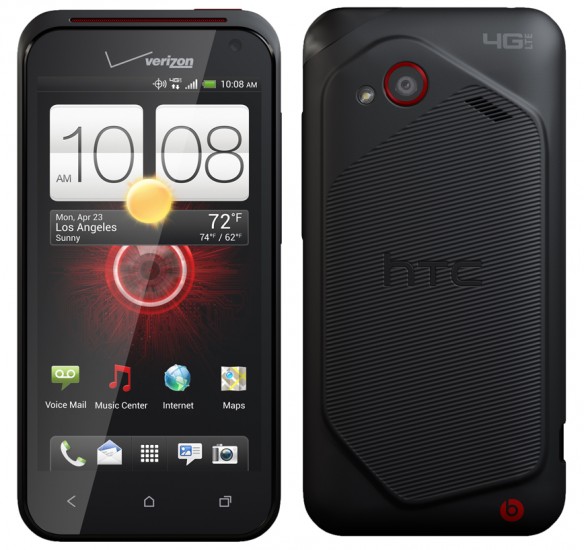
After being confirmed on Verizon Wireless’ Droid DOES page, we knew pretty much everything there is to know about the successor to HTC’s Droid Incredible 2— the Droid Incredible 4G. However, if you needed more confirmation, Big Red and HTC have officially announced the handset, revealing specs and all. The Droid Incredible 4G packs a 4-inch qHD Super LCD screen (960-by-540), 1.2GHz dual-core processor, 1GB of RAM, 8-megapixel shooter, and VGA front-facing camera. As for software, the Incredible 4G features Android Ice Cream Sandwich, along with HTC’s custom Sense 4 on top, which is par for the course with smartphones out of the company. As for the release date, Verizon said “in the coming weeks,” and it will be priced at $299 (according to the Droid Does page from a few weeks ago). We will most likely hear more at this week’s CTIA conference, and you bet we will keep a look out. Who’s buying?
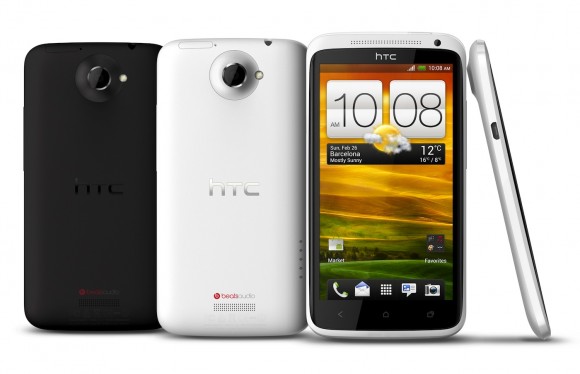
The HTC One X is touted as one of the best Android handsets on the market right now, and I certainly would not disagree. Those looking to get this handset can now pick it up at AT&T stores today. If you pre-ordered the device, it should be near your home already. Just as a quick reminder, the HTC One X features a 1.5GHz dual-core Qualcomm processor, 4.7-inch screen, 8-megapixel shooter, 1.3-megapixel front-facing camera, and Android 4.0. You can grab this handset for $199 on a two-year contract at AT&T stores.
Better yet, Amazon is offering the HTC One X for a cool $50 off, which makes it only $149. Sadly, it will not ship with an unlocked boot loader—like a select few HTC handsets:
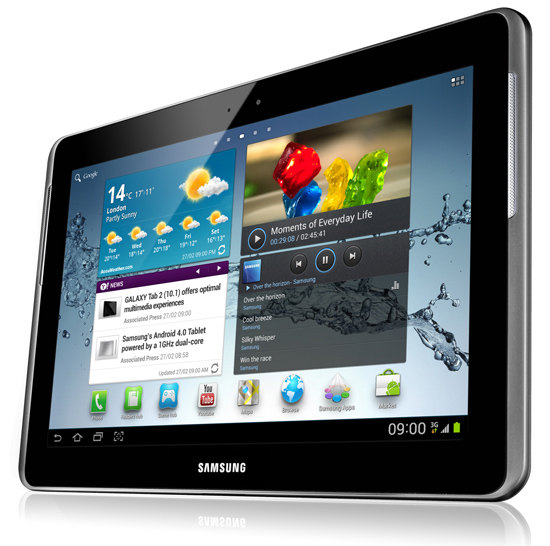
Samsung’s Galaxy Tab 2 10.1 announced last month and is now up for pre-order at several retailers online for $399. The Tab 2 features a snappy dual-core processor, Android 4.0 with Samsung’s custom TouchWiz UI, and a few other upgrades over the original Tab. You can pre-order this device at online retailers like Office Depot, and you can grab it in stores May 13. Who’s buying?
South Korea-based Samsung is aiming to sell a whopping 200 million smartphones this year to grab 24 percent of the global handset market share, Samsung’s J.K. Shin said toMarketWatch. It looks like the company might be on the way to its goal, because it sold an estimated 44.5 million smartphones during Q1 2012. Moreover, with the impressive software and hardware revealed on the Galaxy S III in London yesterday, it could push customers that were waiting for the new device to finally make their purchase. The company will definitely continue to rack-in a ton of sales this year and expect Samsung to report some serious numbers into the summer. Last year, the company had 21.1-percent of the market share, so it would definitely be a pretty impressive feat.
When Google announced Google Music last year, it added the ability to share a song or album with your Google+ friends after you buy it. To compliment that feature, Google added a pretty cool “Shared with me” playlist to Google Play, which curates all the songs that your Google+ friends purchased. This is great, especially considering you get one free listen per song shared. Hopefully you have many friends who are buying music from Google.
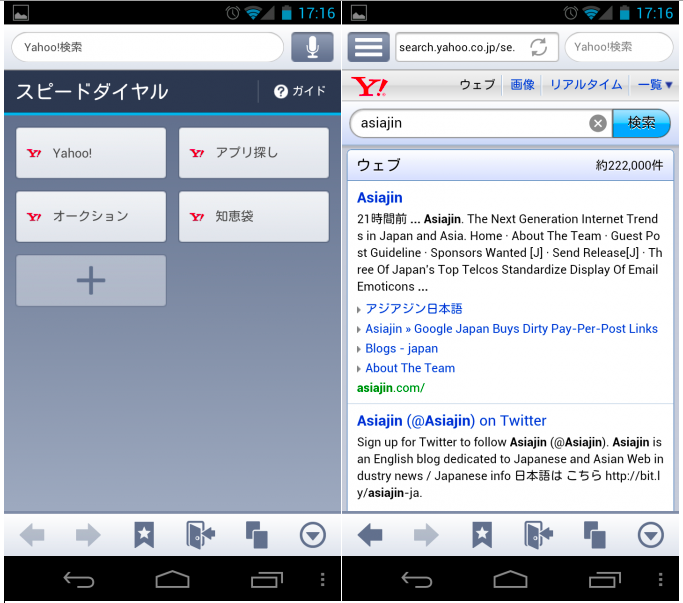
Yahoo! made an interesting announcement in Japan, where the country reigns as the top search engine. The company announced its very own Internet browser on Android, titled “Yahoo Browser,” which looks to be fully functional, to steal some of the fire from the built-in browser. Upon startup, Yahoo Browser features a speed dial much like the other alternative Opera. From the speed dial, users can reach their most visited websites along with websites they pre-chose.
On the main interface, the browser features a URL bar and a search box that searches directly to Yahoo!. Yahoo Browser also offers a semicircular menu like we have seen before, which appears when the user touches either side edge of the screen. Lastly, some smaller features include a widget on the device’s home screen, voice recognition, and a read it later feature that allows users to clip a webpage to go back and view later.
This might be Yahoo! Japan’s genius little way of trying to steal a few ad dollars from Google —specifically in Japan. Some of you might not know that Google makes its money from Android from searches made on the device when users click on ads in the Google homepage (if the default Google search engine is used). If users in Japan opt to use the Yahoo browser, which defaults to Yahoo search, they would click on Yahoo’s ads — rather than Google’s.
Of course, I do not think this alone will dramatically hurt Google, but it is definitely an interesting approach on Yahoo’s part. Yahoo also makes an Android app store available in Japan, a country where 60 percent of new phone purchases are Android. You can check a few more screenshots of the app after the break (via Asiajin).
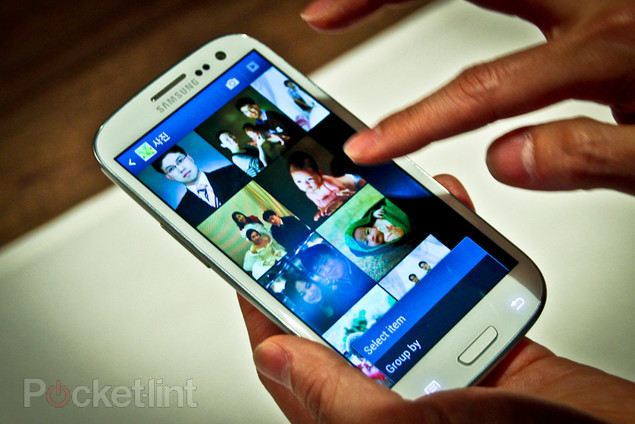
Samsung posted the full Galaxy S III event for your viewing pleasure on its website, if you were not able to watch the presentation live yesterday. For those of you who missed the announcement, Samsung unveiled the highly anticipated Galaxy S III that features a 4.8-inch HD Super AMOLED (1280-by-720 pixel) display, 8-megapixel rear-camera, 1.9-megapixel front-camera, 1.4 GHz Exynos processor, and Android 4.0.
Samsung announced some less-important news last night, compared to the announcements made earlier yesterday. However, this might be exciting for the developer community: Samsung has open-sourced the code that runs both the 7-inch and 10-inch Galaxy Tab 2 models. Samsung posted the code over at its open source page.
With the open source code, developers can now put their own spin on the version of Ice Cream Sandwich that Samsung makes available on the Tab 2. The Tab 2 does not feature an outright version of Android 4.0, because it has Samsung’s custom TouchWiz UI layer on-top. TouchWiz adds various UI enhancements and apps to ICS, some of which are actually pretty useful.
Do you think you are up for a little code tinkering? Try it! You can check out the model numbers for the Tab 2 after the break.
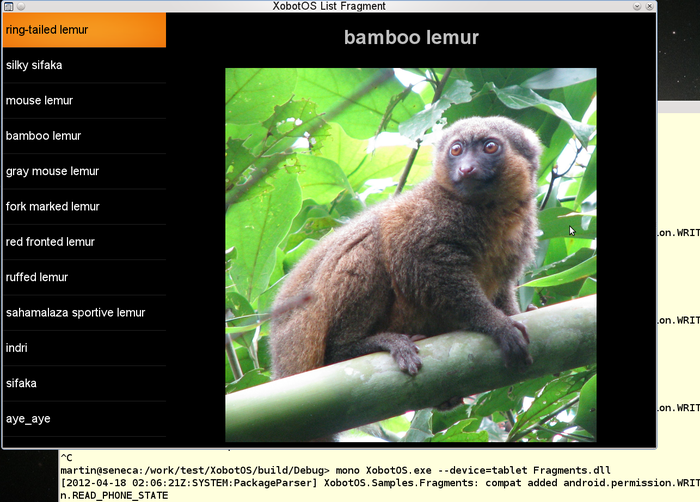
The team over at Xamarin has worked hard to port the Java part of Android to C#, setting way for a new OS called “XobotOS.” The team announced the news in a blog post this evening and uploaded the code onto Github to be used and modified by fellow developers. The team explained the technical aspects:
Android’s core codebase contains over a million lines of Java code, and we knew we wanted to be able to stay up to date with new releases of Android — in fact, we started with the Android 2.x source code back in 2011, and then upgraded XobotOS to Android 4.0 when Google open sourced Ice Cream Sandwich earlier this year. So for us, the only reasonable option was to do a machine translation of Java to C#, building and maintaining any necessary tools along the way.
XobotOS offers a version of Android without any Java whatsoever, and it was achieved through a machine translation to C#. You can read the team’s full post for more details, and check out the project on Github.
Motorola Mobility reported its Q1 2012 financial earnings this afternoon. It had a net revenue of $3.1 billion (up 2 percent YOY), net loss of $86 million (compared to a net loss of $81 million YOY), and an operating cash outflow of $98 million. Motorola Mobility also reported it had $3.5 billion in cash and assets.
Furthermore, the company said it sold 8.9 million mobile devices, 5.9 million of which were smartphones, during Q1 2012. As for the merger with Google, China seems to be the hold-up.
As previously announced on August 15, 2011, Motorola Mobility and Google Inc. (“Google”) (NASDAQ: GOOG) entered into a definitive agreement for Google to acquire Motorola Mobility for $40.00 per share in cash, or a total of approximately $12.5 billion.
Motorola Mobility and Google continue to work closely with the authorities in China for approval on the acquisition. The transaction has been investigated and cleared without conditions in all other jurisdictions with pre-closing clearance requirements. We continue to expect the transaction to close during the first half of 2012.
It looks like things should be underway by summer. Check out the full press release below.
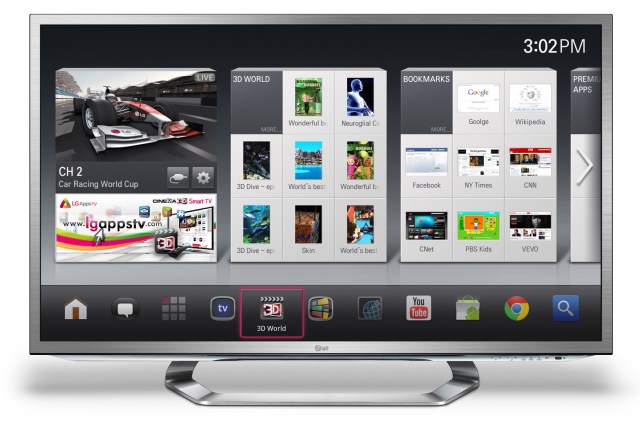
It is no secret that the first launch of the Google TV platform was a bit of a bust, but that is not stopping the folks in Mountain View from giving it another shot. Google TV and a few OEMs debuted new Google TVs at CES 2012 in January, and it looks like the first of those TVs are set to ship sometime this month. PaidContent reported that LG is set to ship two of its 3D TVs later in May, in a 47-inch model priced at $1,699 and 55-inch model priced at $2,299, dubbed the “G2 series.”
Both TVs will pack a 1.2GHz dual-core Marvel chip and will play 3D content. Of course, it will also feature Google TV, which allows users to browse the Play store for apps, watch videos from YouTube, and surf the Web from their couch. Sony, Samsung, and Vizio are also expected to roll out similar televisions later this year.
I feel like we know these already…but then again, there are rumors contradicting it. One of Samsung’s executives dropped word on the company’s Q1 2012 earnings call this evening (viaThe Verge) that the name of the next Galaxy device is indeed “Galaxy S III.” Samsung is set to launch the Galaxy S III at an event in London on May 3 as the successor to the popular Galaxy S II. According to Samsung’s earnings announcement this evening, the Galaxy S II helped lead to strong revenues for the January to March quarter. The company said that the Galaxy S III would see similar sales during the summer.
Samsung confirmed in a press release Wednesday evening that the Galaxy S III would feature the company’s all new 1.4GHz Exynos quad-core processor. Other rumored specs for the device include a 4.6-inch display, 1GB of RAM, 8-megapixel camera, 16GB of storage, and a 2,050mAh battery. It is unclear if Samsung will elect for Galaxy S III or Galaxy S3. I am hoping for the former.
Samsung just announced its Q1 2012 earnings this evening and reported revenues of 45.27 trillion won (roughly $40 billion USD), which is up 22 percent YOY, and a record operating profit of 5.85 trillion won (roughly $5.1 billion), and a consolidated net profit of 5.o.5 trillion won. Samsung saw“an increase in profitability in display panels and mobile phones pushed up quarterly operating profit margins by 1.7 percentage points to 12.9 percent,”according to the press release. The South Korea-based company also saw strong Galaxy Note and Galaxy S II sales, which contributed to high profits for the quarter. However, many potential customers are most likely waiting for the release of the Galaxy S III set to be launched at a London media event May 3. Samsung announced yesterday that the S III would be the first handset to pack the company’s all new 1.4GHz quad-core Exynos processor.
Samsung should have another strong Q2 lead by the Galaxy S III. We will hop on the company’s call with investors to hear more details about Q1 2012 and hopefully (although unlikely) something about the Galaxy S III. You can read the full press release after the break.
While we have not really received an example of what the Google Project Glass glasses can do, Google provided word on some of its features—specifically around augmented reality and other smartphone-like apps. In a new interview today, we got a closer look at the glasses. Google X (the team at Google who is working to develop these glasses among other products) founder Sebastian Thrun went on “Charlie Rose” last evening to discuss and show off the new prototype. During the show’s taping, Thrun posted a picture taken from the glasses. This is our first look at what the Glasses can actually do.
The Glasses were first noticed in the real world on Google co-founder Sergey Brin’s face at an event earlier this month. Brin was wearing a prototype of the glasses, which were said to look very lightweight. Brin made a comment at the time that the glasses were just rebooting and no actual features were working.
However, looking at last night’s post, Project Glass looks to be coming along quite nicely. As we reported a few weeks ago, Google is still up in the air about giving out pairs at Google I/O this summer. You can check out the interview here, where Thrun discussed more Glass features like composing email and having message read aloud.