Jordan writes about all things Apple as Senior Editor of 9to5Mac. He covers Google for 9to5Google.com, the best gadgets and deals on 9to5Toys.com, and delivers a weekly roundup of EV and solar news on Electrek.co. Sometimes he makes weird electronic music as one half of Makamachine.
Contact Jordan with news tips and long-winded complaints:
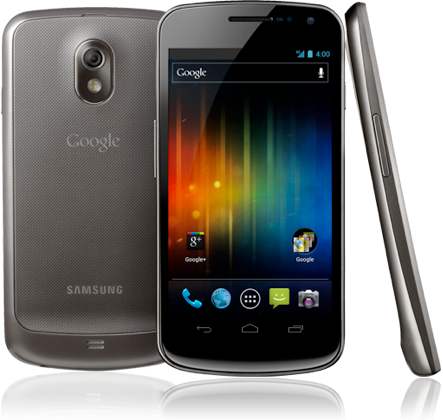
Amazon Wireless (via DealNews) is currently offering the Verizon variant of Samsung’s Galaxy Nexus for $99.99 with free two-day shipping. That’s $200 less than it sells for through Verizon on the same terms, and about $130 cheaper than you will find elsewhere online. As always, you will still be charged the $35 activation fee upon signing up.
You can check out our full review of the 4.65-inch Ice Cream Sandwich-powered Galaxy Nexus here.
Grand Canyon before and after Google Earth 6.2’s improved image rendering
Google just dropped the latest release of Google Earth, version 6.2, bringing with it a new method of rendering imagery that does away with the “quilt effect” (pictured above, left) created when stitching together various images. According to Google’s blog post introducing the update, the new rendering process “preserves the unique textures of the world’s most defining geographic landscapes.” Google said the change will appear on all versions of Google Earth, but the 6.2 release is optimized for the ideal viewing experience.
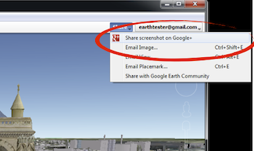
The 6.2 Google Earth release also includes new sharing features giving you the ability to share screenshots of virtual locations from the app on Google+. Other improvements in the update include a redesigned search panel and the Auto complete feature already available on other services like Google Maps. You will also now have access to walking, bike, and transit directions and “search layers” with relevant results beyond the usual top 10). Google explained the new search layers in its blog post:
It’s great to see this positive momentum for Chromebooks in classrooms. It’s similar to where we were about five years ago when Google Apps was just getting off the ground. At that time, educational institutions were the most interested and it was inspiring to hear the different ways schools and districts had begun using Gmail, Calendar and Docs. At FETC we’ve been similarly excited to see how teachers have formed communities around professional development for Chromebooks, districts all across the US are piloting Chromebooks in their classrooms, and more and more reach out to us to learn about Chromebooks for Education every day.
During Google’s keynote, the company announced three new school districts will be offering 1-to-1 Chromebooks for as many as 27,000 students including 4,300 for Iowa’s Council Bluffs Community School District, 3,500 for Illinois’ Leyden Community High School District, and 19,000 to the Richland School District Two in South Carolina. Google noted Chromebooks are now deployed in 41 states across the U.S. in hundreds of classrooms. (Chromebook charging cart is pictured on the right).
Executive Director of Information Systems at Council Bluffs Community school district said the following regarding the announcement:
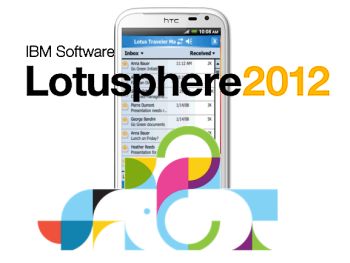
During an interview with eWEEK atIBM’s Lotusphere and Connect conference, HTC announced the company plans on integrating IBM enterprise applications into Android-powered HTC tablets and smartphones. IBM executives used HTC devices to demo new enterprise applications during the event. Executive Director Global Enterprise and Services at HTC David Jaeger talked to eWEEK about its push into the enterprise market:
“It’s only been really relatively recently that HTC has broken into the enterprise space. We’re driving toward that magic 100-million device number globally,” Jaeger said. “We see IBM as the gold standard for an enterprise partnership. We want to make sure if IBM is talking about Android or tablets, HTC is in the conversation.”
HTC is working closely with IBM to ensure its smartphones, tablets support the latest IBM business software, and security features, and with enterprises and third-party developers interested in deploying business applications on HTC’s latest hardware. HTC’s Director of Global Enterprise Operations and Strategy Will Ro told eWEEK the company hopes its stylus and pen recognition software Scribe would provide a level of precision for business apps not offered through touch-only devices: Expand Expanding Close
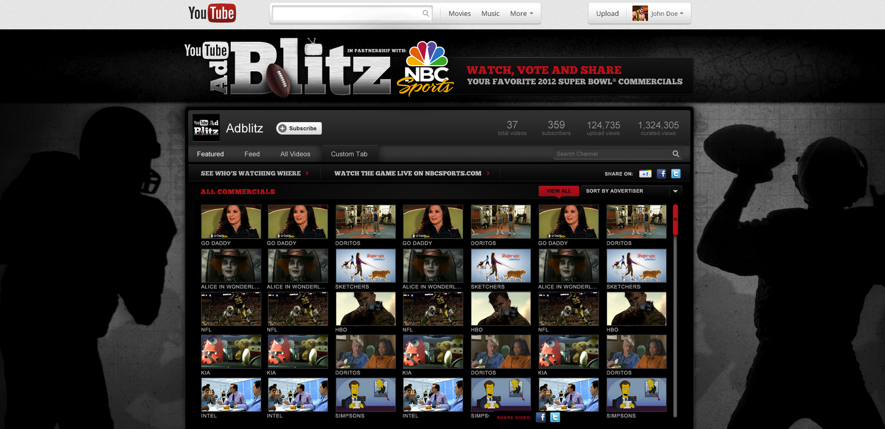
In case you miss any of the upcoming Super Bowl commercials, the new YouTube Ad Blitz channel launched by NBC Sports will bring you the ads right after the have aired and allow you to vote on your favorites. Available through the YouTube channel and NBCSports.com, the website is currently populated with pre-game content including party recipes, tailgating tales, playoff coverage, and big game predictions.
As the premier online gallery of Super Bowl commercials, YouTube Ad Blitz puts all the commercials in your hands, letting you view and vote on the top ads of the Super Bowl, whether you’re on a computer, mobile phone or tablet. This year, NBC Sports is the official partner for YouTube Ad Blitz, adding online promotion to its Super Bowl coverage.
Voting will continue until Feb. 13 at midnight and NBC Sports and YouTube will be having a live Google+ Hangout following the game with “an NBC celebrity.” You can also check out all of the 2011 Super Bowl Commercials on the Ad Blitz channel here. Expand Expanding Close
We already knew it was coming when Verizon announced it alongside the Motorola Droid 4 earlier this month, but the company made things official for the Droid RAZR Maxx today with a solid release date and final pricing. You will be able to get your hands on the device starting Jan. 26 for $300 on the typical two-year commitment. Verizon has also posted a new product page for the device here.
In case you are unfamiliar, the Droid RAZR Maxx is essentially a beefed up version of the latest 4G LTE Droid RAZR, with the main difference being a huge 3300 mAh battery providing up to 21 hours talk time and a slightly thicker 8.99mm design to accommodate it. You can also expect a 4.3-inch qHD display, dual-core 1.2 GHz processor, an 8-megapixel main camera, and support for an Ice Cream Sandwich upgrade in the near future. The full press release from Verizon is available after the break.
Search Engine Land pointed us to a new browser bookmarklet dubbed “Don’t Be Evil” created by Twitter, MySpace, and Facebook engineers to alter the controversial social search results displayed by Google since its most recent “Search plus Your World” update.
Earlier this month Google began rolling out the new “Search plus Your World” update to Google.com search results. The update consists of Personal results, Profiles in Search, and People and Pages, all of which provide prominent quick links to Google+ content relevant to your search query. It sparked controversy as the update arguably favors Google’s own Google+ social network over relevant social content from competitive services.
The tool is being open-sourced and available free. After performing a search, you simply click the “Don’t Be Evil” bookmarklet in your browser of choice (no IE support), and the social “Search plus Your World” results will be altered to also include content from Twitter, Facebook, MySpace, Tumblr, Github, Foursquare, LinkedIn, and a hand full of others. The image above shows Google’s Search plus Your World results on the left with the altered results after clicking the “Don’t Be Evil” on the right.
You might be thinking that the tool is instead favoring websites like Facebook or Twitter, much the same way Google is accused of favoring Google+. However, the creators explained that the tool actually utilizes Google’s own search results to determine the most relevant social content to display. Search Engine Land explained exactly how it works:
The video above from the Wi-Fi Alliance shows the Wi-Fi Direct technology, which is technically supported by many Android devices and it allows for peer-to-peer wireless connections. The possibilities include sharing, screen mirroring, and syncing of data and services between devices without the need of a traditional access point or Internet connection. Wi-Fi Direct is based on the soon to be certified Wi-Fi Display standard that many reported Qualcomm would be the first to deliver with its Snapdragon S4 processors in Android devices by summer 2012. Now it looks like Texas Instruments might beat them to it with a report fromAndroid and Me claiming devices powered by the company’s OMAP4 platform will likely hit the market first:
We have seen Siri clones in the Android Market trying to pass themselves off as the real thing, and some Siri alternatives making their way to the Windows Phone Marketplace. Evi, on the other hand, might actually be the first true Siri competitor/alternative for Android and non-iPhone 4S iOS users.
Available on the App Store for 99 cents and free to Android users on the Android Market, Evi is the work of True Knowledge and its “core semantic search technology” better known as The True Knowledge Answer Engine. The 99-cent price tag on iOS is apparently to cover the cost of using Nuance voice recognition (the same voice recognition tech as Siri), which is not used in the Android version.
The app’s iTunes page explained Evi is capable of returning local data for the United Kingdom (along with the United States), which has been a complaint from U.K. Siri users since the iPhone 4S launch. According to TechCrunch, the app uses “an ontology of tens of thousands of classes into which” every possible user command can be recognized. True Knowledge said the app contains “almost a billion ‘facts’ (machine understandable bits of knowledge)” with the ability to infer trillions if necessary. It also reportedly uses all the expected sources, such as local results from Yelp, third-party websites, traditional web searches, and APIs.
While as of yet Evi is incapable of integrating with Calendar and Reminders like Siri, TechCrunch pointed out it sometimes provides more accurate and useful results for certain types of questions. Siri requests to search the web for an answer when users ask certain questions, such as “How do I make apple pie?” Evi, however, would provide a list of recipes with relevant links to that specific question. TechCrunch highlighted another example where Evi excels:
According to recent reports, iPhone 4S and upcoming Nokia phones now include support for GLObalnaya NAvigatsionnaya Sputnikovaya Sistema—a global navigation satellite system operated by the Russian government and considered an alternative to GPS. It looks like Android vendors will also begin adding support for GLONASS, with Sony Ericsson announcing on its blog that the Xperia S, Xperia Ion, as well as its lineup of other 2011 Xperia devices will now have access to the Russian satellite navigation system.
The company said all of its devices using Qualcomm’s Snapdragon S2 or S3 processor (its entire 2011 and 2012 Xperia lineup) and the latest software would have access to the GPS alternative. Sony explained the benefits of having access to both conventional GPS and GLONASS in a single device:
From David Beckham, and the Muppets, to Newt Gingrich, Google has hosted several special Google+ Hangouts giving users a chance to get their questions answered and interact with politicians and celebrities. Perhaps its most important Hangout yet is going to take place on Jan. 30 with President Obama, who is set to answer the top- voted user submitted questions in a live-streamed interview.
Starting from now until Jan. 28, you can head over to the White House YouTube channel to upload a text or video question submission for the President. Users will decide on the best questions by casting their vote, and a few select individuals will be chosen to speak with the President live during the Google+ Hangout. YouTube noted in its blog post that video submissions are preferred and should be approximately 20 seconds in length.
“Your Interview” with President Obama will be streamed live on Jan. 30 at 5:30 p.m. ET. You can watch the live stream then and submit your questions here.
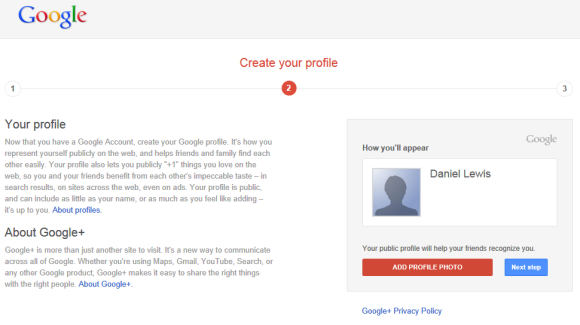
According to a post on the unofficial Google Operating System blog, Google redesigned the account sign up process and now requires users to create a Google Profile, a Gmail account, and automatically join Google+. This will certainly help the continued growth of Google+ that currently sits around 90 million users, along with 350 million active Gmail users, according to Larry Page’s announcement during the Google’s Q4 2011 earnings call.
Before the redesign that has not yet rolled out to everyone, users could create an account by simply entering an email address or creating a Gmail account. According to the report, the new form requires users to fill out a name, gender, and optionally a mobile phone number. However, perhaps the most significant change is the fact that new Google account holders will have a Google+ account created automatically, and they will have to fill out a Google Profile during the sign up process. Users can still delete their Google+ and Google Profile if they wish. They will also be able to delete Gmail after creating an account. The change seems to have rolled out only through Google’s homepage and a few services, with the old sign up form still accessible elsewhere.
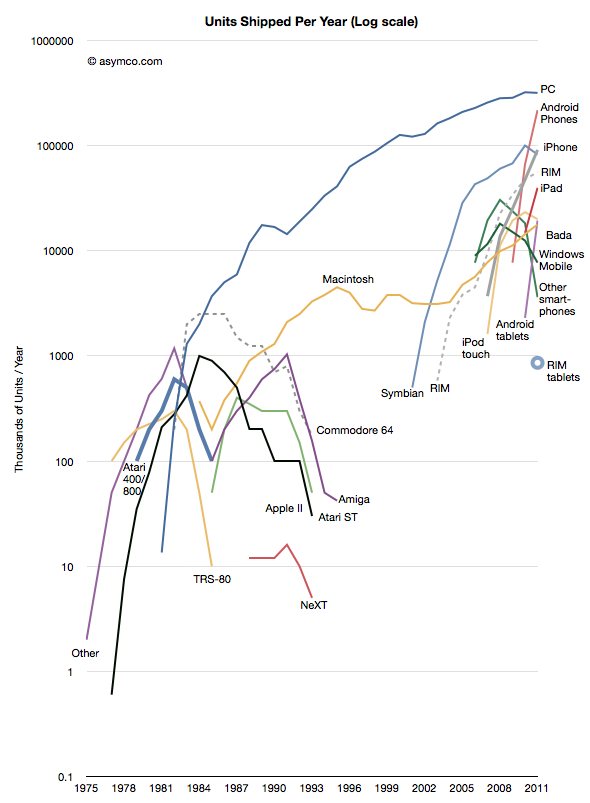
Horace Dediu at Asymco —with help from data published by Jeremy Reimer— has put together the graphic above (click for full graphic), and in the video below he plotted the history of personal computing over the last 37 years. Dediu took Reimer’s data, added smartphone statistics, and updated PC and Apple numbers from Gartner.
We learn from the data that Android, along with iPad and iPhone, accounts for a higher volume of units shipped than the entire PC industry throughout the same time. Specifically, the PC industry accounted for 336 million units shipped in 2011 (not including Macs), in comparison to Android and iOS devices shipping 358 million. While Android is grouped with iOS, you can see in the graphic that Android is clearly way ahead of iPhone and iPad when the two devices are not grouped together. You can check out the same data shown in the animation below and read the full report here:
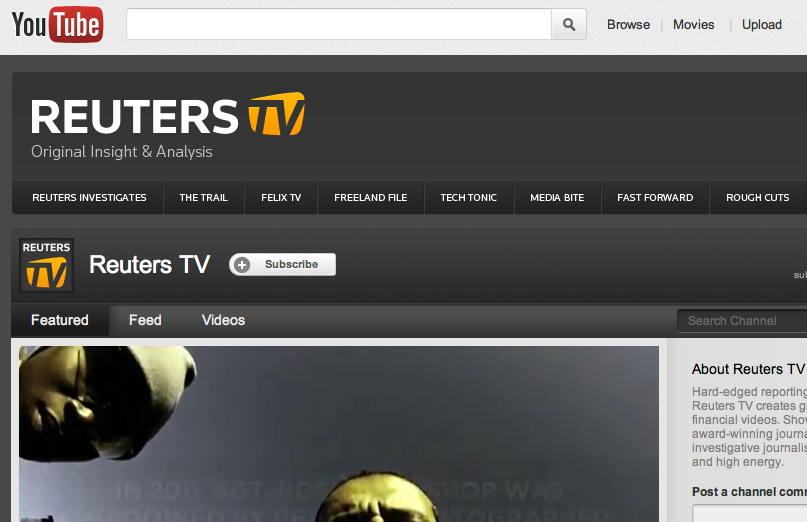
Yesterday Reuters announced it became YouTube’s largest news partner with a redesigned Reuters TV channel, and now YouTube is continuing its push of original content with a brand new lineup of action sports channels.
The new channels include action sports networks Alli Sports and Network A, Red Bull: The Red Bull Channel with 13 original episodic programs, and RIDE —Tony Hawk’s 24-hour channel “devoted to the skateboarding lifestyle” that will roll out 21 new shows throughout 2012.
The four channels have each released preview videos showing off what you can expect in terms of content. The preview video for Tony Hawk’s RIDE channel is above, and the other three are available below. YouTube also announced today that it has made its CES 2012 keynote address available online where the company talked about some of the new original content headed to the website in the future. To accompany the keynote video, YouTube released the teaser video below featuring Stan Lee, Rainn Wilson, Felicia Day, and others bringing original content to YouTube in the coming months.
[youtube=http://www.youtube.com/watch?feature=player_embedded&v=FeRg4U7H_aY#!] Expand Expanding Close
Verizon Wireless announced today that its 4G LTE network would again expand into new markets while expanding the network in three current markets. The rollout will see the total number of markets with access to the carrier’s LTE network reach 195 and over 200 million people.
The five new markets with access to Verizon’s 4G-network starting Jan. 19 include: Glens Falls and Utica in N.Y., McAllen and Brownsville in T.X., and Lawton, Okla. The network will also expand in three other markets including: Houston, Atlanta, and Spokane, Washington.
For the latest LTE-capable devices currently being offered by Verizon, the press release reminds us you will be able to choose from the LG Spectrum, as well as the recently announced Motorola Droid 4 and Droid Razr Maxx. The video above from Verizon highlights the company’s booth at CES 2012 where the focus was showing off the power of its 4G LTE network. The full press release from Verizon, including a full list of all 195 markets with LTE access, is available below:
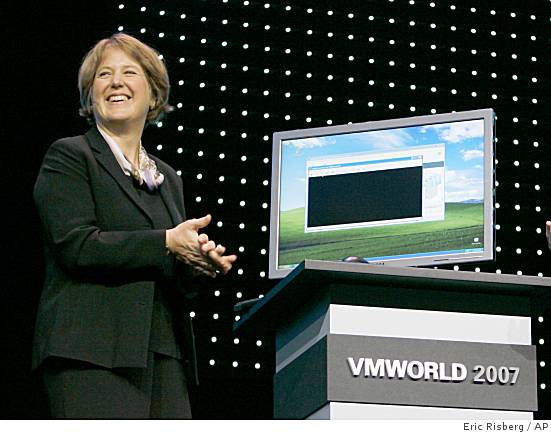
Last week we brought you the news that Google was adding former VMware CEO and Cofounder Diane Greene to its board of directors. Greene will also have a role on Google’s Audit Committee. Today we learn the ins and outs of the deal with a SEC filing (via Business Insider) revealing Greene received $1 million in Google stock for her new gig.
According to the filing, the stock has a vesting period of 5 years, meaning Greene will have to wait to get her hands on it. However, she will also be receiving standard wages for Google’s “non-employees” with an annual stock grant of $350,000 and $75,000 a year. As part of the deal, Greene will have to be present (in-person or by phone) for at least four board meetings per year. Below is an excerpt from the filing:
Google made significant announcements recently regarding large companies and organizations that have switched to Google Apps and services. Most recently the company announced its biggest deal with a single company that plans to switch 110,000 employees of Spanish bank BBVA to Google Apps by the end of 2012. Today, Google announced that the State of Utah recently became the second state to move all employees to Google cloud services and Google Apps for Government following Wyoming in June.
Approximately 22,000 Utah State employees will make the switch to Google Apps for email and collaboration tools such as Docs and video chat. Google explained it won the bid among six other proposals to update the state’s aging email platform and transition it to the cloud with the help of Tempus Nova for implementation:
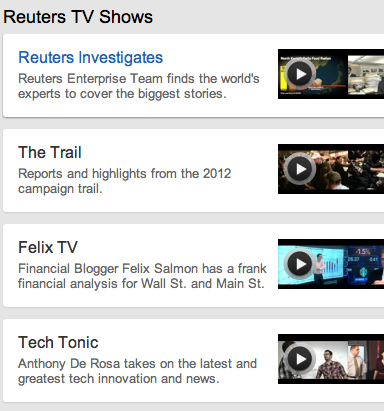
The programming will include 10 news, analysis, and commentary channels in a unique style that is “suited for Internet programming and does not mimic traditional TV.” Reuters Global Head of Programming Dan Colarusso said the following regarding the announcement:
“This deal with YouTube gives Reuters a way to showcase our collection of talented journalists and compelling video from around the world. It will offer unique insights and images that other media companies simply can’t match.”
The new content will be available through the redesigned Reuters TV YouTube channel, but it will also be made available on Reuters.com. A description of all of the new programming from the press release is listed below: Expand Expanding Close
Microsoft is not stopping on its mission to sign patent licensing agreements with just about every Android vendor around from Samsung to Acer, and over 10 others. As of its latest agreement with LG, the company now collects royalties from over 70 percent of all Android smartphones sold in the United States. According to a deal with HTC inked in May, that figure could be as much as $5 per device sold. Now, Microsoft is apparently in talks with Pantech, South Korea’s third biggest smartphone vendor, for a similar licensing agreement.
Google launched a new website for Android developers called Android Designthat it described as the “the place to learn about principles, building blocks, and patterns for creating world-class Android user interfaces.” Starting today, you can visit the website to get Google’s advice on the “Creative Vision,” “Design Principles,” and “UI overview” of Android 4.0 Ice Cream Sandwich. Google also launched the Android Trainingwebsite last month for more in-depth tips on working with the Android framework.
Director of Android at Google Matias Duarte just sat down withThe Verge and explained the new website is part of a style guide for Android developers that will continually be updated.
The specifics of the agreement are not being disclosed at this time, but it is likely Microsoft’s latest license agreement with LG is similar to those signed with just about every other major Android vendor including Samsung, HTC, Huawei, Acer, and over 10 others. Microsoft is already collecting millions from Android vendors in patent agreements stemming from an original deal to collect a $5 royalty per device from HTC in May, and will now begin to profit off LG’s line of Android-based tablets, smartphones, and televisions as well.
Microsoft’s Corporate Vice President and Deputy General Counsel of Intellectual Property Group Horacio Gutierrez made the announcement on the company’s website:
Executive Chairman of Google Eric Schmidt and Vice President Product Innovations and Process Technologies at Daimler Eike Böhm. (Image via 3d-car-shows.com.)
Today at CES 2012 Google and Daimler AG announced a new strategic partnership that will provide the car manufacturer with early access to APIs for building services like Google Maps and Places into automotive-specific applications.
The collaboration will enable Daimler to use Google Maps for their in-car map displays, and significantly improve their ability to quickly and seamlessly integrate useful Google services into Mercedes-Benz passenger vehicles. By making innovative Google products available directly within its cars, Mercedes-Benz is able to accelerate the adoption of cutting edge technologies.
This is not the first partnership announced with Daimler and Google. As the press released noted, Daimler was originally the first carmaker to implement Google Maps’ “Send-to-Car” feature in 2007. Daimler’s Mercedes-Benz vehicles now provide COMAND Online, “a telematics system with cloud-based Mercedes-Benz apps that brings Google Street View, Panoramio and local search.”
The company was also the first to offer individualized routes sent from Google Maps to a vehicle, and plan on making all of these new Google services available to Mercedes-Benz customers in the United States through the mbrace2 infotainment solution in 2012’s second quarter. The full press release is available below:
Google just signed its biggest deal yet with a single company to offer cloud services with 110,000 employees in 26 countries of Spanish bank BBVA switching to Google apps. The bank will use apps like Gmail, Calendar, Chat, Docs, and it will have employees’ access video chats and other collaboration tools. According to BBVA, the deal is the “largest global agreement for the adoption of Google Apps, Google Enterprise suite.”
Through this solution, BBVA seeks to increase its efficiency by providing employees the tools of advanced communication and collaboration. In addition, Google Apps will facilitate collaboration among professionals from the bank, regardless of geographic area in which they are. This is essential to drive innovation in a financial group as global as BBVA.
According to a report fromBBC, who talked with BBVA, the move was largely driven by an increasing number of the bank’s staff utilizing smartphones and tablets as their main computer. The bank already moved 35,000 employees to Google Apps and it expects it to roll out to 110,000 staff members during 2012.
Director of innovation for BBVA Carmen Herranz confirmed to BBC that all customer data would remain on the bank’s servers with the move to Google services only applying to communication among staff. The bank had previously rolled out a successful pilot project with around 7,000 staff, and plans to “closely monitor for any increases in network load.” Herranz said their biggest concern is video conferencing.
Vice President of Google Enterprise EMEA Sebastien Marotte gave a statement in BBVA’s press release highlighting the importance of the announcement and growth of Google Apps:
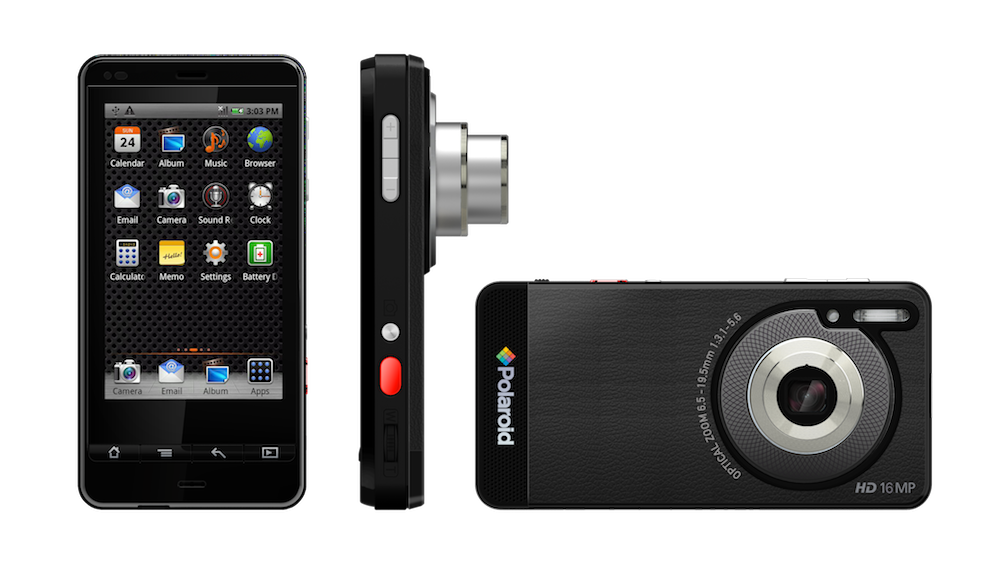
With more and more consumers replacing their conventional point-and-shoot camera with the camera inside their smartphone, Polaroid has ditched its standard user interface in favor of an Android powered, high-end digital camera called the “Polaroid SC1630 Smart Camera.”
Delivering everything expected from a digital camera but powered by Android, the Polaroid SC1630 Smart Camera surprisingly packs all the features needed to conveniently capture, connect and instantly share beautiful HD digital images and video into one device, weighing a mere five ounces.
As far as specs go, expect a 16-megapixel camera, 3X optical zoom, 36-108mm lens, built-in Wi-Fi, up to 32GB through microSD and a 3.2-inch display. It also includes Android Market access and Polaroid is promising 24 hours battery on a full charge. The company has not announced pricing, but it plans to release the SC1630 Smart Camera sometime in 2012. Polaroid President Scott W. Hardy said the following regarding the announcement:








 The programming will include 10 news, analysis, and commentary channels in a unique style that is “suited for Internet programming and does not mimic traditional TV.” Reuters Global Head of Programming Dan Colarusso said the following regarding the announcement: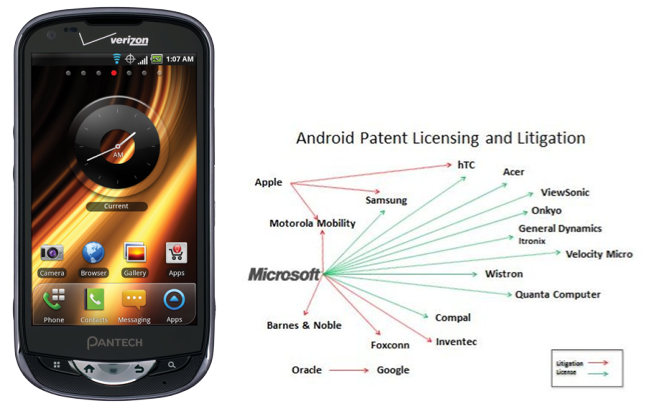

 With more and more consumers replacing their conventional point-and-shoot camera with the camera inside their smartphone, Polaroid has ditched its standard user interface in favor of an