Lenovo



Photo: ibtimes.com
After warning earlier this month that Q2 didn’t “look too good,” Samsung today released its earnings preview for the second quarter of 2014. The South Korean company reported an operating profit of $7.1 billion (7.2 trillion won), missing analyst estimates of $8 billion (8.1 trillion won). This comes out to a 24 percent drop year over year (via Bloomberg).

Although Motorola has yet to formally announce the Moto X+1, we’ve seen our share of alleged photos and videos of this phantom smartphone. Today, however, we’re getting the clearest shot to date of the rumored handset, courtesy of @evleaks. Unlike previous sketchy images, this front and back pair of photos appear to be press renders of the Moto X successor dressed up in some type of case.

http://www.youtube.com/watch?v=OZgHGDGCBfc
Update: The Moto Stream is now live on Motorola’s website. It costs $49, uses Bluetooth and NFC technology to connect to devices, charges over USB, and has a 3.5mm to RCA connector for audio. Motorola also provides a bit more insight into this “DJ experience” it hinted at by describing a software feature called Heist Mode:
Expand
Expanding
Close
Motorola Mobility, still owned by Google until the sale to Lenovo completes, announced today that it’s closing the Texas-based manufacturing plant that it opened in May of last year to build its Moto X smartphone. The plant, which employees approximately 700 employees, is said to be closing its doors by the end of the year, according to a report from The Wall Street Journal:
Expand
Expanding
Close

In addition to the new ChromeOS and Intel-based ChromeBook announcements this morning, Intel announced an important new manufacturing initiative for its computer microprocessors. The company announced via a video that it will be moving production of its processors to completely lack conflict materials. These new chips, including the more efficient Bay Trail, will be conflict free in the new ChromeBooks. Intel’s video explicitly mentions materials such as gold, tungsten, and tin coming from war zones in the Congo. The video says that Intel is choosing to completely revamp its processor manufacturing operations and to assist these zones rather than abandoning them and moving to already conflict-free zones for sourcing materials.

The profile of Chromebooks is likely to get a boost after the world’s largest PC manufacturer, Lenovo, announced its first Chromebooks aimed at the consumer market. Pricing starts at $279.
Lenovo, best known for its Windows laptops, launched its first Chromebook in January – but that one was pitched at the education market, selling in bulk to schools and colleges. This is the first time it has pitched a Chromebook directly at consumers – something which may worry Microsoft. Lenovo has 18.6 percent of the PC market, ahead of HP, Dell and Acer …
Expand
Expanding
Close
Back on Cyber Monday, Motorola cut the price of its flagship Moto X to just $350, causing a frenzy all across the web and even prompting the company to offer it again just a month later and several times since. As noticed by Android Police, Motorola has dropped the price of the RepublicWireless Moto X to just $349, yet again.
Motorola hasn’t made any official announcements regarding the price drop, but if you head over to the company’s website you can see that the price has dropped with no indication of it being a temporary sale.
On Amazon, the device is also priced the same, but it applies to the unlocked GSM model that will work with AT&T and T-Mobile, not RepublicWireless. That’s even a better deal: $350 for 16GB and $400 for 32GB. The developer edition of the device is still set at its normal $449.99 and it’s unclear if it will receive a price cut.
Nevertheless, if you’ve been waiting for an opportunity to snag Motorola’s darn-good Moto X flagship, now’s your chance.
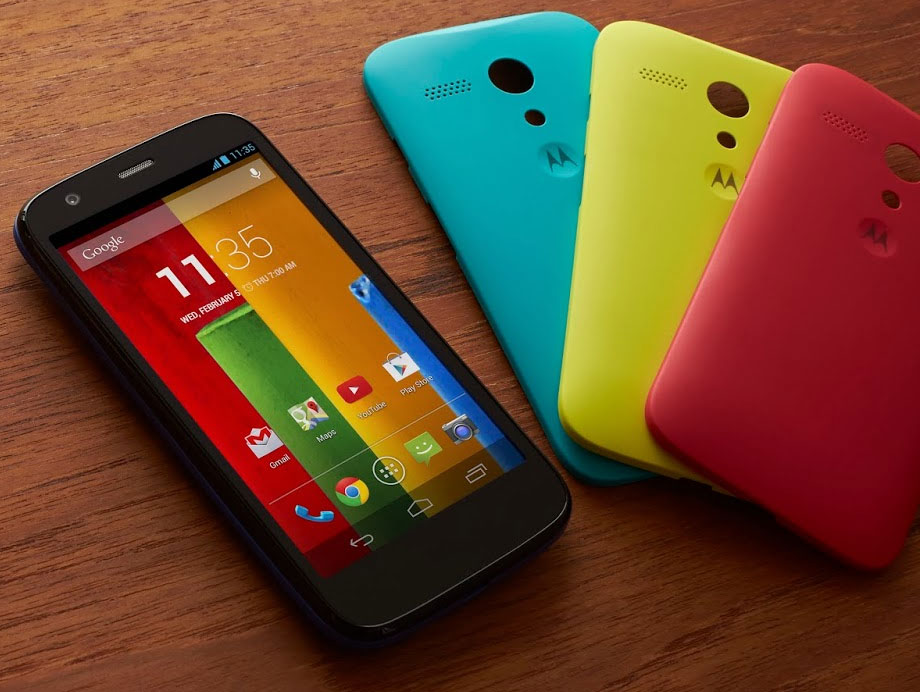
History has taught us that manufacturers typically don’t discuss hardware sales and shipments publicly, but some firms will occasionally issue press releases sharing statistics when boasting about success. However, the folks at Motorola Mobility have taken a much more casual approach to outlining its figures. Today, the soon to be Lenovo-owned company tweeted that it shipped 6.5 million devices globally during Q1 of 2014.

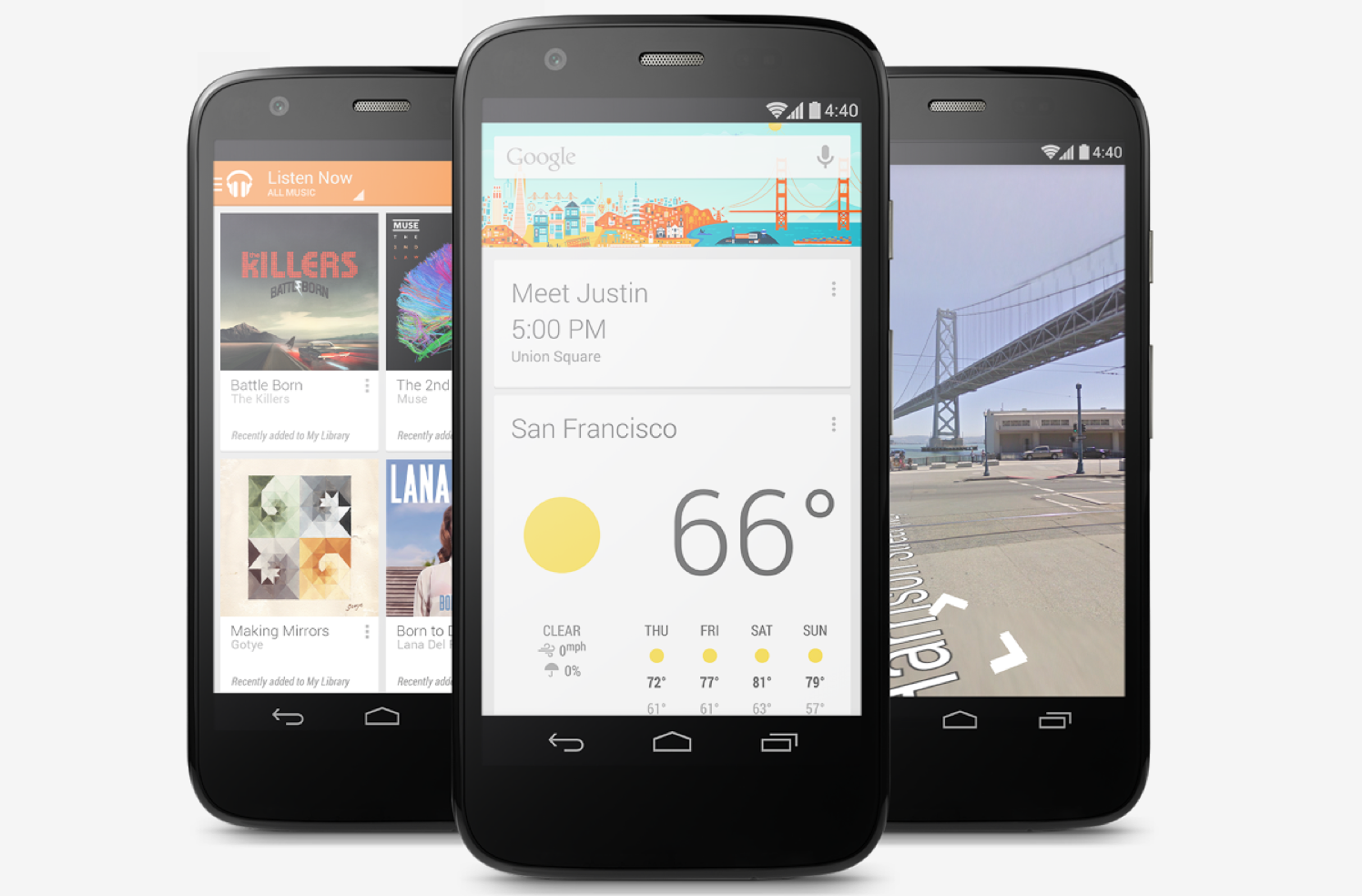
It would be surprising if Google didn’t unveil a new Nexus device before the end of the year. Currently, the Nexus 10 is still out of stock and Google’s Nexus 5 is beginning to show its age. If anything, we hope to see a Nexus 6 in the near future, but Google might be working on a frugal Nexus smartphone as well.
According to Chinese site MTKSJ.com (via GforGames), Google may be working with chip maker MediaTek on a budget Nexus device that could be priced as low as $100. This could really shake things up in the mobile market and would be a direct competitor to ex-Google company Motorola and its Moto G smartphone. The Nexus line is already known for its low-priced devices with high-end specifications, but a $100 Nexus device could definitely broaden Google’s mobile market share.
After announcing its acquisition of Motorola late last month, Lenovo is ending the month with another big bit of news. According to a new report from Re/Code, Lenovo has inked a deal with Ashton Kutcher, star of “Jobs” and “Two and a Half Men”, to release a line of smartphones later this year.
In an interview with the publication, Lenovo Chief Marketing Officer David Roman noted that while the deal does sound kind of odd at first, Kutcher is an engineer and fits the role very well.
“I know on one level, it sounds corny, but it is real. He not only sees himself as an engineer, but he is an engineer. If he sees a problem, he wants to solve it.”
Lenovo and Kutcher have been working together since October, with the actor taking on the role of developing and promoting the company’s Yoga line of devices. Kutcher won’t have much of a say in terms of the design of the phone, but look and feel of the software experience will very much be his.
Kutcher studied biochemical engineering at the University of Iowa, so he certainly is qualified. Although, he did drop-out to pursue a modeling career before graduating. He’s invested in numerous technology start-ups, however, including FourSquare and Uber.


During a panel discuss during Mobile World Congress in Barcelona today, Motorola senior vice president Rick Osterloh revealed the hardware company is working on a smartwatch with plans to ship later this year, CNET reports.
Osterloh didn’t reveal much more in terms of specifics about what Motorola’s offering will present, but did hint that its smartwatch would consider fashion in its presentation:
“Right now, there are non wearable products you actually want to wear, and it’s because they’re all extremely ugly,” Osterloh said at an event at Mobile World Congress on Tuesday.
Google, which recently announced a deal to unpack Motorola onto Lenovo in a multibillion dollar deal, is also reportedly working on its own smartwatch offering through a partnership with LG.
While Motorola offered no specifics on when to expect its smartwatch aside from later this year according to CNET, Google is expected to reveal its smartwatch next month before it’s launch in June at Google I/O.
Last night, it was reported that Motorola CEO Dennis Woodside would be stepping down from his position to become the chief operating officer at cloud storage company Dropbox. Woodside has now confirmed this decision in a blog post on the Official Motorola Blog, saying that he will step down as CEO at the end of March.
Woodside goes on to announce that Jonathan Rosenberg, who was the SVP of Products at Google from 2002 until 2011, will step in as COO at Motorola Mobility on April 1st. Rosenberg worked closely with Woodside and was “intimately involved” with decisions at Motorola. Google Chief Business Officer Nikesh Arora will remain Executive Chairman of the Motorola Operating Board and continue to oversee strategy at the company. It looks as if Motorola will be going without a CEO after Woodside leaves, leaving Lenovo with a lot of control.
Woodside says he is leaving Motorola Mobility “in great hands” and that he is immensely proud of what the company has accomplished in the past 18 months. He also notes that he is excited for the next chapter for the company under Lenovo, who purchased it for $3 billion last month.
Dropbox CEO Drew Houston has also issued a statement on the news.
“We’ve long admired Dennis’s leadership at Google and Motorola where he ran multi-billion dollar businesses and built amazing organizations around the world. We’re so happy to welcome Dennis to our team — I can’t imagine a better person to help us bring Dropbox to global scale.”
Read the full resignation letter after the jump:
According to a new report from the Wall Street Journal, Dropbox plans to name Motorola CEO and 10-year Google veteran Dennis Woodside as its first chief operating officer. Citing people “familiar with the matter,” the report says that Woodside will focus on further expanding Dropbox services into businesses and schools, as the company faces stiff competition from other services, such as Box Inc.
Woodside joined Google in 2003 and was tasked with helping manage the search giant’s relationships with partners and advertisers internationally. He became the CEO of Motorola Mobility when the company was acquired by Google in 2011. Of course, Google just sold its Motorola Mobility unit to Lenovo last month for $3 billion, meaning that Woodside’s rein at Google would be coming to an end.
This is a big loss for Motorola. Even though Woodside didn’t return the company to profitability in his short tenure as CEO, he did release several very well-received smartphones, including the Moto X and its lower-cost sibling the Moto G. It remains to be seen who will take over when Woodside officially steps down from his post at Motorola.
At Dropbox, Woodside will be the business veteran of the team, working under chief executive Drew Houston chief technology officer, Arash Ferdowsi. Dropbox has reportedly been slowing down in terms of growth, with its sales slowing and questions being raised about whether it is profitable or not. Woodside will certainly have his hands full at Dropbox.


Lenovo CEO Yuanqing Yang spoke to CNNMoney about his company’s recent acquisition of Motorola from Google today. In the interview, Yang was asked if his goal for Lenovo was to eventually catch up with more established competitors in the mobile space, such as Apple and Samsung.
With Motorola, Lenovo will be the No. 3 smartphone maker worldwide. Do you think your company can catch up with Apple or Samsung, who are still far ahead of you? And how long will it take?
Definitely, over time. Our mission is to surpass them.
Yang says that Lenovo’s smartphones will probably be released under the Motorola banner, a smart branding decision given Motorola’s existing name recognition and popularity in the U.S. and other countries.
The branding choice combined with the infrastructure and personnel from the Moto buyout could help propel the company to the top of the market, but it will be a hard road to the level of success that Yang is after—especially with Apple and Samsung already locked in a fierce, years-long battle for the top spot.
Throughout the interview, Yang continued to note that several decisions still need to be made with regards to how phones will be branded in certain countries and whether the Lenovo name will be associated with Motorola at all. It will certainly be interesting to see how Yang uses the Motorola brand to push Lenovo forward.
Even after Google announced that it was selling Motorola to Lenovo, there were still many questions surrounding the deal and what exactly Lenovo would be getting for the low price of $2.91 billion. We now know that, not included in the deal, is the Advanced Technology and Projects group led by former DARPA director Regina Dugan. This was revealed during a conference call with Lenovo. The Verge reports that the group will be integrated into Google’s Android team. Dugan will report to Sundar Pichai, but will still run things relatively independently.
This team consists of around 100 people, who will all make the move to Google’s Mountain View office now. The group is most well known for the Project Ara modular phone. This technology allowed for different phone configurations to be constructed from various parts. Google plans to scale the project and use its plethora of resources to speed up the process. Google will also work to accelerate other projects led by Dugan, such as ones pertaining to security tattoos and biotech sensors.
Google will hold onto all of the patents obtained by the Advanced Technology and Projects group, although Lenovo will have a license to them.
Google CEO Larry Page and Lenovo CEO Yang Yuanqing
Update: Motorola and Google have both confirmed the acquisition of Motorola by Lenovo for $2.91 billion. Google will, however, retain the “vast majority” of Motorola’s patents. Google CEO Larry Page says that Motorola will be better unitized and more beneficial to Lenovo. This will also give Google more time to drive “innovation across the Android ecosystem.” The deal still has to pass regulatory approval in China and the U.S., and until then, Google says it is business as usual for the two companies.
According a tweet from Reuters reporter Gerry Shih, Lenovo is nearing completion on a deal to purchase Motorola from Google for around $3 billion. A report from China Daily news corroborates Reuters, but claims the deal is closer to the $2 billion mark. China Daily claims that the deal will be announced to the public Thursday morning in Beijing, which is just a few hours from now. Google is also holding an earnings call tomorrow, so it’s very possible that the information will officially drop during the call.
TechCrunch has “confirmed reports” of the acquisition, saying the terms of the deal have not yet been revealed, but that it was around $3 billion. It’s also important to note that the deal includes Motorola Mobility, which Google paid $12.5 billion for, not the entire Motorola company.

IDC is out today with its latest report tracking worldwide tablet shipments reporting that total shipments have experienced a sequential decline during Q2 at the expense of Apple and the iPad. Apple already announced that it had sold 14.6 million iPads during the quarter, a significant drop from the 17 million it sold in the year ago quarter, but today IDC gives us some insight into where that puts Apple in its lead over Samsung as the top tablet vendor.
Apple was able to pick up 32.4% of the market during Q2, continuing its lead as the top tablet manufacturer, but dropping from the 60.3% of the market it had in Q2 last year. While Apple’s tablet shipments are clearly suffering from lack of new product announcements this year, it’s also losing share to Samsung and others. IDC reports 277% year over year growth for Samsung, giving it 18% of the market with 8.1 million units shipped during Q2. All of the top 3 vendors– Apple, Samsung, and ASUS– experienced a drop compared to Q1 2013, but the Android tablet makers have experienced significant growth compared to Apple since last year.
Expand
Expanding
Close
Research firm Canalys is out today with its latest report tracking worldwide smart mobile device shipments for Q1 with Android accounting for almost 60% of smart mobile devices shipped by OS. That’s compared to a 19.3% share for Apple and approximately 18.1% for Microsoft. Keep in mind Canalys’s report also includes notebooks, in addition to tablets and smartphones, which account for the majority of Microsoft’s share. When looking at tablets alone, Apple continued its lead with 46.4% share in the quarter, although Canalys warned Apple “lost share to its Android-based rivals for the third consecutive quarter.”
‘Spearheaded by Google and Amazon, the commoditization of the tablet market has happened far quicker than that of the wider PC market,’ said Canalys Senior Analyst, Tim Coulling. ‘Profit margins are being squeezed and vendors without a low cost structure will find it hard to compete. A solid range of must-have accessories and a software and services strategy are vital as vendors will increasingly need to make revenue around their devices.’
When it comes to smartphones, the report has Android at roughly 75.6% of shipments with around 32% of those shipments coming from Samsung. We know Apple sold around 37 million iPhones in the quarter but, as always, we warn that the stats from Canalys don’t include shipped vs sold data.
Expand
Expanding
Close

Lenovo’s Android adventure has been a mixed bag of what some may call overpromising and underdelivering. The company’s separation of tablet lineup into consumer and business families surprised those who deemed the tablet market a consumer game. They debuted the 10.1-inch consumer-focused IdeaPad K1 and the ThinkPad for business back in July, following up with a seven-incher two and a half months ago.
That device, the IdeaPad A1, resembless last year’s Galaxy Tab from Samsung. They also promised a 10.1-inch Ice Cream Sandwich tablet for next month and now Engadget has it that a brand new five incher is in the works. Resembling Dell’s ill-fated Streak 5 tablet, the device is said to be marketed under the IdeaPad moniker in the Western world and the LePad in China.
It should pack in a dual-core processor, a micro-USB port, HDMI output and a front-facing camera, amongst other perks. The three capacitive buttons led the publication to speculate that the gizmo may not run Honeycomb or Ice Cream Sandwich, but we’d find this hard to believe as Honeycomb is specifically tailored for seven-inch tablets and beyond.
This morning we told you about HTC’s plans to bring a quad-core tablet to market thanks to Nvidia’s new Tegra 3 chip. That was after we introduced you to the new Transformer Prime from Asus, which will most likely be the first Tegra 3-powered tab you can get your hands on starting in December. Now, not to be left out of the Tegra 3 tablet party, Lenovo is gearing up to launch their own quad-core tab.
According to Engadget, the company is prepping a new 10.1-inch, Android 4.0 tablet powered by Nvidia’s new chip for December. As for specs, you can expect 2GB of DDR3 RAM, USB host socket, main backside camera, and a “Special Fusion-Skin Body”. The report also mentions a fingerprint scanner on the backside of the device that can also be used as a joystick for gaming. We’ll obviously have to wait for more info before we know if this will be a true competitor to the many quad-core tabs we’re bound to see in 2012. Until then, check out a few more images below.
Expand
Expanding
Close

 .
.
Lenovo announced on stage at IFA today the IdeaPad A1 — which rings in at just $199. The devices specs are nothing revolutionary, as expected with the price: 7 -inch 1024×600 display, 1GHz Cortex A8 processor, 18GB, 16GB, or 32GB storage options, SD and microsD reader, 3-megapixel shooter, VGA front-facing camera, and Android 2.3.
The 8GB version will be available for $199, but has no plans of making its way to the United States. The 16GB and 32GB versions do however, ringing in at $249 and $299 respectively. Do these specs look close to the Galaxy Tab from last fall..by any chance? But hey, we’ll take the price. (via AndroidPolice)
Expand
Expanding
Close
Lenovo announced two new Honeycomb 3.1 tablets: The consumer-focused IdeaPad K1 and the ThinkPad, which is being pitched as a tablet for business pros. Both devices come preloaded with the Netflix app that streams Hollywood entertainment, a first for Honeycomb tablets, in addition to Lenovo’s Launch Zone Android 3.1 skin, a bunch of enterprise apps and other software such as Zinio, Kindle and mSpot programs.
The business-focused ThinkPad tablet sports a 10.1-inch display with a 1280-by-800 pixel resolution and IPS, a premium display technology for wide viewing angles. The device is 0.55-inch thick and weighs in at 1.6 pound versus 1.24 pound for the Samsung Galaxy Tab. It runs a 1GHz Tegra 2 chip from Nvidia, features WiFi and 3G options and has a 24.1Wh battery, mini-HDMI, full-size USB 2.0, micro USB ports, SIM tray and SD card slots. The 16GB ThinkPad will retail for $499, or $30 more with the digitizer pen included. A 3G version will be offered “at a later date”, says LG.
The IdeaPad K1 rocks the same display (sans IPS) and processor as its business counterpart, but in a slightly slimmer package due to the use of mini ports. Priced at $499, the 32GB IdeaPad will be available in the US beginning July 20 on Lenovo’s online store and through select business partners and retail stores nationwide. General availability in the US is pinpointed for August 2011 and worldwide during the third quarter 2011. This is my next has more details plus this nice video below.
[youtube=http://www.youtube.com/watch?v=kv8e7GBgzXs]
Expand
Expanding
Close