It turns out that his hobby 9to5Mac.com blog was always his favorite and in 2011 he went full time adding his Fortune Google followers to 9to5Google.com and adding the style and commerce component 9to5Toys.com gear and deals site. In 2013, Weintraub bought one of the Tesla’s first Model S EVs off the assembly line and so began his love affair with the Electric Vehicle and green energy which in 2014 turned into electrek.co.
In 2018, DroneDJ was born to cover the burgeoning world of drones and UAV’s led by China’s DJI.
From 1997-2007, Weintraub was a Global IT director and Web Developer for a number of companies with stints at multimedia and branding agencies in Paris, Los Angeles, New York, Sydney, Hong Kong, Madrid and London before becoming a publisher/blogger.
Seth received a bachelors degree in Industrial and Systems Engineering from the University of Southern California with a minor in Multimedia and Creative Technology in 1997. In 2004, he received a Masters from NYU’s Tisch School of the Art’s ITP program.
Hobbies: Weintraub is a licensed single engine private pilot, certified open water scuba diver and spent over a year traveling to 60 cities in 23 countries. Whatever free time exists is now guaranteed to his lovely wife and two amazing sons.
I did not spend a lot of time with the software, but a quick look at the hardware is impressive. At 340 grams, this feels more like a heavy phone (see anything HTC made last year) than a small tablet. We are not sure how the mA hours/16-core processor/9-hour battery life will reconcile, but it seems impressive at first blush. The plastic back will have its fans and detractors.
One important note: Like the Kindle Fire, but unlike Samsung’s 7-inch tabs, it charges via Micro USB. That will please many…unless they are looking for a quick charge. It will be interesting to see if you can do video out of the Nexus 7 using the micro-USB port—or if Google steers you to its new Q orb.
The screen is very nice. Colors are crisp, even in the bright demo area, and it feels a bit sharper than the now-boxy Kindle Fire.
As a product, the Nexus 7 feels like a media-heavy direct attack on the Kindle Fire. I think there is no question that this is better, though. The issue is that the Kindle Fire is now almost a year old, and rumors of the next version landing at around the same time as this device hits the Google Play store have already started.
I will have my device to go deep into tonight.
The 2012 Google I/O Developers Conference starts today at the Moscone Center West in San Francisco, Calif., with events continuing until June 29 at 4:30 p.m. PST.
Jeff Huber, senior vice president of commerce and local at Google, posted on Google+ last night that the Street View team built a Street View exhibit at the Computer History Museum. Cool.
Of more interest to Apple users: Huber took to the comments to answer some questions for an iOS user. He said Google looks forward to providing “Amazing Google Maps experiences on iOS.” That does not sound like a web app or anything like Google now offers in its Google Earth app or its Latitude app. With geo being such a big part of Google’s recent efforts, and iOS being such a big part of Mobile, it would be surprising to see Google just wave off the large iOS audience.
In a possibly related move, Google just dropped the prices of usage of its API for third-party apps—like Foursquare and Zillow— in the hopes to be used on more screens (there is going to be a lot of freed up bandwidth once iOS 6 is released!)
Prior to Apple unveiling its own Maps solution at the Worldwide Developers Conference earlier this month, Google revealed that its new 3D maps were coming to iOS “in coming weeks,” which is another indication that Google plans to add to its iOS Maps experience.
Perhaps we will hear something at Google I/O next week (full coverage at 9to5Google.com).
Remember, competition is usually good for consumers!
This is an interesting new tool from Google today (feels like something Google would unveil at Google I/O, but it might have been booted from the roster. If so, it bodes well for this year’s announcements!)
I spent the last week with two Samsung Galaxy S IIIs—a Sprint version and an AT&T version. Sprint’s version is LTE, which has not rolled out yet, so it has been on the slow 3G CDMA. AT&T’s version is also LTE, which I am often able to get access to while on the outskirts of Silicon Valley. For that reason, I have used the AT&T version most of the time. But really, they are the same phone, which is the big news here…
“To capture the expanding market of smartphone users, we wanted the new Sharp AQUOS handsets to be a unique kind of Android experience, to look and feel different and standout from competitors,” said Paul Pugh, Vice President, Creative, Software Innovation at frog. “By simplifying the interaction model and reducing clutter through a more curated experience, it will be immediately apparent to customers how to use the phones and make them more personal. In addition, the design caters to current Android users by giving them new tools to organize and optimize their handsets, while personalizing the phone in ways not previously possible.”
I wonder what would happen if a major Android manufacture went with this strategy: Save tons of money and use stock Android. Push updates faster than anyone else by reallocating overlay resources to porting new versions of Android as quickly and reliably as possible.
Sony expands home-entertainment choices with the NSZ-GS7 Media Player with Google TV. Boasting a host of features including Web browsing and picture-in-picture, the media player’s real strength lies in the impressive Google TV remote. Equipped with a full QWERTY keyboard, a Touchpad that supports gestures, and a Microphone for voice commands, the Google TV remote may be a Streaming accessory to be reckoned with.
The Google TV difference starts with the cross search functionality, which crawls all content sources available from Broadcast providers and the Internet to deliver customized Video results on demand.
The $200 price does not bode well as Google tries to compete with Apple for the set-top box market, even though Google adds a different subset of features including a much smarter remote. I imagine the market for this will be Android device owners who can use their devices to control the TV just as Apple TV owners use their iOS devices.
Part of having one phone for five U.S. carriers means that Samsung can consolidate accessories to one-size-fits-all. There were so many form factors and shapes of the previous models that accessory makers would have to develop for each model on each carrier.
Qualcomm seems to have the lock on U.S. processors for high-end phones. Just like the HTC Ones before it, Samsung also uses the dual-core Qualcomm S4 processors in its U.S. versions of the Galaxy S3 phones—trading out its own Exynos quad-core processor. Qualcomm dual-core S4 processors have the LTE and 42MB HSPA+ speeds that U.S. smartphone owners expect while keeping up with quad-core processors.
There are no other real surprises in the announcement. Samsung said S3s would deliver starting at $199 later this month on Verizon, Sprint, AT&T, T-Mobile, and US Cellular. Capacities will vary between 16GB to 32GB of expandable storage, a whopping 2GB of RAM, and a 2100mAh battery. Each will also have that lovely 4.8-inch 720P Super AMOLED display.
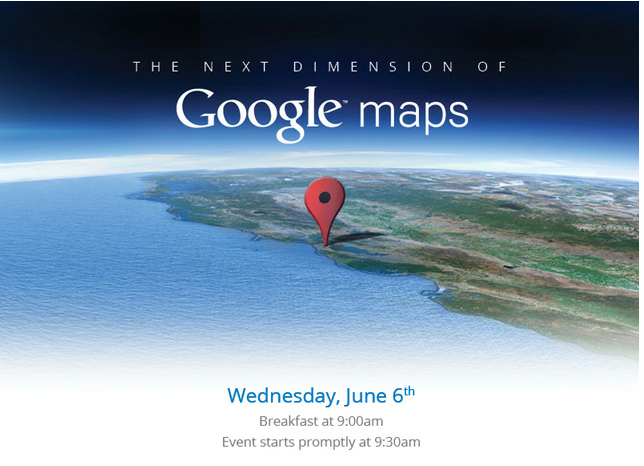
Google will hold a morning event on June 6 to give the press a “behind-the-scenes look at Google Maps and share our vision.” Google will demo some of its “newest technology and provide a sneak peek at upcoming features that will help people get where they want to go – both physically and virtually.”
At this invitation-only press gathering, Brian McClendon, VP of Google Maps and Google Earth, will give you a behind-the-scenes look at Google Maps and share our vision. We’ll also demo some of the newest technology and provide a sneak peek at upcoming features that will help people get where they want to go – both physically and virtually. We hope to see you there.
The HP team responsible for Enyo — webOS’s HTML5-based application framework that debuted on the TouchPad — will be leaving the company and starting at Google shortly, The Verge has learned. What this means for the future of Open webOS is unclear; Enyo and the developers supporting it are central to HP’s open source strategy for the operating system going forward, and it’s hard to say whether this move will have any effect on the planned late 2012 release for version 1.0.
It is pretty clear that webOS is over. With similar roots in Linux, the team could probably do some good with Google’s Android and Chrome products.
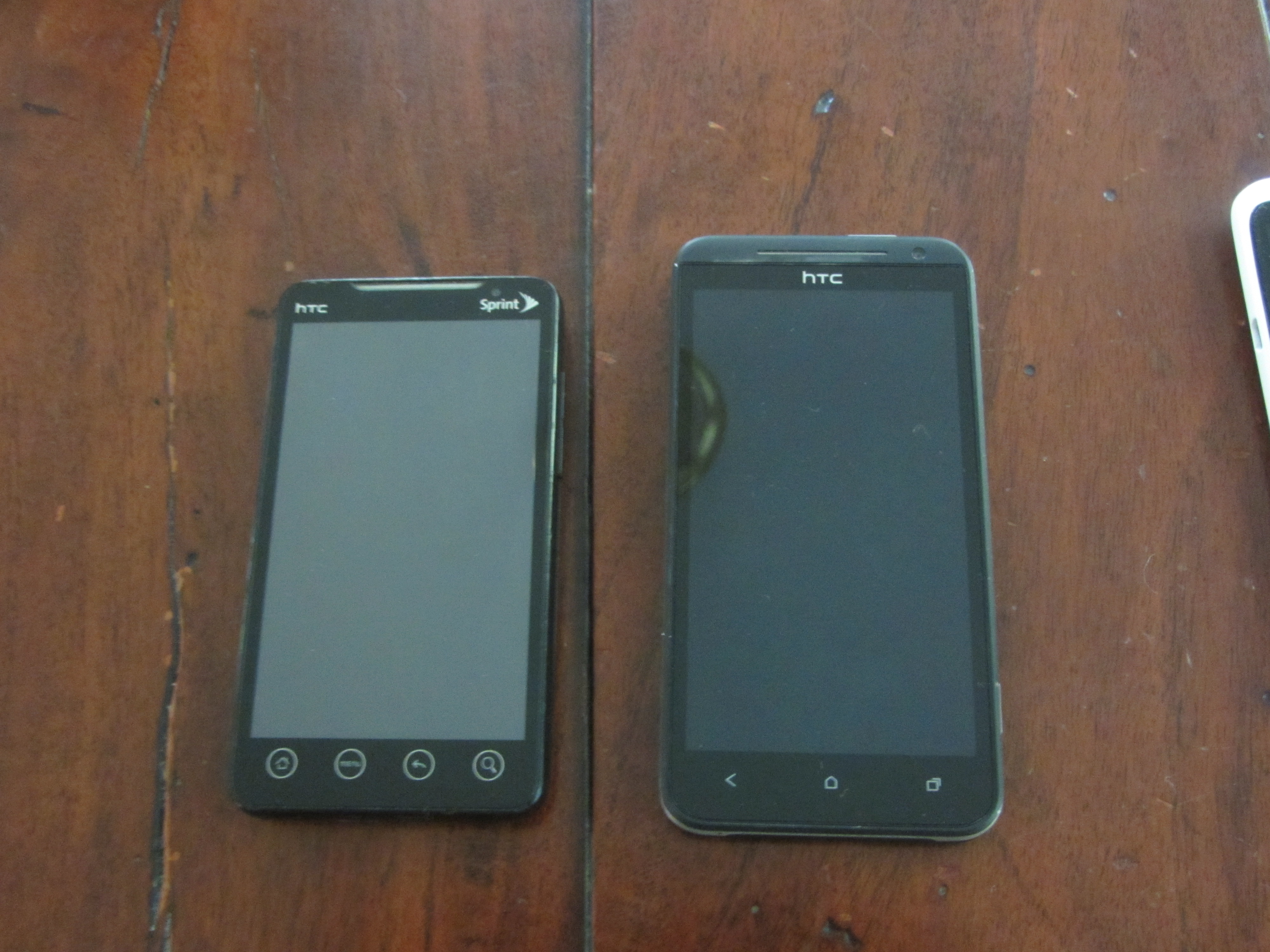
Original EVO 4G, left, new, less 4G EVO ONE, right
When the original HTC EVO launched on Sprint two years ago, it was a game-changer of a phone. It was the first Android device with a 4.3-inch display, 1GHz Processor, 4G WiMAX, and a host of other new technologies including something important that is often jokingly overlooked: a kickstand.
Consider this: Nokia’s current flagship Windows Phone 7 device carries the same 4.3-inch 800-by-480-pixel resolution and single core processor with 512MB of RAM. This is two years later, mind you. And, there are still lots of other phones that lag behind the original EVO. In fact, in one important way, today’s review-ee, the HTC EVO One, also lacks the original EVO’s ability to do 4G data. (Oh, and what perfect two-year contract renewal timing otherwise!)
Sprint finds itself in the middle of a debilitating transition from WiMAX to LTE on its mobile network. I will not go into the details, because it is water under the bridge, but the long story short is that Sprint is migrating to LTE from its previous 4G technology called “WiMAX.” Sprint has a host of phones running WiMAX now and needs to keep the lights on those devices until 2015 (including offloading some bandwidth to its pre-paid customers). At the same time, it has to eek out some spectrum for a new type of 4G service and still keep those 3Gers happy.
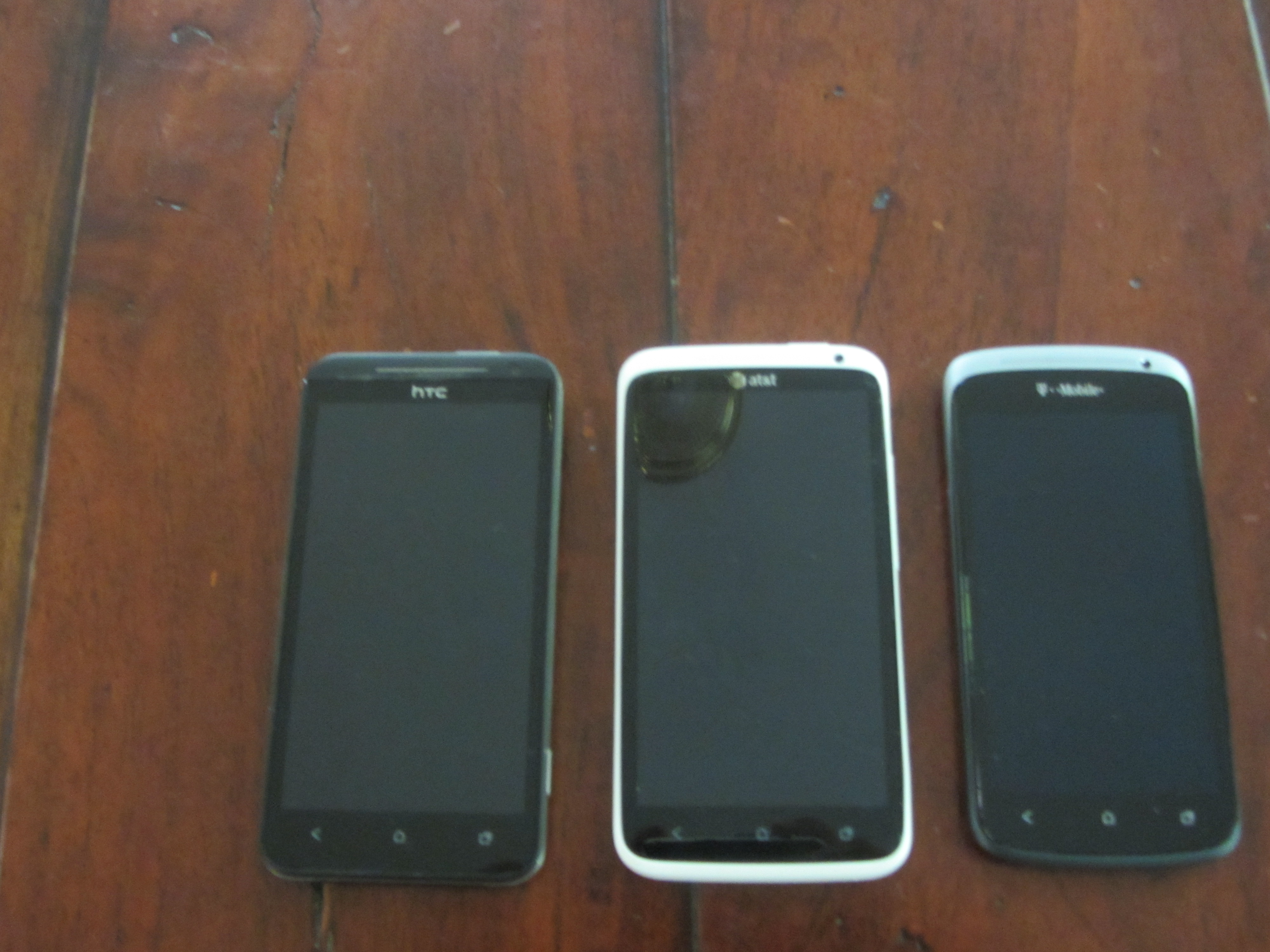
The One Family: Evo One(Sprint), One X (AT&T) and One S (T-Mobile)
Unfortunately, Sprint is only now ramping up its LTE offering as AT&T and Verizon already have many major cities covered. When the EVO One is released today (after a longer than expected layover in customs thanks to Apple), it will not be able to use LTE 4G anywhere. Worse yet, it does not have WiMAX radios, so it is basically on the same level as the iPhone for Sprint customers network-wise.
The original EVO launched at the same time that Sprint’s 4G was rolling out, so you might be saying, “Big deal? The EVO had to wait for 4G and was a success.”
Things have changed immensely over the last two years. If you are buying a superphone in the U.S. now, you expect a super network. The EVO ONE will have to wait a long time to even access a two-year-old-type of 4G speed. Sprint is rolling out its LTE in Dallas, Atlanta, Houston, and San Antonio with some mystery markets, but it should have only 10 markets covered by July. That means only a small percentage of the U.S. is going to be able to really use this phone.
(As an aside, this is Sprint not learning from its WiMAX rollout. Sprint was ahead in its 4G techby a year,but it chose to roll it out in markets like Baltimore and Portland. By the time it got around to major tech/news hubs like New York and San Francisco, Verizon had already announced LTE rollouts and swallowed Sprint’s tech lead.)
If I am a Sprint user (and I am), there is no way I am going to trade a WiMAX smartphone for a non-working LTE one until more of the network is rolled out. WiMAX works great in New York and San Francisco. In fact, I still use my original EVO as a hotspot, because the network is often better than the other carriers’ 4G in the area. There are no current plans for Sprint LTE in my area (New York City).
If HTC/Sprint could have built a phone with dual WiMAX/LTE radios, I would be all over this phone in a heartbeat. However, as it stands, and until Sprint’s LTE gets more mature, it is hard to recommend.
Google’s chairman Eric Schmidt said money would also be provided to buy “teaching aids, such as Raspberry Pi’s or Arduino starter kits”.
He said that without investment in the subject, the UK risked “losing a generation” of scientists.
Speaking on Wednesday at London’s Science Museum, Mr Schmidt outlined further plans: “Put simply, technology breakthroughs can’t happen without the scientists and engineers to make them. The challenge that society faces is to equip enough people, with the right skills and mindset, and to get them to work on the most important problems.”
Google has also sponsored a new exhibition at London’s Science Museum showcasing the life and career of Alan Turing.
Today’s IDC numbers show that iOS and Android continue to dominate the smartphone market. They now account for 82 percent of all smartphones sold when combined, which is up from just over 54 percent a year ago. Android accounts for 59 percent of Smartphones sold, while iOS more than doubled its raw sales numbers by gaining 23 percent of the market. Meanwhile, Symbian, Blackberry, and Microsoft (although the chart above incorrectly doesn’t note it) all fell.
With iOS and Android continuing to grow, and not much in the way of innovation coming from the competition, it seems the smartphone industry is heading toward the same type of duopoly that the PC industry saw over the past three decades.
From the report:
Android finished the quarter as the overall leader among the mobile operating systems by accounting for more than half of all smartphone shipments. In addition, Android boasted the longest list of smartphone vendor partners. Samsung was the largest contributor to Android’s success, because it accounted for 45.4-percent of all Android-based smartphone shipments. But beyond Samsung was a mix of companies retrenching themselves or slowly growing their volumes.
iOS recorded strong year-over-year growth with sustained demand for the iPhone 4S after the holiday quarter and the addition of numerous mobile operators now offering the iPhone for the first time. Although end-user demand remains high, the iPhone’s popularity brings more operational pressures for mobile operators through subsidy and data revenue sharing policies.
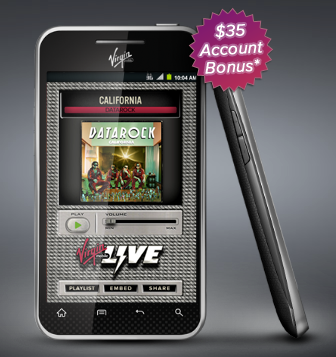
Virgin Mobile, a wholly-own subsidiary of Sprint, announced this morning that it would begin rolling out Google Wallet on its Android phones beginning with the recently announced LG Optimus Elite.
The Elite is a small iPhone-ish sized Android device running Android 2.3. It hit Virgin last week and follows the Optimus V and Slider as popular low-cost Android devices on Virgin Mobile.
Google Wallet has had a rough time with United States carriers. Verizon, with the Galaxy Nexus, blocked it late last year, and AT&T and T-Mobile both have refused to subsidize the Galaxy Nexus GSM version that is available off-plan for $399 through Google’s new Play Store. All three carriers are members of the rival ISIS mobile payments platform, and it is obvious that there is some anti-competitive pressure.
Virgin parent Sprint is a Google Wallet Partner, so it would make sense to see Wallet passed to more Virgin phones and perhaps even Sprint’s other pre-paid subsidiary, Boost Mobile.
Like us, Google appears to be confused by last night’s report—where AT&T’s CEO Randall Stephenson told a questioner that the fault of Android smartphones not receiving updates is Google’s.
Stephenson blamed Google, claiming, “Google determines what platform gets the newest releases and when. A lot of times, that’s a negotiated arrangement and that’s something we work at hard. We know that’s important to our customers. That’s kind of an ambiguous answer because I can’t give you a direct answer in this setting.”
Google refuted that point of view tonight, telling us:
“Mr. Stephenson’s carefully worded quote caught our attention and frankly we don’t understand what he is referring to. Google does not have any agreements in place that require a negotiation before a handset launches. Google has always made the latest release of Android available as open source at source.android.comas soon as the first device based on it has launched. This way, we know the software runs error-free on hardware that has been accepted and approved by manufacturers, operators and regulatory agencies such as the FCC. We then release it to the world.”
Is it possible that the former CFO Stephenson does not know the technicalities of what is happening at his own company? It would appear so. Expand Expanding Close
What a difference a year makes for HTC’s devices. Last year HTC was putting out monster stinkers like the HTC Vivid on AT&T. We didn’t review the Vivid, but it wasn’t for a lack of time spent with the device. It just wasn’t worth our time or yours. It, just like the Verizon Rezound, was more like a grenade than a phone.
The One X changes all of that. This is truly a great phone in the same league as the original EVO or the Nexus One. An instant classic.
As impressed as we were with the HTC One S on T-Mobile, the One X on AT&T is going to make some people even happier with its monster 720P 4.7-inch screen and svelte polycarbonate body. I’ll go ahead and say it: This is the best screen I’ve seen on a mobile phone. Samsung and Apple make great mobile displays but this thing has 180 degree angles that look like a magazine. Throw some high res. images at the screen and you’ll see the 720P display and 315+PPIs come to life. Unlike some Samsung screens, this one looks great in sunlight too… Expand Expanding Close
His statements are confusing, because we have been— up to this point—lead to believe that there is a straightforward way this works:
Google open sources the Android OS.
After that, manufacturers get the OS working on their devices with drivers and (gawdforsaken) overlays.
Finally, the carriers certify the OS on those devices (and add a bunch of crapware).
In a response to the questioner, Stephenson blamed Google, saying, “Google determines what platform gets the newest releases and when. A lot of times, that’s a negotiated arrangement and that’s something we work at hard. We know that’s important to our customers. That’s kind of an ambiguous answer because I can’t give you a direct answer in this setting.”
He then goes on to explain how great Windows is and how he has been using it for a month. He also said Android needs to work on security.
While the questioner is speaking in the broader sense about getting his older Android device updated, it is possible that he is referring to the recent Galaxy Nexus that hit Verizon first in December. The GSM version of the Galaxy Nexus was available on AT&T before the release on Verizon (I was an early user) if you bought the phone without a plan. Expand Expanding Close
AnandTech did some benchmarks on Samsung’s new little puppy today and got some pretty impressive results. Almost across the board, the Samsung Galaxy S III bested or matched the fastest phones out there with its quad core Exynos 1.4GHz processor and Mali-400/MP4 GPU. It did especially well in browser .js tests with the stock browser (assuming it isn’t Chrome, which could make it even faster).
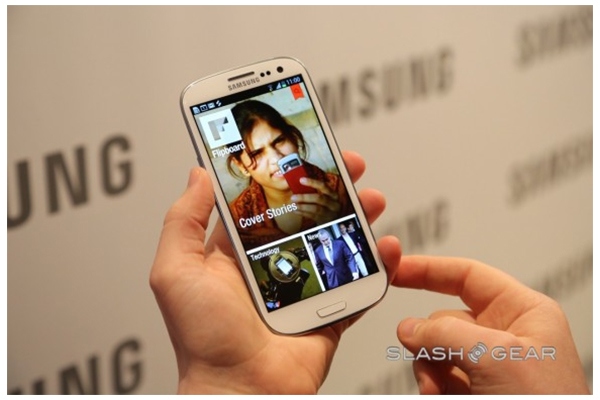
One more prominent iOS-only app bites the dust—or rather goes Android. Flipboard, one of the first content-scraping, Ad replacing tablet apps that turns your feeds into magazine-like content will launch on the Galaxy SIII. It will make its way to other Android apps in the coming days/weeks/months/years ahead as it fights Google Currents and Pulse reader for market share on the Android platform. As for rollout, we expect it to roll out across Samsung devices first (hopefully including tablets) and then to other hardware manufacturers.
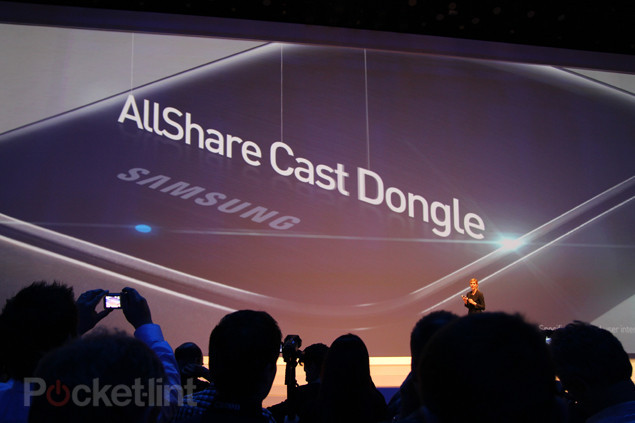
One feature that Samsung shared today at the S II launch event, which possessed more than a passing resemblance to its iOS counterpart, was “AllShare Cast.” It is a way of slinging video around the house. To go with it, Samsung is adding an “AllCast Dongle” to the mix to catch those videos and put them on an HDTV a la Apple TV.
On one hand, it is pretty blatant copying. On the other hand, it is really useful.



 It is pretty clear that webOS is over. With similar roots in Linux, the team could probably do some good with Google’s Android and Chrome products.


![Facebook vs. Google Display Advertising - Comparing the value of the world's largest advertising venues. [INFOGRAPHIC]](http://www.wordstream.com/images/facebook-vs-google-display-network.png)