Author

Avatar for 9to5 Staff

9to5 Staff

Archos previews G9 tablet running Ice Cream Sandwich, promises “child-sized robots” for everyone

Site default logo image

[youtube=http://www.youtube.com/watch?v=cd8ZZhjWNIQ]

Archos, a French consumer electronics company that was established in 1988 by Henri Croha, makes some pretty nice and inexpensive Android tablets. Back in August, 9to5Google updated you with pricing and release dates for their upcoming G9 series, which had been introduced back in June. Even though Archos pushed back the G9 a bit, the company appears to be getting there early nonetheless: Today, they previewed Ice Cream Sandwich version 4.0.1 running on the G9 tablet, as seen in the above video (via ArmDevices.net).

There’s a lot to look forward to with Archos’s G9 series . The annoying laginess of the user interface often plaguing other Android tablets is nowhere to be seen, even though they haven’t yet implemented hardware acceleration for video support. Yes, Android 4.0’s user interface is looking butter-smooth on the gizmo.

The G9 lineup will come in eight-inch and 10.1-inch flavors, starting at $299 and $399, respectively. In its review of Samsung’s Galaxy Tab 8.9, TechCrunch noted that the screen size is “just right” so the eight-inch G9 should be somewhere in the middle, just about right for folks deeming the seven-inchers such as the Kindle Fire from Amazon too small and not terribly impractical for those in the market for a smaller-than-iPad form factor.

Both G9 devices run Texas Instrument’s OMAP4 dual-core 1.5GHz chip and come with 16 gigabytes of storage built-in. Additionally, Archos is throwing in their own features on top of pure Android experience, the stuff like 3G stick and Samba/Upnp support. Interestingly, per Archos CEO Henri Crohas interview with French daily La Libérationell, they are looking beyond personal media players, e-readers and tablets and setting their sights on a “child-sized robot, sold for less than €300”. Go figure.

Expand
Expanding
Close

Asustek makes New Year’s resolution: Surpass Samsung in 2012 tablet sales

Site default logo image


Asustek’s flagship Eee Pad Transformer Prime tablet-meets-notebook gizmo lands this month starting at $499 and will be upgradeable to Ice Cream Sandwich.

Asustek Computer, a computer and consumer electronics maker headquartered in Taipei, Taiwan, wants to beat Samsung in tablets by this time next year. Asian trade publication DigiTimes reported Tuesday that the company’s shipment targets for 2012 include at least three million tablets, “with the company internally expecting the volume to reach six million units” (1.8 million units projected in 2011). That should be enough, the publication speculated, to surpass Samsung which stopped divulging tablet and smartphone sales back in July citing competitive pressure from Apple.

Tablet PCs will reach at least three million units with the company internally expecting the volume to reach six million units, surpassing Samsung Electronics.

Asustek also expects to ship 23.8 million notebooks and netbooks next year, surpassing Dell and challenging the third largest notebook vendor worldwide. The company already beat Dell and Acer in China in terms of market share and files as the largest individual buyer of Nvidia chips. Whether or not their New Year’s resolution concerning tablets is just wishful thinking or based on realistic expectations remains to be seen. What’s clear to everyone is that the market for non-Apple tablets is becoming an increasingly tricky business.

The arrival of the $199 Kindle Fire tablet that Amazon sells at a loss changed market dynamics. The Amazon tablet has certainly dashed hopes for a lot of brands which used to hope that they would be able to make a quick buck on Android tablets with very little differentiation. As Apple continues to cling to its position as the cream of the crop of the tablet world, Amazon is attacking the market on the low-end, leaving little room for other Android tablet makers to differentiate. According to DigiTimes Research, branded tablet PC shipments are poised to grow 60 percent in 2012 to reach 95.1 million units.

Expand
Expanding
Close

HTC: November sales tank due to strong competition from Apple, Samsung

Site default logo image

HTC on Tuesday announced the unaudited consolidated revenues for the month of November 2011 and the numbers don’t look good. Consolidates sales in November were down 20 percent year-on-year and 30 percent sequentially to T$30.94 billion ($1.03 billion) in November 2011, down from T$38.48 billion ($1.27 billion) a year ago and down from T$44.11 billion, or approximately $1.46 billion, in October 2011.

The company says its fourth-quarter revenue would match its Q4 2010 metrics, or approximately $3.4 billion, which however represents a substantially lower projection compared to the original guidance of north of $4 billion in sales. The news couldn’t have come at worse time. HTC is currently awaiting a crucial decision in its legal fight with Apple that could result in a potential sales ban in the United States.

The United States International Trade Commission yesterday said it would delay the hearing by eight days, to December 14. The development could be deciphered as an indication that the Commission is close to a decision and is unlikely to postpone the hearing again. HTC’s share price dropped to a  17-month low following the ITC announcement.

The Taiwanese handset maker two weeks ago lowered fourth quarter forecast by as much as 23 percent, the first sales decline in two years, in the face of global competition from Apple and Samsung. The company specifically cited global macroeconomic downturn and market competition for the adjustment, adding it hoped that growth would return in the first half of next year. HTC is ranked the fourth smartphone maker globally in terms of units shipped.


Expand
Expanding
Close

Supercalc: Google updates search with graphing functionality

Site default logo image

Google search can be a great time saver if you’re looking to quickly check stock quotes, weather, flight information and other types of data for which Google provides instant results at the top of search results. Beginning today, your search result page can also provide a graph of complex mathematical functions. Try it out now,  just type any single variable function such as this one and a live graph should appear on the top of the search results page. You can also plot different functions on a same graph by separating them with a comma and zoom in and out. Supported functiosn include trigonometric, exponential, logarithmic and their compositions. If you’re into math, it’s yet another reason to offload some of your daily productivity to Google.


Expand
Expanding
Close

Google explains how they tweaked Gmail’s lefthand pane for easier navigation

Site default logo image

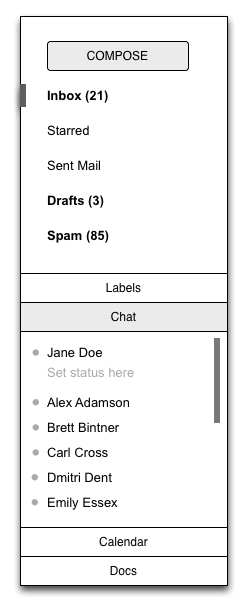
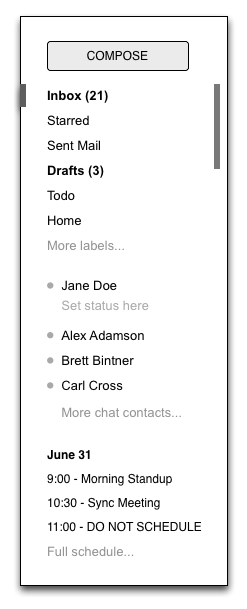
Google on Monday talked about a subtle yet important design change that allows for faster navigation in the Gmail web interface. The company wanted to solve a problem where scrolling the message list in your browser also scrolled the lefthand navigation pane, making it cumbersome to effectively comb through a large message list and at the same time access labels, the chat interface and other gadgets placed in the leftmost column.

They played with two possible solutions (see the above image) calling for both the floating label sections that expands when you are mousing over the Inbox label and the fixed design before settling on a solution combining the two (below). As explained in a blog post:

The final design combines aspects of both approaches. It is a ducking accordion design with only two sections. The bottom section has two tabs, one for chat and one for gadgets, with room to add more tabs in the future. The upper section, which contains labels, expands to show all of the visible labels when you mouse over it. This allows you to see chat contacts but still give quick access to the labels. Best of all, you can easily adjust the balance between labels and chat to fit your own personal preference by dragging the divider between the sections up and down.

They also agonized over the timing and triggering behavior of the expanding labels section in order to minimize accidental triggering. The sections expand only upon moving your mouse below the Inbox label and keeping it there for a moment.
Expand
Expanding
Close

Google explains why Android animation speed is only now catching iOS

Site default logo image

[youtube=http://www.youtube.com/watch?v=-F_ke3rxopc]

Fans of Apple’s mobile devices such as the iPhone, iPod touch and iPad often wonder why can’t scrolling on Android phones and tablets be jerk-free as on iOS devices. It’s been something of a mystery, especially taking into account how the original iPhone had nailed smoothness more than four years ago and on sub-par hardware which was substantially slower than the beefy chips powering today’s Android super phones.

Growing tired of misinformation about how graphics rendering works on Android, engineer Dianne Hackborn set the record straight today on Google+. Android has always used some hardware accelerated drawing, she began. “Since before 1.0 all window compositing to the display has been done with hardware”, Hackborn said.

Apple’s user interface has been hardware-accelerated thoroughly from day one, cynics might say. Truth be told, Apple designs the hardware, the chips and the operating system, allowing them to target iOS specifically for a specific CPU and GPU, a luxury Android does not have. Let’s not forget that Android does true multitasking and background processes execution, unlike iOS, which adds to the overhead. Also adding to the overhead: Native iOS apps are binaries pre-compiled for their own hardware while Android uses the Dalvik virtual machine with just-in-time compilation to run Dalvik dex-code (Dalvik Executable), which is usually translated from Java bytecode.

To be perfectly honest here, Google should be credited for treating each platform update as an opportunity to perfect the hardware acceleration features. For example, they just enabled smoother graphics in all Ice Cream Sandwich apps that rely on the new APIs.

In case you’ve been wondering, menus being shown, sliding the notification shade, transitions between activities, pop-ups and dialogs showing and hiding – Android does offload all those bells’n’whistles to the GPU. The speed of the GPU and the memory bus bandwidth directly impact the smoothness of the interface, Hackborn explained:

As device screen resolution goes up, achieving a 60fps UI is closely related to GPU speed and especially the GPU’s memory bus bandwidth. In fact, if you want to get an idea of the performance of a piece of hardware, always pay close attention to the memory bus bandwidth. There are plenty of times where the CPU (especially with those wonderful NEON instructions) can go a lot faster than the memory bus.

But the GPU “is not a magical silver bullet to butter-smooth UI”, she argues. The new Galaxy Nexus smartphone (9to5Google will be reviewing it shortly) uses a number of tricks to achieve smooth scrolling of lists, web pages and other content in apps, including turning off OpenGL hardware acceleration in parts of the interface that would otherwise cost 8MB of RAM and take away from other things, such as background process and multitasking. Provided the phone’s CPU is fast enough, it can draw graphics without the overhead of the GPU. And in the case of the Nexus S:

Nexus S has no trouble doing 60fps rendering of all the normal stuff you see in the Android UI like scrolling lists on its 800×480 screen. The original Droid however struggled with a similar screen resolution.

Summing up, hardware acceleration is not a be-all-end-all solution to the smooth user interface simply because there’s only that much a smartphone GPU can do. For example, Nvidia’s Tegra 2 GPU found in some Android smartphones can do every pixel of a 1280-by-800 screen about 2.5 times at 60 frames per second, leaving little room for complex, layered animations:


Expand
Expanding
Close

Google wins the Guinness World Records for the largest human beatbox ensemble

Site default logo image

Google won the Guinness World Records last month for the largest human beatbox ensemble. The news was revealed in a Google+ post by Jason Mayes from Google’s innovation services custom solutions engineer Jason Mayes. The unusual record was set at the beatboxing competition at the Convention Center in Dublin, Ireland on November 14, 2011. An image of the certificate follows right after the break. Oh, and looks like Googlers are heavily into beatboxing, if the below Galaxy Nexus advert is anything to go by.

[youtube=http://www.youtube.com/watch?v=DAlO9Mt7-XA]

Expand
Expanding
Close

IHS iSuppli: This holiday, Kindle Fire beats all non-Apple brands combined

Site default logo image

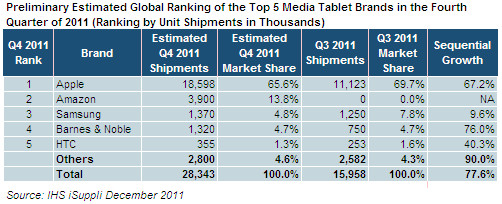
In the two weeks it’s been on the market, Amazon rose to become a major tablet player second to Apple. The $199 Kindle Fire shipping estimate for the fourth quarter of this year easily outpaces combined sales estimates for Samsung and HTC tablets and Barnes & Noble’s Nook Tablet. According to research firm IHS iSuppli, Amazon is set to ship an estimated 3.9 million Fires during the last three months of 2011, which echoes today’s estimated by component makers who predicted Fire shipments of four to five million units through holidays.

Shipments of nearly four million Fires will give Amazon an estimated 13.8 percent share of global media tablet shipments in the fourth quarter, IHS iSuppli noted. The research firm compared that to the 4.8 percent held by Samsung, 4.7 percent by Barnes & Noble and 1.3 percent by HTC. Apple’s iPad, of course, commands 65.6 percent portion of the market.

IHS’s Rhoda Alexander was quoted as saying:

Nearly two years after Apple Inc. rolled out the iPad, a competitor has finally developed an alternative which looks like it might have enough of Apple’s secret sauce to succeed. Initial market response strongly suggests that Amazon, with the Kindle Fire, has found the right combination of savvy pricing, astute marketing, accessible content and an appropriate business model, positioning the Kindle Fire to appeal to a brand-new set of media tablet buyers. The production plans make it clear that Amazon is betting big on the product.

The Fire began shipping sixteen days ago following the September 28 introduction, “creating chaos in the Android tablet market” due to its sweet price spot of just $199, IHS noted. They previously estimated Amazon is selling the device at a loss because components needed to make it cost an estimated $201.70.

Amazon “is playing the long game”, IHS explains, adding the online retailer is “developing a business model that looks beyond the device”. Rhoda Alexander writes that Amazon is able to cover the losses through content sales as the Fire is tightly integrated with their content stores and cloud services:

Amazon plans to use the Kindle Fire to drive sales of physical goods that comprise the majority of the company’s business. As long as this strategy is successful, the company can afford to take a loss on the hardware—while its Android competitors cannot.

IHS expects Apple to discount the $499 iPad 2 when iPad 3 is released some time next year, allowing the Cupertino gadget maker to maintain its profit margins on both the iPad 3 and iPad 2 while attacking Amazon on the low-end.

While Apple and Amazon, and to a lesser extent Samsung, are enjoying fruits of their labor, Research In Motion today announced that unsold PlayBook inventory will cost them a whopping $485 million. Just 150,000 PlayBooks shipped into the channel in the third quarter, the company revealed. Due to this charge, BlackBerry outages and sluggish sales, the once mighty company no longer expects to meet its full-year earnings forecast, Reuters reported today.

[youtube=http://www.youtube.com/watch?v=jUtmOApIslE]


Expand
Expanding
Close

Feds okay Google’s $400 million AdMeld deal

Site default logo image

[youtube=http://www.youtube.com/watch?v=zGTWkuKCLbI]
The United States Department of Justice has approved the proposed $400 million acquisition of real-time bidding platform AdMeld by Google. According to Washington Post, the deal can be cleared “without any major conditions” following antitrust analysis that determined “there are enough competitors that offer services similar to AdMeld”.

A post over at the Google blog says the search company will close the acquisition of the New York-based company that helps publishers sell ad inventory in real time to the highest bidder “in the coming days”. After the deal is completed, Google will focus on improving products and services for publishers and advertisers. For now, it’s business as usual, Google wrote, adding:

Admeld’s products will operate separately to Google’s existing solutions (such as DoubleClick for Publishers and the DoubleClick Ad Exchange). But over time, there are opportunities to bring the best of both businesses together in a variety of ways; and to develop entirely new solutions, too.


Expand
Expanding
Close

The world’s first Android store opens in Australia: Gadgets, robots, Angry Birds and Google Earth on full-size screen

Site default logo image

[youtube=http://www.youtube.com/watch?v=KGwFphUxJ2k]
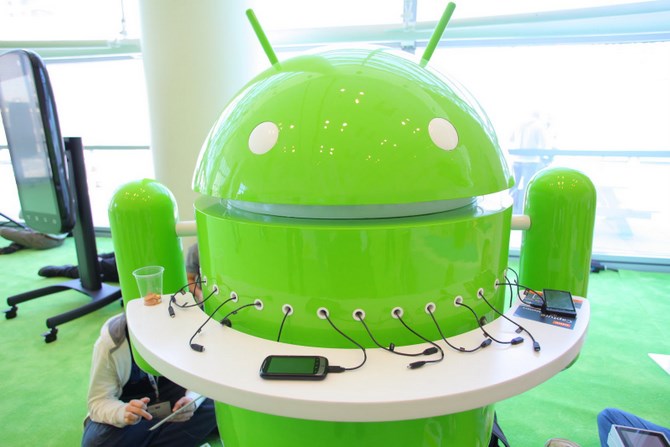
This is Androidland, the world’s first retail store dedicated to all things Android. Dubbed Androidland and in the making since July, it carries a range of Android smartphones, tablets, working robots and accompanied accessories. Heck, they even have a spaceship replica where you can play Angry Birds or experience Google Earth on a huge screen.

Another perk: They’ve got gingerbread smells in the store for the full Android experience. The unusual retail place is located at Bourke Street in Melbourne, Australia and operated by Telstra, the country’s telecommunications and media company.

According to the Androidcentral blog, Telstra closely worked with Google and OEM partners on the outlet that measures 1540 square feet. Telstra will operate Androidland for six months to gauge interest. If foot traffic and revenue meet internal targets, it will stay open longer and hopefully other stores will arrive.

Dedicated retail stores, a secret recipe which has helped Apple become so successful in the past decade, are needed to help push Android gear as well. Although Google’s OEM partners, handset vendors and carriers promote Android devices at their stores around the world, a dedicated Android retail store chain could go a long way toward raising the platform’s visibility, conveying the brand message more clearly and help fans try out the latest Android devices in order to make more informed purchasing decisions.


Expand
Expanding
Close

Amazon to ship five million Kindle Fires through holidays

Site default logo image

Amazon isn’t keen on divulging sales data for its device. This has been true since their venture into hardware with the original Kindle e-reader’s release a little over four years ago. As a result, sales comparison is quite thankless, but not impossible. As most tech companies commission Asian manufacturers to build their gadgets, supply chain leaks can provide a reasonably accurate guesstimate in terms of units shipped to the channel (which can still differ greatly from the number of units sold to consumers and incur high costs related to unsold inventory, as seen in RIM’s example).

Now, according to DigiTimes, an Asian trade publication, Quanta Computer has already shipped between three and four million units of the seven-inch Kindle Fire tablet to Amazon. The online retailer has commissioned Quanta to assemble the gadget. The $199 Android tablet began shipping sixteen days ago following the September 28 introduction. Quanta is estimated to ship up to five million Kindle Fire units by January 2012.

The sources said Amazon has continued to increase its orders for Kindle Fire and aims to see total OEM Kindle Fire shipments reach five million units by the end of December or early January.

If all goes well and sell-through is high enough, Amazon should have no trouble reaching an installed base of five million Kindle Fire users by the year’s end. And considering the tablets prominent placement on Amazon.com, Amazon’s brand, powerful marketing and ecosystem as well as its penchant for gradually reducing prices (even though they sell the gizmo at a loss), the Fire could easily remain the second most-used tablet throughout 2012.


Expand
Expanding
Close

Yay! Google takes aim at copycats with search refinements

Site default logo image

The search Goliath, Google, has been pushing out various product updates at a relentless pace throughout much of this year. For example, they redesigned the main navigation bar, updated the Search app for iOS and are testing new ‘Sources’ section inside of search results, all the while catering to the bright side of technology with notable gems such as this 6-minute clip touching on the history and future of search.

But the company isn’t resting on its laurels as today they made known in a blog post a number of enhancements to their key product, the Google.com search engine. It’s been improved with nearly a dozen new capabilities since the last update on November 14, most of which aim to protect original content on the web.

Google now indexes more long-tail documents and has more accurate autocomplete predictions described as being “a little more flexible for certain queries, without losing your original intention”. They’re also better at figuring out which of two similar web pages is the original one. As a result, shady sites blatantly lifting content that hard-working bloggers produce should have a lesser chance of appearing in search results.

Other refinements include live results for Major League Soccer and the Canadian Football League, minor color and layout changes to improve usability on tablet devices, a change to how they determine image freshness for news queries so they can find the freshest images more often and other under-the-hood tweaks.

With those changes in place, users should benefit from more relevant search experience freed from lifted content that sneaks its way into their search results.

Google+ referrals declining, warns Net Applications

Site default logo image


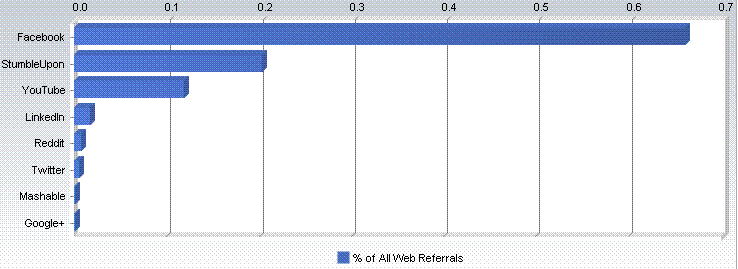
Google+ social media referrals. Source: Net Applications, November 2011. Click for larger.

Google+ has a lot of nice things going for it and is increasingly becoming a place to micro-blog and share content outside the walled garden of Facebook. However, Google+ as a social media referral source has been declining lately, if Net Applications is to be believed. The research firm, which monitors 40,000 sites on the web, warned today that Facebook in November 2011 had a thousand times the amount of referrals as Google+, twice as much than in October.

Furthermore, history data shows that social media referrals from Google+ have actually been on a steady decline since July. As seen in the chart below, Mashable, Twitter, Reddit and LinkedIn in November all ranked higher as social media referral sources than Google+. Of course, one has to take into consideration that Google+ is a young and constantly evolving product which opened for public consumption on September 20, unlike the established social media sites it is being pitted against.

Still, Google+ referrals appear to have been constantly dropping. Back in September, Net Applications reported that Google+ referrals dropped 32 percent after a strong first month. Google+ maintained its position as the seventh leading source of social media referrals in the month of August and Mashable was a distant 13th. A month later, in November, Mashable passed Google+ which dropped to the eighth place.


Expand
Expanding
Close

In browser wars, Google’s Chrome finally surpasses Mozilla’s Firefox globally

Site default logo image


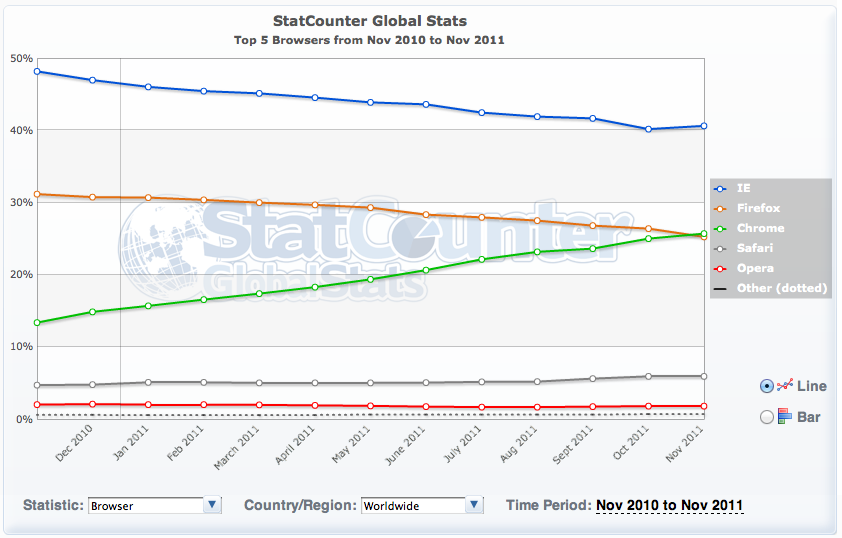
Google Chrome launched on September 2, 2008. Three years later, it beats Mozilla’s Firefox and is after Microsoft’s Internet Explorer, the most commonly used web browser globally.
Source: Global Statcounter, November 2011. Click for larger.

According to November 2011 browser usage data collected by Global StatCounter, a mobile analytics service tracking three million web sites, Google’s Chrome browser has finally surpassed Mozilla’s Firefox on the global scene. Chrome also overtook Firefox in the United Kingdom back in July, but Mozilla’s software retained its lead over Google in the United States as of November 2011. Based on aggregate data collected on a sample exceeding 15 billion page views per month (four billion from the United States), Chrome had a global web browsing share of 25.69 percent in November 2011 versus Firefox’s 25.23 percent.

Compare this to November 2009 when Chrome had just 4.66 percent share. Microsoft’s Internet Explorer still maintains a strong lead with 40.63 percent global share. You could argue that such an important milestone for Chrome has been a long time coming, but you have to consider that Chrome is just three years old while Firefox launched a little over seven years ago.

The achievement was obviously a reason enough to justify issuing a press release, with Statcounter CEO Aodhan Cullen commenting:

We can look forward to a fascinating battle between Microsoft and Google as the pace of growth of Chrome suggests that it will become a real rival to Internet Explorer globally. Our stats measure actual browser usage, not downloads, so while Chrome has been highly effective in ensuring downloads our stats show that people are actually using it to access the web also.

The weird thing is, Internet Explorer got a bump, growing its web browsing share marginally by 0.02 percentage points globally last month. In the United States, Microsoft’s browser enjoys 50.66 percent share, up annually and sequentially over 50.24 and 46.11 percent, respectively. Firefox is second with 20.09 percent share, down annually and sequentially from 26.75 and 22.47 percent share, respectively. Chrome grew year over year from 10.89 percent to 17.3 percent share, but lost ground compared to October’s 18.52 percent share. In the United Kingdom, Internet Explorer leads with 42.82 percent, Chrome is #2 with 24.82 percent and Firefox trails behind with 20.56 percent share. Your U.S. and U.K. charts are right after the break.


Expand
Expanding
Close

HP could axe webOS and go Android, CEO hints

Site default logo image

Meg Whitman, 55, a former eBay CEO and the president and chief executive officer of Hewlett-Packard since September 2011, hinted that anything is possible concerning the fate of webOS, including dropping the platform entirely and going with Google’s Android mobile operating system. Additionally, she also commented that Apple stands a chance of zooming past her company – which files as the world’s leading computer vendor – some time during next year, chiefly on the strength of the iPad 3 launch.

Hewlett-Packard happens to make printers that run Android which support Google’s Cloud Print. Therefore, it’s not terribly shocking that they’re questioning viability of the webOS platform. The company will reach a decision on webOS “soon”.

As you know, after HP indicated it might sell of webOS, that asset has remained in a state of turmoil, to say the least. Even though Whitman reassured fans of her company that the management is adamant to consider all available options, she did nod at Android as one of the choices being considered.

According to TechCrunch:

Interestingly enough, during the same interview, Whitman talked a bit about the future of webOS. She stated that a decision would be made in the next two weeks as there are currently 600 employees in ‘limbo’. The only hint about its future is that Whitman stated that HP needs two OSes but Android could replace webOS.

As for Apple beating HP to the PC punch, Whitman told French newspaper Le Figaro (machine translated):


Expand
Expanding
Close

Samsung unveils dual-core Exynos 5250 chip: 2GHz clock speed, ARM Cortex-A15, WQXGA resolutions, stereoscopic 3D

Site default logo image

Samsung is readying an improved version of the Exynos dual-core chip that will enable next year’s smartphones and tablets to pack in 3D stereoscopic displays with ultra-high resolutions, in addition to the faster graphics and speedier CPU performance. The new chip will be called the Exynos 5250, V3.co.uk reports, and will utilize the Cortex A15 architecture from fables semiconductor design firm ARM Holdings.

It should clock in 14,000 DMIPS, Samsung said, twice the number of instructions compared to the typical ARM Cortex A9-based mobile chips such as Apple’s A5 silicon powering iPad 2 and iPhone 4S or Samsung’s own commonly used dual-core 1.4GHz Exynos 4210 silicon. Samsung did not say what graphics core the 5250 uses beyond mentioning a quadruple jump in graphics performance over the Exynos 4210. The 4210 uses the pretty darn fast Mali-400 GPU from ARM sporting four cores.

Note that Samsung two months ago announced a revised version of the Exynos 4210 chip, dubbed the Exynos 4212. It sports a 1.5GHz clock speed and a dual-core Cortex A9 processing core from ARM, among other things. The Exynos 5250 should make its way into Samsung’s high-end smartphones and tablets in the second quarter of 2012, when the 5250 is expected to go into mass production.

Four times faster graphics processing will let the new Exynos 5250 chip drive tablet displays with WQXGA resolutions of up to 2,560-by-1,600 pixels. Apple too is rumored to upgrade its market-leading iPad with a QXXGA display early next year with. Production of the Retina Display for iPad 3 has already started, the rumor has it. The Cupertino, California company is said to source panels from Samsung Electronic, LG Display and Sharp.


Expand
Expanding
Close

Samsung gets relief in Australia as Federal Court lifts Galaxy Tab sales ban

Site default logo image

A new twist in the Apple vs. Samsung legal proceedings spanning more than two dozen lawsuits across continents as the Federal Court in Australia lifted sales ban on Samsung’s Galaxy Tab tablet today. The court unanimously overturned a ruling last month from Justice Annabelle Bennett which required that Samsung’s Galaxy Tab 10.1 be banned from sale in Australia.

Sydney Morning Hearld quoted the ruling:

Samsung will be permitted to launch the Galaxy Tab 10.1 in Australia provided it keeps accounts of all transactions involving that device in Australia.

Samsung’s Australian subsidiary says it is “pleased with today’s unanimous decision”. Reacting to the decision, Apple plans on appealing to the High Court. The Federal Court also honored Apple’s request that its injunction remain in effect until Friday at 4pm, to allow the company time to prepare an appeal. A full hearing on copycat accusations is set for March 2012, which could still result in a permanent injunction.

Apple is also seeking a ban on the Galaxy Tab 10.1N, a revised version with an added metal frame around the edges. Samsung engineered the Galaxy Tab 10.1N after a district court in Dusseldorf blocked sales of the Galaxy Tab 10.1 on the grounds that the product bears too many similarities to Apple’s iPad. A hearing in that case is scheduled for December 22.

Expand
Expanding
Close

Google launches YouTube Analytics: Find out who’s watching your kitten videos

Site default logo image

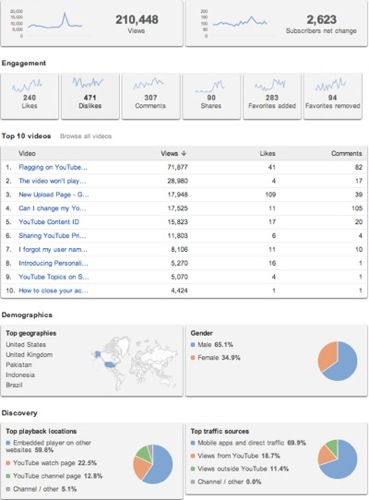
In a move that should make producers and video enthusiasts jump with joy, Google has finally rolled out an improved analytics feature on YouTube, allowing anyone to retrieve detailed reports and see who is watching their videos. The new capability goes beyond the existing Insight feature, which provides only basic analytics.

According to a post at the official YouTube blog, some of the features include a quick overview of how your videos have been doing in terms of view count, more detailed statistics, audience builders that let you discover which videos are driving the most views and subscriptions and audience retention, basically the ability to see “how far viewers are watching through your video”.

You can filter reports by a number of criteria, see line charts, download reports and analyze key metrics in different ways. The new tools should help anyone, especially YouTube’s content partners that share ad revenue with Google, make the most of their videos. The new Analytics feature will be released to everyone on a modern browser over the course of the day, Google said. More information is available in a support document here.


Expand
Expanding
Close

Adobe to update Flash and AIR on Galaxy Nexus in December

Site default logo image

Two months ago, Adobe unveiled Flash Player 11 and AIR 3 for Android devices. As you know, the company changed its mind and said recently it will halt Flash development on mobile after Ice Cream Sandwich. Even though they pledged to continuously support mobile platforms with critical bugs and security flaws, users have gotten confused as to whether or not Adobe will release Flash Player 11.1 and AIR 3.1 for the Galaxy Nexus devices.

The company took to the official blog to explain that some support is in fact in the cards:

We will provide a minor update to the runtimes to support the Galaxy Nexus in December.

However, Adobe reminded users that it’s always been phone vendors’ and carriers’ responsibility to deploy Flash and AIR updates to their customers:

To be clear, the Galaxy Nexus does not initially support Adobe Flash Player 11.1 and AIR 3.1. As we previously communicated in a blog post, devices and software updates from our partners which introduce new technologies are being developed on varied schedules that are different from our own, which means that the Adobe runtimes may not always be optimized or supported on devices until a subsequent release.


Expand
Expanding
Close

WordPress takes aim at Google’s AdSense with WordAds

Site default logo image

WordPress, a popular open source blogging tool and publishing platform, launched today its own advertising initiative conveniently dubbed WordAds. Just to make sure everyone is on the same page here, the company began a post on its official blog by saying its users “deserve better than AdSense”. Ouch! In another nod at Google’s AdSense, the WordPress team explained why it took them so long to roll out adverts on their platform:

We’ve resisted advertising so far because most of it we had seen wasn’t terribly tasteful, and it seemed like Google’s AdSense was the state-of-the-art, which was sad.

They are teaming up with Federated Media, which connects top blogs and web sites with leading brand marketers. If you run a WordPress blog, feel free to apply here to begin making money from WordAds. Many established media outlets entrust their online publishing operations to the WordPress engine, including the CNN and Fortune blogs and this site. Yes, Google absolutely dominates the online advertising game, but WordPress is no ordinary company either.

In addition to being the world’s most popular CMS, WordPress powers over 14.7 percent of top one million web sites, according to Alexa, and was found on 22 percent of all new websites as of August 2011, up from 8.5 percent. Also important, 22 out of every hundred active new domains in the United States use the WordPress CMS engine and more than 50,000 WordPress-powered blogs come online every day.


Expand
Expanding
Close

Cluzee, Siri wannabe, hits Android Market

Site default logo image

[youtube=http://www.youtube.com/watch?v=SeDZ4Trn_jk]

Calling Cluzee a Siri competitor would be inaccurate as any Siri challenger would have to be built right into the bowels of the operating system, as is the case with Apple’s personal digital assistant. With that off our back, Cluzee looks like an interesting addition to Android’s already strong voice and search features. Developed by Tronton, Cluzee is billed as a new type of virtual assistant specialized in finance and information management.

It sports built-in calendar, reminders, filters, advanced search capabilities, voice recognition, voice synthesis and personal analytics, among other features. Tronton partnered with about 50 service providers that help Cluzee provide personalized services.

You can say stuff like “Cluzee, I’m looking to buy this or that in the next few weeks” and it’ll apply your criteria to filter the incoming deals and advertisers. It also does social filtering so you can say “if I get messages from these people, notify me immediately” or “include them in my daily brief”, which is basically your entire summary for any given day.

Just like Siri, Cluzee too employes machine learning, conversational interface and third-party data sources on the web to deliver the results. Cluzee is available on Android Market and will be coming to iPhone soon and just about any platform via an HTML5 web app. More information is available at the Cluzee web site. Go past the break for SocialTechPop’s interview with Cluzee’s Ashish Patwa from TechWeek in Chicago in July of 2011.

[slideshow]

Expand
Expanding
Close

Google Catalogs hits Android tablets

Site default logo image

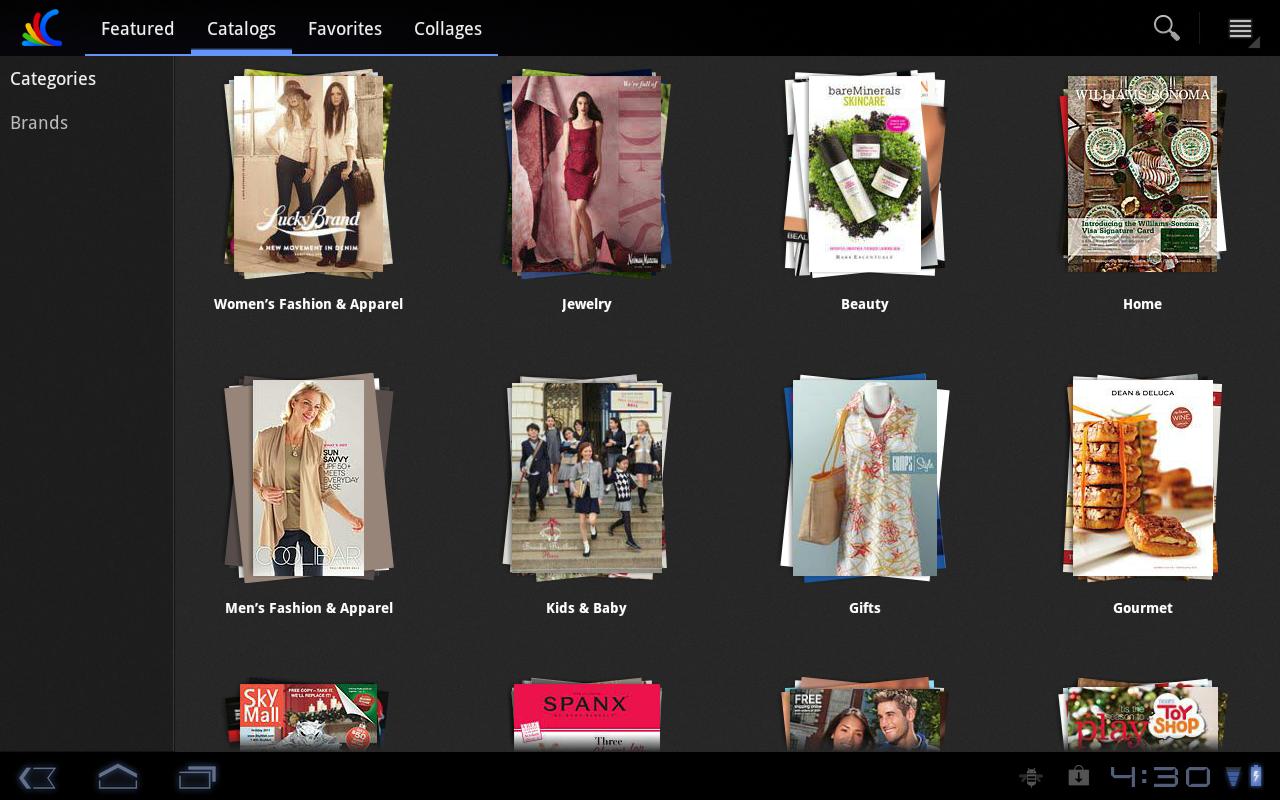
Google Catalogs, an interactive way to browse shopping catalogs on your tablet (currently a U.S.-only thing), is now available for download in Android Market, the company announced in a blog post. Google initially launched this app mid-August on Apple’s iPad and later updated it with more catalogs and six new product categories, including Intimates & Loungewear. The Catalogs app lets you visually browse over 400 digital catalogs sporting your favorite brands such as Nike, Sephora and Nordstrom.

You can flip through the pages in a manner akin to reading electronic books on tablets and find products you’re viewing in nearby stores. Interactive features include pinch zooming images, tapping items to learn more, viewing and creating photo albums, using the unified search box to search across all the catalogs for a specific item and more.

[youtube=http://www.youtube.com/watch?v=FaPgVUJ9A8w]


Expand
Expanding
Close

Google moves Google I/O 2012 to June 27, extends it to three days

Site default logo image

The search monster’s developer conference dubbed Google I/O has been a runaway success this year, bringing us a series of major product announcements ranging from Chromebooks and the new version of the Chrome browser to Ice Cream Sandwich news and Honeycomb tablet software. Google last month said Google I/O 2012 will be running from April 24-25 at San Francisco’s Moscone West, but they decided to extend the event and push it back two months, citing “an unexpected opportunity to extend Google I/O to three days”.

According to a post over at the official Google Code blog, the company made it known that it is moving the conference to June 27-29, 2012. The event will still take place at Moscone Center West in San Francisco. Surprisingly, the Moscone Center events calendar displayed at press time a two-day rather than a three-day event booked for June 27- 28 and the original ‘corporate meeting’ scheduled for April 24-25 is still up on the site.

Those interested in attending can vote for a Day 3 agenda at this page. The company wrote in the comments of a Google+ post that registration for Google I/O 2011 will open in February.


Expand
Expanding
Close

AT&T lands LD Nitro HD with native 720p display and 4G LTE, arriving Sunday for $249.99

Site default logo image

[youtube=http://www.youtube.com/watch?v=cN1gZKGiO4M]

U.S. carrier AT&T today announced that it will be exclusively carrying the Nitro HD smartphone from LG beginning this coming Sunday, December 4. It files as their first Android device with a native 720p display and their third 4G LTE handset (the other two being the Vivid from HTC and the Galaxy S II Skyrocket from Samsung). LG scheduled an ‘exclusive launch event’ for this coming Thursday and the Nitro HD is expected to take center stage at the event.

The 4.5-inch Nitro HD packs in a dual-core 1.5GHz processor, supports GSM HSPA+ and 4G LTE radio technologies, and has an eight megapixel back camera, HD content streaming via DLNA and more. Senior vice president Jeff Bradley said Nitro HD “is the one that does [a true HD experience on Anroid phones] right”, boasting its True HD AH-IPS capabilities.

AH-IPS is an acronym for  Advanced High-Performance In-Plane Switching, a proprietary LG technology for a 1280-by-720 pixel resolution phone display with 500 nit display luminance that allows for clear viewing in direct sunlight. Additionally, RGB stripe pixels “deliver incredibly accurate true-to-life color rendering”.

AT&T recently took its 4G LTE network to fifteen new markets and plans on reaching 70 million Americans with 4G LTE by the end of this year. The Nitro HD will be available from the carrier’s retail and online stores for $249.99 after a two-year service contract. Full release after the break.


Expand
Expanding
Close