ZDNet has posted a video of an internal Microsoft ad, reportedly shown at the Microsoft Exchange Conference, comparing Office 365 to Gmail. As you could imagine, Microsoft bashes Gmail pretty bad with the concept of Google reading people’s mail to serve up better ads.
Except Google Apps for Enterprise doesn’t do ads.
This video is obviously trying to sell Office 365 over Google Apps. Microsoft told ZDNet the video isn’t theirs, but we wonder who else can make such awesomely bad videos.
Google’s executive chairman Eric Schmidt has gone on the offensive and bashed Apple over patent infringement claims the company had filed against high-profile Android backers such HTC and Samsung. In what could be viewed as an effort to sway the public perception, he launched a nasty attack speaking at Google’s Mobile Revolution conference in Tokyo. To Schmidt, Apple’s taking rivals to court sends a strong signal, that of the lack of innovation and jealousy:
The big news in the past year has been the explosion of Google Android handsets and this means our competitors are responding. Because they are not responding with innovation, they’re responding with lawsuits. We have not done anything wrong and these lawsuits are just inspired by our success.
Schmidt re-iterated sales of 135 million Android phones since 2008 and highlighted more than 550,000 daily activations that exclude tablets and non-smartphone devices, which is up from 400,000 a day in May. He said Google will support HTC’s legal battle against Apple’s copyright accusations, but wouldn’t elaborate.
Whether or not Apple’s legal pressure stems from jealousy is up for debate, of course. Cynics might argue Schmidt’s comment draws from nervousness on Google’s part because Android backers are increasingly discovering hidden costs as Microsoft and Apple emerge as holders of patents crucial to Google’s mobile operating system. Apple’s victory over HTC may set what RBC Capital Markets analyst Mike Abramsky painted as a high royalty precedent for Android devices that could further shrink the already slim margins on Android phones.
As if that wasn’t enough, Microsoft is already taking money from five Android vendors for patent protection, including HTC which is said to pay five bucks each time it ships an Android handset and General Dynamics Itronix. Microsoft is also understood to have targeted Samsung, seeking royalties in excess of hundreds of millions of dollars annually. The Cupertino, California-headquartered gadget giant quoted Steve Jobs in a statement announcing the HTC lawsuit March last year:
Then Google CEO Eric Schmidt shares the stage with Steve Jobs at the January 2007 iPhone unveiling. The times of happiness would abruptly come to an end amid Android whispers, culminating with Apple announcing Schmidt’s resignation from its board August 3, 2009.
TechCrunch is reporting that Google is hiring numerous amounts of lawyers in order to acquire more patents. Currently Google only owns 701 patents, a very small number for such a large company. In contrast Microsoft was awarded 3,121 patents just last year. Google will continue to get slammed with lawsuits if they don’t acquire more patents.
On its Job page, Google is listing six open positions involving patents . TechCrunch points one out:
For example, the strategic patent licensing and acquisitions manager evaluates and values potential patent acquisition and licensing opportunities, and negotiates these deals (a.k.a. finds more patents for Google).
Perhaps Google will go after Richard “Chip” Lutton Junior, the chief patent counsel that just left Apple yesterday.
In case you didn’t notice, tech headlines recently are all about patents. Be it the ongoing case of patent troll Lodsys which is now suing The New York Times Company and five other firms that previously sued Lodsys (bringing the number of defendants to 33) or Microsoft going after Samsung and signing Android patent protection pacts with five more vendors or the Apple led-consortium winning a crucial $4.5 billion bid for Nortel’s patent trove – you name it, the blogosphere is all over it.
HTC is now joining the craze with the news that they will snap up graphics vendor S3 Graphics from Via Technologies. The transaction valued at $300 million is about – you guessed right – patents. A total of 235 patents and pending applications will change hands once regulators approve the deal (VIA’s and HTC’s boards of directors already have). The patent agreement should help HTC protect themselves from future patent litigation from rivals. There’s also this:
On July 1, a U.S. International Trade Commission judge ruled that Apple infringed on some of the claims contained in two S3 Graphics patents. Judge E. James Gildea found that Apple infringed on U.S. Patent No. 6,658,146 directed to systems and methods for compressing images and U.S. Patent No. 6,683,978 directed to image data formats, both of which belong to S3 Graphics.
HTC has been trying to escape Apple’s lawsuits since March of last year, when Apple took the Taiwanese handset maker to court over an alleged breach of twenty patents pertaining to the iPhone hardware, software and user interface. With this acquisition, HTC may be out of trouble as both firms now have what the others want – intellectual property – even with HTC bringing a lot less to the negotiating table…
It’s interesting how Microsoft is becoming an intellectual property vendor these days. This is all thanks to Google’s Linux-based Android operating system which incorporate Microsoft’s many patents, allowing the Redmond firm to seek royalties from handset vendors. Microsoft first forced HTC to pony up five bucks in royalties per each handset sold. The revelation has prompted pundits to note that the HTC deal earns Microsoft more money then licensing fees collected from Windows Phone partners.
Microsoft has signed a similar pact with General Dynamics Itronix and their licensing division took cash from component maker Wistron Corp., in addition to Android backers Veloicty Micro and Onkyo Corp. And now, we learn that Microsoft’s legal rottweilers are after Samsung, the leading Android handset maker, reports Reuters based on local media. Note that Microsoft already has licensing agreements in place with Samsung and LG.
Microsoft Corp has demanded that Samsung Electronics Co Ltd pay $15 for each smartphone handset it makes based on Google Inc’s Android operating system as the software giant has a wide range of patents used in the mobile platform, local media reported on Wednesday. Samsung would likely seek to lower the payment to about $10 in exchange for a deeper alliance with Microsoft for the U.S. company’s Windows platform, the Maeil Business Newspaper quoted unnamed industry officials as saying.
Let’s put it this way: Microsoft is set to make $30 million in Galaxy S 2 royalties alone based on sales of three million Galaxy S II smartphones. That’s a run-rate of twenty million handsets a year, meaning the Samsung deal could be potentially worth a cool $200 million in annual licensing fees on the Galaxy S II smartphone alone. And what happens if an Android vendor does not sign with Microsoft for patent protection?
Bloomberg, The New York Times and Dow Jonestoday report that Microsoft and China’s Baidu have entered a cooperation pact for former to provide English language results for the the latter’s queries.
“This is not good news for Google,” said Jake Li, who rates Baidu shares “accumulate” at Guotai Junan Securities in Shenzhen. Most Chinese Internet users currently prefer Google’s English-language search results over Baidu, whose service will be improved by the partnership with Microsoft, he said.
The terms of the deal weren’t made public but the deal will likely work similarly to the Bing-Yahoo deal last year where both companies share the revenues from advertisements. Baidu is the dominant search provider in China, one of the few places that Google doesn’t reign supreme. It had previously signed a mobile only deal with Microsoft but rumors of this deal first surfaced a month ago.
The Baidu-Bing service will go live later this year.
A big milestone today as Google’s Chrome hits a cool 20 percent web usage share according to StatCounter numbers for the month of June (via TNW) based on aggregate data collected from their network of three million websites.
For the first time ever, Chrome passed the 20 percent mark globally, accounting for 20.65 share of all web browsing the world over. Compare that to just 2.8 percent in the year-ago period. Google’s browser is now chasing Firefox which fell from 30 percent in June 2010 to 28 percent in June 2011. All versions of Microsoft’s Internet Explorer have also fallen to 44 percent globally, down from 59 percent in June 2010.
In the United States Chrome’s rise was less rapid, hitting 16 percent in June while Microsoft’s and Mozilla’s browsers scored 46.5 percent and 24.7 percent, respectively. What’s especially interesting is Chrome’s share in South America where it grabbed 29.72 percent of the market, beating Firefox (24 percent) to the browser punch (Microsoft’s browser had 44.1 percent share). An indication of things to come globally?
A month ago we learned that Microsoft signed a patent-protection pact with Android handset maker HTC, with the Windows maker taking an estimated five bucks in royalties for every Android handset HTC makes. Some even calculated that Microsoft makes more money from Android than Windows Phone 7 licenses. Today, Microsoft confirms that it has talked another Android backer, General Dynamics Itronix (GDI), into signing a patent-protection deal.
The agreement “provides broad coverage” for GDI’s Android devices and Microsoft confirmed it will receive royalties from the company. GDI is the maker of rugged mobile computing devices and even though they’re irrelevant in the smartphone space, first-tier handset vendors like Motorola and Samsung could find it increasingly difficult not to pay royalties to the Redmond giant. Apple could indirectly benefit as well… Expand Expanding Close
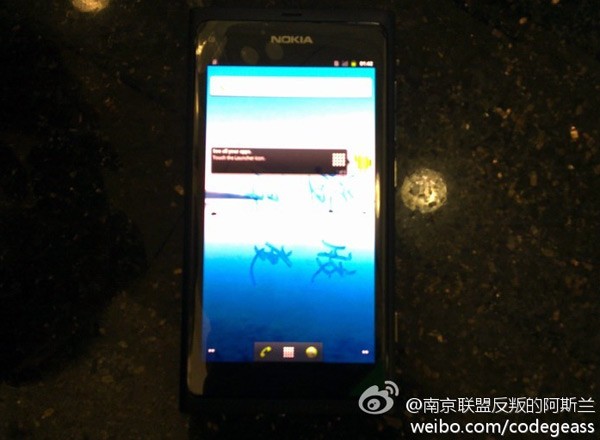
What if Microsoft didn’t decide to dump a boatload of cash on top of Nokia to take their OS and Nokia went Android? It appears that there might have been a skunkworks project in place to get the Android OS on Nokia’s devices if the images from Engadget and Weibo are any indication.
Either that, or some cheeky Nokia employee decided to put Android on their N9. Whichever reality you believe, it wold have been nice to have an N9 Android device, even if it looks like an oversized iPod nano.
The WSJ reports that Google has hit an internet first: one billion unique visitors in a month’s time. The number comes from comScore data released earlier today, citing that the visitors came in the month of May. While on its way to one billion unique visitors, Google saw a 8.4% increase over April month. Microsoft is trailing behind with a close second of 905 million unique visitors a month.
That’s about one seventh of the world’s population visiting Google.com last month. Considering the difficulties Google is having trying to reach the 1.4B people in China, the news is no small feat.
Listen, the recession has obviously helped Google Apps hit the ground running, but the number of high-profile organizations adopting the Google-hosted suite of productivity web apps is growing at an alarming rate (if you’re Microsoft, that is). Lately, Google has won over the #1 hotel chain and today we learn that The McClatchy Company, the country’s third-largest newspaper publisher, has made the switch.
“Historically, each newspaper has operated independently with on-premise software and their own various business operation departments and specifically IT. To date, our technology has been both destandardized and decentralized”, says Terry Geiger, director of corporate IT with The McClatchy Company. Blame that on Microsoft’s technology, he says…
It is pretty desperate times over at Nokia which has lost significant amounts of its market cap Since new CEO Stephen Elop announced plummeting numbers for most of its Symbian Smartphones and dumbphone handsets earlier this week. What does one expect when the CEO publicly executes its flagship Symbian product with nothing to replace it for almost a year?
The company is now worth $25B and Microsoft is said to be trying to by the mobile phone division for somewhere around $19B. Nokia-Siemens and its other businesses would likely remain independent.
For Microsoft and Nokia, it seems like a pretty cozy deal. Microsoft goes from building OSes to building experiences end to end, like Apple, RIM and HP. Just like PlaysforSure->Zune
But what about Microsoft’s other partners in Windows Phone 7? Samsung, who has created arguably the best WP7 device in the Focus, HTC who has a broad range of Windows Phone 7 devices, Acer and other players would be left out in the cold. They won’t use WP7 when Microsoft is making hardware through its Nokia subsidy (again, just like Zune). You can’t compete against the company that makes your software.
They’d all probably double down on Android at that point. In fact, just reading the tea leaves now might have executives at those companies scaling back their Windows Phone 7 R&D.
More trouble in Microsoft land as Bloombergreports that Microsoft device manufacturers are complaining about the software giant’s meddling in their affairs:
Microsoft Corp. is putting “troublesome” restrictions on makers of processors used to run the coming Windows tablet-computer operating system, Acer Inc. Chairman and Chief Executive Officer J.T. Wang said.
“They’re really controlling the whole thing, the whole process,” Wang said at the Computex trade show in Taipei without identifying the restrictions. Chip suppliers and PC makers “all feel it’s very troublesome,” he said.
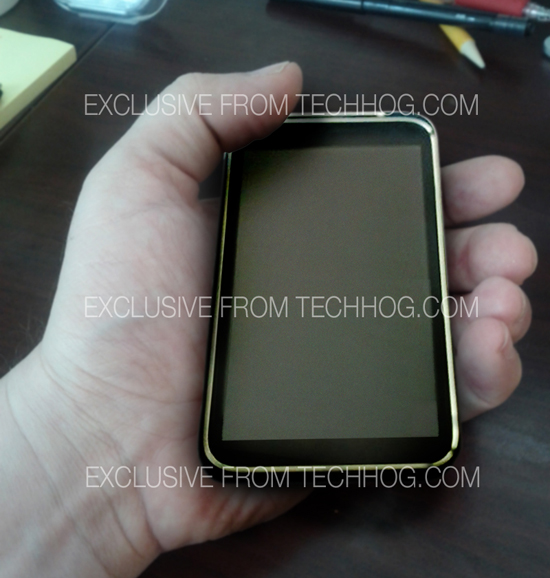
Before it got pulled, TechHogshowed off a picture of what they said was a Nexus 3 device that was to be made by HTC. HTC obviously was the maker of the original Nexus One and has a pretty strong relationship with Google, even if it pays Microsoft patent fees for every Android device it ships.
Interestingly, the device above doesn’t have any permanent front facing buttons, much like the Honeycomb tablets that are being produced right now.
It stands to reason that software-only buttons will make their way down to phones in the next version of Android, called Ice Cream Sandwich, which will combine the Honeycomb tablet versions of the Tablet OS and the Gingerbread phone versions. Ice Cream sandwich is due later this year and Andy Rubin claimed that a Ice Cream Sandwich reference device was in the works before Christmas.
Is this it?
Techhog says the images were pulled at the request of an outside petitioner, though it isn’t clear who it is. Google and HTC are obvious suspects. Expand Expanding Close
A report from Citi analyst Walter Pritchard made headlines this morning with claims that HTC agreed to paying five bucks per every Android handset sold. The basis for this is Microsoft’s patent settlement with the Taiwanese handset maker over intellectual property infringement, the analyst has found out. The fact that HTC makes Windows Phones obviously didn’t help dodge that patent hit.
Microsoft’s boss Steve Ballmer argued last October that Android wasn’t free just because it’s open-sourced. Some watchers are calling the Android platform a patent bomb waiting to explode. HTC is also being sued by Apple over alleged breach of iPhone patents and Oracle is suing Google over use of Java in Android. Pritchard warns other Android vendors can expect to pay royalties to Microsoft between $7.50 to $12.50 per device, which is troubling and here’s why.
Gartner is out with their first quarter 2011 mobile phone market survey. The results are astounding. The first quarter belonged to Google and everyone else was reduced to extras in an Android show. Both Apple and Google grew their respective share of the smartphone market, estimated at 100.8 million quarterly units – nearly double the 54.5 million units from the year-ago quarter. Smartphones grew 85 percent and cut into sales of regular handsets, accounting for almost one quarter (23.6 percent) of the 427.8 million handsets shipped during the first quarter.
Predictably, Android was the leading smartphone platform in the first quarter of 2011. And here comes your mind-boggling takeaway: More Android-powered smartphones were sold during the first quarter than the combined sales of Apple’s iPhone, RIM’s BlackBerrys, Microsoft Windows Phone smartphones and vendors belonging to the Other OS category. And that is worldwide, mind you. Go ahead, do the math yourself (the below table).
It’s fascinating that Microsoft and Symbian combined had three percentage points lower market share than Android. Also, while Apple doubled iPhone sales, they barely gained any marketshare. This just shows that Android is gobbling up market share at a rapid pace, eating pretty much everyone’s lunch in the process…