Author

Avatar for 9to5 Staff

9to5 Staff

Asus chairman: “Android is improving very fast”

Site default logo image

[vodpod id=Video.15577917&w=670&h=551&fv=videoGUID%3D%7B2A16FA04-A4C1-45E8-BFE9-A5E3510D3ABD%7D%26amp%3Bplayerid%3D4001%26amp%3BplyMediaEnabled%3D1%26amp%3BconfigURL%3Dhttp%3A%2F%2Fwsj.vo.llnwd.net%2Fo28%2Fplayers%2F%26amp%3BautoStart%3Dfalse]

Asus chairman Jonney Shih sat down for a fireside chat with the Wall Street Journal columnist Walt Mossberg at the AsiaD conference yesterday to talk tablets, smartphones, cloud computing and general trends in our industry. The interesting Google tidbit came at the end of a preview video, included above. Of Android, Shih said:

I still believe that Android is improving very fast.

Shih advertised the upcoming Transformer device which functions both as a thin Android tablet and a notebook when docked to an aluminum-clad keyboard dock which houses a battery as well. Together, the two batteries in the device and the keyboard dock can provide juice for up to 16.5 hours. The new Transformer launches November 9, Shih said.

Google currently is disadvantaged in the tablet space, no denying that. However, the search Goliath has a strong momentum going in the broader ecosystem, with device makers building Android products spanning tablets, smartphones, ultra portables and what not. It’s the same ecosystem approach Microsoft tapped to achieve Windows monopoly and reduce the Mac’s market share to a single-digit figure. Google, of course, unveiled the new Galaxy Nexus smartphone with Samsung and Ice Cream Sandwich software that supports both smartphones and tablets.

Expand
Expanding
Close
Dual-number Android phones that isolate work from personal data coming from LG, Samsung, others

Site default logo image

Sure thing, dual-SIM Android phones are anything but a new thing. LG’s Optimus Net, for example, lets you pop two SIM cards and switch between two different numbers. Heck, you can even get four-SIM devices these days, like the one pictured after the break.

Sadly, dual-SIM handsets typically have a major drawback: Both numbers share the same operating system environment so you can’t really separate your work and personal data on the device. This is about to change, according to Ars Technica which wrote both LG and Samsung had agreed to build phones containing VMware’s mobile hypervisor technology dubbed VMWare Horizon Mobile. In addition, carriers Vodafone and Telefonica will launch dual-number devices from multiple Android makers in Europe.

In a nutshell, this technology lets users choose between two different operating systems at boot time, each isolated from the other. The publication explains the obvious benefits:

Telefonica Android phones will provide the option of having separate data services and two phone numbers on the same SIM card, one for work and one for personal use. It’s not yet been announced whether Verizon will have dual-number phones ready at launch, but one possibility is tying the corporate side of the phone to a PBX system. Even if a phone has just one number, the separate profiles created by Horizon Mobile keep work messaging and browsing separate from the personal part of the phone, and let IT manage the corporate side without touching the personal data.

What’s best, dual-number phones with hypervisor technology should not cost more than their single-SIM counterparts and the system requirements for VMware’s mobile hypervisor are rather modests and include a 700MHz processor and 512MB of RAM.


Expand
Expanding
Close

Android’s UI chief paints iOS as juvenile, says Google is starting to take the experience seriously

Site default logo image


Image courtesy of The Verge

Following a slew of announcements from Google yesterday culminating with the unveiling of Android 4.0 Ice Cream Sandwich, the accompanying software development kit, Android Beam, the new People app, the panoramic camera feature and the Samsung Galaxy Nexus smartphone (among other things), The Verge has published an exclusive, lengthy interview with Android’s head of user experience Matias Duarte. It’s a highly recommended read with revealing details and interesting insider perspective on Google’s arguably the most propulsive property.

Some of the more noteworthy highlights:

Android Honeycomb, which was Duarte’s first big Google project following his departure from Palm after the company was acquired by HP, was a lot like “emergency landing”, he said.  It’s a platform which has “a flexibility designed into it that you don’t have to worry about when you’re doing a completely integrated device”. And why Google refused to open-source Honeycomb?
“On Honeycomb we cheated, we cut the corner of all that smaller device support”, adding this:

Honeycomb was like: we need to get tablet support out there. We need to build not just the product, but even more than the product, the building blocks so that people stop doing silly things like taking a phone UI and stretching it out to a 10-inch tablet.

People are fed up with “two decades of windows, and cursors, and little folder icons”, he says. The search company actually visited “shadow” users at their homes and workplaces to figure out how they interacted with mobile devices. What they found out was surprising: Android lacked emotional connection with its users who deemed the operating system overly complex. So they set out to build a wonderland of sorts, improving on Android’s typography by creating in-house a clean typeface for Ice Cream Sandwich dubbed Roboto. He then took a jab at Apple, calling the iOS design “juvenile” and likening it to web pages with “cartoony things hanging off a page”.

More tidbits below the fold.

Expand
Expanding
Close

Nexus Prime said to arrive in UK, Japan’s NTT DoCoMo next month

Site default logo image

We’re but a day away from Google’s and Samsung’s major Hong Kong event meant to serve as a launchpad for the Nexus Prime, the first handset to feature Android 4.0 nicknamed Ice Cream Sandwich. Guardian reports that the handset is “expected to be released in the UK within the next four weeks, in time for Christmas”, without naming a source for their claim. Meanwhile, Japanese carrier NTT DoCoMo wrote on Twitter that the Nexus Prime will land in Japan around November, boasting about it being “among the fastest” devices on the market.

An unlocked version of the phone is already showing up at third-party resellers, priced at about $750. The features allegedly include a powerful 1.2GHz dual-core processor, native 720p display, eight-megapixel camera on the back with 1080p video capture, support for NFC and more.

Google pushed back the Nexus Prime launch originally scheduled for Monday last week out of respect for Steve Jobs. Coincidentally, the new October 19 date collides with a celebration of Steve Jobs’ life due tomorrow in the outdoor amphitheater of Apple’s Infinite Loop campus in Cupertino. Apple will even close its brick-and-mortar stores for an hour so employees can watch the ceremony.


Expand
Expanding
Close

Samsung rolls out ChatOn service on Android and Bada, other platforms due by year’s end

Site default logo image

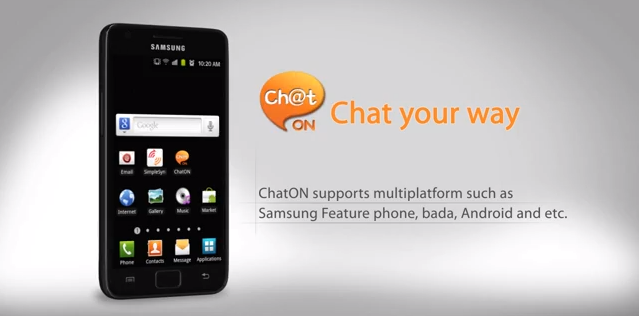
Samsung today announced in a blog post that its free instant messaging service named ChatON is rolling out worldwide. The service will first arrive to Samsung’s Bada-driven devices, Android smartphones and selected feature phones starting this month, via Android Market and Samsung Apps stores. They will release the app on other platforms “by the end of 2011”. The company wrote:

ChatON provides users with a simple way to keep in touch with friends and family anywhere in the world, regardless of device platform. It enables users to communicate in multiple ways, allowing multimedia content and animated messages, as well as more conventional instant messages, to be shared with friends and family.

As we told you, the ChatON service has been conceived as a proprietary messaging service for multiple mobile platforms. Similar to the BlackBerry Messenger and Apple’s iMessage – both of which support free instant messaging over a mobile IP connection – ChatON too supports text, images, group chat and video clips. Unlike rival IM platforms, ChatON also does hand-written notes, animated messages and social features allowing users to give their buddies so-called “Interaction Rank”. In addition, Samsung will be taking ChatON to competing platforms like Research In Motion’s Blackberry OS and Apple’s iOS, guaranteeing mass market appeal and cross-platform messaging.


Expand
Expanding
Close

Drop test: Which is tougher, Apple’s iPhone 4S or Samsung’s Galaxy S II?

Site default logo image

[youtube=http://www.youtube.com/?v=elKxgsrJFhw]

The iPhone 4’s design was heavily criticized over the use of chemically strengthened glass for its enclosure. The pundits typically highlight a zero percent probability of the device landing on the “right” side in an unfortunate event of slipping out of your sweaty hands onto the pavement. Whichever way you look at it, both the iPhone 4 and iPhone 4S have questionable droppability compared to other handsets using chassis engineered around the usual metal + plastic combo.

The folks over at SquareTrade took an iPhone 4S for a spin and pitted it against Samsung’s Galaxy S II to see which one survives a waist high and shoulder high drop. As you can see in the above clip, Apple’s latest and greatest handset was pretty badly damaged from the outside, just like its predecessor. It did, however, fare pretty well landing on its stainless steel band. Dropped face down, however, the iPhone 4S’s screen completely shattered. Samsung’s device didn’t suffer nearly as much damage (note that being light weight is probably a factor).

In addition, the plastic back on the Samsung device has gotta be more prone to surviving the shock of a sudden impact compared to glass. By the way, if you’re concerned about your iPhone’s droppability, head over to 9to5Toys and get yourself a great case. SquareTrade is an independent warranty provider cover nearly everything – excluding, of course, intentional damage shown in the clip. Hop over to their web site for more information.

Daring Fireball’s John Gruber summed up nicely the problem with the iPhone 4’s easily breakable all-glass design. For those who don’t recall Gruber’s comment, here’s a thought he shared shortly after the device had gone on sale in the summer of 2010:


Expand
Expanding
Close

Samsung announces shipments of 30 million Galaxy smartphones

Site default logo image

Samsung’s Galaxy-branded smartphones are poised to become the fastest-selling alternative to the Apple’s iPhone family of devices. The latest Galaxy S II had gotten off to a great start, shipping three million units in the first 55 days of availability and five million units in 85 days. It shipped a total of ten million units in the first five months on the marketplace, beating the company-imposed end-of-2011 target by a significant margin. Today, Samsung announced (via Cellular-news.com) that the Galaxy S and Galaxy SII smartphones have achieved a combined total of 30 million global sales. The publication quoted president and head of Samsung’s mobile communications business JK Shin:

Since its launch only five months ago, Galaxy SII has seen tremendous sales success and garnered enthusiastic reviews from consumers and mobile industry watchers across the globe. This is in addition to the continued sales momentum behind Galaxy S, which we launched at Mobile World Congress 2010 as continues to be a run-away success with consumers

It is important to remember that these aren’t your bargain basement Androids, but really nice high-end devices comparable to Apple’s iPhone with their advanced features, the pleasing and slim design and price points. Considering the aforementioned 10 million Galaxy S II milestone was made public September 25, after which the handset hit the U.S. shores, it’s safe to assume that the Galaxy S and Galaxy S II shipped roughly 15 million units each to this date. In addition to positively impacting Samsung’s bottom line (even though they no longer detail sales of phones and tablets in quarterly earnings reports), the Android patent protection Samsung signed with Microsoft could bring the Windows maker a cool $300 million in licensing revenues on the combined sales of 30 million Galaxy S and S II phones.


Expand
Expanding
Close
Google Maps gets hardware-accelerated visuals

Site default logo image

[youtube=http://www.youtube.com/?v=X3EO_zehMkM]

What do you get by marrying Google Maps to WebGL, a software library that extends the capability of the JavaScript programming language to allow it to generate interactive 3D graphics within any compatible web browser such as Google’s Chrome 14 or Firefox Beta? Pure awesomeness, that’s what. They are calling to Google MapsGL and it enables “far richer visuals and animations”, the search company wrote in a blog post this morning:

WebGL is a new technology that brings hardware-accelerated 3D graphics to the browser without additional installed software. With WebGL your maps experience is much better with 3D buildings, smoother transitions between imagery and the ability to instantly “swoop” into Street View without a plugin.

Just visit maps.google.com and click “Try it now” to take hardware-accelerated Maps for a spin. We wrote in the past about WebGL-based Chrome experiments worth checking out, including a remarkable water simulation and interactive music video.


Expand
Expanding
Close
Brits vote Galaxy S II T3’s Phone of the Year 2011

Site default logo image

As 9to5Google reported this summer, Apple and Google are battling it out in several categories in Gadget Awards 2011, an annual gadget awards ceremony organized by British monthly Tomorrow’s Technology Today, better known as T3. The smartphone category pitted Apple’s iPhone 4, HTC’s Incredible S and Sensation, Motorola’s laptop-killing Atrix, Sony Ericsson’s Xperia Arc and Samsung’s Galaxy S II against each other. Samsung’s phone, which shipped ten million units in five months, has beatten Apple’s sixteen months old iPhone 4 and took home the prestigious Phone of the Year 2011 award. Per the official Gadget Awards web site, Britons this year voted Samsung’s phone as their #1 choice, the first time in three years that neither Apple nor HTC had won the award:

Samsung smashed it into the roof of the net with its top-of-the-range Android blower. A gorgeous looking phone with slick operation, the S II also features the best camera on any smartphone to date, great integration with Samsung’s TVs and other kit and a screen that matches the iPhone 4’s, without aping it, thanks to the unfathomable power of Super AMOLED.

Samsung should launch the Galaxy Prime (alternatively named the Nexus Prime) soon, perhaps November 3. Nexus Prime will be the first Android 4.0 Ice Cream Sandwich device built in partnership with Google. It should boast the original Android experience (meaning no skins). Hardware-wise, the device is expected to sport a big, native 720p display, an eight-megapixel camera that captures full HD video, a speedy dual-core 1.5GHz processor and other treats. The phone should have already debuted, but Samsung and Google decided to delay the launch out of respect for Steve Jobs.


Expand
Expanding
Close
Alien Dalvik 2.0 adds iPad support

Site default logo image


Android apps running on your iPad? Alien Dalvik makes it possible.

In case you’re not familiar with Alien Dalvik, it is a port of the Dalvik virtual machine, which is the software in Google’s Android operating system responsible for executing Android apps. According to SlashGear, the Myriad Group (the brains behind the Alien Dalvik project) announced support for Apple’s iPad in Alien Dalvik version 2.0.

As a result, the unimaginable (even unholy) becomes possible: You’ll be able to download, install and run Android software on your Apple-branded tablet. Alien Dalvik wraps each Android app file in its own virtual machine so it kinda feels as if you were running a native iPad app. The Myriad Group explains:

From a user perspective, Alien Dalvik 2.0 is completely transparent and installed without user disruption. Users simply enjoy the same rich Android ecosystem they have become accustomed to via mobile on other key screens, such as playing Angry Birds on HDTV. This all while gaining faster access to a wider range of apps, thus encouraging a higher frequency of downloads and increased ARPU.

We assume performance won’t be comparable to native iOS apps and we’re expecting hiccups and compatibility issues. This begs the question: Why would you want to run Android apps on your iPad?

Apple’s iOS software boss Scott Forstall said at Monday’s iPhone 4S introduction that about 140,000 out of the 500,000 apps available on the App Store have been specifically created with iPad in mind. Android apps also aren’t as pretty or delightful as their iOS counterparts. But the fact that most are either free or ad-supported should mean something so we expect some folks will give Alien Dalvik a try. Stay tuned as the team promised to show off Alien Dalvik 2.0 running third-party Android apps on iPad 2 at CTIA 2011 next week.

Expand
Expanding
Close
HTC zooms past Acer and Asus to become Taiwan’s leading tech brand

Site default logo image

Quite an accomplishment, but not unexpected given HTC’s popularity on its home turf. According to Taiwan Economic News, Taiwan’s External Trade Development Council (TAITRA) and the Bureau of Foreign Trade named handset maker HTC the country’s leading technology brand, surpassing even computer maker Acer.

In just twelve months, the HTC brand gained $2.23 billion in value and is now worth an estimated $3.6 billion. Acer and Asus trail behind HTC with their respective brands valued at $1.94 billion and $1.36 billion. Here’s how their CEO  Peter Chou commented the accolade:

You have to make an investment, spend time, and stay patient. Even if we failed, the process would help to produce positive results for Taiwan. We are not content with our current achievements, but will work harder to better compete globally, especially at this time of increasingly intense global competition.

HTC yesterday issued unaudited quarterly earnings, with revenues and net income up in the third quarter 80 and 68 percent, respectively. The company is shooting for shipments of 13.5 million smartphone units during the second half of this year. HTC is ranked the fourth smartphone maker globally. In the June quarter, they were the leading Android vendor and the second-best smartphone maker in the United States.


Expand
Expanding
Close
Samsung, Google delay Galaxy Nexus launch out of respect for Steve Jobs

Site default logo image

Sad news from the Android camp as both Google and Samsung announce (via Pocket-lint) that the Galaxy Nexus, also known as the Nexus Prime, will not launch at the Mobile Unpacked conference October 12 next Wednesday, as originally expected. The two companies provided no explanation for the delay apart from this official statement:

Samsung and Google decide to postpone the new product announcement at CTIA Fall. We agree that it is just not the right time to announce a new product. New date and venue will be shortly announced.

The CTIA conference runs October 11-13, 2011 at San Diego’s Convention Center. The publication speculates that the delay could be related to avoiding a likely media conflict if Steve Jobs’ funeral were to happen that day. The wording of the official statement, that “it is just not the right time to announce a new product”, supports the thesis.

UPDATE: Ina Fried over at the AllThingsD blog quotes unnamed sources who said Google and Samsung “just felt it was the wrong time to hold a launch event, as the world continues mourning Jobs”. Furthermore:

The decision to postpone things was made late last night at the top levels of both companies, sources said, with Jobs’ death being the reason. There are no delays with the product itself, sources insisted.

Samsung and Google later updated their original press statement, which now reads:

We believe this is not the right time to announce a new product as the world expresses tribute to Steve Jobs’s passing.

Another possibility, albeit much less likely, is an unknown patent issue that might need sorting out. 


Expand
Expanding
Close
HTC reports soaring third-quarter profits, revenues

Site default logo image

Taiwanese smartphone maker HTC reported unaudited third quarter earnings. The numbers don’t disappoint and follow their equally successful June quarter sales trends when the company doubled profits on sales of 12.1 million smartphones. For the three-month period, HTC’s profits and revenues almost doubled year over year, buoyed on their extensive lineup of the recently released Android handsets.

Unaudited net profit topped T$11.1 billion, or about $360 million, an increase over the T$5.695 billion a year earlier. Operating income climbed to NT$20.2 billion in the third quarter and earnings per share were NT$22.03. Revenue for the quarter was NT$135.8 billion, an eighty percent sequential increase.

Going forward, HTC is expected to benefit from the ongoing interest surrounding the Android platform and a new cloud services model stemming from their acquisition of Dashwire. HTC is ranked the fourth smartphone maker globally and was the leading Android vendor and the second-best smartphone maker in the United States last quarter.


Expand
Expanding
Close
Better late than never: Google TV 2.0 coming “in 3 or 4 weeks”

Site default logo image

According to the AndroidOS.in blog, the update will be released in the next three to four weeks, per the official statement from the mouth of Google TV director of content Donagh O’Malle:

What I can tell you about what’s coming up with Google TV, is version two is about to launch probably within the next three or four weeks.

He also noted that Android Market currently hosts more than 250 apps optimized for the Google TV platform. The firmware update should probably arrive around or shortly after the ICS announcement.

It is no secret that Google’s focus in the broadcasting space has sharpened lately. They are investing a hundred million dollars in original content for YouTube and aiming to stream premium entertainment content on scheduled YouTube channels beginning next year. Those separate strides should be viewed as part of the broad push into the TV business. If Google’s bet pays off, the company could gain a strong footing in the multi-billion dollar market that is Hollywood entertainment.

[youtube=http://www.youtube.com/watch?v=AhGsfydm134&start=2190]


Expand
Expanding
Close

Samsung moves to banish iPhone 4S from Italy, France

Site default logo image

Remember how Samsung threatened to ban sales of Apple’s next iPhone the second it becomes official? They are keeping good on that promise by filing two separate motions for preliminary injunctions in Paris and Milan in an attempt to bar sales of the iPhone 4S in France and Italy. From Samsung’s corporate blog:

Samsung Electronics will file separate preliminary injunction motions in Paris, France and Milano, Italy on October 5 local time requesting the courts block the sale of Apple’s iPhone 4S in the respective markets.

Samsung’s preliminary injunction requests in France and Italy will each cite two patent infringements related to wireless telecommunications technology, specifically Wideband Code Division Multiple Access (WCDMA) standards for 3G mobile handsets.

The infringed technology is essential to the reliable functioning of telecom networks and devices and Samsung believes that Apple’s violation as being too severe and that the iPhone 4S should be barred from sales.

Apple has continued to flagrantly violate our intellectual property rights and free ride on our technology. We believe it is now necessary to take legal action to protect our innovation.

Samsung plans to file preliminary injunctions in other countries after further review.

Cross-posted on 9to5Mac.com.


Expand
Expanding
Close
Samsung downplays iPhone 4S, emails customers a convenient comparison chart

Site default logo image

Talk about speeds and feeds.

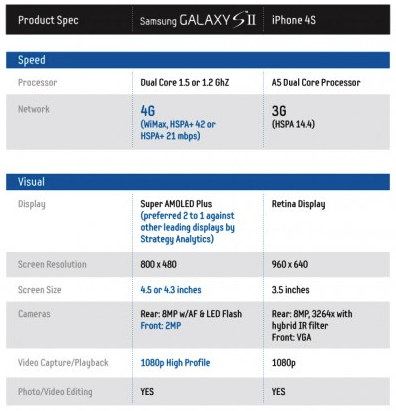
Underwhelmed with Apple’s new iPhone 4S, but obviously viewing it as a potential threat, Samsung is luring undecided or perhaps disappointed fans into considering the Galaxy S II smartphone. The company has issued an email to customers, attaching a convenient comparison table that pits the features of the iPhone 4S against its own Galaxy S II device. On closer inspection, however, some of the entries in Samsung’s table raise eyebrows.

For example, Samsung is downplaying the importance of Siri by describing it as the ‘voice activation’ feature and comparing Siri to Vlingo, a free download from Android Market. While Vlingo is billed as the best personal assistant on Android, it isn’t as comprehensive or deeply integrated as Sir, which surprises with its conversational attitude and artificial intelligence features allowing it to learn from past interactions with the user.

Also, the Cameras section in Samsung’s tablet ignores the iPhone 4S’s enhanced camera system, which is based on Sony’s lens and the improved sensor from Omnivision. The iPhone 4S’s back camera has a fifth lens, the larger f/2.4 aperture, the backside illumination sensor, as well as face detection and video stabilization capabilities, none of which Samsung bothered to mention. Instead, they tout their admittedly superb Super AMOLED Plus display which is “preferred 2 to 1 against other leading displays by Strategy Analytics”, a 1.2GHz or 1.5GHz dual-core processor (versus the A5 chip in the iPhone 4S) and, of course, 4G networking supporting WiMax, HSPA+ 42 or HSPA+ 21 MBps.

Apple’s handset sports HSPA 14.4Mbps networking that marketing chief Phil Schiller said could file as 4G, but underscored Apple won’t follow in the footsteps of its rivals by misusing the term “4G”. Perhaps Apple’s decision was influenced by a new bill to force carriers to disclose real 4G speeds?

Samsung’s table also underscores the openness of Android allowing for multiple app stores, music stores and online services. Finally, they are still referring to the Galaxy SII as the thinnest smartphone despite losing out the title to iPhone 4 in the U.K., per last month’s ruling by the UK Advertising Standards Authority.

Go past the fold for the full speeds and feeds chart and Samsung’s email message in its entirety.


Expand
Expanding
Close
Apple rejects Samsung’s offer to remove some Galaxy Tab 10.1 features in Australia

Site default logo image

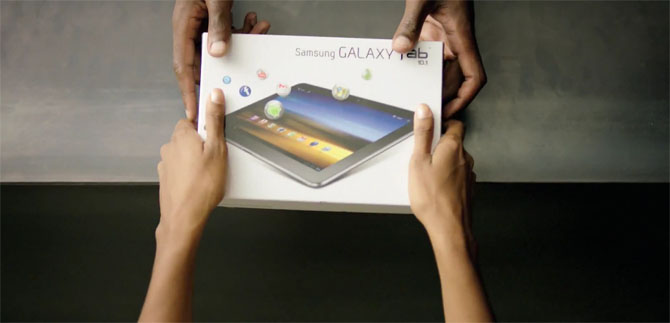
Apple today before a Sydney court rejected Samsung’s seemingly practical proposal calling for the removal of certain Galaxy Tab 10.1 capabilities in exchange for a smooth tablet launch in Australia. Samsung reportedly agreed to take out the feature which ignores unintended touches on the home screen to prevent apps from being launched accidentally. Apple, it appears, instead wants a definite ruling on a temporary Galaxy Tab 10.1 injunction, which should be expected later this week.

If the court sides with Samsung, it gets to launch its iPad rival in Australia in time for Christmas. If not, the case drags out into another year, possibly without a clear winner in sight. Remember, Samsung threatened to ban sales of the new iPhone in Korea the instant it launches. Apple is scheduled to unveil their next iPhone at a media event today in the Cupertino headquarters at 1pm ET, 10am PT. The event is headlined under the “Let’s talk iPhone” tagline, suggesting that the rumored Assistant feature will be in the focus, among other things.

Lawyers for the Cupertino, California-based Apple insist the Galaxy Tab 10.1 “is vastly the one that is going to be targeting the iPad 2”According to Reuters, Apple lawyer Steven Burley made it clear that “the main reason we are here is to prevent the launch and maintain the status quo”. Note: The Wall Street Journal provides a live blog of today’s court hearing. Such a legal maneuvering on the part of the iPhone maker suggests that Apple isn’t interested in settling its dispute with Samsung out of the court unless, of course, unexpected legal setbacks arise.

This is the second blow in two weeks to Samsung’s efforts to make peace with Apple, its largest buyer of components such as NAND flash chips, custom-designed iPhone processors and displays.


Expand
Expanding
Close

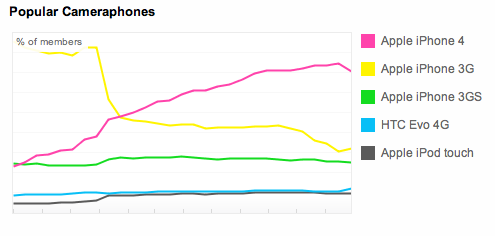
Flickr finally posts the Android app. Will it affect cameraphone usage stats?

Site default logo image

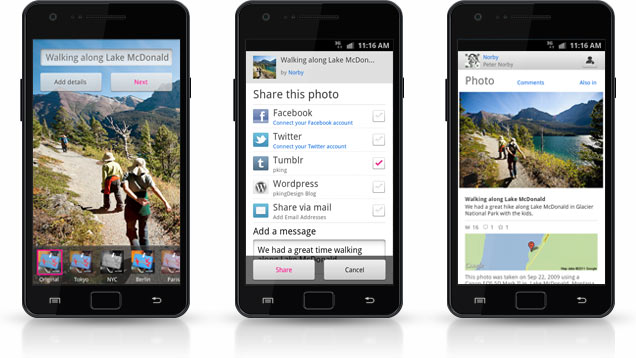
Flickr has had an iOS client on the market since September 20th, but it took a lot of teeth gnashing and cursing from the Android camp before the company would unveil the official Android app. Well, here it is… The Flickr for Android app lets you take photos, enhance them with filters and quickly share on Flickr, Facebook, Twitter, Tumblr and other image sharing services.

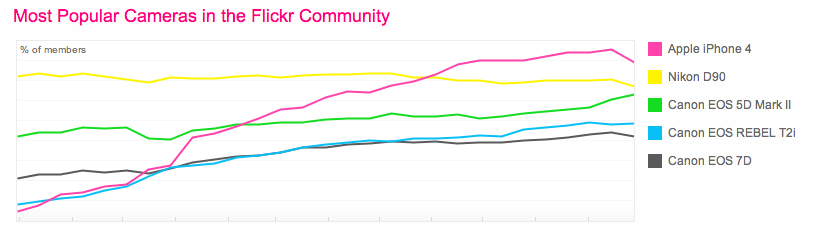
It’s nice that you can take advantage of geotagging and built-in mapping to explore activities and places where the photos have been taken. Commenting is also supported and you’ll especially appreciate stunning full screen browsing and slideshows. The app is free and you can grab your copy in Android Market. Now that it’s been finally released, perhaps the program will help tilt Flickr camera and cameraphone usage stats (see below) in favor of Android and away from Apple’s iPhone. Full release notes after the break.


Expand
Expanding
Close

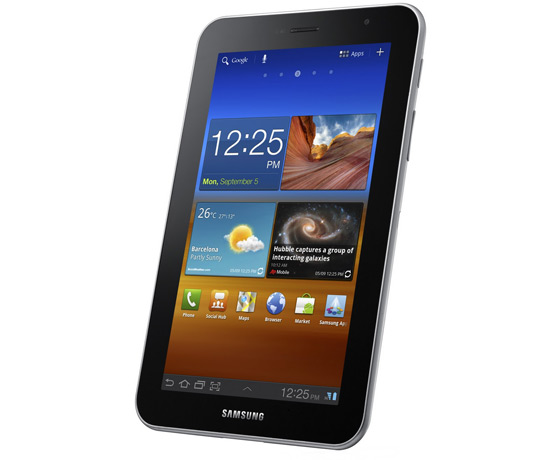
Thinner, lighter, faster Galaxy Tab 7.0 Plus form Samsung due end of October

Site default logo image

Samsung’s seven-inch Galaxy Tab was launched last year on September 2 at the IFA in Berlin and as of April of 2011 they managed to ship six million units worldwide. A year later, the Korean company has updated the tablet with a thinner form factor and a speedier processor. It’s also gotten a new name to convey the enhancements to buyers, the Galaxy Tab 7.0 Plus. According to Samsung’s press release, the new version supports faster 3G HSPA+ connectivity and runs a speedier 1.2GHz processor versus the “Hummingbird” 1GHz chip found inside its predecessor. It also features WiFi Channel Bonding which bonds two wireless channels into one for improved network connection and data transfer at up to twice the speed.

The device is 9.96mm thick and weighs in at 345 grams. This compares to 11.98 millimeter depth and 380 grams of weight of the original Galaxy Tab 7.0. The front camera is of a 2.0-megapixel variety (1.2 megapixels on the original model), and RAM has been bumped up from 512MB to 1GB. On the software front, the Plus runs Android Honeycomb 3.2 which is optimized for seven-inch devices, in addition to Samsung’s latest TouchWiz user interface. Other specs are left unchanged, including 16/32GB of built-in storage expandable via a microSD card slot, a three-megapixel camera on the back and a 4000 mAh battery. The new devices launches at the end of October in Austria and Indonesia, Samsung said, followed by a U.S. launch and the global roll out. Full specs after the break.


Expand
Expanding
Close

Samsung unveils faster mobile chip, the Exynos 4212

Site default logo image

Samsung Electronics at the eighth annual Samsung Mobile Solutions Forum at the Westin Taipei Hotel yesterday unveiled an improved version of its Exynos system-on-a-chip solution for smartphones and tablets. The Exynos 4212 silicon is a successor to the 4210 processor which powers the company’s Galaxy S II smartphone. The new chip features a dual-core ARM Cortex-A9 processing core clocked at 1.5GHz (versus a 1.2GHz CPU core in the Exynos 4210). The Exynos 4212 will be manufactured using a 32-nanometer process so it should draw less power than its predecessor. It is also 30 percent more efficient, Samsung claims, and sports a 50 percent better graphics performance.

Unfortunately, the company wouldn’t say which graphics processor unit the new Exynos 4212 chip is utilizing. For comparison, the Exynos 4210 in the Galaxy S II smartphone packs in graphics processing unit based on the quad-core Mali-400 core from ARM Holdings, a fables chip maker from the UK. It’s the fastest GPU in any current smartphone, benchmarks show. However, the Mali-400 GPU core falls short in the triangle throughput tests, which is a major disadvantage over the iPad 2′s A5 processor that clocks nine times the graphics performance of the original iPad’s A4 chip.


Expand
Expanding
Close

Apple vs. Samsung: It’s the ecosystem, stupid

Site default logo image


Apple has made its concerns official. The iPhone maker fears Samsung tablet will lure consumers away from the powerful iTunes ecosystem. Apple’s been successfully leveraging iTunes to tie people to the platform through app and entertainment content sales.

The heated Apple vs. Samsung legal battle over who’s copying who is really about the ecosystem rather than the hardware or the patents. That’s the gist of today’s hearing before the Federal Court in Sydney related to an Apple-requested ban on sales of Samsung’s Galaxy Tab 10.1 tablet in Australia. According to Smh.com.au, lawyers for Apple argued that the launch of the Galaxy Tab 10.1 could take away iPad 2 sales so quickly that buyers may be “seduced” from the iOS platform.

It’s all about the apps and the broader ecosystem, Apple’s legal team told Justice Annabelle Bennett, arguing the Galaxy Tab 10.1 “is vastly the one that is going to be targeting the iPad 2”. IDC numbers released today suggest that that tablet shipments to Australia and New Zealand doubled sequentially in the June quarter, which the research firm attributed to an influx of Android tablets recently released into those markets.

Apple’s lawyers then resorted to the “fire hose” metaphor to make their case:

This is going to be launched on the market with the velocity of a fire hose and it is going to just come in and take away iPad 2 sales so quickly that by the time we get to final hearing the full impact of the patent infringement will be to the detriment of Apple and to the benefit of Samsung.

And this bit about the battle of ecosystems:

They’ll then be Android people and the investment in the apps that they make to purchase on their Galaxy Tab will be something they can’t use on an Apple product.


Expand
Expanding
Close

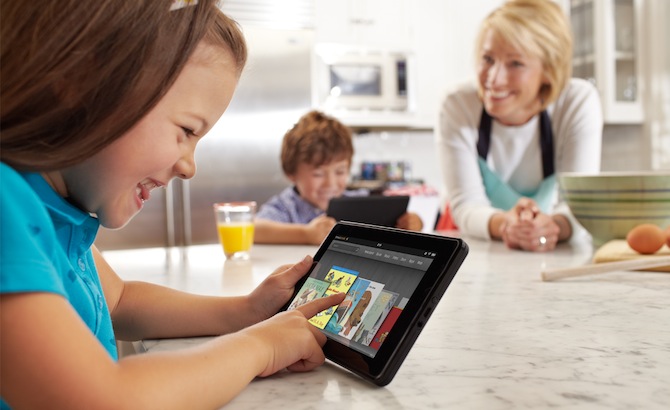
Amazon to pay royalties to Microsoft for using Android in the Kindle Fire tablet?

Site default logo image

All major Android backers are now paying royalties to Microsoft for using Android in smartphones, even the likes of Samsung and HTC. Goldman Sachs estimated the Windows maker could rake in a whopping $444 million this year alone from Android patent pacts, easily exceeding Windows Phone licensing revenues. Now that the $199 Kindle Fire tablet has come into full view, the question arises whether Amazon, too, will run to Microsoft’s arms seeking Android patent protection.

The two companies last year had cut a cross-licensing agreement. However, the Seattle Times notes that the 2010 deal covers the existing Kindle e-readers but not Android, which powers the Kindle Fire tablet. TechCrunch’s MG Seigler, who saw early prototypes of the Fire tablet, described  a forked Android version which is at the core of the Kindle Fire experience:


Expand
Expanding
Close

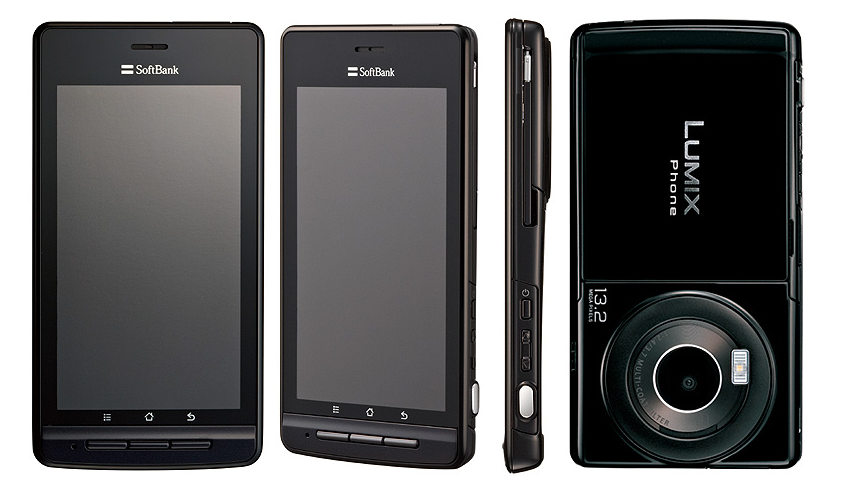
Panasonic readying Android phone with 13-megapixel camera

Site default logo image

You’d be right to argue that most smartphones double as digital cameras these days, but Panasonic’s upcoming Android handsets is in an entirely different league when it comes to snapping photos on the go. Their four-inch Gingerbread device dubbed the Lumix Phone 101P has a high-resolution camera with a 13.2-megapixel CMOS Lumix sensor with Mobile Venus Engine and water-proof body.

Lumix is Panasonic’s brand of digital cameras, ranging from pocket point-and-shoot models to digital SLRs. Other specs include a QHD display with a 960-by-540 pixel resolution, a 1GHz OMAP4430 dual-core chip from Texas Instruments, e-wallet features and digital TV tuner. The Lumix Phone 101P should launch on SoftBank’s network in Japan in November.

via TechCrunch


Expand
Expanding
Close