Android

See All Stories

Breaking news for Android. Get the latest on apps, carriers, devices, and more!
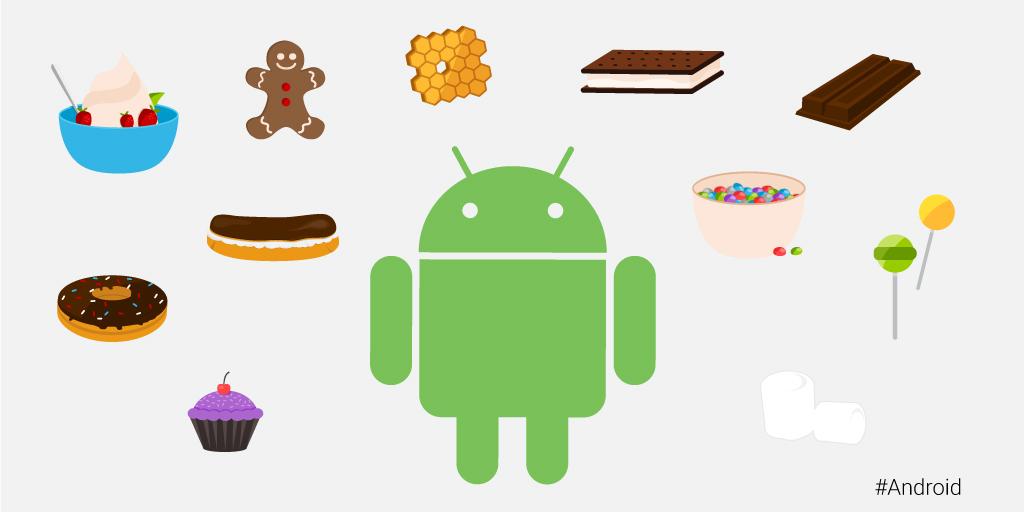
Android is Google’s mobile operating system, launched in September 2008, although its history technically began with the release of the Android alpha in November 2007. To this day, Android powers the majority of the world’s smartphones and comes in several different flavors across many phone makers.

What is Android?

Android Inc.

Android, before it was Android, was a company called Android Inc. That company was founded in Palo Alto, California, in 2003 by a crew of four: Andy Rubin, Rich Miner, Nick Sears, and Chris White. The company and its project was acquired by Google in 2005 for a sum of more than $50 million, although the exact number is unknown. The company’s founders joined Google as part of the deal.

In its infancy, Android was an operating system built not for touch screen smartphones like the iPhone, but rather BlackBerry-like devices with physical keyboards. It’s well documented that after Apple shocked the world with the iPhone, ahead of its nearest competition by at least a couple years, Google and Android Inc. had to go back to the drawing board to build something competitive.

Adoption by third-party makers

It didn’t take long after the launch of the iPhone for various manufacturers to enter the market with their alternatives — and Google’s Android immediately became the obvious platform of choice for just about everyone except Microsoft. HTC was the first manufacturer on board, and introduced the T-Mobile G1 running Android in September 2008. Soon after, HTC, Motorola, Samsung, and carriers like Sprint and T-Mobile jumped on board to form the Open Handset Alliance.

Android makers across the world

Iconic Android handsets

There have been thousands of Android phones released since Android’s inception, but some have been more important to the platform’s history than others. There was the original T-Mobile G1, as mentioned, but there was also the HTC One Google Play Edition, Moto G, Samsung Galaxy S4, and others. Some of the most iconic Android handsets include:

  • HTC G1
  • HTC Nexus One
  • Samsung Galaxy S, S2, S3, S4, and their successors
  • HTC Incredible S
  • Samsung Nexus S
  • Samsung Galaxy Nexus
  • Samsung Galaxy Note
  • Nokia 8
  • BlackBerry KeyOne
  • Google Pixel and its successors

In more modern times, there are several Android smartphones makers that popped up across various niches and in several international markets. Huawei is a dominant Android maker in China and many European markets, while Samsung is by far the most popular maker in the United States by far — effectively creating a duopoly with Apple. Today, there are dozens of major device makers contributing to the Android ecosystem.

Full list of Android OEMs

History of major Android versions

Android has seen countless software revisions over the course of its life, but in modern times the OS usually sees a major release on an annual cadence. In the earlier days, Google famously gave its major software releases dessert-themed codenames, but retired that practice in 2019 with the release of Android 10.

VersionNameReleaseDevices
2.3GingerbreadFebruary 9, 2011Nexus S
4.0Ice Cream SandwichOctober 19, 2011Galaxy Nexus
4.1Jelly BeanJuly 9, 2012Nexus 7
4.2Jelly BeanNovember 13, 2012Nexus 4, 10
4.3Jelly BeanJuly 24, 2013Nexus 7 (2013)
4.4KitKatOctober 31, 2013Nexus 5
5.0LollipopNovember 3, 2014Nexus 6, 9
5.1LollipopMarch 9, 2015Android One
6.0MarshmallowOctober 5, 2015Nexus 5X, 6P
7.0NougatAugust 22, 2016Nexus 5X, 6P
7.1NougatOctober 4, 2016Pixel, Pixel XL
8.0OreoAugust 21, 2017Pixel, Pixel XL
8.1OreoDecember 5, 2017Pixel, Pixel XL
9PieAugust 6, 2018Pixel 2, Pixel 2 XL
1010September 3, 2019Pixel 3, 3a
1111September 8, 2020Pixel 4

List of major Android OS platforms

While Android proper is certainly the most widespread of Google’s Android operating systems, the company has also launched many offshoots of the main OS over the years. There’s Android Auto, Android Wear (now Wear OS), Android TV (now rebranded to Google TV), as well as versions of Android built for tablets and Android Things (now defunct).
Site default logo image

FCC approves T-Mobile/Metro PCS merger, says it will ‘benefit millions of American consumers’

The Federal Communications Commission has officially approved the $1.5 billiondeal to merge T-Mobile USA with MetroPCS. FCC Chairman Julius Genachowski issued a statement on the approval of the transaction, saying the deal will “benefit millions of American consumers and help the U.S maintain the global leadership in mobile it has regained in recent years.”

“With today’s approval, America’s mobile market continues to strengthen, moving toward robust competition and revitalized competitors.  We are seeing billions more in network investment, while the courts have upheld key FCC decisions to accelerate broadband build-out, promote competition, and benefit consumers, including our broadband data roaming and pole attachment rules. Today’s action will benefit millions of American consumers and help the U.S maintain the global leadership in mobile it has regained in recent years.

“Mobile broadband is a key engine of economic growth, with U.S. annual wireless capital investment up 40% over the last four years, the largest increase in the world, and few sectors having more potential to create jobs. In this fast-moving space, of course challenges remain, including the need to unleash even more spectrum for mobile broadband and continuing to promote competition and protect consumers. The Commission will stay focused on these vital goals.”

Site default logo image

Reminder: Google I/O registration opens in less than 24 hours

Google’s annual I/O developer conference is right around the corner and tomorrow officially kicks off registration for a limited number of tickets that typically sellout within minutes of the site opening for registration. We told you previously that Google has now launched its Google I/O website with details about the travel, events, and FAQs, as well as the tips below for those planning to register.

You’ll need a Google+ account, a Google Wallet account, and $900 ($300 for Academic) to get yourself a ticket when registration opens at 7 a.m. PST tomorrow morning:
Expand
Expanding
Close

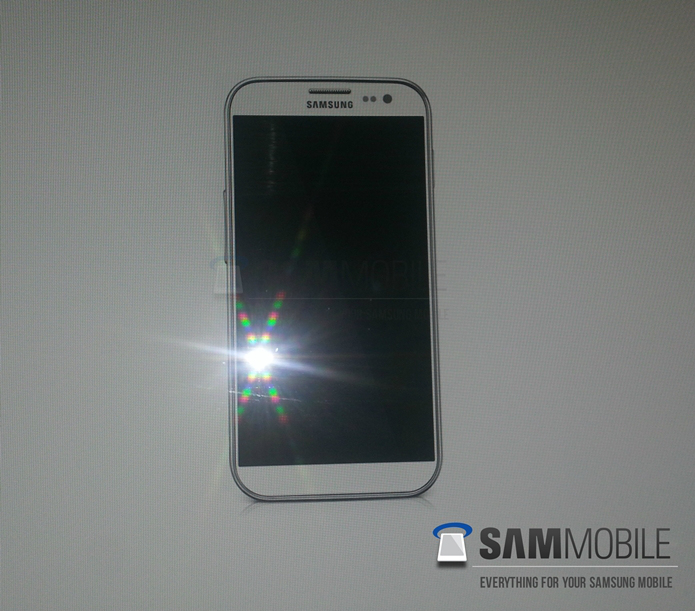
Galaxy S IV captured on video, touts new and improved TouchWiz with Galaxy S III design

Site default logo image

The cat’s out of the bag, or in this case, the Galaxy S IV is out of Jeremy’s box. A YouTube video, posted on the account “iStevencom“, reveals what seems to be a Galaxy S IV booting up (along with the phone and settings apps).

The device, if it proves to be real, looks almost identical to the Galaxy S III, with the exception of a thinner bezel and the camera flash is placed below the camera. In the video, we also get a glimpse of the future of TouchWiz. No longer will TouchWiz’s general theme be black and blue but rather a more modern white and blue. We also see the device’s home screen that looks almost identical to the TouchWiz home screen now found on the Galaxy S III.

The full video is available above with a photo gallery below.

Expand
Expanding
Close

Samsung releases another Galaxy S4 teaser with part two of Jeremy campaign (Video)

Site default logo image

http://www.youtube.com/watch?feature=player_embedded&v=YzkfC7–jog#!

Samsung started a new ad campaign to tease its upcoming next-generation Galaxy smartphone earlier this month. We weren’t huge fans of the ad that featured a top-secret meeting with Jeremy, the 13-year-old “secret messenger of Samsung Unpacked 2013.” Today, Samsung has released part two of the ad. It continues with Jeremy’s story but doesn’t reveal anything new.

Site default logo image

Chrome for Android updated with background audio and performance enhancements

Google updated its Chrome for Android app today with a number of performance enhancements including improved scrolling, better responsiveness for pinch-zooming, and improvements to “interactive pages thanks to the latest version of the V8 javascript engine.” Google is also including background audio support in this release and “expanded support HTML5 features”:

What’s in this version:

Updates in this version of Chrome for Android include improved text font clarity and stability fixes in addition to:
1. Improved scrolling performance
2. Increased responsiveness to pinch-zooming on pages
3. Faster interactive pages thanks to the latest version of the V8 javascript engine
4. Audio now continues to play while Chrome is in the background. Audio playing in Chrome will now pause when the phone is in use. This requires an additional permission
5. Expanded support for HTML5 features

Google Glass app from Duke University recognizes people by what they wear

Site default logo image

Google Glass has yet to even land as the “Explorer Edition” for developers, but devs are already fast at work on innovative applications for Google’s head-mounted computing platform. With Google I/O right around the corner, we have been seeing more and more concepts for potential Glass apps popping up– including this one from Google and another designed by JetBlue. We’ve seen concepts for apps such as GPS and navigation, photo and video, and weather and alerts, but today NewScientist (via Engadget) pointed us to a new app called “InSight” being developed to allow Glass users to easily detect friends and co-workers by learning and identifying the patterns and colors of clothing they wear.

Imagine a near future where humans are carrying smartphones and wearing camera-embedded glasses, such as the Google Glass. This paper intends to recognize a human by looking at him or her from any angle, even when her face is not visible.

A group at Duke University is developing inSight, and it focuses on allowing Google Glass users to recognize humans without using traditional face recognition technology. It would also allow users to spot people they are looking for in a busy crowd, even if their back is turned. The paper described Google Glass users being able to see a nametag for each person in a room, or, when names are not suitable, users could share a tweet such as “looking to share a cab.”

For instance, Alice may look at people around her in a social gathering and see the names of each individual – like a virtual badge –suitably overlaid on her Google Glass display.

Where revealing names is undesirable, only a tweet message could be shared. People at the airport could tweet “looking to share a cab ”, and Alice could view each individual’s tweet above their heads. In general, we intend to extend augmented reality [1, 2] to humans and the key challenge pertains to differentiating individuals. We explore options outside face recognition [3, 4]

The full paper on InSight from Duke University can be found here and is definitely worth the read if you’re interested in seeing how developers might leverage the unique form factor of Glass to create innovate new apps.

Google begins cutting an additional 10 percent of Motorola workforce, around 1,200 employees

Site default logo image

We heard in October that Google had plans to further reduce Motorola’s workforce after cutting around 20 percent, or roughly 4,000 jobs, in August. The Wall Street Journal reported today on an email from Google that confirmed the company is beginning to cut around 1,200 employees (a little over 10 percent of its current total headcount):

Motorola MSI -0.74% staffers were informed by the company via email this week that “while we’re very optimistic about the new products in our pipeline, we still face challenges.” The company email added that “our costs are too high, we’re operating in markets where we’re not competitive and we’re losing money.”

As for where the cuts might take place, we previously reported that Motorola, which was unprofitable for 14 of its last 16 quarters, planned to reduce its operations in Asia and India, but today’s report said the layoffs would hit workers in the United States, China, and India. Google also warned that further restructuring might be necessary and significant costs could be involved.

In a recent piece from The Wall Street Journal highlighting Google executives’ fear that Samsung is gaining too much dominance, Android chief Andy Rubin said the purchase of Motorola was “a kind of insurance policy against a manufacturer such as Samsung gaining too much power over Android.”

Samsung signs multi-year deal to put Immersion haptics technology in future devices

Site default logo image

http://www.youtube.com/watch?v=HgxyreJRLj8

Samsung is already using the Immersion haptics technology in a couple of its products including the Galaxy S3, but today the two companies announced a multiyear licensing agreement that would allow Samsung to bring Immersion’s TouchSense and Integrator technology to new devices.

“We are very pleased by Samsung’s broad adoption of our haptic technology, and we believe that this agreement marks an important milestone in our strategy to monetize our technology more fully within the mobile market,” said Immersion CEO Victor Viegas.

The Integrator tech works together with Immersion’s TouchSense technology, and it is described by the company as an option for OEMs “that automatically add haptics into the Android UI and applications and provides an easy way to customize the overall tactile feel of the device.”

The press release also noted that the deal extends to “Samsung’s prior and future use of simple forms of haptic effects, sometimes referred to as Basic Haptics, in its smartphones and other mobile devices.”
Expand
Expanding
Close

Twitter updates Android app with improved search & Discover tab, extended conversation view

Site default logo image

In addition to updating its application for the iOS App Store, Twitter has updated its Android app with a similar feature set. The updated Android version includes an improved, more timely search and Top Tweets experience, an improved Discover tab, and an extended conversation view that allows users to see more tweets. Unlike with the iOS application, Twitter did not remove MobyPicture, VodPod, and its own Posterous as video uploading services through Android. Release notes:


Expand
Expanding
Close

China’s technology ministry warns country is too dependent on Android

Site default logo image

Google has been accused today of having too much power with the Android operating system in China, according to a white paper published by a group from China’s Ministry of Industry and Information Technology. Reuters reported today that the technology ministry said “Google had discriminated against some Chinese companies developing their operating systems by delaying the sharing of codes.”

The white paper also claimed the country’s R&D in the mobile operating space is “too dependent on Android” and that there is an opportunity for China to develop its own operating systems.

The paper pointed to Baidu Inc., Alibaba Group, and Huawei Technologies as companies developing their own operating systems and claimed that Google has deals in place that “restrain the business development of mobile devices of these companies.”


Expand
Expanding
Close

Report: Samsung’s Galaxy S4 will include ‘Eye Scroll’ feature

Site default logo image

According to a report from The New York Times, citing ” a person who has tried the phone,” Samsung’s upcoming Galaxy S4 will include a new “eye scrolling” feature that tracks the user’s eye to determine where to focus and when to scroll on the page:

The phone will track a user’s eyes to determine where to scroll, said a Samsung employee who spoke on condition of anonymity because he was not authorized to speak to the news media. For example, when users read articles and their eyes reach the bottom of the page, the software will automatically scroll down to reveal the next paragraphs of text.

As noted in the report, Samsung actually filed for a trademark in Europe for “Eye Scroll” in January and again in the United States for “Samsung Eye Scroll” in February.

Apple and other companies have filed patents for similar technology that tracks the movement of a user’s eyes to zoom, scroll, and manipulate the elements on a display without physically touching it.
Expand
Expanding
Close

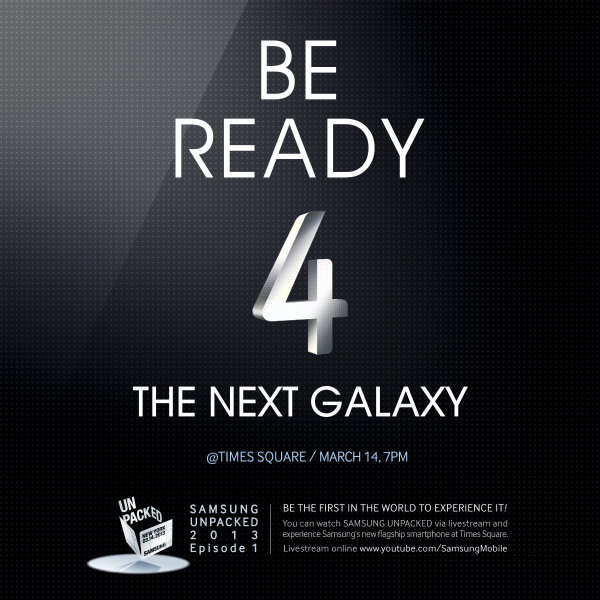
Samsung teases Galaxy S4 with new ad campaign, new specs leak

Site default logo image

Samsung does some great ads. This is not one of them.

http://www.youtube.com/watch?v=dIEfNaNCkKM

Samsung teased last week that the upcoming event would live streamed to Times Square and beyond.

Specs for the device seem to be a 4.99-inch 1080p display, quad-core Exnos 5410 1.7GHz processor with 2GB of RAM, and a PowerVR SGX 544 MP GPU. Add to that a 13-megapixel shooter. We heard these specs before—and having a 5-inch 1080p display seems to be what 2013 is all about.

https://twitter.com/Faryaab/status/308204123877154816

We’ll be on-hand at the event in a few weeks. In the meantime, we have these commercials to get us by.


Expand
Expanding
Close

Site default logo image

Deal of the Day: 32GB 4G LTE Motorola XOOM 10.1 inch tablet for $219

From 9to5Toys.com

Today only, Daily Steals has the Motorola XOOM 10.1 inch Android tablet for $219. This is a Google reference device and it comes with 32GB of storage. It also uses Verizon’s 4G LTE for browsing anywhere and can also act as a wireless hotspot. You can update this to Android 4.1 and beyond and it also has an SD card slot for 32 GB of additional storage. It also has  5 megapixel camera around back and a 2 megapixel camera up from for video conferencing and built in HDMI out.

(If $219 is too much money, how about a Kindle Fire for $70?)

Product Features:
Expand
Expanding
Close

Site default logo image

YouTube app for iOS updated with Send to TV feature, YouTube Capture integration, more

Google updated its YouTube app for iOS, bringing the Send to TV feature that it originally introduced on Android devices in November 2012. The app will allow users to send YouTube videos from their iOS devices to a Google TV, PS3, or Xbox, and Google confirmed in January that the feature would come to even more smart TVs this year.

Have an iPhone or iPad and a Google TV? You can now play and control videos from your YouTube app for iOS on your TV, like a remote control for YouTube. Anyone on the same WiFi can join in to control the video or add videos to a playlist (Harlem Shake marathon anyone?). This automatic pairing feature is also available on the YouTube app for Android, and it’s coming to more TVs this year from LG, Sony, Panasonic and others.

There is an interactive demo of how the new feature works at youtube.com/yt/sendtotv. The updated YouTube app for iOS is available on the App Store.

Samsung officially unveils Samsung Wallet, a ‘Passbook-inspired’ digital ticket app

Site default logo image

Samsung is today officially unveiling its “Samsung Wallet” mobile app solution, and it is quickly gaining attention for similarities to Apple’s iOS 6 ticket, card, and coupon solution known as Passbook. For those familiar with Apple’s app, Samsung Wallet appears to work much the same way. The app will allow users to store event tickets, membership cards, coupons, and boarding passes in one central app. From there, users will be able to present the digital passes and companies supporting the standard can scan a barcode included for each digital ticket.

Samsung has already posted a developers document for the app to outline how devs can implement support for the app using an API (via The Verge). The document also explained how the app works and noted that users will also receive real-time notifications related to their tickets, just as Apple does with Passbook.

As for the Apple influence, aside from the look and feel of the app and icon (pictured above), the Samsung Wallet app doesn’t seem to offer any additional functionality above and beyond what Passbook already offers. The company confirmed to TheVerge that the app will initially not be integrated with NFC wallet solutions (despite a new partnership with Visa), but it did confirm partners for the app’s launch include: Walgreens, Belly, Major League Baseball Advanced Media, Expedia, Booking.com, Hotels.com, and Lufthansa. 
Expand
Expanding
Close

Former Apple ad man Ken Segall says Apple’s advertising has lost momentum to Samsung

Site default logo image

[ooyala code=”9wc3FtOTpudZkeXdJrtb8gXF-WmHpm1i”]

In the video above, Bloomberg West speaks with 72andSunny’s partner and creative director Jason Norcross about the thinking behind some of Samsung’s latest campaigns. 

If there is one person qualified to discuss the state of Apple’s current marketing efforts, it’s Ken Segall. Working alongside Steve Jobs’ creative team for more than a decade, Segall, the man who put the “i” in iMac, served as creative director at ad agency TBWA\Chiat\Day. He created some of Apple’s most iconic ads such as the legendary Think Different campaign. Segall took some time on his Observatory blog today to share his thoughts on how “momentum has been lost” for Apple’s marketing department at the hands of none other than the company’s biggest rival, Samsung:

While you can still argue that Macs and i-devices have a ton of appeal, you can’t argue that Apple is still untouchable when it comes to advertising…The fact is, it is being touched — often and effectively — by none other than Samsung…Samsung has made remarkable inroads in a very short time, for two big reasons.

According to Segall, the two big reasons Samsung’s advertising has eclipsed Apple’s is due to Sammy’s massive advertising budget and willingness to “bash away at Apple, delivering ads that are well produced, well written and seem to be striking a nerve.” Specifically, Segall pointed to Samsung’s decision to run creative new ads at the Super Bowl and Oscars: 
Expand
Expanding
Close

WSJ: Google execs worried by Samsung’s success with Android

Site default logo image

While Google might be happy with the mobile ad revenue Samsung brings in shipping roughly 40 percent of the devices running Android, The Wall Street Journal said Google execs worry behind closed doors that Samsung could use its dominance to renegotiate its cut of revenue from mobile ads and search:

Google executives worry that Samsung has become so big—the South Korean company sells about 40% of the gadgets that use Google’s Android software—that it could flex its muscle to renegotiate their arrangement and eat into Google’s lucrative mobile-ad business, people familiar with the matter said.

Citing its usual “people familiar with the matter,” WSJ claimed executives at Google are betting on companies like HTC and HP to release compelling Android devices that compete with Samsung. According to the report, Android chief Andy Rubin discussed the situation at a recent event for Google executives. He described Motorola as “a kind of insurance policy against a manufacturer such as Samsung gaining too much power over Android.”
Expand
Expanding
Close

Site default logo image

Bloomberg: Google in talks with labels to launch subscription music streaming service by Q3

Following a report from the Financial Times last week claiming Google is developing a free music service to compete with Spotify, Bloomberg reported today much of the same details citing “two people with knowledge of the situation.” According to the report from Bloomberg, Google is planning to launch the subscription-based music streaming service by the third quarter and it’s already in talks with record labels:

Negotiations are under way with major record labels to license their music, said the people, who sought anonymity because the talks are confidential. Google, which also owns the YouTube video website, is also discussing renewing deals that cover the use of songs in videos made by consumers, they said.

The report added that sources said the service would work on both Android and devices running another OS.

Samsung and Visa announce deal to preload Visa payWave on future Samsung devices

Site default logo image

Samsung and Visa today announced a deal that would see future Samsung devices preloaded with the Visa payWave applet, allowing consumers to “wave and pay” through Visa’s contactless payment terminals. The Visa payWave service will of course only come preloaded on select Samsung devices, but rumor has it that the upcoming Samsung Galaxy S4 will be the first to receive the functionality. While Samsung and Visa were showing off the technology with existing NFC-enabled devices at MWC this week, CNET and others have apparently confirmed through sources that the S4 will indeed be the first device to get the applet preloaded.

  • Global Strategic Alliance
    Visa and Samsung have agreed to work together to enable the next generation of Samsung mobile devices with Visa payment technology, and to partner with financial institutions to accelerate the availability of mobile payment solutions globally.
  • Samsung to Connect to Visa’s Mobile Provisioning Service
    In order to enable financial institutions to launch large scale mobile (NFC) payment programs, Samsung will offer banks the ability to load payment account information over-the-air to a secure chip embedded inSamsung devices, using Visa’s Mobile Provisioning Service3 which is linked to Samsung KMS (Key Management System) – a service that creates secure data storage domains for issuers.
  • Samsung Awarded Global Visa payWave License
    The Visa payWave mobile applet will be preloaded onto selected next-generation Samsung mobile devices featuring NFC technology and an embedded secure element. Off the shelf, these devices are ready to be personalized with Visa payment account information – a simple step that consumers will be able to initiate using a mobile payment application provided by their financial institution.

Visa also noted that the partnership, which isn’t exclusive with Samsung, will allow financial institutions with mobile payment programs to “use the Visa Mobile Provisioning Service to securely download payment account information to NFC-enabled Samsung devices.”

Expand
Expanding
Close

The year of the tablet phone continues with the 7-inch Asus Fonepad & new HD Padfone hybrid

Site default logo image

http://www.youtube.com/watch?feature=player_embedded&v=TuMHScgnRUI#!

Following the official announcement of Samsung’s 8-inch Galaxy Note smartphone and tablet hybrid, Asus today made things official for its own 7-inch tablet with built-in 3G calling capabilities. We’re not exactly sure if consumers are asking for a 7-inch or larger device for making calls, but the addition of an HSPA+ radio is on top of otherwise decent specs compared to its competitors. Dubbed the FonePad, Asus said the device includes a 1.2GHz Intel Atom Z2420 processor, 1GB of RAM, a 1,280-by-800 HD display, and a PowerVR SGX540 GPU. The Fonepad also packs a 4,270mAh battery that Asus said should bring around 9 hours of battery life.

As for availability, Asus said the Fonepad would arrive to customers in the U.K. sometime in late Q2 of this year with prices starting at £179 (inc VAT) for the 16GB variant.

The company also announced another phone/tablet hybrid today, the next-generation PadFone. Asus has released previous generations of the device including a smartphone and tablet dock that allows users to quickly switch from the tablet form factor to a smartphone. It announced it is upgrading the smartphone portion to a 5-inch, 1080p display, while the 10.1-inch tablet gets a new 1,920-by-1,200 display and upgraded internals (via Engadget):


Expand
Expanding
Close

Galaxy Note 8.0 launched, takes Apple’s iPad Mini head on

Site default logo image

After lots of leaks, rumors and outright company forecasts,  Samsung today announced the Galaxy Note 8.0, an 8-inch iPad Mini competitor. The 1280×800 pixel display will have a slightly better PPI of 189 than the Mini and match camera specs and a quad core processor. Samsung’s Note 8.0 will also double up the Mini with 2GB of RAM and add an S-Pen for those who need/want it as well as expandable storage via the Micro-SD card slot. Just like the Galaxy Tab 7 2 it has an IR blaster with a rebranded Peel station navigation. On the down side, it won’t have LTE (only HSPA+) and it will run a slightly out-dated 4.1.2 version of Android Jelly Bean. It also weighs almost an ounce more than the iPad Mini.

Oh and it can make calls like a huge phone.

Will this go head to head against the Mini? My gut reaction is no. Samsung’s Touchwiz overlay and pen will keep these out of the hands of mainstream users. No price or launch date is yet planned but the specs tell me (720P TFT display) that Samsung is aiming for a low price. I’d expect to see this at $250 in the US probably just after it launches in the 2nd quarter in a number of Asian and EU territories.

https://twitter.com/9to5mac/status/305507515855167489

Press release follows:

Expand
Expanding
Close