Stay up to date on news from Google headquarters. Be the first to learn about plans for Android, Google Plus, Google Apps, and more!
Stay up to date on news from Google headquarters. Be the first to learn about plans for Android, Google Plus, Google Apps, and more!

 .
.
Unwired View has obtained images of Sharp’s next Android phone codenamed SH8188U. The device is without a QWERTY keyboard, hardware buttons, and is reported to be running Android 2.2. From the back we can conclude that the device will have a 5-megapixel, and does not appear to have a front-facing camera. Other features include HD video recording, WVGA display, Wi-Fi, and 3G. According to a filing with Bluetooth SIG, this sleek little device will be on its way to North America, Europe and Asia very soon. No pricing or date has been announced, but you bet we’ll keep you updated.
Expand
Expanding
Close
 .
.
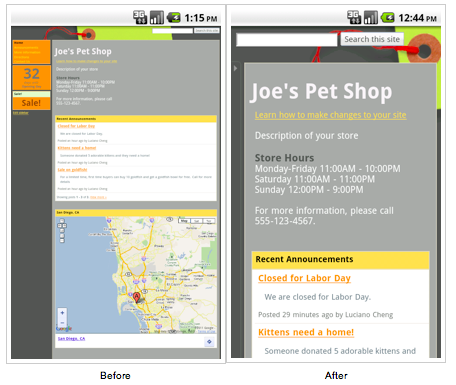
For those of you who use Google Sites to host your website, a new feature is available that allows your site to appear beautifully on the mobile web. Google announced, today, that Google Sites will automatically be rendered for mobile devices. Google will do the following to make your website appear better: align the header layout and top bar, smart handle sidebars, horizontal navigation, and dropdown links. This feature can be activated in the general settings. Besides presenting your site better, Google has also reformatted its own sites.google.com for mobile browsers.


Google’s photo software is about to get upgraded…
Stanford professor and iPhone Camera app developer Marc Levoy is going to Google for two years according to his Stanford bio page:
I will be on part-time leave of absence from June 2011 through June 2013, to pursue a project at Google.
This stint at Google won’t be his first. He co-designed the Google book scanner and launched Google’s Street View project.
Levoy’s current interests include light fields, optical microscopy, and computational photography – meaning computational imaging techniques that extend the capabilities of digital photography. Levoy’s recent research focuses on camera applications.
My research has recently focused on making cameras programmable. One concrete outcome of this project is our Frankencamera architecture, published in this SIGGRAPH 2010 paper. To help me understand the challenges of building photographic applications for a mobile platform, I tried writing a cell phone app myself. The result is SynthCam. By capturing, tracking, aligning, and blending a sequence of video frames, the app makes the near-pinhole aperture on an iPhone camera act like the large aperture of a single-lens-reflex (SLR) camera. This includes the SLR’s shallow depth of field and resistance to noise in low light. The app is available for $0.99 in the iTunes app store. I don’t expect to get rich from this app, but I learned a lot by writing it, and yes – seeing it appear in the app store was a thrill. Here are a few of my favorite reviews of the app: MIT Technology Review, WiReD.
What’s Levoy going to be working on at Google?

[youtube=http://www.youtube.com/watch?v=Wp_i-Cq7ec8]
Google cites ‘Word of Mouth’ study with Keller Fay that point out that Google directly informs 146 million brand conversations a day out of 2.4 billion brand conversations each day. Rather than bore you with tiresome numbers, here’s a lively, upbeat video explaining the effects of the web and connected devices on word of mouth conversations about brands.
Google has updated its Goggles app for Android with support for the Russian language. The software also features a handy Google Maps integration and the little things such as the ability to view your search history on a map or the ability to automatically copy your findings to system clipboard. Since 2009, Google has only supported languages that use Latin characters. The latest update brings support for Cyrillic characters, making the Russian language one of the new options.
The new search history feature is especially useful: It lets you visualize on a world map the places where you’ve been (and searched using the Goggles service). The world map overview of your history is in addition to the standard list view. Lastly, Google wants to make it easier to share our findings by allowing people to opt-in to have their findings automatically added to the clipboard for easy and fast sharing. The update is available on Android Market.
Box has added today the ability to create and edit Google Docs inside of their service. The popular cloud storage solution favored by six million people would previously require folks to create documents at the Google Docs website or using a desktop program before uploading them to the Box cloud. Being Google Docs, other users can also collaborate with you right inside the Box service. Once done, you can share files with your other computers and those you are working with. Check out these new features in a short clip after the break.
Expand
Expanding
Close
After smartphones, tablets and cross-over gadgets such as Lenovo’s IdeaPad U1 with detachable display, Android and ARM technology could make its way inside notebooks by year’s end.
The vast majority of all-in-one chips powering today’s tablets and smartphones incorporate CPU designs from UK-based ARM Holdings, a fables semiconductor intellectual property firm headquartered in Cambridge, England. For example, chips from the likes of Qualcomm, Nvidia and even Apple all incorporate CPU designs licensed from ARM Holdings. Now that power-savvy mobile chips with two and four processing cores and flashy graphics are a reality, notebook vendors are taking notice.
We’ve previously heard whispers that Apple has a MacBook prototype designed around the iPad 2’s A5 chip which contains two ARM-designed processing cores. Not content with being left behind, first-tier device makers such as Samsung, Toshiba, Acer and Asustek plan on bringing ARM-powered notebooks to the market by the end of this year. From DigiTimes:
The sources pointed out that ARM-based systems using Android were already launched under the smartbook name two years ago with Toshiba and Lenovo both launching products in the retail channel. However, due to weaker than expected demand, the related products were soon phased out of the market. Asustek has already made plans to launch a 13-inch ARM-based notebook adopting Nvidia’s processor with Android. The sources pointed out that there are already several brand vendors reportedly set to launch ARM-based notebooks with prices lower than US$299 to compete for market share and the vendors’ processor choices include Nvidia’s Tegra, Qualcomm’s Snapdragon and processors from Texas Instruments.
There’s a lot to look forward to…
 .
.
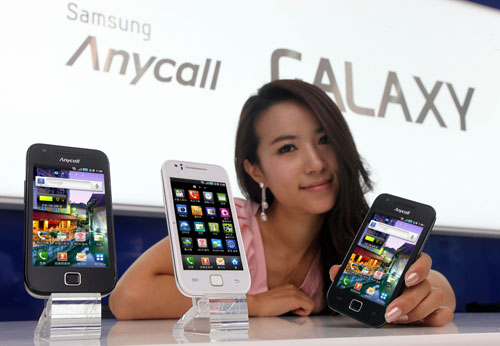
Yonhap News is reporting that 10 million units of Android smartphones have been sold in South Korea. South Korea’s biggest carrier, SK Telecom Co, has a whopping 6.18 million Android subscribers under its belt. KT Corp. is following second with 2.06 million, and LG Uplus Corp hosts 1.86 million and is following with the third spot. The 10 million Android smartphones makes up for 70% of South Korea’s phone market according to the report. Apple’s iPhone, by comparison, has 2.5 million iPhones in the South Korea market on its dominant carrier. Figures weren’t yet available for SK Telecom.
South Korea is of course the home turf of big Android makers Samsung Electronics Co., LG Electronics Inc. and Pantech Co.
And you thought the US was high with 50%?
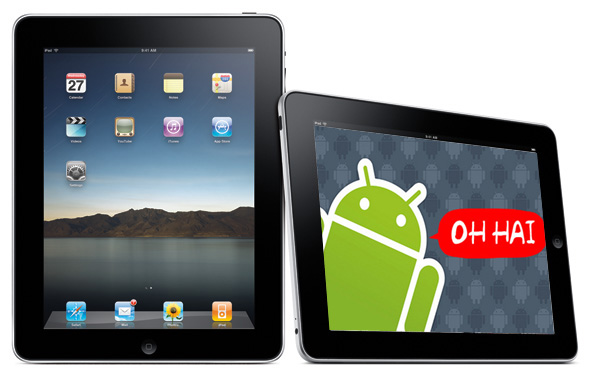
Who said Apple has to dominate the tablet market? As of now they are, but that doesn’t mean things can’t change. According to CNet, Apple shipped 4.7 million tablets last quarter. But hot…err warm… on their heels, Samsung has shipped 850,000 units – and that’s without the newly launched Galaxy Tab 10.1. Following a close third, and could even overtake Samsung, Acer shipped 800,000 units that same quarter. This is promising news for a diverse tablet market.
There’s no reason why Apple can’t become a minority player by the end of the year. Just these two companies alone have a third of Apple’s share. There is also Motorola, ASUS, LG, HTC and even the Nook by Barnes and Noble.
Expand
Expanding
Close

The WSJ reports that Google has hit an internet first: one billion unique visitors in a month’s time. The number comes from comScore data released earlier today, citing that the visitors came in the month of May. While on its way to one billion unique visitors, Google saw a 8.4% increase over April month. Microsoft is trailing behind with a close second of 905 million unique visitors a month.
That’s about one seventh of the world’s population visiting Google.com last month. Considering the difficulties Google is having trying to reach the 1.4B people in China, the news is no small feat.
 .
.
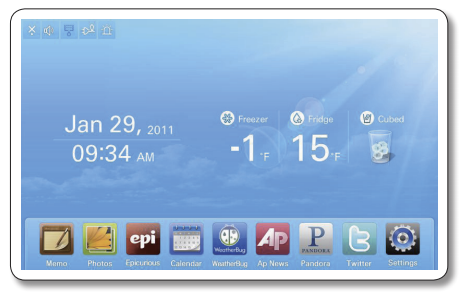
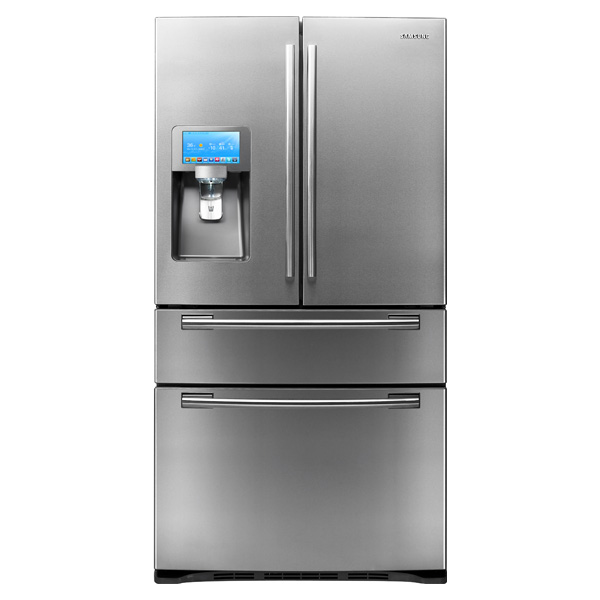
It seems like a no brainer. Samsung is building 8-inch screens into its refrigerator line. Of course it is going to use Android so you can have 200,00 apps on your Honeycomb fridge, right? Even HP picked Android to run its printers (at least until it picked up Palm) -Clearly Android is what everyone wants.
 .
.
Nope, it looks like Samsung is using its own proprietary, non-Bada embedded OS. Likely due to stability concerns, Samsung went to something that Google doesn’t control. We’ve combed through the 4000 page user manual (PDF) and nary a mention of Android, though some screenshots seem to be reminiscent of its UI (below). Perhaps Samsung (or some hackers) will get Android on there in a future update.
Expand
Expanding
Close
While we’re at it, check out the sharp decline of RIM’s once powerful BlackBerry platform.
It’s always a good idea to take whatever analysts are predicting with a healthy dose of skepticism. That said, Needham’s Charlie Wolf cites IDC data that portrays Android as losing ground to iOS in America. Android, of course, is the country’s leading smartphone platform which in the first quarter grabbed a whopping 49.5 percent of the smartphone market while Apple’s iPhone had 29.5 percent. The momentum cannot continue forever so it’s little surprise then that Android controlled 52.4 percent of the market in the quarter-ago period. Fortune’s Philip Elmer-DeWitt calls this Android’s “first sequential loss ever in any region of the world”, quoting Wolf’s Monday note to clients:
In our opinion, this is just the beginning of Android’s share loss in the US. The migration of subscribers to the iPhone on the Verizon network should accelerate this fall when Apple coordinates the launch of iPhone 5 on the GSM and CDMA networks. The iPhone could also launch on the Sprint and T-Mobile networks.
It looks like ol’ Charlie’s trying to offload some AAPL shares. He argues that…
Expand
Expanding
Close
[youtube=http://www.youtube.com/watch?v=vtELiwNmTSc]
Some people are claiming they’ve been participating in a design experiment by Google related to the look and feel of the search results page. Although we cannot tell whether the above clip is genuine, it sure strike us as the familiar Google search results. Looks quite nice and a bit easier on the eyes, too.
Notice how the links in the lefthand pane, which provide shortcuts to individual search silos, appear in gray rather than in multiple colors? By the way, where did the search button go? The “I’m feeling lucky” thing is also MIA.
This is my next reports that Google will update Honeycomb to version 3.2 with support for tablets with seven-inch screens, in addition to Qualcomm processors and Nvidia’s Tegra 2 chip. They also heard that the software update will contain the obligatory bug fixes and better hardware acceleration plus updated widgets and apps such as Movie Studio, Movies and Music. Motorola’s Xoom will apparently get the update in the “next few weeks”. Three independent sources have confirmed these tidbits, telling the publication:
Android 3.2 will be the last Honeycomb point upgrade before Google opens up the Ice Cream Sandwich freezer, and it will indeed run on a “range” of screen sizes, meaning that proper 7-inch Android tablets are about to become a reality.
Listen, the recession has obviously helped Google Apps hit the ground running, but the number of high-profile organizations adopting the Google-hosted suite of productivity web apps is growing at an alarming rate (if you’re Microsoft, that is). Lately, Google has won over the #1 hotel chain and today we learn that The McClatchy Company, the country’s third-largest newspaper publisher, has made the switch.
“Historically, each newspaper has operated independently with on-premise software and their own various business operation departments and specifically IT. To date, our technology has been both destandardized and decentralized”, says Terry Geiger, director of corporate IT with The McClatchy Company. Blame that on Microsoft’s technology, he says…

The folks at Fusible have been doing some sleuthing on the possibility of Google putting together a social network based on photos. They found that Google has trademarked the name Photovine with the following under the following areas:
Goods and Services IC 009. US 021 023 026 036 038. G & S: Computer software
IC 038. US 100 101 104. G & S: Communication services, namely, transmission of visual images and data by telecommunications networks, wireless communication networks, the Internet, information services networks and data networksIC 042. US 100 101. G & S: Non-downloadable computer software
IC 045. US 100 101. G & S: On-line social networking services
Additionally, a company who uses MarkMonitor to anonymously register domain names has bought photovine.com from a private holder. Google is one of the companies that uses MarkMonitor.
Clearly that spells out a photo-sharing social network.
So, are Picasa/Picnik online services about to get more social under a new brand name? All signs point to ‘yes’.
(Google Weddings, a mashup of similar Google services pictured above)
Expand
Expanding
Close
Oracle purchased Sun for $7.4B in 2009. The deal closed at the outset of 2010 and some wondered why Oracle had outbid IBM for the hardware/software giant. Today we finally hear how much Oracle is after in its suit against Google over Android’s use of Java: $1.5 – $6 Billion. That means that Oracle could recover more than half of the purchase price. Perhaps most? Just from one intellectual property suit.
Java pioneer and recent Google hire James Gosling gave a hint to what was to come when he resigned from Oracle right after the purchase
During the integration meetings between Sun and Oracle where we were being grilled about the patent situation between Sun and Google, we could see the Oracle lawyer’s eyes sparkle. Filing patent suits was never in Sun’s genetic code.
So, it seems that Oracle always had some Google Java money baked into its purchase price. That’s why it could outbid IBM so spectacularly.
Expand
Expanding
Close
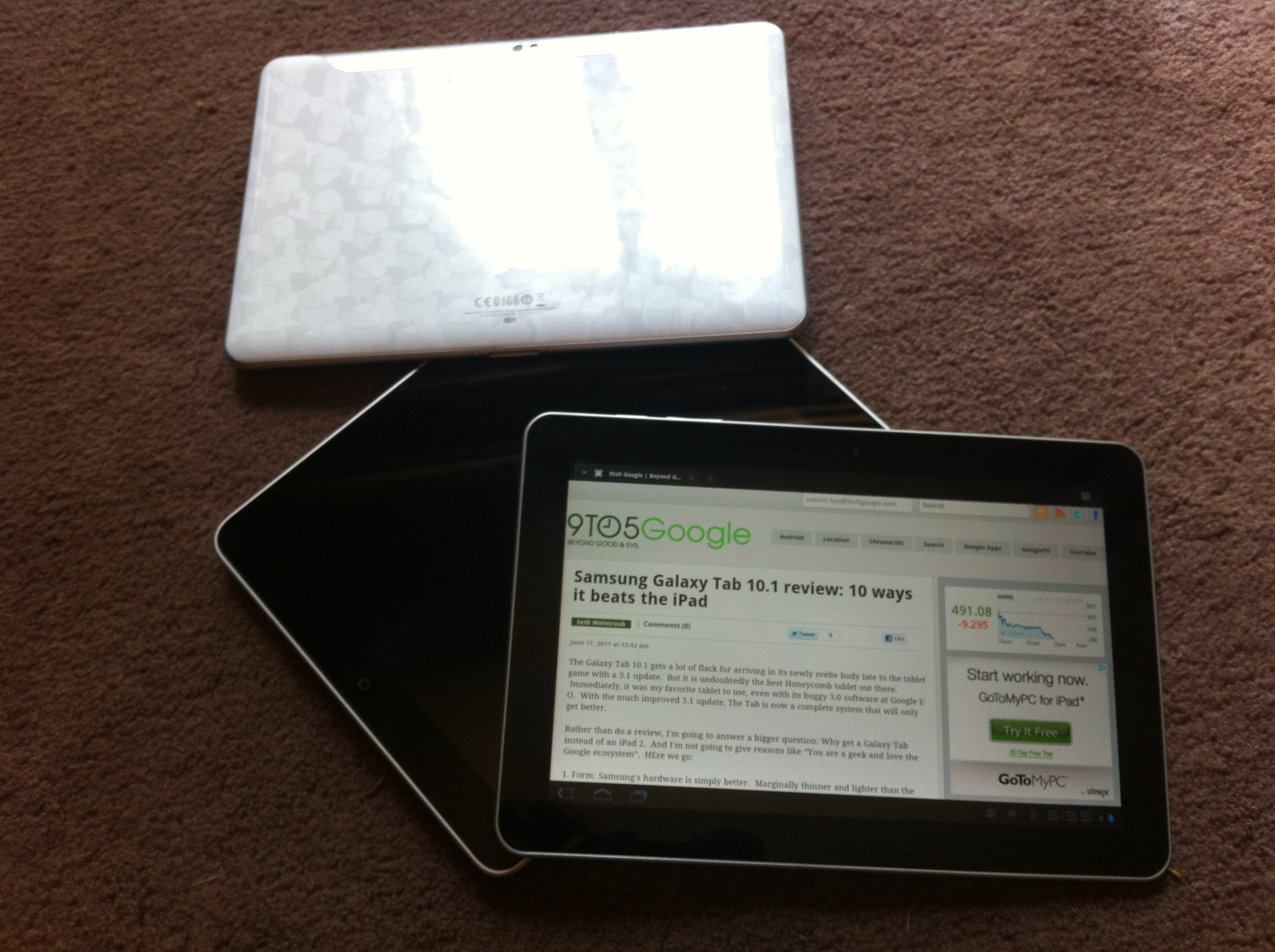
The Galaxy Tab 10.1 gets a lot of flack for arriving in its newly svelte body late to the tablet game with a 3.1 update. But it is undoubtedly the best Honeycomb tablet out there. Immediately, it was my favorite tablet to use, even with its buggy 3.0 software at Google I/O. With the much improved 3.1 update, The Tab is now a complete system that will only get better.
Rather than do a review, I’m going to answer a bigger question: Why get a Galaxy Tab instead of an iPad 2. And I’m not going to give reasons like “You are a geek and love the Google ecosystem”. Here we go:
If you’re concerned about data people see when they google your name, you should check out a new section in your Dashboard, aptly named ‘Me on the Web’. It’s a one-stop shop for your online identity needs, Google says, stressing the section helps you “understand and manage what people see when they search for you on Google”. ‘Me on the Web’ features a useful at-a-glance overview of all the outbound links published on your Google profile, the stuff like your social profiles, YouTube and Flickr accounts and so on. There are also links to Google help files explaining how to manage your online identity and how to remove unwanted content.
More importantly, you can create custom search alerts for your own name to receive email notifications when your personal data is posted publicly. You can also set up additional alerts for your specific personal data, such as telephone number and address. In the example below, I’ve set up an alert for my author byline, allowing me to track in near-real-time when my posts go up or other people mention my name in references to my articles. You could have created those alerts before in Google Alerts, but now everything is in one place, which should appeal to non-techies.
Not sure how this one went unnoticed, it’s a lovely tweak to Google’s mobile search page on iOS and Android devices. It is also noteworthy as Google rarely alters the look of its mobile landing page. Now, when you visit google.com from your mobile browser, you’ll notice four big icons sitting right below the search field: Restaurants, Coffee, Bars and More (which includes shops, ATMs, fast food and attractions).
Each icon takes you to a location-based listing with corresponding places, taking the pain out of finding the nearest place to eat or have a quick drink, wherever you happen to be. You can browse places in either list or map view, as well as check photos, reviews, business phone numbers and star ratings from credible sources such as Trip Advisor.
From 9to5toys.com:
The original G1 Android phone just hit Heights via Ebay for $137.95 new in the box without a contract. While Google and T-Mobile have long left the G1 off their update lists, the folks in the mod community have it running Gingerbread with many of the fixings.
The T-Mobile G1 weighs 5.6-oz. and features a 480×320 touchscreen LCD, 3.2-megapixel digital camera, QWERTY-style keyboard, 3G support, Wi-Fi, One-Touch Google Search, Bluetooth 1.2, microSD slot, USB connectivity, and Android OS.
A new G1 in the box could also make a keepsake for the nostalgic Android fan.
[vodpod id=Video.10978228&w=670&h=411&fv=]
CNN Money reports that Google and SolarCity, a rooftop solar power company, partnered on a new initiative aimed at making solar energy affordable to the masses. The deal worth $280 million was announced yesterday. It’s the nation’s largest residential solar project to date that will enable SolarCity to lease solar power systems to some nine thousand homeowners in the ten states where it operates and Google will recoup its investments through those leases. The deal comes on top of the 15,000 SolarCity’s solar projects that are either completed or under way.
Customers who wish to have the company’s solar system installed at their home can pay for it outright, but most choose instead to let SolarCity retain ownership of the equipment and rent back the use of it through monthly solar lease payments.
Google is all out on the green front, with investments ranging from wind farms to eco-friendly datacenters.
This is my next reports HTC has changed its mind and will bring Android 2.3 Gingerbread to the Desire after all. HTC’s UK office posted on their Facebook page two hours ago:
Contrary to what we said earlier, we are going to bring Gingerbread to HTC Desire
Just a day ago, HTC argued via Facebook that the Desire wouldn’t be getting Gingerbread because they “can’t shovel Sense on it as well” due to constrained RAM. Interesting how they fixed that limitation just 24 hours later. HTC also announced last month it would unlock all of its phones’ bootloaders.
HTC London Meetup in April of 2011: You know, Apple fans aren’t the only ones lining up for product launches
[youtube=http://www.youtube.com/watch?v=MQnZe_Iggx0&w=670&h=411]
Voice Search from mobile is now available on your desktop on google.com in English. From the official Google blog:
We first offered speech recognition on mobile search, but you should have that power no matter where you are. You should never have to stop and ask yourself, “Can I speak for this?”—it should be ubiquitous and intuitive. So we’ve added speech recognition into search on desktop for Chrome users. If you’re using Chrome, you’ll start to see a little microphone in every Google search box. Simply click the microphone, and you can speak your search.
And why does Voice Search matter? Well, it’s for showing off, that’s for sure, but you may find it useful for hard-to-spell searches or complex ones that you can speak aloud faster than type. After all, we first learn to talk before we learn how to type, right?