As we noted in our live event coverage, the Sprint EVO One features HD Audio, which should allow users to hear the other side of the conversation much more vividly. Perhaps to illustrate the feature, the HTC promo video brings back the famous 80’s commercial Pin drop.
– Narrator introduction: Sprint was the first carrier with nationwide 4G, first with 3G, and it unveiled the first 3D phone.
Sprint CEO Dan Hesse takes the presentation stage floor:
– He talks about Sprint’s successful partnership with HTC and Evo.
– Showcases network vision, which is an initiative designed to give customers a better network coverage and experience.
– He mentions that Evo is an HD voice- capable phone. Mobile voice quality is crystal clear. Enhanced voice quality for Sprint stems back to fiber optic network days of Sprint’s heritage.
HTC President Jason Mackenzie takes the stage to unveil new Evo One:
– It has only been two years since both companies originally launched the HTC Evo flagship device.
– It was the first 4G smartphone to launch in the United States. This year represents a turning point for HTC, because it is delivering true hero products with beautiful designs, amazing cameras, and an authentic sound.
– HTC is not just all about specs; it believes experience is key.
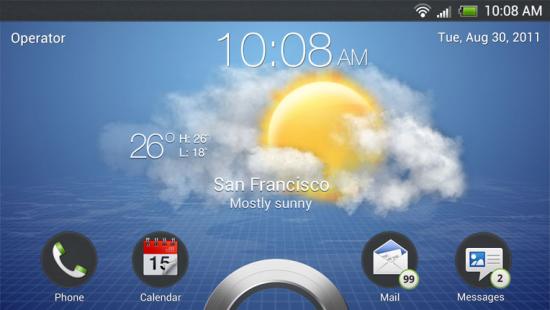
– Evo One’s Sense 4 is faster, cleaner, and more intuitive than ever before for delivering a premium experience.
– Evo One boasts an amazing camera and awesome sound experience.
-Design is something HTC has always been serious about, and it is doubling down this year so phones look and feel great.
HTC Lead Designer Jonah Becker takes the stage to discuss the Evo One’s design:
– The Evo name stands for the very best. It features authentic material with meticulous attention to detail.
– The Evo One is crafted from aluminum, first given a black finish, and then the edge’s surface is cleaned of edge to bring a highlight to the device’s look.
– Design process discussed next (video demo): Red kickstand gives the Evo One an HTC look, but it also serves a purpose.
– The Evo One has a soft touch finish and blasted aluminum for texture, and then it undergoes a chemical etching process to create something new to industry without painting or coating.
– About 100 different machine cutters are used to create all the features and geometry needed in the HTC Evo One—and people notice. A much-better designed product. “It’s what I want in my pocket.”
– New Evo is also a high-end camera like an SLR, and the red ring around lens mimics high-end cameras, while the red band on the back reinforces the HTC brand.
– The aluminum gives the Evo One a precise feel, and an actual camera button gives it a real feel.
– It is also a multimedia powerhouse; hardware is just a passage to content.
– Crisp, rectangular phone mimics TV, and its kickstand lets you go hands free.
Sprint Product Chief Fared Adib takes stage to talk about camera features:
– The camera: True digital SLR in phone.
– The Evo One sports HTC image sense technology and dedicated imaging chip, with super fast camera startup and auto focus to allow four frames per second in a continuous shooting mode.
– Image sense f/2.4 lens with HDR and smart flash makes sure every picture is perfect, i.e., not too dark or too light.
– The Evo One takes videos and photos simultaneously without switching between modes. While shooting video, just click shutter button to snap a picture.
Sprint CEO and HTC President are back on stage to conclude presentation:
– The HTC Evo One has a focus on sound: Rich, authentic sound with Beats Audio by Dr. Dre.
– Evo One has a media manager to get sound from computer to phone, but the music hub also gives access to a user’s music in apps and all other places. Streaming options to car and TV are also available.
– HTC voice: In 2012, Sprint will serve 500 million voice minutes. Sprint’s beloved HD voice is the future of phone calls. It is possible through a combination of dual microphones, decoders, encoders, and networks for a richer sound.
– Demo video depicts reduced background sound very well. “Hearing is believing.”
– Key features: 2,000 mAh batter, 4.7-inch HD screen, and Snapdragon dual core processor, Beats Audio by Dr. Dre, Ice Cream Sandwich OS with Sense 4.0, and a 8-megapixel shooter and 1.3-megapixel camera.
The HTC Evo One will be available in the second quarter for $199.99. Pre-sale starts May 7.
Demonstration area opens:
– I played with the phone. It looks cool—feels sturdy and valuable, yet the screen is huge. I had trouble handling it, because I am use to the smaller iPhone. Snapping photos while recording video was excellent. The fast startup and auto focus was also impressive. Camera features are cool too: built-in vignette, panorama, HDR, face detection for group shots, and more. The HD voice demo was amazing, as well. It highlighted absolutely no background sound despite the noisy area. I think the HTC Evo One is a quality phone. There is nothing that stands out when it comes to the user interface, though, as it looks like a typical Android smartphone.
Virgin Mobile is getting ready to introduce the HTC EVO 3D rebranded as the “HTC EVO V 4G” later this year, according to a report fromPocketNow citing a “reliable source.” The report noted the device originally launched almost a year ago with its plum color variant exclusive to Best Buy. Both shades including the plum and grey will apparently be available on Virgin sometime in 2012 and, like Sprint, the carrier will also offer 4G hotspot support. The glasses-free EVO 3D can capture 3D images and video with its two 5-megapixel cameras, and it packs a dual-core 1.2GHz processor and qHD resolution display. The EVO V 4G variant for Virgin will presumably have similar specs.
Getting your Android smartphones upgraded to the latest version is an important factor in considering which carrier to go with, because some carriers push updates quickly while others let things fall by the wayside.
This time around, AT&T is the first carrier to upgrade one of its phones to Android 4.0 Ice Cream Sandwich. Besides the Galaxy Nexus devices, and anything running a hacked version or Cyanogen Mod, Vivid owners will be the first U.S. device owners running ICS.
A version of ICS briefly hit Vivid owners earlier this week, but it was pulled. At the moment, we are not able to do the update, but we are told it is rolling out now.
According to HTC’s Twitter account, the Vivid will also get Beats by Dre audio functionality as well.
We have talked about the HTC Endeavor a lot lately as a rumored Mobile World Congress announcement draws closer. However, a new report from Economic Daily News (viaDigiTimes) indicates that the Endeavor will be announced by HTC on Feb. 26, just one day before MWC kicks off.
HTC will unveil Endeavor on February 26, one day before the opening of the 2012 Mobile World Congress in Barcelona, the paper indicated.
The HTC Endeavor will reportedly pack a 1.5GHz Tegra 3 based Quad-Core processor, 4.7-inch 720P HD screen, 8-megapixel camera, 1.3-megapixel front-facing camera, 1GB of RAM, Wi-Fi, and Bluetooth 4.0. The handset will also feature Beats audio experience onboard, as well the Sense 4.0 user interface that was shown off today. So, stay tuned!
You can either love or hate HTC’s Sense user interface. HTC includes Sense on its Android devices as a skin that goes on top of stock Android. Sense provides UI enhancements and widgets. Some customers like it, and many hate it — like me. However, that is not going to stop HTC from including it in its future phones.
The good folks over at Android Central did a little snooping this weekend, and were able to get their hands on the new Sense 4.0. Sense 4.0 is rumored to be announced with the quad-core HTC Endeavor at Mobile World Conference in a few weeks.
If you want to check out the new Sense 4.0 on your device, you can give it a download. If you are not up for the challenge, we also posted screenshots after the break (viaAndroid Central):
A new device called the “HTC Edge” leaked. It was the world’s first rumored quad-core handset. Fast forward to last month, and PocketNow reported that HTC renamed the HTC Edge to the “HTC Endeavor.”
A new report from MoDaCo, said HTC is announcing the HTC Endeavor at Mobile World Conference in Barcelona in less than three weeks. If you are not familiar, MWC is the CES for phones and tablets.
MoDaCo’s sources confirmed that the HTC Endeavor will ship with a 1.5GHz Tegra 3 based Quad-Core processor, 4.7-inch 720P HD screen, 8-megapixel camera, 1.3-megapixel front-facing camera, 1GB of RAM, Wi-Fi, and Bluetooth 4.0. The handset will also feature Beats audio experience onboard, as well as Sense 4.0…
Following its November promise, Taiwanese handset maker HTC today detailed through its Facebook page the devices that will get Ice Cream Sandwich in March. The first round of upgrades will roll out by the end of March for the Sensation, Sensation 4G, and Sensation XE. The Sensation XL will upgrade to Ice Cream Sandwich “soon thereafter,” the company noted. Additionally, other devices will get Ice Cream Sandwich upgrades “later this year,” including the Rezound, Vivid, Amaze 4G, EVO 3D, EVO Design 4G, Incredible S, Desire S, and Desire HD.
After posting a 26 percent profit drop for the holiday quarter, HTC warned it will scale back its 2012 roadmap to focus on flagship devices rather than spread itself thin developing, manufacturing and marketing dozens of short-lived phones. The company will make announcements at Mobile World Congress that runs Feb. 27 to March 1 in Barcelona, Spain. The rumor-mill thinks HTC will launch the Ville and Edge handsets at the show; the latter being billed the world’s first quad-core smartphone. The device should run Nvidia’s Tegra 3 chip sporting four processing cores clocked at 1.5GHz.
It would appear that Android backers are finally giving up their practice of carpet-bombing the market with countless models that offer little differentiation. Thus far, this served the Android camp well as the resulting media coverage diverted spotlight away from Apple’s iPhone and helped mainstream smartphones built around Google’s platform. Earlier this month, Sony Ericsson made public plans to release fewer phones in 2012 and now Taiwan-based handset maker HTC is following suit.
The company will focus on quality and so-called ‘hero’ devices rather than waste time and energy developing a multitude of models, most of which have short shelf lives. This will help cut development cost and boost HTC’s bottom line that took a hit in the crucial holiday quarter amid the iPhone 4S march.
HTC UK chief Phil Roberson toldMobile Magazine today:
Newsweek‘s Dan Lyons reported today that Apple’s “thermonuclear war” on Android smartphone manufacturers is fading fast, while a new rumor surfaced among the suits’ lawyers claiming the company spent $100 million on its initial set of claims against HTC.
“Who knows if it’s true, but if so, Apple didn’t get a lot for its money,” wrote Lyons on his RealDanLyons’ blog Jan. 23.
Apple’s legal claims are abruptly junked left and right, and its only minor victories to date are so inconsequential that Android device makers can dance around the momentary obstacles with just a few minor tweaks to products, explained the Newsweek reporter.
The technology giant’s case against HTC with the International Trade Commission began in February 2010, when the Cupertino, Calif.-based company wanted the ITC to block HTC from importing products into the United States. The case originally had 84 claims based on 10 patents, but it was dwindled down to only four claims by the time a judge became involved, according to Lyons.
The rulings —for the most part— were a score for HTC. One patent was invalid as Apple did not have a rightful claim to it, and HTC did not infringe upon two of the other patents due to Apple apparently not implementing them into its products. In other words, Apple did not have a right to seek an injunction, because ITC injunctions can only occur if it is provable that both parties are “practicing” the patent in question, which Apple could not demonstrate against HTC…
A new Japanese comic called “Sweet Android High-school”chronicles the relationship between major Android vendors and the rest of the smartphone market (Apple) as students each representing a company.
Some of the characters include Laura Moto-chan representing Motorola and Sam-Sung-chan representing Samsung. Other students include HTC, LG, Sony Ericsson, and Apple. As an example of what might take place in the comic’s storyline, Laura Moto-chan apparently married the character representing Google (the school’s teacher) to mirror the Google/Motorola acquisition.
The comic runs in “extra editions of Weekly ASCII, a PC magazine with long history in Japan,” and a breakdown of the characters can be found here.
Chromebooks are currently being produced only by Samsung and Acer, the former having multiple Series 5 models on offer and the latter just one base model, the AC700. Market source from Asia, however, toldDigiTimes today that handset maker HTC could be developing a Chrome OS device of its own:
HTC is evaluating the feasibility of combining the advantages of Chrome OS and Android for use in Internet-access devices, products between tablet PCs and netbooks.
The statement is a bit ambiguous in and of itself. Granted, HTC has been rumored to consider alternative operating systems before, but their mission statement-like video posted on YouTube today is a portrayal of a mobile devices company specialized in phones, tablets and personal digital assistants. There’s no reason as to why HTC wouldn’t evolve its product line and throw notebooks/netbooks into the mix.
However, it’ss a crowded space with slim margins offering little incentive unless you’re Apple. On a final note, the “products between tablet PCs and netbooks” part could mean many things, not necessarily a Chrome OS netbook from HTC. Perhaps an Internet-connected portable media player akin to Apple’s iPod touch or Samsung’s Galaxy Player. It could also be a niche gadget such as Samsung’s Galaxy Note as well as a tablet/netbook hybrid with the capability to boot into Chrome OS or Android.
Some pretty alarming news coming from the Android hacking community today. If you haven’t yet heard of Carrier IQ, it’s essentially tracking software that has been found loaded into the source code of several devices being shipped by Samsung, HTC, and other Android vendors. The software is said to track and log user activities. Now, this has been known for sometime and wouldn’t normally be newsworthy at this point, but the company behind Carrier IQ is now actively threatening XDA-Developers member Trevor Eckhart, a.k.a TrevE, the same dev who first discovered the software.
As part of Eckhart’s research to expose the software, he posted training material that the company had already made available publicly online. Following his analysis and criticism of the software, Carrier IQ removed the training material from their own website and issued a cease-and-desist letter to Eckhart demanding that he remove the documents and replace his report with a statement written by Carrier IQ renouncing his research. They also want him to issue that statement as a press release.
Eckhart didn’t back down, fortunately. On his behalf, the Electronic Frontier Foundation has issued a response to Carrier IQ’s cease-and-desist letter. Here’s an excerpt: Expand Expanding Close
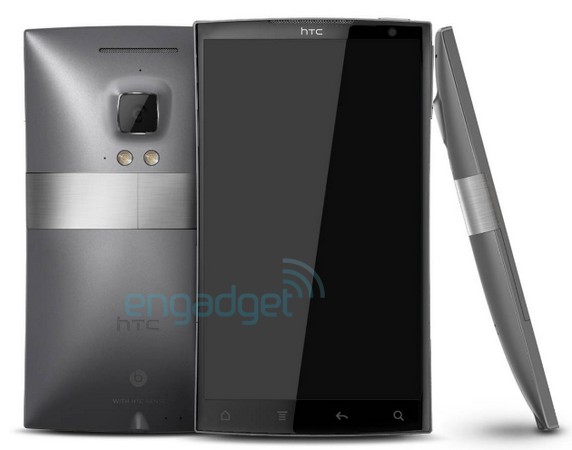
Engadgethas leaked the specs of a new handset from HTC called the Zeta (rendered above). The HTC Zeta is rumored to pack a 2.5GHz quad-core processor, 1GB of RAM, 720p 4.5-inch display, 8-megapixel rear camera (1080p HD), and 1.3-megapixel front camera. With specifications optimized for power, the HTC Zeta makes itself favorable over its previously leakedbrethren the HTC Edge.
The 2.5 GHz S4 processor will be manufactured by Qualcomm, a competitor to Nvidia’s Tegra 3 that is finding its way into devices by next year. This device is sure to be a speed demon.
Engadget doesn’t say which version of Android the Zeta will run, but with the Ice Cream Sandwich source code released yesterday, we’re hoping the device will see ICS on launch day if not shortly after. HTC’s custom Sense UI will also most likely earn a spot on the Zeta. There is no word on pricing or availability, but Q1 or early Q2 of 2012 sounds about right.
I’ve been playing with the EVO Design 4G for the better part of a month now, after showing off the hardware and software quickly in October. Today, we’re back with our full review of the device to answer a few questions. Is this the premier mid-range Android device on Sprint? Does it live up to its EVO name? Is this the world phone you’re looking for? But first, let’s go over some specs.
The Design 4G is packing Android 2.3 (Gingerbread) HTC Sense, a 1.2 GHz processor, 4-inch qHD display, 5-megapixel rear-camera, 1.3-megapixel front-camera, Wi-Fi, and World Phone capabilities. So how does this hardware hold up with the software? Head on after the break for our full review.
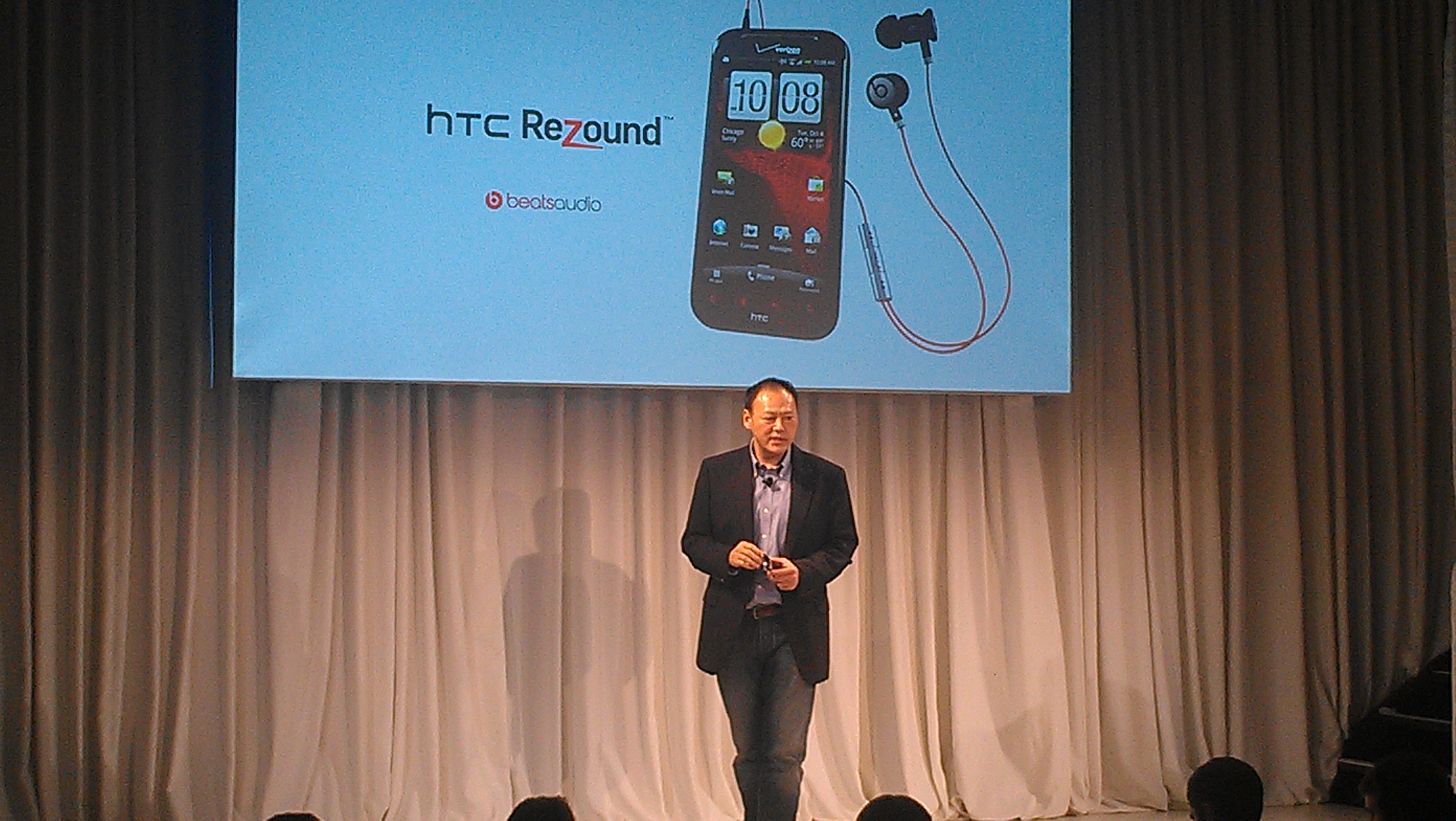
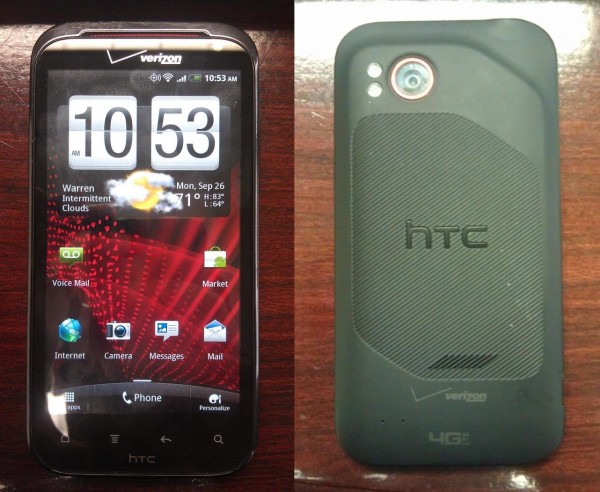
HTC and Verizon have just announced the rumored HTC Rezound (formerly Vigor) at their event in New York City. The HTC Rezound is available on Verizon for $299 with two year contract, featuring Android 2.3, Verizon LTE, a 720P 4.3-inch display, 1.5-GHz processor, and 1GB of RAM. You can notice the Beats Audio branding on the back of the device, in which headphones are includes. This device is sure to go head-to-head with Samsung’s Nexus Prime. Sadly, the Rezound won’t get Ice Cream Sandwich until early Q1 of 2012.
The HTC Rezound will be available at Best Buy and Verizon for $299 on November 14th.
We’ll have a hands-on of the device when the event ends in just a few minutes. In the mean time, check out the press shots of the device after the break:
HTC just sent out invites for the unveiling of their “latest innovation” slated for November 3rd in NYC. Judging by the Beats by Dr. Dre logo, whatever is announced will most likely benefit from that recently acquired audio tech. Many sources are speculating we’ll get a look at the leaked HTC Rezound (codenamed HTC Vigor). That device is rumored to have a 1.5 GHz dual-core processor, 4.3-inch 720- HD display, 4G LTE capabilities, an 8-megapixel camera, and 2-megapixel front-facing camera. We’ll have to wait until next Thursday at 5PM EST to find out for sure. Expand Expanding Close
Quite an accomplishment, but not unexpected given HTC’s popularity on its home turf. According toTaiwan Economic News, Taiwan’s External Trade Development Council (TAITRA) and the Bureau of Foreign Trade named handset maker HTC the country’s leading technology brand, surpassing even computer maker Acer.
In just twelve months, the HTC brand gained $2.23 billion in value and is now worth an estimated $3.6 billion. Acer and Asus trail behind HTC with their respective brands valued at $1.94 billion and $1.36 billion. Here’s how their CEO Peter Chou commented the accolade:
You have to make an investment, spend time, and stay patient. Even if we failed, the process would help to produce positive results for Taiwan. We are not content with our current achievements, but will work harder to better compete globally, especially at this time of increasingly intense global competition.
HTC yesterday issued unaudited quarterly earnings, with revenues and net income up in the third quarter 80 and 68 percent, respectively. The company is shooting for shipments of 13.5 million smartphone units during the second half of this year. HTC is ranked the fourth smartphone maker globally. In the June quarter, they were the leading Android vendor and the second-best smartphone maker in the United States.
At the Beats Audio event in London, HTC unveiled the Sensation XL this afternoon — a massive device packing Beats audio. The XL name is definitely not exaggerating, seeing as the device features a whopping 4.7-inch display (you really see how big it is after the break). The device also ships with Beats Audio embedded and urBeats headphones, like its Sensation XE brethren.
Full specs for the device include a 1.5 GHz Qualcomm processor, Android 2.3.5 w/ Sense 3.5, 16 GB of internal memory, a 4.7-inch display (800 x 480), 8-megapixel rear-facing camera, 1.3-megapixel front-facing camera, and 1600 mAH battery.
The Sensation XL lands in Europe sometime in November. Check out Engadget’shands-on after the break:
The fine folks over at Android Police have discovered that many HTC devices have a huge security hole due to a recent Android update. The results are pretty shocking, and HTC has no one to blame but themselves. In a recent update, HTC included a set of logging tools that logs users email accounts, last known network and GPS connection, phone numbers that have been recently dialed, encoded SMS data (probably can be decoded), and system logs.
Okay so HTC logs all of this, what’s the big deal? The big deal is that any app that requests android.permission.INTERNET can get their hands on this information. Phones include the Thunderbolt, Evo 4G, Evo 3D, and more.
As of now, the only way to patch this hole is to root your device and remove /system/app/HtcLoggers.apk. If you’re not rooted, stay away from sketchy apps. As Android Police points out, even a high-quality app could still get their hands on this information. Android Police has all of the technical details.
HTC is doubling down on Windows Phone. Pictured above: The HTC Titan, powered by Windows Phone 7.5 ‘Mango’ and arriving to AT&T this Fall.
HTC, the embattled handset maker from Taiwan and the second-largest smartphone vendor in the United States, is doubling down on Microsoft’s mobile platform, seemingly to reduce its reliance on Google’s Android software which has been under heavy fire lately from Apple, Microsoft and Oracle over patents. According toZDNet Asia, a HTC manager for Singapore said during the Windows Phone 7.5 Mango launch event:
We believe that Windows Phone 7 will eventually be better than other platforms and will give Android a run for its money.
Melvin Chua, the manager, also noted that the Windows Phone platform already accounts for nearly one-third (30 percent) of HTC’s overall sales. This subtle hint points to a possible 180-degree turn for the company that made fortunes by making and selling Android phones. It’s not terribly surprising, though. Their chairwoman Cher Wang recently went on record, saying the company discussed internally a mobile operating system purchase. “We can use any OS we want”, she was quoted as saying.
Droid-Life has published exclusive shots of the HTC Vigor which shows some pretty impressive specs for the upcoming device. According to a shot after the break, the Vigor is shown having a 1.5 GHz dual-core processor, 4.3-inch 720p HD display, 8-megapixel rear-facing, 2-megapixel front-facing camera, and Verizon Wireless’s 4G LTE.
On the hardware side, the Vigor will feature Android 2.3.4 and Sense 3.5 (ugh). There’s no word on release date, but looks like a nice Thunderbolt successor, eh?
Apple’s embattled iPhone has had tough time competing against the legions of Android handsets that have flooded the market. That shouldn’t come as a surprise: Carriers are promoting inexpensive Android devices left and right and they are literally everywhere. But how satisfied Android and iPhone users are with their handsets? According to a study of 515 smartphone owners conducted by USB Research (viaGigaOM), iPhone is “sticky” like no other phone, with an average retention rate of 89 percent.
It is falling rapidly for other vendors, though, and the next nearest hardware is HTC with a retention rate of 39 percent and 28 percent for Samsung. Android phones in general are at 55 percent. Nokia and Research in Motion are sinking really fast. The former saw its retention rate drop from 42 percent in March 2010 to just 24 percent and the latter dropped from 62 percent to 33 percent.
The survey may not be terribly accurate due to a small sample size, but it helps understand market trends. People are obviously happy with their iPhones and a large portion of users will happily stay within the Apple ecosystem. USB concludes:
Demand for iPhone, iPad and MacBook Pro remains robust, with a leading ecosystem that creates sticky demand.
Truth be told, Android’s low stickiness could be due to its users being more comfortable changing handset manufacturers. Another interesting nugget that bodes well for Apple: Nearly one-third (31 percent) of polled Android users have plans to switch to an iOS device in the future. Also important, more than half the smartphone switchers are in the market for an iPhone while only one in ten iPhone users plan on defecting to other platforms.
It is no secret that HTC is doubling down on software. One example: Recently, their chairwoman Cher Wang contemplated an operating system of their own. HTC also has Sense, an Android user interface skin, and the company has expanded into a cloud-based delivery service for music, television shows and Hollywood entertainment on the go. The latest addition to their arsenal includes cloud-storage service Dropbox, which teamed up with the Taiwanese handset maker to offer folks with select HTC smartphones a bonus three gigabytes of free storage. This is on top of the two gigabytes free storage Dropbox has always had in store for new sign-ups, resulting in five gigabytes of free storage for HTC handset owners. Plus, convincing five friends to sign up for a Dropbox account raises the free limit to a maximum of ten gigabytes of free cloud storage.
Given Dropbox’s popularity, many people will no doubt take advantage of this promotion. Using Dropbox, users can effortlessly sync their files across desktop and mobile devices, regardless of the platform. The service takes care of file system differences between the platforms, resolving conflicts and keeping platform-specific file meta data intact. This promotion is valid from October, Pocket-lintreports. It requires a new HTC handset with the Sense 3.5 software or later, which currently includes only the Rhyme and Sensation XE smartphones.
As of April 2011, more than 25 million people saved a cool 200 million files daily on Dropbox. Eagle-eyed readers could observe that computer maker Hewlett-Packard used to bundle its PlayBook tablet with a 50GB of free cloud storage on Box.net, until they shuttered webOS.