Motorola


You might remember back in July when we first reported that T-Mobile was actually not yet signed up to carry the Moto X. Yesterday Motorola officially announced the device and, while it said that it will be available through all carriers (including T-Mobile), today T-Mobile backed up our original report by confirming that it will indeed not be selling the Moto X in its stores (via AllThingsD):
Expand
Expanding
Close

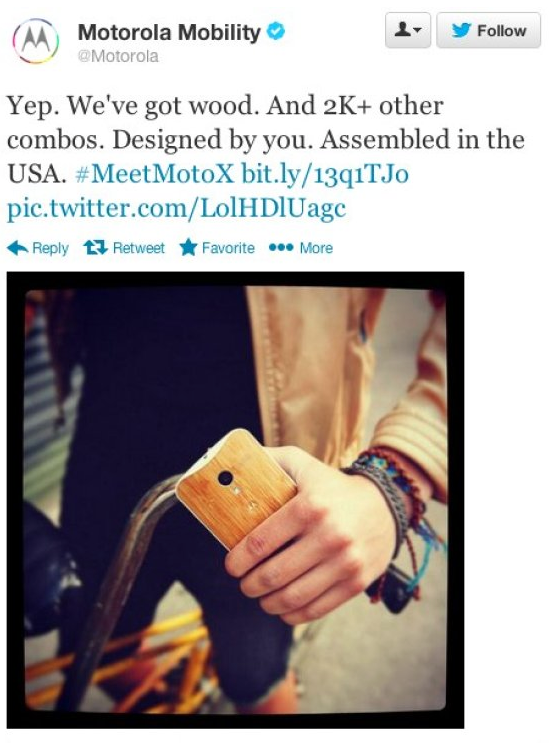
Motorola’s tweet, since deleted
You’d have thought that when you’re spending half a billion dollars on marketing a phone, you might be able to decide your strategy beforehand. So far, Motorola seems to be suffering a bad case of indecisiveness, reports Business Insider, deleting the above tweet and revising two ads.
Poor taste or harmless fun? You decide. Before-and-after ads below the fold …
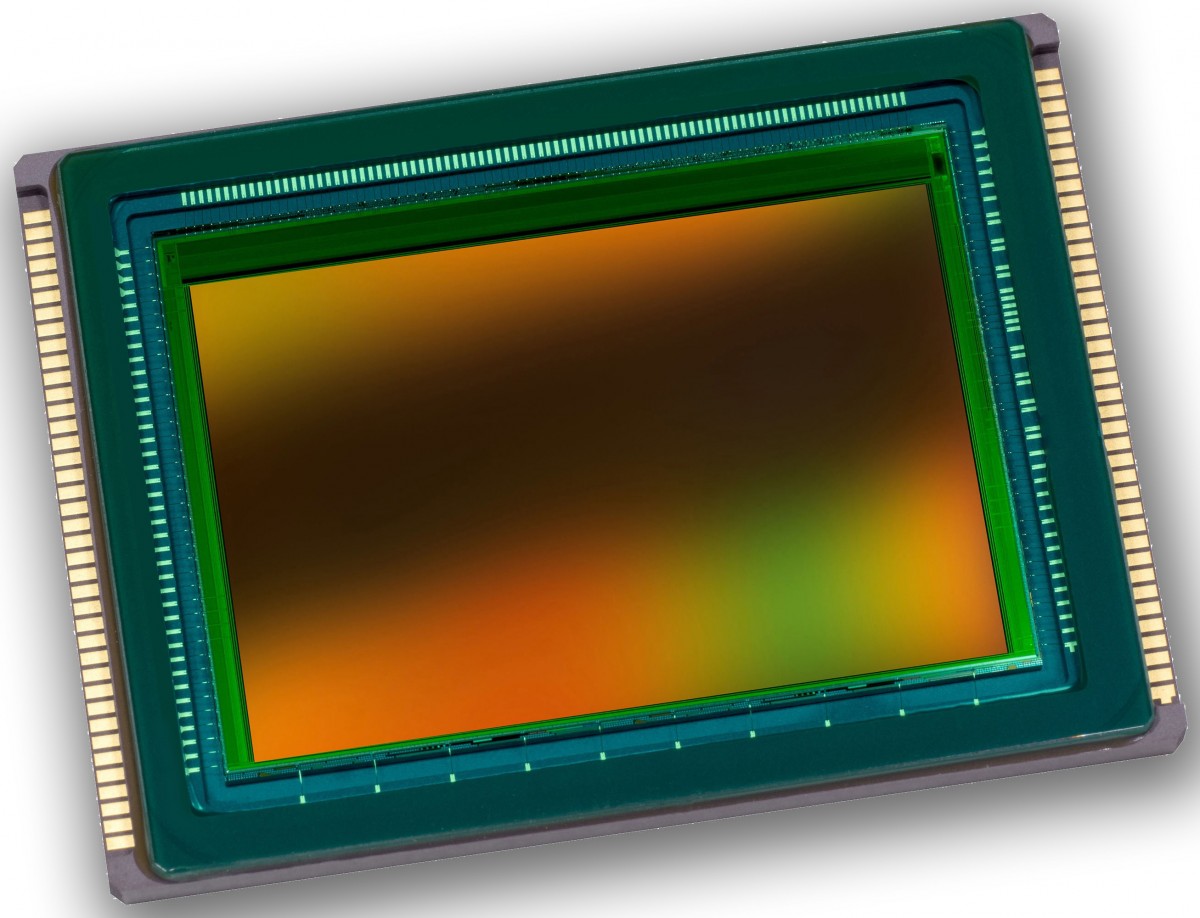
Library image of a camera sensor
Motorola told us yesterday that the Moto X has a “10MP Clear Pixel (RGBC)” camera, and now Engadget has a little more info on this.
It’s the OmniVision OV10820, a 1/2.6-inch sensor with a video-friendly 16:9 aspect ratio and large 1.4-micron pixels. Its strong low-light performance comes through a two-chip approach. The sensor captures RAW images using a sensitive RGBC (red / green / blue / clear) color filter, and a companion chip automatically converts the resulting shots into the Bayer format that most imaging processors expect. The result is a high-performance camera that slots inside the Moto X without requiring any special effort.
RAW images allow a sensor to capture greater ‘dynamic range’. Picture a bright sunny day with a tree casting a shadow. With most sensors, either the shaded area would appear solid black or the surrounding area would appear too bright. RAW allows a sensor to retain detail across both bright and dark areas.
And the size of the pixels? These are again important for image quality, especially in low-light conditions. There has been a tendency for manufacturers to cram more and more pixels into a given sensor size, knowing that most consumers think a higher megapixel number has to mean a better camera. In practice, it can mean the opposite as the quality of indoor photos suffer because the pixels are too small. A larger physical sensor size enables larger pixels and better quality.
1.4 micron pixels are larger than most smartphone cameras, but not exceptional in todays high-end handsets. It’s larger than the 1.12 micron in the standard Samsung S4, the same as the S4 Zoom and iPhone 5 – but not as large as the 2 micron pixels in the HTC One.

We are just a few days away from Motorola’s official announcement of the X Phone, but that hasn’t stopped the leaks from coming. This time, the leak comes straight from Motorola evangelist Guy Kawasaki. On Google+ (via: Droid Life), Kawasaki posted a picture from a Motorola campus party that clearly shows the much rumored X Phone in the same green shade that we saw in other leaked images earlier this month. The white and black variants are also present, but we’ve seen them several times before.
The X Phone is expected to be available in at least 25 different color options and sold built-to-order via an online portal. While we know a lot about the device already, Motorola should announce all the secrets this Thursday during its press event.
Expand
Expanding
Close
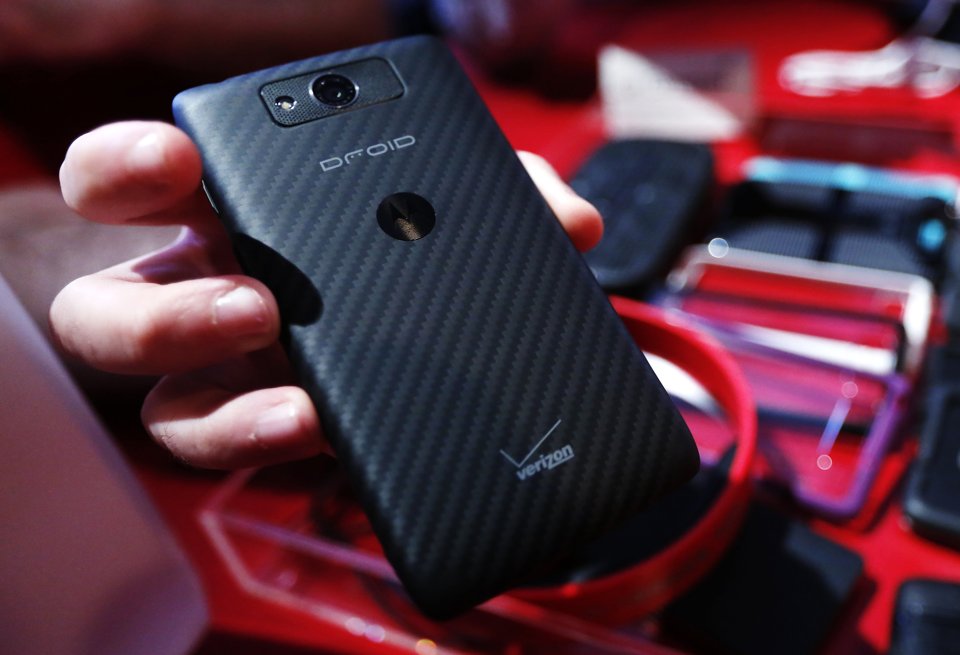
Photo: Yahoo News
While we already knew that the Droid MAXX, Droid Ultra and Droid Mini, like all Droids would be exclusive to Verizon (‘Droid’ is a Verizon brand licensed from LucasArts after all!). CNET now reports that the exclusivity will work in reverse too: with all Droid-branded devices being manufactured exclusively by Motorola.
Starting with the Droid Ultra lineup, Motorola will be the only smartphone manufacturer to build Droid smartphones, Verizon marketing executive Jeff Dietel told CNET on Tuesday.
Verizon had previously used the Droid brand for handsets from a range of manufacturers, including HTC’s Incredible series and Samsung’s Droid Charge. With HTC moving to its own ‘One’ branding and Samsung’s own, more powerful Galaxy branding, the news doesn’t come as much of a surprise.
These latest handsets are likely the last vestiges of pre-Google Motorola and with the Moto X coming in a few short days, these are likely some of, if not the last devices designed before the takeover by Google. Google-installed CEO Dennis Woodside noted earlier this year that Google was working to clear some mediocre inventory that had been been built by his predecessors. With due respect to Mr. Woodside, the 48-hour battery life and other specs on these are going to give the X phones a run for their money.
http://www.youtube.com/watch?feature=player_detailpage&v=8CHyOTOnSS4
Verizon has just released a new video teasing its new Droid MAXX, Droid Ultra, and Droid Mini devices announced this morning. The video, in typical Verizon/Motorola fashion, is very robot-like. The video teases that “WHEN IT MATTERS, DROID DOES.”
The moments that matter offer no time to pause or stop, no room for bulk or bloat, and no chance to refuel. In those moments, the new lineup of DROID phones delivers.
The DROID Ultra and MAXX will be available on August 20 and the Droid Mini on August 29, with pre-orders starting today.
Expand
Expanding
Close
In a continued barrage of Moto X news and rumors, Android Police has just published an extensive gallery of images showing what it believes is the camera interface and app that the device will feature. The interface is noticeably different from what we saw on the Google Play Edition devices, as well as all Android 4.2 devices.
Along the left hand side of the interface is a control wheel that allows you to adjust certain settings, such as the exposure, flash, focus, camera setting (HDR, video, etc) and more. It appears that you will be able to scroll the wheel around to see even more options. I’m not exactly a fan of this interface, as it’s not always clear what settings the icons are representing. It also looks like the device will be capable of slow motion video.
Expand
Expanding
Close
Verizon and Motorola are set to unveil a new series of DROID devices tomorrow at a press event, but almost everything has already been leaked ahead of time. Motorola fan site HelloMotoHK (via Droid Life) has just published an image of a “Limited Edition” DROID ULTRA variant with a red stripe running down the back.
It’s unclear exactly how or if the device will be offered to consumers. There’s a strong possibility that it will be an employee edition, common practice by Verizon and Motorola.
We’ll be sure to let you know what Verizon has to offer up at its press event tomorrow, but it seems pretty like that its a new DROID series.

Just got word from our Motoleaker with the latest in X Fon news. As of now, only Sprint, Verizon and AT&T are major carriers confirmed to carry the device in the US. T-Mobile (perhaps because it already subsidized the similar-specced Nexus 4?) hasn’t yet finalized any deals with Motorola for the device.
The X phones will begin shipping to carriers in August and should be ready for back to school. The price is cheap enough for the carriers to subsidize the complete upfront cost, though it isn’t certain if they will or not. $300 is the current number being thrown around as the unsubsidized price (Again, like the Nexus 4).
Expand
Expanding
Close
The X leaks keep coming in. Evleaks/Unlockr appear to have the first press shots (besides the ones on the invite and all of the ones Eric Schmidt showed off).
AndroidPolice also tweeted out a AnTuTu benchmark (below) which verifies our “Ghost” codename scoop earlier this year.
Expand
Expanding
Close
Rumors surrounding the Moto X Phone have been coming in at a crazy rate over the past few months, with information regarding design, customization, and more leaking. We’ve known for a while that the device is not meant to be high-end in terms of specs, and new information obtained by The Verge confirms that.
According to a “tipster who has used a CDMA variant of the phone,” it will feature a 1.7GHz Snapdragon MSM8960T processor, which is basically the same as a Snapdragon 600, but dual-core instead of quad-core. The device will also feature 2GB of RAM and a screen “in the vicinity” of 4.5-inches. Things get a tad questionable when it comes to the battery life, however, with The Verge’s source originally claiming that it had a measly 1500mAh battery, but later saying that figure might not be accurate, as it was reported by a software tool.
Expand
Expanding
Close
Interesting G+ Post from Amanda Rosenberg on the genesis of the “OK Glass” hot word which activates the Glass headset:
In the car on the way back, Mat told me about how the team had been working on the “hotword” for Glass. I must confess, I did not know what “hotword” meant. Did I ask what it meant? No. Did I nod whilst looking pensive? You bet your glass I did. As I listened to Mat, I quickly* * * * deduced that he was referring to the phrase that sets off the Glass menu. He then asked me if I had any ideas for the hotword. In that moment the only phrase I could think of was ‘OK Glass’. I didn’t tell him straightaway though. Instead, I continued to look pensive and muttered something about ‘looking into it’ just to appear as though I was going to put more than 3 seconds of work into it.
Interestingly, it appears that OK has migrated to “OK Google Now” in Motorola’s upcoming X Phones.
Expand
Expanding
Close
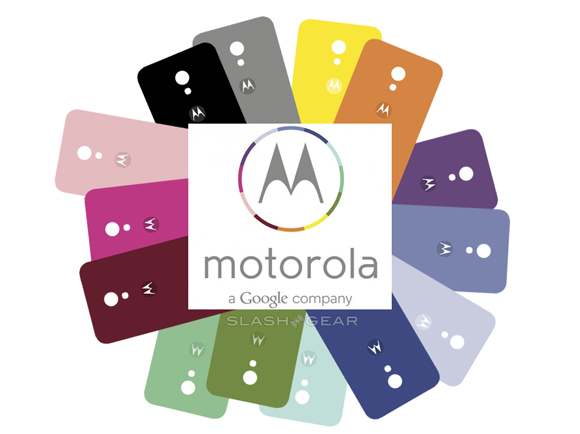
Mockup: Slashgear
Choosing a phone is pretty simple if you’re the kind of person who wants the latest & greatest handset and has the budget to pay for it. Even if you’re not sure what platform you want, you’re essentially choosing between a handful of flagship products and are currently likely to walk away with an iPhone 5, Samsung S4 or HTC One.
There isn’t too much head-scratching at the bottom end of the market either: buyers there don’t care about the handset, and take whatever freebie their carrier pushes at them.
But the mid-market is where life gets complicated. You care enough about your handset to want something decent, both in specs and design, but you don’t want to take out a mortgage to buy it. It’s this market that is going to get incredibly colorful this fall …
Expand
Expanding
Close
When Dennis Woodside introduced the Moto X Phone back at the AllThingsD conference, he teased that he was carrying the device as his primary phone, but he couldn’t show it to us. It turns out that Google chairman Eric Schmidt is also using the phone, but while at the Allen & Co. business conference, he didn’t make any attempt to hide it from the press, as Italian site Corriera.it has posted a gallery of photos of him using it (via The Verge).
Schmidt was pictured using the white model of the phone, though much like the white Nexus 4, the front remains all black. The phone appears to have a design that is thicker in the middle than around the edges, which means you won’t be able to set it on a flat surface and use it very easily. It looks like Schmidt has finally broken his habit of using a Blackberry, which he admitted was a pretty hard habit to break earlier this year.
Another leaked image of the device in black also recently appeared on Chinese site Weibo, though we can’t really tell much from it that we didn’t already know.
The X Phone is expected to be a device heavily customized by the user, so if you aren’t a fan of the white design, don’t get to worried. The release date is still up in the air, though a leaked document pointed at an August 23rd date for Verizon.
View all of the images below…
It looks like Motorola and Verizon are set to team up for yet another lineup of DROID devices this fall, as press images from @evleaks and story boards from Android Central have leaked. First off, the DROID MAXX looks to be the successor the popular DROID RAZR MAXX from last year. Specs are still a mystery for the most part, but seeing how the RAZR MAXX was a flagship last year, it seems likely that its successor will also feature high-end internals. The big selling according to the leaked ad, however, will still be the battery life. The ad teases that the DROID MAXX will have “48 hours of worry-free battery life.” The RAZR MAXX was advertised with 32 hours of talk time, so two full days of usage is pretty impressive.
The DROID ULTA’s storyboard doesn’t really give us any hints as to what to expect from the device, but it does mention that the device will be “Only on Verizon. 8-8-13.” More than likely, the DROID ULTRA will be very similar to the DROID MAXX, but with less impressive battery life and a thinner design.
Expand
Expanding
Close
Last week, tech pundit Leo Laporte announced that he had been invited to an event on Google’s campus on July 10th by Motorola’s Guy Kawasaki. According to him, only a small number of journalists were invited, with the same event being held on July 11th for another group of people. Many people speculated that this was where Motorola would unveil the highly anticipated X Phone. According to a report out of AllThingsD, however, the event is not for any product announcements and is purely a “private event” being held by Kawasaki.
The X Phone will be Motorola’s flagship device for the remainder of the year and will be highly customizable and feature a lot of sensors and awareness features, according to several reports. At the D11 conference, Motorola CEO Dennis Woodside stated that it would be made in the United States and be available this fall.
Update: According to a source speaking with CNET, Motorola does not plan to unveil the X Phone at the press briefings next week, saying the event is about “something else.”
We already know a lot about the upcoming Moto X Phone. Motorola CEO Dennis Woodside announced it at the D11 conference earlier this year, and since then, we’ve seen images, specs, and details regarding customization options leak. The main thing we need to know is when it will be announced and when it will be released. On an episode of his This Week in Google show, podcaster Leo Laporte stated that he has been invited to an event at the Google campus on July 10th by Motorola employe Guy Kawasaki. It’s a small event, according to Laporte, with only 50 journalists being invited. The same event will also be held on July 11th with another group of reporters.
There are all sorts of things Moto/Google could have up its sleeves for this event, but Laporte seems pretty adamant about it being the Moto X Phone. It could also be something simple, such as Motorola wanting to further introduce its new strategy with reporters. Given the fact that it will be held on the Google campus, it could also be something entirely unrelated to Motorola, such as Android 4.3. As Google has said before, Motorola is supposed to be operated entirely separate with no direct access to Google.
On the ad released by Motorola earlier this week, two people were jumping into a lake forming “XI” with their bodies. In Roman numerals, X1 is obviously the number 11, which further leads to the possibility of the X Phone being announced at these small events. However, that’s a lot of speculation on top of very little information, so we’ll just have to wait and see.
For all of the details from Leo Laporte (not many) jump to the 40 minute mark in the video below:
Hot on the heels of a report with more details regarding the customization options of the Motorola X Phone, French site NWE has obtained several images showing four colors the device will supposedly be offered in. One is green, one is red, another is blue, and the fourth is a shade of purple. The source, who “wishes to remain anonymous” says the device will be offered in “no less than” 16 color variations.
Earlier today, a report emerged claiming the only aspects that will be customizable about the Moto X Phone are the wallpaper, color, and engraving. Though, apparently, the sensor and awareness features will be the big selling points of the device.
Expand
Expanding
Close
Back in May, we reported on many of the customization options that would be coming with the Moto X Phone. Our sources claimed the device would be offered with 25+ color options in the form of skins/protections, and now ABC News is reporting something very similar, but with a few more details.
According to the report, users will be able to buy the device in a variety of colors, just as we said earlier. One of the colors will be used for the back case and the other for the trim. Much like with iPhones, iPads, and iPods, users will be able to have a custom message engraved in the back cover, which is something we’ve yet to see with Android devices. Finally, users will supposedly be able to upload a custom photo and have their device arrive with that photo set as the wallpaper.
So the big thing with the Moto X will be the 'awareness' features. Keep an eye on @9to5Google for more on this soon.
— Seth Weintraub (@llsethj) July 3, 2013
More details were also offered regarding the sensors that the X Phone will feature.
The biggest tricks of the phone come with what Motorola has been doing with the hardware sensors, sources say. Instead of having to fumble to find the camera icon or button, users will be able to flick the phone to launch the camera. There are also added voice capabilities, which leverage Google’s advanced voice recognition technology. The phone is said to be smart enough to know when you are driving and will automatically launch the speakerphone function.
After unveiling a new ad for the unreleased device yesterday, Motorola has now launched a sign up page for the Moto X Phone. The page is titled “Motorola 2013 Summer Announcement Registration,” and simply invites us to sign up to find out what the company is “up to.”
Motorola keeps the same “Designed by you. Assembled in the USA” tagline from yesterday and reaffirms the fact that it will create over 2,000 new jobs in Ft. Worth, Texas to make all of this possible.
Expand
Expanding
Close
Click to view the full ad
Motorola’s latest flagship device, the Moto X Phone, is set to be released sometime this fall, but despite not having released any images of it, the company is getting ready to run its first ad for the phone. The ad, as shown by Ad Age, shows some definite Google influence, as well as the logo we reported on last month.
The ad is centered around the Fourth of July festivities and focuses on the fact that it is made in the United States.
“What we are doing which is very different is assembling [Moto X smartphones] here in the U.S. in our assembly plant in Ft. Worth, Texas,” Motorola’s VP-global brand and product marketing Brian Wallace said in an interview. “What better time than July 4th to come with a message like that?”

We already know that Motorola is planning for the X Phone to be its flagship device for later this year, but it looks like the company has at least one other device or variant planned. Motorola has created a page on its website dedicated to the Droid Ultra, an unreleased device. Motorola teases that it is thin, but tough as steel, yet no offers no other information.
Droid Ultra
Think thin
Available in a bunch of glossy colors, this high-grade DuPont Kevlar body proves you can be even thinner and still be tough as steel.
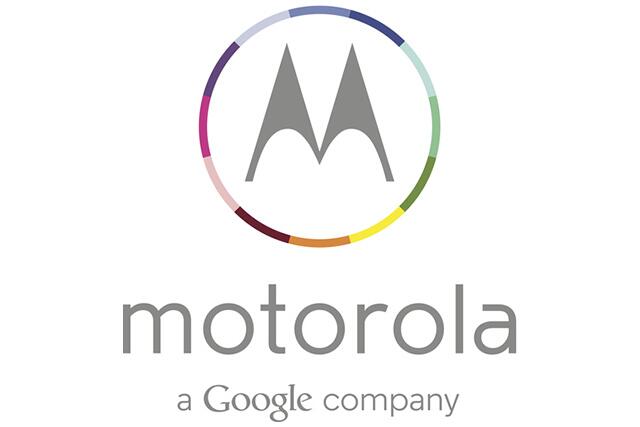
Since it was purchased by Google, Motorola has been undergoing a major shift as a company. We’ve seen very few devices released over the last year, and up until the D11 conference, everyone inside the company had been very quiet. As part of the overhaul, however, Motorola looks to have a new logo. The new logo made its first appearance on the site of Techweek, an event Motorola is co-sponsoring this week. Now, this does make us wonder if the logo is here to stay or if it just for the conference, but we’re inclined to say that it’s here for good. Companies don’t change their logos all that often, as they are not something taken lightly.
The new logo is much simpler than Motorola’s old look, which was a bolded, italicized “MOTOROLA.” Now, everything is in lowercase font with a much softer color. The classic red “M” is now the same color as everything else and is surrounded by a wheel of colors. The most notable change, however, is what is underneath. To show off its new bosses, Motorola is now advertising that it is “a Google company.”
Expand
Expanding
Close
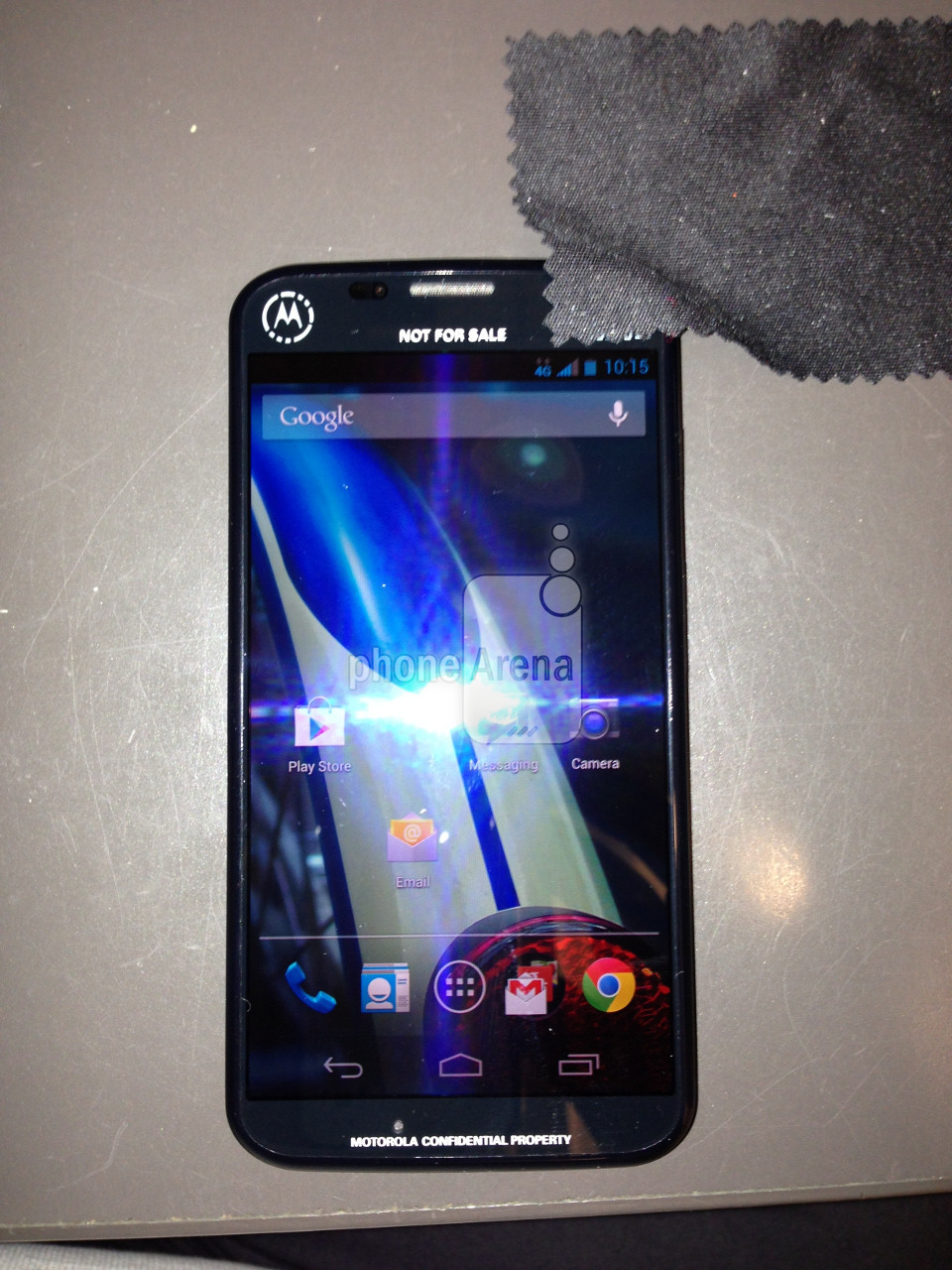
Motorola officially announced the X Phone on-stage at the AllThingsD conference earlier this year, but left out many of the details, including the design of the device. PhoneArena, however, has now gotten its hands on what appears to be the Motorola X Phone. We can’t tell all that much from the image, except that it appears to have a Motorola logo in the upper left corner and on-screen buttons. The screen is somewhere around the 4.7-inch mark, which falls in line with what we’ve heard before. This specific model is being tested on Sprint, according to the report, and carries the XT1056 model number. The device also appears to be running stock Android.
Earlier reports pegged the device as having a 1.7GHz Snapdragon S4 Pro processor, 2GB of RAM, a 720p display, 16GB of storage, and a 10MP camera.
Motorola CEO Dennis Woodside says the device will be released this October on all Major US carriers and will be manufactured in Texas.
Expand
Expanding
Close