Verizon

See All Stories

Verizon earnings call reveals 3.4M Android smartphone activations for Q3 2012

Site default logo image

Verizon held its Q3 2012 earnings call this morning and —aside from announcing $29 billion in total operating revenue— revealed Android smartphones were 79 percent of its total smartphone activations for the quarter.

The nation’s second-largest carrier also said operating revenue experienced a 3.9-percent gain over last year, while noting a third consecutive quarter of “double-digit percentage growth.” As for mobile device activations, 4G LTE smartphone penetration increased from “just below 50 percent last quarter to more than 53 percent.”

The company further disclosed that it activated 6.8 million smartphone in Q3, and 3.4 million of those activations were Android-powered devices. Three million were also specifically 4G LTE Android. In terms of iPhone activations, for comparison’s sake, Verizon activated 3.1 million with only 21 percent of the iPhones supporting 4G LTE.

The carrier then gave more information on its aggressive LTE rollout across the United States (via Yahoo Finance | Earnings Call Transcript):

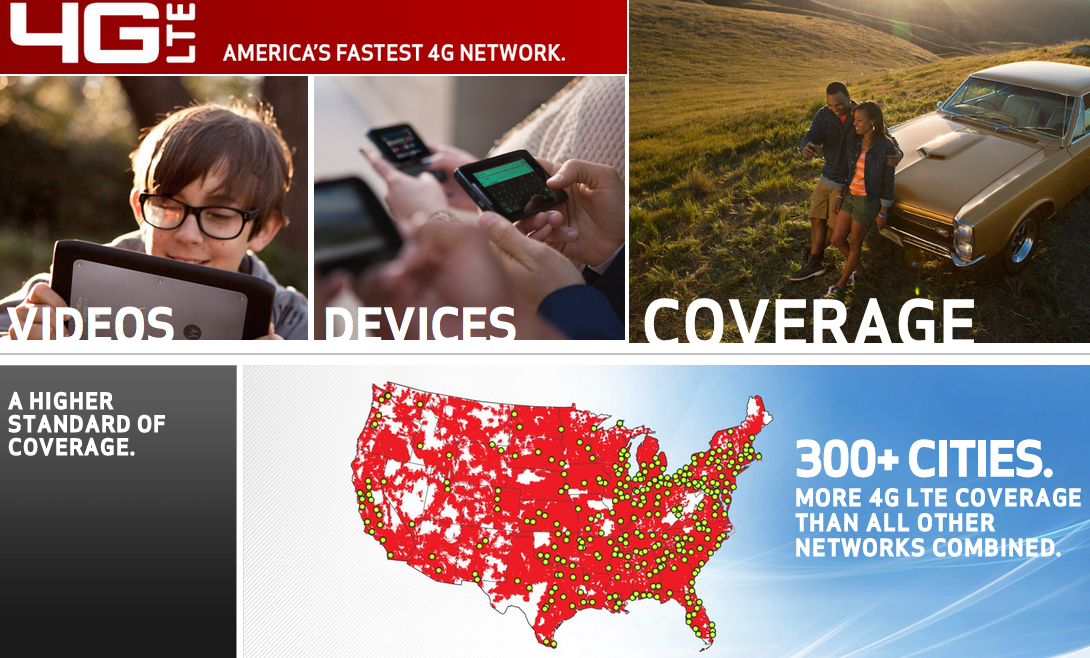
[sic] In terms of 4G LTE coverage we are by far the market leader. Our 4G LTE service is currently available in 419 markets covering more than 250 million tops roughly 80% of the U.S. population. As our TV commercial say, we have more 4G LTE coverage than all of our competitors networks combined. We will continue expanding our 4G LTE network with a goal of having a nationwide foot print similar to our 3G network next year.

Visit Verizon’s Investor Relations page for more specifics.

The press release is below.


Expand
Expanding
Close

ISIS Mobile Wallet app for Android released for two T-Mobile devices, special SIM-card required

Site default logo image

ISIS, a mobile payment partnership between AT&T, T-Mobile, and Verizon, has released its first app onto Google Play that was pushed back from the initial September plan. The app, ISIS Mobile Wallet, only works with the Galaxy S III and Galaxy Relay 4G on T-Mobile in Salt Lake City, Utah or Austin, and it requires a special SIM card courtesy of ISIS, as MobileBurn noted. T-Mobile and the ISIS have not announced anything specific about the app, but you can give it a test run over at Google Play.

There is no word if AT&T or Verizon will receive a similar app for its NFC-enabled devices. If you are wondering about the nation’s No. 3 carrier, Sprint is not apart of the ISIS. It is partnered with Google Wallet on many of its phones. Furthermore, Sprint is rumored to announce its own payment platform sometime in the future.

Yesterday, TmoNews reported that T-Mobile users would receive a $25 credit when signing up and the service will officially launch in a pilot program Oct. 22.


Expand
Expanding
Close

Site default logo image

Sprint says ‘accidental dual fibercut’ on network causing nationwide outages, attempting to fix issues

A widespread network outage on Sprint’s network started at 7:30 a.m. PST today and hit Portland, Ore., Seattle and Tacoma Wash., Minneapolis, Minn., and San Francisco and Sacramento, Calif. Sprint just confirmed it is working diligently to fix the issue.

Sprint’s statement to 9to5Mac:

“Earlier this morning, an accidental dual fibercut occurred on Sprint’s network causing a disruption in data and voice services for some Sprint customers in parts of Portland, Oregon; Seattle and Tacoma Washington; Minneapolis, Minnesota; and San Francisco and Sacramento, California. Sprint network technicians are working aggressively to resolve this issue and we hope to have service restored soon.”

This article is cross-posted on 9to5Mac.


Expand
Expanding
Close

Site default logo image

Samsung Galaxy S III’s black and brown versions ‘coming soon’ to Verizon

Samsung announced in August that its Galaxy S III would land in four new colors, and now it appears two of those variations will soon hit through Verizon.

Verizon’s website this morning, as first noted by Droid-Life, revealed the Android-powered handset would soon launch in “Black and Brown.” Hmm…Can anyone say, “Brown Zune?”

Samsung previously called the two colors “Sapphire black” and “Amber brown”. Big Red’s website also offered folks a chance to sign up for availability notifications. Pricing will likely match the blue and white flavors, but we will have to wait and see.


Expand
Expanding
Close

Verizon finally pushes Jelly Bean upgrade to Samsung’s Galaxy Nexus

Site default logo image

Samsung’s Galaxy Nexus is the first smartphone at Verizon to get Android 4.1 Jelly Bean, announced the leading 4G LTE carrier today, with the software upgrade rolling out over Wi-Fi now.

Those interested in getting the latest, buttery-smooth version of Android can go to System Updates under the “About Phone” Setting’s menu. As noted, a Wi-Fi network is required to complete the download. The update comes to Verizon more than three months after Jelly Bean was released on the GSM version of the Galaxy Nexus.

“The interface on Jelly Bean is also the most responsive Android OS to date,” said Verizon in its announcement. “Customers can interact with messages, photos, emails and event details from the notification screen, allowing them to directly access important information without navigating their phone.


Expand
Expanding
Close

Verizon again tops J.D. Power and Associates Network Quality Performance report

Site default logo image

J.D. Power and Associates is out with the second half of its 2012 “U.S. Wireless Network Quality Performance Study”, and Verizon once again come out on top for network performance in five of the six regions included in the report. Only second to U.S. Cellular in the North Central region, Verizon posted the best overall network performance among the other carriers in the remaining regions based on 10 key problem areas that could impact the customer experience.

For a 16th consecutive reporting period, Verizon Wireless ranks highest in the Northeast region. Verizon Wireless achieves fewer customer-reported problems with dropped calls, initial connections, transmission failures and late text messages, compared with the regional average. Verizon Wireless also ranks highest in the Mid-Atlantic, Southeast, Southwest and West regions… U.S. Cellular ranks highest in the North Central region for a 14th consecutive reporting period. Compared with the regional average, U.S. Cellular has fewer customer-reported problems with dropped calls, failed initial connections, audio problems, failed voice mails and lost calls.

The study also covered the customer experience specifically for data-related problems. Not surprisingly, LTE device users experienced significantly less issues than older 3G devices like the iPhone:

The study finds that the number of data-related problems, especially those related to slow connection speeds, is significantly lower among customers using 4G LTE-enabled devices than among those using devices with older 3G/4G technology standards, such as WiMAX and HSPA+… For example, among customers with 4G LTE-enabled devices, the problem incidence for excessively slow mobile Web loading is 15 PP100, compared with the industry average of 20 PP100. Furthermore, the overall problem incidence for excessively slow mobile Web loading is even higher among customers with WiMAX and HSPA+ technology

Based on responses from over 26,000 U.S. wireless customers, the report explained how network performance was calculated:
Expand
Expanding
Close

Verizon Galaxy Nexus owners can now use Google Wallet without any workarounds

Site default logo image

Verizon Wireless muddied the water earlier this year when it announced that it would not allow Galaxy Nexus users to access Google Wallet. Many began to theorize that Big Red’s move was a defense for its own ISIS mobile payment solution brewing, but a few crafty folks figured out a way to bypass Verizon’s restrictions.

Now, merely a day after the Federal Communications Commission slapped Verizon with a $1.25 million charge for not keeping the “open network” pledge it made when it bought a block of 700MHz spectrum, things have changed. As JR Rafael noted, why does the open network standard not apply to Google Wallet too?

Engadget reported this evening that Verizon Galaxy Nexus owners can now access Google Wallet without any workarounds. The news also comes just after Google Wallet was updated with remote wipe, a web app, and support for all major credit cards yesterday afternoon. Right now, Verizon Galaxy Nexus users do not appear to be able to search for Google Wallet on the Play store and download it; however, they can download Google Wallet with a direct link. Folks, give it a try. [Google Play via Engadget
Expand
Expanding
Close

Google Wallet gets Web App, updated with all major credit cards and remote wipe

Site default logo image

[youtube=http://www.youtube.com/watch?v=VuFVsaFCzsw&feature=player_embedded]

Google Wallet is now cloud-based, supports any type of credit or debit card, and it is safer than ever before thanks to secure storage and remote disabling.

U.S. carriers are extremely stingy about letting Google put the Wallet app on its own operating system. While Sprint and its Virgin subsidiary have Google Wallet enabled on most of their new Android phones, Verizon has outright banned it—even on the Galaxy Nexus. AT&T and T-Mobile, which, with Verizon, are part of the competing ISIS Wallet standard. Both refuse to carry phones that use Google Wallet, but you can buy an unsubsidized GSM Galaxy Nexus that works on both networks just fine.

Google seems to have found another way around the ban, according to the the official Google Commerce blog:

“Today we’re releasing a new, cloud-based version of the Google Wallet app that supports all credit and debit cards from Visa, MasterCard, American Express, and Discover. Now, you can use any card when you shop in-store or online with Google Wallet. With the new version, you can also remotely disable your mobile wallet app from your Google Wallet account on the web.”

Google Wallet is simple: Card information is entered on the app, or on its new online wallet and Google Play, and manageable transaction records for in-store and online purchases appear on the phone (and now the Web!) immediately after payment use.

Google also instantly charges the selected credit or debit card. Well, when a user pays, the virtual card is transmitted to the merchant, but then the back-end charges the selected card. Note: It does not directly charge the card, because it is a proxy card.


Expand
Expanding
Close

Site default logo image

Verizon extends 4G LTE to 33 new markets, touts more coverage than competitors combined

Verizon Wireless plans to expand its 4G LTE coverage tomorrow to 33 new U.S. markets. The carrier will then boast 337 LTE markets, which places it ahead of competitors by a wide margin, and it hopes to reach 400 total by the end of 2012. Verizon also announced it is broadening coverage in 32 existing markets.

Check out the list below (via Verizon Wireless): 

  • The 33 new markets: El Dorado/Magnolia and Russellville, Ark.; New London County, Conn.; Fort Pierce/Vero Beach and Melbourne/Titusville, Fla.; Columbus and Rome, Ga.; Burley, Idaho; Mattoon, Ill.; Anderson and Muncie, Ind.; Manhattan/Junction City and McPherson, Kan.; Lafayette/New Iberia, La.; St. Joseph, Mo.; Bozeman/Livingston, Kalispell and Missoula, Mont.; Goldsboro/Kinston, Roanoke Rapids and Rocky Mount/Wilson, N.C.; Zanesville, Ohio; Meadville and Punxsutawney/DuBois/Clearfield, Pa.; Orangeburg, S.C.; Sherman/Denison, Texas; Cedar City and Logan, Utah; Rutland/Bennington, Vt.; Lynchburg and Winchester, Va.; Bellingham, Wash.; and Beckley, W.Va.
  • The 32 expanded markets: Mobile, Ala.; Los Angeles, San Diego and San Francisco, Calif.; Washington, D.C.; Fort Lauderdale, Miami and Sarasota/Bradenton, Fla.; Hilo, Honolulu and Kahului/Wailuku/Maui County, Hawaii; Blackfoot/Idaho Falls/Rexburg, Idaho; Peoria, Ill.; Indianapolis, Ind.; Wichita, Kan.; Baton Rouge, La.; Baltimore, Md.; Kansas City and Springfield, Mo.; Akron, Cleveland, Columbus and Toledo, Ohio; Allentown/Bethlehem, Harrisburg and Scranton/Wilkes Barre, Pa.; Columbia and Greenville/Spartanburg, S.C.; Provo/Orem and Salt Lake City/Ogden, Utah; Fredericksburg, Va.; and Seattle, Wash.

“With more markets than all other U.S. wireless providers combined, our customers are the first to learn of the great advantages of the Verizon Wireless 4G LTE network for streaming video, downloading files, uploading pictures and so much more, at consistently reliable fast data speeds,” said Verizon Wireless’ Chief Technical Officer Nicola Palmer.

This article is cross-posted on 9to5Mac.


Expand
Expanding
Close

Quick Review: Verizon’s Droid Incredible…isn’t

Site default logo image

TL;DR: Pass.

This phone is exactly what you think it is: a throwback to last year when HTC made thick phones, while Verizon loaded phones with crapware (O.K., that’s still happening). I have to wonder what happened behind the scenes with the HTC-VZ relationship. Did HTC say to Verizon, “You want to do WHAT with our One phones? Errr, here—have this instead of the One.”

I mean, T-Mobile, Sprint, and AT&T each released the next generation of thin, svelte One series smartphones with big, beautiful displays. They are critically acclaimed! The Incredible 4G’s 4-inch display would have been passable, if it had a body like the HTC One S, which I am still in love with. This phone is so thick (.46 inches) that you almost expect it to have a slide out keyboard (Droid 4 with a keyboard is only microns thicker).

This…this is like the Rezound Jr., which is not entirely bad…for a 2011 grenade phone.


Expand
Expanding
Close

Site default logo image

Ice Cream Sandwich now available to Verizon’s Droid Razr and Razr Maxx

[tweet https://twitter.com/vzwnews/status/220216437745266689]

Verizon just confirmed on its Twitter that customers of the Motorola’s Droid Razr and Droid Razr Maxx finally have access to Ice Cream Sandwich through a manual update.

 DROID RAZR and DROID RAZR MAXXX customers can now manually download the Android 4.0 Ice Cream Sandwich operating system. Here’s how: on your RAZR smartphone, go to Settings, then select About Phone, then select System Updates.

Site default logo image

Verizon Wireless launches Share Everything plans

Verizon Wireless’ Share Everything plans go live today.

Current Verizon customers can upgrade, but new customers must choose a Share Everything plan. Verizon is scrapping the family plans and individual tiered plans for incoming subscribers, because the new options provide unlimited talk, unlimited text, and shareable data with pricing based on how much data is consumed.

Unlimited plans are not profitable for Verizon, which stopped offering unlimited data last year, due to growing smartphone usage clogging the carrier’s pipelines. The new standard is quickly becoming 4G LTE, so Verizon is likely trying to capitalize on every bit of data funneled through its network.

Verizon’s new strategy is the first of its kind in the U.S. It notably allows users to share data with up to 10 devices through a single account, but users can also fly solo with plans starting at $30 for 2 GB of data.

Visit the Share Everything website for all the details, or check out the full price sheet at Verizon’s Share Everything Calculator page.

This aside is cross-posted on 9to5Mac.


Expand
Expanding
Close

Site default logo image

Verizon announces ultra-high speed FiOS ‘Quantum’ service, up to 300 Mbps for $210 a month

Verizon announced tiers for its new high-speed Internet FiOS “Quantum” service today. It ranges from $65 to $210 a month, and it is available in double or triple-play bundles and stand-alone plans. Verizon will continue offering its entry-level $65 15/5 Mbps service, but it will introduce new plans including: 50/25 Mbps, 75/35 Mbps, 150/65 Mbps, and 300/65 Mbps. The company noted they are “by a wide margin the nation’s fastest, mass scale residential Internet speeds.”

Three of those speeds ¬¬ 75/35, 150/65 and 300/65 — are twice as fast as those previously offered.1 In addition, Verizon will continue to offer its entry-level speed of 15/5 Mbps… The two highest downstream speed offers – 150 and 300 Mbps – and the new 65 Mbps upstream speed are by a wide margin the nation’s fastest, mass scale residential Internet speeds available. By contrast, the fastest Internet speeds offered by cable-company challengers top out at 105 Mbps downstream and 20 Mbps upstream. (This FiOS Internet speed grid shows specific examples of the benefits of faster downstream and upstream speeds.)

Verizon noted existing customers can upgrade free, but they will on-average pay $10 to $15 more per month. The company also outlined the different pricing options for new customers:

For new customers, prices of triple-play bundles of 15/5 Mbps FiOS Internet, FiOS TV and FiOS Digital Voice unlimited calling will range from $99.99 to $144.99 per month, depending upon which FiOS TV package is ordered. The packages are: Prime, with more than 200 channels and more than 50 HD channels; Extreme, with more than 290 channels and more than 70 HD channels; and Ultimate, with more than 380 channels plus premium movie channels, and more than 110 HD channels).

Double-play bundles of the 15/5 Mbps FiOS Internet and FiOS TV range from $84.99 to $129.99 per month. Stand-alone 15/5 Mbps service costs $69.99 per month on a month-to-month basis, and $64.99 per month with a two-year contract.

Triple-play bundles of the 50/25 Mbps speed range from $109.99 to $149.99 per month for new customers. Double-play bundles with FiOS TV range from $94.99 to $134.99 per month. The stand-alone version costs $79.99 per month on a month-to-month basis, and $74.99 with a two-year contract.

Triple-play bundles of the new 75/35 Mbps speed range from $114.99 to $154.99 per month for new subscribers. Double-play bundles with FiOS TV range from $99.99 to $139.99 per month. The stand-alone costs $89.99 per month on a month-to-month basis, and $84.99 with a two-year contract.

Triple-play bundles of 150/65 Mbps speed range from $169.99 to $174.99 per month for new FiOS customers. Double-play bundles with FiOS TV range from $154.99 to $159.99 per month. The stand-alone costs $99.99 per month on a month-to-month basis, and $94.99 with a two-year contract.

The new 300/65 Mbps tier, offered as a stand-alone only, costs $209.99 per month on a month-to-month basis, and $204.99 with a two-year contract.3

Analyst: iPhone ‘under pressure’ at Verizon as Droid RAZR MAXX takes top spot during the quarter

Site default logo image

William Blair analyst Anil Doradla (via Barron’s) wrote in his notes today that the iPhone is still the best-selling smartphone across the United States, but it is coming “under pressure, particularly at Verizon” due to the carrier’s aggressive marketing of 4G-capable devices. Citing his checks of sales for the current quarter as of June, Doradla claimed the Motorola Droid RAZR MAXX outsold the iPhone on Verizon:

Since Apple’s iPhone launch in North America, we believe this was the first quarter where the iPhone was not the best‐selling smartphone at a North American mobile operator (where it was available). While Apple continued to maintain its top position at AT&T and Sprint, Motorola’s Droid RAZR MAXX was the best‐ selling smartphone at Verizon. Our checks also indicate that at this stage consumers are not pausing in front of the iPhone launch as it is not influencing their purchasing decisions (but we expect it to start impacting over the next couple of months).

While the RAZR MAXX took the top spot, Samsung’s Galaxy Nexus grabbed third position behind the iPhone, according to Doradla. He backed his “outperform” rating on Apple by saying he is “not worried” given the next generation iPhone, which is likely due in October, is expected to include 4G LTE capabilities:

Expand
Expanding
Close

Verizon to introduce shared data plans June 28, reflects reality of multiple device users

Site default logo image

According to a report from AllThingsD, Verizon Wireless will soon change the way it charges customers for cellular/data plans in a major way. Rather than charging customers for phones calls or messages sent, the report claimed Verizon would charge “almost exclusively based on how much data” is consumed. The new “Share Everything” plans will also be the first in the United States that allows users to share their data with up to 10 devices through a single account:

The plans, known as “Share Everything,” allow users an unlimited number of calls and texts and also allow data usage to be pooled among up to 10 devices on one account. With the move, Verizon becomes the first U.S. carrier to offer the ability for customers to share a bucket of data across multiple devices.

AllThingsD noted that AT&T also has plans for shared data options, but it did not provide more details. As for Verizon’s new plans, which will apparently kick-in June 28, the report explained the cost of the data plan and pricing metrics based on a per-device fee. In other words, you will have to pay roughly $40 per smartphone ($10 per tablet), and then opt for either a $50 1GB data plan or a $100 10GB plan. While the report claimed the new pricing should not impact the cost of plans for users who continue consuming the same amount of data, it is clear that those signing a new plan for a single smartphone are getting a bit less for their money:


Expand
Expanding
Close

Site default logo image

First leaked images bring the Motorola Droid Razr HD to life [Photos]

A couple Motorola Droid Razr HD pictures just hit the Web.

Droid-Life posted the leaks (above), mentioned the smartphone’s upcoming arrival to Verizon’s 4G LTE network, and detailed its visualized design and rumored specs:

While it maintains a bit of the RAZR look of last year, the back plate is now full kevlar without the extra rim of plastic around it. The camera (likely 13MP) has been centered in the middle with flash and speaker on each side. From the picture below, you can see that there isn’t much of a hump left and that is thought to be because of the 3300mAh battery that Moto has included inside. Our source claims that the screen is “amazing” and that the phone also has the expected on-screen navigation keys. They were not able to confirm the processor, which is thought to be Qualcomm’s 1.5GHz dual-core Snapdragon S4, but we would be surprised if it was something else. What’s interesting is the move from Motorola to put the micro HDMI and USB ports on the bottom side of the device again, similarly to what we saw from multiple devices like the Bionic and DROID X/X2.

There are no official details on a release date for the newest Razr offering, but rumors indicate a late summer launch.


Expand
Expanding
Close

Site default logo image

Verizon to launch LTE in horde of US cities May 17

Verizon is expanding its LTE rollout by giving the green light on May 17 for many northeast cities in the United States.

PC World tested 3G and 4G wireless data transfer speeds last month for the top four carriers —both indoors and outside with multiple devices across 13 major cities in 130 testing locations— and discovered some surprising results: AT&T won the 4G crown. It clocked the fastest speeds in all but four cities when compared to other 4G network providers. With that said, AT&T may soon lose its place as Verizon vastly continues to increase LTE presence in the country.

Check out Verizon’s full rollout list with each presser linked below:

  1. Myrtle Beach, South Carolina
  2. Benton Harbor And St. Joseph, Michigan
  3. Mansfield, Ohio
  4. Oil City And Franklin, Pennsylvania
  5. Ashtabula, Ohio
  6. Toledo, Ohio
  7. Defiance, Ohio
  8. New Castle, Pennsylvania
  9. Lima, Ohio
  10. Bucyrus, Ohio
  11. Somerset, Pennsylvania
  12. Erie, Pennsylvania
  13. Northern Cambria County, Pennsylvania
  14. Youngstown And Warren, Ohio
  15. Canton, Ohio
  16. Fredericksburg, Virginia
  17. Virginia’s Shenandoah Valley
  18. Martinsville, Virginia
  19. Williston, North Dakota
  20. Dickinson, North Dakota
  21. Delaware Shore Points
  22. Northern Vermont
  23. Cape Cod, Massachusetts
  24. Lancaster And York, Pennsylvania
  25. Jersey Shore

AT&T CEO Randall Stephenson says that Google prevents updates to Android devices

Site default logo image

During the Q&A of a recent interview, AT&T’s CEO Randall Stephenson said some interesting things about the Android ecosystem.

[youtube=http://www.youtube.com/watch?feature=player_embedded&v=Q3drI4yyiVw&start=2675]

His statements are confusing, because we have been— up to this point—lead to believe that there is a straightforward way this works:

  1. Google open sources the Android OS.
  2. After that, manufacturers get the OS working on their devices with drivers and  (gawdforsaken) overlays.
  3. Finally, the carriers certify the OS on those devices (and add a bunch of crapware).

In a response to the questioner, Stephenson blamed Google, saying, “Google determines what platform gets the newest releases and when. A lot of times, that’s a negotiated arrangement and that’s something we work at hard. We know that’s important to our customers. That’s kind of an ambiguous answer because I can’t give you a direct answer in this setting.”

He then goes on to explain how great Windows is and how he has been using it for a month. He also said Android needs to work on security.

While the questioner is speaking in the broader sense about getting his older Android device updated, it is possible that he is referring to the recent Galaxy Nexus that hit Verizon first in December. The GSM version of the Galaxy Nexus was available on AT&T before the release on Verizon (I was an early user) if you bought the phone without a plan.
Expand
Expanding
Close

Google Play rolling out direct carrier billing for movies, music, and books

Site default logo image

For quite a while, Android users on many carriers in a handful of countries have had access to direct carrier billing for apps. Google is rolling out the option today to all content available through Google Play including music, movies, and books to certain carriers in the United States and Japan. While direct carrier billing is available to AT&T, Sprint, and T-Mobile (everyone but Verizon who operates its own Android store), Google’s announcement seems to indicate the expanded service will launch first on T-Mobile in the United States with Sprint coming soon. It will also roll out to Softbank, DoCoMo, and KDDI customers in Japan. You can check out a full list of countries and carriers that support direct billing here.


Expand
Expanding
Close

Site default logo image

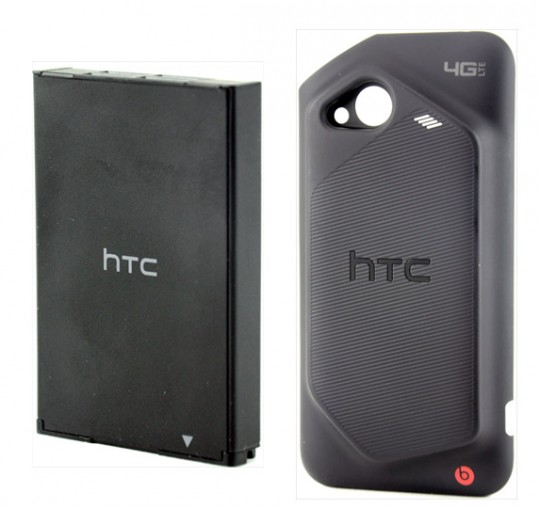
Droid Incredible 4G LTE extended battery spotted on retail site

The yet-to-be released HTC Droid Incredible 4G LTE just received more verification about its pending existence due to two accessories that suddenly appeared on retail website HTCPedia.

The HTC 2150 mAh Extended Battery for HTC Incredible 4G LTE and HTC Extended Battery Door for HTC Incredible 4G LTE for $34.99 and $19.99, respectively, are further indications that this highly-anticipated smartphone is on the way.

Earlier this week, the Droid Incredible 4G accidentally—and temporarily—popped up on Verizon’s “Droid Does” website, and images of the device even surfaced around the Web at the beginning of April. These leaks verify rumors that the latest Droid will pack a 1.2GHz dual-core processor, 4-inch display, LTE bands, and Android 4.0 with HTC’s custom Sense 4 on top. Presumably, the device will also feature an 8-megapixel shooter.

(via Android Community)

Verizon’s leaked roadmap shows Galaxy S3, HTC’s Note competitor, and new Motorola devices

Site default logo image

While many of the devices on the list have rumored or leaked release dates already, BGR claimed to have Verizon’s summer/fall roadmap that details flagship smartphones being launched later this year.

According to the report, Verizon Wireless will offer Samsung’s highly anticipated and much rumored Galaxy S3, which the company confirmed yesterday will pack its new 1.4GHz Exynos 4 quad-core processor. The report does not give a release date, but it speculated a summer release based on the roadmap.

Also apparently on the roadmap are multiple Motorola RAZR devices and a new 5-inch HTC device that appears to be a Galaxy Note competitor…


Expand
Expanding
Close

Verizon slashes $100 from Galaxy Nexus price to $199

Site default logo image

Verizon is now offering the Samsung Galaxy Nexus for $199.99 on a two-year contract— a $100 discount.

The carrier’s internal MAP documents from last week suggested a new asking price was coming sooner rather than later, and it seems Verizon was quick to match Sprint’s newly announced price tag for the device. The attractive savings also levels the flagship Ice Cream Sandwich smartphone with Verizon’s other high-end handsets such as the Droid 4 and LG Spectrum. However, Verizon’s off-contract price for the Galaxy Nexus is still fixed at $649.99.

For those unaware, the LTE-capable Galaxy Nexus also packs a 4.65-inch HD Super AMOLED contoured display, dual-core 1.2GHz processor and 1GB Ram, and a 5-megapixel camera coupled with a 1.3-megapixel front shooter.


Expand
Expanding
Close

Site default logo image

T-Mobile Test Drives 4G vs 3G in unfair network comparison

Following the launch of its new Alter Ego ad campaign yesterday, T-Mobile just made its new “Test Drive” tool available for comparing the speed of “American’s Largest 4G Network” to other guys— Sprint, AT&T, and Verizon. Unfortunately, as pointed out by TMONews, the carrier is comparing 4G LTE Android handsets, such as the Galaxy S II, to the 3G speeds of the iPhone 4S. This is obviously not a fair comparison of LTE network speeds…

T-Mobile’s TestDrive website is now live and I will say at first glance, I’m disappointed. I’ll just get right to it — T-Mobile, I’m really puzzled by this. The idea that you claim “America’s largest 4G network” and design a new commercial campaign around speed and then compare your “4G” network against “3G” smartphones is a questionable act. Speed should no longer be the focus of T-Mobile’s marketing campaign, Value and Technology should. Speed should be a secondary thought. If you can’t win on speed, highlight where you can, Value, Value, Value.

Report: Four carriers fight for fastest 3G and 4G speeds, only two debut on top

Site default logo image

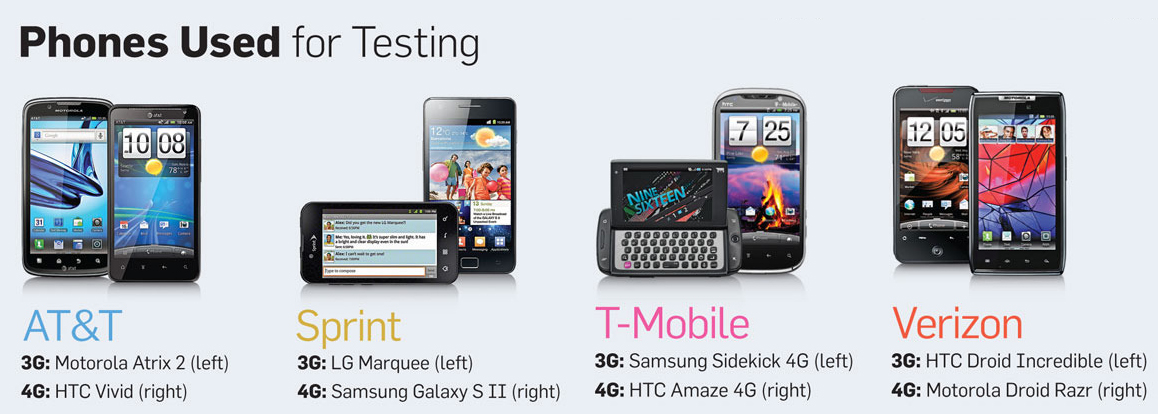
PC World tested 3G and 4G wireless data transfer speeds for the top four carriers —both indoors and outside with multiple devices across 13 major cities in 130 testing locations— and discovered some surprising results.

During average wireless speed tests for 3G networks with the smartphones pictured above, T-Mobile took home the fastest download and upload speed prize at 3.84 Mbps and 1.44 Mbps, respectively. AT&T landed the No. 2 spot with its 2.62 Mbps download speed and 0.85-Mbps upload speed.

The slower 3G network provider reclaimed its pride and rose to fame with its 4G wireless speeds, however. AT&T garnered 9.56 Mbps while downloading and 5.15 Mbps for uploads. Verizon debuted at second with its 7.35 Mbps download speed and 5.86 Mbps upload speed.

The overall winners are named below.


Expand
Expanding
Close