Breaking news for Android. Get the latest on apps, carriers, devices, and more!
Android is Google’s mobile operating system, launched in September 2008, although its history technically began with the release of the Android alpha in November 2007. To this day, Android powers the majority of the world’s smartphones and comes in several different flavors across many phone makers.
Android, before it was Android, was a company called Android Inc. That company was founded in Palo Alto, California, in 2003 by a crew of four: Andy Rubin, Rich Miner, Nick Sears, and Chris White. The company and its project was acquired by Google in 2005 for a sum of more than $50 million, although the exact number is unknown. The company’s founders joined Google as part of the deal.
In its infancy, Android was an operating system built not for touch screen smartphones like the iPhone, but rather BlackBerry-like devices with physical keyboards. It’s well documented that after Apple shocked the world with the iPhone, ahead of its nearest competition by at least a couple years, Google and Android Inc. had to go back to the drawing board to build something competitive.
Adoption by third-party makers
It didn’t take long after the launch of the iPhone for various manufacturers to enter the market with their alternatives — and Google’s Android immediately became the obvious platform of choice for just about everyone except Microsoft. HTC was the first manufacturer on board, and introduced the T-Mobile G1 running Android in September 2008. Soon after, HTC, Motorola, Samsung, and carriers like Sprint and T-Mobile jumped on board to form the Open Handset Alliance.
Android makers across the world
Iconic Android handsets
There have been thousands of Android phones released since Android’s inception, but some have been more important to the platform’s history than others. There was the original T-Mobile G1, as mentioned, but there was also the HTC One Google Play Edition, Moto G, Samsung Galaxy S4, and others. Some of the most iconic Android handsets include:
HTC G1
HTC Nexus One
Samsung Galaxy S, S2, S3, S4, and their successors
HTC Incredible S
Samsung Nexus S
Samsung Galaxy Nexus
Samsung Galaxy Note
Nokia 8
BlackBerry KeyOne
Google Pixel and its successors
In more modern times, there are several Android smartphones makers that popped up across various niches and in several international markets. Huawei is a dominant Android maker in China and many European markets, while Samsung is by far the most popular maker in the United States by far — effectively creating a duopoly with Apple. Today, there are dozens of major device makers contributing to the Android ecosystem.
Android has seen countless software revisions over the course of its life, but in modern times the OS usually sees a major release on an annual cadence. In the earlier days, Google famously gave its major software releases dessert-themed codenames, but retired that practice in 2019 with the release of Android 10.
Version
Name
Release
Devices
2.3
Gingerbread
February 9, 2011
Nexus S
4.0
Ice Cream Sandwich
October 19, 2011
Galaxy Nexus
4.1
Jelly Bean
July 9, 2012
Nexus 7
4.2
Jelly Bean
November 13, 2012
Nexus 4, 10
4.3
Jelly Bean
July 24, 2013
Nexus 7 (2013)
4.4
KitKat
October 31, 2013
Nexus 5
5.0
Lollipop
November 3, 2014
Nexus 6, 9
5.1
Lollipop
March 9, 2015
Android One
6.0
Marshmallow
October 5, 2015
Nexus 5X, 6P
7.0
Nougat
August 22, 2016
Nexus 5X, 6P
7.1
Nougat
October 4, 2016
Pixel, Pixel XL
8.0
Oreo
August 21, 2017
Pixel, Pixel XL
8.1
Oreo
December 5, 2017
Pixel, Pixel XL
9
Pie
August 6, 2018
Pixel 2, Pixel 2 XL
10
10
September 3, 2019
Pixel 3, 3a
11
11
September 8, 2020
Pixel 4
List of major Android OS platforms
While Android proper is certainly the most widespread of Google’s Android operating systems, the company has also launched many offshoots of the main OS over the years. There’s Android Auto, Android Wear (now Wear OS), Android TV (now rebranded to Google TV), as well as versions of Android built for tablets and Android Things (now defunct).
Yes, Sony actually seems to think that image you’re seeing above looks better after running through an “AI Camera Assistant.” In promoting its new Xperia 1 VIII, Sony is rightfully seeing backlash around the output of these new AI changes – and I can’t help but think about how this is just the worst possible form of the problem facing so many modern smartphone cameras.
Google announced yesterday that its implementation of AirDrop support in Android’s Quick Share will be coming to more Android phones, including a list of what devices are confirmed for support.
Adobe’s Premiere app is finally heading to Android, with Google providing a slightly more specific timeline compared to what Adobe previously left us with.
Android’s upcoming desktop OS experience is set to power “Googlebook” laptops in the not-too-distant future, and a 16-minute video has revealed some of the features found in this platform including its Android roots, some familiar ChromeOS features, and desktop-style features like folders on the desktop and terminal.
Google might have its own Pixel ecosystem to continue building out, but it’s also working on knocking down barriers between platforms. Building on top of a relatively-successful push to establish RCS as an accepted messaging standard, the company has slowly been adding AirDrop support to Quick Share, beginning with its own devices and recent releases from Samsung. Today, we’re learning that’s just the start of Google’s plans.
It’s been nearly a decade since Google launched its suite of Digital Wellbeing tools on Android, but despite the occasional upgrade, I’m not sure how much its app timers and dashboard displays ever caught on with the general public. This year, Google is giving Digital Wellbeing a much-needed boost with Pause Point, which goes well beyond an app timer to deliver an experience that feels much more in line with modern times.
Apple’s Liquid Glass redesign of its platforms, especially iOS, has been divisive to say the least but, thankfully, Google’s President of Android says that it’s “not happening” on this side of the walled garden.
Right as it’s been revealed that Google’s upcoming Pixel 11 probably won’t have new face unlock hardware, a new name is showing off some impressive under-display face unlock tech that could start showing up in Android devices as soon as next year.
Android AICore lets you “run generative AI features directly on your Android phone or tablet’s hardware.” These models (Gemini Nano) are inherently large, but Google now has a more detailed explanation of why Android AICore storage occasionally spikes.
You’ve undoubtedly heard about the rising costs of RAM and storage over the past few months, but price hikes and yearly comparisons don’t always show the impact of the ongoing shortage. But a chart we recently saw really shows just how bad things are.
Smartphone price hikes have been called “inevitable” amid the ongoing RAM crisis, but many devices have held firm for a while. Now, though, they’re landing, with price hikes having just hit the OnePlus 15 and Nothing Phone (4a) Pro, among others, in India.
As Google’s “Aluminium” OS slowly makes it way to launch, a new report reveals that Samsung is preparing new Galaxy Book laptops running Android, but with Samsung’s design on top.
The monthly “Google System Release Notes” primarily detail what’s new in Play services, Play Store, and Play system update across Android phones/tablets, Wear OS, Google/Android TV, Auto, and PC. Some features apply to end users, while others are aimed at developers.
There are a lot of reasons I love using a Google Pixel phone, but voice-to-text might just be the most underrated upgrade on these devices. Every time I use a Pixel, without fail, I struggle to switch back to literally any other Android device in part because the voice-to-text experience is just so much worse. But, finally, there’s a brighter future in view.
EU battery regulations originally published in 2023 are starting to make the rounds again, as the 2027 implementation deadline is fast approaching. With renewed attention, there are a few things to clear up regarding what the “new” regulations mean for Android devices.
Device information app Inware is getting a major update this week, with its 7.0 update delivering a Material 3 Expressive makeover and some new features as well.
For the past five years, a tap-to-pay vulnerability on iPhone has been known and has now been highlighted in an in-depth video, but your Android phone is not at risk for this.
Android
Breaking news for Android. Get the latest on apps, carriers, devices, and more!
Android is Google’s mobile operating system, launched in September 2008, although its history technically began with the release of the Android alpha in November 2007. To this day, Android powers the majority of the world’s smartphones and comes in several different flavors across many phone makers.
Table of contents
What is Android?
Android Inc.
Android, before it was Android, was a company called Android Inc. That company was founded in Palo Alto, California, in 2003 by a crew of four: Andy Rubin, Rich Miner, Nick Sears, and Chris White. The company and its project was acquired by Google in 2005 for a sum of more than $50 million, although the exact number is unknown. The company’s founders joined Google as part of the deal.
In its infancy, Android was an operating system built not for touch screen smartphones like the iPhone, but rather BlackBerry-like devices with physical keyboards. It’s well documented that after Apple shocked the world with the iPhone, ahead of its nearest competition by at least a couple years, Google and Android Inc. had to go back to the drawing board to build something competitive.
Adoption by third-party makers
It didn’t take long after the launch of the iPhone for various manufacturers to enter the market with their alternatives — and Google’s Android immediately became the obvious platform of choice for just about everyone except Microsoft. HTC was the first manufacturer on board, and introduced the T-Mobile G1 running Android in September 2008. Soon after, HTC, Motorola, Samsung, and carriers like Sprint and T-Mobile jumped on board to form the Open Handset Alliance.
Android makers across the world
Iconic Android handsets
There have been thousands of Android phones released since Android’s inception, but some have been more important to the platform’s history than others. There was the original T-Mobile G1, as mentioned, but there was also the HTC One Google Play Edition, Moto G, Samsung Galaxy S4, and others. Some of the most iconic Android handsets include:
In more modern times, there are several Android smartphones makers that popped up across various niches and in several international markets. Huawei is a dominant Android maker in China and many European markets, while Samsung is by far the most popular maker in the United States by far — effectively creating a duopoly with Apple. Today, there are dozens of major device makers contributing to the Android ecosystem.
Full list of Android OEMs
History of major Android versions
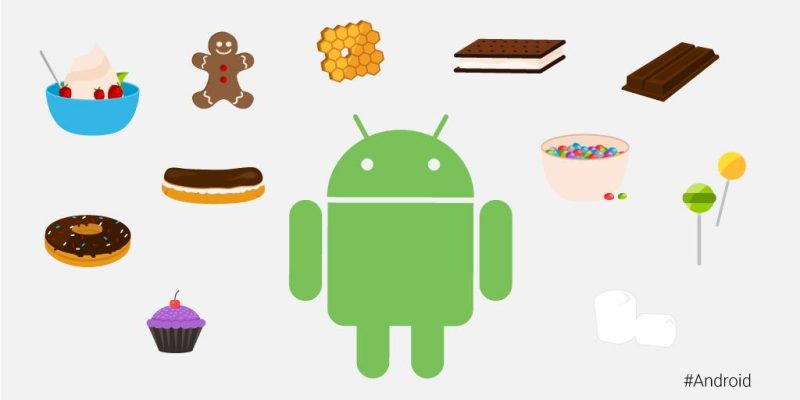
Android has seen countless software revisions over the course of its life, but in modern times the OS usually sees a major release on an annual cadence. In the earlier days, Google famously gave its major software releases dessert-themed codenames, but retired that practice in 2019 with the release of Android 10.
List of major Android OS platforms
While Android proper is certainly the most widespread of Google’s Android operating systems, the company has also launched many offshoots of the main OS over the years. There’s Android Auto, Android Wear (now Wear OS), Android TV (now rebranded to Google TV), as well as versions of Android built for tablets and Android Things (now defunct).
Sony’s awful ‘AI Camera Assistant’ for Xperia is the final boss of the worst camera trend [Gallery]
Yes, Sony actually seems to think that image you’re seeing above looks better after running through an “AI Camera Assistant.” In promoting its new Xperia 1 VIII, Sony is rightfully seeing backlash around the output of these new AI changes – and I can’t help but think about how this is just the worst possible form of the problem facing so many modern smartphone cameras.
Expand Expanding CloseAndroid rolling out AI-powered ‘Contextual suggestions’ that learn from your habits
Google is using on-device AI to analyze how you use your Android phone and provide “Contextual suggestions.”
Expand Expanding CloseThese Android devices will get AirDrop next – here’s why your phone might not
Google announced yesterday that its implementation of AirDrop support in Android’s Quick Share will be coming to more Android phones, including a list of what devices are confirmed for support.
Expand Expanding CloseAdobe Premiere is coming to Android ‘soon,’ Google says
Adobe’s Premiere app is finally heading to Android, with Google providing a slightly more specific timeline compared to what Adobe previously left us with.
Expand Expanding CloseAndroid’s desktop OS for ‘Googlebook’ leaks with basic features, virtual desktops, terminal [Video]
Android’s upcoming desktop OS experience is set to power “Googlebook” laptops in the not-too-distant future, and a 16-minute video has revealed some of the features found in this platform including its Android roots, some familiar ChromeOS features, and desktop-style features like folders on the desktop and terminal.
Expand Expanding CloseGoogle is bringing AirDrop support to many more Android phones, QR cloud share
Google might have its own Pixel ecosystem to continue building out, but it’s also working on knocking down barriers between platforms. Building on top of a relatively-successful push to establish RCS as an accepted messaging standard, the company has slowly been adding AirDrop support to Quick Share, beginning with its own devices and recent releases from Samsung. Today, we’re learning that’s just the start of Google’s plans.
Expand Expanding Close‘Pause Point’ is the Digital Wellbeing upgrade Google’s needed to deliver for years
It’s been nearly a decade since Google launched its suite of Digital Wellbeing tools on Android, but despite the occasional upgrade, I’m not sure how much its app timers and dashboard displays ever caught on with the general public. This year, Google is giving Digital Wellbeing a much-needed boost with Pause Point, which goes well beyond an app timer to deliver an experience that feels much more in line with modern times.
Expand Expanding CloseGemini Intelligence brings gen UI widgets, Gboard ‘Rambler’ to Android, debuting on Pixel & Samsung
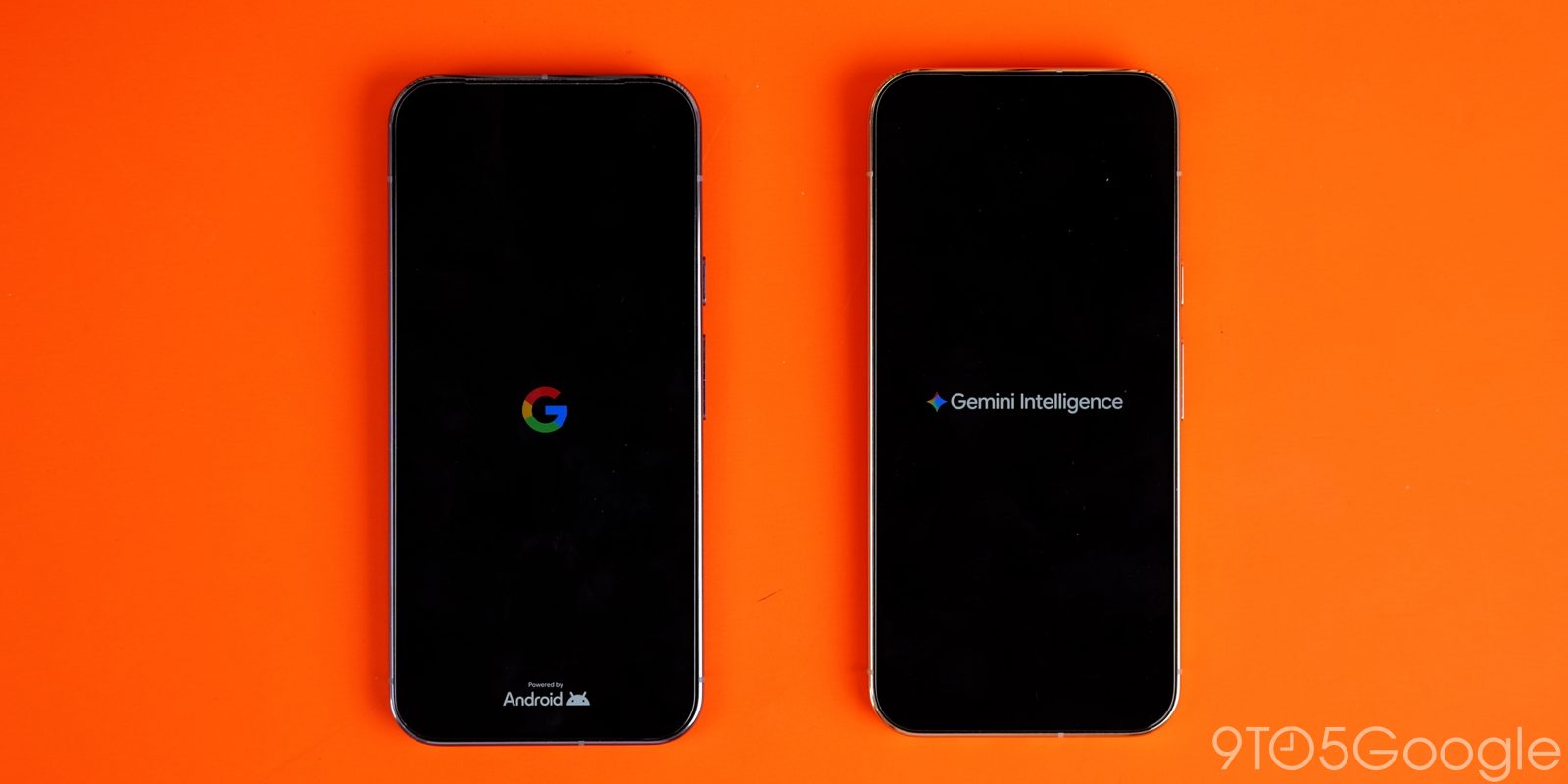
Google today announced “Gemini Intelligence” as the overarching name for a new series of AI features on premium Android devices.
Expand Expanding CloseEverything announced at The Android Show: Gemini Intelligence, Googlebooks, and more
Like last year, Google is making most of its Android announcements a week before I/O 2026. At The Android Show, we got four sets of announcements.
Expand Expanding CloseLiquid Glass for Android is ‘not happening,’ at least not for Pixels
Apple’s Liquid Glass redesign of its platforms, especially iOS, has been divisive to say the least but, thankfully, Google’s President of Android says that it’s “not happening” on this side of the walled garden.
Expand Expanding CloseGoogle hosting The Android Show on May 12: ‘one of the biggest years for Android yet’
For the second year in a row, Google will be hosting “The Android Show | I/O Edition” before I/O 2026.
Expand Expanding CloseAndroid phones could get this impressive under-display face unlock tech pretty soon
Right as it’s been revealed that Google’s upcoming Pixel 11 probably won’t have new face unlock hardware, a new name is showing off some impressive under-display face unlock tech that could start showing up in Android devices as soon as next year.
Expand Expanding CloseGoogle explains why Android AICore occasionally takes up more storage
Android AICore lets you “run generative AI features directly on your Android phone or tablet’s hardware.” These models (Gemini Nano) are inherently large, but Google now has a more detailed explanation of why Android AICore storage occasionally spikes.
Expand Expanding CloseThis chart shows why the RAM shortage has become a ‘mageddon’
You’ve undoubtedly heard about the rising costs of RAM and storage over the past few months, but price hikes and yearly comparisons don’t always show the impact of the ongoing shortage. But a chart we recently saw really shows just how bad things are.
Expand Expanding ClosePrices hikes have arrived for OnePlus 15, Nothing phones, more
Smartphone price hikes have been called “inevitable” amid the ongoing RAM crisis, but many devices have held firm for a while. Now, though, they’re landing, with price hikes having just hit the OnePlus 15 and Nothing Phone (4a) Pro, among others, in India.
Expand Expanding CloseSamsung reportedly prepares Galaxy Book laptops running Android with One UI 9 skin
As Google’s “Aluminium” OS slowly makes it way to launch, a new report reveals that Samsung is preparing new Galaxy Book laptops running Android, but with Samsung’s design on top.
Expand Expanding CloseWhat’s new in Android’s April 2026 Google System Updates [U]
The monthly “Google System Release Notes” primarily detail what’s new in Play services, Play Store, and Play system update across Android phones/tablets, Wear OS, Google/Android TV, Auto, and PC. Some features apply to end users, while others are aimed at developers.
Expand Expanding ClosePocket Casts can now prevent auto-downloads if you’re low on space
The latest set of updates for Pocket Casts on Android has added the ability to prevent auto-downloads to your device if you’re running low on storage.
Expand Expanding CloseGoogle Pixel ruined voice typing on every other phone for me, but the fix is in sight
There are a lot of reasons I love using a Google Pixel phone, but voice-to-text might just be the most underrated upgrade on these devices. Every time I use a Pixel, without fail, I struggle to switch back to literally any other Android device in part because the voice-to-text experience is just so much worse. But, finally, there’s a brighter future in view.
Expand Expanding CloseWhatsApp working on Android notification bubble support instead of Facebook’s wonky ‘Chat Heads’
“Bubbles” are an underrated part of Android notifications, with WhatsApp apparently working to add support just like another Meta app already had.
Expand Expanding CloseThe X app – you know, Twitter – for Android is on fire, but a fix is coming
If you’ve been trying to use the Twitter/X app on Android lately, you’ve probably noticed a whole host of issues. Thankfully, a fix is coming soon.
Expand Expanding CloseThose ‘new’ EU battery regulations probably won’t mean hot-swap batteries for your Android phone
EU battery regulations originally published in 2023 are starting to make the rounds again, as the 2027 implementation deadline is fast approaching. With renewed attention, there are a few things to clear up regarding what the “new” regulations mean for Android devices.
Expand Expanding CloseInware now tells you even more about your Android device with expressive makeover [Gallery]
Device information app Inware is getting a major update this week, with its 7.0 update delivering a Material 3 Expressive makeover and some new features as well.
Expand Expanding CloseAndroid phones aren’t at risk of long-standing iPhone tap-to-pay vulnerability [Video]
For the past five years, a tap-to-pay vulnerability on iPhone has been known and has now been highlighted in an in-depth video, but your Android phone is not at risk for this.
Expand Expanding Close