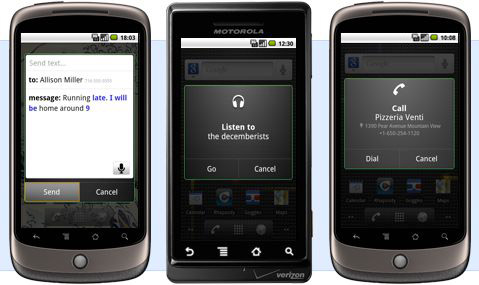
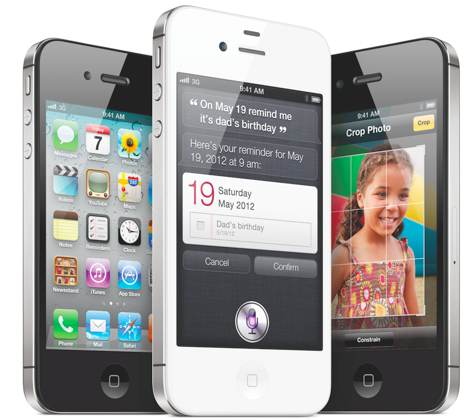
Android and Mereports on a secret Google project aimed at adding a little conversational flare to Android Voice Actions. Dubbed Project Majel after Majel Barrett-Roddenberry – the voice of Star Trek‘s Federation Computer – it’s thought to be motivated by the success Apple’s seen with its clever marketing of the voice-controlled digital assistant Siri that debuted as an iPhone 4S exclusive on October 4.
According to the blog:
Majel is an evolution of Google’s Voice Actions that is currently available on most Android phones with the addition of natural language processing. Where Voice Actions required you to issue specific commands like ‘send text to…’ or ‘navigate to…’ Majel will allow you to perform actions in your natural language similar to how Siri functions.
Google is apparently working on Majel at clandestine Google X, the company’s top-secret lab headed by Sergey Brin. Majel should debut for Google search queries first. It’s unknown at this stage whether the technology incorporates some of the artificial intelligence traits exhibited in Apple’s Siri. Expand Expanding Close
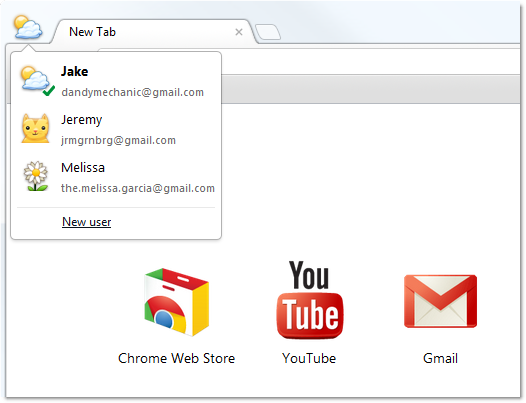
Multiple user profiles in Chrome have been in the works for months and we first spotted this feature in the Chrome Canary build before it found its way into the beta channel. Today, it gets official as the search Goliath announced in a blog post an update to the stable Chrome build, bringing the new Sign in to Chrome feature – previously known as Chrome Sync – which is available from the browser’s wrench menu. You will be asked to provide your Google Account credentials in order to authorize your copy of Chrome on whatever device you are running it.
“Signing in to Chrome lets you take your Chrome stuff with you, so you can always have your personal Chrome experience on all of your devices”, says Google. Changing something on one device – such as adding a bookmark – instantly changes it on all your other devices. You can also create multiple user profiles in Chrome on your machine (say, one for dad, the other for you, another one for your sister) and switch between them so each user can have its own personalized environment separate of the other users.
A user profile holds your bookmarks, the sites you visited, saved forms and passwords, installed web apps and extensions and other items supported by Chrome’s syncing mechanism. To add a new user to Chrome, go to Options (Preferences on a Mac), click “Personal Stuff,” and click “Add new user. Bear in mind that anyone with access to your machine can switch between users because the feature is not password-protected. A more detailed description is available over at the Google Chrome blog and in this support document.
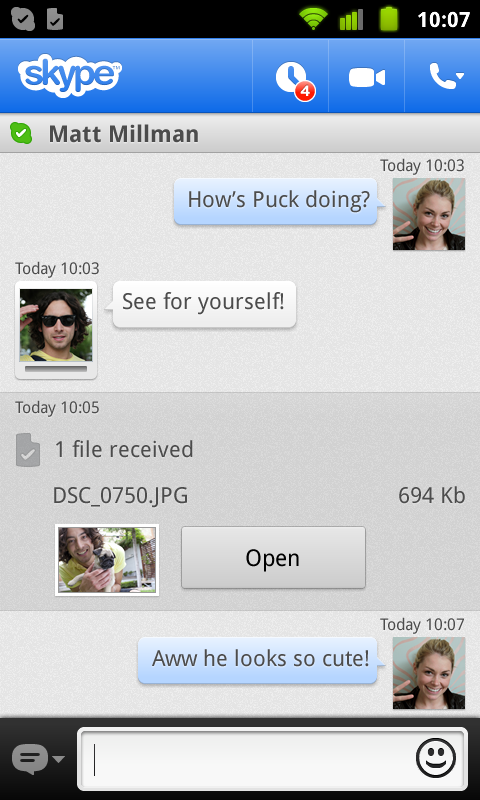
Skype today updated its Android client with the ability to share videos and images over 3G cellular networks or WiFi hotspots. According to a blog postannouncing Skype for Android version 2.6, the company also improved battery life while the owners of devices using Nvidia’s Tegra 2 chipset, such as the Samsung Galaxy Tab 10.1, Motorola Xoom and Acer Iconia Tablet, will notice better video quality on a bigger canvas. Additionally, the app now supports video calling on new devices, including the HTC Amaze 4G, Motorola Droid 4 and Motorola Droid Razr. Skype 2.6 for Android is a free download from Android Market.
Getting the user interface of a mobile application right down to the pixel level is a daunting task which often requires a lot of testing. To help Android developers get a better feel of what their designs will look like on an actual device, Adobe introduced a tool aptly named the Android Design Preview Tool. It takes some pain out of UI work by mirroring your desktop to your Android device, which helps mitigate guesstimating the appearance of the user interface elements and avoid wasting time compiling a build and syncing it to the device in order to test out each tweak. The new tool joins Adobe’s suite of Android utilities comprised of the Android Asset Studio and UI Prototyping Stencils.
Google has kept it promise and released an updated Street View imagery documenting the aftermath of the March 11 earthquake and tsunami that had partially destroyed or completelly wiped out large parts of Northeastern Japan. The search company described in a blog post how starting inland and venturing out toward the coast “you’ll see the idyllic countryside change dramatically, becoming cluttered with mountains of rubble and debris as you get closer to the ocean”.
They also added a timestamp to the bottom left corner of each image helping you to contextualize what you’re seeing. This new timestamp feature is now available on Street View imagery worldwide, Google noted. The street-level imagery of the affected areas are truly shocking to those of us lucky enough not to experience a natural disaster of such magnitude.
As people were sifting through wreckage caused by the devastating quake-tsunami combination, Google sent out Street View cars to capture the 360-degree panoramic imagery of the scene some nine months later. An even more horrifying depiction can be found at Google’s newly set up site called Build the Memory that has the ‘before’ and ‘after’ photos.
In a matter of less than two weeks, the Carrier IQ controversy blew up and became the mainstream topic in national newspapers and evening newscast. The idea that millions of people have been carrying a cell phone in their pocket that runs an app in the background which secretly collect personal information without their consent naturally has had privacy advocates cry foul.
Making the privacy scare even more scary, The Federal Bureau of Investigation refused to release information about its own use of Carrier IQ in response to the request under the Freedom of Information Act filed December 1 by Michael Morisy. David Hardy, who’s with the Bureau, replied:
The material you requested is located in an investigative file which is exempt from disclosure. I have determined that the records responsive to your request are law enforcement records; that there is a pending or prospective law enforcement proceeding relevant to these responsive records.
That the agency wasn’t forthcoming to Morisy’s request to release any manuals and documents outlining their use of data gathered by Carrier IQ only serves to underscore the lack of transparency on their part, if not a waste of taxpayers’ money. That’s not to say that Big Brother is monitoring your calls or eavesdropping on your messaging all the time, but the Bureau clearly has had this capability for a long time and could be working with Carrier IQ to downplay the media outrage.
As we repeatedly stressed, Carrier IQ is the mobile industry’s worst kept secret. Carrier IQ CEO Larry Lenhart and vice president of marketing Andrew Coward sat down withAllThingsD’s John Paczkowski to discuss the controversial data mining software. In damage control mode, the two executives pretty much admitted to Carrier IQ’s keylogger-like capabilities and sucking your SMS messages into the cloud…
An installation like the thing depicted above, we imagine, is definitely something CNN’s Wolf Blitzer would die to use on the set of The Situation Room, his evening newscast. To mapping aficionados, it’s an absolute dream come true. Too bad this monstrosity won’t be coming to your retailer any time soon. Stemming from Google’s Liquid Galaxy project from 2009, what began as a typical 20 percent project has turned into a 40-square meter display consisting of 48 screens that render high-resolution Google Earth content in all its glory.
It serves almost a hundred million pixels, insane! And how do you control this blown up display with so high pixel count? Using four separate multitouch screens to pinch and zoom your way around, that’s how. Combined, Google explains in a blog post, the 48 screens create a stunning effect due to the sheer size of the viewable area and the fact that life-like satellite imagery is being rendered in incredibly high fidelity. If you’ve ever seen Google Earth running on a 50-inch plasma television, you’ll know what we mean.
“We believe this to be the largest screen showing Google Earth to date”, the company wrote in the post. These are not your ma and pa’s maps, folks, though you can always try out a pedestrian version by loading this KML file in Google Earth on your computer and pretending you were at an NSA briefing in the White House situation room. Oh yes, Google will be open sourcing the Liquid Galaxy project soon and releasing the graphical interface “over the next few months”.
The Black Eyed Peas’ Will.i.am just posted a music video on his Google+ profile for T.H.E. (The Hardest Ever) featuring Mick Jagger, Jennifer Lopez, a BMW motorcycle – and a white HTC handset. The sleek device is prominently shown only for a couple of second at the video’s beginning, as Will.i.am is typing away a text message. While we’re not 100 percent sure, judging by the looks the handset in question could be the Vivid 4G, available for $199 after a two-year AT&T contract (white costs more than black).
Cynics would say the music vid is but one giant advertisement. Be that as it may, HTC is no stranger to product placement. The company spent $300 million in exchange for a 51 percent stake in Beats Electronics, an electronics company Dr. Dre co-founded with Interscope Geffen A&M Records CEO Jimmy Iovine. The first fruits of that partnership: The Rezound and the Sensation XE smartphones, featuring Beats Audio technology.
We love it a lot (the song, J Lo and product placement) and think HTC should put their sleek handsets into the hands of as many movie stars, pop singers and celebrities as humanly possible. After all, wasn’t it HTC boss who recently argued college kids don’t want an iPhone “because their dad has one”? If that indeed is the case, more HTC adverts sporting cool hipsters and celebrity endorsements are needed to back up that claim.
A comprehensive software update for the Nook is ready to breathe new life into the year-old e-reading device by Barnes & Noble. It has brought out four new media consumption capabilities, including the ability to use your e-reader to access and stream movies and television shows found on the hugely popular Netflix service and stream media from the Warner Brothers-owned Flixster service.
Additionally, the new firmware enables access to the new Nook Comics and PagePerfect Nook Books services. The former enables you to access and read Marvel graphic novels in full color. The PagePerfect Nook Books first debuted on the Nook Tablet and are basically deemed electronic books on steroids. As the name suggests, PagePerfect Nook Books allow publishers to use advanced controls in order to create digital replicas that more closely match the layout of the real thing.
Along with the previous software updates which added web browsing and email checking capabilities, the new firmware update makes the Nook color a more complete device and a joy to use for media consumption and not just for reading electronic books. The software update version 1.4.1 is available for manual installation from Barnes & Noble here. An over-the-air update should automatically drop on users’ Nook colors later this week. Official release notes right after the break.
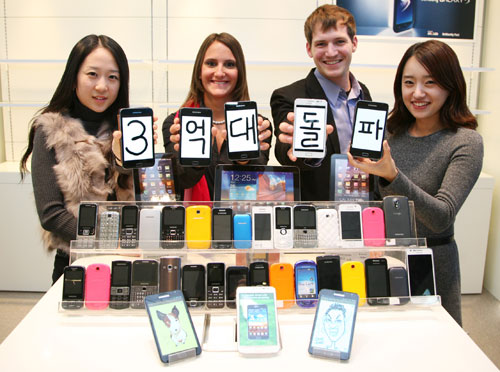
Samsung has announced sales of three hundred million cell phones in November, a record for the South Korean conglomerate that had moved during the entire 2010 about 280 million handset units. The 300 million figure excludes December 2011 shipments, Reutersreported. Samsung Electronics began making cell phones back in 1988 and in 1996 announced total shipments of one million units. They sold a hundred millionth cell phone unit in 2005 and zoomed past the 200 million mark in 2009.
The 4G LTE market grew by 33 percent in the third quarter of 2011 and Samsung has a strong showing with the Galaxy SII device which debuted in April and sold over ten million units into the channel by the end of August 2011. Mind you, the 300 million figure includes all of the handsets Samsung shipped in 2011.
The lion’s share were dumb phones rather than smartphones, although we can’t tell for sure because Samsung stopped reporting smartphone unit sales this summer due to competition from Apple. Still, 300 million is 300 million, quite an impressive figure no matter how you look at it – that’s on average 825,000 units per day, each day of the year .
The Wave GTS8500, powered by Samsung’s own mobile operating system called Bada.
While branded phone makers such as Motorola and Sony Ericsson are buying time explaining why it’s taking them so long to deploy Android 4.0 Ice Cream Sandwich software on their newest devices in the wild, Chinese manufacturer Huawei has posted a demo build of the Ice Cream Sandwich software update for their flagship Honor smartphone. The device launches next week on the China Unicom network and is expected to hit the U.S. shortly under the name Huawei Glory and priced at $300.
The firmware update for this Gingerbread 2.3 device was posted on Huawei’s support page this morning (viaEngadget). It comes with support for simplified Chinese but it’s a beta so it’s not ready for prime time yet. Still, looks like Huawei has become the first Android vendor to release an Ice Cream Sandwich firmware update for public consumption. Power users willing to experiment can download and install the 148MB build for their Honor phone starting today.
Google on Sunday announced in a blog post YouTube for Schools, a new offering allowing the institutions access videos on YouTube EDU without having to sort through user-generated clips of puppies and kittens. The new service available at www.youtube.com/schools lets students access video content from TEX, the Smithsonian and about 600 U.S. universities, including up-and-coming YouTube partners such as Khan Academy, Steve Spangler Science and Numberphile.
We know how busy teachers are, and that searching through thousands of videos sounds like a daunting visit to the world’s largest library, so we’ve also worked with teachers to put together more than 300 playlists broken out by subject — Math, Science, Social Studies, and English Language Arts — and by grade level. Teachers can find them listed out at youtube.com/teachers. Of course, this list wouldn’t be complete without your input — teachers, what videos do you use in your classroom? Suggest your own education playlist here.
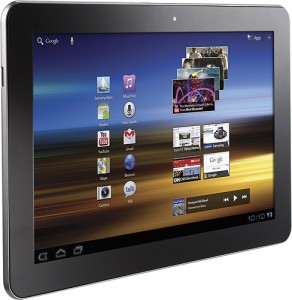
Today is a bad day for Apple’s legal sharks. First Motorola Mobility scores a ruling in Germany which has paved the way for a Europe-wide injunction on sales of Apple’s iOS devices and now High Court in Australia denies Apple’s request to appeal against an earlier decision which overturned the ban on Galaxy Tab 10.1 sales in Australia.
Put simply, the country’s highest-level legal instance has ruled that no, Samsung’s tablet does not “slavishly copy” Apple’s iPad, as the Mac maker argues in court documents. The Federal Court honored Apple’s recent request that its injunction against the Samsung tablet remain in effect until today at 4pm in order to allow Apple time to prepare an appeal. According to the Sidney Morning Herald, Tyler McGee, vice-president of telecommunications for Samsung Australia, said customers in Australia will be able to pick up the Galaxy Tab 10.1 tablet “towards the latter part of next week”. Also…
Motorola Mobility this morning scored a major win in Germany as the Mannheim Regional Court ruled against Apple in one of the patent infringement lawsuit that the maker of the Razr phone filed against the Cupertino firm in April of this year. Interestingly, Motorola’s counsel Quinn Emanuel also beat Apple’s motion for a preliminary injunction against Samsung products in the United States and is representing Motorola in another Apple lawsuit involving iCloud.
As part of the ruling, first reported by the FOSS Patents blog, Motorola won an injunction against infringing Apple products, meaning the original iPhone, iPhone 3G, iPhone 3GS, iPhone 4, the original iPad 3G and iPad 2 3G. The court decision follows a default judgment against Apple last month, scheduled to be discussed again in early February.
The ruling involves the European Patent 1010336 (B1) – the European equivalent of the U.S. Patent No. 6,359,898 – which covers a “method for performing a countdown function during a mobile-originated transfer for a packet radio system” and was declared essential to the General Packet Radio Service (GPRS) standard. This is the first “substantive ruling” as the injunction is “preliminarily enforceable” against Ireland-based Apple Sales International in exchange for a bond unless Apple wins a stay, FOSS Patents explains. How can Apple fight back?
Google chairman Eric Schmidt, one of the highlights at an Internet freedom conference in the Dutch city of The Hague in the Netherlands, took swipe at Carrier IQ, likening the mobile analytics software to a keylogger:
It’s a key-logger, and it actually does keep your keystrokes, and we certainly don’t work with them and we certainly don’t support it.
Schmidt said the openness of the Android platform sometimes results with unwanted software wreaking havoc on the users’ handsets:
Android is an open platform, so it’s possible for people to build software that’s actually not very good for you, and this appears to be one.
Carrier IQ, a mobile analytics service, has turned into quite a controversy after security researcher Trevor Eckhart discovered that carrier Sprint worked with phone vendors to install the app secretly on cell phones. Its sole purpose is to gather data on the phone use, keeping track of everything you do on the handset – including keystrokes – without your consent. It’s the mobile industry’s worst kept secret, but the media outrage prompted many phone vendors and carriers to distance themselves from Carrier IQ. Expand Expanding Close
Square Enix’s Mini Ninjas, a popular 2009 action-adventure game, is coming to the Chrome Web Store, the publisher announced yesterday. It will be the first game to utilize the Native Client SDK beta that Google released at Google I/O in May of this year as an open-source technology for running native compiled code in the browser. Chief executive officer of Square Enix Holdings, Yoichi Wada, says Native Client “enables the same consumer experience in the browser as in a native application”.
The game will require Chrome 17 Beta which will be available in the coming weeks (support for native code execution first appeared in Chrome 14). Mini Ninjas will be entering an open beta in December. The blurb promises console-quality gaming in the browser and invites fans of Mini Ninjas to “chart the journey of Hiro, the world’s smallest hero on his biggest quest, as he embarks on an epic quest to restore harmony to a world on the brink of chaos”. Square Enix promised more Chrome games utilizing native code execution “within the next year”.
SpaceTime Studios, the brains behind the popular MMO Pocket Legends, will be also taking advantage of Native Chrome Client to bring its MMO series to Chrome, allowing for cross-platform compatibility with their PC, Android and iOS releases.
Following an extensive period of beta testing and refining, a promising new Google product is ready for prime time. Today, the search Goliath took the wraps off of a brand new social publishing platform that used to be known under the ‘Propeller’ code-name. Our sister publication 9to5Mac is one of the publishers Google cherry-picked to be launch content partner for the service.
It debuts under the ‘Currents’ moniker and is available to end users via dedicated mobile apps for Android devices and Apple’s iPhone and iPad. As for publishers, they can package their content in a web app to be presented on tablets and smartphones with a little bit of HTML5 magic.
Google Currents is a new application for Android devices, iPads and iPhones that lets you explore online magazines and other content with the swipe of a finger. It brings together this content in a beautiful and simple way so you can easily navigate between words, pictures and video on your smartphone or tablet.
As last we heard back in September, the Currents back-end accessed through a web browser lets publishers upload and format their content, provide meta data, monitor reading stats, inject AdSense ad units, collect user info via email, monitor usage stats through Google Analytics and more.
Layout options include multiple formats to target various tablet and handsets, including iPhone and iPad, while navigation choices support individual articles, table of contents and browsing custom-made sections that curate multiple articles. Images, video and other rich media types are also at publishers’ disposal.
In addition to end-user enhancements, Google promised participating publishers that they will soon receive a “Best Practice for Updating a Live Edition” guide to help mitigate any possible teething problems. Google is planning a host of additional capabilities post-launch, such as the ability to sell individual articles to readers for a small fee, using Google Checkout.
There’s no doubt that Currents is aspiring to build on the success of popular social reading apps such as Flipboard, which recently launched on the iPhone following the July 2010 release on the iPad.
Google today rolled out a new opt-in setting on Google+ allowing you to give the company’s facial recognition software residing in the cloud an explicit permission to match your photos against the images other people upload to their profile. If it detects a match, Google+ will automatically put your name tag next to your face on their photo. All they have to do is accept or reject a face tag.
They call it Find My Face, Google explains:
By turning on Find My Face, Google+ can prompt people you know to tag your face when it appears in photos. Of course, you have control over which tags you accept or reject, and you can turn this feature on or off in Google+ settings.
A similar feature exists on Facebook and Google+ has had facial recognition and tagging for photos from the onset. However, Facebook has no opt-in setting. Their feature is on auto-pilot (users do get to review their face tags on other folks’ photos) and on Google+ you could previously tag yourself in your own photos, but it wouldn’t put the name behind a familiar face.
Google is building a new data center (red icon) in the Tseung Kwan O Industrial Estate in Kowloon, next to a golf course.
Google is building a new data center in Hong Kong worth $300 million to better handle search traffic in the region and help mitigate its clash with mainland China. According to a statement on the official micro-site dedicated to Google’s server strides, they are “building this data center to make sure that our users in Hong Kong and across Asia have the fastest and most reliable access possible to all of Google’s services, so they can do just that.”
The facility will be located in the Tseung Kwan O Industrial Estate in Kowloon, where the company bought 2.7 hectares of land in September 2011. Google plans to start bringing the new data center online by early 2013 and has confirmed it will employ 25 full-time Googlers. A number of part and full-time contractors will be involved with the site as well, such as computer technicians, electrical and mechanical engineers and catering and security staff.
It became clear last year that Google would be needing a new data center as they began redirecting users visiting Google.cn to Google.com.hk, where they offer uncensored search in simplified Chinese. “Due to the increased load on our Hong Kong servers and the complicated nature of these changes, users may see some slowdown in service or find some products temporarily inaccessible as we switch everything over”, Google warned in a blog post back in 2010. Expand Expanding Close
Samsung two months ago moved to ban iPhone 4S sales in France and Italy as there is no end in sight to its ongoing legal dispute with Apple. Today, however, the South Korean consumer electronics maker has suffered a setback as the Tribunal de Grande Instance de Paris (the first-instance court for all French patent lawsuits) has denied Samsung’s request for a preliminary injunction against the iPhone 4S, which sold four million units during launch weekend.
The development has been tweeted by French newspaper Le Figaro reporter Benjamin Ferran. The ruling also says Samsung must reimburse Apple’s legal fees of about 100,000 euros. A court in Milan is scheduled to hold a second hearing on December 16 concerning Samsung’s efforts to impose a sales ban on iPhone 4S in Italy.
If the Italian bid also fails, the time may come for both Apple and Samsung to realize that you can’t win a marathon with a sprint. The problem with those “sprints” — in terms of requests for preliminary injunctions that courts can grant after a fast-track proceeding — is that when they fail, they do nothing to enhance credibility of the respective plaintiff.
The news follows last week’s ruling by a U.S. judge who rejected Apple’s request to banish Samsung smartphones and tablets from the United States.
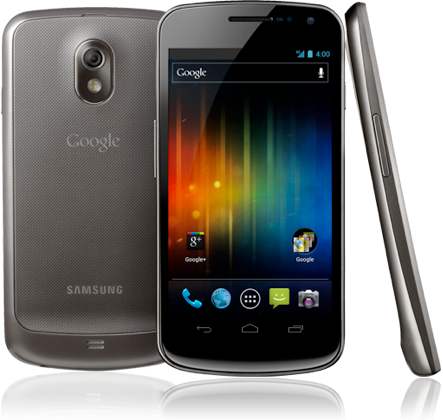
You would have though Google and Verizon Wireless would know better than fight over the former’s mobile payment service dubbed Wallet. A partnership the two companies had signed earlier this year was forged to enable open application development on open airwaves and yet Verizon decided to block Wallet on Galaxy Nexus as the service clashes with the ISIS project, a mobile payment partnership featuring Verizon, AT&T and T-Mobile USA.
While the carrier continues a cat-and-mouse game with Google and delays the planned December 9 Galaxy Nexus launch in the United States (apparently over ongoing 4G LTE issues), the Galaxy Nexus just launched in Canada through Bell and Virgin Mobile, reportsPhandroid. It’s priced at $159 after a 36-month contract or $649.99 for the SIM-free version.
Verizon isn’t doing itself any favor blocking Wallet, fighting Google publicly and jeopardizing their open airwaves initiative. As noted by Dan Frommer, “Verizon is not allowed to block applications on the airwaves that its 4G LTE network uses, per special open access rules set by the FCC (which Google, of all companies, had aggressively lobbied for”. Eventually Verizon will want to land the Galaxy Nexus on their network, with or without Google’s wallet service. And what can they do about Wallet, anyway? Android is an open platform and folks can always sideload the Wallet app themselves.
UPDATE: Sony Ericsson also ran a post today explaining how they’re handling Ice Cream Sandwich and Android software updates.
Motorola today on its blog cast more light on the intricacies of engineering Ice Cream Sandwich devices. While much of the post kinda states the obvious, it did imply is that we won’t be seeing Ice Cream Sandwich smartphones from Motorola for some time (disregarding the Droid Razr which we know will be upgradeable to Google’s latest software some time in the first quarter of 2012).
The company explains why the November 14 release of Android Ice Cream Sandwich source code won’t automatically update your device:
Each new version of Android launches with one device partner, in what is called the “Google Experience Device” or GED, the showcase device for a new Android release. The GED partner for each launch works with Google during the development of the OS so that the device and new Android version are ready for a coordinated simultaneous launch.
That much we’ve known. This bit is important (emphasis ours):
We are currently assessing this source code, and over the next month we will be determining which devices will get the upgrade and when — and we will communicate this as information becomes available.
On top of that, there may be a two-month preparation cycle to enter a carrier verification phase of one to three months. Color me skeptic, but all this points to a first quarter release of flagship Motorola phones running ICS out of the box. Our two cents: Motorola will make a splash with new ICS hardware at the Mobile World Congress which runs February 27 – March 1 in Spain, Barcelona.
Regarding upgrade path for existing devices, an ICS firmware update will arrive at some point for the Droid Razr and Bionic smartphones and the Xoom and Xoom Family tablets. As for the other handsets they make: Expand Expanding Close
Logitech just announced in a blog post that they will be pushing a firmware update to their beleaguered Revue set-top box running Google’s Google TV software. “We are pleased to announce that we will begin delivering a free software update of the Android 3.1 platform to Logitech Revue with Google TV this week”, the post says.
Power users were able to install Android 3.1 beta on their Revue box since August, but this is the official update. New customers should receive this firmware update automatically upon activation, the company notes. Logitech recently saidthey will be letting their supply of Revues run out this quarter and won’t develop any more or be manufacturing a follow-up device either.
The Revue update brings access to Android Market, faster and more comprehensive search and browse capabilities in the Chrome browser and system-wide, a simplified user interface, improvements to the Logitech Media Player, full keyboard navigation and support for Adobe Flash player version 10.2. More information from Logitech after the break.
Taiwanese handset maker HTC, the fourth largest smartphone maker in the world, has found itself on the receiving end of a legal battle with German patent firm IPCom, which won an injunction against HTC almost three years ago. HTC at first appealed the 2009 ruling and then withdrew the appeal last month, making the original decision enforceable.
IPCom is now asking the Mannheim court in Germany to fine the handset maker for not complying with the 2009 sales injunction involving HTC phones using UMTS technology (meaning every handset they make). They asked HTC to stop sales a week ago and took them to court yesterday because the phone maker failed to comply.
According toReuters, “HTC says the injunction covers only one HTC handset which is no longer sold in Germany”. The fines could be measured in millions of euros as HTC sells an IDC-estimated two million smartphones per year in Germany, or one in twenty handsets they ship globally. Additionally, IPCom is also threatening to sue retailers that continue selling HTC phones. The patent firm has licensed its intellectual property to several phone makers and is also fighting Nokia over the patents IPCom acquired from Bosch.
HTC has certainly seen better days. Their newest legal woes with IPCom arrived just as the United States International Trade Commission postponed the hearing in the Apple vs. HTC case until December 14, indicating the body is close to a decision on a possible import ban of HTC phones in the United States. Earlier today, HTC announced the unaudited consolidated revenues for November 2011 that showed a 30 percent growth decline amid the iPhone 4S launch. HTC management blamed the worrying sales decline on global macroeconomic downturn and strong competition in the marketplace.
Apple’s new iPhone hit the market in the United States, the United Kingdom, Germany, France, Italy and Japan on October 14, selling four million units during the launch weekend – more than double the iPhone 4 launch. It should be noted that the iPhone 4S is the first iPhone to launch simultaneously on three carriers in the United States. The iPhone is available for the first time on the Sprint network, which together with Verizon certainly helped boost sales numbers stemming from an expanded distribution footprint.