Author

Avatar for 9to5 Staff

9to5 Staff

Samsung closing 20M units gap between Nokia to become #1 phone maker in H2 as Android reaches 50+ percent penetration

Site default logo image

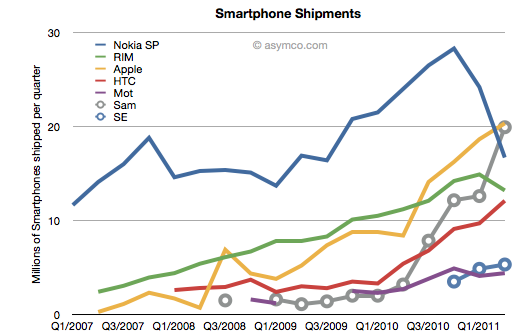
If you deemed the nearly 20 million smartphones Samsung shipped in the June quarter an impressive figure, brace yourself for even more extraordinary achievement in the second half of 2011 as DigiTimes reports that Samsung “has placed orders for 30 million touch sensors used to make four-inch AMOLED screens”. Suppliers Chunghwa Picture Tubes and others are said to be the prime beneficiaries of Samsung’s booming smartphone business. Of course, Samsung sources touch sensors from other suppliers so their final order may well exceed the quoted figure. As evident in the below chart from Asymco’s Horace Dediu, the Korean company’s been growing at an exponential rate, eclipsing Apple’s 142 percent annual growth in iPhone shipments.

The company, however, all but displaced Apple, which just toppled Nokia to become the world’s leading smartphone vendor. Being the leading Android backer, Samsung’s success has helped the Google operating system reach more than 50 percent platform share of all smartphones, more than double the iOS share of 19 percent, per latest Canalys survey. That said, it’s entirely plausible that this year Samsung could overtake Apple and become both the world’s leading smartphone vendor, while Apple remains the industry’s leading player in terms of revenues and profit. Also notable, a  gap between Samsung and market leader Nokia is narrowing fast…

Expand
Expanding
Close

Samsung agrees not to sell Galaxy Tab 10.1 in Australia until Apple lawsuit is resolved

Site default logo image

Update: Samsung issued a statement and a “workaround”

In a surprising turn of events to anyone following the ongoing Apple vs. Samsung spat, Bloomberg reported this morning that Samsung has agreed to temporarily cease sales of the Galaxy Tab 10.1 tablet until their legal dispute with Apple is settled or they win court approval:

Apple Inc. escalated a patent dispute against Samsung Electronics Co. and won an agreement that the South Korean company won’t sell the newest version of its tablet computer in Australia until a lawsuit is resolved. Samsung, based in Suwon, South Korea, agreed to stop advertising the Galaxy Tab 10.1 in Australia and not to sell the device until it wins court approval or the lawsuit is resolved.

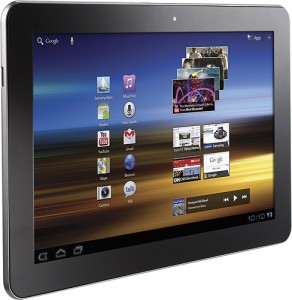
It’s interesting because Samsung was advertising the Galaxy Tab 10.1 launch in the country since July 20. Still, carriers Vodafone and Optus both hinted at plans to offer the device to their Australian customers “soon”. Samsung’s decision came as a lawyer for Apple sought an injunction before Federal Court Justice Annabelle Bennett in Sydney, claiming Samsung’s tablet infringes ten Apple patents. With that in mind, Samsung’s clearly on the defensive here. Apple also wants wants to “stop Samsung from selling the tablet in other countries” and Samsung’s conceding to Apple may have set an important precedence for other countries. Of course…


Expand
Expanding
Close

Whoa, HTC ships 12.1 million phones, doubles profits in the second quarter

Site default logo image

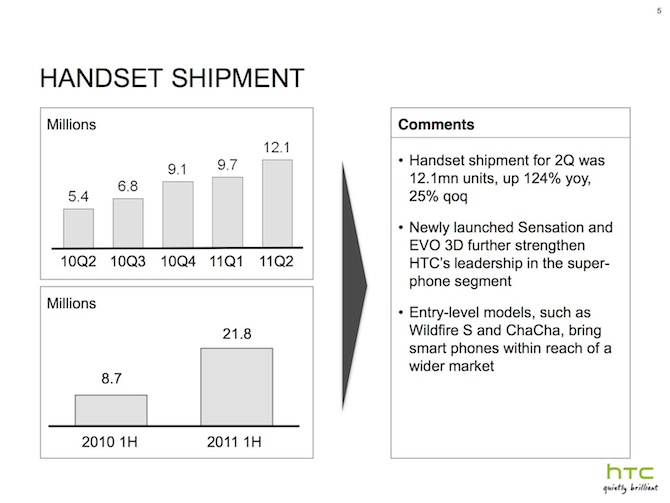
HTC reported second-quarter earnings today and just briefly glancing at numbers was enough to realize why they’re the #2 smartphone vendor in the US. Per their statement, HTC grew its revenues by 104 percent from the year-ago quarter and shipped 12.1 million phones during the June quarter. The company reported revenues of  NT$12.4 billion, or approximately $4.3 billion, a 19 percent sequential increase. Net income for the quarter topped NT$17.52, more than double from NT$60.96 billion in the year-ago quarter (and an 18 percent sequential jump).

The 12.1 million phones shipped include devices powered by Microsoft’s and Google’s software and amount to a 25 percent and 24 percent sequential and annual jump in terms of units, respectively. Looking at the third quarter, HTC is modeling for a 10 percent quarterly increase and a 90 percent annual jump based on shipments of an estimated 13.5 million phones.

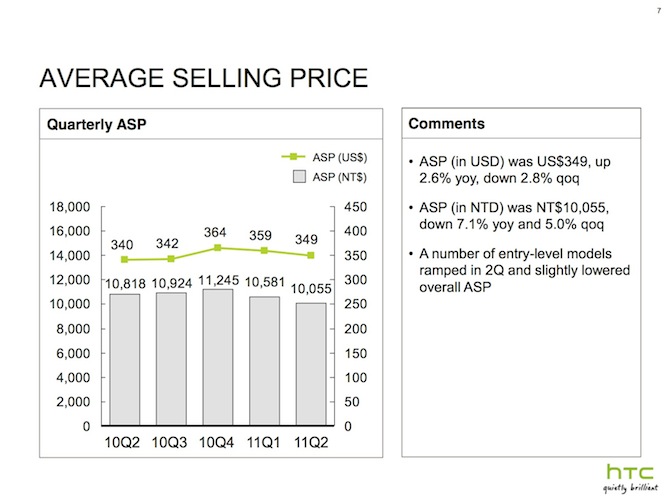
New phone shipped in the quarter include the HTC Sensation, EVO 3D, Wildfire S, ChaCha, Salsa and Flyer. The average selling price dropped from $359 in the previous quarter down to $349 because they brought new inexpensive handsets to the market. Much of HTC’s growth came from Europe, Asia and the United States, where Nielsen ranks them as the second-largest smartphone maker. The achievement is even more impressive taking into account that Apple is now the world’s leading smartphone maker and controls two-thirds of total operating profits in the handset business.


Expand
Expanding
Close

Google unveils new search UI on tablets: Bigger buttons, continuous scrolling of image results

Site default logo image


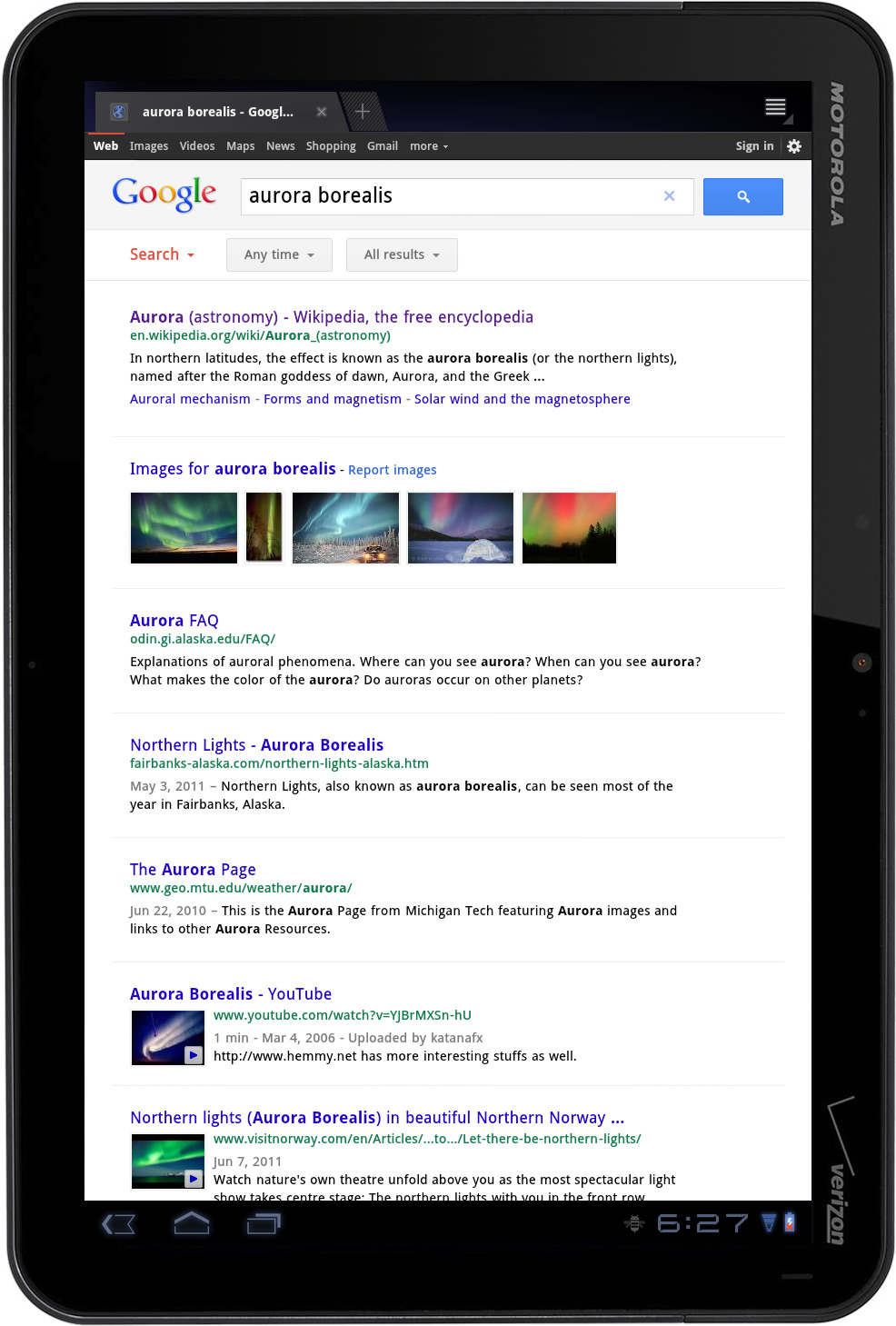
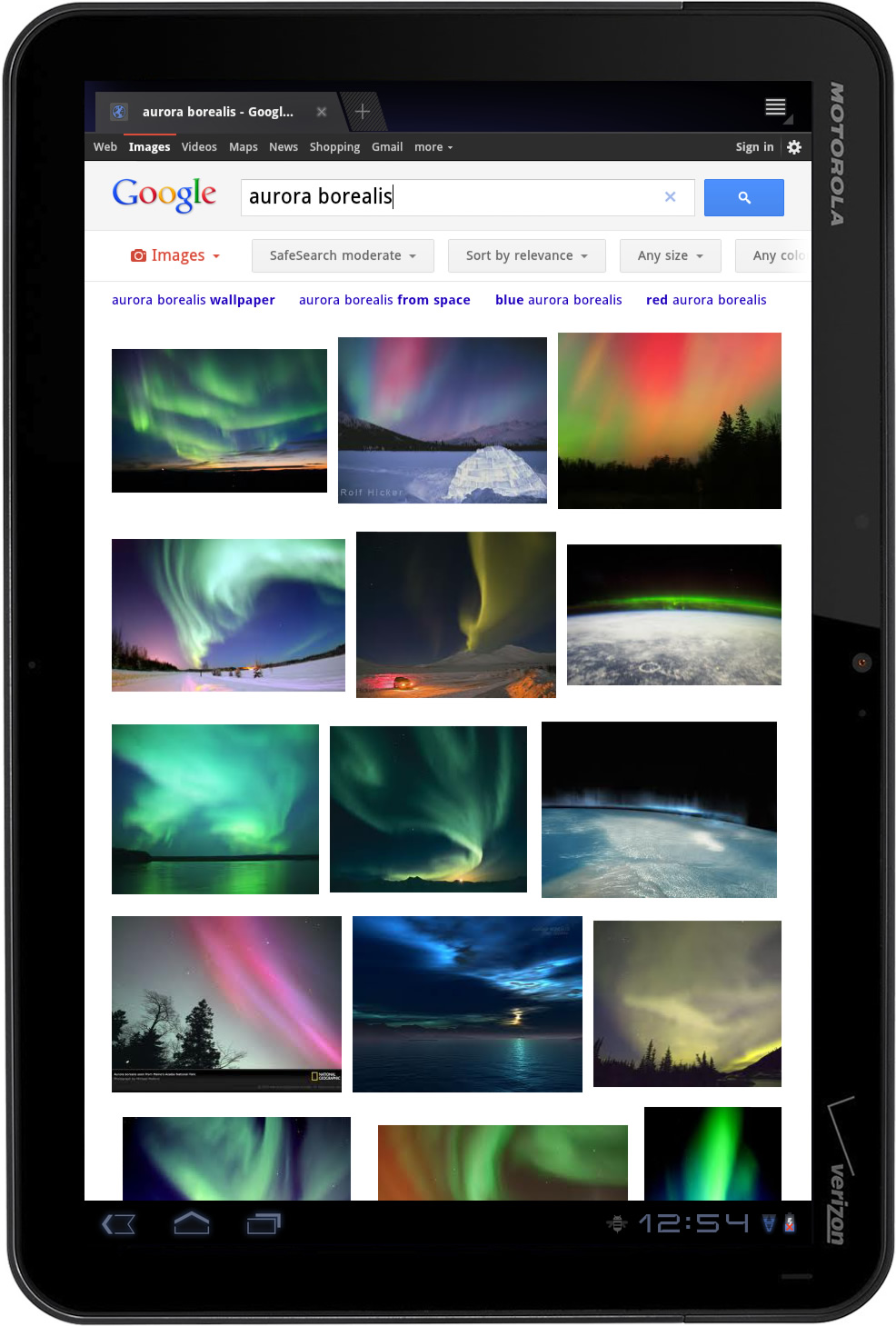
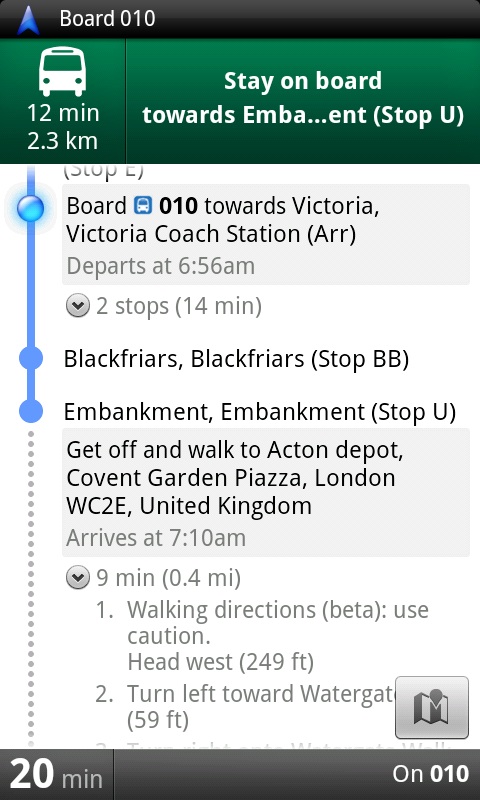
The new search layout on the Motorola Xoom. Web (left) and image (right) results. Click for larger.

Google last month announced a bunch of enhancements to its search engine and today the company confirmed via a blog post an overhauled layout on tablets, which the blog Digital Inspirations leaked two days ago. From now, searching on your tablet by visiting the main Google search takes you to an overhauled search results page. It’s surprising it took Google so much time to optimize the search experience on slates, really. You can tell the new layout is easier on the eyes and we are love in love with the bigger buttons. Now you can finally hit the controls on smaller tablets without having to sand down your finger first.

Our favorite: The big, unobtrusive buttons right below the search box for quick access to specific search silos, such as web, images, news and so forth. Also noteworthy, the image search results page now appears way more attractive due to larger previews and continuous scroll – just go to the bottom and a new batch of images loads automatically. The new layout will be available on iPad and Android Honeycomb 3.1 tablets and in 36 languages “in the coming days”, everyone’s favorite search monster noted.


Expand
Expanding
Close

Google buys a thousand IBM patents

Site default logo image

Anticipating Android backers will face legal hurdles as Apple now has the upper hand in its case against HTC (here and here), Google has stepped up and bought more than a thousand IBM patents for an undisclosed sum. The news was first reported by the blog SEO by the Sea and picked up by The Wall Street Journal. The search company might use IBM inventions as a leverage against pending lawsuits that indirectly involve its Android software.

Google failed to outbid the Apple-led consortium which paid $4.5 billion for Nortel’s treasure chest of more than 6,000 patents covering wireless technologies, among them crucial inventions related to fourth-generation cellular networks. The new patent deal is in line with Google’s focus on snapping up patent portfolios left and right in creating a “disincentive for others to sue Google”as noted on their official blog back in April. The 1,030 granted patents Google bought from IBM cover varied technologies, including…


Expand
Expanding
Close

Samsung stops disclosing phone and tablet sales for competitive reasons

Site default logo image

Samsung, which reported earnings today, also said it would stop reporting sales data and forecasts for its mobile phones and tablets, “probably due to its continuing legal battle with Apple”, analysts tell The Wall Street Journal. The company did not provide phone or tablet sales data in today’s earnings report, the decision Robert Yi, Samsung’s chief of investor relations, said in a conference call with analysts was due to competitive reasons:

As competition intensifies, there are increased risks that the information we provide may adversely affect our own businesses.

And in the earnings release Samsung only wrote that “shipments of mobile handsets increased in the high-single-digit range quarter-on-quarter”. Per latest IDC and ABI Research second-quarter cell phone survey, Samsung shipped…


Expand
Expanding
Close

Public transport directions for the London Underground now live in Google Maps

Site default logo image


Photo credit: Lasse Engelbracht on Flickr

Google’s been steadily improving its mapping application for Android and the web. Over the past 30 days, Google updated Maps with ‘My Places’ tab and added offline maps and stop-by-stop public transit navigation to Google Maps for Android. Starting today, the search giant wrote in a blog post, public transport directions are available for the London Underground in both web and Android apps, including all Underground, bus, tram and Docklands Light Railway (DLR) lines:

Let’s say you’re at Trafalgar Square, and you want to visit Madame Tussauds. With a simple directions search, you’ll see all the possible public transport connections. In Maps, click “Get directions” in the left-hand panel, and then the train icon to see public transport directions. Enter your departure location next to A, and your destination next to B. These can be either street addresses or names of popular places, businesses or restaurants. When you’re done, click the “Get directions” button and suggestions for your trip will appear below.

Mobile Maps utilize your phone’s location in order to figure out an optimal rout  to your destination, but you’ll also have be presented with multiple alternatives. On Android devices public transport directions are available with Transit Navigation (Beta) in Google Maps, meaning your phone can even alert you when it’s time to get off the tube at your destination.


Expand
Expanding
Close

Motorola ships 400,000 Xoom tablets and 4.4M Android smartphones in June quarter

Site default logo image

Motorola Mobility reported June quarter earnings today, nearly hitting Wall Street estimates with the reported GAAP net loss of $56 million, 19 cents a share. Revenues for the quarter topped $3.3 billion and non-GAAP earnings were nine cents a share. One of the noteworthy highlights includes shipments of 400,000 Xoom tablets, although the company wouldn’t divulge actual sell-through numbers. Xoom shipments amount to some 2.65% June tablet market share, per Strategy Analytics’s cumulative figures.The company also shipped eleven million mobile devices in total, including 4.4 million Android smartphones. Analyst Tomi Ahonen wrote on Twitter that Android shipments amount to an eight percent market share, making Motorola “8th biggest smartphone maker and 5th biggest Android”.

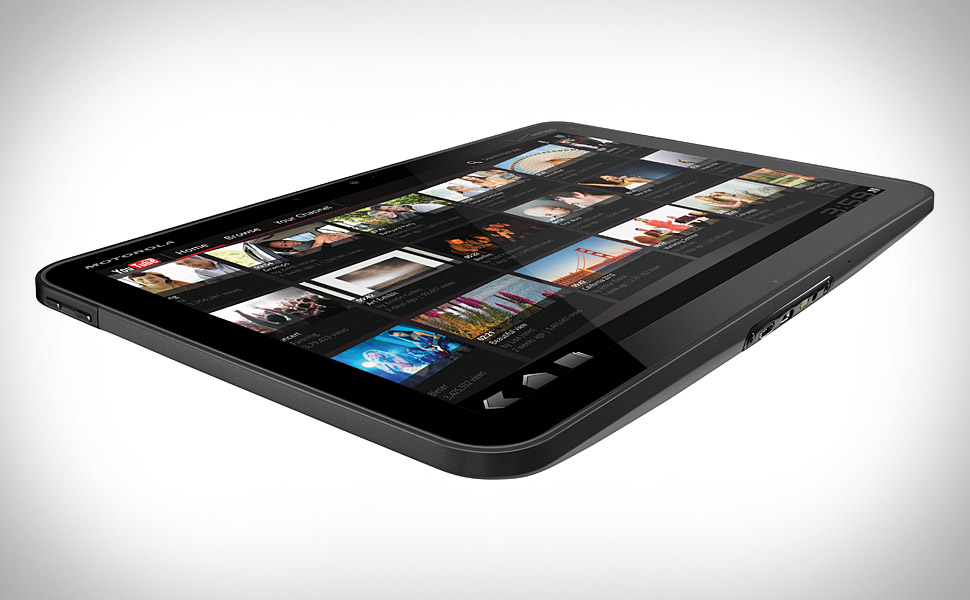
Xoom aren’t bad at all, actually a bit higher than the 300,000 units investors were expecting. Furthermore, the Xoom, Motorola’s inaugural Honeycomb tablet, arrived to market with little or no support from third-party developers plus devices from rivals ensued soon thereafter. Motorola benefited from an expanded distribution of the Atrix 4G smartphone and Motorola Xoom tablets in Latin America, China, Korea and Europe. They also rolled out four new smartphones in China. Moving forward, the company previously pledged to launch ten new devices in 2011 with Sprint, including Motorola Photon 4G which launches this weekend. Other tidbits right below…


Expand
Expanding
Close

Meet Dr. Richard Muscat, Email Intervention Specialist with Google

Site default logo image

Gmail is admittedly the world’s most popular web-based email service, but it’s still ranked third as both Microsoft Live Mail (formerly known as Hotmail) and Yahoo! Mail command larger user bases. As of November 2010, Gmail had 193.3 million monthly users, according to Wikipedia. So to help you initiate the uninitiated, Google has created a new mini-site called Email Intervention, accompanied by a nifty little video included above. A notice on the website says:

You’ve probably already improved the lives of your friends and family members by helping them switch to Gmail, but what about that one friend who still hasn’t made the switch? It’s time to take a stand and stage an intervention.

Email Intervention is basically a simple web site where you select people from your address book and have them receive a nicely formatted email message (see below) asking them to jump on the Gmail bandwagon. The message includes Google’s intervention video featuring Dr. Richarc Muscat, Intervention Specialist, but you can replace it with your own footage. Of course, only Gmail users can send glorified invitations to Gmail using the website tools. The Gmail blog is even more straightforward in attempts to convince folks to make a switch:

On the Gmail team, we affectionately refer to them as “email interventions.” We hear about them all the time: the cousin who finally switched from an embarassing address like hottie6elliot1977 to a more professional elliot.d.smith@gmail.com, a co-worker who helped his dentist switch after he heard her grumble about having to pay for IMAP access, etc.

[youtube=http://www.youtube.com/watch?v=PE1il5znICA]

Expand
Expanding
Close

Google TV stalling as Logitech Revue purchases are dwarfed by returns

Site default logo image

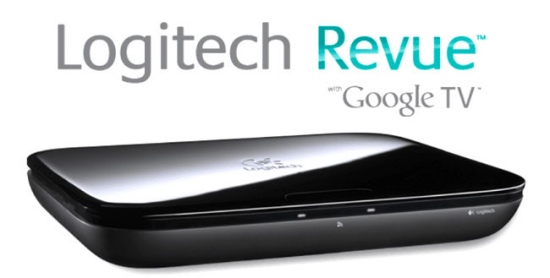
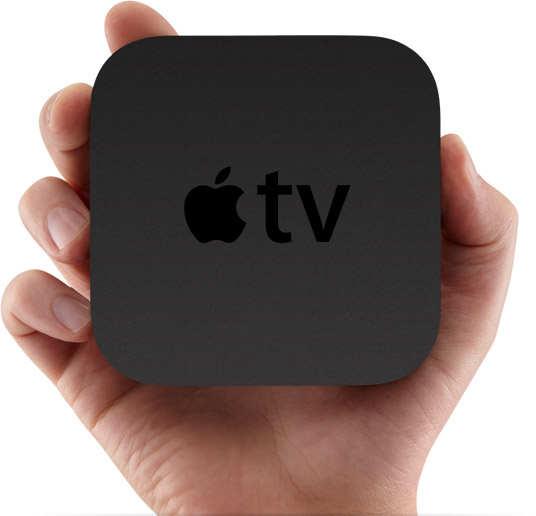
It is no secret that Google TV failed to hit the ground running as the notion of having to buy another box for their TVs fell on deaf ear with the general public. It is no surprise then to find out that Google TV boxes are not selling very well, just like the Apple TV (picture below). What we didn’t know is how bad the situation is for the search giant’s pet project. TIMN points at a prepared statement from Logitech, the maker of Google TV-powered Revue box, in which the company acknowledged “very modest sales” of the product in the June quarter:

Sales of Logitech Revue were slightly negative during the quarter, as returns of the product were higher than the very modest sales. We believe the significantly lower everyday price for Logitech Revue, reduced from $249 to $99, will generate improved sales.

Google on its part will update the Google TV project with Honeycomb code later this summer, adding the ability to download and run apps on your television. But despite the aggressive price cut which will cost Logitech $34 million in one-time charges and the fact that the Revue now price-matches the $99 Apple TV, ordinary consumers will still be avoiding set-top boxes in droves, regardless of a brand.

Apple on its part could tackle the market with a rumored full-blown television set with the Apple TV functionality built-in. Apple’s op-chief Tim Cook recently in a conference call with Wall Street analysts re-iterrated Apple’s stance that the Apple TV box remains “a hobby” for the company. The comment jibes with Steve Jobs’s argument from the Wall Street Journal’s D8 conference last year when he said set-top box makers like Apple and Google faced a go-to market problem, calling the television market “balkanized” (full quote and video below the fold).


Expand
Expanding
Close

Nielsen: Android top phone OS in the US, HTC #1 Android vendor

Site default logo image

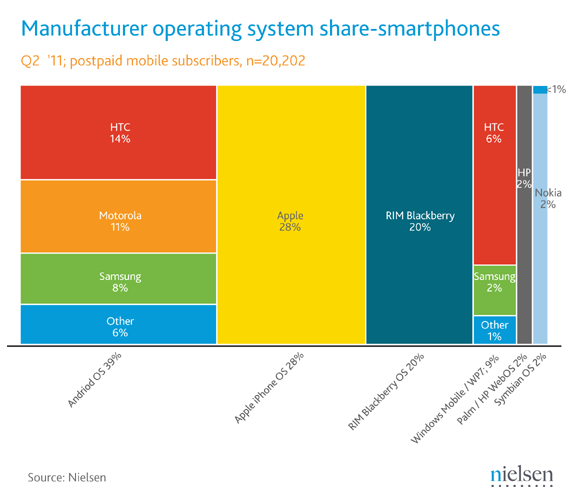
Research firm Nielsen chimed in today with a survey that puts Apple as the leading handset maker in the United States whilst Android is portrayed as the top mobile operating system in the country. Those findings follow a recent analysis which had Apple overtaking Nokia to become the world’s leading smartphone vendor in July, also corroborated  by IDC figures. According to Nielsen’s June data, Google’s Android remains the nation’s top phone platform with a 39 percent of the country’s consumer smartphone market. Apple’s iOS follows with 28 percent and BlackBerry maker Research In Motion continues to bleed share, down to 20 percent in the second quarter of 2011. Windows Mobile and Windows Phone combined grabbed nine percent, webOS and Palm OS were barely a blip with two percent, as was Nokia’s dying Symbian OS.

Apple on the other hand is the top smartphone maker in the United States that controls 28 percent of the market (excluding iPods and iPads). That’s partly “because Apple is the only company manufacturing smartphones with the iOS operating system”, Nielsen argues. HTC shares second spot with Research In Motion with a fourteen percent share of Android devices and six percent of Windows Phones for a total of 20 percent share of the whole market, same as the BlackBerry maker. HTC is also the nation’s leading Android and Windows Phone vendor with 14 percent and six percent share, respectively. No wonder Apple is suing HTC and seeking to ban import of their phones into the US…


Expand
Expanding
Close

Sprint in a 4G LTE deal with LightSquared

Site default logo image

Carrier Sprint today announced a fifteen-year deal with LightSquared enabling them to offer 4G LTE services on their network. As you know, Sprint currently offers wireless broadband marketed as 4G through its majority stake in Clearwire, utilizing their WiMax technology. Sprint couldn’t have signed a better deal to joing the 4G LTE craze. LightSquared will actually pay the carrier $9 billion in cash over the course of eleven years to deploy an LTE network, spending itself $13 billion over the next eight years on boosting their network capacity. In return, the company will be allowed to sell their 4G service to Sprint customers. Sprint can tap up to 50 percent of LightSquared’s 4G capacity and a roaming agreement will be in place by 2012.

On the downside, LightSquared plans on launching its first 4G market in 2012 and finish commercial deployment by 2015. Compared this to AT&T and Verizon Wireless which already operate 4G LTE service in select markets and plan to commercially deploy their networks by the end of next year. However, Sprint is the nation’s third-largest carrier with 51 million customers as of June so the ability to host on their network an increasing number of 4G LTE smartphones will positively impact their bottom line and competitiveness. Plus. Sprint is rumored to have been testing a Sprint iPhone for some time, with Apple seeking a carrier engineer in the Kansas City area, where Sprint is headquartered.


Expand
Expanding
Close

New Chrome experiment: Embed your message in a music video and have the band dance it out

Site default logo image

We here at 9to5Google love Chrome Experiments, nifty little web apps that showcase what can be achieved with HTML5 and the Chrome browser. Be it a simple project like the Google I/O countdown timer or mind-boggling stuff such as this interactive music video, Google Experiments is a go-to place for a glimpse of where web technologies are headed. All Is Not Lost, the latest Chrome experiment and an HTML5 music collaboration between the band OK Go, the dance troupe and choreographers Pilobolus and Google, is one such example.

It lets you embed your message in a music video and have the band dance it out, Keiko Hirayama, senior marketing manager with the Google Tokyo team explains in a post over at the Chrome blog. Upon visiting the experiment’s landing page, you’re only required to type in your message. The web app will then load the video and make the band dance it out with a little bit of HTML5’s canvas magic…


Expand
Expanding
Close

New Chrome developer build issued, respects Mac OS X Lion’s multitouch philosophy

Site default logo image

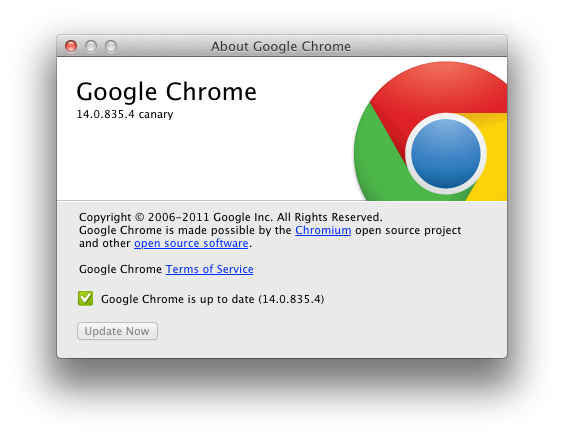
Now that Apple let Lion out of the cage, Google is developing a Chrome browser version to take advantage of the operating system’s gestures support. The search company announced on the Google Chrome Releases blog a new developer build (version 14.0.835.0) that re-enables a two-finger gesture “which respects the system preference”. A three-finger swipe that would previously move you backward and forward in browsing history now respects system-wide preference in Lion that flips between full-screen apps. Chrome still lets you go forward and backward in browsing history by invoking a two-finger swipe left or right.

The release also comes with a multi-profile user interface improvements and support for a new communication protocol for Web Sockets. The former lets one browse the web using multiple online identities and switch them easily. Windows and Linux builds added platform-specific tweaks and changes as well. It’ll be some time before Chrome 14 makes it down to the stable channel, but if you wish to try out experimental new features without messing with your existing Chrome installation and user profile, we recommend installing the Canary build of the browser.

Cross-posted on 9to5Mc.com


Expand
Expanding
Close

Samsung issues invites to the “major” Galaxy Tab 10.1 software update unveiling on August 3

Site default logo image

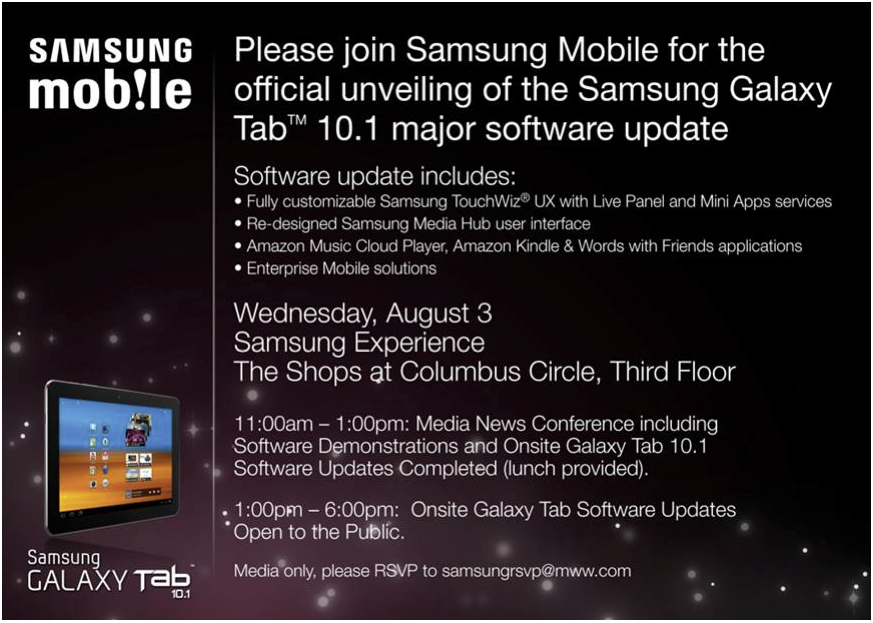
Samsung Mobile has issued invitations to select members of the press regarding a media event this time next week, when the company is due to unveil a “major software update” to its 10.1-inch Galaxy Tab tablet. The press-only event is scheduled for Wednesday, August 3, at the Samsung Experience store at the third floor of Columbus Circle in New York. Users will be able to either wait for this update to come over the air or sideload it, which will remove all the data on the device.

Samsung has been building anticipation regarding this firmware update, selectively leaking tidbits we documented here and accompanied by a company-made video walkthrough that shows off some of the exciting new capabilities. First up, you’ll get the fully customizable Samsung TouchWiz overlay that will let you use Live Panel and Mini Apps services. Next, the software will feature a strong showing of Amazon apps, including Music Cloud Player, Kindle and Words with Friends. Finally, a re-designed Samsung Media Hub user interface and new enterprise-grade features are also in the cards, the invite reads.
[youtube=http://www.youtube.com/watch?v=hlLP3RXkmUQ]

Expand
Expanding
Close

Galaxy S II sales accelerating as Samsung ships five million units in 85 days

Site default logo image

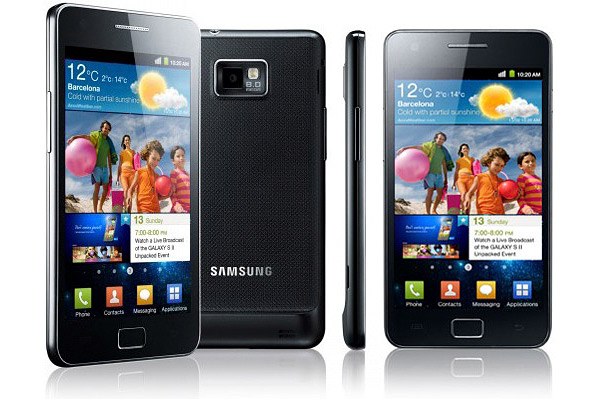
Korean news agency, Yonhap News, reported on Wednesday (via Boy Genius Report) that Samsung shipped five million units of its top-of-the-line Galaxy S II smartphone, a successor to the wildly successful Galaxy S phone. Samsung achieved the milestone in 85 days, which means an average sales rate of nearly 60,000 units a day. The previous milestone had Samsung sell three million units in 55 days, amounting to some 55,000 units a day, so sales of the latest smartphone from the Galaxy S series are steadily accelerating. The device reached the milestone 40 days earlier than its predecessor, the Galaxy S, which shipped five million units in 125 days, and is the top-selling phones in ten European countries, including the UK, France, Germany, Italy and Spain.

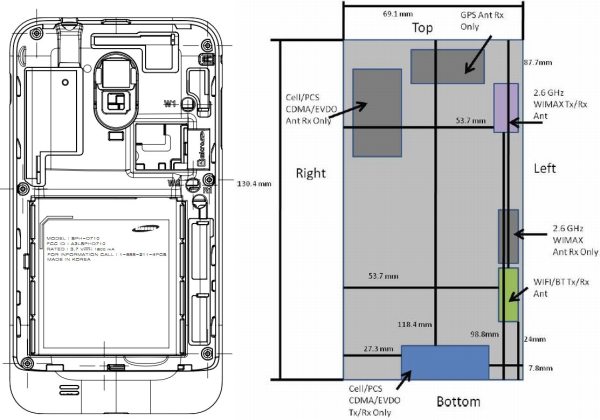
Samsung is the world’s second-largest mobile phone maker, but it could soon overtake Apple and become #1. The company launched the Galaxy S II in South Korea on April 29 and the device went on to grab a surprising 56 percent smartphone market share in the country as of last month. The handset later rolled out in Japan and some European countries and is due to hit the US shores next month. Meamwhile, Engadget uncovered an FCC filing revealing CDMA and WiMAX radios for the US version of the handset. Paired with a recent leak of AT&T’s flagship slider phone purported to be the Galaxy S II, Samsung could be looking to bring its handset to AT&T’s 3G GSM network, Verizon Wireless’s 3G CDMA network and Sprint’s WiMAX.


Expand
Expanding
Close

Gingerbread rolling out to Xperia X10, T-Mobile G2x, 4G LTE upgrade due for Xoom in September

Site default logo image

Motorola’s Xoom will get the promised 4G LTE modem upgrade in September, per corporate communication from Verizon Wireless sent to registered users, published by the Droid Life blog. The free of charge update promises a tenfold increase in network speeds, available to more than 110 million people in select markets where the carrier rolled out its 4G LTE network, with “coverage expanding every day”. The email notice reads:

Be on the lookout at the end of summer for an email with information about how to upgrade your Motorola XOOM to speeds up to 10X faster than 3G. In the meantime, learn more about what you can do to prepare for the 4G LTE upgrade to your Motorola XOOM by backing up data, encrypting, or resetting your Motorola Xoom tablet.

On a somewhat related note, T-Mobile and Sony Ericsson also began rolling out Gingerbread updates to the Xperia X10 and G2x


Expand
Expanding
Close

DigiTimes: Amazon becomes the second-largest buyer of tablet parts

Site default logo image

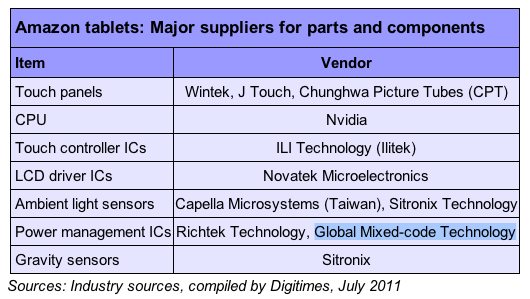
In what is another indication of a rumored Amazon tablet, Taiwanese trade publication, DigiTimes, this morning quoted sources from the supply chain who said Amazon has become the second largest buyer of tablet parts as component suppliers are lining up to provide parts for Amazon’s seven- and ten-inch slates. That’s a notable change from previous reports asserting Apple had gobbled up pretty much the entire supply of tablet parts. The Amazon devices are apparently due for a fourth quarter launch and the online retail giant is targeting to ship four million tablet PCs this year.

The publication named suppliers which include an unnamed processor from Nvidia, gravity sensors from Sitronix and touch panels from Wintek (also an Apple supplier) in addition to J Touch and Chunghwa Picture Tubes. Note that the mention of the seven-inch Amazon tablet probably means a new Kindle e-reader while the ten-incher most likely refers to a brand new Android-powered tablet said to be integrated with their cloud stores carrying mobile apps, music, movies, e-books and other digital warez. A Retrevo survey indicated that 79 percent of buyers would consider an Amazon tablet if priced less than $250. Apple is said to be considering cheaper components for next iPad amid the increasing pricing pressure in the market.


Expand
Expanding
Close

Revamped Google search layout revealed

Site default logo image

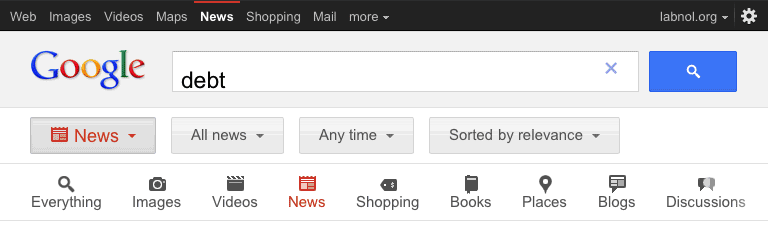
Digital Inspiration reports Google is testing out a new search page design created specifically for tablets, but likely to make its way onto desktops as well. The new tablet-optimized search home page puts forth a cleaner layout with new visual features recently applied to Gmail, Calendar and their other properties. Old graphics is gone and replaced with a Google+-like appearance, along with the black Google navigation bar at the top that recently appeared on desktop.

A brand new thing: The top row of icons for filtering down search results by type (images, news, web, etc.) has been replaced with the traditional lefthand column with search tools, still present on desktop. Does this change signal the new design for search silos across desktop and mobile? If Google’s recent focus on consistency in design is an indication, than the answer should be a resounding ‘yes’. Google has not officially rolled out the new design, but we’re expecting them to make an announcement soon. Another screenshot right below the fold.

Expand
Expanding
Close

Google’s Gundotra reflects on how “the magic of software” saved him from fatal car crash

Site default logo image

Vic Gundotra, Google’s social head and senior vice president of engineering, isn’t the one to avoid media appearances and is pretty outspoken when it comes to the Android operating system, the number of activations, the Google vs. Apple rivalry and a number of other trend-setting industry topics. He is also frank and open about his personal life, publishing pictures of his son on his public Google+ profile, for example. It was then a bit of a revelation when 9to5Google discovered Gundotra in a video by car maker Mercedes, which is part of their series about safety innovations in the S63 AMG.

“If anyone can appreciate the protective potential of the right algorithm, he can”, says a YouTube page. In the video, Gundotra reflects  on his first hand experience that almost cost him his life. “I had a pretty good 2011”, he begins, but “it might have been different if the car had acted differently that day.” He explains:

I turned just for a brief moment and because I was distracted I didn’t notice what was going on. The lane that I was travelling had come to a complete stop due to traffic. I never saw the traffic stop. I remember briefly hearing multiple beeps. I was travelling over 45 miles per hour, I grabbed the steering wheel and I saw the car in front of me as rushing toward, it was at the dead stop. It was clearly too late for me to do anything. I heard the beep-beep-beep as my Mercedes collision system automatically kicked in. And the next thing I know, my Mercedes was stopped, without hitting the car in front of me. I was just shaking, the Mercedes stopped itself. The thought of what I could have done to someone else because I momentarily wasn’t paying attention – wow, that’s scary feeling.

Notice how he is also subtly making the case for Google’s autonomous cars.

I’ve been doing software development my whole life and I have a great deal of innovation, particularly in the real of software. Watching what Mercedes has done and bringing together the sensors in the car with software that has the ability to save your life – you know, that really is the fulfillment of software, that really is the magic of software.

[youtube=http://www.youtube.com/watch?v=5XXypu3dVPM]

Expand
Expanding
Close

IMS Research: Samsung, Apple the biggest beneficiaries of the Nokia downfall

Site default logo image

IMS Research put out a study estimating that some 420 million smartphones will be sold worldwide in the 2011 calendar year, or 28 percent of all handsets sold. The survey portrays Apple as making huge gains in the space, buoyed on the sales of 18.65 million and 20.34 million iPhones in their last two quarters – enough to garner a 19 percent share of the global smartphone market. Combined with Nokia’s slumping sales, Apple emerged as the world’s leading smartphone maker.

It remains to be seen whether Samsung, which is due to report its earnings Friday, will beat Apple’s smartphone sales (some say it will). IMS noted the fact that the company grew their share of global smartphone market from three percent in the first quarter of 2010 to 13 percent in the first quarter of this year. Samsung, as you know, sells phones powered by Google’s and Microsoft’s software in addition to their own operating system for feature phones, Bada. IMS’s Analyst Josh Builta says this of LG:

LG, despite being the third largest OEM in the world, has offered a fairly limited smartphone portfolio in recent years, a factor that resulted in the company reaching less than a three percent share of the total smartphone market in 2010.

However, Nokia’s fall surprised even the most seasoned watchers and is unheard of in this industry. Nokia, the Finnish phone giant, lost 16 percentage points of its smartphone market share, going from a 40 percent share last year to 24 percent in the first quarter of 2010. They shipped 16.74 million smartphones in the June quarter – a 34 percent annual decline – versus Apple’s 20.34 million units – a 134 percent annual increase. Nokia also killed Symbian and is only shipping the well-received but short-lived MeeGo-powered N9 to select markets. Here’s how the analyst described Nokia’s problem:

Clearly one of the key dynamics of the mobile handset competitive environment in recent years has been the inability of many traditional market leaders to recognize and adjust to the growing smartphone tier. The reasons for these failures vary and include everything from poorly designed and manufactured devices, unsatisfactory user interfaces, and portfolios that don’t offer products with a differentiating feature. These lapses have created opportunities for newer entrants to the market, which they have aggressively pursued.

Research In Motion fell from 20 percent to 15 percent in the same period, mind you. IMS sees one billion smartphones by 2016 as average selling prices drop and vendors release more inexpensive handsets. Smartphones then will account for one of every two mobile handsets sold, the research firm concludes.

Cross-posted on 9to5Mac.com
Expand
Expanding
Close

Survey: Buyers want sub-$250 Amazon tablet

Site default logo image

Much has been said about a rumored Amazon tablet so far. It should be based on Android, we are told, and Asian source have chimed in with their share of leaks, the latest being that Taiwanese contract manufacturers have begun producing the gizmo, presumably for a Fall launch. But will you take the plunge? That’s what research firm Retrevo set out to figure out in a July study stemming from polling over a thousand online individuals in the US. Key takeaway: Amazon tablet must be really affordable if it’s to hit the ground running.

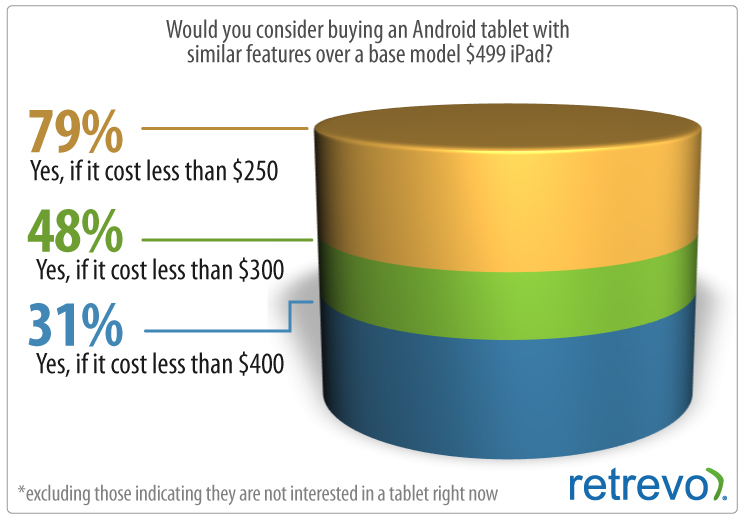
Asked whether they’d consider buying any Android tablet with similar features over a base model $499 iPad, more than three-quarter respondents, or 79 percent, said “Yes, if it cost less than $250”. Amazon is rumored to be skipping on some tablet features in order to keep production costs down, like use a less expensive touch panel which can only detect two fingers at once.

Of course, Amazon knows how to build gadgets like Kindle and make them less expensive over time. The tablet, however, they’d have to price aggressively from day one as Apple pretty much set the starting price at $499. Nearly half the respondents would choose an Android tablet over an entry-level $499 iPad if it was priced less than $300 and nearly one in three would go Android with a sub-$400 device.

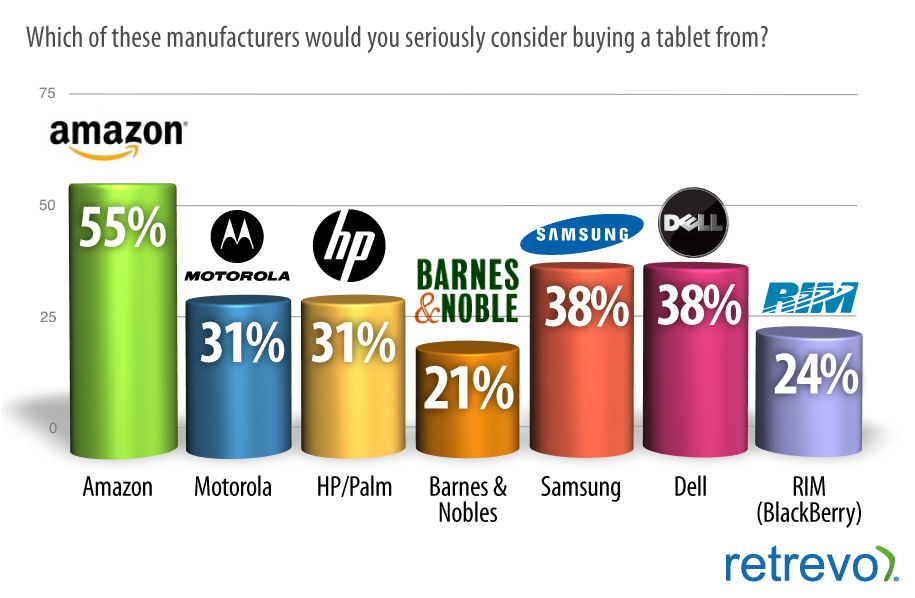
In a blow to other tablet makers, including brands such as Motorola, Samsung, Research In Motion, Hewlett-Packard and others, a whopping 55 percent would seriously consider a tablet from Amazon. This highlights the power of ecosystem which has turned Apple’s tablet into a smash hit. Amazon too has its own app store, music store, movie store and other digital stores in the cloud, bound to create a compelling user experience in the familiar environment from a trusted name in online retail. More food for thought and pretty charts right below…


Expand
Expanding
Close

HTC’s Puccini tablet with stylus leaks

Site default logo image

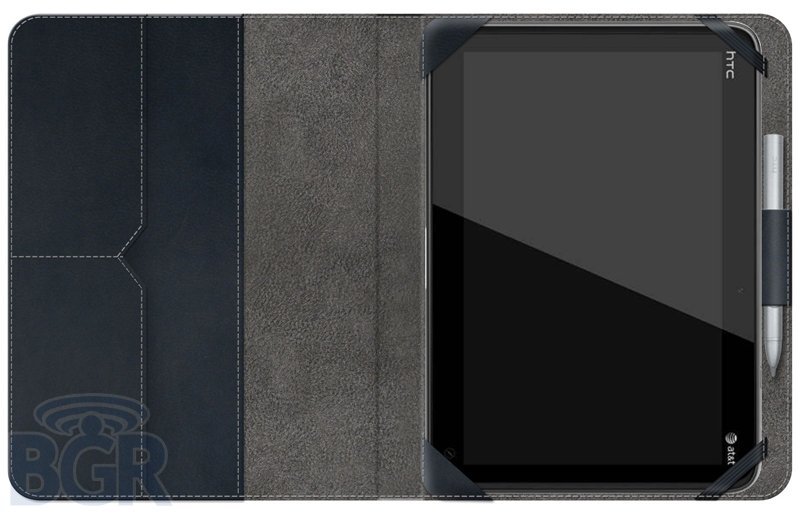
Boy Genius Report publishes a pair of crisp images of what appears to be HTC’s allegedly upcoming tablet dubbed the Puccini. It may strike you as remarkably similar to Microsoft’s Courier project, but that’s due to the case shown on the image. The Puccini rocks a single 10.1-inch display and apparently a stylus. The leaked shots include AT&T branding, just so you know where to buy this thing when it hits the market.

Not a whole lots more to conclude from the images so the publication throws in a couple goodies they heard from sources, like an eight-megapixel camera on the back with dual-LED flash plus stereo speakers and a microphone. The tablet should run a 1.5GHz processor, a 4G LTE modem and HTC’s Sense interface on top of Honeycomb software, if the sources are to be trusted.


Expand
Expanding
Close

Jaw-dropping concept: Samsung Galaxy phone with flexible AMOLED display

Site default logo image

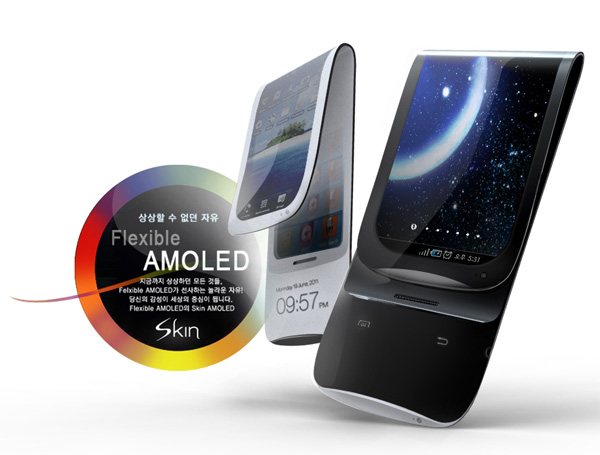
An extensive report by 9to5Mac, our parent site, explained that OLED technology isn’t ready for prime time yet in big screen TVs, making the prospect of an Apple-branded television set uncertain, to say the least. In mobile, Samsung’s improved OLED displays marketed as Super AMOLED and Super AMOLED Plus have become an important hardware hardware feature setting apart their high-end smartphones (and quite possibly coming to a next-gen Galaxy Tab). Samsung Mobile Display has taken this technology up a notch at CES 2011 where they showed off the flexible AMOLED Displays with electro activity polymer (see the below clip).

The possibilities of this technology inspired designer Heyon You to go about rendering the above concept Samsung Galaxy S phone, the Samsung Galaxy Flexi as he calls it. The designer envisiones a four-inch smartphone with a 800-by-480 pixel resolution flexible display that can fold into a watch-like device. His dream phone also sports a projector and rocks an eight-megapixel camera (why not ten or twelve megapixel?) with 720p video recording. A couple more images after the break and lots more at You’s website (via Oled-Display.net)

[youtube=http://www.youtube.com/watch?v=tZkU-GEZ72s]

Expand
Expanding
Close