Android

See All Stories

Breaking news for Android. Get the latest on apps, carriers, devices, and more!
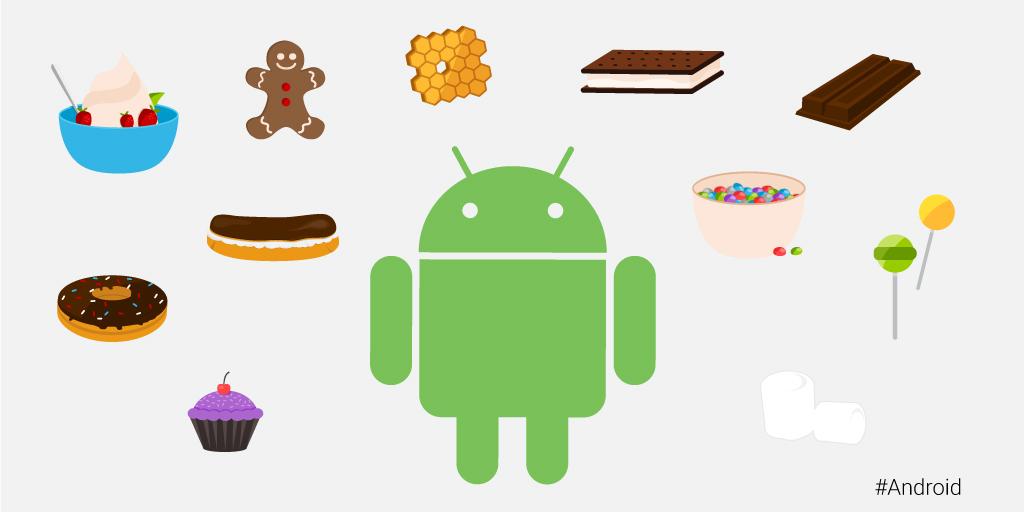
Android is Google’s mobile operating system, launched in September 2008, although its history technically began with the release of the Android alpha in November 2007. To this day, Android powers the majority of the world’s smartphones and comes in several different flavors across many phone makers.

What is Android?

Android Inc.

Android, before it was Android, was a company called Android Inc. That company was founded in Palo Alto, California, in 2003 by a crew of four: Andy Rubin, Rich Miner, Nick Sears, and Chris White. The company and its project was acquired by Google in 2005 for a sum of more than $50 million, although the exact number is unknown. The company’s founders joined Google as part of the deal.

In its infancy, Android was an operating system built not for touch screen smartphones like the iPhone, but rather BlackBerry-like devices with physical keyboards. It’s well documented that after Apple shocked the world with the iPhone, ahead of its nearest competition by at least a couple years, Google and Android Inc. had to go back to the drawing board to build something competitive.

Adoption by third-party makers

It didn’t take long after the launch of the iPhone for various manufacturers to enter the market with their alternatives — and Google’s Android immediately became the obvious platform of choice for just about everyone except Microsoft. HTC was the first manufacturer on board, and introduced the T-Mobile G1 running Android in September 2008. Soon after, HTC, Motorola, Samsung, and carriers like Sprint and T-Mobile jumped on board to form the Open Handset Alliance.

Android makers across the world

Iconic Android handsets

There have been thousands of Android phones released since Android’s inception, but some have been more important to the platform’s history than others. There was the original T-Mobile G1, as mentioned, but there was also the HTC One Google Play Edition, Moto G, Samsung Galaxy S4, and others. Some of the most iconic Android handsets include:

  • HTC G1
  • HTC Nexus One
  • Samsung Galaxy S, S2, S3, S4, and their successors
  • HTC Incredible S
  • Samsung Nexus S
  • Samsung Galaxy Nexus
  • Samsung Galaxy Note
  • Nokia 8
  • BlackBerry KeyOne
  • Google Pixel and its successors

In more modern times, there are several Android smartphones makers that popped up across various niches and in several international markets. Huawei is a dominant Android maker in China and many European markets, while Samsung is by far the most popular maker in the United States by far — effectively creating a duopoly with Apple. Today, there are dozens of major device makers contributing to the Android ecosystem.

Full list of Android OEMs

History of major Android versions

Android has seen countless software revisions over the course of its life, but in modern times the OS usually sees a major release on an annual cadence. In the earlier days, Google famously gave its major software releases dessert-themed codenames, but retired that practice in 2019 with the release of Android 10.

VersionNameReleaseDevices
2.3GingerbreadFebruary 9, 2011Nexus S
4.0Ice Cream SandwichOctober 19, 2011Galaxy Nexus
4.1Jelly BeanJuly 9, 2012Nexus 7
4.2Jelly BeanNovember 13, 2012Nexus 4, 10
4.3Jelly BeanJuly 24, 2013Nexus 7 (2013)
4.4KitKatOctober 31, 2013Nexus 5
5.0LollipopNovember 3, 2014Nexus 6, 9
5.1LollipopMarch 9, 2015Android One
6.0MarshmallowOctober 5, 2015Nexus 5X, 6P
7.0NougatAugust 22, 2016Nexus 5X, 6P
7.1NougatOctober 4, 2016Pixel, Pixel XL
8.0OreoAugust 21, 2017Pixel, Pixel XL
8.1OreoDecember 5, 2017Pixel, Pixel XL
9PieAugust 6, 2018Pixel 2, Pixel 2 XL
1010September 3, 2019Pixel 3, 3a
1111September 8, 2020Pixel 4

List of major Android OS platforms

While Android proper is certainly the most widespread of Google’s Android operating systems, the company has also launched many offshoots of the main OS over the years. There’s Android Auto, Android Wear (now Wear OS), Android TV (now rebranded to Google TV), as well as versions of Android built for tablets and Android Things (now defunct).
Some Nexus 4 orders shipping in three weeks due to ‘overwhelming demand’

Site default logo image

We just received a tip from a reader that Google is beginning to send out emails to Google Play customers who ordered its new Nexus 4 device to inform them the device is currently on backorder. As you can see in the email above, Google expects to ship the device “within three weeks,” and it will credit customers who have to wait with the shipping charges. Google cited “overwhelming demand” as the reason for the delays. We previously reported that initial supplies of the device sold out within minutes of officially going on sale in the U.S. earlier this week.

Adobe launches Photoshop Touch app for Amazon Kindle Fire devices

Site default logo image

Adobe just announced on its Photoshop blog that it is making the Photoshop Touch app available to Kindle Fire devices starting today for $9.99 in the Amazon Appstore. Adobe previously had version of the app available for other Android devices on Google Play, as well as an iOS version of the scaled down Photoshop app for Apple’s devices. The new app for Kindle Fire will be available on the 8.9-inch Kindle Fire HD, and the 7-inch Kindle Fire, and Kindle Fire HD models. The app is only compatible with devices running Android 4.0 and up, so it’s not available to first-gen Kindle Fire users.

We have worked closely with Amazon to enable Adobe Photoshop Touch on this device, and are proud to announce that it is available for purchase in the Amazon Appstore immediately for US$9.99… In addition, we are announcing support for the updated 7-inch Kindle Fire and Kindle Fire HD devices. This means that Photoshop Touch is optimized for both 8.9-inch and 7-inch screens, giving users a great experience on all recent Kindle Fire devices.

Owner of CyanogenMod.com begins shutting down site after asking for $10,000, CM’s founders work to gain control [Updated]

Site default logo image

The folks who run CyanogenMod, the website that hosts open source software for a slew of Android devices, announced that the CyanogenMod.com website is no longer under their control. CyanogenMod.com was a gift to the team from the original domain owner (a non-staff member); however, he took it back today after the owners of CyanogenMod rejected his $10,000 offer and his shenanigans throughout the network (which included impersonating founder Steve Kondik to set up referral deals). Even with the domain loss, the community still plans to flourish under its CyanogenMod.org domain name while its dispute with ICANN is underway. We hope things are restored quickly, as CyanogenMod plays a huge role in the community.

Fast-forward 3 years, we have 3 extremely powerful build boxes donated by the community and an army of developers, contributors, and supported devices. But, a little over a week ago, things took a bad turn. The person owning the CyanogenMod.com domain was caught impersonating Steve to make referral deals with community sites. When confronted and asked to hand over control of the domain amicably, he decided he wanted 10K USD for it, which we won’t (and can’t) pay.

Update: Cyanogen has news this evening about the issues being resolved:

With that said, the ex-member in question contacted us and has agreed to hand over control of the CyanogenMod.com domain. This was done as amicably as these things can be, and CM did not pay the fee he requested.

We will still be using CyanogenMod.org as our primary domain, and the .com address will simply redirect to this new domain. Ironically enough, ‘.org’ is better than ‘.com’ as we are not a commercial entity, and is far more in line with how CyanogenMod is structured.

[CyanogenMod, XDA Developers via Droid Life]


Expand
Expanding
Close

Google TV update adds Voice Search & ‘PrimeTime’ TV & Movies app, hits LG devices this week

Site default logo image

[youtube=http://www.youtube.com/watch?feature=player_embedded&v=TNOsB8tRmWU]

Yesterday, we told you about the updated YouTube apps for Google TV and Android that bring a new synced experience, but today Google announced two other big new features for Google TV: Voice Search and PrimeTime.

On the Official Google TV blog, Google walked us through the new features that will roll out to LG devices first starting this week. The most notable new feature is the addition of voice search, allowing users to not only perform Google searches with their voice, but also open apps, press play on a YouTube video, or speak a command, such as “CNN”, to navigate directly to a channel.

Google also explained that questions, such as “how to tie a bow tie,” would bring up instructional videos on YouTube. Part of the new voice search experience is a new visual search results page:

Try “search movies with Jeff Bridges” and see results in our new, more visual search results page.

Google is also introducing a new app called “PrimeTime” in the update that is essentially a rebranding of the old TV & Movies app it added last year:
Expand
Expanding
Close

Gartner: Apple and Samsung capture almost half of smartphone market in Q3, Android passes 70 percent share

Site default logo image

Worldwide Mobile Device Sales to End Users by Operating System in 3Q12

Gartner is out with its quarterly report for worldwide mobile device sales by vendor and OS for the third quarter. While reporting an overall 3 percent decline in mobile phone sales, the smartphone category hit 169.2 million units in Q3, a 47 percent increase from the year-ago quarter. While Apple is still third to Samsung and Nokia for total mobile device sales, Samsung and Apple remain the top smartphone vendors collectively, capturing 46.5-percent of the market. Meanwhile, Nokia slipped from No. 3 smartphone vendor in Q2 to No. 7 in Q3. This made room for RIM and HTC behind Apple and Samsung in the third and fourth positions.

With sales of 23.6 million units in the third quarter for Apple (up 36.2-percent year-on-year), Gartner reported Samsung has widened its lead on Apple with almost 55 million smartphones in the quarter and strong demand for its Galaxy line. Samsung once again takes the top vendor position for smartphones with 32.5-percent of the market:

Samsung’s mobile phones sales continued to accelerate, totaling almost 98 million units in the third quarter of 2012 (see Table 1), up 18.6 percent year-on-year. Samsung saw strong demand for Galaxy smartphones across different price points, and it further widened the gap with Apple in the smartphone market, selling 55 million smartphones in the third quarter of 2012. It commanded 32.5 percent of the global smartphone market in the third quarter of 2012.

As for the race between Android and iOS, Gartner’s numbers show Android increased its marketshare nearly 20 percentage points in the quarter to 72.4-percent of the market, up from just 52.5-percent in the year-ago quarter. In comparison, Apple now accounts for 13.9-percent of the market, down from 15 percent last year, but Gartner expects that to change in Q4 thanks to the continuing iPhone 5 roll out:
Expand
Expanding
Close

Android 4.2 Jelly Bean SDK now available to developers

Site default logo image

Today, alongside the launch of Nexus 4 and Nexus 10, Google is officially making the Android 4.2 Jelly Bean SDK available to developers. Included in the release are the lock screen widgets, the Daydream interactive screensaver mode, enhanced support for external displays, and more. Developers can download the Android 4.2 platform from the Android SDK Manager. Google also has an overview of what’s new on its website and an API overview here.

The full release notes from Google (via the Android Developers Blog) are below:


Expand
Expanding
Close

LG’s Nexus 4 sells out on Google Play within minutes of launch

Site default logo image

The LG Nexus 4 just became available in the United States, but the Google Play store already sold out of the 8 GB and 16 GB models.

Check it out: 

Google made the Nexus 4 and Nexus 10 available to customers in the U.S. through Google Play at about 11:45 a.m. today. The 16 GB model was the first to sell out at around noon, while the 8 GB model ran out of stock at about 12: 10 p.m.

Like the U.S. variant, the United Kingdom’s Nexus 4 also sold out within 30 minutes of going live earlier this morning.


Expand
Expanding
Close

Site default logo image

Android 4.2 manual install now available for Galaxy Nexus and Nexus 7

Google is updating Nexus devices to Android 4.2 Jelly Bean via an over-the-air update today.

Those with the GSM version of the Galaxy Nexus, who don’t feel like waiting for a rollout, can grab the firmware manually from Google’s servers now, while the v4.2 ROM for the Nexus 7 is also available.

Galaxy Nexus owners need to download the “takju” ROM (.zip), and then install manually or use a ROM Manager. Nexus 7 owners have a similar process: download the Jelly Bean update (.zip), and then manually install or use a ROM Manager.

As SlashGear noted, ClockWorkMod’s ROM Manger in the Google Play Store is a free and easy solution. However, if the above steps confused you, just wait it out. The update will land over the next few days.

[via SlashGear]


Expand
Expanding
Close

YouTube’s Android app now steams video to Google TV from Android device

Site default logo image

A new YouTube Android app update pairs Android devices and Google TV on the same Wi-Fi network and allows folks to stream videos from their mobile devices to the television.

“Just find a video on your YouTube app for Android — like the latest video from GoPro or H+ The Digital Series — click the TV icon that appears, and the video will play instantly on your Google TV,” wrote YouTube Product Manager Timbo Drayson on the official YouTube Blog, while further explaining the new feature is an idea Google toyed with for over two years.

Android users who update their YouTube app today, as it rolls out, will now see a new button that enables them to play videos from their devices to the television with just a tap. The new feature essentially streamlines the process of pairing the YouTube app with Google TV.

As the video streams, users can control actions, such as pause, scroll, or skip, with their mobile device, as if it were a remote control, and they can even connect multiple devices to create a playlist. Moreover, since the devices are cloud-connected, as Drayson noted, they can do things like “find the next video to watch from your tablet or browse around the web on your phone, all while the video plays on TV.”


Expand
Expanding
Close

Ahead of device launch, Nexus 4 bumper appears on Google Play for $20

Site default logo image

Ahead of the Nexus 4 becoming available in the next few hours for $299, Google made a black Nexus 4 bumper available on its Google Play store this evening. Google is scant on details for the accessory, but it said it is available for $20 and allows you to “customize your Nexus 4 with a lightweight bumper case.” There is no word on when you will actually be able to purchase the bumper or when it will ship, but you can enter your email for the latest updates. Does this remind you of anything?

Additionally, the Nexus 4 and Nexus 10 went on sale for Australian customers early this evening. The Nexus 4 already sold out. [Google Play]


Expand
Expanding
Close

Amount of text messages decline in Q3, thanks to Google Voice and other Internet services

Site default logo image

According to research from Chetan Sharma Consulting, the amount of text messages sent during Q3 2012 showed the first decline ever. The fall can be attributed to Apple’s iMessages (when it is up), along with other Internet services like Facebook Messaging, Skype, AIM, Google Voice and more that use Wi-Fi. With less text messages being sent monthly, this has lead to less revenue in the text message area for carriers, however, they are still making plenty of money off data. The research released today says data makes up for 43 percent of carrier revenue generated, with Verizon and AT&T accounting for 69 percent data revenue during the quarter. Mobile data is expected to slow down after growing rapidly over the last five years, perhaps thanks to Wi-Fi.

AT&T CEO Randall Stephenson said he is losing sleep over services like iMessage cutting into revenue, while speaking earlier this year.“You lie awake at night worrying about what is that which will disrupt your business model,” Stephenson said. “Apple iMessage is a classic example. If you’re using iMessage, you’re not using one of our messaging services, right? That’s disruptive to our messaging revenue stream.”

[FierceMobile]
Expand
Expanding
Close

Google’s Nexus 4 and Nexus 10 will be available early morning tomorrow

Site default logo image

We’re sure many of you can’t sit still in your seats, waiting for the arrival of the Nexus 4 and Nexus 10. But yearn no longer, as both devices will be available early tomorrow morning, according to Google Germany employee Stefan Keuchel. He said that devices won’t be available right at midnight as some may have hoped, but “around breakfast time” in Germany. This translates to early morning hours on the West Coast.

Nonetheless, tomorrow’s the day you Android fanatics have been waiting for, so have your browsers locked on Google Play and your credit cards on deck. Both devices will ship-out within two days. [Android Central]


Expand
Expanding
Close

AT&T to offer Samsung’s Galaxy Camera for $500 starting Nov. 16

Site default logo image

AT&T just announced the Samsung Galaxy Camera would land Nov. 16 for $499.99 with or without a data plan.

The Galaxy Camera is Samsung’s first 4G-connected camera to marry point-and-shoot technology with Android 4.1 Jelly Bean software. It sports AT&T mobile internet connectivity, access to Android apps from the Google Play store, a quad-core 1.4 GHz processor, 4.8-inch HD Super Clear LCD display, 21x optical zoom lens, and a 16-megapixel backside illuminated CMOS sensor.

Samsung also noted a limited time-only sale for customers who want to purchase any Samsung Galaxy smartphone. They can now receive up to $100 off the new Samsung Galaxy Camera or any connected Samsung device. The Samsung Galaxy Camera will hit AT&T’s online store and select company-owned retail stores nationwide.

AT&T further said the camera will have access to its new cloud-storage app, AT&T Locker, and it revealed data plan options for the camera:

  • AT&T Mobile Share: $10 to share between 1 GB and 20GB
  • AT&T DataConnect 250MB: $15 for 250MB
  • AT&T DataConnect 3GB: $30 for 3GB
  • AT&T DataConnect 5GB: $50 for 5GB

Check out 9to5Google’s coverage of the camera’s unveiling in Berlin last August for a full-spec rundown.

Go below to get more details in the press release. 


Expand
Expanding
Close

Site default logo image

T-Mobile’s Nexus 4 to support Wi-Fi calling

Many reports assumed T-Mobile’s version of the Nexus 4 would not have Wi-Fi calling, but a T-Mobile Connectivity and Data page for the device just confirmed support for the feature.

To use the feature: T-Mobile customers need to get a specific GBA SIM card, register their 911 address, turn on Wi-Fi, and then connect to a Wi-Fi network. Pretty straightforward. Now go check out our hands-on review of the LG Nexus 4.

(Source: T-Mobile; Via: TalkAndroid)


Expand
Expanding
Close

Site default logo image

Verizon Wireless says 4G LTE rollout to be completed by mid-2013

Speaking at a conference with investors this morning, Verizon Wireless CFO Fran Shammo revealed that Verizon would roll out its LTE network completely by mid-2013. FierceWireless reported today’s timeline is six months earlier than previous estimates released by Verizon. Verizon’s LTE network will match its 3G CDMA coverage area once the rollout is complete. Additionally, Shammo commented on the early problems the LTE network suffered. However, he said with over 80 percent of the country’s population now covered, it is now stable. According to Big Red’s latest numbers, 14.9 million LTE devices are currently on the network.

In retrospect, the nation’s largest carrier AT&T plans to have 250 million people covered by the end of 2013, with a completed roll out of 300 million people planned by the end of 2014.

Shammo also revealed today that the company’s new Share Everything data plans introduced in late June now makes up 13 percent of current Verizon customers. The shared data plan allows customers to share data with up to 10 devices through a single account. [FierceWireless]


Expand
Expanding
Close

Angry Birds Star Wars launches, Pinterest tests secret boards, and Starbucks adds Square Wallet payments

Site default logo image

[youtube=http://www.youtube.com/watch?feature=player_embedded&v=lyB6G4Cz9fI&list=PLTR8zrKWyBqj5q-EbL8h_NDJWgd08wAHP]

A few notable apps either launched or announced headlining news today, so 9to5Google gathered the most noteworthy ones in a roundup below. Our sister website, 9to5Mac, publishes app roundups on a daily basis, and now we attempt to do the same here for the most important changes happening in the Google Play store. We will also continually update this list throughout the day, so keep checking back for more details.

1. Angry Birds Star Wars
The highly-anticipated (and much-teased) Angry Birds Star Wars is now available in Google Play (video atop). Developer Rovio has long been working with the recently Disney-acquired LucasArts to bulk its popular app lineup with a Star Wars-themed iteration of Angry Birds that brings new creative and play experiences to the franchise.

The latest Rovio title ditches the traditional exploding/flinging Angry Birds for a slew of new bird characters each wielding a unique weapon. The Han Solo bird, for instance, halts enemies with a three-shot space gun. The game also features iconic Star Wars locations, 80 immersive levels, “hours and hours” of gameplay, fresh mechanics, and new level-up capabilities for birds.

Check it out:

Angry Birds Star Wars also landed on the Mac, iOS, Amazon Kindle Fire, and Windows 8 platforms today.

More apps below.


Expand
Expanding
Close

Microsoft Office for Android and iOS shows its face, release in early 2013

Site default logo image

.

The Verge has what it says are previews of Microsoft Office for the two platforms that own 90 percent of the smartphone and tablet markets.

The Verge has learned through several sources close to Microsoft’s plans that the company will release Office versions for Android and iOS in early 2013.

Office Mobile will debut in the form of free apps that allow Android and iOS users to view Microsoft Office documents on the move. Like the existing SkyDrive and OneNote apps, Office Mobile will require a Microsoft account. On first launch, a Microsoft account will provide access to the basic viewing functionality in the apps. Word, PowerPoint, and Excel documents will all be supported, and edit functionality can be enabled with an Office 365 subscription.


Expand
Expanding
Close

Site default logo image

Apple adds Android 4.1 Jelly Bean and Galaxy Note 10.1 to lawsuit against Samsung

The showdown between Apple and Samsung seems far from over. Bloomberg reported Apple made a motion today in a San Jose, Calif. courtroom to include the Galaxy Note 10.1 and Android 4.1 Jelly Bean (we’re not sure how TouchWiz factors in) into the lawsuit already existing between the two companies. Apple’s move today comes after a similar motion from Samsung in early October, where it filed claims against Apple’s hot-selling iPhone 5.

In August, a jury under Judge Lucy Koh ruled that Samsung infringed on several of Apple’s patents in a showdown that drew eyes from all around the world. Samsung was ordered to pay damages of $1.05 billion, and nonetheless, Apple has requested that additional damages be tacked on. The Galaxy Note 10.1 and Android 4.1 motion put forth by Apple today is scheduled for trial sometime in 2014. Additionally, there is a trial set for December to consider a U.S. ban on several Galaxy smartphones and the Galaxy Tab 10.1. [Bloomberg]


Expand
Expanding
Close

Google leaks ‘Google Wallet card’ on Eligible Devices page

Site default logo image

9to5Google previously detailed a leaked version of Google Wallet that plans to soon introduce a physical Google Wallet card, but a new leak today adds another layer of credibility to the piling speculation.

As noted by TechCrunch, Google let the cat out of the bag again today on its “Eligible Devices” page under the Help section of the Google Wallet website. The page listed all of the Android devices “eligible to download the Google Wallet app for use with the Google Wallet card.”

Last week’s leaked screenshots of the Google Wallet app also called the physical cards “Google Wallet card.” With that said, Google’s Eligible Device page no longer mentions them. It seems Google has promptly corrected its mistake. Hmm.

Check out the updated webpage below. 


Expand
Expanding
Close

Samsung to start 2013 with new brand unveiling at CES?

Site default logo image

Samsung plans to welcome the new year with a new look.

ChannelNews just published a report, citing sources in Asia, that claimed Samsung is working with Scott Bedbury, a brand-marketing wizard whose past experience includes Nike, to launch a “more vibrant International brand image alongside the likes of arch rival Apple.”

The new look, which apparently ditches the blue Samsung logo and fashion’s all-new advertising material with fresh colors that will compliment an overall brand identity for the company, is set to unveil at the 2013 Consumer Electronics Show in Las Vegas.


Expand
Expanding
Close

Site default logo image

Report profiles Google’s internal feelings over whether Apple will approve Google Maps app

iOS 5 Maps with Google’s backend

The Guardian published a new report today that cited unnamed sources and throws around phrases like “not optimistic” and “unlikely event” in regards to Apple ever allowing a Google Maps iOS app.

The story claimed Google’s app is ready to ship by the end of 2012, but Google is torn about the likelihood of Apple ever giving an official go-ahead:

While one source indicated increased hopes that the dedicated Google Maps iOS app will eventually be approved now that Apple’s maps leader, Scott Forstall, has departed the company, another was less than enthusiastic about any increased prospects, citing industry politics and Apple’s need to save face as much as possible and “keep moving forward in an effort to make its obviously inferior product better”. Apple unveiled the section, which on Monday listed ten free and paid-for apps, to spotlight alternative mapping apps for iOS in an effort to placate users over response to criticisms of its own Maps app.

The Guardian specifically noted Apple’s reluctance to give Google Maps any attention in iOS. The company apparently went as far as to neglect apps in the “Find maps for your iPhone” section of the App Store that use Google Maps APIs:

Further, a source at Google told me the feeling is that those apps were purposely left out of the new section because they promote Google and its “superior product” – at a time when there is so much bad blood between the companies over the continuing smartphone patent litigation (following allegations from the late Steve Jobs that Google’s Android OS ripped off iOS). In other words, no matter how bad Apple’s Maps are, the company still wants its users to move on from Google – and forget about them. This doesn’t bode well for the approval of an official Google Maps app, the source says.

Despite the pessimistic outlook of the anonymous Google sources, the Guardian said Apple and the folks in Mountain View are in constant talks. So, the tide could potentially change without any notice. With that said, they firmly believe Apple will never again make Google Maps a default mapping solution in iOS.


Expand
Expanding
Close