Canadians wondering where your Galaxy S 4 luving is, rejoice! Telus, Bell, Virgin, and Videotron all announced plans to carry the Galaxy S4 today which almost seems like a coordinated effort on Sammy’s part. Android Policenote that each carrier has slightly differing bits of info but expect to drop $200 and be in a contract for at least 2 years. Expand Expanding Close
Pebble, the E-Ink smart-watch for iPhones and Android devices which raised over 10 million dollars on Kickstarter is about to get a lot of new features. Today, Pebble announced that the watch SDK is being released today. The SDK will allow developers to create custom watch faces, alerts and new apps.
At the moment, there’s less than 10 available watch faces and only one app, but expect those numbers to grow dramatically now that developers can get their hands on a public SDK. Expand Expanding Close
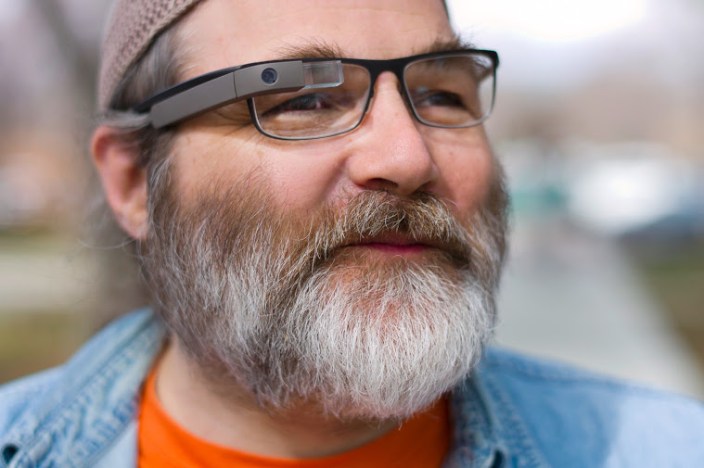
Google has been hiring a group of individuals on one year contracts to help the Glass explorers with their upcoming Glasswear we’ve learned. The employees would be based in New York or San Francisco but travel to events throughout the US and eventually overseas. These people will also be manning the retail presence that Google hopes to have in New York, San Francisco and possibly LA by the end of the year.
In an ongoing case in which Apple and Google’s Motorola have accused each other of infringing various mobile related patents since 2010, U.S. District Judge Robert Scola said in an order yesterday that the two companies have no interest in reaching a settlement. Bloomberg reports Scola said in his order that both companies are using the litigation as a “business strategy that appears to have no end”:
“The parties have no interest in efficiently and expeditiously resolving this dispute; they instead are using this and similar litigation worldwide as a business strategy that appears to have no end,” U.S. District Judge Robert Scola in Miami said in an order dated yesterday. “That is not a proper use of this court.”
“Without a hint of irony, the parties now ask the court to mop up a mess they made by holding a hearing to reduce the size and complexity of the case,” he wrote. “The court declines this invitation.”
The result is Apple and Google will now have a four month period to narrow their claims related to the case that now includes over 180 claims for 12 patents. Bloomberg notes that Scola said the case currently includes “disputes over the meaning of more than 100 terms,” and that the case would be put on hold until the disputes are resolved if the two companies are unable to come up with a solution before the four month timeframe expires… Expand Expanding Close
Since we first heard rumors that Microsoft was working on Office for iOS and Android as far back as 2011 and got a look at alleged leaked images of an iPad app that Microsoft later denied were real, every couple of months we’ve seen reports that say the app is coming soon. First it was November 2012, then early 2013, and others claimed “sometime after” March 2013. Along the way The latest rumor: Microsoft has Office for iPhone and Android is scheduled for fall 2014.
Zdnet claims to have got its hands on Microsoft roadmap for next year and says on it is “iOS/Android support for Office”: Expand Expanding Close
Almost 60,000 apps have been removed from Google Play, reports TechCrunch, in a move believed to be in response to the number of apps falling foul of the store’s anti-spam policies. Expand Expanding Close
Facebook introduced the HTC First with Home for Android today, and now CEO Mark Zuckerberg is doing the press rounds and discussing everything from “Facebook phone,” building for Android, Google’s reaction to Home, and even why iOS was left in the dark.
During the unveiling event, Zuckerberg described building Home for Android as “smooth,” because the platform is open and does not require any Google intervention, where as Home for iOS would require a direct partnership with Apple.
In a wide-ranging interview at Wired.com this afternoon, Zuckerberg gave a more detailed explanation on why Facebook launched Home for Android phones instead of iOS, as well as why the company ditched the idea of building a phone directly:
Why not just build a phone? I’ve always been very clear that I don’t think that’s the right strategy. We’re a community of a billion-plus people, and the best-selling phones—apart from the iPhone—can sell 10, 20 million. If we did build a phone, we’d only reach 1 or 2 percent of our users. That doesn’t do anything awesome for us. We wanted to turn as many phones as possible into “Facebook phones.” That’s what Facebook Home is.
It’s only available on Android phones. Isn’t it ironic that your mobile strategy is now tied to Google’s operating system? “We have a pretty good partnership with Apple, but they want to own the whole experience themselves. There aren’t a lot of bridges between us and Google, but we are aligned with their open philosophy.”
So do you think in, say, two years you will have this on the iPhone? “That’s above my pay grade to be able to answer that.”
That’s a pretty high pay grade.
“Look, I would love for that answer to be yes. Facebook is in a very different place than Apple, Google, Amazon, Samsung, and Microsoft. We are trying to build a community. We have a billion folks using our services now, and we want to get to 3 or 5 billion one day. We’re going to do that by building the best experience across all devices. Android is growing quickly, and we’re excited that the platform is open and that it allows us to build these great experiences. I think that this is really good for Google too. Something like this could encourage a lot of people to get Android phones, because I think people really care about Facebook. In a lot of ways, this is one of the best Facebook experiences that you can get. Of course, a lot of people also love iPhones—I love mine, and I would like to be able to deliver Facebook Home there as well.”
Zuckerberg also talked with Fortune.com today about Google’s reaction to Home and what it’s like working with Apple:
On what Google will think of Facebook’s use of the open Android platform:
“I’m not sure how they’re going to react.”
On working with Apple:
“They really control the operating system… Android is different because it’s a much more open platform.”
On Google vs. Apple in mobile:
“I think that Google has this opportunity in the next year or two to start doing the things that are way better than what can be done on iPhone through the openness of their platform. We’d love to offer this on iPhone and we just can’t today. And we will work with Apple to do the best experience that we can within what they want, but I think that a lot of people who really like Facebook–and just judging from the numbers, people are spending a fifth of their time in phones on Facebook, that’s a lot of people. This could really tip things in that direction. We’ll have to see how it plays out.”
When we heard late last month that Samsung planned to open Apple-style ‘store-in-store’ locations within Best Buy retail stores it was still only rumor. Today Samsung and Best Buy have made things official for its plans to roll out 1,400 “Samsung Experience Shops” in Best Buy retail stores across the United States. Best Buy plans to have the store within a store Samsung shops up and running by the summer with 900 scheduled to open by May:
Select Best Buy stores will have Samsung Smart Service™, which includes dedicated Samsung Experience Consultants™ and Best Buy blue shirt sales associates to assist customers with purchasing and activating mobile products on the carrier of their choice, understanding their device and supporting them throughout the lifecycle of their product. The specially trained Samsung Experience Consultants will assist with product demonstrations, basic product services, Samsung account set up, warranty registration and post purchase support.
The shops vary in size, with the largest being approximately 460 square feet. Within the larger shops, the Samsung Connected Solutions™ area creates a place for customers to see how easily Samsung devices connect and share content across multiple screens.
It’s not exactly a first for Samsung, having experimented with a number of similar store-within-store locations at other retailers around the globe, but it could very well act as a test ahead of bigger retail expansion plans in the U.S. It’s also something that Google has experimented with in Best Buy and PCWorld in the United Kingdom, which we’re hearing has lead to even much bigger retail plans for the company.
The image above shows what a typical Samsung Experience Shop inside Best Buy will look like. Samsung’s full press release below: Expand Expanding Close
Patents don’t always become reality, but they—such as Google’s latest camera settings patent— are certainly an interesting look into the possible future.
As reported by Engadget, a new Google patent filed with the United States Patent and Trademark Office describes a method of using GPS technology to auto-adjust a camera’s settings. The GPS would gather data for local climate and tune the camera’s white balance and saturation, for instance, to match the weather.
Disclosed herein is a method for capturing an image using an image capture device equipped with a processor. The method includes receiving an electromagnetic signal transmitted from a remote station, determining a location of the image capture device based on the received electromagnetic signal, establishing communication over a network between the image capture device and a remote server, transmitting a request to the remote server for weather information pertaining to the determined location; receiving the weather information, determining an ambient lighting value based on the weather information, capturing an image using the image capture device, and processing the captured image using the determined ambient lighting value.
Photographers can fine-tune their own settings now, obviously, but Google’s patent is an interesting spin on GPS and camera settings. Marrying the two functions together would certainly create new, appealing technology for snapping beautiful images in rain or shine and on the fly.
A source familiar with the matter told The Korea Times Friday that the Yeouido-based firm’s development of the next-generation watch, along with an innovative smart product similar to Internet giant Google’s Glass, was part of its long-term strategy to keep its competitiveness in the volatile information technology (IT) industry
While Apple and even Samsung have been at the heart of the rumors that new smart watch devices could be the products to keep an eye out for in 2013, Google too might try its hand at bringing a wearable computer in wristwatch form. According to a new report from The Financial Times, citing “a person briefed on the project,” Google’s Android unit is working on a smart watch platform of its own:
Google’s latest venture into wearable technology was more an attention-seeking gimmick than a serious new venture. But with the search giant ploughing significant resources into Google Glass, which embeds a screen, camera, microphone and other sensors into a pair of futuristic spectacles, it’s another indication that Google is serious about moving from the digital to the physical.
While Glass is being created in its X Lab, home to experimental “moonshot” projects such as the self-driving car, Google’s smart watch is being developed by its Android unit, according to a person briefed on the project
The fact that the device is reportedly being developed by Google’s Android unit, and not its experimental X Labs like Google Glass, could be an indication that Google plans to bring its watch product to the masses sooner rather than later. FT’s source also confirmed that the project is separate from the recently announced smart watch project from Samsung that is rumored to run a new operating system called AltiusOS and not Android.
Bloomberg reported in February that Apple had around 100 product designers working on its smart watch, and many analysts expected the product to be released by Apple as early as this year. Today’s report from FT doesn’t provide many details on what exactly Google has planned, but it’s a sign that Google isn’t betting on Glass as the be-all and end-allof wearable platforms. The report did note that Google is developing its smart watch “to act as an extension to the smartphones using” Android.
FastCompany today posted an in-depth look at the differences between Apple’s MapKit and Google’s recently launched Google Maps for iOS SDK from the perspective of developers. The lengthy piece gets insight from several iOS app developers with apps that rely on the SDKs and sheds some light on a few things that Apple is doing much better than Google despite a perception from users that Google Maps are superior:
“Google doesn’t currently charge for the Places API, but they do require a valid credit card for access–which gives you a quota of 100,000 daily requests. So you have to wonder if they plan to start charging sooner or later,” McKinlay explains. “That 100,000 limit perhaps sounds reasonable, but each user session can generate many requests–particularly when using the ‘autocomplete’ feature of Tube Tamer–and some types of requests count for 10 times the quota each, so it can get used up pretty quickly.”
While noting that Google wins out with location lookup services, 3D buildings, directions, geocoding, and better hybrid satellite imagery, the developers were also quick to point out downsides of the Google Maps SDK such as quotas for the Places API, an increased app size, and limitations with markers, gradient polylines, and overlays.
Developer of transportation app Tube Tamer, Bryce McKinlay, discussed some of the benefits of using Apple’s MapKit: Expand Expanding Close
We have been hearing much about Samsung’s advertising efforts in recent months including its efforts crafting the now well-known ad campaign mocking iPhone line sitters, to some of the companies recent marketing tactics used to target iPhone users. Last night The Wall Street Journal published a new piece outlining Samsung’s increasingly aggressive advertising thanks to new data from research firm Kantar Media. According to the report, Samsung passed Apple in 2012 for ad spending by around $68M in the US:
Outspent by rival Apple Inc. more than three to one in advertising for mobile phones in the U.S. in 2011, Samsung responded with a marketing blitz on TV, billboards, the Internet and print media that moved the Korean company into the pole position last year… In 2012, Samsung spent $401 million advertising its phones in the U.S. to Apple’s $333 million, according to ad research and consulting firm Kantar Media.
Apple spent more than three times Samsung on marketing its mobile devices in 2011. If a slew of recent media reports is any indication, including one from Apple’s own former ad man Ken Segall, many seem to think Apple is losing its advertising momentum to Samsung.
The Wall Street Journal added that executives at carriers said Samsung “also spends more on “below the line” marketing than any device maker. Those funds help pay for in-store advertising, promotions and training for carrier sales representatives that help close the sale.”
To put the spending in perspective for the global smartphone market, Tech/telco analyst Benedict Evans noted the figures above account for around 10% of Samsung global ad budget compared to 1/3 of Apple’s, which also somewhat reflects sales proportions.
According to a report from The New York Times, citing ” a person who has tried the phone,” Samsung’s upcoming Galaxy S4 will include a new “eye scrolling” feature that tracks the user’s eye to determine where to focus and when to scroll on the page:
The phone will track a user’s eyes to determine where to scroll, said a Samsung employee who spoke on condition of anonymity because he was not authorized to speak to the news media. For example, when users read articles and their eyes reach the bottom of the page, the software will automatically scroll down to reveal the next paragraphs of text.
As noted in the report, Samsung actually filed for a trademark in Europe for “Eye Scroll” in January and again in the United States for “Samsung Eye Scroll” in February.
Mac’s edges are thinner but about the same overall
pretty close
Backsides
left sides
Pixel siiiightly lower
Screen height is similar to 15″ macbook pro
$250, $1300, $2200
who invited the guy on the end?
the workstation
Look at the text!
Look at the text!
Look at the text!
familiar sized power brick
Long before the Chromebook Pixel was released, I, and surely many other Chromebook users, begged Google to create a high-end laptop that would allow technology professionals to use the Chrome OS to its fullest. To really give it a run against our high-end MacBook Pros and PC workstations, Google would have to throw more than the repurposed netbook hardware that OEMs like Samsung, Acer, HP, and others were giving this operating system.
Google’s Pixel is that high-end machine, but does it stack up where it needs to? First, the good: Expand Expanding Close
Google updated its YouTube app for iOS, bringing the Send to TV feature that it originally introduced on Android devices in November 2012. The app will allow users to send YouTube videos from their iOS devices to a Google TV, PS3, or Xbox, and Google confirmed in January that the feature would come to even more smart TVs this year.
Have an iPhone or iPad and a Google TV? You can now play and control videos from your YouTube app for iOS on your TV, like a remote control for YouTube. Anyone on the same WiFi can join in to control the video or add videos to a playlist (Harlem Shake marathon anyone?). This automatic pairing feature is also available on the YouTube app for Android, and it’s coming to more TVs this year from LG, Sony, Panasonic and others.
Samsung is today officially unveiling its “Samsung Wallet” mobile app solution, and it is quickly gaining attention for similarities to Apple’s iOS 6 ticket, card, and coupon solution known as Passbook. For those familiar with Apple’s app, Samsung Wallet appears to work much the same way. The app will allow users to store event tickets, membership cards, coupons, and boarding passes in one central app. From there, users will be able to present the digital passes and companies supporting the standard can scan a barcode included for each digital ticket.
Samsung has already posted a developers document for the app to outline how devs can implement support for the app using an API (via The Verge). The document also explained how the app works and noted that users will also receive real-time notifications related to their tickets, just as Apple does with Passbook.
As for the Apple influence, aside from the look and feel of the app and icon (pictured above), the Samsung Wallet app doesn’t seem to offer any additional functionality above and beyond what Passbook already offers. The company confirmed to TheVerge that the app will initially not be integrated with NFC wallet solutions (despite a new partnership with Visa), but it did confirm partners for the app’s launch include: Walgreens, Belly, Major League Baseball Advanced Media, Expedia, Booking.com, Hotels.com, and Lufthansa. Expand Expanding Close
In the video above, Bloomberg West speaks with 72andSunny’s partner and creative director Jason Norcross about the thinking behind some of Samsung’s latest campaigns.
If there is one person qualified to discuss the state of Apple’s current marketing efforts, it’s Ken Segall. Working alongside Steve Jobs’ creative team for more than a decade, Segall, the man who put the “i” in iMac, served as creative director at ad agency TBWA\Chiat\Day. He created some of Apple’s most iconic ads such as the legendary Think Different campaign. Segall took some time on his Observatory blog today to share his thoughts on how “momentum has been lost” for Apple’s marketing department at the hands of none other than the company’s biggest rival, Samsung:
While you can still argue that Macs and i-devices have a ton of appeal, you can’t argue that Apple is still untouchable when it comes to advertising…The fact is, it is being touched — often and effectively — by none other than Samsung…Samsung has made remarkable inroads in a very short time, for two big reasons.
According to Segall, the two big reasons Samsung’s advertising has eclipsed Apple’s is due to Sammy’s massive advertising budget and willingness to “bash away at Apple, delivering ads that are well produced, well written and seem to be striking a nerve.” Specifically, Segall pointed to Samsung’s decision to run creative new ads at the Super Bowl and Oscars: Expand Expanding Close
On top of officially announcing the launch of Outlook.com today, Microsoft is making the rounds with the press by offering some stats on the newly launched service. While announcing the service has grown to 60 million active users in just six months of the limited preview release, Outlook.com Senior Director Dharmesh Mehta told Bloomberg that a third of those users are ex-Gmail customers. The news follows the launch of Microsoft’s latest Google smear campaign with a series of “Scroogled” ads depicting security and privacy concerns related to Google scanning users’ email to display ads.
While free e-mail isn’t a huge money-maker — Mehta said Outlook.com carries about 60 percent fewer advertisements than Microsoft’s previous Hotmail product — the Redmond, Washington- based company considers it critical to gaining and retaining consumers. Microsoft, the world’s largest software maker, has been losing users of its Windows operating system to smartphones and tablets such as Apple Inc.’s iPad.
According to Mehta, roughly 20 million of Outlook.com’s users have switched from Gmail and now use the service as their “primary free e-mail account.” There is of course no real way of knowing how many users have actually decided to make the switch, and how many of those users are continuing to use both accounts. As for the Scroogled campaign, Mehta shared that Microsoft is spending “tens of millions” on many TV, online print, and bus ads in the US, as well as TV ads in Europe slated to debut in the coming weeks.
An extremely reliable source has confirmed to us that Google is in the process of building stand-alone retail stores in the U.S. and hopes to have the first flagship Google Stores open for the holidays in major metropolitan areas.
The mission of the stores is to get new Google Nexus, Chrome, and especially upcoming products into the hands of prospective customers. Google feels right now that many potential customers need to get hands-on experience with its products before they are willing to purchase. Google competitors Apple and Microsoft both have retail outlets where customers can try before they buy. Google’s retail move won’t be an entirely new area, however.
.
Google Chrome pop-up stores
Google currently has Chrome Store-within-a-store models in hundreds of Best Buys in the U.S. and 50 PCWorld/Dixon’s in the U.K. These stores have Google trained employees who demonstrate the value of Chromebooks and can answer the multitude of questions people have before making a purchase. Our source told us the new Google Stores would be a much broader play. The Chrome SIS employees don’t have sales targets, and they are there mostly for educating. Best Buy and Dixen’s also handle product and monetary transactions, not Google.
.
Google and Virgin also ran a limited test run of Kiosks in five major Airports, including this one at SFO (Image Scott Beale)
My understanding is that these new stores will operate independently and make direct sales to customers from Google like the Nexus online store does currently. It might also make sense for Google to sell its apparel and other Google-branded merchandise in these stores as well, but that’s speculation on my part.
The decision to open stores, I’m told, came when drawing up plans to take the Google Glass to the public. The leadership thought consumers would need to try Google Glass first hand to make a purchase. Without being able to use them first hand, few non-techies would be interested in buying Google’s glasses (which will retail from between $500 to $1,000). From there, the decision to sell other Google-branded products made sense.
Along with Glass, Google will have an opportunity to demonstrate other upcoming and Google X projects like driverless cars and mini-drone delivery systems at its stores.
There are small bits of anecdotal evidence that Google is looking into retail. It is hiring folks to develop Point of Sale systems, for instance. We’re told, however, that most of the ramping up of these stores will be done by an outside agency.
“I don’t think we would have been nearly as successful with iPad if it weren’t for our stores. It gives Apple an incredible competitive advantage. Others have found out it’s not so easy to replicate. We’re going to continue to invest like crazy. The average store last year was over 50 million in revenue.”
Google may now understand that if it wants to roll out a new product category like Google Glass, it is going to have to dive into retail. Expand Expanding Close
The Federal Trade Commission released a report today that recommends how owners of mobile platforms can better inform consumers about how their data is being handled. The FTC named a number of companies in its report, including: Amazon, Apple, BlackBerry, Google, and Microsoft, as well as “application (app) developers, advertising networks and analytics companies, and app developer trade associations.”
In the report, titled “Mobile Privacy Disclosures, Building Trust Through Transparency,” the FTC issued a number of recommendations. The FTC recommended that all platform owners “Provide just-in-time disclosures to consumers and obtain their affirmative express consent before allowing apps to access sensitive content like geolocation.” It recommended app developers take the same measures in addition to having “a privacy policy and make sure it is easily accessible through the app stores.” The report also suggested that companies implement a ” a one-stop “dashboard” into their operating systems so consumers can easily view how their data is being handled by specific apps.
Other recommendations the FTC asked Apple and others to implement include new icons that “depict the transmission of user data” and a “Do Not Track” option for users to easily opt out of their data being sent to third parties.
“FTC staff strongly encourages companies in the mobile ecosystem to work expeditiously to implement the recommendations in this report. Doing so likely will result in enhancing the consumer trust that is so vital to companies operating in the mobile environment. Moving forward, as the mobile landscape evolves, the FTC will continue to closely monitor developments in this space and consider additional ways it can help businesses effectively provide privacy information to consumers,” the report states.
A full list of the recommendations made by the FTC for mobile platform owners, advertising agencies, and app developers is below: Expand Expanding Close
Reuters reported today that a U.S. Federal Circuit Court of Appeals in Washington rejected Apple’s attempt to get a sales ban on Samsung’s Galaxy Nexus. Apple asked the court to revisit a previous decision to reject the company’s request for the sales ban leading up to a full trial set for March 2014. The case involved patents not included in the California trial that awarded Apple a $1.05 billion verdict against Samsung.
Apple wanted the full Federal Circuit of Appeals, made up of nine active judges, to reverse the earlier ruling. But in a brief order on Thursday, the court rejected Apple’s request without detailed explanation or any published dissents… Several experts had believed that Apple faced long odds, as the legal issues in play were not considered controversial enough to spur full court review.
Reuters noted that Apple could still appeal the decision to the U.S. Supreme Court:
Apple could still appeal to the U.S. Supreme Court. However, the high court has made it more difficult for patent plaintiffs to secure sales injunctions in recent years.
Google agreed to pay a record $22.5 million Federal Trade Commission fine in August following an investigation into whether it bypassed mobile Safari security settings to install tracking cookies without user consent. Now, twelve iPhone users in the United Kingdom have launched a lawsuit against Google that seeks compensation related to the tracking. They also want a “proper explanation” about how their personal information was used. The Telegraph via Business Insider has the full story:
It is thought the case, being brought against Google by law firm Olswang on behalf of the internet users, is the first of its kind in the UK. They say that cookies, small tracking files, were installed by Google on the Apple computers and mobile devices of those using the Safari internet browser without their knowledge .
Claimants thought that cookies would be blocked because of assurances given by Google in the time their devices were allegedly affected, from summer 2011 to spring 2012, and also because of Safari’s default settings.
“We hope that they will take this opportunity to give Safari users a proper explanation about what happened, to apologize and, where appropriate, compensate the victims of their intrusion.”
While Samsung has conveniently left specific smartphone sales numbers out of its Q4 earnings release yesterday (as usual), today we get a look at the latest estimates for the quarter coming from research firms Strategy Analytics and IDC.
We know that Apple sold 47.8 million iPhones during the quarter, and today both research firms put Samsung just over 63 million units for Q4 2012. That means Samsung was able to capture 29 percent of the market last quarter (up from 36.2 million units and 22.5-percent of the market in the year ago quarter). Apple is of course a close second among the top five smartphone vendors with 21.8-percent—down slightly from the 23 percent it held in the same quarter last year. In Q4 2011, Apple and Samsung were neck and neck at about 23 percent of the market each.
The increasing market share for Apple, and especially Samsung, over the past year comes at the expense of Nokia. It experienced a drop from 16 percent to 5 percent of the market during the past year. Expand Expanding Close