Google Maps



Some pretty incredible new features of Google+ Photos today that will probably be burying Picasa once and for all. Using their algorithms, they will enhance and help sort photos saving time and energy with the net result being incredible photo albums.

Google today announced new features coming to the Google Play Developer Console that will make it easier for developers to track and optimize apps across markets.
Perhaps one of the biggest features that will soon be available to developers is the ability to manage beta testing and staged rollouts right from within the Developers Console. The tool will allow developers to select a percentage of users for a stage rollout and easily beta test their apps among small amounts of users.
Among the new features, Google will be rolling out a new APK translation feature built into the console that allows developers to purchase translations through various providers directly through the console.
Other features headed to the developer console include optimization tips, referral tracking, and detailed revenue graphs. Check out a full gallery of the new features below:
Expand
Expanding
Close
We knew from leaks in the weeks leading up to I/O that Google was planning some gaming related announcements and today the company has officially announced the service in a press release ahead of its Google I/O keynote taking place now. Not only will the service allow Android developers to build in real-time multiplayer, social features, achievements, and leaderboards while storing game saves and settings in the cloud, the SDK for Google Play game services will also be available to iOS and web developers.
Google noted a few titles for Android have already been updated with the feature including World of Goo, Super Stickman Golf 2, Beach Buggy Blitz, Kingdom Rush, Eternity Warriors 2, and Osmos.
Not surprisingly, the cross-platform gaming service will also build in Google+ integration to track high scores, achievements and more:
-Achievements that increase engagement and promote different styles of play.
-Social and public leaderboards that seamlessly use Google+ circles to track high scores across friends and across the world.
-Cloud saves that provide a simple and streamlined storage API to store game saves and settings. Now players never have to replay Level 1 again.
-Real-time multiplayer for easy addition of cooperative or competitive game play on Android devices. Using G+ Circles a game can have up to 4 simultaneous friends or auto-matched players in a game session together with support for additional players coming soon.
Google’s full press release below:
Expand
Expanding
Close
While the report is a little bit on the light side with specific details regarding the product, a new report from AndroidAuthority claims that a source has revealed details about a Google smartwatch as well as new updates coming to Gmail and Maps apps on Android.
According to the report, which seems to provide more questions than answers, the Android smartwatch has been floating around Google offices in Berlin, Manchester, and more recently Mountain View, which it claims signals “the watch is set for release sometime soon.” The last we heard from analysts is that Google smartwatch is scheduled for 2014 at earliest, but AndroidAuthority already claims to have details on the device:
While noting that “Functionality will be very much like Glass,” the report claims Google’s smartwatch is “not a standalone device yet” and that “It needs to be tethered to a smartphone.”
We don’t expect to see a Google smartwatch on show at Google I/O this month, and the report doesn’t offer up much in the way of confident predictions for when we might. The report added that sources say Google’s Motorola will be manufacturing the smartwatch.
Also included in the report is info on updates that are apparently coming to Google’s Maps and Gmail apps on Android devices in the near future. AndroidAuthority describes redesigned apps that will apparently borrow a lot from the most recent versions of Google’s apps on iOS:
Expand
Expanding
Close

The unofficial Google Operating System blog posts some screenshots and details of a supposed upgrade to the Google Maps website that is nearing launch.
The experience is redesigned and more immersive due to a greater focus on the map content instead of navigation buttons. The new map tiles also look similar to the interface included in Apple’s proprietary iPhone, iPad, and iPod touch Maps software…

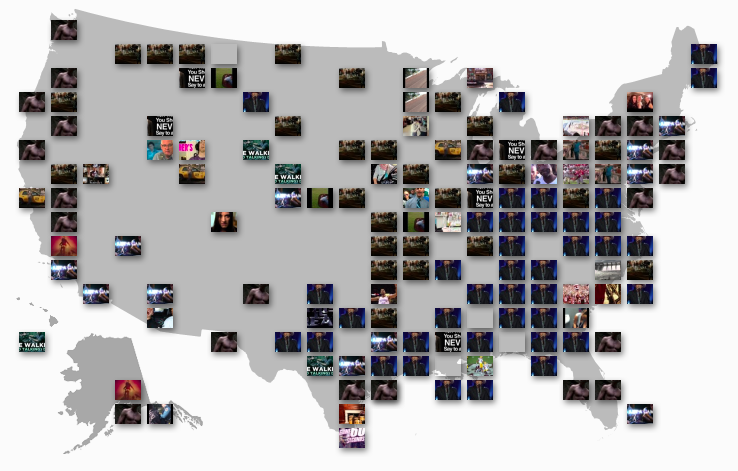
YouTube introduced a new way to see which videos are popular in your area today through trend maps.
Google supplies a vast library of demographics information on its YouTube Dashboard, and now visual mapping is an additional and fun option.
Users in other countries have had access to Google’s public alerts for weather warnings and other critical public information through its Google Public Alerts platform since as early as January of last year. Now, Google has teamed up with Public Safety Canada and Environment Canada to roll out the feature in Canada, bringing severe weather alerts in both English and French to users through Google Search, Google Maps, and the Google Public alerts website. Users on Android will also be able to receive the alerts through Cards that automatically appear in Google Now:
We couldn’t have launched Public Alerts in Canada without Public Safety Canada and Environment Canada. Their meteorological data will ensure our users are notified of severe weather when relevant. We also appreciate their commitment to open data standards such as the Common Alerting Protocol (CAP).
For more information, or to see all active public alerts, visit our homepage at www.google.org/publicalerts. If you are a data provider, we also provide instructions here that will help you get your emergency data ready for Google Public Alerts.
According to Bloomberg, U.K. based internet map provider Streetmap is suing Google over allegedly favoring its own maps to those of competitors. Streepmap is claiming that it’s harder to find their maps (and other competitors) in a Google search than it is to find Google Maps. Streetmaps is calling the issue a “cynical manipulation” by Google and is calling for a change in the way Google displays map related search results:
“We have had to take this action in an effort to protect our business and attract attention to those that, like us, have started their own technology businesses, only to find them damaged by Google’s cynical manipulation of search results,” Kate Sutton, commercial director of Streetmap, said in the statement.
The lawsuit mirrors complaints at the heart of the EU’s current investigation into whether or not Google’s abuses its search dominance to favor its own services over competitors within search results and elsewhere. Earlier today we reported that Google had handed in a formal offer of concessions to the European Commission related to the investigation, but there is no word yet on exactly Google’s settlement offer includes…
Expand
Expanding
Close
Starting today, Google is rolling out its Map Maker service in the UK, allowing Google Maps users in the United Kingdom the ability to join the over 40,000 other people around the globe making contributions to improve the Google Maps experience:
Now it’s your turn to help, whether marking the trails through Brecon Beacons National Park in Wales, adding all your favorite shops in London’s Soho Square, or improving driving directions to St Ives in Cornwall. Drawing from your knowledge about world famous tourist destinations or the streets of your hometown, you can now use Google Map Maker to make the map of the United Kingdom (along with Isle of Man, Jersey and Guernsey) more comprehensive and accurate than ever before. Once approved, these improvements will appear across Google Maps, Google Earth, and Google Maps for Mobile.
Google is encouraging users in the UK to submit contributions through Map Maker and also invited them to check out its “community of mappers” and the “Map Maker Help Center” for additional information.

Someone at Teehan+Lax may have grown up reading Dr. Seuss as they’ve just created a web service called Hyperlapse, allowing you to create a high-speed Street View animation of any Google Maps route.
http://vimeo.com/63653873
Expand
Expanding
Close

Google refreshed Google Places for Business last night with a new look and feel.
The streamlined interface now makes it easier for businesses to update their information, and a helpful widget will even outline what they should do to fully complete profiles.
Profile edits will also now appear across all of Google’s products, like Google Maps, within 48 hours, but the improved integration doesn’t stop there. The official Google and Your Business blog has the story:
Through this upgraded interface, you will be able to access your local Google+ page to take advantage of social features like sharing photos, videos, or posts. For businesses who also use AdWords Express and Google Offers, managing your ads and promotions is easier than ever. You can check results and make edits directly from your upgraded Places for Business dashboard.


Google has begun its yearly unveiling of April Fool’s Day jokes with some clever new ideas that probably come up in strategy meetings throughout the year.
Google Nose. Searching a query on Google and clicking the ‘Nose Beta’ button can only find this ‘service’. The service isn’t real of course, but you can read about its features on Nose’s homepage. Funniest bit?
Don’t ask, don’t smell: For when you’re wary of your query – SafeSearch included.
More Google jokes are on the way…
Expand
Expanding
Close
The two most popular non-game apps downloaded from Apple’s iOS App Store so far this year were both Google ones: YouTube and Google Maps, according to data from App Annie (via The Next Web).
Google Maps was originally installed as standard on iPhones and iPads until Apple struck out on its own with the rather ill-fated Apple Maps. Though Apple has since fixed many of the embarrassing errors in the launch version, demand for Google’s version has seemingly increased rather than decreased.
In an ironic turnabout, Google lost the top slot on its own Google Play store to Facebook.
Google has been constantly updating its Maps and Google Earth apps with new Street View imagery in recent months. Earlier this month it began rolling out new imagery for famous mountains including Kilimanjaro and Everest, and now Google’s Street View team is hitting Northern Canada for the first time with its Street View Trekker backpacks:
This is the first Trekker expedition in Canada for Google Maps. I’m wearing the backpack to collect Street View imagery as I walk to the shore of Frobisher Bay, where the wind is the strongest and you can see the tide piling up mountains of sea ice. On the way I’ll pass sled dogs tied up outside houses, yapping in anticipation of their next trip. And I may stop to check out an igloo, built by Inuit craftsmen using methods passed down over a millennia.
Google announced today on its Official Blog some that it began rolling out some new enhancements for Google Maps with the addition of famous mountains such Kilimanjaro in Africa and the Everest Base Camp in Asia. Imagery for other mountain peaks is included in today’s update, including: the tallest mountain in Europe; Mount Elbrus located in Russia; as well as the highest in the Western and Southern Hemispheres, Argentina’s Aconcagua.
Google also shared a detailed post on its Lat Long blog that details the process of collecting imagery for today’s update.
FastCompany today posted an in-depth look at the differences between Apple’s MapKit and Google’s recently launched Google Maps for iOS SDK from the perspective of developers. The lengthy piece gets insight from several iOS app developers with apps that rely on the SDKs and sheds some light on a few things that Apple is doing much better than Google despite a perception from users that Google Maps are superior:
“Google doesn’t currently charge for the Places API, but they do require a valid credit card for access–which gives you a quota of 100,000 daily requests. So you have to wonder if they plan to start charging sooner or later,” McKinlay explains. “That 100,000 limit perhaps sounds reasonable, but each user session can generate many requests–particularly when using the ‘autocomplete’ feature of Tube Tamer–and some types of requests count for 10 times the quota each, so it can get used up pretty quickly.”
While noting that Google wins out with location lookup services, 3D buildings, directions, geocoding, and better hybrid satellite imagery, the developers were also quick to point out downsides of the Google Maps SDK such as quotas for the Places API, an increased app size, and limitations with markers, gradient polylines, and overlays.
Developer of transportation app Tube Tamer, Bryce McKinlay, discussed some of the benefits of using Apple’s MapKit:
Expand
Expanding
Close
Google rolled out the official YouTube app for Wii U in November, allowing users to browse channels and categories from the GamePad and view the video in 1080p on their TVs. Today, as previously announced, Google is rolling out its new Google Maps and Street View solution for Wii U owners with the Wii Street U app available now on the Wii U eShop. The app allows users to view street view and 360 degree content and easily navigate Google Maps using the Wii U GamePad:
With Wii Street Utm powered by Google, you can step into Google Street View with an immersive experience that will make you feel like you’re actually there! View a 360 degree Google Maps Street View of locations all over the world using the Wii Utm GamePad controller’s motion controls. Jumping to a location is easy—just use the GamePad touch screen to type in an address or location and start exploring, or instantly travel to over 70 fascinating, hand-picked locations around the globe.
A video of the app in action is below:
Expand
Expanding
Close
Kia Motors is working with Google to bring Google Maps and Google Places integration to new vehicles via an updated version of its UVO eServices telematics system. Kia said in a press release today that it would work with Google to integrate Maps and Services for “driving directions and locate Points of Interest (POIs) in a seamless and organic manner.” The new integration will land in the 2014 Sorento CUV and go on sale in the first half of this year, but it will presumably hit all-new vehicles that utilize Kia’s built-in UVO eServices. Kia will also provide Maps and Places features from its UVO smartphone app:
Available with the 2014 Sorento CUV, the new Google-powered UVO system will serve Kia owners whether they are in their cars or away from them. Enabled by the Send2Car feature, Kia owners can send a POI or destination to their car directly from the Google Maps via their SmartphoneUVO app. From within the car, Kia owners will benefit from Google Places, which will provide POI and destination resources such as a dealership location, and Google Maps, which will provide directions to virtually anywhere and everywhere a car can travel.
Expand
Expanding
Close
The Trulia Android app uses the new Maps API (starting tomorrow), so users can search for a place in 3D.
The Android Developers blog just unveiled version 2.0 for Google Play services.
Google Play services is a new platform that provides developers with improved integration for Google products. The latest version of the platform includes two new APIs, and the most notable one is an anticipated upgrade for Maps.
According to the announcing blog post, the new Google Maps Android API allows developers to “bring many of the recent features of Google Maps for Android to your Android apps.” The API is available supports Froyo devices and up:
The new API uses vector-based maps that support 2D and 3D views, and allow users to tilt and rotate the map with simple gestures. Along with the layers you’ve come to know from Google Maps such as satellite, hybrid, terrain and traffic, the new API lets you include indoor maps for many major airports and shopping centers in your app.
Google further launched Photo Sphere mode in the Camera for Android 4.2, which allows users to create panoramas, and now it is releasing new APIs that enable “developers, businesses, and photographers to explore new uses of Photo Sphere for work and for play.”
Photo Sphere is now an open format, too, so users can create and access it via the web and mobile devices. Go to the Android Developers blog for more information on either API key.
[tweet https://twitter.com/googlemaps/status/269499168354091008]
As noted on the Google Maps blog, Google continues to update maps with new aerial, satellite, and 45-degree imagery for many cities in the U.S. and abroad. Google’s most recent addition to maps is a new collection of 45-degree imagery for 60 new cities—40 in the U.S. and 20 internationally— in places like Switzerland and Luxembourg. That brings the total number of cities with updated aerial and satellite imagery in Maps and Google Earth up to 164 cities in 108 countries. Google walked through a few of the recent updates, such as the Space Needle in Seattle and Bridges in the Sky art installation in Austria, but also provided a full list of cities with new high resolution imagery (below):
Expand
Expanding
Close
iOS 5 Maps with Google’s backend
The Guardian published a new report today that cited unnamed sources and throws around phrases like “not optimistic” and “unlikely event” in regards to Apple ever allowing a Google Maps iOS app.
The story claimed Google’s app is ready to ship by the end of 2012, but Google is torn about the likelihood of Apple ever giving an official go-ahead:
While one source indicated increased hopes that the dedicated Google Maps iOS app will eventually be approved now that Apple’s maps leader, Scott Forstall, has departed the company, another was less than enthusiastic about any increased prospects, citing industry politics and Apple’s need to save face as much as possible and “keep moving forward in an effort to make its obviously inferior product better”. Apple unveiled the section, which on Monday listed ten free and paid-for apps, to spotlight alternative mapping apps for iOS in an effort to placate users over response to criticisms of its own Maps app.
The Guardian specifically noted Apple’s reluctance to give Google Maps any attention in iOS. The company apparently went as far as to neglect apps in the “Find maps for your iPhone” section of the App Store that use Google Maps APIs:
Further, a source at Google told me the feeling is that those apps were purposely left out of the new section because they promote Google and its “superior product” – at a time when there is so much bad blood between the companies over the continuing smartphone patent litigation (following allegations from the late Steve Jobs that Google’s Android OS ripped off iOS). In other words, no matter how bad Apple’s Maps are, the company still wants its users to move on from Google – and forget about them. This doesn’t bode well for the approval of an official Google Maps app, the source says.
Despite the pessimistic outlook of the anonymous Google sources, the Guardian said Apple and the folks in Mountain View are in constant talks. So, the tide could potentially change without any notice. With that said, they firmly believe Apple will never again make Google Maps a default mapping solution in iOS.
Google announced today on the Official Google Blog that it will now include public AMBER Alerts through Google Search results and Maps in coordination with the National Center for Missing and Exploited Children and the Google Public Alerts platform:
If you’re using Google Search or Maps on desktop and mobile you’ll see an AMBER Alert if you search for related information in a particular location where a child has recently been abducted and an alert was issued. You’ll also see an alert if you conduct a targeted search for the situation. By increasing the availability of these alerts through our services, we hope that more people will assist in the search for children featured in AMBER Alerts and that the rates of safe recovery will rise.
Google explained the alert could include information about an abducted child or additional details including “make and model of the vehicle he/she was abducted in or information about the alleged abductor.” It also said it is working with other organizations, such as Missing Children Europe and the Canadian Centre for Child Protection, to roll out alerts to other countries as well. Google has partnered with the National Center for Missing and Exploited Children in order to display the AMBER alert data:
Expand
Expanding
Close
Google is sponsoring an upcoming hackathon by Hattery Labs that is awarding two grand prizes to innovators using Google Maps API.
The “Reroute/sf” hackathon runs from Oct. 19 to Oct. 21 at The Hattery, according to its Facebook page, and it aims to “improve transportation in San Francisco with technological innovation, and work with the City to make it real.” The three-day event essentially invites engineers, designers, and entrepreneurs to “make San Francisco a better place.”
The hackathon will host three challenges, i.e., “Collect the right data,” “Plan a trip anywhere – on-time,” “See what’s broken and watch it get fixed,” while senior representatives from the City of San Francisco and the technology community will determine who wins the following four prizes:
Aside from Google, the Hattery, the San Francisco Mayor’s Office, San Francisco Municipal Transportation Agency, Waze, Google Maps, and the General Assembly sponsor the hackathon. The Hattery is a collection of experts ranging from designers and engineers to investors and brand marketers, and some of their most notable collaborative work under Hattery Labs includes giving people clean water and helping Haitians rebuild schools through WellDone and Haiti School Project, respectively.
Registration details below.
[youtube=http://www.youtube.com/watch?v=c0F0V8F8yqk&feature=plcp]
Motorola just published a new television commercial for the Droid Razr M on its YouTube channel. The 30-second ad depicts everything from the animated film “Rango” to Google Maps projected onto everyday hands just to show how Verizon’s 4G LTE Droid Razr M has a “big screen that’s fit for your hand.” It is pretty cute, actually. Check it out above.