Stay up to date on news from Google headquarters. Be the first to learn about plans for Android, Google Plus, Google Apps, and more!
Stay up to date on news from Google headquarters. Be the first to learn about plans for Android, Google Plus, Google Apps, and more!

Google+ is not yet available to the general public, but if first impressions from early adopters (read: journalists) are indicative of its potential, Google may have nailed the social thing this time. Google+ out-innovates Facebook on several aspects, including the integrated audio/video chat feature, fine-tuned sharing features, the ability to create ad-hoc networks and more. The hype and the headlines have not escaped the attention of Facebook CEO Mark Zuckerberg who figured he might as well join the damn thing and see why all the fuss.
Of course, it’s hard to establish authenticity of Zuckerberg’s alleged profile on the Google+ service, first outed by Forbes. Dana Brunetti, one of the producers of The Social Network movie, apparently added Mark Zuckerberg to his “People I did a Movie About” social circle on Google+. If it’s genuine, however, we’re giving Zuck a thumbs-up for having the guts to create a public profile on a rival network and the curiosity to explore the life beyond the walls of Facebook.

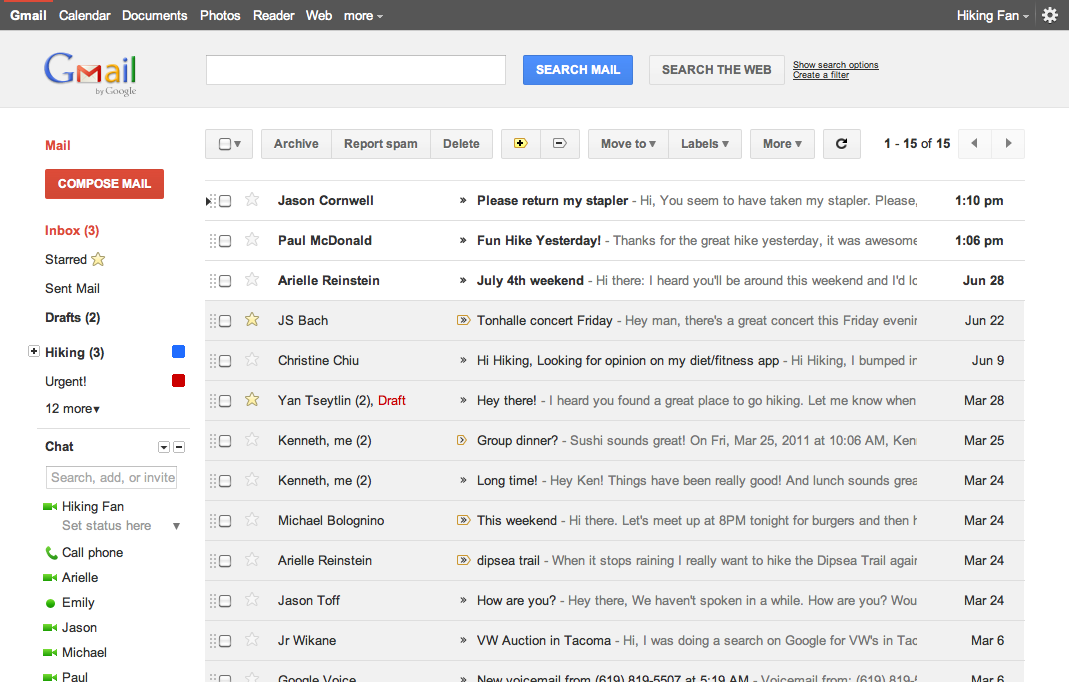
Matching Google+, redesigned Maps, Search, and Calendar, Google has released a redesign for Gmail. The theme of this redesign is to remove the clutter, something some of you might think Gmail suffered from. F0r now, we notice new colors and an overall buffer of the page. To get your hands on these new designs select the ‘Preview’ or ‘Preview Dense’ theme from the settings.
Expand
Expanding
Close
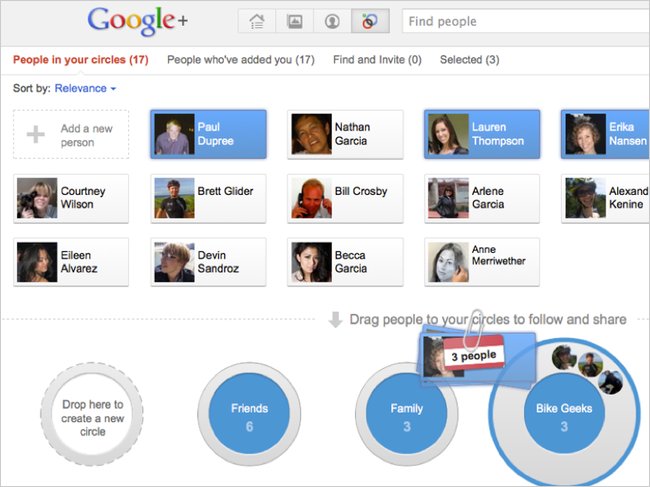
Google+ was announced earlier in the week, but currently it is invite only. Last night Google opened invites for all users and later closed it down. Some of you may have been lucky and received an invite from us, but others not so. On his personal blog, David Di Franco has posted a guide on how to bypass the invite system, for now.
- View your “Circles” page.
- Click “Add a new person” to add someone to your circle.
- Select your person from the list. If they are not appearing, simply input their email address.
- Add the person to your circle. After doing so, go to “Home” where you can view the stream.
- Compose a new post, but make sure the box is checked next to “Also email…”
- Click “Share” and you’re set. Now the person will see the post in their inbox, which will grant them access to Google+.
We can’t guarantee this will work, but if you have a friend with Google+ ask them to give it a try. I’m buuuusy….

.
At this point, it seems pretty obvious that Google means business with the Google Plus platform. Besides all of the other areas Plus has engulfed, it looks like Google is heading into the gaming realm. The following code snippet was found in the web page code
“have sent you invites and more from Google+ Games”
So now Google is taking on Microsoft’s Xbox and Apple’s Gamecenter. Perhaps Google might want to lower the barrier to entry..
Expand
Expanding
Close
As if it were any surprise to watchers, TechCrunch reports that Chinese authorities yesterday tapped The Great Firewall of China to block or limit access to social network Google+ from Mainland China. Quoting a Pen Olson report, the publication later added that the Chinese government didn’t block access to the service entirely. Instead, they are slowing it down to a crawl, “which essentially comes down to the same thing: censoring”. Maybe Chinese officials are trying to get even for Google calling them out publicly for Gmail hack attacks?
By now you’ve probably figured out from our Google+ coverage that we here at 9to5Google are big fans of Google’s latest social thingie. There’s just one problem with this service: There’s no easy way to bring all your Facebook friends to Google+ because, you know, Facebook and Google are at odds with each other. Lifehacker comes to the rescue with this nifty workaround.
It involves authorizing Yahoo Mail to access your Facebook account via Facebook Connect and then transferring Facebook contacts to the Yahoo Mail Address Book. From there, you can easily import them into Google+. Alternatively, you can use the Friends to Gmail web app to bring along all your Facebook contacts to Gmail. Both solutions will transfers only contacts, not other Facebook data or your social graph you’ve been building on Zuckerberg’s social network. And should you ever want to take out your data from Google+ or any other Google property, you can use the new Google Takeout service. Zuck, you listening?
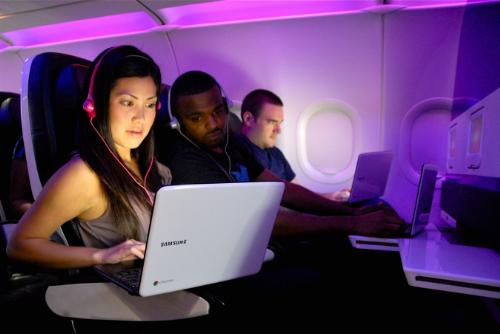
One of the big hurdles to get over when considering Cloud computers is the “What if I am offline” argument –and the number one place people have traditionally been unable to get online is on an airplane.
Gogo Wireless a few years ago started putting that to rest and it is almost unthinkable to take a domestic flight these days without wireless Internet onboard.
But Google, who want to reinforce the belief that the Internet is everywhere, has teamed up with Virgin and Gogo to give consumers a taste of what its like to operate a computer off with data 35,000 feet below. The plan will have ChromeOS reps at Virgin gates handing out and instructing passengers on how to use the Chromebooks (we see Samsung’s beautiful Series 5 12-inch devices above – which should fit really well in cramped spaces vs. clunky Windows laptops). Customers must put down a credit card as a deposit to make sure the Chromebooks make it back, but the transaction is otherwise free. Virgin and Google are also working on a Chrome web App that will help travelers get ready for their flight.
This is an incredibly smart idea and a great way to make the public aware of these devices…so long as the wireless bandwidth can handle it. (It also might get a few more people signed up with Google)
Full press release below:
Expand
Expanding
Close
If you attempt to sign in to Google+, the search giant’s latest social thing (coming soon to iPhone as a native app), the system will cut you off if you are not over a certain age, putting up this warning (thanks, @admhawrth):
Could not sign you in to Google+. You must be over a certain age to use Google+.
By the way, what’s a certain age anyway and why don’t they make public the age limit? Because Google+ authorizes users with their Google Account, which is widely used across other Google properties, the system can tell your age by looking up the birth date information in your account.
Of course, kids can circumvent this by creating a brand new account and lying about their age, but the vast majority of ordinary users would prefer using Google+ with their real Google identity. The fun part? You cannot change the year of birth in your Google account. Also notice how the mobile Google+ site cleverly replicates standard iOS 5 dialogue box…
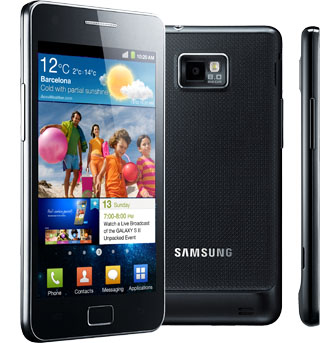
Whip out your syrup and bacon, because Engadget is reporting that the Samsung Galaxy S II is coming to Canada on three carriers. This device is on its way to Bell, Virgin Mobile, and SaskTell. Bell and VirginMobile have yet to release any pricing. SaskTell will be carrying the phone for $79.99 on a 3 year contract, which seems like a reasonable price but absurd commitment. SaskTell and Virgin Mobile are saying the device is on its way in the coming weeks, where Virgin Mobile is holding a contest to win the phone that ends July 19th. Expect to see this phone soon.
Because we love our readers so much, we’re going to give out 50, and maybe a few more, Google+ invites. To get your invite email me submit the tips field above. In the mean time, check out our notes on the new Facebook killer. For those of you who have it already, what do you think?
Update: Vic says the gate is closed today. However, it will open up again soon. We have your names and will try to get as many people as we can in!
Google today announced that street-level imagery available in Google Maps has been refreshed with new locations while existing ones have gotten higher-resolution images. They say it’s “our biggest update yet”. New crisp shots of world cities are now available in thirteen countries: Denmark, Ireland, Italy, Spain, Netherlands, Norway, Sweden, Romania, South Africa, Taiwan, Japan, the United States and the United Kingdom.
Some examples: Rättvik, Leksand, Mora, Lake Siljan and Cape Agulhas. Existing locations that have received higher-resolution panoramic views include landmark places such as the Golden Gate Bridge, Staples Center, and USS Midway. Some slight design changes in the web interface for Google Maps, too, stemming from the broad face-lift of Google properties with black navigation bar.
Of course, it ain’t the first phone to be called a Facebook phone. But if you’re fan of Zuckerberg’s social network, you should give this one a chance. What’s the number one thing for Facebook (excluding photos)? Yes, status updates. That’s what guided HTC to put a dedicated Facebook share button on the aptly named Status handset, to cater to the Facebook generation that cannot fathom letting an hour go by without firing up a couple of status updates.
Apart from the button and the BlackBerry-style physical QWERTY keyboard that sits below the screen, the Status packs in an 800MHz chip, a five-megapixel camera on the back and a VGA camera out the front, a 1,250 mAh battery and a 2.6-inch touchscreen with a 480-by-320 pixel resolution – all driven by Android 2.3 Gingerbread. AT&T wouldn’t say when the phone would be available. Full release and t he complete front shot of the device right below.
Search Engine Land discovered Monday that Google is experimenting with a brand new black navigation bar. Today, the revamped bar goes live for some as the company gradually rolls out the changes to everyone. The search firm rarely messes with its legendary homepage design, so their creative director Chris Wiggins lays out in a post over at the official Google blog the main principles behind the redesign. It’s about focus, elasticity and effortlessness, he explains:
We’re bringing forward the stuff that matters to you and getting all the other clutter out of your way. Even simple changes, like using bolder colors for actionable buttons or hiding navigation buttons until they’re actually needed, can help you better focus on only what you need at the moment.
He says the new design lends itself to a consistent visual experience across desktop and mobile, “without sacrificing style or usefulness”. Google says a crucial part of the new experience is the use of the latest technologies like HTML5 and WebGL so “you have all the power of the web behind you”. They will roll out the new bar over the course of the following months to other properties, including Google Maps and Gmail.
The original Google.com homepage in 1997.
Our invites came in and we’re up and running. Here’s the initial reactions:

The first annoying thing is that Google hasn’t allowed Apps for Domains in yet. They are “working on it”. If you are like me and have your life in a Google Domain account this is a major pain. I’m going to have to reconnect to everyone and they are going to have to put me in their circles all over again. Bad start.
Once signed in, the interface is very “Facebook feeling” Google has found a lot of people who know me or are in my contacts so adding them to circles is easy. Unfortunately my gmail.com account has a lot of people from school (when I used it last) and not a lot of the people I deal with on a day to day basis.
Friends seem to be coming in from way back in history – very Facebook like.
It will be interesting to see how Google keeps people coming in and more importantly coming back.
Because I can’t stay logged into this and my normal Apps Google account at the same time, it won’t get used very much. I imagine there are a lot of power users in this exact same boat. I wonder what Google’s plan for this is. I’m hoping there is going to be a merge button at some point in the future.
Overall, I have to say that the product feels very good…like if all of my Facebook Friends came in, I’d probably leave Facebook immediately. But how do I use both at the same time?
Check out that fresh navigation bar!
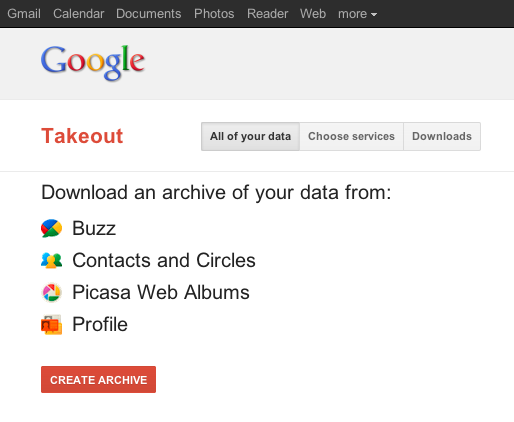
In correspondence with Google’s release of Plus, Google has released a new service called Google Takeout. Google Takeout allows users to take their data out of the cloud from a few of Google’s products. The products so far included in Takeout are Buzz, Contacts and Circles, Picasa Web Albums, and Profile. The data from these sites are put in a small .zip file, and inside you’ll be able to view your data. This service is directly related to Google’s Data Liberation Front. What a nice little tool, Google.
Well, this is interesting… Google is advertising on its Google Labs page an experimental tool which aims to liberate web developers from the confines of Adobe’s Flash platform. They are calling it Swiffy (sweet) and its sole purpose is to convert Flash SWF files to HTML5. But make no mistake about it – this is about Apple’s iOS gadgets. Google itself says Swiffy lets you “reuse Flash content on devices without a Flash player (such as iPhones and iPads)”. Interesting Apple’s frenemy all of a sudden took it upon themselves to help port Flash content to Apple’s devices.
It’s a web-based tool and we’ve tried it on several relatively simple Flash animations, the ones usually seen running as annoying adverts on web sites. Surprisingly, Swiffy did quite a good job converting sample SWFs to HTML5, sans custom fonts that didn’t translate well into HTML5. Just don’t expect the latest Flash games and heavy project with lots of interactive features to port smoothly or at all. In fact, the search company is downplaying the importance of Swiffy, saying you shouldn’t expect miracles. “Swiffy currently supports a subset of SWF 8 and ActionScript 2.0, and the output works in all Webkit browsers such as Chrome and Mobile Safari,” the company noted.

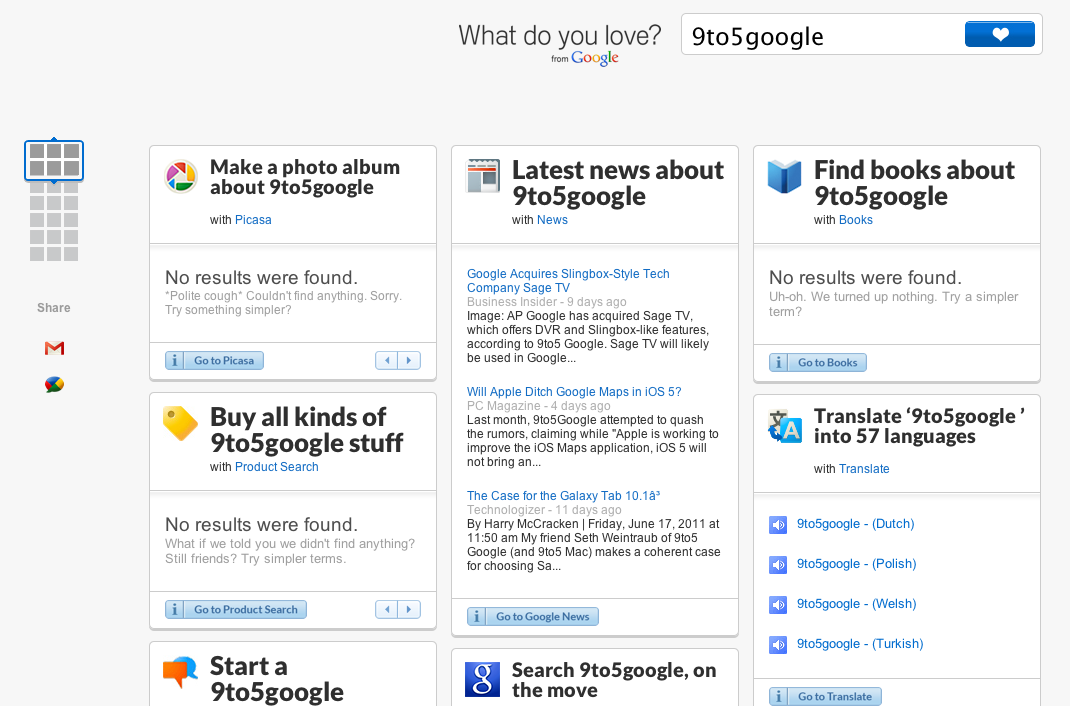
TechCrunch is reporting this morning that Google’s new site WDYL is live, but not officially announced. WDYL stands for What Do You Love, and the one suggestion would be 9to5Google. But for testing’s sake, we’ll give you a pass if you search for something else in this sleek new service.
So what is this lovely new service? WDYL allows users to make one search that will turn up results in all of Google’s products. As you can see below, our search for 9to5Google turned up results in Google News, Picasa, Books, Search, Translate, and many more.
Google hasn’t officially announce WDYL, but the product is out there to use. To give WDYL a try, head to www.wdyl.com. The www. is required in this case, because going to wdyl.com turns up a 404. We should expect to see google announcing this soon.
This little factoid came an hour ago straight from the Android chief Andy Rubin, who tweeted:
There are now over 500,000 Android devices activated every day, and it’s growing at 4.4% w/w.
Compare that to some 210,000 daily activations for Apple stemming from the 19 million iPhones they sold in the last quarter. Google’s data point is a notable improvement over the 400,000 daily activations Google’s mobile chief Rubin reported last month at the Google I/O conference. Where are 100,000 additional devices being activated each day? Maybe China? Mobile handset base there grew to 910 million in May, a 1.08 percent and 14.35 percent sequential and annual increase, respectively. Many Android phones in China sell for less than $150, vendors like Arima Communications are promising sub-$100 handsets this summer and then there are really cheap Android knock-offs from white-label vendors.
A lot of potentially far-reaching developments happening right now in China where Baidu, the dominant search engine, is secretly cranking up a mobile operating system of its own. It’s based on – of all things – Android and code-named Qiushi, which means fruits in autumn, explains TechNode quoting a local report by Chinese-language TechWeb.
Baidu says it’s just “an under-developing mobile ad product”, but considering that several Android-built mobile operating systems already exist in the country (i.e. Xiaomi Tech’s MIUI and DianxinOS) – and taking into account that Android benefited a certain search giant in ways more than one – it isn’t so far-stretched a notion that Baidu is leveraging Android to attack mobile on all fronts and further reduce Google’s share of China’s search-based revenue. Should Google be worried? Read on…
A month ago we learned that Microsoft signed a patent-protection pact with Android handset maker HTC, with the Windows maker taking an estimated five bucks in royalties for every Android handset HTC makes. Some even calculated that Microsoft makes more money from Android than Windows Phone 7 licenses. Today, Microsoft confirms that it has talked another Android backer, General Dynamics Itronix (GDI), into signing a patent-protection deal.
The agreement “provides broad coverage” for GDI’s Android devices and Microsoft confirmed it will receive royalties from the company. GDI is the maker of rugged mobile computing devices and even though they’re irrelevant in the smartphone space, first-tier handset vendors like Motorola and Samsung could find it increasingly difficult not to pay royalties to the Redmond giant. Apple could indirectly benefit as well…
Expand
Expanding
Close

Search Engine Land is reporting that Google is testing a new black navigation bar. This doesn’t necessarily mean it’s on its way out anytime soon, but it’s worth a look. You’ll notice that it does bring more attention to the top. But for now, this could just be measly a test.
Expand
Expanding
Close
Google has announced today that schools using Google Apps will see their storage increase from 7GB to 25GB. The 25GB can be used across all Google Apps, including Mail, Docs, and Calendar. This update makes me wish my school was using Google Apps. Yes, that’s right..this applies to both teachers and students. That’s a lot of space, but who really needs that much? New Educational Google Apps accounts will see the storage added automatically and existing users will see it in a few weeks. It’s summer anyways.
Google I/O attendees can now cllaim their Samsung Series 5 Chromebooks. Interestingly, Google and Samsung are giving out the 3G models which retail for $500. Also interesting, they come via Amazon – you get a promo code to redeem at the end. Start here once you get your code.
Yes, ours is on the way, you have a week to claim them!

Richard DeVaul, a PhD. scientist from MIT with a focus on building wearable technologies, was snared from Apple this month by Google. At Apple he was rumored to be working with SVP of Industrial Design, Jonny Ive in Apple’s secret labs building the next big thing.
Besides his having knowledge of the inter-workings of Apple, it is also interesting that DeVaul is a hardware person who has focused on building wearable products for the past decade. Google has been a software company for all of its existence, but more and more it appears that it will enter the hardware business…but probably in smart accessories rather than phones.

He’ll likely join two former Danger hardware experts in a new Google lab called Google Hardware where his Job Description of “Rapid idea evaluation and prototyping for new projects at Google. ” seems to fit in with Joel Britt and Matt Hershenson are doing.
I wrote about DeVaul’s transition to Apple at Computerworld 18 months ago, excerpted below:
