Breaking news for Android. Get the latest on apps, carriers, devices, and more!
Android is Google’s mobile operating system, launched in September 2008, although its history technically began with the release of the Android alpha in November 2007. To this day, Android powers the majority of the world’s smartphones and comes in several different flavors across many phone makers.
Android, before it was Android, was a company called Android Inc. That company was founded in Palo Alto, California, in 2003 by a crew of four: Andy Rubin, Rich Miner, Nick Sears, and Chris White. The company and its project was acquired by Google in 2005 for a sum of more than $50 million, although the exact number is unknown. The company’s founders joined Google as part of the deal.
In its infancy, Android was an operating system built not for touch screen smartphones like the iPhone, but rather BlackBerry-like devices with physical keyboards. It’s well documented that after Apple shocked the world with the iPhone, ahead of its nearest competition by at least a couple years, Google and Android Inc. had to go back to the drawing board to build something competitive.
Adoption by third-party makers
It didn’t take long after the launch of the iPhone for various manufacturers to enter the market with their alternatives — and Google’s Android immediately became the obvious platform of choice for just about everyone except Microsoft. HTC was the first manufacturer on board, and introduced the T-Mobile G1 running Android in September 2008. Soon after, HTC, Motorola, Samsung, and carriers like Sprint and T-Mobile jumped on board to form the Open Handset Alliance.
Android makers across the world
Iconic Android handsets
There have been thousands of Android phones released since Android’s inception, but some have been more important to the platform’s history than others. There was the original T-Mobile G1, as mentioned, but there was also the HTC One Google Play Edition, Moto G, Samsung Galaxy S4, and others. Some of the most iconic Android handsets include:
HTC G1
HTC Nexus One
Samsung Galaxy S, S2, S3, S4, and their successors
HTC Incredible S
Samsung Nexus S
Samsung Galaxy Nexus
Samsung Galaxy Note
Nokia 8
BlackBerry KeyOne
Google Pixel and its successors
In more modern times, there are several Android smartphones makers that popped up across various niches and in several international markets. Huawei is a dominant Android maker in China and many European markets, while Samsung is by far the most popular maker in the United States by far — effectively creating a duopoly with Apple. Today, there are dozens of major device makers contributing to the Android ecosystem.
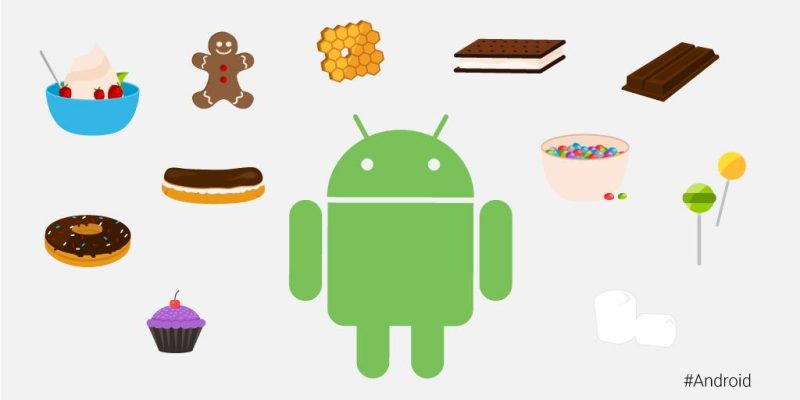
Android has seen countless software revisions over the course of its life, but in modern times the OS usually sees a major release on an annual cadence. In the earlier days, Google famously gave its major software releases dessert-themed codenames, but retired that practice in 2019 with the release of Android 10.
Version
Name
Release
Devices
2.3
Gingerbread
February 9, 2011
Nexus S
4.0
Ice Cream Sandwich
October 19, 2011
Galaxy Nexus
4.1
Jelly Bean
July 9, 2012
Nexus 7
4.2
Jelly Bean
November 13, 2012
Nexus 4, 10
4.3
Jelly Bean
July 24, 2013
Nexus 7 (2013)
4.4
KitKat
October 31, 2013
Nexus 5
5.0
Lollipop
November 3, 2014
Nexus 6, 9
5.1
Lollipop
March 9, 2015
Android One
6.0
Marshmallow
October 5, 2015
Nexus 5X, 6P
7.0
Nougat
August 22, 2016
Nexus 5X, 6P
7.1
Nougat
October 4, 2016
Pixel, Pixel XL
8.0
Oreo
August 21, 2017
Pixel, Pixel XL
8.1
Oreo
December 5, 2017
Pixel, Pixel XL
9
Pie
August 6, 2018
Pixel 2, Pixel 2 XL
10
10
September 3, 2019
Pixel 3, 3a
11
11
September 8, 2020
Pixel 4
List of major Android OS platforms
While Android proper is certainly the most widespread of Google’s Android operating systems, the company has also launched many offshoots of the main OS over the years. There’s Android Auto, Android Wear (now Wear OS), Android TV (now rebranded to Google TV), as well as versions of Android built for tablets and Android Things (now defunct).
There’s a bit of an obsession out there with resurrecting the BlackBerry-style physical QWERTY keyboard but, after trying a couple of the latest attempts, I still struggle to see the appeal in 2026, and I’m really not sure who’s buying these.
In a discussion on the Google for Developers channel, head of Android Sameer Samat goes over Android 17 upgrades, the future of AI on Android, Gemini’s car upgrades on Android Automotive, and more.
The monthly “Google System Release Notes” primarily detail what’s new in Play services, Play Store, and Play system update across Android phones/tablets, Wear OS, Google/Android TV, Auto, and PC. Some features apply to end users, while others are aimed at developers.
AI agents are the latest “next big thing” for AI, but OpenClaw has been working at the idea for a while now. Today, OpenClaw is bringing a gateway app to Android (and iOS) to help bring agents on the go. It also looks… like that.
The Supreme Court rendered a decision this morning on a case debating whether or not people have an “expectation of privacy” from their government, even with always-available location tracking enabled on practically everyone’s smartphone, and to my pleasant surprise, the ruling actually fell in the general public’s favor.
Amazon’s Fire TV platform is in the process of ditching Android for an in-house VegaOS, a change that’s been controversial among users. In an interview, Amazon’s VP of Fire TV explains some of the reasoning behind the decision, but only one part really makes sense.
Google Play has just launched a “Mega Game Sale” that takes a handful of popular Android games and slashes their prices down to a mere $0.10 – just a dime.
The transition to Gemini on Android Auto has been a bit rough for a number of reasons, but a current bug has left some users unable to make calls due to a strange error, and it’s not just an issue behind the wheel.
Google has released another set of benchmark results to determine the best AI models for Android coding, along with how much each model costs per token. Google’s Gemini 3.5 Flash is easily the most resource-intensive in Android development, and it doesn’t even make the top five.
After a couple of years of trying to get my dad to switch from a battered and bruised iPhone 8, I wondered to myself why. If it ain’t (too) broke, don’t fix it, but I thought about what would be the oldest phone I could actively consider using daily.
In what is now her second big partnership around Android, Google has named Paris Hilton as an “Icon in Residence” for Android, with a focus on what Android’s new AI tools can do for users.
Ever since the Pixel 10 was released last year, Qi2 magnets have been a love-hate relationship – I love using them, but I hate that, somehow, the Pixel 10 is the only Android phone that has them. It’s crazy to me that no other Android brand has taken this feature seriously, and that we still have no word of that changing.
Google cracked the code on making Android’s Quick Share feature work with Apple’s AirDrop, and the list of compatible devices continues to grow. Here’s every Android device currently compatible with AirDrop.
With coding having emerged as one of the best use cases for LLMs, Google is reportedly looking to train its AI models with code from actual Android app developers, but is at least paying them to do so.
Android
Breaking news for Android. Get the latest on apps, carriers, devices, and more!
Android is Google’s mobile operating system, launched in September 2008, although its history technically began with the release of the Android alpha in November 2007. To this day, Android powers the majority of the world’s smartphones and comes in several different flavors across many phone makers.
Table of contents
What is Android?
Android Inc.
Android, before it was Android, was a company called Android Inc. That company was founded in Palo Alto, California, in 2003 by a crew of four: Andy Rubin, Rich Miner, Nick Sears, and Chris White. The company and its project was acquired by Google in 2005 for a sum of more than $50 million, although the exact number is unknown. The company’s founders joined Google as part of the deal.
In its infancy, Android was an operating system built not for touch screen smartphones like the iPhone, but rather BlackBerry-like devices with physical keyboards. It’s well documented that after Apple shocked the world with the iPhone, ahead of its nearest competition by at least a couple years, Google and Android Inc. had to go back to the drawing board to build something competitive.
Adoption by third-party makers
It didn’t take long after the launch of the iPhone for various manufacturers to enter the market with their alternatives — and Google’s Android immediately became the obvious platform of choice for just about everyone except Microsoft. HTC was the first manufacturer on board, and introduced the T-Mobile G1 running Android in September 2008. Soon after, HTC, Motorola, Samsung, and carriers like Sprint and T-Mobile jumped on board to form the Open Handset Alliance.
Android makers across the world
Iconic Android handsets
There have been thousands of Android phones released since Android’s inception, but some have been more important to the platform’s history than others. There was the original T-Mobile G1, as mentioned, but there was also the HTC One Google Play Edition, Moto G, Samsung Galaxy S4, and others. Some of the most iconic Android handsets include:
In more modern times, there are several Android smartphones makers that popped up across various niches and in several international markets. Huawei is a dominant Android maker in China and many European markets, while Samsung is by far the most popular maker in the United States by far — effectively creating a duopoly with Apple. Today, there are dozens of major device makers contributing to the Android ecosystem.
Full list of Android OEMs
History of major Android versions
Android has seen countless software revisions over the course of its life, but in modern times the OS usually sees a major release on an annual cadence. In the earlier days, Google famously gave its major software releases dessert-themed codenames, but retired that practice in 2019 with the release of Android 10.
List of major Android OS platforms
While Android proper is certainly the most widespread of Google’s Android operating systems, the company has also launched many offshoots of the main OS over the years. There’s Android Auto, Android Wear (now Wear OS), Android TV (now rebranded to Google TV), as well as versions of Android built for tablets and Android Things (now defunct).
Turns out I don’t want a physical QWERTY keyboard for my Android phone – do you? [Video]
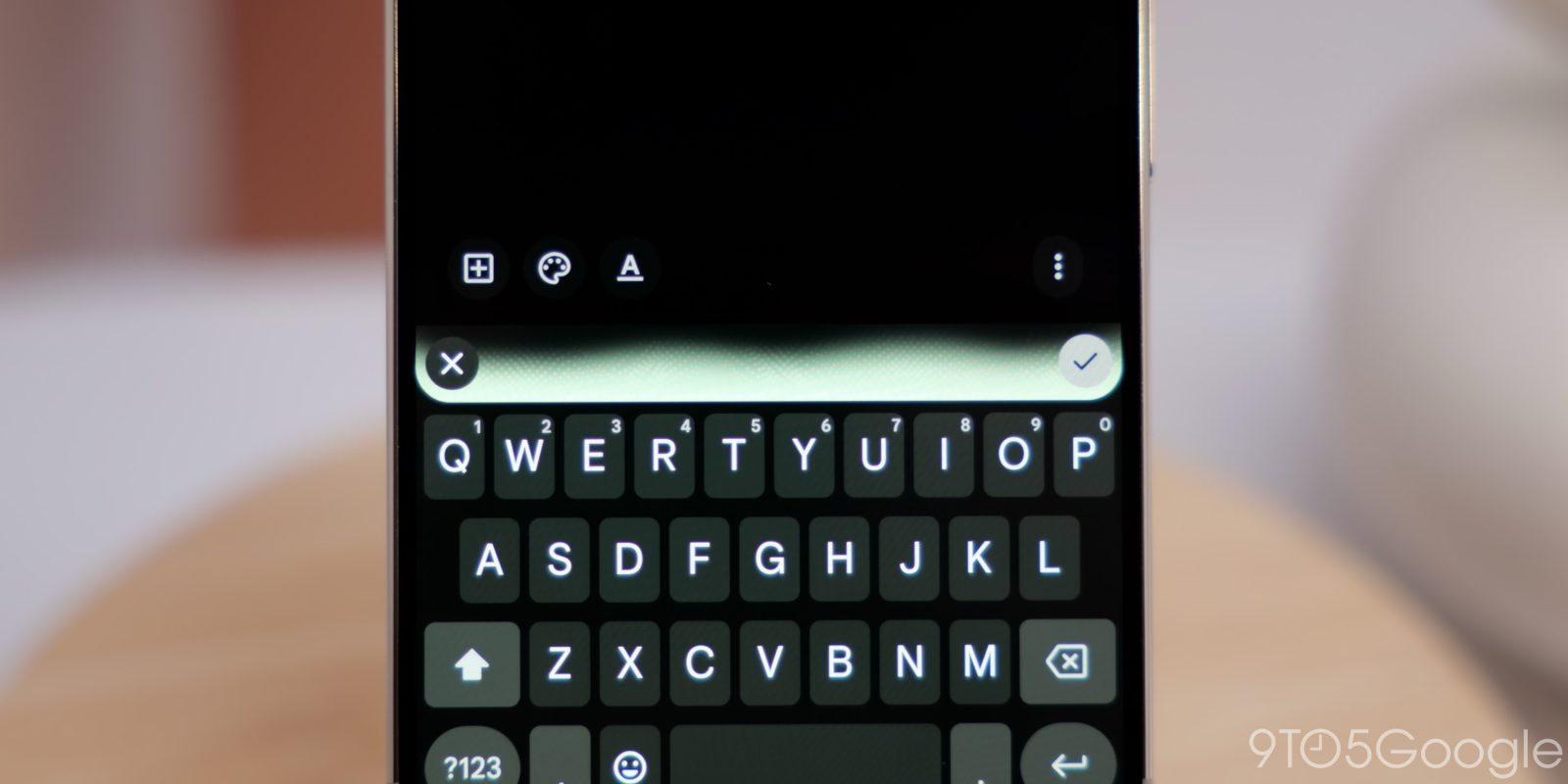
There’s a bit of an obsession out there with resurrecting the BlackBerry-style physical QWERTY keyboard but, after trying a couple of the latest attempts, I still struggle to see the appeal in 2026, and I’m really not sure who’s buying these.
Expand Expanding CloseReport claims OxygenOS and Realme UI set to be discontinued
The woes for OnePlus continue as a new report suggests that OxygenOS is being discontinued alongside Realme UI.
Expand Expanding CloseGoogle on what ‘Android Halo’ does, talking less about AI, and how Gemini will use car cameras [Video]
In a discussion on the Google for Developers channel, head of Android Sameer Samat goes over Android 17 upgrades, the future of AI on Android, Gemini’s car upgrades on Android Automotive, and more.
Expand Expanding CloseGoogle rolling out new ‘Signatures’ app to Pixel and other Android phones [Gallery]
Google is quietly adding a new utility app to Android, with a “Signatures” app now showing up on Pixel devices and some other Android phones.
Expand Expanding CloseWorking Clicks Communicator unveiled in ‘first look’ as launch date gets closer [Video]
Clicks released a “first look” of the Clicks Communicator in working order after months of designing and teasing the new phone.
Expand Expanding CloseGoogle rolling out per-app controls for Android Backups
Following last year’s settings redesign of Android Backups, Google is now rolling out per-app backup controls.
Expand Expanding CloseWhat’s new in Android’s June 2026 Google System Updates [U]
The monthly “Google System Release Notes” primarily detail what’s new in Play services, Play Store, and Play system update across Android phones/tablets, Wear OS, Google/Android TV, Auto, and PC. Some features apply to end users, while others are aimed at developers.
Expand Expanding CloseOpenClaw app for Android puts AI agents in your pocket and… looks like that
AI agents are the latest “next big thing” for AI, but OpenClaw has been working at the idea for a while now. Today, OpenClaw is bringing a gateway app to Android (and iOS) to help bring agents on the go. It also looks… like that.
Expand Expanding CloseSupreme Court rules the Fourth Amendment protects your phone’s location history
The Supreme Court rendered a decision this morning on a case debating whether or not people have an “expectation of privacy” from their government, even with always-available location tracking enabled on practically everyone’s smartphone, and to my pleasant surprise, the ruling actually fell in the general public’s favor.
Expand Expanding CloseAmazon explains why Fire TV ditched Android for VegaOS, but only one part makes sense
Amazon’s Fire TV platform is in the process of ditching Android for an in-house VegaOS, a change that’s been controversial among users. In an interview, Amazon’s VP of Fire TV explains some of the reasoning behind the decision, but only one part really makes sense.
Expand Expanding CloseGoogle opens the Play Store to external billing in the US, UK, and Europe next week
Google today announced that it will open up the Play Store to external payments starting on June 30 in the US, UK, and Europe.
Expand Expanding CloseGoogle Play ‘Mega Game Sale’ discounts these popular Android games to just $0.10
Google Play has just launched a “Mega Game Sale” that takes a handful of popular Android games and slashes their prices down to a mere $0.10 – just a dime.
Expand Expanding CloseRedmagic’s new compact Android tablet launches next week to take on Legion Tab
The tiny Android tablet market is getting its second wave, with the Redmagic Astra sequel officially set to launch next week.
Expand Expanding CloseAndroid developer verification on track for September, ‘Verifier’ service will soon auto-install
Google today published an update on Android developer verification, which is set for its initial launch later this year and will continue into 2027.
Expand Expanding CloseGoogle rolling out fix for Gemini after it couldn’t make calls on Android and Android Auto [U]
The transition to Gemini on Android Auto has been a bit rough for a number of reasons, but a current bug has left some users unable to make calls due to a strange error, and it’s not just an issue behind the wheel.
Expand Expanding CloseGemini 3.5 Flash lands on Google’s Android coding rankings, but it’s 3x the cost for slower performance
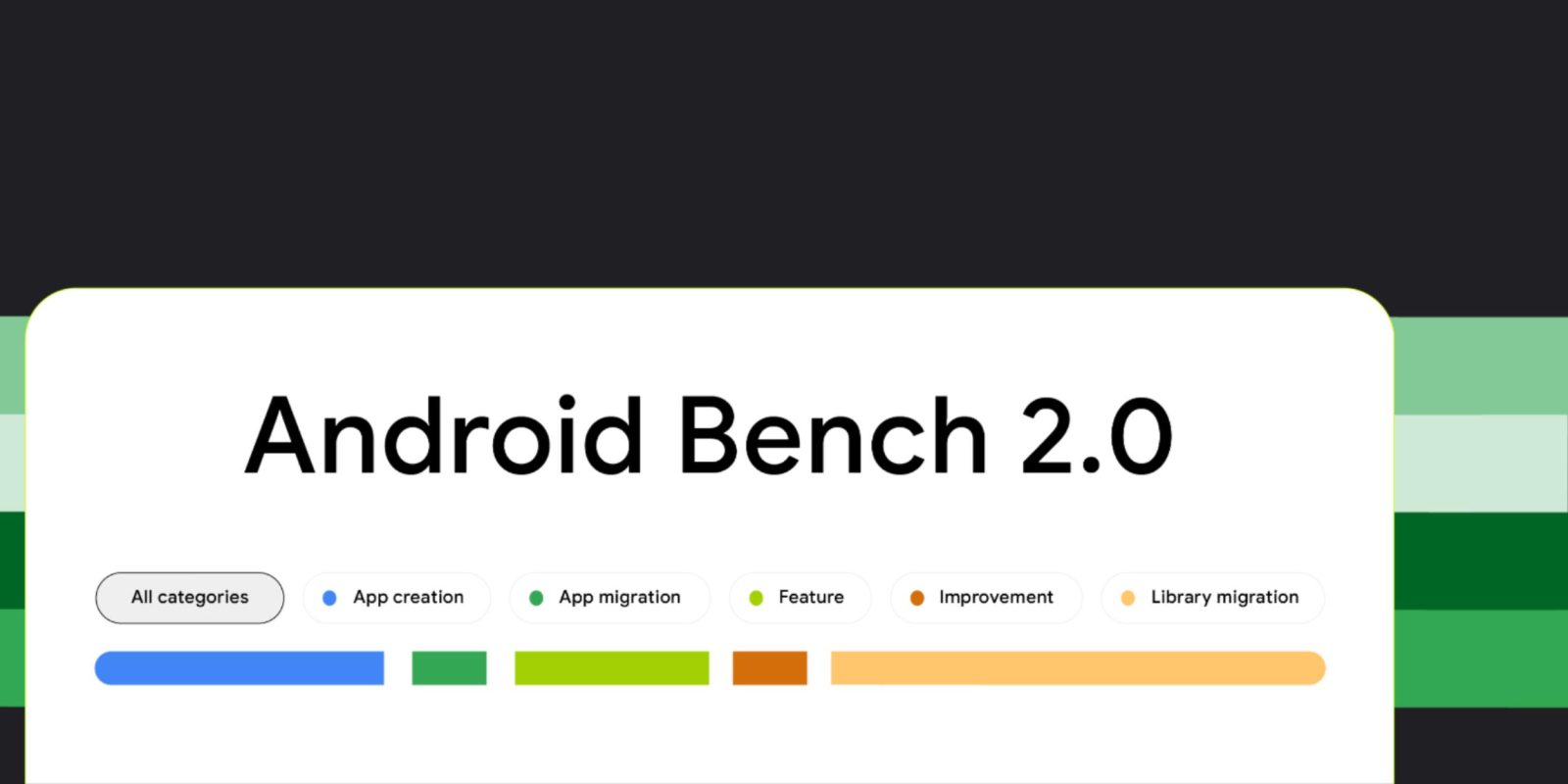
Google has released another set of benchmark results to determine the best AI models for Android coding, along with how much each model costs per token. Google’s Gemini 3.5 Flash is easily the most resource-intensive in Android development, and it doesn’t even make the top five.
Expand Expanding Close[Update: US too]Google kicks off World Cup hype with new ‘Chrome Dino FC’ Android figure [Gallery]
To celebrate the World Cup 2026, Google has quietly dropped a clever new limited-edition “Chrome Dino FC” Android figurine on its merchandise store.
Expand Expanding CloseWhat is the oldest phone you’d consider using daily? [Poll]
After a couple of years of trying to get my dad to switch from a battered and bruised iPhone 8, I wondered to myself why. If it ain’t (too) broke, don’t fix it, but I thought about what would be the oldest phone I could actively consider using daily.
Expand Expanding CloseBoox updates 6-inch pocketable Android e-reader with stylus support
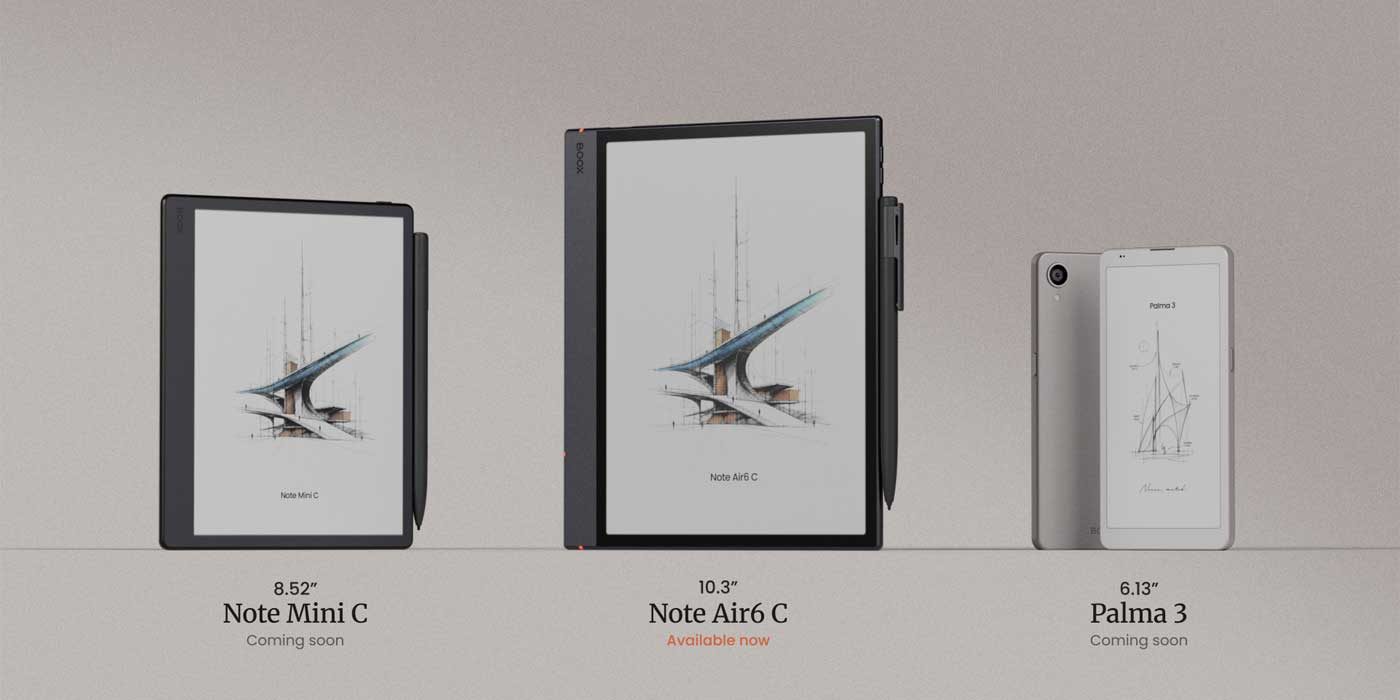
The Boox Go 6 Gen II turns one of the best Android e-readers into a pocketable notepad with support for a stylus.
Expand Expanding CloseGoogle teams up with Paris Hilton to showcase Android and AI app building
In what is now her second big partnership around Android, Google has named Paris Hilton as an “Icon in Residence” for Android, with a focus on what Android’s new AI tools can do for users.
Expand Expanding CloseSeriously, how do we not have more Android phones with Qi2 yet?
Ever since the Pixel 10 was released last year, Qi2 magnets have been a love-hate relationship – I love using them, but I hate that, somehow, the Pixel 10 is the only Android phone that has them. It’s crazy to me that no other Android brand has taken this feature seriously, and that we still have no word of that changing.
Expand Expanding CloseApple’s new iPhone ad couldn’t try any harder to make Android phones look ancient [Video]
In its latest “Privacy on iPhone” ad, Apple goes pretty heavy-handed in its attempt to make Android phones look ancient and ugly.
Expand Expanding CloseThese Android phones support AirDrop sharing with iPhone and Mac
Google cracked the code on making Android’s Quick Share feature work with Apple’s AirDrop, and the list of compatible devices continues to grow. Here’s every Android device currently compatible with AirDrop.
Expand Expanding CloseGoogle is reportedly buying Android app code from Play Store devs to train AI models
With coding having emerged as one of the best use cases for LLMs, Google is reportedly looking to train its AI models with code from actual Android app developers, but is at least paying them to do so.
Expand Expanding Close