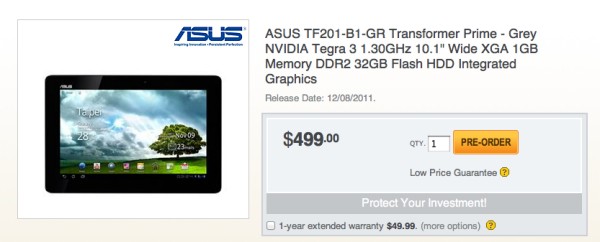
The Asus Eee Pad Transformer Prime, the first quad-core tablet running the new Tegra 3 chip from Nvidia, is probably arriving Thursday, December 8, just in time for Christmas. Engadgetpoints to a pre-order page over at Newegg which specifically mentions the December 8 date.
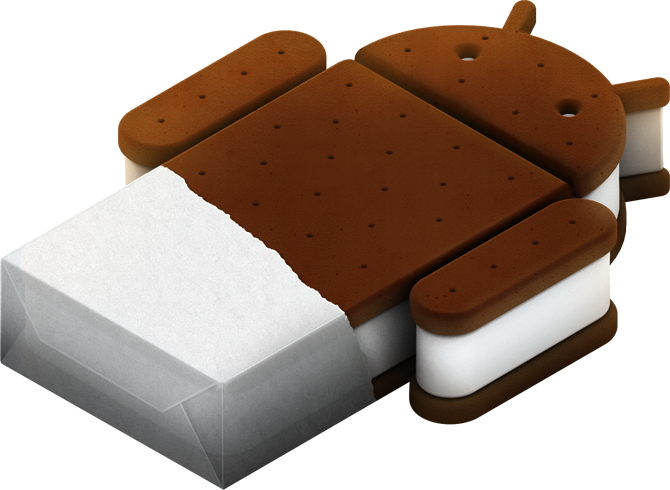
Asus chairman Jonney Shih confirmed that the device will be upgradeable to Android 4.0 Ice Cream Sandwich by the end of this year. Nvidia has published a nice video demonstrating Ice Cream Sandwich on a Transformer Prime. If you’re in the market for cool accessories, you may want to consider this origami like iPad-inspired smart cover case for the Transformer Prime.
According toDigiTimes, Asus is looking to ship over 350,000 Transformer Prime units this year. Sources estimate the company could cumulatively ship up to two million units of the Transformer tablet PC family in 2011.
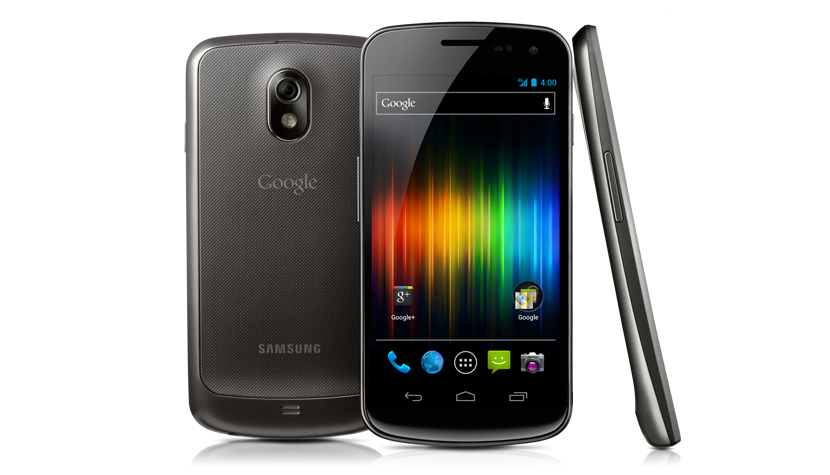
The Tegra 3 chip inside the Prime really makes the difference: Per this benchmark, the forthcoming tablet/notebook hybrid has the power of the previous generation of Transformer and smokes competition, including the Galaxy S II, Motorola Xoom and Galaxy Nexus.
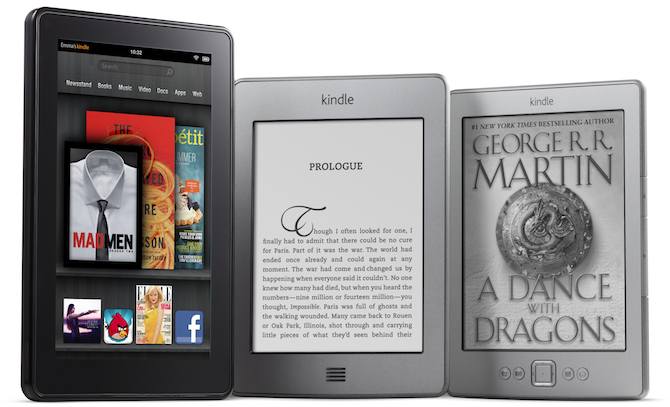
Online-only seller Amazon is sure bearing fruits of its recent foray into the tablet space. The $199 Kindle Fire tablet launched September 28 and it remains their bestselling product across all Amazon for eight weeks running. It’s not much of a surprise, really, considering the product’s prominent advertising on the Amazon sites and its breakthrough price.
Plus, it really is competing with other Android tablets rather than with Apple’s iPad (as we mentioned in our quick review). Amazon also said today that this Black Friday was the best ever for the Kindle family, with Black Friday sales of Kindle devices outpacing last year’s Black Friday by a factor of four. Kindle devices area now available at over 16,000 retail locations throughout the United States.
Amazon’s Kindle vice president Dave Limp said his company saw “a lot of customers buying multiple Kindles – one for themselves and others as gifts”. The streamlined Kindle product mix covers sweet price spots, ranging from as low as $79 (the Kindle) to $99 (the WiFi Kindle Touch) to $149 (the 3G Kindle Touch) and all the way up to $199 for their most expensive mobile device, the Kindle Fire tablet. Apple’s iPad 2 begins at $499, which buys you a tablet with 16 gigabytes of flash storage and WiFi-only networking ($130 more for a 3G+WiFi version).
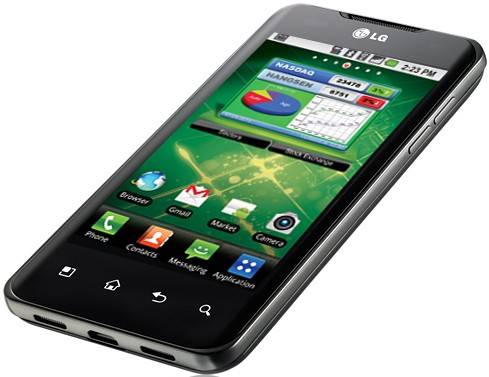
LG published on their official Facebook page a list of handsets that will get a firmware update with Android 4.0 Ice Cream Sandwich software. Initially, high-end LG smartphones will be eligible for upgrade to Google’s latest Android release, including the Optimus 2X, the Optimus Black, the Optimus 3D and the Optimus LTE. The company did not say when Ice Cream Sandwich will arrive for the aforementioned handsets, noting it will update customers via Facebook in December. As for their other devices:
We are also continuing to evaluate the ICS OS to determine whether it is compatible with the functionality, features and performance of other LG smartphones to make the ICS OS available on as many LG smartphones as possible.
Google’s been serious about requiring phone vendors and carrier partners to support high-end handsets with Android software updates for up to 24 months since the purchase date. Phone vendors recently began announcing lists of devices eligible for Ice Cream Sandwich, including Sony Ericsson and HTC.
Google on its part confirmed that the Nexus S will get an Ice Cream Sandwich firmware update “within weeks”, but not owners of the older Nexus One smartphone. Samsung refrained thus far from public comments, but their flagship Galaxy SII is certain to get the new software and we have no doubt in our mind that the South Korean manufacturer will soon detail an ICS upgrade path concerning their Android devices.
It’s the deal day today in the United States. To our non-U.S. audience, Black Friday (which follows Thanksgiving Day, a legal U.S. holiday observed on the fourth Thursday of November) officially marks the beginning of the holiday season (Black Friday through New Years). Unless you’re a U.S. resident, many if not all Black Friday deals don’t apply unless you’re shopping for intangibles.
Enter Gameloft’s Black Friday weekend sale of games for Android. If you’ve been looking for an excuse to load your Android device with high-quality games, make sure to follow @GameloftAndroid on Twitter. Beginning Friday and through Cyber Monday, Gameloft will be tweeting links to download paid games free of charge. Each link will be valid for two hours so you’ll need to remember to check their channel on a regular basis.
Gameloft also has a temporary sale of high-end games such as Modern Combat 2: Black Pegasus, The Oregon Trail, Real Soccer 2011 and more. These titles have been slashed to just 99 cents and a are ready to be downloaded here.
Google has posted a nice new promo clip for Google+ to their YouTube channel, just in time for the official start of the holiday shopping season. Surprisingly, it isn’t about discounts or deals as Google opted for a different approach.
It’s entitled “Circles Love Story” and illustrates vividly “new ways of sharing the right things with the right people”. So, a guy meets this girl and puts her in the “Love of my Life” circle on Google+. Ring a bell?. She returns the favor by putting him in the Creepers circle, but soon changes her mind and moves him around a bit until he ends up in…
Just watch the clip above. Google also polished up the original Google+ advert and introduced a new tagline. Both the original and new advert are right after the break. Speaking of holidays, have you seen a Thanksgiving Google Doodle that lets you customize a virtual turkey?
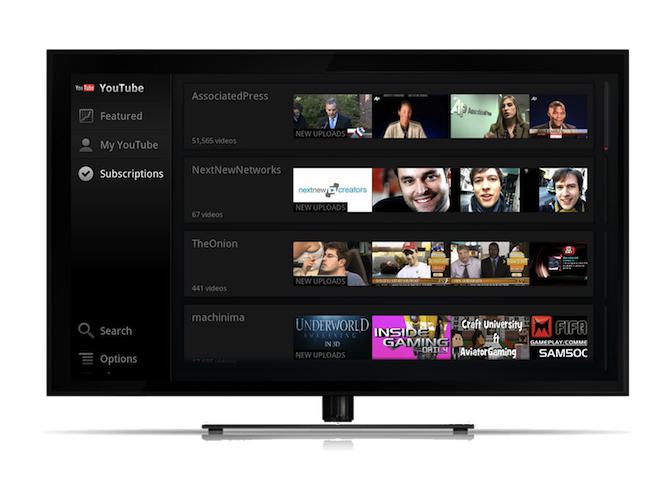
Google last month announced that its software powering the Logitech Revue set-top box and Sony’s networked television sets (and soon Samsung’s) will be updated with Android 3.1 Honeycomb code and new features. Today, the first in a series of several software updates is rolling out to Google TV devices, bringing with it enhanced experience for YouTube and Photos apps.
Per the official blog post, the new YouTube app now lets you watch the videos you’ve subscribed to and access your playlists, favorites and the Watch Later queue. It is also possible to add videos to your own channel from your Google TV.
As for the Photos app, you get the new Discover feature, basically a pretty screen saver that animates a collage of all your photos sourced from your Picasa or Flickr accounts. Like the shuffle feature on the iPod shuffle, Discover is a great way to enjoy your long forgotten photos.
Sony’s Google TVs have already received this update, but it’s still pending for Logitech’s Revue box, which has yet to receive a Honeycomb firmware update.
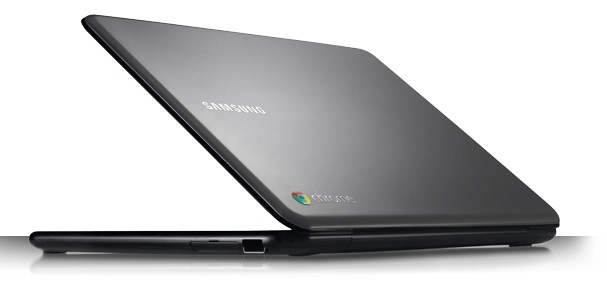
Chromebooks are currently being produced only by Samsung and Acer, the former having multiple Series 5 models on offer and the latter just one base model, the AC700. Market source from Asia, however, toldDigiTimes today that handset maker HTC could be developing a Chrome OS device of its own:
HTC is evaluating the feasibility of combining the advantages of Chrome OS and Android for use in Internet-access devices, products between tablet PCs and netbooks.
The statement is a bit ambiguous in and of itself. Granted, HTC has been rumored to consider alternative operating systems before, but their mission statement-like video posted on YouTube today is a portrayal of a mobile devices company specialized in phones, tablets and personal digital assistants. There’s no reason as to why HTC wouldn’t evolve its product line and throw notebooks/netbooks into the mix.
However, it’ss a crowded space with slim margins offering little incentive unless you’re Apple. On a final note, the “products between tablet PCs and netbooks” part could mean many things, not necessarily a Chrome OS netbook from HTC. Perhaps an Internet-connected portable media player akin to Apple’s iPod touch or Samsung’s Galaxy Player. It could also be a niche gadget such as Samsung’s Galaxy Note as well as a tablet/netbook hybrid with the capability to boot into Chrome OS or Android.
Google already shut down Android developer forums, closed Labs, phased out Google Desktop, killed off questions and answer site Advark and gave up on a whole lot of other services. With that in mind, the latest batch of Google services heading to the technology graveyard will surprise hardly anyone.
The streamlining of the company continues as the search Goliath announced in a blog post yesterday that Knol, Wave, Bookmarks Lists, Friend Connect, Gears and Search Timeline are goners, too. They are also shutting down the RE<C project which aimed to lower the cost of renewable energy (RE<C is an acronym for “renewable energy” [RE] is cheaper than coal [C]”). This comes after Google’s green arm had poured over $850 million into various renewable energy projects.
Google’s CEO and co-founder Larry Page said his company would kill off a number of smaller products in order to put “more wood behind fewer arrows”. The Jobs-ification of Google is supposed to allow the company to become more agile as it sets its sights on moon shots, ambitious projects which could metamorphose into the pillars of Google’s future growth.
Page took the reigns at Google on April 4, taking over from Eric Schmidt who was promoted the company’s chairman. Head down past the break for the full list of discontinued products and their respective end-of-life dates, per Google’s post.
Lenovo’s Android adventure has been a mixed bag of what some may call overpromising and underdelivering. The company’s separation of tablet lineup into consumer and business families surprised those who deemed the tablet market a consumer game. They debuted the 10.1-inch consumer-focused IdeaPad K1 and the ThinkPad for business back in July, following up with a seven-incher two and a half months ago.
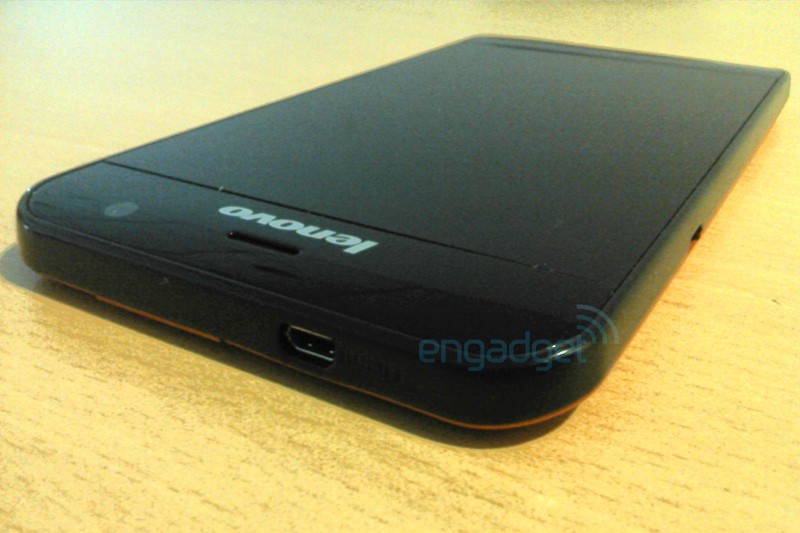
That device, the IdeaPad A1, resembless last year’s Galaxy Tab from Samsung. They also promised a 10.1-inch Ice Cream Sandwich tablet for next month and now Engadget has it that a brand new five incher is in the works. Resembling Dell’s ill-fated Streak 5 tablet, the device is said to be marketed under the IdeaPad moniker in the Western world and the LePad in China.
It should pack in a dual-core processor, a micro-USB port, HDMI output and a front-facing camera, amongst other perks. The three capacitive buttons led the publication to speculate that the gizmo may not run Honeycomb or Ice Cream Sandwich, but we’d find this hard to believe as Honeycomb is specifically tailored for seven-inch tablets and beyond.
An issue with the volume control on the Galaxy Nexus handset spontaneously going to zero plaguing some UK users have been addressed and fixed, Google said in an official statement to The Verge:
We are aware of the volume issue and have developed a fix. We will update devices as soon as possible.
This is good news for owners who feared the volume bug was actually a hardware flaw with the device whereas it was actually a software thing. Google will likely squash this bug with a next point Ice Cream Sandwich update delivered over the air. A video clip, included below, outlines the bug which manifests itself as another phone is put near a Galaxy Nexus device, causing it to cycle through the menu in bootloader mode, activated by the volume rocker.
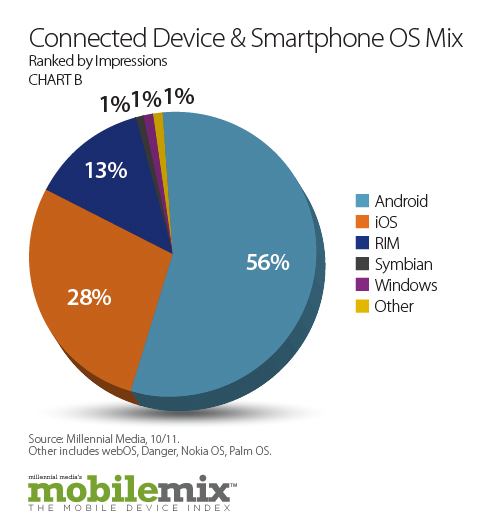
Mobile advertising and data company Millennial Media is out with a new MobileMix report based on ad impressions across their network. The results are admittedly surprising considering Android’s seemingly unstoppable march: Google’s operating system did not grow in October compared to the summer period. All Android devices combined in October logged twice the ad requests of iOS gadgets, 56 percent versus 28 percent.
Both operating systems recorded same respective shares during the summer, although Android actually fell two percentage points in August before returning to its 56 percent share in October. As for the other players, Research In Motion’s BlackBerry OS did 13 percent ad requests while Symbian, Windows and Other each logged just one percent. In fact, the entire pie chart above is exactly the same as the summer 2011 chart. Also, relative data pitting Android vs. iOS echoes recent surveys by Nielsen and Gartner.
Of the top 15 device vendors, Samsung grew seven percent month-over-month and had six of the top 20 phones on the Millennial Media network. Interestingly, the Samsung Freeform, a feature phone, made the list of top 20 phones led by iPhone (it’s the first feature phone on their list since May 2011). Android devices represented 14 of the top 20 cell phones in October (15 devices in the summer period), with a combined impression share of 24 percent.
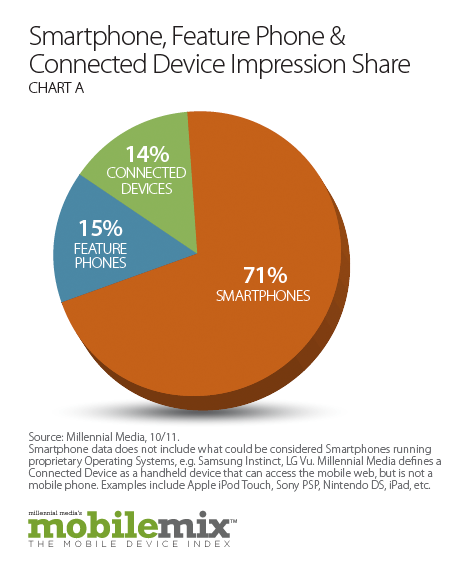
Apple remained the leading manufacturer on their platform and Android remained the top OS when combining Smartphone & Connected Device impressions. More surprising than that, nearly three-quarters of ad requests, or 71 percent, came from smartphones. The remaining 15 and 14 percent came from feature phones and connected devices. Other interesting takeaways right after the break…
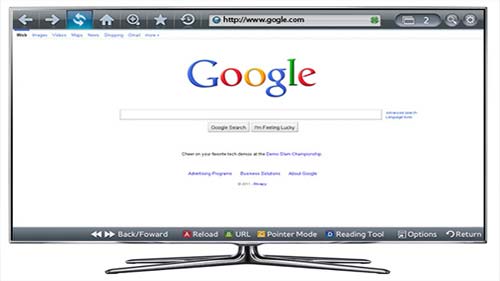
Samsung has been selling Smart TVs like the one above for years.
Samsung and other players have been selling high-definition television sets based on the Smart TV platform for years. The South Korean maker of consumer electronics sold just shy of 20 million units and announced in June that their Smart TVs topped two million app downloads. Samsung also announced a Blu-ray player and Google TV companion box back in January, but that product failed to materialize.
Reuters reports the company could be doubling down on the Google TV initiative. Their head of television division Yoon Boo-keun confirmed that his company “is in last-stage talks with Google to roll out Google TV”. Interestingly, the executive hinted Samsung’s Google TV offering “would differ” from those of competitors.
It makes sense. Samsung has had tremendous success with Android-driven smartphones and tablets. The company is keen on exploring future Android devices, including mobile devices with flexible displays. And because Google TV is basically a Honeycomb device with a big screen, Samsung can tap its experience and expertise building Honeycomb devices for the Google TV project.
As for the chips, Samsung could simply use Intel’s reference Atom platform found in other Smart TVs or use the rumored quad-core processor code-named Exynos 4412 said to debut in the Galaxy S III at Mobile World Congress in February 2012. Economies of scale would benefit Samsung if it were to use its own chips in a similar fashion Apple benefits from deploying its A-series of chips across the tens of millions of iOS devices they sell each quarter. Expand Expanding Close
Samsung is thought to be at work developing a quad-core chip to power the Galaxy S III, an addition to the Galaxy smartphone family expected to be unveiled at Mobile World Congress which runs February 27-March 1 in Barcelona, Spain. According toPocketNow, based on the source code at kernel.org, the new chip will be marketed as the Exynos 4412 and will feature four processing cores.
Samsung recently launched the 32-nanomenter Exynos 4212 chip with a dual-core ARM Cortex-A9 processing core clocked at 1.5GHz and ARM’s quad-core Mali-400 GPU. Like Apple’s upcoming A6 chip (said to be manufactured by Samsung) and Nvidia’s Tegra 3 silicon, the rumored Exynos 4412 chip should take advantage of the four cores of the Cortex-A9 processor from ARM Holdings. Its closes competitor, however, will be a 2.5GHz Qualcomm Snapdragon quad-core beast allegedly debuting early next year in the HTC Zeta smartphone.
Unlike the Tegra 3 chip which employs Nvidia’s own GeForce graphics processor or Apple’s A6 that is likely to tap Imagination Technologies’ next-generation PowerVR GPU, the Exynos 4412 could use the recently introduced Mali-T658 graphics unit which delivers up to ten times the graphics performance of the Mali-400 GPU and four times the GPU compute performance of the Mali-T604 GPU.
ChangeWave Research in a new survey polled 3,043 consumers on consumer tablet demand for the holidays, including a close-up look at demand for the Amazon Kindle Fire vs. the Apple iPad. Overall, tablets are big this holidays as sales in the United States increase an estimated 130 percent.
Everybody wants a tablet, it seems. A total of 14 percent of respondents plan on buying a tablet in the next 90 days, an eight percentage points increase over an August ChangeWave survey and more than triple the level of a year ago. However, nowadays shoppers no longer have to pick between an iPad or an array of same-looking Android tablets because Amazon is now the second most-popular tablet brand (people clearly want an Amazon tablet).
According to ChangeWave:
The Amazon Kindle Fire is going to leapfrog the competition and become the number two product in the tablet market, as long as it can provide a quality user experience. But the Amazon surge may also contain a silver lining for Apple, by damaging the tablet market hopes of the remaining competitors in the field.
Nearly two-thirds of respondents (65 percent) plan on buying an iPad, or two out of three tablet buyers. People are loving their iPads and it shows in satisfaction ratings. A total of 74 percent of all iPad owners are Very Satisfied versus 49 percent for all other tablet manufacturers combined.
More than one in five, or 22 percent, eye an Amazon tablet and just four percent plan on buying a Galaxy Tab from Samsung. Apple’s score is in line with iPad’s IDC-estimated 68 percent share of the tablet market. In addition, Canalys projected Apple will overtake Hewlett-Packard to become the #1 PC maker globally on the heels of iPad 3 release, although not everybody is down with counting iPad as a computer. More tidbits and charts after the break.
One of the treats that immediately set apart the first version of Android from Apple’s iOS software (besides the notification center invoked with a pulldown gesture) is the pattern unlock feature on the lock screen. Whereas Apple opted for a slide gesture (“We wanted something you couldn’t do by accident in your pocket”, said Steve Jobs at the iPhone unveiling), Android introduced a concept of drawing a custom shape to unlock your device.
And while some Android manufacturers replace this built-in capability with their own enhanced solutions, pattern unlock is in fact a norm on most Android phones. Apple, of course, patented its Slide to Unlock thing and yesterday the United States Patent & Trademark Office granted the search giant a patent for Android pattern unlock.
Titled “Touch Gesture Actions From A Device’s Lock Screen”, it summarizes Android’s trademark capability:
A lock screen view is displayed on the mobile device to prevent unauthorized and inadvertent access to the mobile device’s data. While the mobile device is locked, a touch gesture having a pre-defined shape is detected on a touch screen of the mobile device independently of the initial position of the touch gesture on the touch screen.
The patent goes on to detail custom gestures which can be drawn anywhere without even looking at the lock screen, allowing you to quickly access certain functions while keeping the device locked, like with HTC’s Sense 3.0 software shown in the below clip. Google explains custom gestures can be used to, say, silence the device while keeping it discretely hidden from view.
The document continues:
In response to detection of the touch gesture, a particular action is executed on the mobile device while the mobile device stays locked. The particular action determined according to the pre-defined shape. In this way, detection of the touch gesture causes the particular action to execute while keeping the mobile device locked.
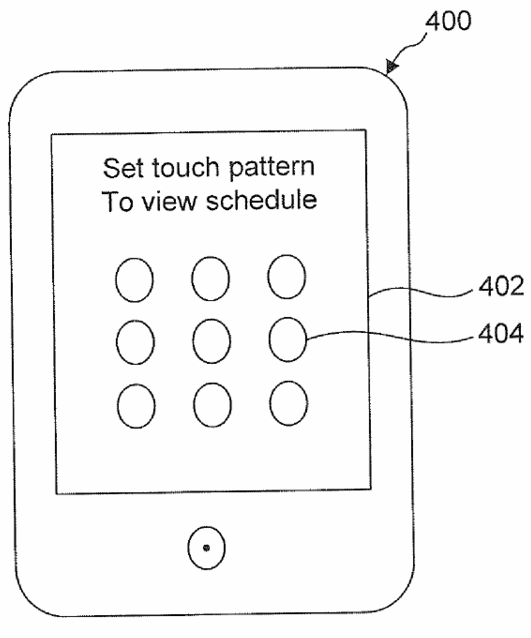
Google was also granted another patent titled “Automatic Derivation of Analogous Touch Gestures From A User-Defined Gesture” (patent ID: 20110279384) which specifically details methods to decipher custom gestures drawn anywhere on the lock screen, regardless of their shape, size, position, etc . The search company credits James B. Miller et all with the pattern unlock invention. To retrieve additional information, type in a patent number of 20110283241 into the USPTO search engine here. Another drawing from the patent grant is right after the break.
It won’t come as a terrible shock to anyone that Google is leveraging Ice Cream Sandwich software for smartphones and tablets in order to up-sell you to its paid offerings, namely the new Google Music service. After all, it’s Google’s software and Google’s ecosystem and others are guilty of this as well. For example, Apple wants your credit card number before you can download free apps from the App Store.
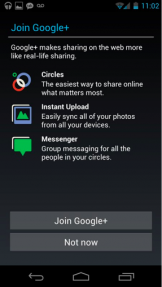
And now, TechCrunchdiscovers that those who enter their Google account credentials into their Ice Cream Sandwich device are prompted to sign up for Google+. While expected, it means any Ice Cream Sandwich device owner is a potential Google+ user. Yeah, Facebook should be worried.
The other thing Ice Cream Sandwich does is it prompts you to enter your credit card information. This is also an intriguing move with far-reaching consequences. Of course, Google needs your credit card for purchases in Android Market.
But, as Wallet now gets integrated with Checkout and Music gets its own place in Android Market, an integrated Google ecosystem is slowly but surely forming before our own eyes. And the more you live in that ecosystem, the harder it gets to switch over to something else. Just ask Apple, the creator of arguably the stickiest platform out there.
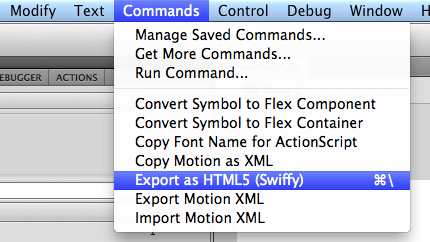
As the Occupy Flash initiative looks to end the reign of Adobe’s Flash Player plug-in in web browsers, Google has conveniently made an announcement over at the Code blog about the Swiffy Extension for Flash Professional. This handy add-on lets developers convert their vector animations in Flash Professional to HTML5.
With the Swiffy Extension, you can publish to HTML5 right from Adobe Flash Professional. This makes using Flash to develop HTML5 animations much easier. The extension accesses Google Swiffy as a web service, so you always use the most recent version of Swiffy.
The extension is compatible with Adobe Flash Professional CS4 or newer for Windows XP/Vista/7 or Mac OS X 10.4+ (download it here). It cannot convert every conceivable Flash project to HTML5 so you may want to check out the output panel that lists any Flash features used in your project that are not supported by Swiffy.
The extensions is based on Swiffy, an experimental web app released back in June as a way of liberating web developers from the confines of Adobe’s Flash platform. It was subsequently updated with new features and got a new home at g.co/swiffy. Expand Expanding Close
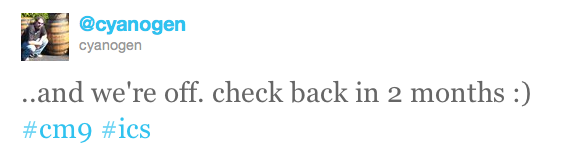
If you want to put Android 4.0 Ice Cream Sandwich on your tablet or a smartphone on your own terms, you’ll have to wait until the CyanogenMod is updated with Android 4.0 support. According to a tweet by Android coder @cyanogen (viathe Verge), the new version of the CyanogenMod is due in two months.
For those not in the know, the CyanogenMod project allows owners of rooted Android devices to install the latest firmware themselves rather than wait for their carrier to deliver it. The project supports a bunch of devices, some fifty builds are available for various Android products.
Amazon’s Free App of the Day has brought us dozens of not-to-be-missed deals on otherwise paid Android apps and games, such as the addictive Peggle puzzler. Today, they’re offering Electronic Arts’ Bejeweled 2, a highly-addictive color matching game available on every conceivable platform. In fact, the Bejeweled series catapulted its maker PopCap Games into stardom, leading to a $1.3 billion acquisition by games publisher Electronic Arts. Bejeweled 2 is free today only (otherwise a $2.99 value) so hop over to the Amazon store and grab yourself a copy.
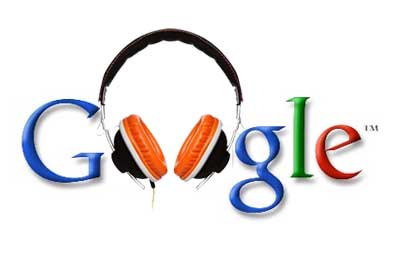
As Google gears up for a music announcement due Wednesday, leaked details help paint a better picture of what to expect tomorrow. This includes pretty screenshots of an Android client as well as various tidbits published by big media, including the likes of the Wall Street Journal.
This morning, Bloombergchimed in with information that the search giant will “secure songs” from Vivendi’s Universal Music Group, the largest record label in the world:
An accord with Universal, the world’s biggest music company, may be signed as early as tomorrow, said the person, who isn’t authorized to talk publicly.
The article goes on to mention that the new music service will provide song downloads and full-song previews while the accompanying cloud locker will let users access tracks from multiple devices, share them on Google+. Vivendi isn’t the only holdout: Sony and Warner Music Group reportedly passed on Google Music citing pricing and piracy concerns. Google previously managed to secure licenses for music from EMI. The agreement could give Vivendi a much-needed leverage against Apple, mind you…
Google’s much tighter co-operation with key Android backers on Ice Cream Sandwich and their insistence that phone vendors regularly drop firmware updates could be working. Some Android manufacturers – such as HTC and Google – have already published a list of devices to get the Ice Cream Sandwich update.
Today Sony Ericsson announced in a blog post that the latest and greatest version of the Android operating system will drop on all Xperia devices released in 2011, which includes the Xperia arc and arc S, Xperia PLAY, Xperia neo and neo V, Xperia mini and mini pro, Xperia pro, Xperia active, Xperia ray as well as Sony Ericsson Live with Walkman.
Per the blog post:
We can today confirm that we plan to upgrade the entire 2011 Xperia portfolioto the next version of Android known as Android 4.0 or Ice Cream Sandwich. We are working on merging our current Xperia experience with the new features in Android 4.0.
Early last month at MAX 2011, Adobe announced six new apps for tablets: Photoshop Touch, Collage, Debut, Ideas, Kuler and Proto (check out our hands-on), in addition to Adobe Creative Cloud, a new worldwide hub providing a central cloud-based storage and sharing features for Adobe’s software. Today, a post over at the Adobe blog revealed the availability of those programs in Android Market.
The apps are priced at $9.99 each, they are compatible with Android 3.1 Honeycomb and onwards and require at least an 8.9-inch device. According toThe Verge, they won’t run on Amazon’s Kindle Fire tablet.
Adobe Creative Cloud is clearly becoming a crucial backbone serving Adobe’s desktop and tablet software. Combined with tablets apps, Adobe Creative Cloud lets you store, share and view your creative work across devices, using 20GB of online storage, as well as transfer the files into Adobe Creative Suite for further refinement.
The apps themselves allow for image editing, ideation, sketching, mood boards, website and mobile app prototyping, as well as presenting finished work. In addition to the already released Adobe Ideas for iOS devices, Adobe said iOS versions of the other five apps will be available “in early 2012”. Go past the break for more information about each app.
Android, Google’s software conceived as an operating system for smartphones, tablets and other devices, was found on more than half of all global smartphone shipments in the third quarter of this year. Samsung’s Bada software was the only other growing platform, going from 1.1 percent share in Q3 2010 to 2.2 percent share in Q3 2011.
All the other guys, Apple included, surrendered market share to a wide variety of Android devices. Plus, Samsung was confirmed as the leading smartphone vendor worldwide. Delayed launch of a next-generation iPhone presented Android backers with additional three months to gain market share, which negatively affected Apple whose shares were down ten percent over the past month.
That’s the gist of today’s report from Gartner that pegged Android’s Q3 2011 share to 52.5 percent on sales of a whopping 60.49 million Android phones, a substantial increase over the 25.3 percent in the year-ago quarter on shipments of 20.54 million units. Together, iOS and Android accounted for more than two-thirds of all smartphones sold (talk about duopoly). Principal research analyst Roberta Cozza:
Android benefited from more mass-market offerings, a weaker competitive environment and the lack of exciting new products on alternative operating systems such as Windows Phone 7 and RIM
Research In Motion, which is gearing up to launch first QNX-driven BlackBerries early next year, saw its smartphone share fall to just ten percent, its lowest point so far in the U.S. market. Apple’s share of the global smartphone market was 15 percent in Q3 2011 on sales of 17.29 million units, which is a 21 percent annual increase. But the smartphone market grew at an even faster clip so Apple actually recorded a slight decline from the 16.6 percent in Q3 2010 on sales of 13.48 million units.
Google’s post-sale support leaves a lot to be desired and this has especially been true for advertisers, publishers and businesses who host their business on Google’s servers. As the search company adds many more thousand and millions of users under its fold, so does the need for friendlier ways of addressing customer issues grow. Publishers and advertisers should get phone support anytime now, as promised.
As for the Google Apps for Business customers, Google today announced in a post over at the official Enterprise blog the new Google Apps for Business support page which lets Business and Education edition customers yell at Google over phone, 7 days a week, 24 hours a day:
To improve the experience of our customers, we now provide 24 x 7 phone support to small, medium, and large Google Apps for Business customers for all issues affecting the core services. Our customers may also receive support through our web-based support portal, online help forms, and online help center. All support cases are handled directly by trained Google Apps experts.
Phone technical support is available in the United States, internationally and in local markets. For local phone numbers, Google advises folks to visit the Support tab in their control panel.









 Source: Gartner (November 2011)