Android

See All Stories

Breaking news for Android. Get the latest on apps, carriers, devices, and more!
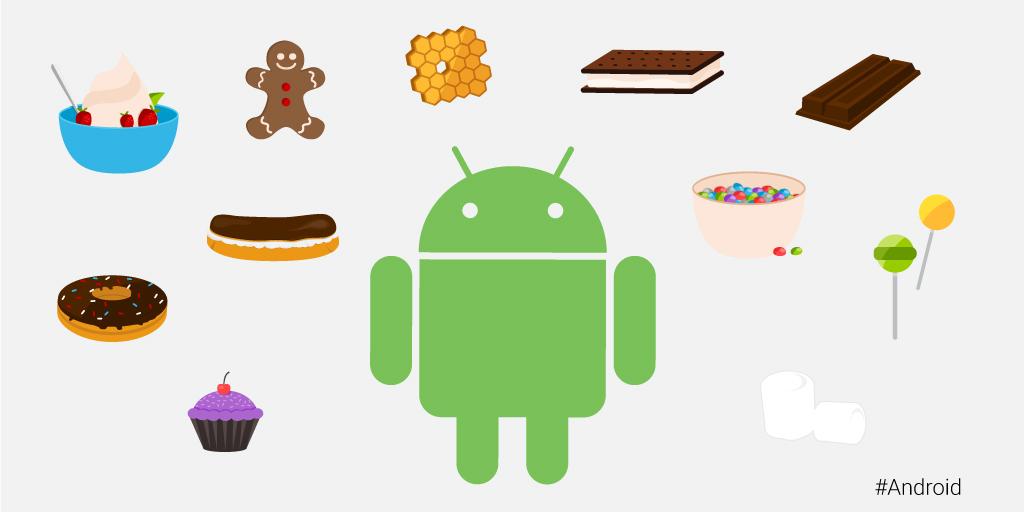
Android is Google’s mobile operating system, launched in September 2008, although its history technically began with the release of the Android alpha in November 2007. To this day, Android powers the majority of the world’s smartphones and comes in several different flavors across many phone makers.

What is Android?

Android Inc.

Android, before it was Android, was a company called Android Inc. That company was founded in Palo Alto, California, in 2003 by a crew of four: Andy Rubin, Rich Miner, Nick Sears, and Chris White. The company and its project was acquired by Google in 2005 for a sum of more than $50 million, although the exact number is unknown. The company’s founders joined Google as part of the deal.

In its infancy, Android was an operating system built not for touch screen smartphones like the iPhone, but rather BlackBerry-like devices with physical keyboards. It’s well documented that after Apple shocked the world with the iPhone, ahead of its nearest competition by at least a couple years, Google and Android Inc. had to go back to the drawing board to build something competitive.

Adoption by third-party makers

It didn’t take long after the launch of the iPhone for various manufacturers to enter the market with their alternatives — and Google’s Android immediately became the obvious platform of choice for just about everyone except Microsoft. HTC was the first manufacturer on board, and introduced the T-Mobile G1 running Android in September 2008. Soon after, HTC, Motorola, Samsung, and carriers like Sprint and T-Mobile jumped on board to form the Open Handset Alliance.

Android makers across the world

Iconic Android handsets

There have been thousands of Android phones released since Android’s inception, but some have been more important to the platform’s history than others. There was the original T-Mobile G1, as mentioned, but there was also the HTC One Google Play Edition, Moto G, Samsung Galaxy S4, and others. Some of the most iconic Android handsets include:

  • HTC G1
  • HTC Nexus One
  • Samsung Galaxy S, S2, S3, S4, and their successors
  • HTC Incredible S
  • Samsung Nexus S
  • Samsung Galaxy Nexus
  • Samsung Galaxy Note
  • Nokia 8
  • BlackBerry KeyOne
  • Google Pixel and its successors

In more modern times, there are several Android smartphones makers that popped up across various niches and in several international markets. Huawei is a dominant Android maker in China and many European markets, while Samsung is by far the most popular maker in the United States by far — effectively creating a duopoly with Apple. Today, there are dozens of major device makers contributing to the Android ecosystem.

Full list of Android OEMs

History of major Android versions

Android has seen countless software revisions over the course of its life, but in modern times the OS usually sees a major release on an annual cadence. In the earlier days, Google famously gave its major software releases dessert-themed codenames, but retired that practice in 2019 with the release of Android 10.

VersionNameReleaseDevices
2.3GingerbreadFebruary 9, 2011Nexus S
4.0Ice Cream SandwichOctober 19, 2011Galaxy Nexus
4.1Jelly BeanJuly 9, 2012Nexus 7
4.2Jelly BeanNovember 13, 2012Nexus 4, 10
4.3Jelly BeanJuly 24, 2013Nexus 7 (2013)
4.4KitKatOctober 31, 2013Nexus 5
5.0LollipopNovember 3, 2014Nexus 6, 9
5.1LollipopMarch 9, 2015Android One
6.0MarshmallowOctober 5, 2015Nexus 5X, 6P
7.0NougatAugust 22, 2016Nexus 5X, 6P
7.1NougatOctober 4, 2016Pixel, Pixel XL
8.0OreoAugust 21, 2017Pixel, Pixel XL
8.1OreoDecember 5, 2017Pixel, Pixel XL
9PieAugust 6, 2018Pixel 2, Pixel 2 XL
1010September 3, 2019Pixel 3, 3a
1111September 8, 2020Pixel 4

List of major Android OS platforms

While Android proper is certainly the most widespread of Google’s Android operating systems, the company has also launched many offshoots of the main OS over the years. There’s Android Auto, Android Wear (now Wear OS), Android TV (now rebranded to Google TV), as well as versions of Android built for tablets and Android Things (now defunct).

Report claims Microsoft roadmap has iOS/Android support scheduled for fall 2014

Site default logo image

Since we first heard rumors that Microsoft was working on Office for iOS and Android as far back as 2011 and got a look at alleged leaked images of an iPad app that Microsoft later denied were real, every couple of months we’ve seen reports that say the app is coming soon. First it was November 2012, then early 2013, and others claimed “sometime after” March 2013. Along the way  The latest rumor: Microsoft has Office for iPhone and Android is scheduled for fall 2014.

Zdnet claims to have got its hands on Microsoft roadmap for next year and says on it is “iOS/Android support for Office”:
Expand
Expanding
Close

Samsung releases first Galaxy S4 TV ads focusing on S Translator, Sound Shot & Group Play (Video)

Site default logo image

http://www.youtube.com/watch?v=w-DfsqoqRn4

Samsung has released a few of what appear to be its first Samsung Galaxy S4 TV ads on its YouTube channel. The first, above, shows off the the S4’s S Translator feature, while the others (below) highlight the Sound & Shot feature that ads audio to still images and Group Play for streaming audio on multiple device’s at once:
Expand
Expanding
Close

‘Burner – Disposable Phone Numbers’ app launches on Android with new referral program

Site default logo image

We’ve written about the Burner iOS app from Ad Hoc Labs in the past on our sister site 9to5Mac– an app that received a lot of attention for its ability to provide temporary numbers for receiving SMS and calls on the iPhone. Today the developers are announcing a major update to the app that introduces a number of new features such a referral program and custom voicemail messages alongside the launch of the Android version of Burner. While temporary burner numbers aren’t free, Ad Hoc Labs is also dropping the $1.99 price tag and making Burner available as a free download starting today.

Not only can you download the app now for free, Burner is also providing a “Sample Burner” to get you started:
Expand
Expanding
Close

Samsung offices raided in ongoing case over leaked OLED tech

Site default logo image

According to a new report from Bloomberg, police in South Korea searched offices belonging to Samsung yesterday in a raid connected with an ongoing case related to whether or not Samsung was involved in the leaking of trade secrets. Police originally charged six employees from LG Display related to the theft of OLED technology from Samsung. Reports from last year claimed Samsung employees were fired in connection with leaking the technology, and today an LG spokesperson confirmed the latest investigation is related to its OLED TV panel technology:

“The latest investigation is related to large-sized OLED TV panel technology, but the police have made the allegation themselves,” Son Young Jun, a Seoul-based LG Display spokesman, said by phone today. LG said in July the information its employees were charged with leaking or stealing at the time was widely known in the industry and wasn’t considered to contain trade secrets.

Police in the South Korea wouldn’t comment on yesterday’s raid, but LG reportedly said “it didn’t report Samsung to police in connection with the current investigation.” 
Expand
Expanding
Close

Facebook First and Home review round-up: beauty is only skin deep

Site default logo image

Last week, Facebook announced two new products to expand their reach in the mobile market: Facebook Home, a downloadable Facebook-intergrated skin for Android phones and the HTC Facebook First, the first official hardware by the company. The First is scheduled to be released April 12th for $99 exclusively through AT&T. Naturally, the First comes pre-loaded with Facebook Home.

Facebook Home is a downloadable launcher for Android phones only, and a few of its key features such as Chat Heads are getting much praise by reviewers. On the other hand, the First is being criticized for its lack-luster hardware such as the mediocre 5MP camera and lack of a dedicated shutter button.

If you want to read all about Facebook’s new duo of software and hardware, below is a round-up of some of the reviews from around the web…

Engadget:

The HTC First is compelling for two reasons. For Facebook fans, it’s now easier to maintain social connections with friends and family. For the tech-savvy crowd who has little interest in the service, the phone is a stock Android 4.1 device that comes with AT&T LTE, which is still something of a rarity. Including this opt-out was a smart move on Facebook’s part, because it’s difficult to recommend that consumers sign two-year contracts on an unproven product that depends so heavily on their engagement with Facebook. Worst case, it’s a decent mid-range phone for $99 on contract (or $450 without any commitment).
Facebook Home isn’t perfect, nor will it convince many non-Facebookers to start Liking and commenting with reckless abandon. But it’s aesthetically pleasing, and surprisingly polished for a 1.0 product.

CNET:
Expand
Expanding
Close

Microsoft’s latest Scroogled ad warns against downloading apps on Google Play

Site default logo image

[protected-iframe id=”c528ab847bd1105bebfbbc1620586798-22427743-18874939″ info=”http://hub.video.msn.com/embed/5ca0a386-f0c2-4a4f-bdea-bd971e54a3b0/?vars=Y29uZmlnQ3NpZD1NU05WaWRlbyZsaW5rb3ZlcnJpZGUyPWh0dHAlM0ElMkYlMkZ3d3cuYmluZy5jb20lMkZ2aWRlb3MlM0Zta3QlM0Rlbi11cyUyNnZpZCUzRCU3QjAlN0QlMjZmcm9tJTNEJm1rdD1lbi11cyZzeW5kaWNhdGlvbj10YWcmY29uZmlnTmFtZT1zeW5kaWNhdGlvbnBsYXllciZsaW5rYmFjaz1odHRwJTNBJTJGJTJGd3d3LmJpbmcuY29tJTJGdmlkZW9zJmZyPXNoYXJlZW1iZWQtc3luZGljYXRpb24%3D” width=”640″ height=”360″ frameborder=”0″ scrolling=”no”]

If you don’t know by now, since early February Microsoft has been running its “Scroogled” smear campaign spending 7 figures on a series of print and online ads attacking various Google services. The ads originally focused on Gmail and how Google displays ads based on the content of user’s emails, but Microsoft’s latest Scroogled ad (above) takes on another Google app– Google Play.

The ad is currently featured on the front page of Microsoft’s Scroogled website and features a warning that Google passes off personal information about users to app makers without consent from users:

When you buy an Android app from the Google app store, they give the app maker your full name, email address and the neighborhood where you live. This occurs without clear warning every single time you buy an app. If you can’t trust Google’s app store, how can you trust them for anything?

We expect Google will be issuing a response to Microsoft’s claims shortly. Another Scroogled ad claiming Google Play sends personal data to app makers below:
Expand
Expanding
Close

Site default logo image

Google Calendar now available in Latin American Spanish on Android & desktop

While hundreds of millions of Spanish speakers around the globe have had the option to use Gmail in Latin America Spanish since last year, a number of other popular Google services didn’t offer the Español language setting. Now, Google has announced on its Official Gmail Blog that it is expanding support for its Latin American Spanish language option to Google Calendar:

If you’re new to Calendar but already using Gmail in Latin American Spanish, just visit google.com/calendar and language settings will be ready to go. If you’ve used Calendar in the past, you’ll need to update your language settings by clicking on the gear icon in the mid-upper right of Calendar, then selecting Settings: Once in General Settings, Language you can select Español (Latinoamérica).

You’ll also be able to access the Español (Latinoamérica) setting for Calendar on Android devices through your device’s “Language Settings” within Settings.

Google confirms redesigned Google Play Store, begins rolling out

Site default logo image

An updated Google Play with an image-centric design will be rolling out to all Android devices running Froyo (2.2) and up over the next few weeks, the Official Android blog confirmed. The redesign focuses on connecting ‘similarly themed’ content so apps, songs, and movies of the same genre are grouped rather than scattered everywhere.

Perhaps it’s too soon to  state this with any certainty — surely this update has been in the works for some time now — but we may already be seeing the influence of Facebook Home on app design, at least as it pertains to the use of larger imagery and simplified interface. Something to keep an eye on at the very least.

Site default logo image

WhatsApp says it’s not holding sales talks with Google despite earlier rumor

This past weekend, a rumor had claimed that Google is holding talks with WhatsApp to acquire the messaging service for around $1 billion. Tonight, WhatsApp has told AllThingsD that it is not holding sales talks with Google. Meanwhile, Google is rumored to soon be launching its own “Babel” messaging service.


Expand
Expanding
Close

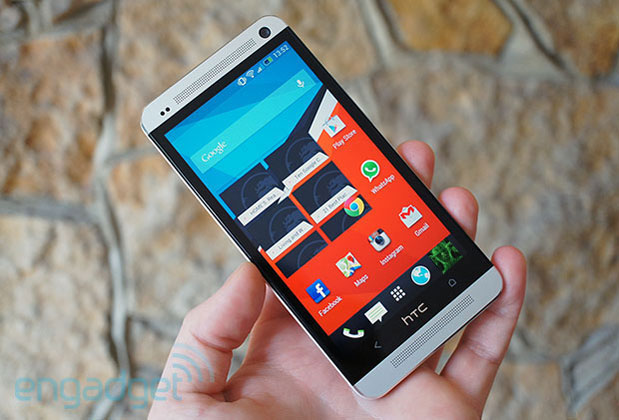
HTC One, reviewed: a standout, breathtaking Android phone for everyone

Site default logo image

I’ve been really excited to get my hands on the HTC One.

The world is chock-full of low-end — and high-end —  Android phones that are plastic and hard to distinguish from one another. So, as an iPhone user primarily, I liked the One’s obvious iPhone 5-like accents—which is seemingly A-O.K. by Apple, at least as evidenced by the global settlement and 10-year licensing deal reached with HTC last year—and entirely aluminum construction.

HTC’s flagship phone in 2012, the One X, earned critical acclaim from reviewers across the blogosphere, but the Samsung Galaxy S III and iPhone 4S overshadowed its launch. Now, one year later, HTC is up to bat again with the HTC One, but this time around, it faces nearly the same challenges in the Galaxy S 4 and iPhone 5.

Check out the full review below to see how the HTC One measures up.


Expand
Expanding
Close

HTC One pictured in red

Site default logo image

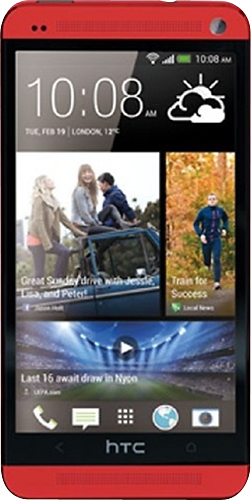
The HTC One is a gorgeous phone — even without the Lumia-esque colors, it’s still one one of the most attractive handsets on the market. It should really be no surprise, then, that HTC plans to expand the current color palette of, um, two, to encompass a brighter range of hues. This is the red version of that device — you may remember HTC accidentally posted a similar render when the One was first announced.

We would expect a slew of differently-colored Ones to hit the market as a way to keep the phone fresh; check out this post for some possible color schemes, although a two-tone design seems unlikely. For the best looking One, you’ll still need to shell out for some Colorware action.

Facebook Home ad is as repulsive to some (me) as it must be attractive to addicts

Site default logo image

http://www.youtube.com/watch?feature=player_embedded&v=mx_GzNlQOxI

This video was released as part of the Home presentation and hit YouTube over the weekend. Having had another look at it, it reenforces my believe that this overlay isn’t for me. In fact, I was in the WTF camp since the Home screenshots were leaked.

BusinessInsider notes that it isn’t garnering positive feedback even on its own site. I tend to agree with this observation:

The ad’s intent seems to be to show that having Facebook Home means that no matter where you are, you’ll get all the wonderful, unadulterated weirdness of Facebook.

But it also gives the odd impression that Facebook Home will turn your life into a visual clown car, with an endless stream of trivia spewing randomly from your phone.

The ad was created by agency Wieden + Kennedy, which also did “Chairs.” Facebook spends very little money on TV advertising — why should it, it’s owns its own audience of 1 billion people after all — and thus needs its ads to go viral in free online video media.

I like two things about Facebook Home. If I want to go into Facebook, it is a nice interface. Also, if I want to clean up Touchwiz or Sense, Home is a good way to put a mostly stock Android build on a phone.

But this commercial only reinforces exactly why I wouldn’t want Facebook owning my phone experience. The big question is: Is this anyone’s ideal phone experience?
Expand
Expanding
Close

Samsung’s midrange is now a 4.7-inch display with quad-core CPU: Galaxy Win

Site default logo image

Samsung today announced the latest addition to its midrange lineup with the ‘Samsung Galaxy Win’, a new device that appears to step things up in the specs department compared to what we are used from Samsung’s middle range line. A cross between older Galaxy devices and a bit of the refined Galaxy S4 design, the Galaxy Win actually sports some rather impressive specs for a device that we assume will land somewhere in between the S4 and Samsung’s cheaper, low-end Galaxy devices when it eventually gets priced.

Inside the Android 4.1-powered Galaxy Win you’ll find a 1.2GHz quad-core processor, a 4.7-inch display, a 5-megapixel main shooter, 8GB of onboard storage and a large 2,000mAh battery.

In addition to its Continuous Shot, Best Photo, and color effects features baked into the camera, Samsung will also include an “Easy Mode” homes screen, smart alerts, and motion UX:
Expand
Expanding
Close

Leaked version of Facebook Home available to install on your phone (update: fixed)

Site default logo image

Update: …annnndddd it has been disabled serverside:

https://twitter.com/paulobrien/status/321283016582369282

https://twitter.com/paulobrien/status/321341520005455873

If you’re keen to try Facebook Home, and are brave enough to install pre-release software, MoDaCo has the files available for download


Expand
Expanding
Close

HTC One delay really hurts as company profits plunge

Site default logo image

HTC’s profits dropped 98% year-on-year, reports Bloomberg, with first-quarter results of just $2.8 million. HTC had been planning to launch the HTC One last month, but shortage of camera components forced a delay, with the handset now expected to launch later this month.

The choice of HTC for the first ‘Facebook phone’ and anticipated profits from the delayed HTC One may explain the relatively small hit to the company’s share price.

Google comments on Facebook Home: NBD

Site default logo image

Here’s Google’s statement on the Facebook Home overlay:

“The Android platform has spurred the development of hundreds of different types of devices. This latest collaboration demonstrates the openness and flexibility that has made Android so popular. And it’s a win for users who want a customized Facebook experience from Google Play — the heart of the Android ecosystem — along with their favorite Google services like Gmail, Search, and Google Maps.”

Does Google want this? No, they do not. But Mountain View lets (encourages?) their OEMs and carriers to mess with the pure Android experience, so they have to let Facebook do it too if customers so desire. And, why not? In the most recent versions of Jellybean, you can make Google Currents your lock screen. OEMs have long had access to the way your home screen looks. Why shouldn’t other vendors have access to these functions?

The real question is: what happens in the unlikely event that this takes off and people find value in Facebook’s Home? You know Facebook is going to continue to push Google out of the way and people will use Google services less and less, which is the whole point of Android.

I imagine Google will come up with some other Home-type of function with a lot more Now and + integration than currently exists…one that would delete the Facebook Home in the install process. This of course will be bundled with every Gmail, Maps, Yahoo, Plus, and Talk update so that it is almost impossible not to install.

Get the popcorn ready. (Image via Fortune.com)


Expand
Expanding
Close

Site default logo image

Facebook CEO Zuckerberg on Google relationship: ‘Few bridges, but we are aligned with their open philosophy’

Facebook introduced the HTC First with Home for Android today, and now CEO Mark Zuckerberg is doing the press rounds and discussing everything from “Facebook phone,” building for Android, Google’s reaction to Home, and even why iOS was left in the dark.

During the unveiling event, Zuckerberg described building Home for Android as “smooth,” because the platform is open and does not require any Google intervention, where as Home for iOS would require a direct partnership with Apple.

In a wide-ranging interview at Wired.com this afternoon, Zuckerberg gave a more detailed explanation on why Facebook launched Home for Android phones instead of iOS, as well as why the company ditched the idea of building a phone directly:

Why not just build a phone?
I’ve always been very clear that I don’t think that’s the right strategy. We’re a community of a billion-plus people, and the best-selling phones—apart from the iPhone—can sell 10, 20 million. If we did build a phone, we’d only reach 1 or 2 percent of our users. That doesn’t do anything awesome for us. We wanted to turn as many phones as possible into “Facebook phones.” That’s what Facebook Home is.

It’s only available on Android phones. Isn’t it ironic that your mobile strategy is now tied to Google’s operating system?
“We have a pretty good partnership with Apple, but they want to own the whole experience themselves. There aren’t a lot of bridges between us and Google, but we are aligned with their open philosophy.”

So do you think in, say, two years you will have this on the iPhone?
“That’s above my pay grade to be able to answer that.”

That’s a pretty high pay grade.
“Look, I would love for that answer to be yes. Facebook is in a very different place than Apple, Google, Amazon, Samsung, and Microsoft. We are trying to build a community. We have a billion folks using our services now, and we want to get to 3 or 5 billion one day. We’re going to do that by building the best experience across all devices. Android is growing quickly, and we’re excited that the platform is open and that it allows us to build these great experiences. I think that this is really good for Google too. Something like this could encourage a lot of people to get Android phones, because I think people really care about Facebook. In a lot of ways, this is one of the best Facebook experiences that you can get. Of course, a lot of people also love iPhones—I love mine, and I would like to be able to deliver Facebook Home there as well.”

Zuckerberg also talked with Fortune.com today about Google’s reaction to Home and what it’s like working with Apple:

On what Google will think of Facebook’s use of the open Android platform:
“I’m not sure how they’re going to react.”

On working with Apple:
“They really control the operating system… Android is different because it’s a much more open platform.”

On Google vs. Apple in mobile:
“I think that Google has this opportunity in the next year or two to start doing the things that are way better than what can be done on iPhone through the openness of their platform. We’d love to offer this on iPhone and we just can’t today. And we will work with Apple to do the best experience that we can within what they want, but I think that a lot of people who really like Facebook–and just judging from the numbers, people are spending a fifth of their time in phones on Facebook, that’s a lot of people. This could really tip things in that direction. We’ll have to see how it plays out.”


Expand
Expanding
Close

HTC officially unveils the Facebook Home-powered ‘HTC First’ smartphone, available April 12 for $99

Site default logo image

As expected, after showing off the new Facebook Home platform for Android phones, Mark Zuckerberg handed the stage over to HTC executives to unveil the first device that will officially run the platform— the HTC First. The device will come in four colors and will be available on AT&T’s 4G LTE network when it launches with Facebook Home preinstalled late this month.

AT&T will start taking pre-orders for the device starting today, and the HTC First will be available on April 12 for $99 exclusively through AT&T. Zuckerberg also hinted the device would be available through other partners in the future including EE and Orange.

On top of the HTC first, Facebook told us Home will be supported on the HTC One and Galaxy S4 in addition to the “HTC One X, HTC One X+, Samsung GALAXY S III and Samsung GALAXY Note II.”

You can also check out our rundown of the Facebook Home platform.

Facebook unveils ‘Home’ for Android phones (Photos)

Site default logo image

[youtube=http://www.youtube.com/watch?v=Lep_DSmSRwE]

Facebook CEO Mark Zuckerberg is live on stage in Menlo Park, Calif., and he just unveiled his company’s new home on Android: called “Home”.

Facebook clarified that it’s not building a phone directly, nor is it building an operating system, instead the company unveiled “Home”. Home is for Android devices, and it is literally the home screen and “soul of your phone,” as Zuckerberg explained. Home is also “family of apps.”

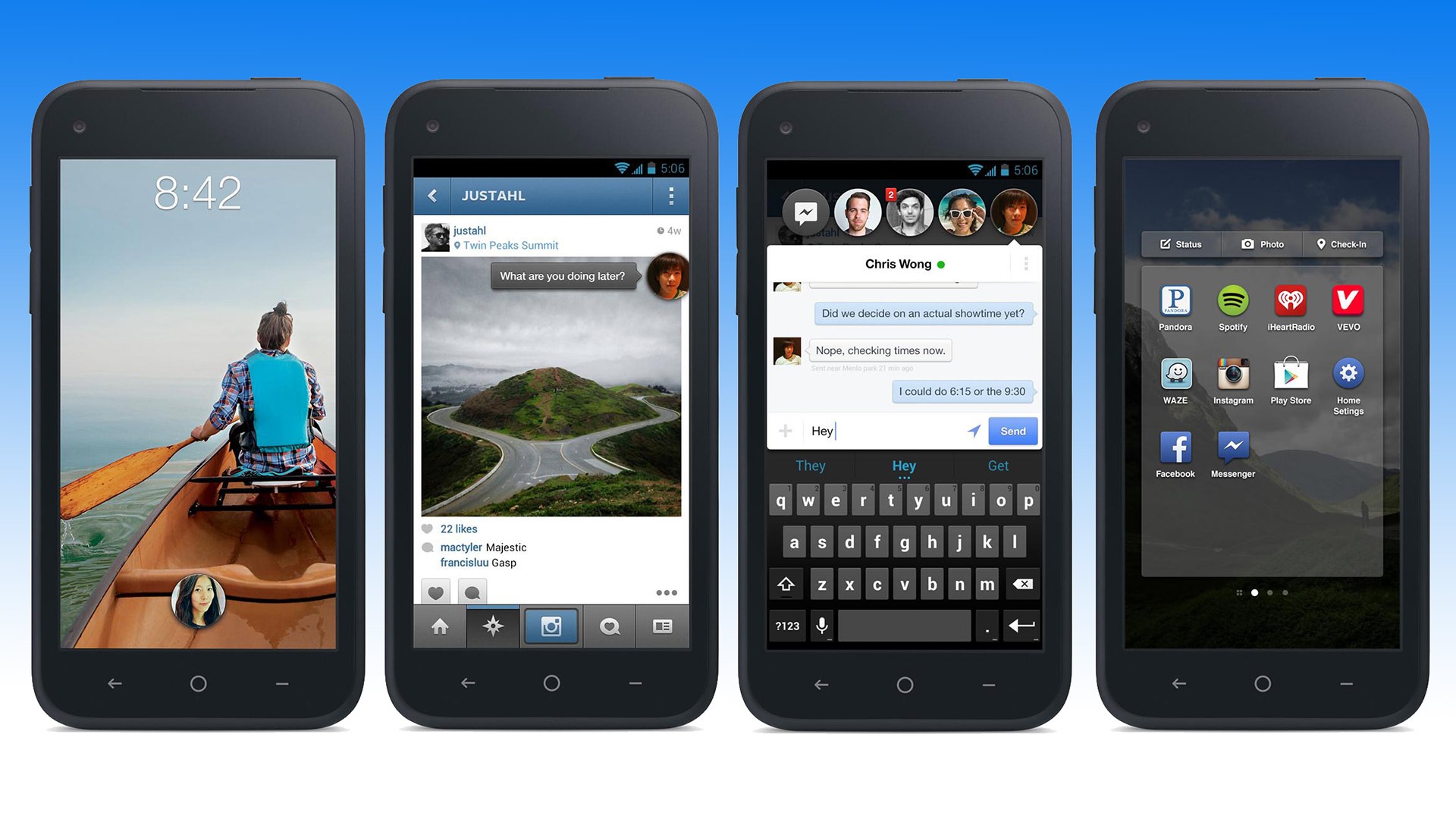
9to5Google posted the first look at “Home” yesterday, but Facebook just gave a quick run down as to what the interface can really do.  For instance: Cover feed, a window that replaces the lock screen and home screen, allows users to navigate by flipping through, double tapping, etc.

Users can double-tap to “Like” a post and comment right from the home screen, and they can tap their own face and swipe to get to apps. Users can also swipe up to see their favorite apps in the launcher. There’s even a screen containing all apps, so they can drag their favorite apps to the launcher. Meanwhile, notifications come from people and not apps. Each notification has a person’s face, and users can collect all notifications in a stack and either swipe or save them.

Facebook also announced a new messaging service called “Chat heads” that works with both Facebook messages and SMS. A chat head appears with in the upper right, where users can tap on them, move them, or stack them. Tapping will bring up messages.

Facebook will launch Home via Google Play on April 12, with download availability coming for tablets in a few months. Facebook will maintain Home “just like the regular Facebook app,” and it promises to issue updates at least once a month with new features.

Only a few devices are ready for launch, including: the HTC One X, One X+, Samsung Galaxy S III, Galaxy Note II, and eventually the HTC One and the Galaxy S4. There’s even a “Facebook Home Program” for phone manufacturers, and HTC, AT&T, Samsung, Sony, etc., have all signed up.

Zuckerberg just handed the stage over to HTC executives to unveil the first device that will officially run the platform— the HTC First. More details on Home are in the press release and videos below.


Expand
Expanding
Close

Watch Facebook’s phone event live (Video)

Site default logo image

[protected-iframe id=”c4f74094c6997794ba60f6e523e1b6a5-22427743-20587613″ info=”http://new.livestream.com/accounts/817005/events/1980369/feed_embed?width=4=580&height=1000″ width=”580″ height=”1000″ frameborder=”0″]

Facebook CEO Mark Zuckerberg will take the stage in Menlo Park, Calif., this morning to show off his company’s “new home on Android,” and you can watch a live stream of the event in the widget above.

The video should auto-play around 10 a.m. PST.


Expand
Expanding
Close

Samsung confirms 1,400 ‘Samsung Experience Shops’ coming to Best Buy locations by summer

Site default logo image

When we heard late last month that Samsung planned to open Apple-style ‘store-in-store’ locations within Best Buy retail stores it was still only rumor. Today Samsung and Best Buy have made things official for its plans to roll out 1,400 “Samsung Experience Shops” in Best Buy retail stores across the United States. Best Buy plans to have the store within a store Samsung shops up and running by the summer with 900 scheduled to open by May:

Select Best Buy stores will have Samsung Smart Service™, which includes dedicated Samsung Experience Consultants™ and Best Buy blue shirt sales associates to assist customers with purchasing and activating mobile products on the carrier of their choice, understanding their device and supporting them throughout the lifecycle of their product. The specially trained Samsung Experience Consultants will assist with product demonstrations, basic product services, Samsung account set up, warranty registration and post purchase support.

The shops vary in size, with the largest being approximately 460 square feet. Within the larger shops, the Samsung Connected Solutions™ area creates a place for customers to see how easily Samsung devices connect and share content across multiple screens.

It’s not exactly a first for Samsung, having experimented with a number of similar store-within-store locations at other retailers around the globe, but it could very well act as a test ahead of bigger retail expansion plans in the U.S. It’s also something that Google has experimented with in Best Buy and PCWorld in the United Kingdom, which we’re hearing has lead to even much bigger retail plans for the company.

The image above shows what a typical Samsung Experience Shop inside Best Buy will look like. Samsung’s full press release below:
Expand
Expanding
Close