Stay up to date on news from Google headquarters. Be the first to learn about plans for Android, Google Plus, Google Apps, and more!
Stay up to date on news from Google headquarters. Be the first to learn about plans for Android, Google Plus, Google Apps, and more!

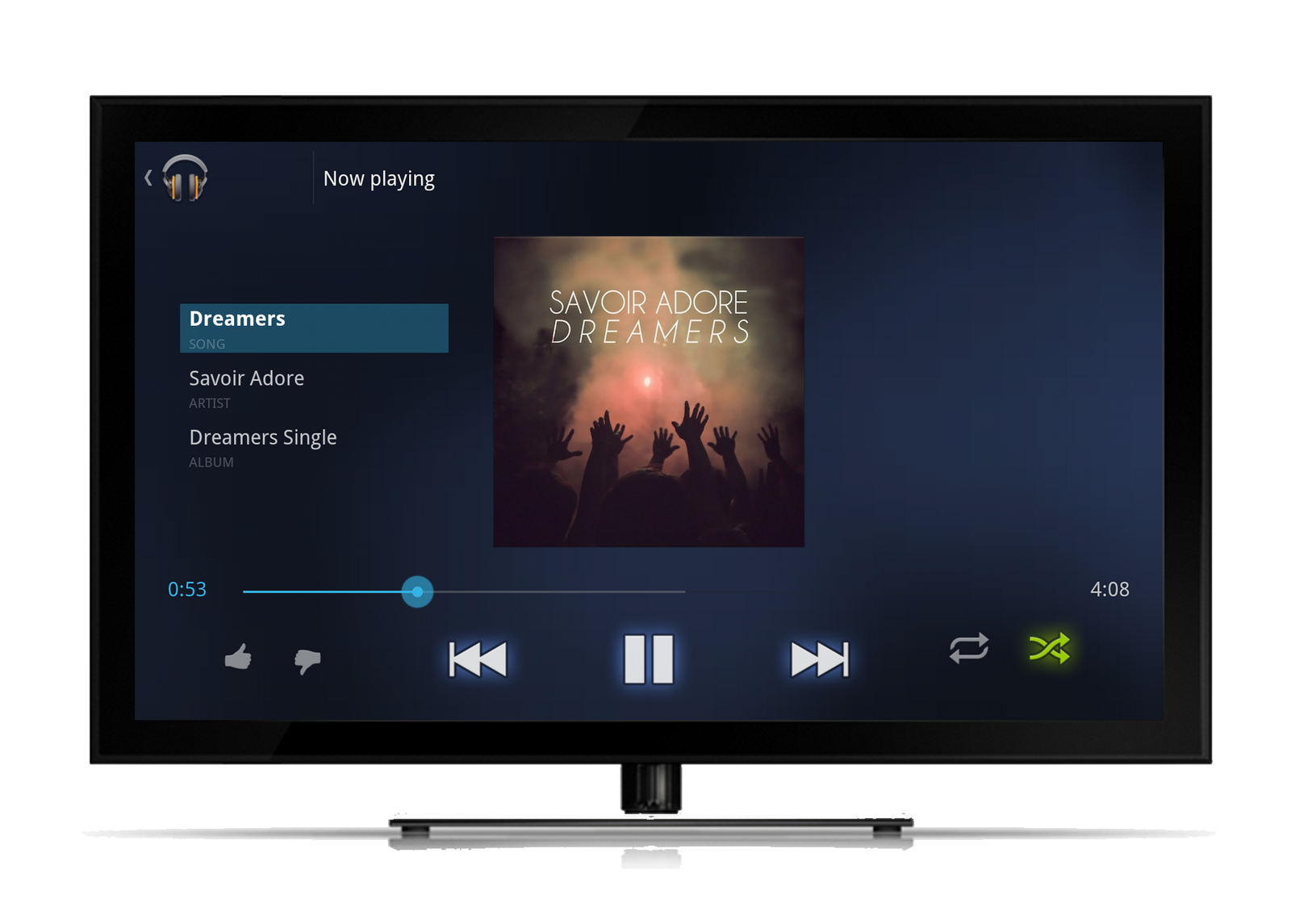
The day after Google Music was announced at an event in LA, Google has unveiled a new Music app for Google TV. The new app streams music directly from your music locker, getting rid of the need to download music or stream it from your computer. The app is as simple as signing in with your Google account and even works in the background as you use other apps.
As long as you have Android 3.1 installed on your Google TV, the Music app is available on the Android Market. Besides streaming music you can also purchase it directly from your TV.
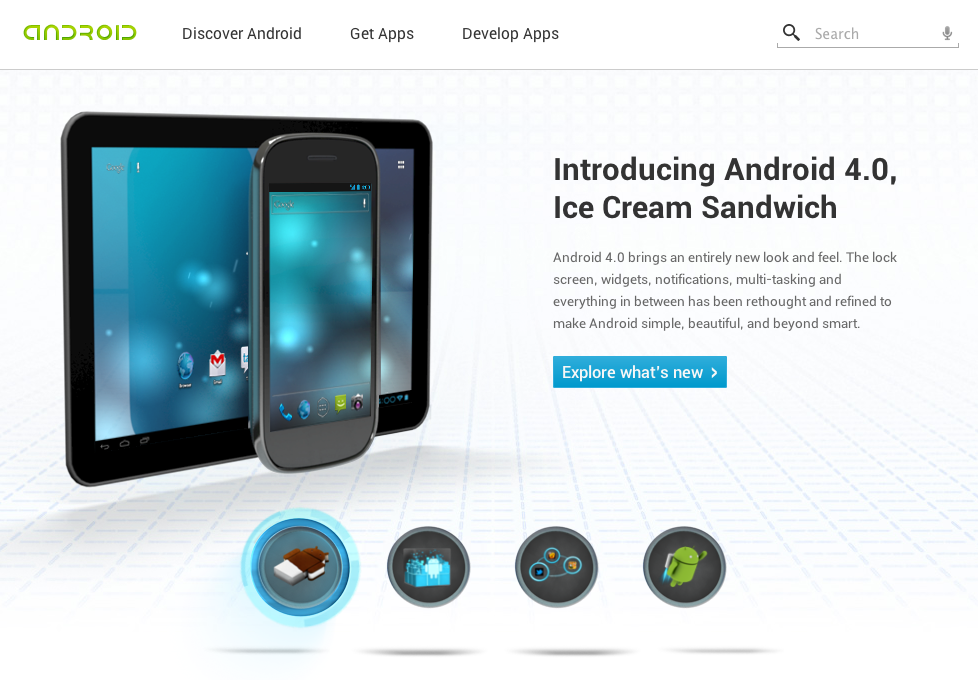
Google has just released their redesigned Android.com, that will definitely appeal to the consumer moving away from references of “SDK” and more. The old Android homepage was more of a portal for developers, but today’s update gives a sure direction of what Android is and how it can appeal to consumers.
The main part of the page gives information on what is new in the Android ecosystem — which right now is Android 4.0. “Discover Android”, found in the top left, will also tell you exactly what Android is and describes why you want it. There’s also links to the developer portal and Android Market.
This seems like a huge step!

If you want to put Android 4.0 Ice Cream Sandwich on your tablet or a smartphone on your own terms, you’ll have to wait until the CyanogenMod is updated with Android 4.0 support. According to a tweet by Android coder @cyanogen (via the Verge), the new version of the CyanogenMod is due in two months.
For those not in the know, the CyanogenMod project allows owners of rooted Android devices to install the latest firmware themselves rather than wait for their carrier to deliver it. The project supports a bunch of devices, some fifty builds are available for various Android products.

[youtube=http://www.youtube.com/watch?feature=player_embedded&v=CdD8s0jFJYo]
Today is the day that UK customers can finally get their hands on the Galaxy Nexus, with Google updating the device’s page to include links to retailers and carriers including Phones4U, Three, Carphone Warehouse, Vodafone, and O2.
Earlier Samsung sent out a tweet of Alex Ioannou, the first customer to purchase the device this morning. However, it looks like Ioannou might not have had the best of luck, as Engadget reports the man got home only to find a pre-release developer build of Android with a bunch of developer tools including “Report a WTF condition”. Needlessly to say, Ioannou has since replaced the device, which somehow must have slipped through the cracks without getting the final ICS treatment.
Google has also posted a bunch of videos to their Nexus YouTube account showing off some of the new ICS features of the Galaxy Nexus including multitasking, face unlock, camera and panorama, and Android Beam. One video, entitled “Getting Started (US)”, shows the US version of the device with “Verizon 4G” branding and all. You can check out a selection of the videos below.
Expand
Expanding
Close

From 9to5toys.com:
[youtube=http://www.youtube.com/watch?feature=player_embedded&v=vbnrHE9lP1g#!]
As mentioned last night, Google Music offers several MP3 album and single downloads from popular artists, as listed below. It’s one of the best collections of free MP3 downloads we’ve seen. The deals:
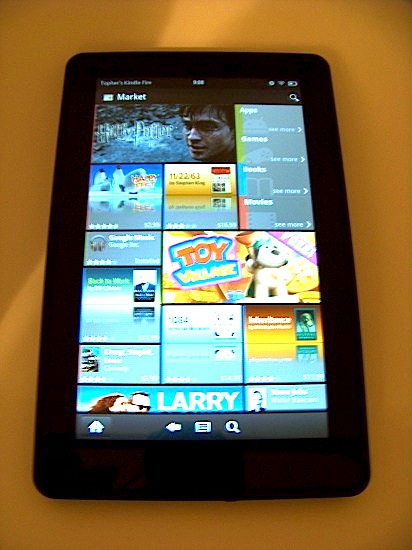
It you want access to all of the apps on the Android platform (including all of Google’s great apps) on your Kindle, you’ll want to get the Android Market on there. Once rooted, it is a pretty straightforward process as outlined in the steps below. Is the Kindle going to replace the Nook as the go-to cheap hacking Android Tablet?
Expand
Expanding
Close
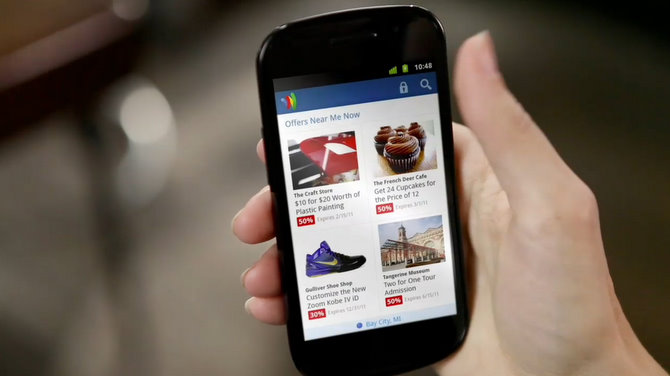
Google has announced on their Commerce Blog this evening that they are now rolling Google Checkout into Wallet. Since Checkout’s focus was to simplify online checkouts, Wallet will now be rolling out to more places over the web including the Android Market, Google+ Games, YouTube, and even more Google sites.
Since both products have a similar goal, to simplify purchasing items, it makes sense for Google to roll the products together. For current Commerce users they will be able to setup a Wallet account when logging again, while merchants won’t have to make any changes. Wallet looks like its ready to roll for this Holiday season.
[youtube=”http://www.youtube.com/watch?v=TPd0EZ_ukK4&feature=channel_video_title”]
Google has just announced the new Google Music, so we’ve decided to show our lovely readers a quick tour. Above you’ll find a tour of both the Android and web app, including me purchasing a song. My Google+ friends were also able to use the one free play, as seen below.
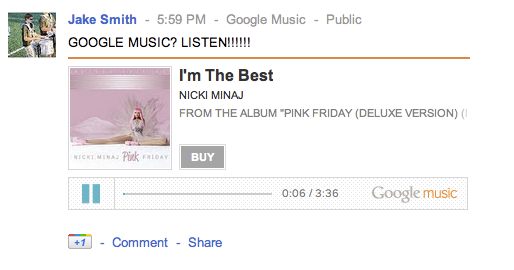
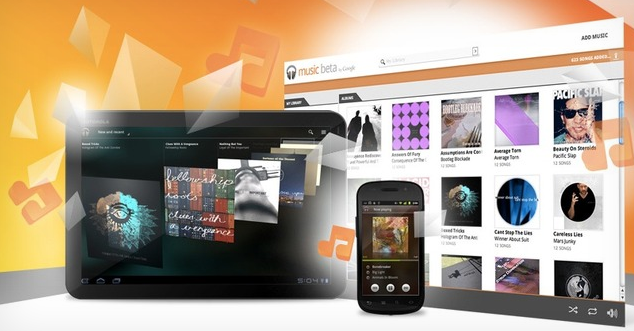
Before its official announcement at an event tomorrow night, more details on Google’s new Music service have leaked out. Bloomberg reports that Music will have a store that closely resembles Apple’s iTunes and will allow users to purchase music. Google has reportedly earned licensing deals with Sony (this evening actually), Universal Music Group, and EMI Group Ltd. Songs will also cost between 99-cents and $1.29, but Google may offer discounts.
Wall Street Journal drops an awesome feature that Google Music will reportedly have.
“Additionally, after buying songs from Google Music for around $1 apiece, users are expected to be able to share one or two free listens of the songs with their contacts on the Google+ social-networking service, these people said.”
All the details will be spilled tomorrow. Make sure to stick with us tomorrow evening at 5 PM EST for all of the breaking news.
Google announced in a post today on the AdWords blog that a new API for third-party apps will allow businesses to manage their branded Google+ pages through social media management services like HootSuite.
Initially the API will only be open to six partners including Buddy Media, Involver, Context Optional, Hearsay Social, Vitrue, and HootSuite. Starting with selects users, these services will allow businesses to manage their circles, make posts to their Google+ page, and monitor activity and analytics. On the Hootsuite website, for instance, features listed include the ability to manage circles, as well as “monitor, search, share, and post” right within the app’s interface.
The API will inevitably be opened up to more third-party apps after the initial experiment, and social media management companies can already click here to sign up. Below is an image showing Google+ integration in the updated HootSuite dashboard, which is probably the most in-depth solution, and it looks like just about every aspect of a Google+ page has been included.
Expand
Expanding
Close

Google has updated Google Voice for Android to version 0.4.2 — a small update — but the app now features group texting, offline voicemail, and improved text message notifications.
Offline voicemail is definitely the big feature here, letting users listen to voicemail in spotty coverage areas. Now if there could be some improvements to the iOS app and MMS available on all carriers. Download it now!
What’s in this version:
There is good reason Google collects our geographic location data through wireless access points, specifically to deliver location services to devices such as our smartphones faster than technologies like GPS. However, in September Google made it clear that they will “go further in protecting people’s privacy” related to collecting user location data to facilitate location services. Today, they are putting their first new initiative in place to address concerns by allowing a new method to opt out of having your location data stored in the Google Location Server.
Google explains:
“We’re introducing a method that lets you opt out of having your wireless access point included in the Google Location Server. To opt out, visit your access point’s settings and change the wireless network name (or SSID) so that it ends with “_nomap.” For example, if your SSID is“Network,” you‘d need to change it to “Network_nomap.”
A couple things to note:
1. The opt-out will become active the next time your device sends information to the Google Location Server with the _nomap tag, which will remove the access point from the server. The quickest way to do this- “open Google Maps on an Android Device with WiFi enabled, and use the My Location feature”
2. Google is hoping all location service providers, who will start notice the SSID opt-out method, will adopt the “_nomap” tag as a industry standard and “unified opt-out process”.
Google has also posted a support guide walking you through location-based services and the new opt-out feature. You can find detailed instructions under “How do I opt out?”, which essentially just walks you through changing your access point’s SSID.
Expand
Expanding
Close

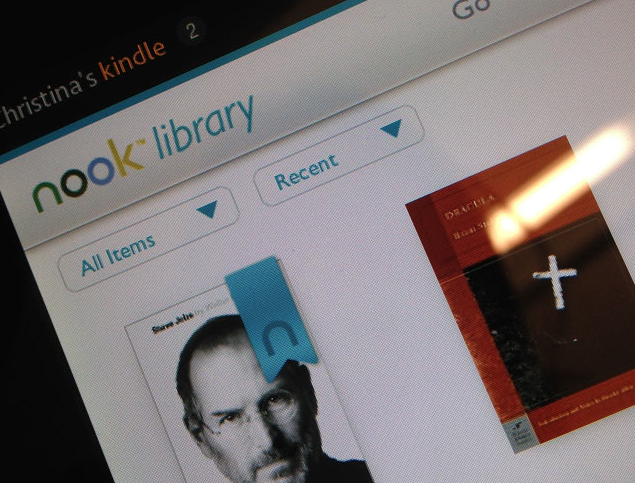
Mashable reports that some Google Marketplace apps are installable on Kindle’s new Fire tablet. A user simply needs to head to the device settings pane and enable the “Allow Installation of Applications From Unknown Sources” option. Then, the user needs to install GetJar.com. The Kindle Fire won’t appear in the GetJar options for app downloading, so the user just needs to select another Android 2.3 tablet. Not all apps will install, and Mashable uses the example of the Nook app. Quite the irony.
We’re playing with Google Maps right now (below). FYI Launcher apps don’t seem to work. It appears that the Kindle is about to be opened up bigtime for hacking in the next 24 hours….
Expand
Expanding
Close

T-Mobile has begun sending out invites to the press this afternoon (via TechCrunch), inviting them to Google’s upcoming event on Wednesday. T-Mobile’s presence was already hinted at in Google’s invite last week, but today’s invite confirms that T-Mobile most likely has a big involvement in what’s coming up.
The event is most definitely looking to be the launch of Google Music. Look at all of those music artists (for the after party) in the invite: Drake, Maroon 5, Busta Rhymes, Dirty South, and R3hab are certainly some big names. However, it’s not clear what T-Mobile’s roll will be, but a Galaxy Nexus version could certainly be possible.
Check out last week’s invite after the break:
[youtube=http://www.youtube.com/watch?v=Ka9IwHNvkfU]
Fascinating story from the New York Times:
Sergey Brin, Google’s co-founder, is deeply involved in the lab, said several people with knowledge of it, and came up with the list of ideas along with Larry Page, Google’s other founder, who worked on Google X before becoming chief executive in April; Eric E. Schmidt, its chairman; and other top executives. “Where I spend my time is farther afield projects, which we hope will graduate to important key businesses in the future,” Mr. Brin said recently, though he did not mention Google X.
Expand
Expanding
Close


In an update on the official Notion Ink blog, Notion Ink’s CEO, Rohan Shravan, shared his thoughts on when Android 4.0 Ice Cream Sandwich source code would become publicly available.
17th is when we are expecting ICS to be finally out with the source, and then you will see whole community (aka TabletRoms) and NI pushing in ROMs with different flavors.
AndroidCentral points out that Rohan has a track record worth taking a look at. It shows that he had successfully predicted the Gingerbread source code release date, something that doesn’t happen by coincidence. The prediction couldn’t have been made without reference. Samsung’s announcement of November 17th availability of the Galaxy Nexus in Europe might just be his reference for this go around.
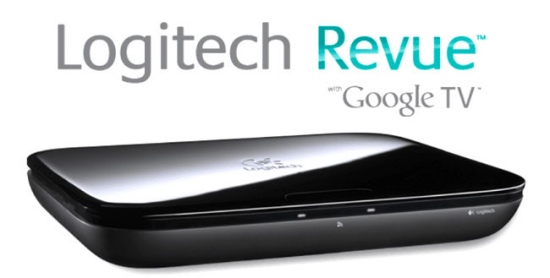
At a meeting with investors yesterday, Logitech’s CEO Guerrino De Luca didn’t hold back while talking about how Google TV has affected their business. Luca said that Google TV ‘cost us dearly’, and that developing the set-top box was a mistake. He also dropped the bomb that Logitech will be letting their supply of Revues run out this quarter and won’t develop any more or be manufacturing a follow-up device either. Ouch.
Luca does believe, however, Google TV has a chance sometime in the future, but said it needs some work. He went as far as saying Google TV is currently like a beta.
Even with the recent 3.1 update, we’re going to have to side with Luca on this one. Google TV is still missing many key features to disrupt the television industry. It’s going to take more innovation, content deals, and devices to get the ball rolling. (via The Verge)

Google has acquired San Francisco based startup Apture, for an undisclosed amount AllThingsD reported today. Aperture is a downloadable browser plugin that presents users with contextual information from sources like Wikipedia to match the current webpage they’re on.
A Google spokesperson told AllThingsD, while they’re not only after Apture’s product, they’re after Apture’s talent to add to the Chrome team.
There’s no word on what the team will actually do inside of Google, but it would be cool to see this technology implemented somehow. Aperture raised $4.1 million in venture funding before being acquired by Google.
From 9to5toys.com:
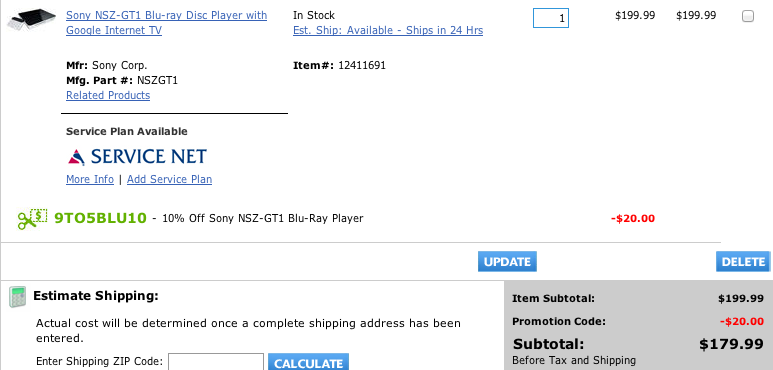
PC Connection offers the Sony GoogleTV BluRay Player NSZ-GT1 for $199. 9to5 coupon code 9to5Blu10 drops it $20 to $179.99, the lowest price we’ve seen. Google just updated its TV line to 2.0 which has applications, an easier menu system, HBO co and more. It features support for the Android-based Google TV service, 1080p upscaling, 8GB of built-in storage, 802.11n wireless and Ethernet connectivity, four USB ports, HDMI output, and more.
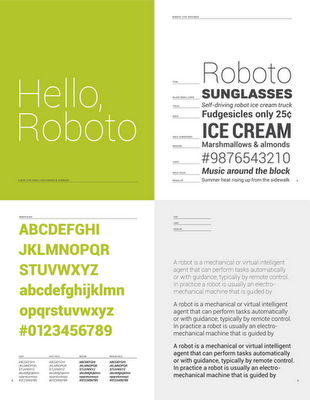
Curious about some of the details in why Google switched to their new Roboto type face in Ice Cream Sandwich? Matias Duarte, Android director, took to Google+ this evening to explain it in great detail. Switching from Droid type face to Roboto type face was mainly due in part to the higher pixel density screens, Matias explained. As screens get bigger, and more pixel dense, certain font schemes can lose their luster.
The other big part of the new type face was also due in part to the design strides Google is trying to make with Ice Cream Sandwich. You’ll notice in screenshots that fonts are much more crisp and tie in better with the rest of the UI.
The Android team is devoting themselves to continue working on the font, and the overall UI. We can’t wait to check it when we get our hands on the Nexus Prime in a few weeks.
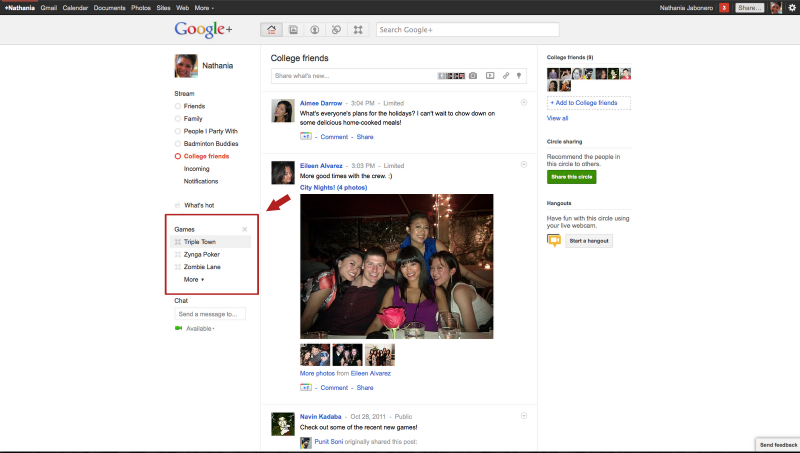
Google+ engineer Vermont Lasmarias revealed today that a new section displaying all of your recently played games has been added to the Google+ homepage. The new section can be found in the bottom left, and allows you to quickly launch into a game where you left off. Luckily, if you’re not a fan of the new games section, or just want to free up your side bar, you can get rid of the widget right from the homepage too.

After their $12 billion acquisition of Motorola Mobility this summer, many critics began to think Google would favor Motorola over other Android vendors. Google has already assured us that they won’t, but today at a meeting with reporters in South Korea, Google’s Chairman Eric Schmidt said that Motorola Mobility will run separately from the rest of the company. Schmidt said:
“In general, with all of our partners, we told them that the Motorola deal will close and we will run it sufficiently and independently, that it will not violate the openness of Android…we’re not going to change in any material way the way we operate.”
The comments of course are to assure other OEMs, like HTC and Samsung, that they won’t be left in the dark after the recent acquisition. Google so far seems to be holding up to their promise, seeing as the Galaxy Nexus is a Samsung device, but time will only tell. (via Reuters)
Eric Schmidt also made comment today that, “Android efforts started before the iPhone efforts.”
[vodpod id=Video.15665143&w=425&h=350&fv=]
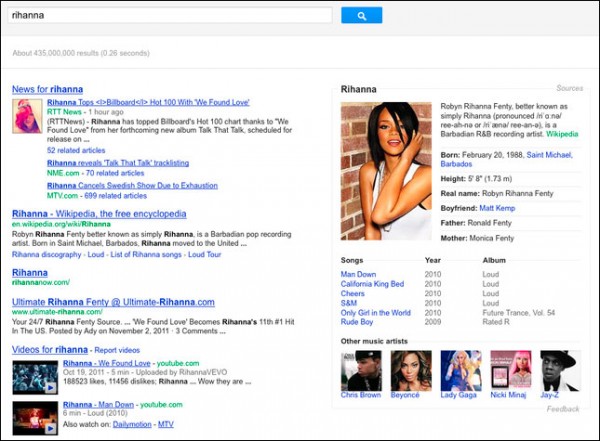
Google has confirmed with Search Engine Land that the company is currently testing new a ‘sources’ display inside of Search. As you can see above, the sources section pulls in information, in this case about Rihanna, that has appeared on Wikipedia and various other sources. The section also pulls in song information, in Rihanna’s case.
In most instances while searching on Google you want to find definite information — fast. Google has implemented similar features inside of Search for weather, sports, math calculations, and more. Keep ’em coming!
[youtube=”http://www.youtube.com/watch?feature=player_embedded&v=KQlPCflWP9k#!”]
Coming up tonight on Charlie Rose, Mark Zuckerburg has made comment that “Google is building their own little version of Facebook”. While that was certainly a hit towards Google, Zuckerburg was happy to give props to Amazon and Apple as partners.
Amazon and Apple “are extremely aligned with us,” said Zuckerberg. “We have a lot of conversations with people at both companies just trying to figure out ways that we can do more together, and there is just a lot of reception there.” Meanwhile, “Google, I think, in some ways, is more competitive and certainly is trying to build their own little version of Facebook,” Zuckerberg said.