Motorola


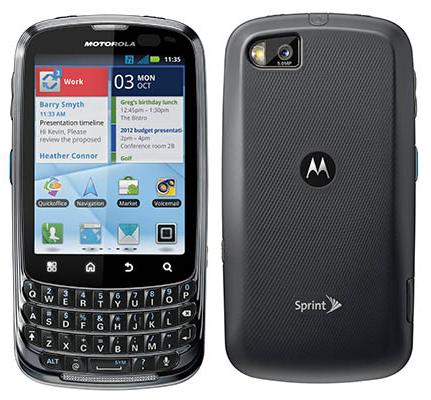
Sprint has announced the Motorola Admiral this afternoon, a 3.1-inch device running Android 2.3 with a design to withstand rugged environments. The device features a 3.1-inch VGA display (Gorilla Glass), full QWERTY keyboard, 1.2 GHz processor, 4GB of internal memory, 5-megapixel camera, Wi-Fi, and Android 2.3. That Gorilla Glass and full QWERTY keyboard are definitely a selling point for some.
The Motorola Admiral launches October 23rd for $99. We’ll have a full review then, so stay tuned.

From 9to5toys.com:
 .
.
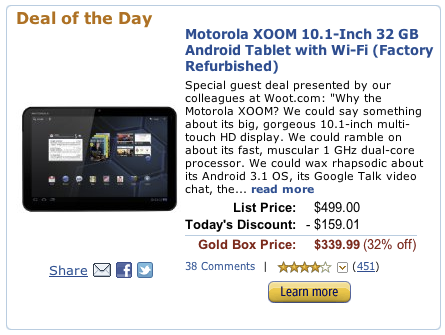
Woot! via Amazon has the 32GB Motorola XOOM Android Tablet for $339.99. That’s 32% off and the lowest price we could find for this refurbished item.
Andy Rubin told the audience at AllThingsD in Asia that the XOOM would be the first tablet to be upgraded to Ice Cream Sandwich later this year.
Expand
Expanding
Close
[youtube=http://www.youtube.com/watch?v=XGyp6dS6zqk]
Following the announcement of the RAZR in partnership with Verizon yesterday, Motorola has released the official commercials for the new Android device. Motorola has released both a U.S. and Europe version of the ad. Check out the European version after the break:
[youtube=http://www.youtube.com/watch?feature=player_embedded&v=FYLL1zWT0zk]
The Droid RAZR was announced yesterday afternoon with a killer set of hardware. We were worried, however, when it came to software seeing as the device packed Gingerbread, and Ice Cream Sandwich was going to be announced that evening. Well Ice Cream Sandwich is now here and looking wonderful, but don’t fear though, TechCrunch is reporting that the RAZR will be seeing its Ice Cream Sandwich update in Q1 of 2012.
You can check out the RAZR in our hands-on above (it doesn’t really do it justice) and check out the Ice Cream Sandwich screenshot tour for all of the details on that. ICS + Droid RAZR = perfect match.

[youtube=http://www.youtube.com/watch?v=FYLL1zWT0zk]
Just getting my barrings after a crazy day yesterday…and have to say that of the Ice Cream Sandwich and Nexus announcements, I was most blown away by the Motorola Droid RAZR. Well the hardware anyway – we didn’t get to spend any time with the Software which is Android 2.3.5 with Motorola and Verizon Droid overlays. All I can say about that is it is typical for the Droid line as far as I can see. But let’s talk hardware really quick, shall we?
I’m going to say it: On hardware alone, this is the most impressive piece of mobile device equipment I’ve ever seen. It is both impossibly thin and feels incredibly solid. As you can see in the video above, when someone picks it up, there is a gasp. It’s like picking up a material so light and strong (titanium?) with such a vibrant display that you can’t reconcile it with your past smartphone experiences. Sure Samsung makes devices similar in size and weight, but they are plastic. This is a super-light metal phone that doesn’t bend and whose back cover doesn’t fall off.
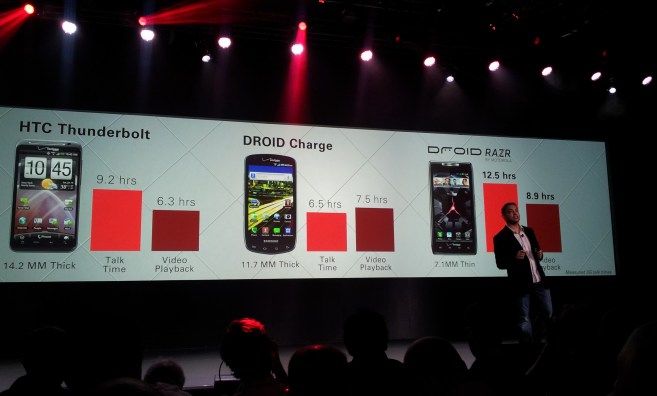
People will point out the bump at the top as making it thick – but even the bump is thinner than most smartphones (see below) and it is “so big” because it needs to house an LTE antenna and a 8-megapixel backlit CCD camera with advanced lens technology.
The display is also the best I’ve ever seen perhaps save for the tablet-phone tweener 5.3-inch Samsung Galaxy Note. At a more pocket manageable 4.3-inch qHD 960×540 pixels Super AMOLED, it has amazing 180 degree viewing angles and looks incredible (the video above doesn’t do it justice). I’m not sure how it will do outside but the presentation room had all kinds of lights which would have put a damper on early OLEd screens like the original Droid. When compared to the Motorola Droid Bionic’s 4.3 inch display, it isn’t even close. This looks like the highest end Samsung display.
For all of its thin-ness, Motorola still touts it as having a much better batter life than its competitors on LTE.
Again, based on hardware alone – I’ve yet to use it – this is the best phone I’ve ever seen. It goes on pre-order at the end of the month and hits stores some time in November (hopefully before Black Friday). If Motorola has production delays like it did with the now obsolete Bionic, it will have missed a pretty significant opening. If it delivers the product on time and without any glitches in the software, this will be its most significant phone since the original Droid, which put Android on the map two years ago.
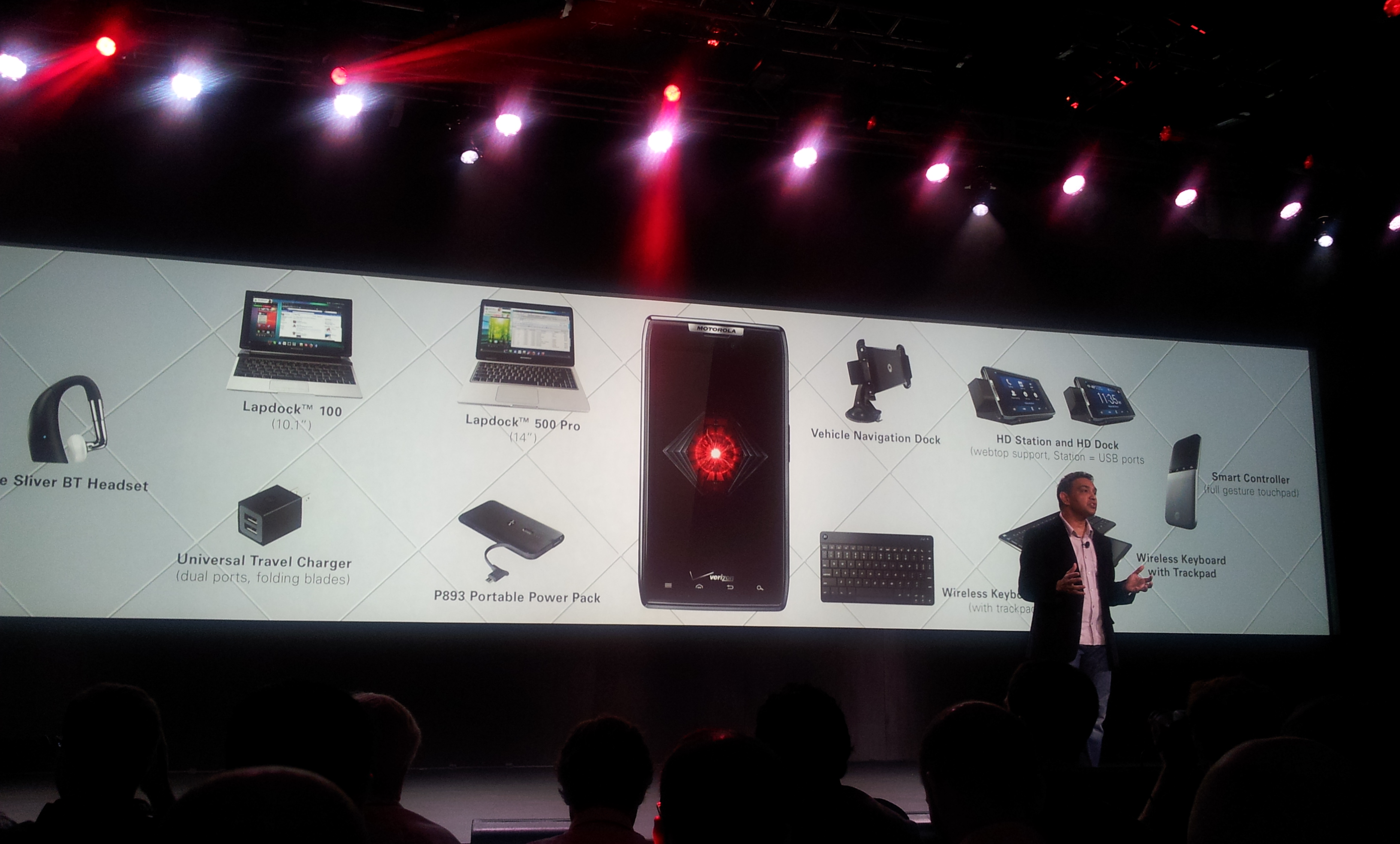
We just got back from the Motorola/Verizon event where the Motorola RAZR was announced. Along with the RAZR, Motorola announced a full line-up of accessories (as seen above). The most notable, as we mentioned on 9to5mac, is the lapdock that looks closely to the MacBook Pro. There are two versions of the Lapdock: the Lapdock 100 and Lapdock 500 Pro (hmm..). The Lapdock 500 pro features a larger 14-inch screen, VGA out, and wider keyboard.
Other accessories include a Bluetooth headset, Universal Travel Charger, Portable Power Pack, Navigation Dock, Wireless Keyboard, and Wireless Keyboard w/ touchpad. For TV connectivity, Motorola has unveiled the HD Station, HD dock, and Smart Controller. What a perfect combo for the living room.
Pre-orders for the RAZR start October 27 for $299 with an expected launch sometime in November. We’ll have a full review up then, and it’s sure to be a good one!
We’re waiting in anticipation live from the Motorola and Verizon media event where we now know we’ll get a better look at the new Motorola RAZR unveiled in a series of teasers yesterday.
12:00 Sanjay Jha enters. Smartphones are a big deal. “Might of heard about some business news”
12:05 Talking Fitness. Hardware – Music centric experience. “Moto ACTV” Little iPod Nano sized device to deliver Fitness and music to headses.
12:20 Demo-ing the Droid RAZR. Pretty much as seen before. 7.1 mm thin except for the bump. Lightest, Strongest, Fastest, Smartest.
Preorders Oct 27 pre order. November delivery Price $299.
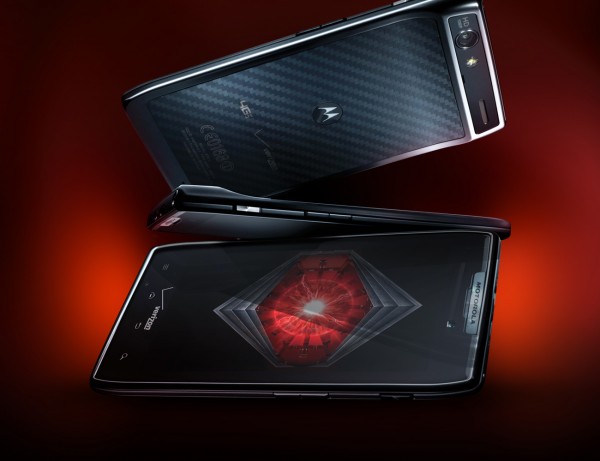
Droid Life has discovered the above image in Motorola’s teaser site we told you about this morning. The above image confirms what we already know: a thin, 4G enabled device, that features a kevlar coating and a relatively large screen. For now gaze on this picture in awe, but tomorrow Motorola and Verizon will ease our waiting by officially announcing this device.
Motorola has sent out invites to 16 different blogs to unlock more pieces to their new RAZR teaser site. The RAZR is the next Android device to be featured on Verizon Wireless. As each blog enters in their unique code a new piece of information about the phone will be revealed. Motorola did something similar with the Bionic, revealing a video that told all about the LTE beast.
The only blog to enter in their code so far is Mobile Burn who learned that the RAZR will feature a kevlar coating. We’ll be looking out for more websites as they come.
The Motorola RAZR will be announced the day before the Nexus Prime and Ice Cream Sandwich, which will be announced by Samsung/Google in Hong Kong.

During their earnings call Thursday, Google announced that there have been 190 million Android handsets activated. Interestingly, if you look at the numbers on Android’s Developer page, 1.5% of all devices that accessed the market within the last 30 days are running Honeycomb — the almost exclusive OS for Android tablets (well, excluding a few million Samsung Galaxy Tab 7s and other tablets running 2.x Android). So, if all 190 million of those devices accessed the market in the last 30 days, that leaves only 3.4 million Honeycomb tablets on the market if you do the math. Ouch..
With all of the numbers added up, it’s indicating that Android still has some catch up to do against the big Apple when it comes to tablets. Perhaps Ice Cream Sandwich will help with that.
Expand
Expanding
Close

AT&T has announced five new Android phones to add to their portfolio bringing their total Android count for the year to 19. This round includes the anticipated Atrix 2, Samsung Captivate Glide, Samsung Double Time, Pantech Pocket, and AT&T Avail. These five new devices exceed AT&T’s expectations of 12 new Android devices this year by a healthy margin.
The big boy of these five devices is the Motorola Atrix 2, the successor to the Atrix announced at CES this year. The Atrix 2 features a pretty nice spec list: 4.3-inch qHD screen (960 x 540), 1 GHz dual-core processor, 4G, 8-megapixel rear-shooter (1080P HD), unspecified front-facing camera, and Android 2.3. The Atrix 2 features the same connectivity as the original Atrix: Motorola’s webtop application, HD station, and the Lapdock 100.
Also having a nice set of specs, AT&T has announced the Samsung Captivate Glide. Specs for the Glide include: 4-inch 480×800 display, 1GHz Nvidia Tegra 2 dual-core processor, Android 2.3, 4G, HDMI playback, 8-megapixel rear-shooter (1080p HD), and 1.3 mega-pixel front-facing camera. Yeah, it is another Samsung Epic 4G type of device (not that there is anything wrong with that).
Check out the other three after the break:

[youtube=http://www.youtube.com/watch?v=1o6TBezfSpU&feature=player_embedded]
Skype pushed out version 2.5 of their Android app that sees video support added to an additional 14 devices (full list below) bringing the total to 41.
Other enhancements in the update include landscape support and the ability to zoom in on video calls, improved bluetooth support, and the usual bug fixes and performance improvements that will “boost the user experience of Skype for Android”. You can also now edit and delete instant messages.
As part of the announcement, Skype noted the app will come pre-installed on various Motorola smarpthones and tablets including the Xoom and Atrix.
You can grab Skype 2.5 from the Android market now. Full list of newly supported devices below, or get a full list from the Market.
Expand
Expanding
Close
We got our first look at Motorola’s upcoming Xoom 2 tablet a few days back, but now have a few quite clear shots (via Engadget) that will give you a better view of the smaller 8.2-inch, 9mm thick, LTE Android tablet, and the larger variant sporting similar specs.
While the specs aren’t exactly confirmed, the report speculates from the images that both devices are approximately the same thickness of the 9.3mm iPhone 4, and the rear facing buttons appear to be a volume rocker and power button. The tipster who provided the images also apparently confirmed LTE capability for both models and 5-megapixel HD rear cameras.
Not too long about we told you about a similar looking mystery Motorola tablet being spotted in the wild by This is my next who claimed to see micro USB and micro HDMI ports.
We’ll of course keep you updated as we learn more. More images after the break.
Expand
Expanding
Close

From 9to5toys.com:
With activation of a new line of service, Amazon offers the Motorola DROID X2 Android 3G Smartphone for Verizon Wireless bundled with a $50 Amazon Gift Card for 1 cent with free shipping. Even if you don’t use the credit, that’s still $100 under our June mention and the lowest total price we’ve seen by $50. Features include a 4.3″ 540×960 color touchscreen, virtual QWERTY keyboard with Swype, 8-megapixel camera with dual flash, 720p video capture, HDMI output, microSD slot, WiFi connectivity, Bluetooth, Android 2.2 OS, up to six hours of talk time, and more.
Note that a $36 activation fee applies.
Expand
Expanding
Close
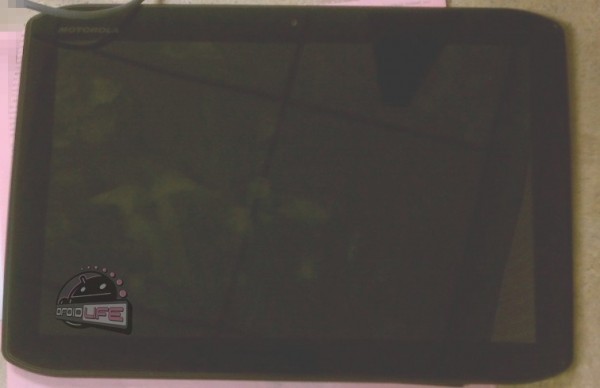
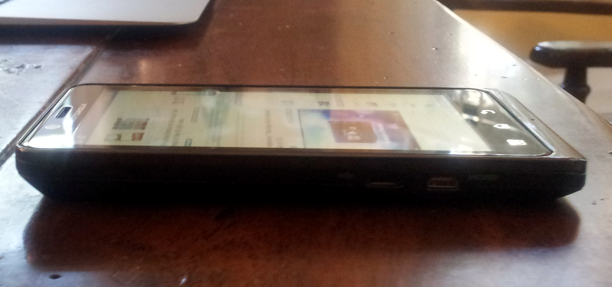
Droid Life has gotten their hands-on exclusive pictures of Motorola’s successor to the Xoom, the Xoom 2. There’s not much in the way of specs, but we do know the device has an HDMI and micro USB port, physical buttons on the back, and a SIM card slot (probably LTE). After the break, you’ll notice that next to the camera is a HD logo. No word in way of carrier. More to come.
One more after the break:
http://www.youtube.com/watch?v=Wwrf5GMAZWw
This upcoming device on Sprint is a slightly-modified Droid Pro with what looks like a much nicer keyboard and Sprint features such as a push to talk button. Other notables on this Blackberry to Android transition device are 3.1-inch display, 5 megapixel camera and a light touching of Motorola Blur mixed Santorum-style with Sprint’s own ID overlay.
For those Crackberry addicts that are looking for some Android methadone on Sprint, here you go!
Expand
Expanding
Close
Apple’s embattled iPhone has had tough time competing against the legions of Android handsets that have flooded the market. That shouldn’t come as a surprise: Carriers are promoting inexpensive Android devices left and right and they are literally everywhere. But how satisfied Android and iPhone users are with their handsets? According to a study of 515 smartphone owners conducted by USB Research (via GigaOM), iPhone is “sticky” like no other phone, with an average retention rate of 89 percent.
It is falling rapidly for other vendors, though, and the next nearest hardware is HTC with a retention rate of 39 percent and 28 percent for Samsung. Android phones in general are at 55 percent. Nokia and Research in Motion are sinking really fast. The former saw its retention rate drop from 42 percent in March 2010 to just 24 percent and the latter dropped from 62 percent to 33 percent.
The survey may not be terribly accurate due to a small sample size, but it helps understand market trends. People are obviously happy with their iPhones and a large portion of users will happily stay within the Apple ecosystem. USB concludes:
Demand for iPhone, iPad and MacBook Pro remains robust, with a leading ecosystem that creates sticky demand.
Truth be told, Android’s low stickiness could be due to its users being more comfortable changing handset manufacturers. Another interesting nugget that bodes well for Apple: Nearly one-third (31 percent) of polled Android users have plans to switch to an iOS device in the future. Also important, more than half the smartphone switchers are in the market for an iPhone while only one in ten iPhone users plan on defecting to other platforms.
Cross-posted on 9to5Mac.com.
According to an SEC filing made by Motorola today (seen after the break), Motorola was able to get $3 billion more out of Google before they were acquired for $12 billion — even without any other bidders present. But it isn’t that simple.
Today’s report contradicts August’s, saying Andy Rubin actually assisted in the acquisition when he reached out to Motorola first. It was previously stated that Rubin has no knowledge of the acquisition until the buyout was close to being announced. Rubin and company reached out to Motorola to buy patents, after losing the Nortel deal according to the filing.
The story continues as follows: Motorola’s Sanjay Jha told Google that Motorola wouldn’t only sell patents, rather the whole Motorola Mobility sector. Motorola than rejected two of Google’s offers which were $30 and $37 a share respectively, until both companies finally settled on a final price of $40 per share. Google, it appears, was in a hurry to get the deal done and bid pretty close to Motorola was after in order to avoid going to a long, drawn out auction process.
SEC filing after the break:
This is a Samsung-branded Windows 8 tablet Microsoft is giving away to BUILD attendees today. Wanna take bets on possible actions from Apple? Go past the break for unboxing clips. Image courtesy of MobileTechWorld
The latest in the ongoing patent saga involving Apple, Google, Motorola and Samsung includes an unexpected twist as Samsung goes after iPhone and iPad with a complaint filed before a Paris district court in July. The filing alleges infringement of Samsung’s three technology patents, reports AFP. The first hearing is expected in December of this year.
Meanwhile, patent expert Florian Müller notes on his blog FOSSPatents that Apple has filed motions to temporarily halt two Motorola lawsuits until Google completes its $12.5 billion acquisition, which shook the technology world last month. Put simply, Apple argues Motorola waived its rights to sue when it transferred patents to Google. Apple wrote:
To further its pending acquisition by Google, Motorola has surrendered critical rights in the patents-in-suit, such that Motorola no longer has prudential standing to pursue this action. According to the publicly-filed Merger Agreement, Motorola has ceded control of the most basic rights regarding the patents-in-suit
As you know, Google has transferred some of the Motorola patents to HTC, in addition to the ones acquired from Palm and Openwave Systems. HTC then used those patents to counter-sue Apple. Back to Apple vs. Samsung…
Financial Times today opined that Samsung needs to hit the reset button, predicting a licensing agreement of sorts provided Apple succeeds in blocking Galaxy products in the U.S. next month. Contrary to the reports, the publication thinks “Apple is restricted from taking its chip business to Samsung’s rivals in Taiwan because Samsung offers a complete package of components that other firms cannot match”. However, there are indications that Apple’s been lowering Samsung orders for some time and it’s widely believed the company is eager to take its silicon business to TSMC beginning next year.
Ahhh. Finally, an LTE phone with everything. Motorola’s Bionic has been on everyone’s lips since its announcement at CES eight months ago. However, Motorola’s first LTE phone underwent numerous facelifts, spec enhancements and delays pushing the phone out to last Friday.
We’ve had a week to play with this thing and can say that for all intents and purposes, this is the best Android device on the US market today. Here’s the rundown of why:
Expand
Expanding
Close
That didn’t take long… The Droid Bionic, which just launched today for $299 on a new two-year Verizon contract, is already discounted $100 on Amazon to just $199. The Verizon online store still lists the device at the original launch price, however.
The 4G LTE capable Droid Bionic has been perhaps the most talked about Android device launched in recent months and at $199 is definitely an even bigger competitor. If you’re still having second thoughts, you can check out our review roundup here.
Expand
Expanding
Close
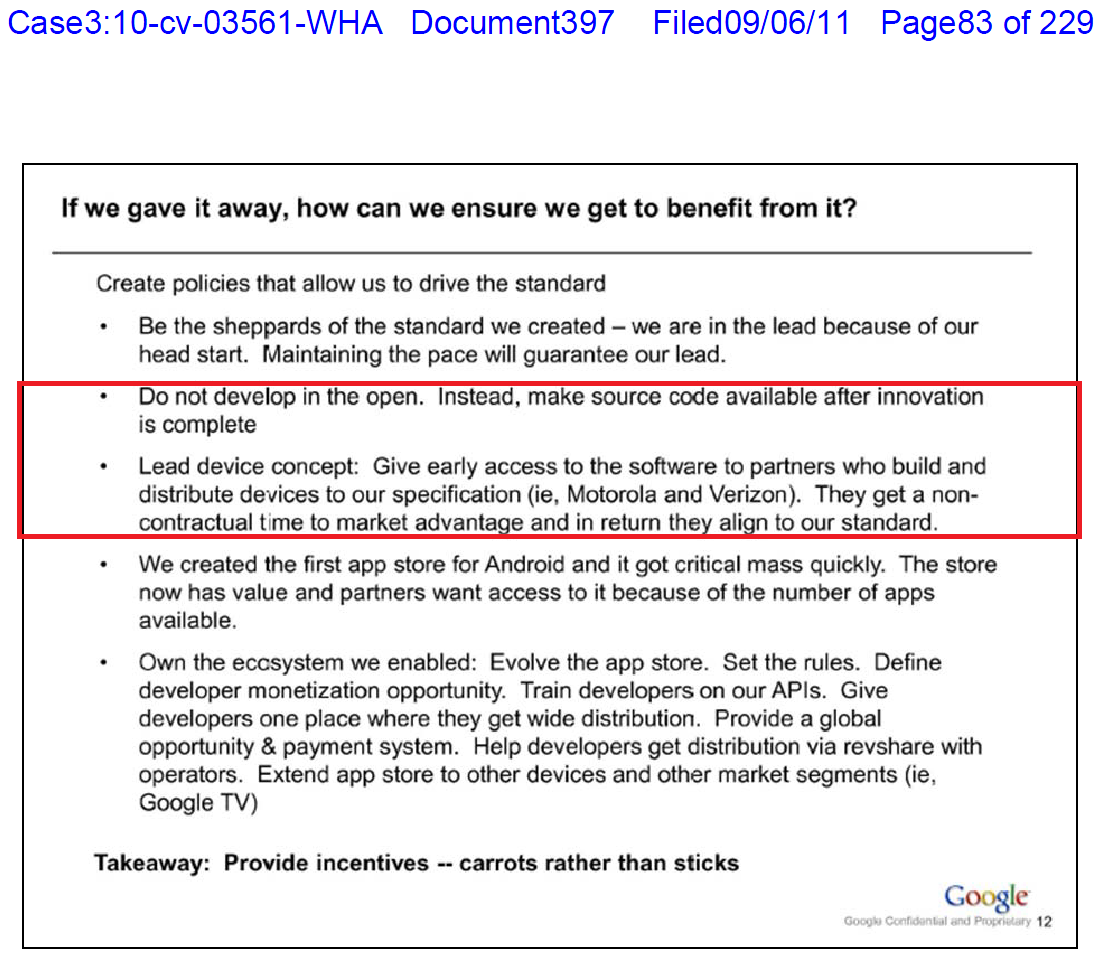
A new report by Foss Patents’ Florian Mueller this afternoon implies that Motorola will be given the lead to innovate with new versions of Android and be able to issue the lead device, before any Android OEMs get the chance. The report comes after an internal document (seen above) was published to the public by the judge of the current Oracle vs Google proceedings. This Verizon/Motorola lead device is the XOOM tablet. The next one will be Samsung. Anything beyond that is speculation.
Hasn’t Google been developing a lead Android device for the last two years — aka Nexus and Nexus S?
With Gingerbread, Google released the updated OS on the Nexus S before it was given to any other OEM. They picked a specific OEM, in this case Samsung, to begin working on a device they pictured to be ideal for this version of Android to run on. Same with the original Nexus, which Google picked HTC.
All of this worry comes after Motorola was acquired by Google. Many analysts, speculators, and journalists assume that Google will turn to Motorola as being the one stop for releasing their new versions of Android. Compare this to what Apple does: one device that rules them all.
[youtube=http://www.youtube.com/watch?v=sdM0w5Fee40&feature=player_embedded]
Joshua Topolsky of This is my next
Verizon Wireless officially announced the long-awaited Droid Bionic to be released tomorrow, and we are very excited to a look at the reviews that along with the announcement. The general consensus is that the Droid Bionic is a winner, if you’re looking to take advantage of Verizon’s badass 4G network and shell out the $299. We’ll add more reviews as they come in.
Joshua Topolsky / This is my next
This is not the killer handset that I think a lot of people were expecting it to be — it’s a good phone on a great network that will keep you satisfied… for now. As usual with Android phones, there always seems to be something else just around the bend, and you’ve got to figure out if you’re going to take the next exit, or keep on trucking. Let’s just say that the Droid Bionic isn’t a bad place to pull off and grab a cup of coffee.
Continue after the break:
Motorola and Verizon just issued a joint press release announcing the availability of the much talked about Droid Bionic. Looks like the wait is over, as of tomorrow (September 8th) the 4.3-inch 4G LTE smartphone will be available in brick and mortar Verizon retail stores or online for $299.99 on a new two-year contract.
The Droid Bionic will run Android 2.3.4 Gingerbread and pack in a dual-core 1GHz processor, 1 GB of RAM, 8-megapixel backside (1080p HD video capture), an unspecified front-facing camera, and 32 GB memory (16 GB on board and 16 GB microSD).
Early reviews seem positive, but we’ll have to wait to get our hands on it to see if it lives up to the price point. Full press release after the break, if you’re interested.
Expand
Expanding
Close