Stay up to date on news from Google headquarters. Be the first to learn about plans for Android, Google Plus, Google Apps, and more!
Stay up to date on news from Google headquarters. Be the first to learn about plans for Android, Google Plus, Google Apps, and more!

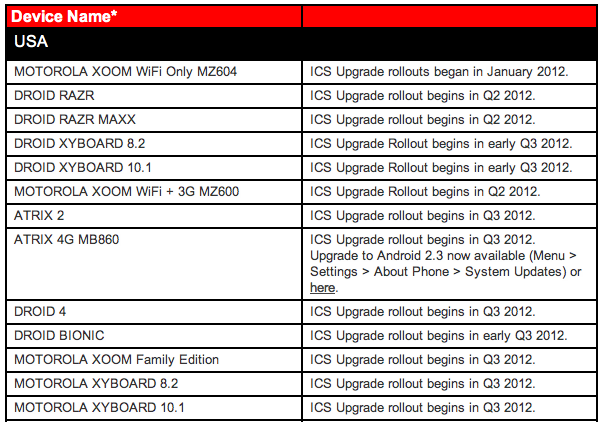
Motorola just tweaked its Android Software Upgrade timetable for Ice Cream Sandwich updates, and it looks like both the United States-based Droid Razr and Razr Maxx are getting Android 4.0 in the second quarter.
The Xoom 3G model is also eyeing an ICS rollout in the same quarter, while the 8.2-inch and 10.1-inch Xyboard, Droid Bionic, and the Droid 4 are upgrading to the latest and current Android OS in Q3 2012. These devices were once listed under “Evaluation & Planning” when Motorola last altered the timetable in February.
It is worth noting the rollout dates could change once Google’s buyout of Motorola completes. Check out the manufacturer’s Motorola Android Software Upgrade News website for a full chart of slated ICS promotions.


Virgin Mobile, a wholly-own subsidiary of Sprint, announced this morning that it would begin rolling out Google Wallet on its Android phones beginning with the recently announced LG Optimus Elite.
The Elite is a small iPhone-ish sized Android device running Android 2.3. It hit Virgin last week and follows the Optimus V and Slider as popular low-cost Android devices on Virgin Mobile.
Google Wallet has had a rough time with United States carriers. Verizon, with the Galaxy Nexus, blocked it late last year, and AT&T and T-Mobile both have refused to subsidize the Galaxy Nexus GSM version that is available off-plan for $399 through Google’s new Play Store. All three carriers are members of the rival ISIS mobile payments platform, and it is obvious that there is some anti-competitive pressure.
Virgin parent Sprint is a Google Wallet Partner, so it would make sense to see Wallet passed to more Virgin phones and perhaps even Sprint’s other pre-paid subsidiary, Boost Mobile.
The press release follows:

Google and Microsoft are directly targeting Amazon with their new clouds that are allegedly in-development.
According to GigaOm’s Derrick Harris, who cited unnamed sources familiar with the plans, Google is developing a cloud computing offering that will give Amazon’s EC2 cloud a run for its money. More sources claimed Microsoft is even working on an IaaS platform that will either release or announce before Google’s offering. The sources further elaborated and said Google should lunch its service for renting virtual server instances by the latter half of 2012, while Microsoft scheduled its announcement for June 7 in San Francisco.
GigaOm explained:
- Although Google declined to comment on whether the offering is indeed on the way, an IaaS cloud would make a lot of sense for the company. It already has a popular platform-as-a-service offering in App Engine that is essentially a cloud-based application runtime, but renting virtual servers in an IaaS model is still where the money is in cloud-based computing. Google also has an API-accessible storage offering — the aptly named Google Cloud Storage — that would make for a nice complement to an IaaS cloud, like Amazon’s ridiculously popular S3 storage service is for EC2.
- Microsoft clearly got the message on where developers are spending in the cloud, too, which is why it’s reportedly expanding its Windows Azure cloud to compete with Amazon more directly than it already does. That means the ability to rent Windows and Linux virtual servers by the hour as well as, it has been reported, support for Java on the PaaS side of Azure. The speculation that Microsoft will make these moves at some point is nothing new, and tweets last week from a Microsoft analyst saying “Infrastructure as a Service is on the roadmap” only stoked the flames.

Dylan Hoffman of Caledonia, Wisc., is the 2012 United States Doodle 4 Google National Winner.
According to Google’s Vice President of Project Management Marissa Mayer, the second-grader’s “Pirate Times” doodle, featured above, will go live on the U.S. Google homepage May 18. Hoffman entered his illustrated response to this year’s “If I could travel in time I’d visit…”, and then he landed the No. 1 spot and won a treasure chest of prizes, such as: a $30,000 college scholarship; a Chromebook computer; and, a $50,000 technology grant for Prairie School. His doodle will also appear on the Crayola 64-crayon special edition box this fall.
The annual contest received a record 114,000 submissions, while millions of public votes helped determine the winner. The full list of runner-ups is available on the official Google blog, and each winner will receive a $5,000 college scholarship.
[youtube=http://www.youtube.com/watch?feature=player_embedded&v=rD_WcGtA3C4]
Google collaborated with advertising research company Nielsen to conduct a series of new cross-media studies for television, and they discovered over one-third of adults opted for broadband Internet over cable TV.
The search engine’s six cross-media studies looked at viewership patterns and campaign effectiveness across television, YouTube, and the Google Display Network. The results indicated 31 percent of 18-to-49-year-old adults are “light TV viewers” who are “more efficiently reached with cross media campaigns on YouTube and the GDN than with TV alone.”
Google’s Advertising Research Manager Sheethal Shobowale took to the official Adwords Blog to further elaborate:
“At the end of 2011, several signs seemed to indicate that younger viewers were watching less TV and spending more time online. In fact, broadcast only/broadband homes have increased 22.8 percent since Q3 2011. We conducted a series of new cross-media studies for TV and six YouTube/GDN campaigns to find out if this trend would continue, and how it might impact advertisers in 2012. […] Overall, the results suggest that adding YouTube and the GDN to your TV network campaigns improves effectiveness in several powerful ways…”
Check out Google’s infographic below and video above to learn more.

At this point, at the very least, we already know that Google’s augmented reality glasses are capable of snapping a photo. However, we do not have much of an idea of how the UI might work other than what is in the initial concept video. Our sources previously indicated that Google was using a “head tilting-to scroll and click” for navigation of the user interface. Today, we get a look out how the company is experimenting with alternative methods of input for the glasses from a patent recently granted by the United States Patent & Trademark Office and detailed by PatentBolt.
According to the report, the highlight of the patent is how Google’s glasses could work with hand gestures. The patent described various hand-wearable markers, such as a ring, invisible tattoo, or a woman’s fingernail, which could be detected by the glasses’ IR camera, to “track position and motion of the hand-wearable item within a FOV of the HMD.” In other words, the wearable marker, in whatever form factor, would allow the glasses to pick up hand gestures. The report also noted multiple markers could be used to perform complex gestures involving several fingers or both hands:
Expand
Expanding
Close
Google launched its Schemer social networking mobile app today as a free iPhone app in the App Store. It originally launched as an invite-only service in December, and then it released on Google Play in April. The service is a social network “all about the schemes” that allows you to post your plans for future activities, meet with friends, and get activities, or “schemes” recommended to you.
The app is completely separate from Google+, but it does utilize your Google+ account to “show you what people in your circles are scheming about.” There is always a possibility we will see more integration between the two services, or Schemer becoming a feature of Google+ after the service picks up steam.
You can download the free Schemer iPhone app from the App Store now.
Google just announced a small, but welcomed, update to Gmail. Among the new features is the ability to quickly access contact information and Google+ circles from within your inbox.
When searching for an email address in Gmail, in addition to person’s profile image and past conversations, you will now see the person’s contact details like email, phone number, and quick links to start voice and video chats. Google noted the contact data would automatically stay updated for users who have a Google+ profile.
Google has integrated with Gmail through a number of ways in recent months, but today’s update brings further integration with the ability to use Circles in search and filters by typing circle:[circle name] or has:circle. The update also adds profile photos of people in any selected circle in the upper right of the page. The new features will roll out to all Gmail users today.
[youtube=http://www.youtube.com/watch?feature=player_embedded&v=mmQl6VGvX-c]
Google just made searching the Internet much more tailored—again—by announcing its new Knowledge Graph that identifies the relationship between words in a query.
In a massive blog post on the official Google Blog, Google’s Senior Vice President of Engineering Amit Singhal announced the new feature, while explaining search has historically been about matching keywords to queries, but that is not the ideal approach in the modern era of search.
According to the Singal:
- “Take a query like [taj mahal]. For more than four decades, search has essentially been about matching keywords to queries. To a search engine the words [taj mahal] have been just that—two words.
- But we all know that [taj mahal] has a much richer meaning. You might think of one of the world’s most beautiful monuments, or a Grammy Award-winning musician, or possibly even a casino in Atlantic City, NJ. Or, depending on when you last ate, the nearest Indian restaurant. It’s why we’ve been working on an intelligent model—in geek-speak, a “graph”—that understands real-world entities and their relationships to one another: things, not strings.
The SVP further described how the Knowledge Graph helps Google decipher ambiguous language. The feature’s methodology determines whether a user meant Taj Mahal the monument or Taj Mahal the musician when searching “Taj Mahal,” and then it displays a more narrowed list of search results.
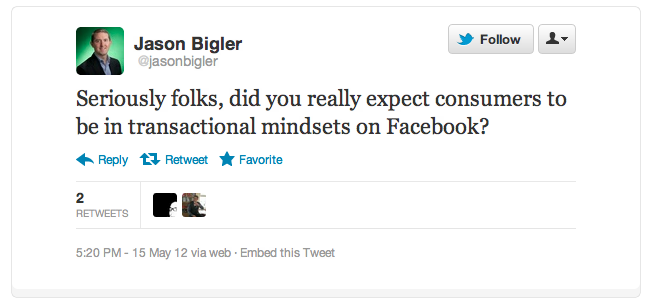
Google’s product leader for display ads business, Jason Bigler, took to Twitter yesterday to announce his not-so shocked reaction over General Motors, ya know—the nation’s third-biggest advertiser, slashing its $10 million Facebook campaign budget to zilch.
The Wall Street Journal’s Dennis K. Berman told the world via the micro-blogging service that GM pulled its $10 million advertising campaign from Facebook because “the ads didn’t work.” Bigler obviously agreed with the reporter’s sentiments.
Google’s ad boss has a reason to jump on the Facebook-bashing bandwagon, though. After all, his company operates its own social network that directly competes with Mark Zuckerberg’s widely-popular website. However, amid the Twitter trash-talk, there just might be some actual truths to Facebook’s potentially flawed campaign techniques when compared to Google’s advertising methods.
According to Business Insider:
Google’s perfect online ad product is the search ad. Search ads are perfect because the people paying for the ads know that the people looking at the ads want to see them. Consumers go on to Google and search for products or information about products, and Google shows them ads from the company that makes that product (and ads from its competitors). There is no guesswork in the targeting of Google ads. The same cannot be said for Facebook ads. Facebook ads are targeted the old-fashioned way.
According to a post on XDA-Developers, some Android users discovered Google Play Music is limiting the number of device deauthorizations per account. The new 10-device limit apparently rolled out sometime over the last 60 days and users are now beginning to receive a message informing them they have hit the limit. AndroidandMe pointed out the number of deauthorizations is actually limited to four per year, despite the 10-device limit.
As noted in the post, the issue is specifically problematic for users who often flash new ROMs to their device, because each ROM is recognized as a new device. Fortunately, Google agreed to remove older devices for some users who contacted Google Support via email, but the only solution otherwise is to create a new account and re-upload your music. The post on XDA explained another option is to “restore a Nandroid backup from a ROM that was working before.” This is clearly an issue Google will have to address in the near future…
[youtube=http://youtu.be/-WCASaYzUYs]
This morning’s Stable release of Chrome will soon allow access to open tabs across multiple devices in different locations.
The feature has been available in Chrome Beta since early April. It enabled users logged into Chrome to open browser tabs on one device while permitting access to them on separate devices from within the “Other devices” menu on the New Tab page.
“Say you’ve found an awesome recipe on your work computer while… ahem… working hard at the office. But when you get back home, you can’t quite remember if it was two teaspoons of baking soda or two teaspoons of baking powder,” wrote Software Engineers Raz Mathias on the official Google Chrome Blog while detailing the latest feature. “Wouldn’t it be cool if you could pull up the same recipe on your home computer with one click?”
Patents recently published by the United States Patent & Trademark Office (via Engadget) show Google successfully patented at least the ornamental design of its “Project Glass” augmented reality glasses unveiled last month. It does not look exactly like the prototypes shown off in the concept videos, nor the pair worn by Sergey Brin, but we expect the design will be altered somewhat before it eventually hits the market.
Expand
Expanding
Close
[youtube=http://youtu.be/5Be2YnlRIg8]
Google released an animated video today that explores what happens to an email once the “send” button is clicked in Gmail.
The cartoon visually depicts a digital message’s journey as it travels past servers, cables, hard drives, even underground pathways equipped with vampires, from a user’s inbox to another’s mobile device.
The interactive timeline, dubbed “The Story of Send,” is meant to detail Google’s safety, security, and low energy footprint within its data centers as they handle billions of emails each day. While the HTML 5-based documentary provides an illustrated, advertised view of the process, visitors can get a more in-depth look by clicking on the informational tidbits, promotional videos, and photos embedded within the animation.
Check out the feature’s advertisement reel above, or just visit the website. You can even take a peak at 9to5Google’s video screen capture below.

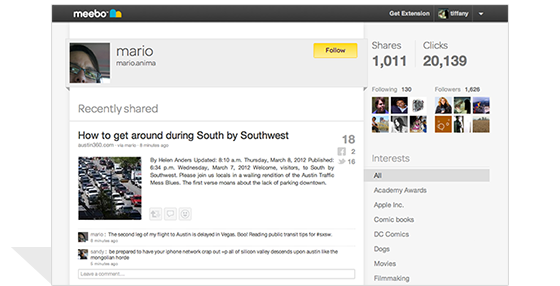
Google is reportedly close to buying social startup Meebo at roughly $100 million, AllThingsD reported this evening. Citing “two sources familiar with the matter,” the publication said the deal is close to going down.
Meebo launched in 2005 and has had many products over the years like a web-based and smartphone-based IM client and a tool bar that can be loaded on websites to provide readers with social links. These types of toolbars can be found on TMZ, TV Guide, and more. Most recently, the startup launched a new homepage that lets you “create an interest profile to get new and timely information about the things that matter to you.”
Over the years, the Mountain View, Calif.-based (how fitting) startup raised $60 million in funding to date. It most recently raised a monster round of $25 million from Khosla Ventures in 2010.
If the acquisition goes through, Google will most likely use the team and technology to boost its social network/heavy Facebook competitor Google+. More recently, Google bought out Digg-founder Kevin Rose and his team of employees from their endeavor called “Milk.” Rose and his former team are currently assigned to work on Google+, which we expect to be the same fate for the Meebo team.

Verizon is expanding its LTE rollout by giving the green light on May 17 for many northeast cities in the United States.
PC World tested 3G and 4G wireless data transfer speeds last month for the top four carriers —both indoors and outside with multiple devices across 13 major cities in 130 testing locations— and discovered some surprising results: AT&T won the 4G crown. It clocked the fastest speeds in all but four cities when compared to other 4G network providers. With that said, AT&T may soon lose its place as Verizon vastly continues to increase LTE presence in the country.
Check out Verizon’s full rollout list with each presser linked below:
[youtube=http://www.youtube.com/watch?v=ySwn_1o8zfs]
Earlier this month, Microsoft’s search engine Bing unveiled a new style that looks strikingly like Google’s homepage user-interface, but today the Redmond, Wash.-based Company branched from the design and announced a host of new features.
The redesign is still very Google-esque, but the notable aspect to this change is that Microsoft is continuing to make jabs at its primary competitor all the while conducting an obvious rip-off. The Windows-maker even detailed to users in a Bing blog post that its search relevance and quality surpassed Google’s when all signs of branding were removed from the search engines’ homepages:
From the outset, we knew that serving relevant results that were equal to or better than the other guy was table stakes. To track our progress, we conducted tests that removed any trace of Google and Bing branding. When we did this study in January of last year 34% people preferred Bing, while 38% preferred Google. The same unbranded study now shows that Bing Search results now have a much wider lead over Google’s. When shown unbranded search results 43% prefer Bing results while only 28% prefer Google results. What this means is that in 3 years we’ve made some real progress in core relevance and search quality, and while search is becoming so much more than just web results, having a rock solid foundation is important for the future of Bing and search more generally.
Screenshots are available below.
Following announcements from Microsoft that it will restrict third-party browsers in its upcoming Windows 8 release for ARM devices, Google has weighed in and expressed concerns by claiming the decision restricts “user choice, and innovation.” Mozilla, makers of the Firefox browser, recently expressed similar concerns in several blogs posts (here and here). Mozilla project manager Asa Dotzler, who is leading development of Firefox for Windows 8, claimed, “Microsoft is trying to lock out competing browsers,” and he called it a “direct violation of the promises they made to developers, users, and OEMs.” Today, Google provided the following statement to CNET mirroring Mozilla’s complaints:
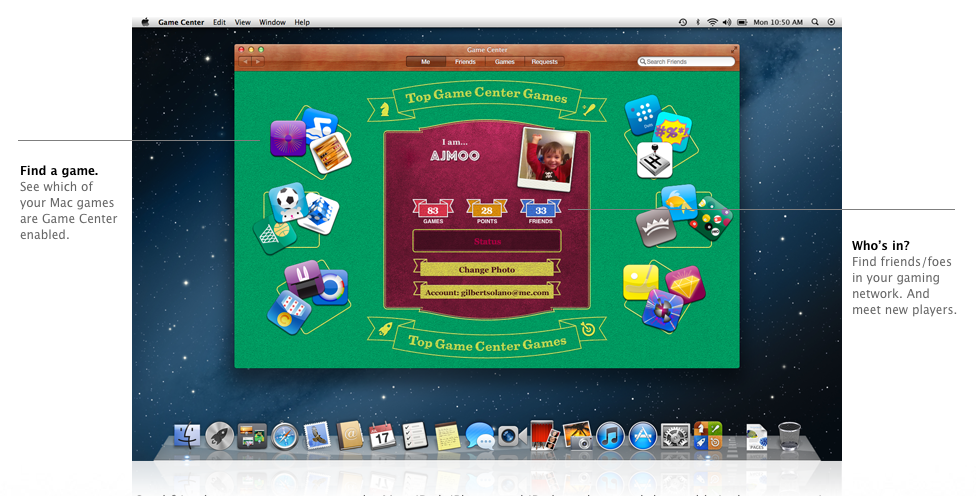
Apple introduced Game Center, an online multiplayer social gaming network, in 2010 that allows app users to invite friends, start multiplayer games, track achievements, and compare scores on a leader board, and now reports claim that Google is looking to develop a similar system for Android.
While not naming any sources, Business Insider claimed Google is developing a native Android app similar to Game Center, but the publication detailed Apple’s offering as “an app on the iPhone that connects players in most of Apple’s iOS games.” However, that description is selling the network short. Game Center comes standard with the current iOS, and Apple announced in February that the service would soon integrate with Mountain Lion, which is set for a late summer 2012 release (image, above).
Google’s flavor will allegedly include a social-based achievement system, as well as a leader board. The similar client would poise Google as a legitimate contender in the exploding mobile games market. Developers who build Android games use a variety of third-party solutions, like the iOS-compatible OpenFeint, but Google wants to create its own native app in the wake of Apple’s popularity with gaming.
[youtube=http://www.youtube.com/watch?feature=player_embedded&v=yBrbIQ-1g80]
Google just updated its Maps for Android app to version 6.7 by adding a number of notable new features like integration of Google offers, indoor walking directions, and new 360-degree Street View-like panoramic views for the insides of certain buildings.
As for Google Offers integration, Google will launch the feature only in the United States and provide access to the deals through a new “Offers” option within the app’s “Maps” drop-down menu. The app will also let you opt-in to receive notifications for nearby deals. The feature is limited to the Android app, but we are likely to see Offers integration across all Google Maps products in the near future.
Another new feature rolling out to both U.S. and Japanese users is the ability to get indoor walking directions, but this is in addition to the indoor floor plans launched earlier this year in version 6.0 and will only rollout to select buildings initially.
Taking advantage of its Street View technology, Google is introducing 360-degree panoramic views in version 6.7. To access the feature, Google noted to keep an eye out for the “‘See Inside’ section on the Place page of select businesses.”
Google Maps 6.7 for Android is already available to download from Google Play here.
[youtube=http://www.youtube.com/watch?list=PL7527E02D85D19A68&feature=player_embedded&v=KH29FKSVII0]
YouTube’s Next Vlogger is a development program that provides mentoring and promotion to vloggers (a.k.a. video bloggers) to bulk the video-sharing platform’s quality content offering, and the contest just announced its 16 winners. According to the official YouTube Creator Blog:
Not only is vlogging one of the most popular forms of expression on YouTube, but selecting Next Vlogger also resulted in more applications than we’ve received for any previous Next Creator program. Bravo! Although, that still left us with some tough decisions… After much debate and many sleepless nights, we’re excited to introduce you to the 16 Next Vloggers.
In total, the winning vloggers already have more than 125 million views. Now, they will participate in three months of trainings through Google+ Hangouts, including advice from YouTube content creators iJustine and Natalie Tran from communitychannel. They will also receive $5,000 of video equipment and $10,000 of promotion. For those that did not win, YouTube is offering Creator Workshops available on the YouTube Creator Events website. Attendance is done through Google+ Hangouts on Air from the YouTube Creators page.
Videos from each of the winners are available below (and above).
Sony and Google introduced a new Google TV product at an event today in Palo Alto, Calif. Phandroid was on-hand for the event and noted the box also comes with a completely redesigned double-sided remote that integrates a multi-touch trackpad on one side and a full keyboard on the other. There is not much word on pricing or specs, but Sony is expecting to launch the Google TV 2.0 device sometime this summer with more information likely coming out of Google I/O. Go past the break for videos of the device and remote from the event:
According to a report by Jason Stern at MuscleWeek, the iconic Gold’s Gym in Venice, Los Angeles is set to close in 2014 after 45 years of operation. This would normally not be reported; however, Stern confirmed with the gym’s former owner, Ed Connors, that “Google has bought the building and the surrounding real estate and Los Angeles DUI attorney businesses with grand designs on walling off the streets and creating a SoCal campus to rival its Mountain View ‘university’.”
The worst-kept secret at Gold’s Gym in Venice is that the gym is closing its doors for good when its lease expires on June 30, 2014… Publicly, the gym management continues to emphasize (perhaps ‘misrepresent’ is a better word choice) that Gold’s Gym isn’t going anywhere, but for those in the know, it has become painfully clear that the clock is ticking down to zero…The result: Google Plus. Gold’s Minus.
Google has not confirmed its plans, but there were rumors last year that the company purchased the building home to the landmark Gold’s Gym location.
Expand
Expanding
Close
Google+ always allowed you to receive notification emails for specific activity from the network, such as comments on your posts and when another user mentions or shares with you. Today, Google is making the experience even better for Gmail users by making those notification emails interactive. In Gmail, you can now “view, comment on, and +1 posts” directly from within your inbox. Google noted, “Comments appear in the Google+ stream in real-time, and responses from others instantly appear in Gmail, as part of the notification message.”
Google explained replying to the notification emails is now possible from your mobile device through a “Reply to this email” prompt (pictured, right):
Tap reply, send your comment, and we’ll automatically add it to the ongoing Google+ conversation. Even if you don’t use Gmail, you can still reply by email from many different services.
Google will make these new features available to Gmail/Google+ users over the coming week, and you can always manage your Google+ notifications in settings here.
Expand
Expanding
Close