Stay up to date on news from Google headquarters. Be the first to learn about plans for Android, Google Plus, Google Apps, and more!
Stay up to date on news from Google headquarters. Be the first to learn about plans for Android, Google Plus, Google Apps, and more!

Wouldn’t it be great if you could report those pesky phone calls from marketeers as spam with a single click, just like you in Gmail? If you’re a Google Voice user, now you can because the search monster this morning flipped the switch on the new global spam filtering machine that sucks out unwanted calls before they hit your phone.
And if some go through, the new Report Spam button in the Google Voice interface is all you need to stop the pesky callers who wouldn’t take ‘no’ for an answer from wasting your time. You can also fine-tune the system by automatically redirecting calls, texts and voicemails from any of the numbers in Google’s database directly into their spam folders. To turn on spam filtering, tick the Global SPAM filtering box on the Calls tab of Google Voice settings.

 .
.
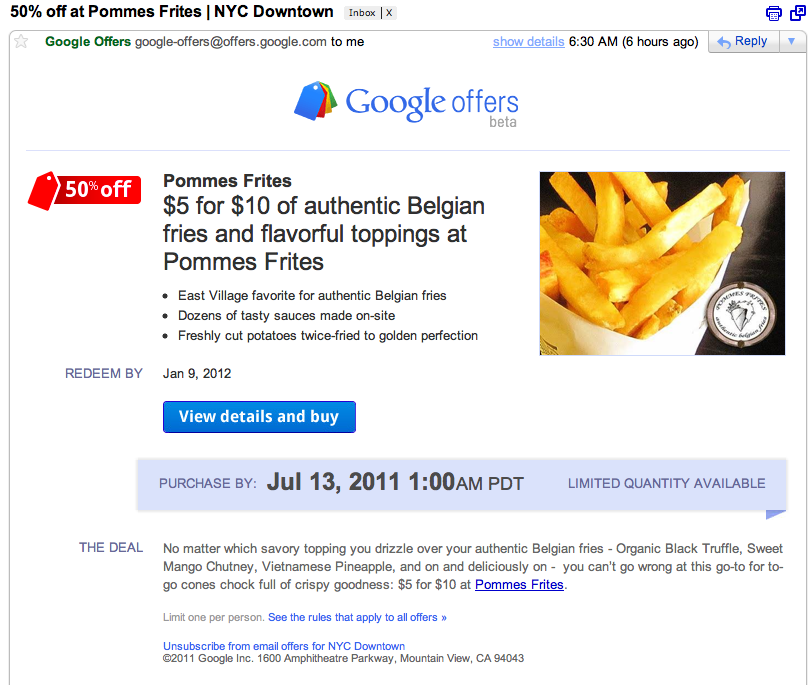
While Google Offers has been available in Portland, OR for sometime, Google has today launched offers in New York and San Francisco. Google Offers gives users daily deals on local items and services, just like GroupOn, Living Social, and GILT City. To start using Offers, locals can sign up on the Offer’s website or use the Google Shopper Android app.
Google also announced that Offers will be on its way to Austin, Denver, Washington D.C., Boston, and Seattle soon. See any good deals?
[youtube=http://www.youtube.com/watch?v=YHKum7fidIk]
Expand
Expanding
Close


As we reported last week, Google is working on a photo sharing service called Photovine.
Photovine site is now live but not “open for business”. It doesn’t appear to be part of Google Plus though it will offer some “social network service integration”. It is also weird that the start page has an iPhone rather than a Nexus S and the like..
Google, who barely appear on the page at all, advertises the service:
Photovine is a community that’s about creating fun and unique collections of photos that we call Vines. In Photovine, vines connect you with people through the ideas and themes expressed in your photos. A vine is like a constantly growing family of photos connected through a common caption created by you, your friends, and people all over the world. Some examples of vines could be: “What Weekends Are Made Of”, “Secret Stuffed Animal”, “Party People”, or, “Love of My Life”. As people add photos to vines, they tell their own stories about the moments, images, and ideas that define our lives in a way that’s social, creative, and fun. Start a vine by taking a photo and creating a new caption, or add to an existing vine. Other people will see your vine and join in by adding their own photo, showing their own take on the caption.
More Q&A below:
Expand
Expanding
Close
Nearly three-quarters of Android sales in Britain during a twelve-week period ended June 12 came from people upgrading from so-called feature phones to their first smartphone. In addition, only 1.8 percent of new Android sales came from iOS users jumping ship, a Kantar Woldpanel ComTech survey reveals. The research didn’t take into account corporate sales or contracts and was based on extensive interviews with up to one million consumers in Europe alone.
Android has grown its share of total US handset market to 9.2 percent in June of this year, up over just one percent a year ago. The platform had a 45.20 percent share of the entire smartphone market in the country, while iOS fell from 30.6 percent share in June 2010 to 18.3 percent share in June 2011. A big part of this was price: Apple’s is among the priciest consumer smartphones and only 45 percent contracts offer the device for free versus 90 percent for Android phones.
The fall of iOS came as a result of the overall UK market growing at a faster pace than iPhone sales, which have been overshadowed for the past two months as Samsung’s Galaxy S II smartphone emerged as the best-selling smartphone. In the US, Android and iOS had 57 percent and 28.7 percent market share last month, respectively. Android is clearly victorious in Germany, France, Italy, Spain, Australia and Japan, where the platform enjoys a whopping 64.7 percent share of the smartphone market versus 27.7 percent for iOS.
Kantar analysts predict that by this time next year smartphones would account for nearly 50 percent of the overall handset market, thanks to more and more feature phone owners dumping their devices for smartphones. This is not unexpected because trends hint that eventually all phones will become smartphones. Other phone vendors are experiencing sharp declines around the world, especially Symbian which has been bleeding share as Nokia fights for survival.

In an attempt to connect with his fans, Digg’s founder Kevin Rose announced that he will now be forwarding his personal domain to Google+. His personal domain, kevinrose.com, was once used for his somewhat popular blog. In recent months, his blogging has slowed down — making forwarding to Google+ a smart move. Rose tweets:
Decided to forward kevinrose.com to Google+. G+ gives me more (real-time) feedback and engagement than my blog ever did.
Google+ is great for sharing longer posts, where you can get faster feedback from readers. Obviously, you can’t host ads on Google+ to make money off your posts, but we assume Rose isn’t too worried about that. Who said Google+ wasn’t catching on?
Expand
Expanding
Close
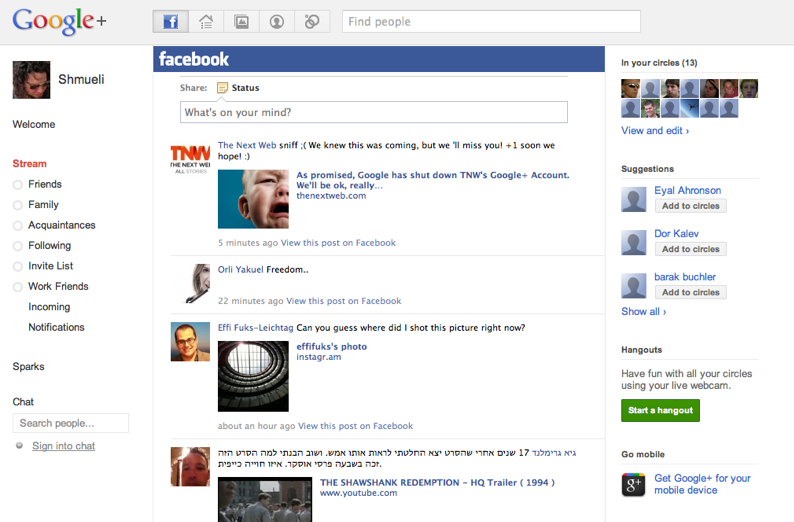
A new extension Google+Facebook adds your Facebook newsfeed right into Google+. As you can see in the screenshot above, a Facebook icon is placed right next to the home icon at the top of the page. While it doesn’t give you all the functionality of Facebook, it’s a nice tool to have to update your status and check out the latest news from your friends that haven’t moved to Google+.
Google+Facebook was developed using the Crossrider framework, a framework that is used to build an extension across all three popular browsers: Chrome, Firefox, and Internet Explorer. While we wish the extension was up on the Chrome Web Store, for those of us who use Chrome, it sadly isn’t. For now we’ll have to hit up the download that is available on Crossrider. Check out Crossrider’s demonstration of Google+Facebook after the break.
From 9to5toys.com:
Logitech today offers a refurb Logitech Revue for $149.99. That’s half of retail and the lowest price yet offered. The Revue is the standalone Google TV unit with full sized keyboard and trackpad. It features an Intel processor, 1080P video with browser that can play Flash video, Pandora, Twitter and more.
As we reported earlier this week, you can also pick up a Sony 24-inch LCD GoogleTV for just $299 as well.
Both of these machines will be upgradable to the next GoogleTV OS based un Honeycomb in the upcoming months.
Expand
Expanding
Close
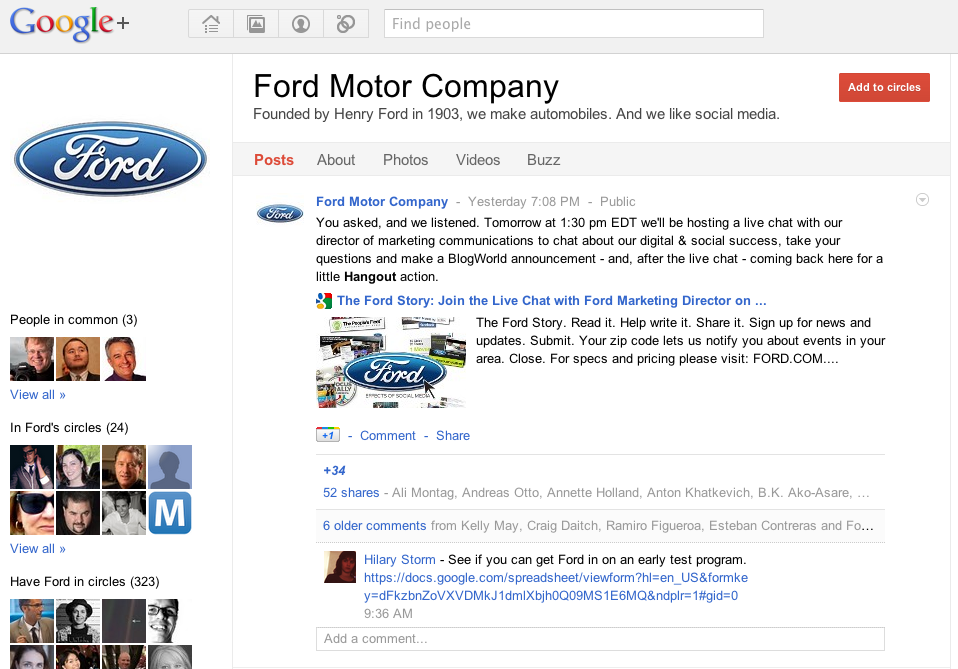
Ad Age is reporting that Google+ will open up brand pages within the next two weeks. The brand pages will resemble Facebook’s, who has seen great success gaining ad revenue from them. Ford, MTV, and Mashable are expected to be the first pages. As they wait for their official page, Ford has already set up a profile — acting as a mock page. For companies that would like to get a page, they can simply fill out a form. The form must be popping, because Google told Ad Age they can barely keep up with requests. Check out Google’s thoughts of Ford’s move below.
Ad Age: So it turns out plenty of companies are interested in setting up a business page on Google+, so much so that you’re having to turn off some of these pages. What’s the plan?
Christian Oestlien: We’re basically nine days in to what you could describe as a multi-year project. We’ve gotten several thousands of applications to be in the test group since we opened it up last night.
Ad Age: Ford is one of them, and it appears to be very active already. Are you asking it to take down its page?
Mr. Oestlien: We’re positively overwhelmed by how quickly Ford has become involved with the project. They’re doing to some incredibly cool stuff like the “hangout” they’re doing this afternoon with their customers. It’s the kind of stuff we’re looking to test.
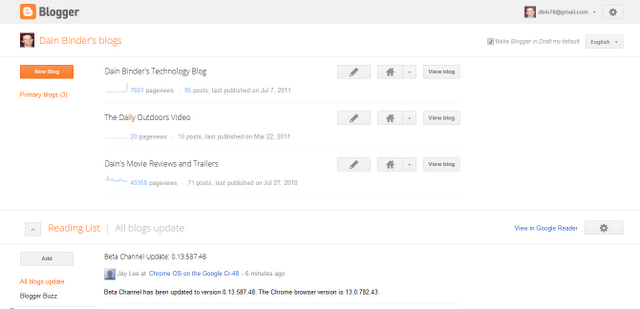
As spotted by Dain Binder on Google+, Blogger is receiving a redesign just like the rest of Google’s products. The new redesign resembles Gmail’s new look, sporting new buttons and an overall touchup. Currently, the new design can only be viewed in the draft section of Blogger, but we’d bet this is coming to the full site soon. More images after the break.
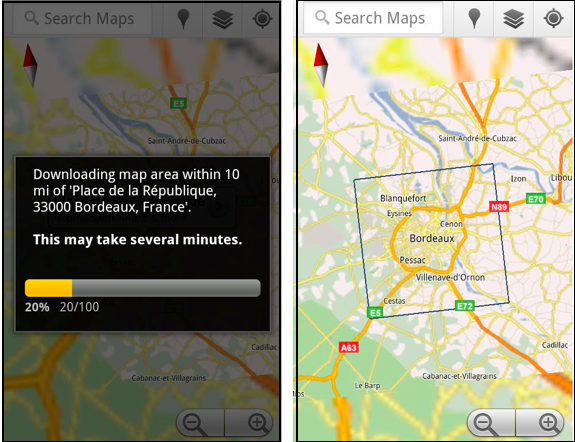
Android users who downloaded the updated Maps application today got a nice surprise. Google Maps for Android now features offline viewing. To enable the new feature, simply navigate to the Labs section of the Maps application and enable the Download Map Area option. After this is enabled, each time you want to download maps for offline viewing you will need to visit a Place page, click the more button, and then select the option to store locally. Maps will then store a 10 mile radius, locally to your device.
Offline viewing is available for Android because of the way it displays the maps. Android uses a vector-based system for displaying map tiles, where the iPhone uses an image based. This means Android can pull maps using about 1/100th of the data the iPhone would. Maybe we’ll see a change to the iPhone’s Google Maps soon.

Google is now testing an experimental design on YouTube, called Cosmic Panda. The new design is not enabled by default, but you can use it today by enabling it in YouTube’s TestTube.
The design is totally new and focused on channels, playlists, and videos. Besides the obvious style change, other features include auto-refresh commenting, dark background on video pages, and much more. Give it a try yourself.
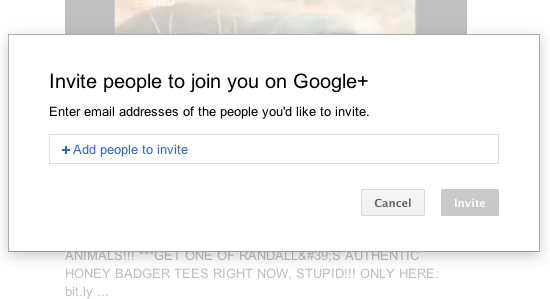
Grab them while you can! Google has just posted their invite button in Google+, that allows users with accounts to invite users without. We feel for you — those who haven’t tried the new social network. Since we care about you so much, uncle 9to5 is here to help.
Update: After inviting hundreds of people, we’ve exhausted our supply of Google Invites. If we didn’t get to you, we’ll try again next time :D
Facebook’s boss Mark Zuckerberg appeared before the crowd of journalists summoned to the company’s Palo Alto headquarters to reveal new Facebook features designed to tackle the Google+ threat. He began by saying that the industry is quickly approaching an inflexion point where focus will be on apps rather than the number of registered users. Facebook has over 750 million users, he said. Facebook is hoping to zoom past the one billion mark in the near future, he said, predicting that the social networking industry at large will soon measure its user base in billions.
Social today is about sharing. It’s about what people do on social networks, what content they share and so forth. Sharing on Facebook is growing at an exponential rate, said the executive who famously had the “I’m CEO, bitch” tagline printed on his business card in the early days. Today, an average Facebook user is sharing twice as much than the previous year and in 2012 will share double the items shared today. “We’re at the elbow of the curve,” Zuck said. For example, people share four billion things on aggregate each day on Facebook. This figure excludes direct interactions between users, such as instant messages.
He then took this huge jab at Google:
We just have this belief at Facebook validated by the success of Facebook, entrepreneurs who focus on one thing do better.
Zuckerberg predicted proliferation of apps which are “the biggest driver for us”. Mobile and the ability to segment stuff into groups are the #2 and #3 things for the company, respectively, he said. The CEO then proceeded to unveil an improved Groups feature, a redesigned chat and an all-new video calling via Skype. More about that plus a nice promo clip showing off Skype video calling right below the fold.
It’s interesting how Microsoft is becoming an intellectual property vendor these days. This is all thanks to Google’s Linux-based Android operating system which incorporate Microsoft’s many patents, allowing the Redmond firm to seek royalties from handset vendors. Microsoft first forced HTC to pony up five bucks in royalties per each handset sold. The revelation has prompted pundits to note that the HTC deal earns Microsoft more money then licensing fees collected from Windows Phone partners.
Microsoft has signed a similar pact with General Dynamics Itronix and their licensing division took cash from component maker Wistron Corp., in addition to Android backers Veloicty Micro and Onkyo Corp. And now, we learn that Microsoft’s legal rottweilers are after Samsung, the leading Android handset maker, reports Reuters based on local media. Note that Microsoft already has licensing agreements in place with Samsung and LG.
Microsoft Corp has demanded that Samsung Electronics Co Ltd pay $15 for each smartphone handset it makes based on Google Inc’s Android operating system as the software giant has a wide range of patents used in the mobile platform, local media reported on Wednesday. Samsung would likely seek to lower the payment to about $10 in exchange for a deeper alliance with Microsoft for the U.S. company’s Windows platform, the Maeil Business Newspaper quoted unnamed industry officials as saying.
Let’s put it this way: Microsoft is set to make $30 million in Galaxy S 2 royalties alone based on sales of three million Galaxy S II smartphones. That’s a run-rate of twenty million handsets a year, meaning the Samsung deal could be potentially worth a cool $200 million in annual licensing fees on the Galaxy S II smartphone alone. And what happens if an Android vendor does not sign with Microsoft for patent protection?
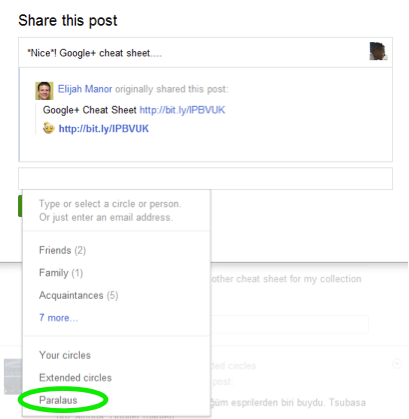
Google+ user Ufuk Kayserilioglu was able to use his Google Apps account in Google+ for a short time today — sorta. As he notes below, he was able to sign into Google+ with a Google Apps account with some accidental trickery.
I discovered it by accident: I was logged into Google+ with my Google Account and into my Google Apps account (on the Paralaus domain), as secondary, with multiple sign-on. For some reason Google decided to log me off all my Google accounts. At that point, I made the initial login with my Google Apps account and secondary with my Google Account. I was unaware that Google+ was open on another tab. I tried to reshare something publicly, and was confused that it was saying Paralaus where it should be saying Public. Picking that options told me that only “People on Paralaus can find and view” my post. It was then that I realized I was able to use Google+ with my Google Apps account in a hybrid mode where I was not fully logged in but some elements were available; almost as a preview. ;)
Our own Seth Weintraub would love to see this feature come to Google+, as I’m sure many of you would too. While this was just a ‘preview’, we do expect Google Apps support to come very soon.
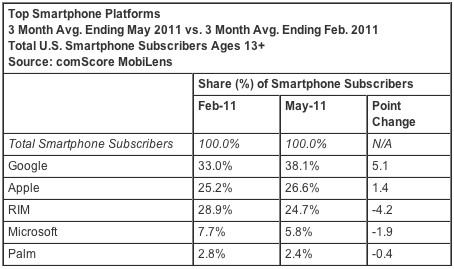
The Android train keeps chugging along with the comScore showing a 5.1 point increase in total US Android use in the Feb-May Quarter putting the OS at 38.1% of the total US smartphone market. Apple also gained, though less spectaculary with 1 percentage point improvement, coming in at 26.6%. Android head Andy rubin said last month that Android activations had grown to over half a million a day worldwide.
For the other guys, it wasn’t a happy quarter. RIM continues its slide down to a under quarter of all US smartphone purchases, while Microsoft and webOS risk being bundled into the “other” category as their marketshare continues to erode into almost nothing.

Mashable has learned that Google is planning to kill two of its biggest branded products and merge them into Google branded services in the next six weeks.
According to two sources familiar with the matter, Google intends to rename Picasa “Google Photos” and Blogger will become “Google Blogs.” Several other Google brands are likely to be affected, though our sources made it clear that YouTube would not be rebranded.
Mashable notes that the move isn’t without precedent – Grandcentral became Google Voice, Jotspot became Sites, etc. etc.
Blogger (co-founded by Evan Williams of Twitter) was acquired in 2003 and is one of the top 10 most visited websites in the world. Picasa is also a very popular service acquired in 2004.
Both services will likely be tied in with Google’s new Plus Social Network. It would be surprising to see Picnik survive as a separate product. ‘Google Photo Editor’ anyone?
You probably remember Google Video, the search giant’s free video sharing site? It launched on January 25, 2005, but Google discontinued the ability to upload videos four years later following the YouTube acquisition on October 9, 2006. The company has re-branded the service as Google Videos and made it a search silo. It looks Google is now prepping a dedicated smartphone app dubbed Google Videos, reports the Android Central blog. This one has nothing to do with user-created videos – for that purpose, Google provides YouTube apps for various smartphone flavors.
According to tipsters who spotted the Google Videos app briefly in Android Market (it’s gone now), the software is basically a pretty front-end to Google’s upcoming movie rental service which was announced back in May at Google I/O 2011. Google said movie rentals would first roll out on the Xoom tablet and promised support for more devices, including Android 2.2 smartphones. Movies can be rented on Android Market starting at $1.99 and are available for offline viewing and across all Android devices and computers tied to the same Google Account. Check out the Google Videos app running on a Nexus S in the below clip.
[youtube=http://www.youtube.com/watch?v=eaOhLpsoCA0]
Expand
Expanding
Close
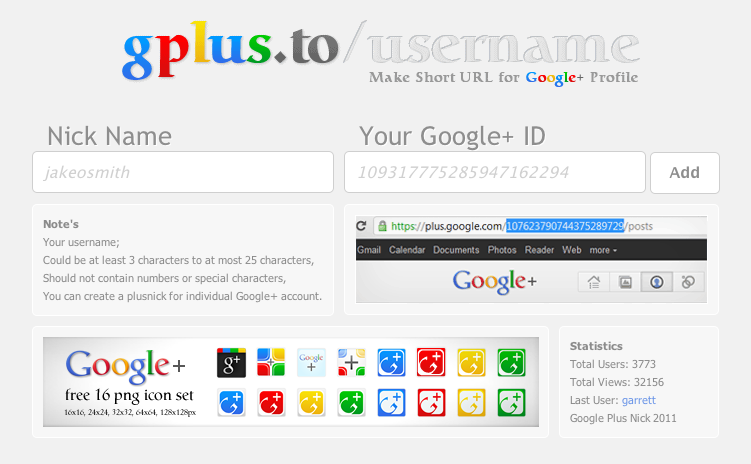
Facebook has a nifty feature that allows users to give their profile a link like facebook.com/9to5Google, instead of facebook.com/19238288asd8a8. This feature allows for easier sharing of profiles, and sadly the new social network Google+ doesn’t offer anything of the sort. We’ve stumbled upon a new website, called Gplus.to, that allows Google+ users simply create a shortened URL for their Google+ profile. The shortened URL will be something along the lines of gplus.to/9to5google.
The shortened URL is pretty easy to setup, with the help of a little guide on the website. Gplus.to is currently boasting 32,000 users, and it seems to be growing at a fast pace. If you have a profile on Google+ why not give this a try? Let us know how it goes.
Expand
Expanding
Close
 Cross posted from 9to5Mac
According to Google Employee Erica Joy, the Google + app is awaiting Apple’s approval in the App Store. It also sounds like it is a iPad univeral app. Hopefully it gets through quicker than Google Voice which took over a year to clear the gauntlet. Cross posted from 9to5google.com
[UPDATE 1, July 5, 2011 8:31 Eastern]: Facebook has blocked the Chrome extension for exporting friends Author Mohamed Mansour wrote on the extension page that “Facebook is trying so hard to not allow you to export your friends. They started to remove emails of your friends from your profile by today July 5th 2011. It will no longer work for many people. New version with a different design is currently deploying. You might have to do exports daily. It uses a different approach, and I will maintain this version. Just bear with me.”
Transferring your Facebook contacts to Google+ is a bit tricky because of, you know, the walled garden of Facebook which restricts how you can take your social graph elsewhere (unlike the Google Takeout service). Some workarounds tackle the issue, like the Friends to Gmail web app which will copy your Facebook contacts to Gmail. You can also pull a similar stunt via Yahoo Mail. Both solutions, however, require that you first copy Facebook friends to an online address book and then use this data to build your social graph on Google+.
A new Chrome extensions takes the pain out of this, allowing you to continue building your Facebook relationships on Google’s social service in one easy step. It’s called Facebook Friend Exporter and right now works only with the English version of Facebook and only via standard HTTP connection (SSL Facebook isn’t supported yet). What’s best…

Bloomberg, The New York Times and Dow Jones today report that Microsoft and China’s Baidu have entered a cooperation pact for former to provide English language results for the the latter’s queries.
“This is not good news for Google,” said Jake Li, who rates Baidu shares “accumulate” at Guotai Junan Securities in Shenzhen. Most Chinese Internet users currently prefer Google’s English-language search results over Baidu, whose service will be improved by the partnership with Microsoft, he said.
The terms of the deal weren’t made public but the deal will likely work similarly to the Bing-Yahoo deal last year where both companies share the revenues from advertisements. Baidu is the dominant search provider in China, one of the few places that Google doesn’t reign supreme. It had previously signed a mobile only deal with Microsoft but rumors of this deal first surfaced a month ago.
The Baidu-Bing service will go live later this year.
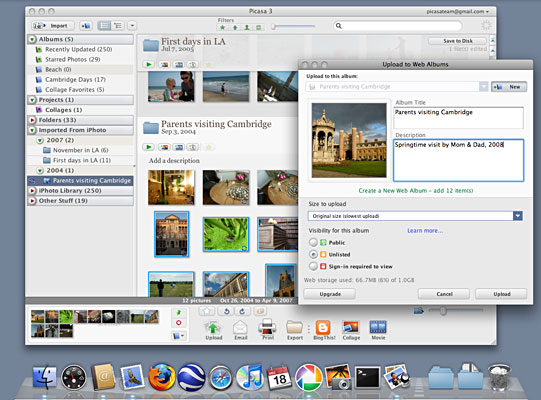
Google has always integrated products, into products, into products. Google+ is no different, where we see many of Google’s product incorporated into this invite only product. One of these is Picasa, who historically only had a storage limit of 1GB, but now that Google+ is on the market things have changed. ReadWriteWeb has posted a break down on what pictures count torwards what storage.
As it turns out, there’s nothing to worry about. If you’re signed up for Google+, photos up to 2048×2048 pixels and videos up to 15 minutes long won’t count towards this free storage limit. And Google will automatically resize photos for you when you upload them to Google+, so they stay under the free size limit.
That means only photos uploaded directly to Picasa Web Albums over the 2048×2048 size will count towards the 1 GB of free storage, explains Google. And when that limit is reached, photos will be automatically resized.
Meanwhile, for non-Google+ users, there are slightly stricter rules: photos up to 800×800 and videos up to 15 minutes won’t count towards free storage. Again, when the 1 GB limit is reached, larger photos will be resized down.
To sum this up, any Google user can now upload unlimited pictures to Picasa as long as they’re under 2048×2048. If they’re above 2048×2048 you are given 1GB of storage, but they’ll be resized. Google+ users can upload photos up to 2048×2048 that won’t count towards the limit, and Google will automatically resize them to stay within the limits. Get storing!
A big milestone today as Google’s Chrome hits a cool 20 percent web usage share according to StatCounter numbers for the month of June (via TNW) based on aggregate data collected from their network of three million websites.
For the first time ever, Chrome passed the 20 percent mark globally, accounting for 20.65 share of all web browsing the world over. Compare that to just 2.8 percent in the year-ago period. Google’s browser is now chasing Firefox which fell from 30 percent in June 2010 to 28 percent in June 2011. All versions of Microsoft’s Internet Explorer have also fallen to 44 percent globally, down from 59 percent in June 2010.
In the United States Chrome’s rise was less rapid, hitting 16 percent in June while Microsoft’s and Mozilla’s browsers scored 46.5 percent and 24.7 percent, respectively. What’s especially interesting is Chrome’s share in South America where it grabbed 29.72 percent of the market, beating Firefox (24 percent) to the browser punch (Microsoft’s browser had 44.1 percent share). An indication of things to come globally?
