Android

See All Stories

Breaking news for Android. Get the latest on apps, carriers, devices, and more!
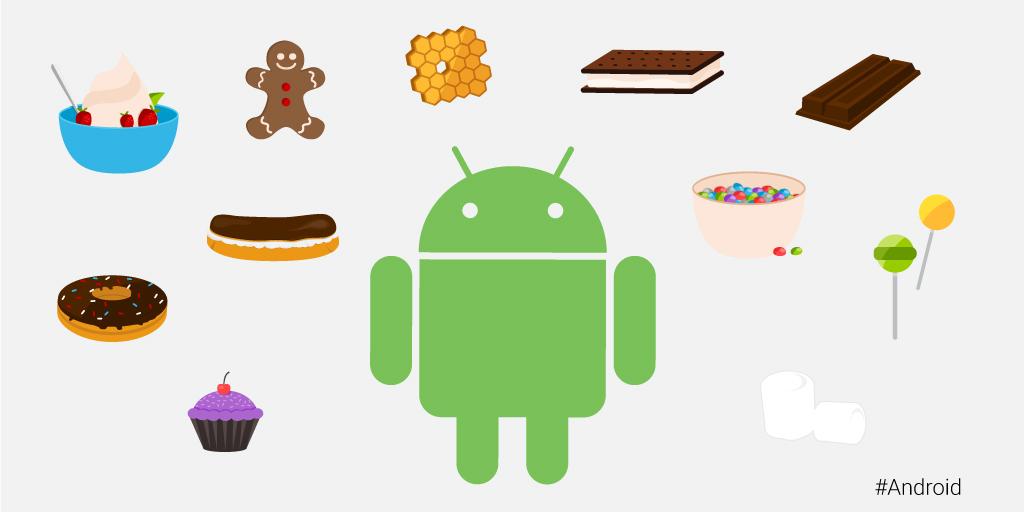
Android is Google’s mobile operating system, launched in September 2008, although its history technically began with the release of the Android alpha in November 2007. To this day, Android powers the majority of the world’s smartphones and comes in several different flavors across many phone makers.

What is Android?

Android Inc.

Android, before it was Android, was a company called Android Inc. That company was founded in Palo Alto, California, in 2003 by a crew of four: Andy Rubin, Rich Miner, Nick Sears, and Chris White. The company and its project was acquired by Google in 2005 for a sum of more than $50 million, although the exact number is unknown. The company’s founders joined Google as part of the deal.

In its infancy, Android was an operating system built not for touch screen smartphones like the iPhone, but rather BlackBerry-like devices with physical keyboards. It’s well documented that after Apple shocked the world with the iPhone, ahead of its nearest competition by at least a couple years, Google and Android Inc. had to go back to the drawing board to build something competitive.

Adoption by third-party makers

It didn’t take long after the launch of the iPhone for various manufacturers to enter the market with their alternatives — and Google’s Android immediately became the obvious platform of choice for just about everyone except Microsoft. HTC was the first manufacturer on board, and introduced the T-Mobile G1 running Android in September 2008. Soon after, HTC, Motorola, Samsung, and carriers like Sprint and T-Mobile jumped on board to form the Open Handset Alliance.

Android makers across the world

Iconic Android handsets

There have been thousands of Android phones released since Android’s inception, but some have been more important to the platform’s history than others. There was the original T-Mobile G1, as mentioned, but there was also the HTC One Google Play Edition, Moto G, Samsung Galaxy S4, and others. Some of the most iconic Android handsets include:

  • HTC G1
  • HTC Nexus One
  • Samsung Galaxy S, S2, S3, S4, and their successors
  • HTC Incredible S
  • Samsung Nexus S
  • Samsung Galaxy Nexus
  • Samsung Galaxy Note
  • Nokia 8
  • BlackBerry KeyOne
  • Google Pixel and its successors

In more modern times, there are several Android smartphones makers that popped up across various niches and in several international markets. Huawei is a dominant Android maker in China and many European markets, while Samsung is by far the most popular maker in the United States by far — effectively creating a duopoly with Apple. Today, there are dozens of major device makers contributing to the Android ecosystem.

Full list of Android OEMs

History of major Android versions

Android has seen countless software revisions over the course of its life, but in modern times the OS usually sees a major release on an annual cadence. In the earlier days, Google famously gave its major software releases dessert-themed codenames, but retired that practice in 2019 with the release of Android 10.

VersionNameReleaseDevices
2.3GingerbreadFebruary 9, 2011Nexus S
4.0Ice Cream SandwichOctober 19, 2011Galaxy Nexus
4.1Jelly BeanJuly 9, 2012Nexus 7
4.2Jelly BeanNovember 13, 2012Nexus 4, 10
4.3Jelly BeanJuly 24, 2013Nexus 7 (2013)
4.4KitKatOctober 31, 2013Nexus 5
5.0LollipopNovember 3, 2014Nexus 6, 9
5.1LollipopMarch 9, 2015Android One
6.0MarshmallowOctober 5, 2015Nexus 5X, 6P
7.0NougatAugust 22, 2016Nexus 5X, 6P
7.1NougatOctober 4, 2016Pixel, Pixel XL
8.0OreoAugust 21, 2017Pixel, Pixel XL
8.1OreoDecember 5, 2017Pixel, Pixel XL
9PieAugust 6, 2018Pixel 2, Pixel 2 XL
1010September 3, 2019Pixel 3, 3a
1111September 8, 2020Pixel 4

List of major Android OS platforms

While Android proper is certainly the most widespread of Google’s Android operating systems, the company has also launched many offshoots of the main OS over the years. There’s Android Auto, Android Wear (now Wear OS), Android TV (now rebranded to Google TV), as well as versions of Android built for tablets and Android Things (now defunct).

Samsung shows off 2013 Galaxy Camera accessories at CES

Site default logo image

During IFA last year we showed you some of the accessories and future accessories launching alongside the Samsung Galaxy Camera. Today at the Las Vegas Convention Center Samsung was showing off its latest iterations of the accessories for the launch of the LTE variant on Verizon, as pictured in the gallery below:

Site default logo image

Samsung reportedly working on firmware fix for ‘sudden death’ of some Galaxy S IIIs

Samsung is apparently working on a firmware update to fix the “sudden death” of some 16GB Galaxy S IIIs.

The term “sudden death” stuck after a number of device owners reported in the XDA-Developers forums that their SIIIs, well, just suddenly died. The smartphone would apparently stop working for an unknown reason, but a Samsung spokesperson admitted to Tweakers recently that the bug only concerns a “very limited number” of S IIIs.

Samsung Galaxy S IIIs with 16GB, stock software, and custom ROMs seem to have only experienced the issue so far, but Samsung is reportedly pushing out a firmware update at some point in the unspecified near future to remedy the problem.


Expand
Expanding
Close

Site default logo image

Amazon Instant Video apps add seasons of popular shows from A&E, HISTORY, and Lifetime

Following the launch of A+E Network’s dedicated iPad apps for A&E, History Channel, and Lifetime last month, Amazon announced in a press release today that it also licensed content for its Amazon Instant Video service. It sounds like Amazon is only getting access to old seasons of popular shows from the network, but any additional content will surely be welcomed by Android users taking advantage of the service through the Amazon Instant Video app on Google TV, Kindle Fire, or elsewhere.

Amazon.com, Inc. today announced a content licensing agreement with A+E Networks to add prior seasons of popular series from A&E, bio, HISTORY and Lifetime to the Prime Instant Video service…The deal with A+E Networks will bring Prime customers more TV episodes from some of their highest rated television programming including Pawn Stars, Storage Wars and Dance Moms, which are also available for purchase through Amazon Instant Video.

Jelly Bean now on 10 percent of all Android handsets worldwide, as Gingerbread’s share falls

Site default logo image

The latest numbers from Android’s Current Distribution page reveal somewhat exciting results for the folks in Mountain View. Android 4.1 – 4.2 Jelly Bean has now crossed the 10 percent threshold for all Android devices on the market. It now sits at 10.2-percent. Additionally, Gingerbread has dropped below the 50 percent mark for the first time in over a year, as Ice Cream Sandwich made gains to get close to 29.1-percent total share. Maybe this is how things should have always been. But, at any rate, sales from the Samsung Galaxy S III, HTC One X, and more seem to be paying off.


Expand
Expanding
Close

Corning announces Gorilla Glass 3 ahead of CES 2013, touting 40 percent visible scratch reduction

Site default logo image

Ahead of CES 2013 taking place in Las Vegas next week, the folks at Corning have unveiled Gorilla Glass 3. It is a new glass composition aimed at next-generation smartphones and tablets. The stronger Gorilla Glass 3 offers a new feature called “Native Damage Resistance” that brings 40 percent reduction in the number of scratches a device’s screen may take and a 50 percent boost in retained strength after the glass becomes flawed. Several Android handset manufacturers have incorporated Gorilla Glass on many of the most popular smartphones on the market, so we would not put it past Corning’s new screen tech to be found in almost all the new devices landing this year. We’ll take a closer look at CES with our hands-on coverage. (via Engadget)


Expand
Expanding
Close

comScore: iOS and Android continue move toward duopoly with 90 of US market in November

Site default logo image

According to the latest numbers from comScore MobiLens for the United States mobile phone market, Apple and Samsung both continue to gain marketshare as the leading OEMs as Android and iOS move closer toward a duopoly with a combined almost 90 percent of the market. ComScore’s latest numbers track the three-month period ending in November, which saw Apple jump from 17.1-percent in August to 18.5-percent of the U.S. mobile phone market. Samsung continued its lead jumping up 1.2-percent to 26.9-percent, while gains for both companies come at the expense of decreases in market share for LG, Motorola, and HTC.

As for the U.S. market by platform, iOS and Android both experience slight gains over August numbers. With a joint 88.7-percent of the market for Apple and Google, RIM is the closest competitor dropping from 8.3-percent of the market in August to just 7.3-percent in November. Microsoft dropped from 3.6-percent to 3 percent:

In November, 75.9 percent of U.S. mobile subscribers used text messaging on their mobile device (up 0.3 percentage points). Downloaded applications were used by 54.2 percent of subscribers (up 0.8 percentage points), while browsers were used by 52.1 percent (up 0.1 percentage points). Accessing of social networking sites or blogs increased 0.9 percentage points to 39.2 percent of mobile subscribers. Game-playing was done by 33.7 percent of the mobile audience, while 28.7 percent listened to music on their phones (up 0.4 percentage points).

Site default logo image

Don’t have $1,500? Just build your own Google Glass

IEEE’s Rod Furlan just explained how he built his own Google Glass-like prototype.

Google’s Sergey Brin revealed at the 2012 Google I/O Developers Conference in June that a pair of beta, or “Explorer Edition”, Google Glasses cost $1,500 and would start shipping to I/O attendees in 2013, but Lee realized the components to such a headset display must be readily available if Google was able to start developing one. And so, he decided to build his own—admittedly rough—version.

After promptly selecting the Myvu head-mounted video display, Lee tried to find an onboard computer:

I settled on a fourth-generation iPod Touch. I had to “jailbreak” it, which eliminates limitations built into the iOS software by Apple. Once that was done, I could mirror the Touch’s main display to the microdisplay using its composite video output. This choice of onboard computer meant that for a point-of-view camera (used to record images and video), I needed one that could communicate via the iPod Touch’s Wi-Fi or Bluetooth wireless interfaces. I used a Looxcie Bluetooth camera, which is small enough to be mounted on the side of the frame once you strip it from its plastic shell; you can order it online for around $150. (I’m already building a second iteration of my prototype around a Raspberry Pi. This will allow more control over the camera than is currently possible with the iOS apps that work with the Looxcie and better integration of sensors such as accelerometers.)

Lee tested the prototype once the assembly process was over, and he noted his world immediately changed forever:

My world changed the day I first wore my prototype. At first there was disappointment—my software was rudimentary, and the video cable running down to the onboard computer was a compromise I wasn’t particularly pleased with. Then there was discomfort, as I felt overwhelmed while trying to hold a conversation as information from the Internet (notifications, server statuses, stock prices, and messages) was streamed to me through the microdisplay. But when the batteries drained a few hours later and I took the prototype off, I had a feeling of loss. It was as if one of my senses had been taken away from me, which was something I certainly didn’t anticipate.

Lee continued to give insight into how Google Glass and his iOS prototype could provide immense value. Unfortunately, he only corroborated his post with a few illustrations and no images. Go to IEEE for more details.

This article is cross-posted on 9to5Mac.


Expand
Expanding
Close

Rumor: HTC M7 flagship to be announced at CES

Site default logo image

If a new rumor is to be believed, the launch of HTC’s new flagship may be coming sooner than we thought. Prominent XDA Forum member Football4PDA tweeted that the One X+ successor, the HTC M7, may be announced at a CES 2013 event by HTC and not at Mobile World Congress. The M7 is rumored to feature “several industry firsts,” boasting a 4.7-inch display with a pixel density of 468PPI and a number of visual improvements. It will also sport a second-generation 1.7GHz quad-core processor, 2GB of RAM, 32GB of internal flash storage, and LTE. There are also believed to be several camera improvements, with a 1080p, 13-megapixel rear-facing camera and 1080p front-facing camera. A CES announcement may give the device a quicker launch, with Sprint and Verizon looking to be the destination stateside. We will cover CES from the show floor next week and will bring you the latest as we get it.
Expand
Expanding
Close

Site default logo image

Flurry: Holiday 2012 sees new 1-week record with 50M iOS & Android activations and 1.76B app downloads

Flurry today released its stats for worldwide app downloads during the 2012 holiday season. It recently released some stats for Christmas Day, including a huge 332 percent increase over previous years to 17.4 million new iOS and Android activations and 328 million app downloads. Today it shared some stats for the entire week starting on Christmas and ending New Year’s Day, noting it recorded the highest number of activations and app downloads for any week in history. As highlighted in the images, Flurry estimated 50 million devices activations and an increase of 65 percent to 1.76 billion app downloads:

The final week of the year, between Christmas and New Year’s Day, grew by 65% over the early-December baseline, historically breaking through the largest single week record previously set during the same week of 2011.  While several weeks since late November delivered billion+ week download levels, the holiday week delivered a record-shattering 1.7 billion downloads… Looking forward to 2013, Flurry expects the trend of one-billion-download weeks to become the norm, and that the industry will surpass the two-billion download week during Q4.

Ubuntu smartphone OS hardware requirements detailed for entry level and high-end ‘superphone’ devices (Gallery)

Site default logo image

Canonical has announced a new version of Ubuntu that is aimed at the smartphone and built around existing Android kernels and drivers, reported The Verge. The mobile OS will support both ARM and x86 and is said to be very easy for OEMs to adapt on their Android devices. The main difference between Ubuntu and other versions of Android is that Java Virtual Machine is not being utilized. According to the folks at Canonical, this is said to let “all core applications run at full native speeds with a small memory footprint.”

Ubuntu phones are expected to be shipping in early 2014, according to Canonical, while the device is being demoed today at a media event in London (as seen above). Additionally, downloadable versions of Ubuntu are expected in the coming weeks for the Galaxy Nexus to let developers begin tinkering. An app marketplace is in the works, as more devices will be added in the coming months.

Canonical has detailed the system requirements for smartphones running Ubuntu. The “entry level” Ubuntu device is expected to run a 1GHz Cortex A9 processor, 512MB – 1GB of RAM, 4-8GB eMMC + SD, and a multi-touch display. The high-end Ubuntu “superphone” calls for a Quad-core A9 or Intel Atom processor, 1GB of RAM minimum, multitouch, and desktop convergence. The desktop convergence part certainly sounds interesting, as Canonical called it a “a full PC desktop accessible just by docking the device to a monitor and keyboard.”

An initial hands-on report from Engadget said the OS relies on heavy edge swipes instead of buttons, much like Windows 8. Canonical will showcase the devices even more at CES 2013 next week, and we’ll definitely take them for a spin. In the mean time, you’ll find a gallery of Ubuntu running below.

[youtube=”http://www.youtube.com/watch?feature=player_embedded&v=cpWHJDLsqTU”]


Expand
Expanding
Close

MK802 Mini Android PC for $35.21 offers an affordable Android computer

Site default logo image

From 9to5toys:

Perfect to hook-up to a television, Amazon is offering the MK802 Mini Android PC for $35.21 — lower than the regular list price of $59. For those unfamiliar, this little gadget offers a full Android 4.0 Ice Cream Sandwich experience in the size of a USB flash drive. A mini HDMI port is on the device for connecting it to an external display, making it a compelling device for the living room.

Additionally, the Mini Android PC features a full-sized USB port to connect to another computer or add peripherals. It ships with an HDMI, USB, and power cable and supports 802.1b/g/n Wi-Fi. Of course you’ll need a keyboard and mouse, so something like the Logitech diNovo Mini Keyboard plus a Bluetooth Micro Adapter may be the perfect solution. [Amazon]
Expand
Expanding
Close

Head of Google Glass Babak Parviz talks what is next for the platform

Site default logo image

As 2013 kicks off, Babak Parviz, head of the Google Glass project that launched in spring of last year, sat down in an interview with IEEE Spectrum to give word on what to expect next.

We saw several prototype versions of Google Glass, as it readies shipping to the mainstream, and today, Parviz gave some insight into what has changed. “We constantly try out new ideas of how this platform can be used. There’s a lot of experimentation going on at all times in Google,” said Parviz. “We’re also trying to make the platform more robust. This includes making the hardware more robust and the software more robust, so we can ship it to developers early this year.” The early 2013 shipping time was announced at Google I/O 2012. It is nice to see Google is still on-track; however, new features for the platform have not been revealed. “The feature set for the device is not set yet. It is still in flux,” Parviz said.

Parviz also covered how Google will make a business out of Google Glass, and, maybe as a surprise to many, the Mountain View company currently doesn’t have plans to include advertising—its bread and butter. The business model is still being worked on: “This is still being worked on, but we are quite interested in providing the hardware…At the moment, there are no plans for advertising on this device.”

Other revelations in the interview include a cloud-based API so developers can integrate their Android apps into Google Glass. An example given was email and calendar services. Lastly, Parviz said the Glass team has worked hard on battery life and making sure the device is safe on the eyes. You can read the full interview for more. [IEEE Spectrum]
Expand
Expanding
Close

Student (or play one)? Here, have $50 off a Kindle HD 8.9-inch, now starting at $249

Site default logo image

From 9to5Toys.com:

.

If you are a student (or have access to a .edu email address), Amazon is having a special New Years Day deal on the Kindle HD 8.9. The online retailing giant is offering $50 off the price of an 8.9-inch Kindle Fire that yields a $249 price.

Exclusive Discount on Kindle Fire 8.9″
Special pricing available only to Amazon Student Members with an active Prime account (free six-month or $39/year plan). Join Amazon Student or start your [$39/year] discounted Prime membership to take advantage of this sale. The promo codes below will become available 24 hours after activation of your account, through January 30. New members, don’t forget to check your .edu email and verify your account.

How to Redeem This Deal
Place a Kindle Fire HD 8.9″ or a Kindle Fire HD 8.9″ 4G LTE Wireless in your cart. At checkout, enter the promo code KNDL4STU. If you are an Amazon Student member in a free or paid Prime plan, the discount will be applied to the items in your cart. This promo code may be redeemed once per customer. offer good only while supplies last.
Expand
Expanding
Close

Ring in the New Year with the official New Year’s Eve Ball countdown app (and keep those resolutions too!)

Site default logo image

new-years-eve-photo-by-countdown-entertainment-llc_4388468_lrg

The countdown is on.

It’s New Year’s Eve and folks are either getting ready to go out and party or assembling a junk food fest to sit on the couch and gorge the night away, but it’s guaranteed that almost everyone will have their eyes locked on Time Square’s Ball when the clock strikes midnight. Instead of watching this year’s countdown on television, however, just use an Android smartphone.

The Times Square Official New Year’s Eve Ball App is the official app to celebrate New Year’s Eve live from New York City, as the app’s description indicates, and it’s free. The main features include the ability to watch the co-hosted official show live, opening ceremonies, musical performances, celebrity appearances, hourly countdowns, and the midnight Ball Drop.

Check it out:

Users can also submit images and then vote on friends’ photos to possibly be selected for display on the Toshiba Vision Screen beneath the New Year’s Eve Ball, and they have access to tidbits related to history, news, weather, photos, map, and event schedule. The app also offers New Year’s Eve eCards and the ability to customize the Toshiba Countdown Clock with a personal photo and time zone.

Get more apps below.


Expand
Expanding
Close

Google-Motorola working on new flagship ‘X Phone’ to take on iPhone 5

Site default logo image

According to the Wall Street Journal, Google-Motorola is working on a new smartphone that is internally known as ‘X Phone’. It is aimed at Apple and Samsung’s latest flagship devices. Details seem to be slim, but here are some of the key points:

  • X-Phone, and an eventual X-Tablet, are separate from Motorola’s long-existing Droid line.
  • Some early plans for the device were scrapped over supply chain and manufacturing concerns.
  • Project is led by Lior Ron, a former Google Product Manager.
  • Motorola wants the phone to have panorama photo capabilities and improved color saturation, but these have been found to affect battery life.
  • The companies wanted to use bendable and ceramic technologies, but these plans are apparently difficult to implement.
  • Launching sometime in 2013.

The original report has more detail and background information. (Image: Chris Voss)


Expand
Expanding
Close

Polaroid exec confirms mirrorless Android-based camera will debut at CES

Site default logo image

On Tuesday, rumors surfaced that camera manufacturer Polaroid was set to enter the Android-based camera game with a new mirrorless solution, surely firing up the Android and camera fanatics alike. Today brings better news. Without confirming any specs, Polaroid CEO Scott Hardy confirmed the rumor in a statement to Imaging Resource, announcing: “There will be an Android powered, interchangeable lens camera introduced by Polaroid at CES 2013.” The camera is rumored to feature an 18-megapixel sensor and 3.5-inch LCD for photo perusing, all while running Android 4.0 as the base operating system.

The main players in the Android camera game right now are Samsung’s Galaxy Camera and Nikon’s s800c—both of which have received mixed reviews. But, with higher megapixels and interchangeable lens system, what is to stop Polaroid’s solution from being all that? We’ll make sure to bring you a full hands-on as soon as we can, as 9to5Google is your prime spot for all-things Android at CES 2013. [Imaging Resource via Gizmodo]


Expand
Expanding
Close

Google makes Quickoffice iPad app free to Google Apps for Business customers

Site default logo image

Google made some announcements today regarding its work with the Quickoffice team since acquiring the company in June. On top of noting work to take advantage of Quickoffice conversion technology in Google Docs, Google launched a free version of the QuickOffice iPad app exclusively for Google Apps for Business customers today. There are also free iPhone and Android versions of the app for creating and editing Word, Excel, and PowerPoint files coming to Apps customers in the near future:

Converting old files to Google Docs, Sheets and Slides is the easiest way to share and work together, but perhaps not everyone you work with has gone Google yet. To complement what you can do with Google documents, we’re also making it easier for you to make quick edits to Microsoft Word, Excel and Powerpoint files without conversion. Starting today, the Quickoffice iPad app is available for free to all Apps for Business customers, and iPhone and Android versions are on the way.

Vice President of Google Enterprise Amit Singh welcomed the announcement on his Twitter account: “Customers can now get Quickoffice for free. No need to license microsoft for your ipad.”

[tweet https://twitter.com/aksingh77/status/281531037249581056]
Expand
Expanding
Close

Site default logo image

Google’s new Nexus 4 holiday ad shows off Android 4.2 Photo Sphere feature (Video)

[youtube=http://www.youtube.com/watch?v=aA8quc-93CU]

Google just posted the holiday-themed Nexus 4 ad above to its GoogleNexus YouTube channel to show off the new Photo Sphere feature that rolled out in Android 4.2. You can check out the Photo Sphere captured in the video above for yourself on Google+.

Site default logo image

FTC updates online child privacy law to require parental consent for data collection, exempts Google Play

The Wall Street Journal reported today that the US Federal Trade Commission has announced its decision to update its more than 10 year old law governing the privacy of children online. The changes will mean app developers and websites will be required to obtain parental consent when collecting photos, videos, geolocation information, or tracking behaviour of children 13 and under. However, as noted in the report, the updated rules have been altered since originally proposed in August and would not require third-party plug-ins, like Facebook Like buttons, or app platforms such as the App Store and Google Play to enforce the law:

in a departure from rule changes the government proposed in August, third-party “plug-ins” on websites—things like Facebook Inc.’s “Like” button and ads placed by advertising networks—will only have to meet child online privacy regulations if they have “actual knowledge” that they’re collecting information through a website or app that targets kids… 

Apple made that point in five meetings with FTC officials in the fall. The FTC responded by explicitly exempting the Apple App Store and Google Play, the app store for mobile devices running Google’s Android software, from having to make sure that the apps they provided complied with Coppa.

Cross-posted on 9to5Mac.com

NORAD-less Google will still track Santa this Christmas

Site default logo image

NORAD, the self-touted official Santa Tracker, went with Bing Maps instead of Google Earth this holiday season, but Google isn’t getting left in the dust, as the folks in Mountain View launched its own count down to Christmas Eve with Google Santa Tracker.

According to the official Google blog, a team of dedicated Google Maps engineers developed an algorithm to track Santa’s annual trip around the world this Christmas:

On his sleigh, arguably the fastest airborne vehicle in the world, Santa whips from city to city delivering presents to millions of homes. You’ll be able to follow him on Google Maps and Google Earth, and get his stats starting at 2:00 a.m. PST Christmas Eve at google.com/santatracker.


Expand
Expanding
Close

Redbox Instant by Verizon Android app live on Google Play as $8/month streaming service launches in private beta

Site default logo image

Verizon and Redbox confirmed on the official Redbox Instant Twitter account that the new unlimited streaming service is rolling out gradually starting today. The $8-per-month Netflix competitor will provide unlimited streaming and four physical DVD or Blu-ray rentals ($9 a month for Blu-ray) and will be available through the browser as well as mobile apps. A Redbox Instant by Verizon Android app is already available on Google Play. There is also a free one-month trial included.

[tweet https://twitter.com/redboxinstant/status/281397404585062400]

It is unclear what kind of content deals are in place for streaming, but we do know the service will offer content from Warner Bros., and EPIX.

If you’re interested in taking advantage of the service today, you’ll have to sign up for the private beta on the Redbox Instant website.


Expand
Expanding
Close

Images & specs for Sony’s 5-inch, full HD Yuga smartphone surface

Site default logo image

We have been hearing a lot of rumors about Sony’s unannounced “Yuga C6603” smartphone, and today Russian site Mobile-review.com posted images of the 5-inch, Android 4.1.2 powered device. According to the report, which also includes a number of benchmark tests, the Sony Yuga’s packs in a full HD (1,920 x 1,080) 5-inch display with 440 ppi and Sony’s Mobile Bravia Engine. The display also features on-screen buttons running along the bottom. Other specs include 2GBs of RAM, LTE, a quad-core Snapdragon S4 Pro CPU, Adreno 320 graphics, USB Host support, and micro HDMI and microSD for support up to 128GB. This could definitely be an interesting flagship device for Sony in 2013. It’s also sporting a 12 megapixel camera according to the site.

Head over to Mobile-review for more images and benchmarks. We’ll be keeping our eyes out for the device early next month at CES. 
Expand
Expanding
Close

Samsung unveils the 5-inch, dual-SIM Galaxy Grand

Site default logo image

Samsung today announced a new 5-inch, Android 4.1.2 Jelly Bean-powered smartphone known as the “Galaxy Grand”. We don’t get any details on pricing or availability, and specs and design add up to your typical low to mid-range Galaxy variant, but the device is packing a 1.2 GHz dual for processor, 5-inch WVGA TFT LCD, 8-megapixel camera (2 megapixel front cam), Bluetooth 4.0, and 1 GB of RAM. Perhaps the most interesting part of the Grand is that initially Samsung will ship a dual SIM version (GT-I9082) only that will allow users to manage two numbers on one device:

For the dual SIM version, its innovative dual SIM feature provides total communication flexibility, allowing users to manage two phone numbers from a single phone. It is possible to receive calls on one SIM number while taking a call from the other, ensuring efficient management of personal and work commitments without ever missing a call. Dual SIM also offers the flexibility of selecting different billing plans for either SIM, switching between them to make the most of cheaper call and data plans.
Expand
Expanding
Close

Site default logo image

Facebook joins the local discovery and sharing game with updated Nearby feature (video)

[youtube=http://www.youtube.com/watch?v=FqocJOQMVwQ&feature=youtu.be]

Facebook just announced an update to Facebook for Android and iOS that helps users discover new places their friends like.

The latest version of the popular app features a refreshed Nearby tab, which, according to a post on the Facebook Newsroom website, now shows recommendations from friends:

From the app menu, open the tab to find local spots your friends have recommended, checked into, or liked. If you’re looking for a place to eat, choose a category like Restaurants to see what’s nearby. When you find a place that looks interesting, tap to see info like friends who’ve been there and business hours.

The new Facebook for Android and iOS further allows users to share their own opinions by rating or recommending places. Facebook warned the update is an early release, however, and “there’s lots more to do.” So, results will improve the more people use Nearby.

“We also plan to add places info from third party services in the near future,” Facebook explained.


Expand
Expanding
Close