Stay up to date on news from Google headquarters. Be the first to learn about plans for Android, Google Plus, Google Apps, and more!
Stay up to date on news from Google headquarters. Be the first to learn about plans for Android, Google Plus, Google Apps, and more!

[youtube=http://youtu.be/rgZuUTRvzso]
YouTube announced it is live-streaming “Coachella 2012” all weekend long on its video-sharing platform.
“Since 2001, the the Coachella Music and Arts festival has brought thousands of fans to southern California to kick off the music festival season in style. For the second year, YouTube will be live streaming the action, with a three day broadcast of the festival, presented by State Farm,” explained Google’s Music Marketing Manager Tim Partridge on the Official YouTube Blog.
Over 60 artists will stream during the event—from Gotye to The Black Keys. The show begins at 6:50 p.m. EST tonight on the Coachella YouTube channel.
Expand
Expanding
Close
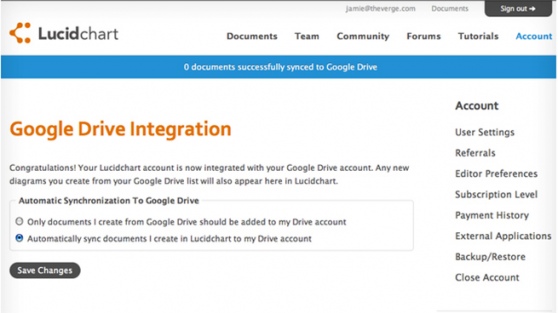
Google’s rumored alternative to Dropbox just got a name confirmation while suggesting third-party integration.
The Verge reported that online computing graphic tool Lucidchart implemented a link for integrating Google Drive to its control panel for automatic synchronizing to the cloud. The link quickly disappeared, but the leaked screen capture above seems to verify Google Drive’s name and a taste of what it can do.

During Google’s conference call with investors that took place this afternoon, Chief Executive Officer Larry Page asked about the success of Android tablets during a Q&A session.
Page, perhaps hinting at a 7-inch tablet branded by Google, said: “I think there’s also, obviously, there’s been a lot of success on some lower-priced tablets that run Android — maybe not the full Google version of Android. But we definitely believe that there’s going to be a lot of success at the lower end of the market, as well, with lower-priced products that will be very significant. It’s definitely an area we think is quite important and that we’re quite focused on.”
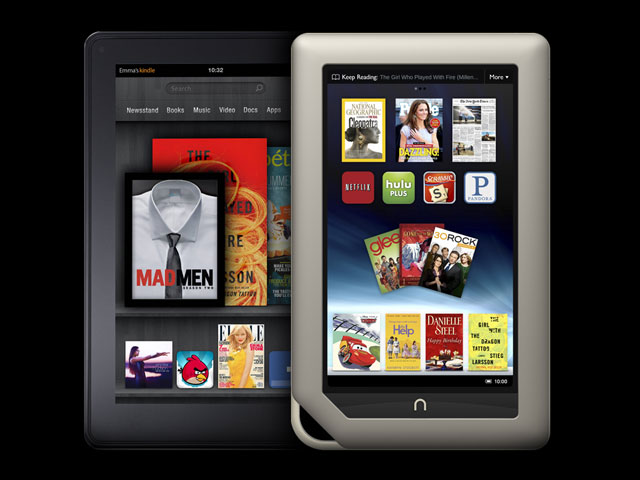
The most popular 7-inch tablets to date are Amazon’s Kindle Fire, which looks to be the hottest selling Android tablet, and the Barnes and Noble’s Nook. Both tablets are priced very competitively around $200.
Google is rumored to launch its own branded tablet, manufactured by Korea-based ASUS, this June. The tablet is reportedly priced at roughly $200 and features Android 4.0. Both the Fire and Nook feature a custom version of Android—almost to where you cannot even tell it is Android. NVIDIA also talked about its plans to launch a similar tablet. While there is not a lot of Android tablets out there, it is interesting that most of them are lower priced.
Source: Android Central
Google just announced its Q1 2012 earnings before the live call set to start at 4:30 p.m. EST.
The Mountain View-based Company is reporting revenues are up 24 percent year-over-year. Revenue is at $10.65 billion, and net income is at $2.9 billion for the quarter. Sites owned by Google generated $7.31 billion in revenue, which accounts for 69 percent of total revenues. International revenues for the company totaled $5.77 billion (or 54 percent) of total revenue.
As of today, Google has $49.3 billion in cash or cash equivalents. The company also had 32,467 full-time employees at the end of 2011.
You can read the full press release after the break:
Just a little reminder this morning: Google’s Q1 earnings call will take place at 4:30 p.m. EST, where Larry Page and company will talk numbers for the last quarter. We are sure to hear plenty about how Android and Google+ did over the last quarter. Of course, the press release will go up a little earlier than the call, so stick to 9to5google for full coverage this afternoon!
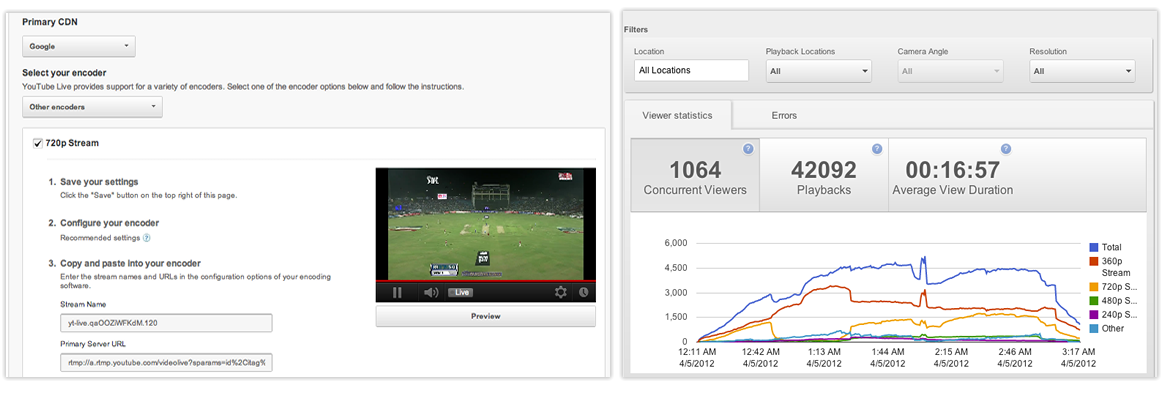
YouTube Live Publishing Flow + Analytics
YouTube Live added new features to its live-streaming video platform today to celebrate its first birthday, but the most notable update it the ability to monetize live events.
“You can now monetize your live events with advertising or paid options. A live event can be claimed in the new video manager like any other video and monetized with instream ads or paid options where you can set price by country,” explained YouTube Partner Product Manager Varun Talwar on the official YouTube Creator Blog.
Other improvements to the service include Wirecast for YouTube Live and a new publishing flow with real-time analytics.
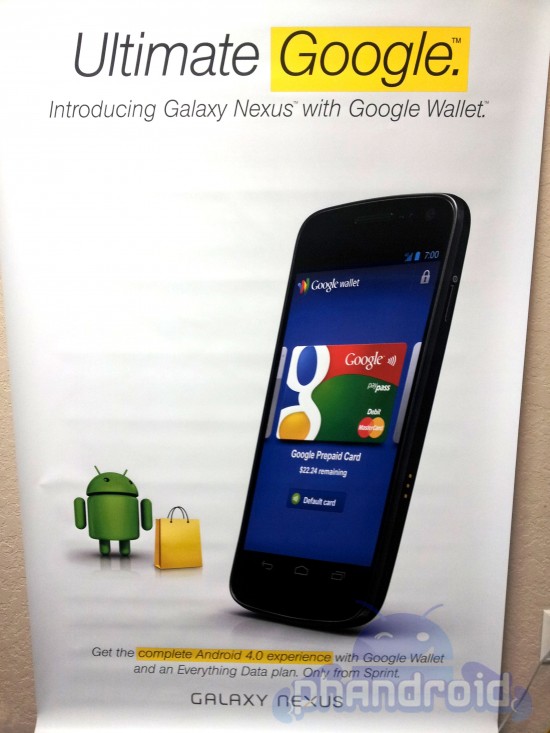
We know everything there is to know about the Sprint Galaxy Nexus LTE, except for its launch date. According to Phandroid, the launch could be soon, because many Sprint retail stores received sign material to post around their stores. As you can see after the break, the signage is going to be posted in stores this Sunday, April 15.
From the looks of it, the launch of the Sprint Galaxy Nexus cannot be too far off. For those unfamiliar, the Sprint Galaxy Nexus packs two exclusive features: a faster 1.5GHz processor and Google Wallet compatibility. In January, we exclusively brought news that Wallet was left out of the Verizon version at Verizon’s request. This was attributed to Verizon working on its own mobile payment platform.
At any rate, Sprint customers will be able to take advantage of that “Everything Data Plan” for the Galaxy Nexus soon.
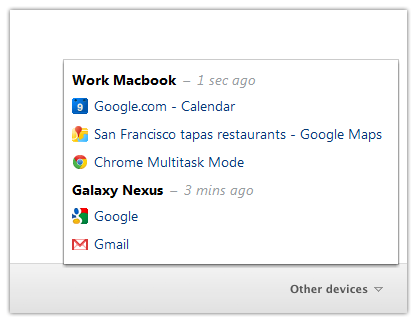 A new Chrome Beta update now makes open tab information available on multiple devices in different locations.
In Chrome Beta, when users are logged into Chrome, the tabs open on one device are now accessible on all their devices under the “Other devices” menu on the New Tab page.
“Imagine you’ve looked up directions to a cool new restaurant on your home computer. Later, when you’re leaving work, you realize you can’t quite remember how to get there. If only you could quickly pull up the same directions on your office computer with one click,” explained Software Engineers Nicolas Zea and Patrick Dubroy on the official Google Chrome blog.
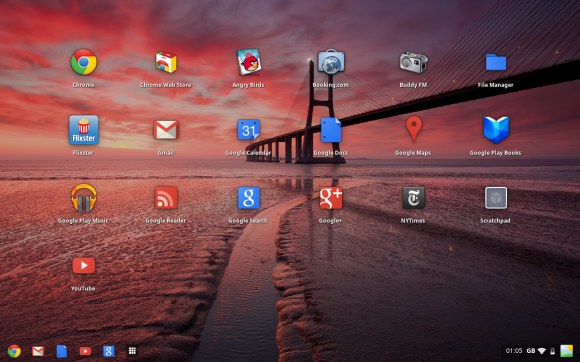
The Chrome OS appeared as simply a full screen Chrome web browser in Chromebooks about a year ago, and now an announcement on the developer channel shows the operating system received its largest visual upgrade yet, which seems to blur the line between OS X and Windows.
Google’s shipped an undisclosed number of Chromebooks that have not exactly created an insatiable buzz, so the Internet giant was due to make the OS more mainstream while still keeping a web-based focus.
The Chrome Releases Blog debuted “Aura” as the new Chrome OS window manager. It gives the platform an actual desktop look, rather than just a web browser, and it adds support for wallpapers, stacked windows, an app launcher akin to Launchpad, and a task manager.
According to Chrome’s engineers, Aura is a cross-platform window manager aimed to provide “a flexible windowing system and shell for Chrome and Chrome OS on a variety of form factors.” The build also features many security and stability improvements.
A screenshot gallery is available below.

Google is presenting the first-ever Google TV Hackathon Weekend for television-loving Android geeks later this month.
The Internet giant announced today that it is collaborating with the Silicon Valley Android Developers Group and the London Android Group to host two simultaneous TV Hackathons with the goal of creating new experiences for Google TV.
The SVAndroid Hackathon is taking place at Google TV headquarters in Mountain View, Calif., and tickets are $20, but purchasing options end April 17.
Team ideas will be announced April 20, and the following day is “devoted to building, with breaks for demo sessions, Q&As, and a hangout with Google TV developers,” according to the Official Google TV Blog. The teams will present ideas to judges April 22 for the chance to win tickets to Google I/O and other prizes.
The Londroid Hackathon is occurring at the Google Campus in London, United Kingdom. It will run concurrent with the Mountain View event to gather Android devs throughout Europe.
“We will kick things off bright and early on Saturday, April 21, with introductions and background information on developing for Google TV. Teams will power on through Saturday night so that we can do a round of presentations and prizes at lunchtime on Sunday,” explained Google TV Senior Developer Advocate Paul Carff on the Official Google TV Blog.
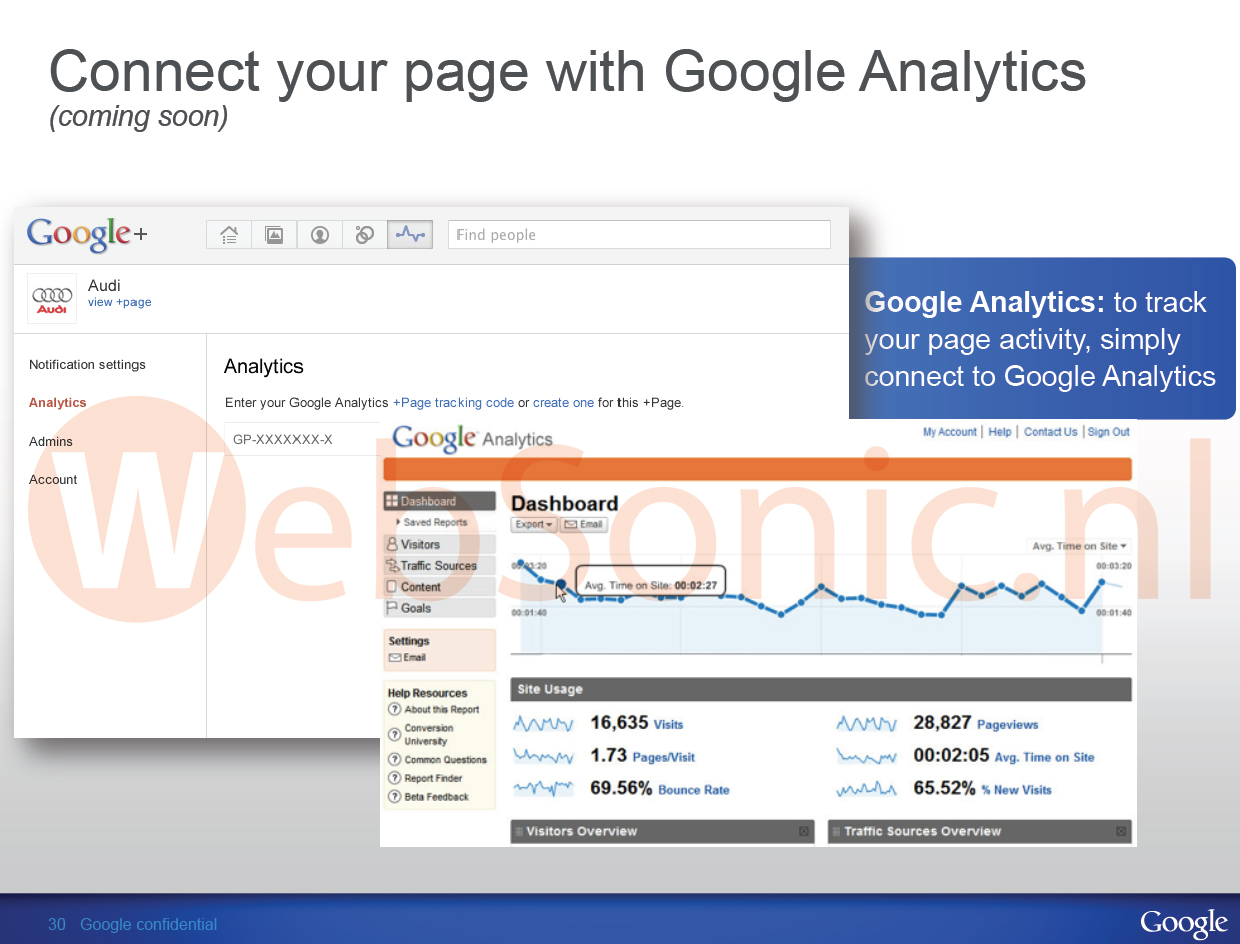
Leaked slides from a confidential deck show Google+ may soon feature Google Analytics integration.
Dutch website Dutchcowboys found the entire deck with screens showcasing the combined services. According to the slides, users will soon have access to total number of visits with percentage of new visits, page views, average time spent on the site, and the bounce rate for their Google+ pages.
Google+ is a social network operated by Google Inc., and Google Analytics is a free service that generates detailed statistics about the visitors to a website. There is currently no way to measure or view Google+ activity other than self-analyzing +1 social engagement.
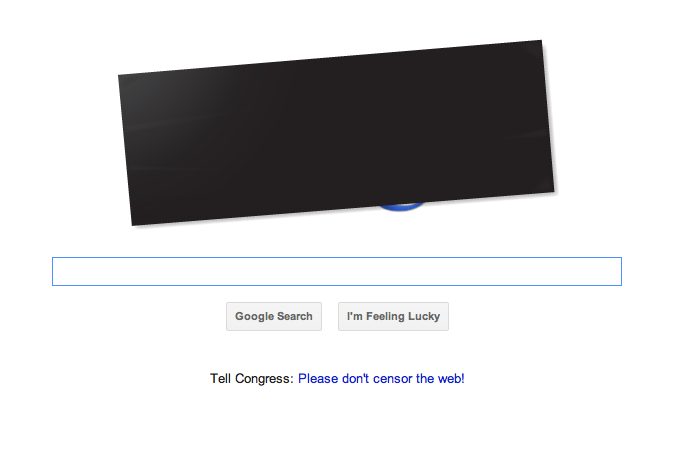
Google is attending this year’s annual White House Correspondents’ Association dinner, but the movie-making industry is anything but excited about the Internet giant’s presence.
According to The New York Times’ blog, the dinner is a large Hollywood affair equipped with buffets, banquets, and after-parties, where entertainment stars, media moguls, and famed celebrities alike gather to party the night away and mingle with the country’s most powerful politicians.
Google’s Eric Schmidt is a fresh face on this year’s guest list, but many show business executives, still scorned by the defeated antipiracy legislation earlier this year, are perturbed that the executive chairman plans to appear.
The Mountain View, Calif.-based Company’s role in conquering the hotly-debated legislation, coupled with Schmidt’s co-hosted pre-event party with The Hollywood Reporter in Washington on April 27, is just salt on the wound for many media executives.
The Los Angeles Times even noted the party does not “go unnoticed in the community.”

 .
.
There are reports today that Google’s 7-inch tablet made by ASUS has been delayed until July from an original release window in May.
I was told from the beginning that the tablets would be announced at Google I/O and shipping to the public shortly thereafter, so I do not know if this is a delay at all. The original source for May is Digitimes, so I am not sure how accurate the information is. Perhaps Google was hoping to bank on a little cushion in its delivery window.
What is the reason for the delay?
The Mountain View team plans to make some design changes and hopes to lower the price from the current $249. The tablet, made in partnership with Taiwan’s Asustek Computer, currently comes with a 7-inch screen, an Nvidia Tegra 3 quad-core processor, and is Wi-Fi-only.
Pictured above is the ASUS Memo370T shown off at the 2012 Consumer Electronics Show in January and due in the second quarter. It has some beefy specs including a Tegra 3 processor, 8-megapixel camera, and a 720P display. It has a retail price of $249, so I am not sure if Google really needs to get the price down too far. This is already a solid tablet.
If the release is pushed to July, it would mean that attendees will not get the tablet at the show (I have not heard this specifically) and would have to get a voucher/mail-in kind of thing like the Samsung ChromeBooks last year.
 .
.
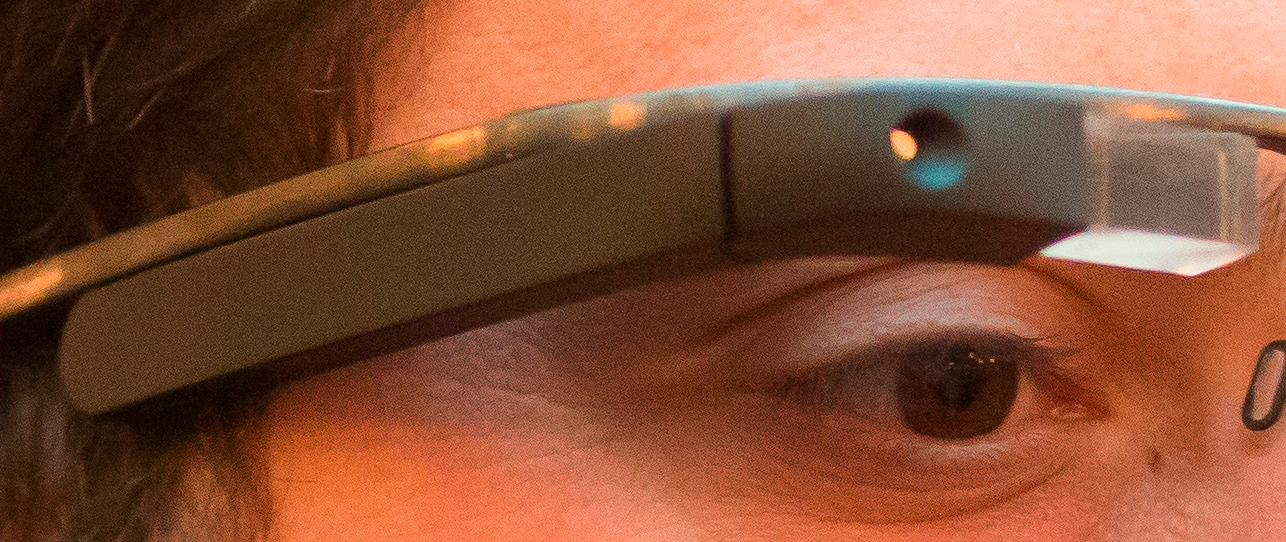
Somebody (Thomas Hawk – Flickr) with a real camera was on the scene last night to capture Project Glass’ prototypes sitting on Google Co-founder Sergey Brin’s dome.
Another close-up is below (via The Verge).
 .
.
Besides the Scobelizer spotting Google Glasses on co-founder Sergey Brin (above), we are hearing some additional information about the project. First, the brand was changed from “Project Wingfront,” which was the name of the project in the [x] labs. As it graduated to public knowledge, Google needed a more general-purpose name. I am told this decision was made in the past month.
Additionally, my understanding is that there has been a lot of strife in the Wingfront group over the past few months. Product people complain that they need time to iterate and perfect the experience, while management wants to get these into the outside world as soon as possible. Some strong tensions in the group are getting even more heated as more people are brought in.
The glasses shown off in the video and on the Plus page is only one of many prototypes worn in the [x] labs. I am told that there are clip-on models that attach to normal glasses, as well as ones built into full-fledge sunglasses that I previously detailed (here and here).
But most importantly, when can we buy these things?
Expand
Expanding
Close
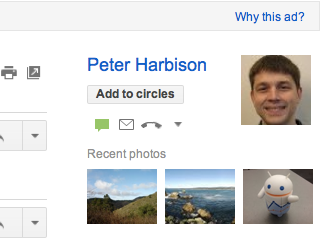 Gmail updated its people widget to include three photos from recent emails for a showcased person (example to the right).
“The next time you look at the people widget, you might see up to 3 photos from recent emails from that person. Not only does this remind you of photos they’ve sent to you, but it also gives you one click access to the emails with those photos,” announced Gmail on Google+.
The Gmail people widget is located on the right-hand side of messages and displays users’ contextual information about people their interacting with in the email service.
[tweet https://twitter.com/sprint/status/188003634016030720]
It looks like Google and Sprint finally got around to updating the NExus S 4G to Ice Cream Sandwich. The update, certainly expected for awhile, is detailled below.
Nexus S Software Update – IMM76D (Android 4.0 – Ice Cream Sandwich)
Enhancements/Fixes:
Expand
Expanding
Close

On the Google Investor Relations website, Google’s Chief Executive Officer Larry Page just published his “2012 Update from the CEO” to give an update on the state of the company since taking over as chief and “reorganizing the management team” around the company’s core products.
In the letter, Page talks a lot about one of his biggest efforts during the last year: Google+. While noting, “We have a long way to go,” he said the service now has 100 million active users and the company has implemented more than 120 Google+ integrations with services like search and Android.
Last April, I began by reorganizing the management team around our core products to improve responsibility and accountability across Google. I also kicked off a big clean-up. Google has so many opportunities that, unless we make some hard choices, we end up spreading ourselves too thin and don’t have the impact we want. So we have closed or combined over 30 products, including projects like Knol and Sidewiki. In addition, we gave many of our products, such as Google Search, a visual refresh, and they now have a cleaner, more consistent, and beautiful look.
Addressing concerns over changes made to privacy policies and search in recent months that have “generated a lot of interest,” Page explained the company’s incentive to “do the right thing”:
We have always wanted Google to be a company that is deserving of great love. But we recognize this is an ambitious goal because most large companies are not well-loved, or even seemingly set up with that in mind. We’re lucky to have a very direct relationship with our users, which creates a strong incentive for us to do the right thing… We have always believed that it’s possible to make money without being evil. In fact, healthy revenue is essential if we are to change the world through innovation, and hire (and retain) great people..
The full letter is below…
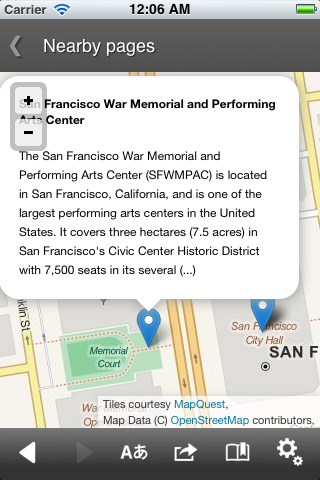
OpenStreetMap on "Wikipedia for Android" app
Wikipedia updated its Android and iOS apps today, but the noteworthy feature is that the online encyclopedia-like website dumped Google Maps for OpenStreetMap, which marks a growing trend for technology firms preferring an alternative mapping solution.
The company just announced its Android counterpart witnessed 2.25 million installs in less than two months since its birth, while netting over 23 million Wikipedia page views per month. Despite the success with Google’s mobile OS, Wikipedia updated its apps with Open StreetMap data in favor of the service’s “nearby view” feature.
Wikipedia further explained the reasoning behind the switch:
Previous versions of our application used Google Maps for the nearby view. This has now been replaced with OpenStreetMaps – an open and free source of Map Data that has been referred to as ‘Wikipedia for Maps.’ This closely aligns with our goal of making knowledge available in a free and open manner to everyone. This also means we no longer have to use proprietary Google APIs in our code, which helps it run on the millions of cheap Android handsets that are purely open source and do not have the proprietary Google applications. OpenStreetMaps is used in both iOS and Android, thanks to the amazing Leaflet.js library. We are currently using Mapquest’s map tiles for our application, but plan on switching to our own tile servers in the near future.
In the last couple of months alone, both Apple and Foursquare also shifted to OpenStreetMap. It is worth mentioning that Yahoo implemented OpenStreetMap data within Flickr in 2009 for a plethora of worldwide cities, such as Baghdad, Beijing, Kabul, Santiago, Sydney, and Tokyo.
Google announced today in a post on the Inside Google Books blog that it would be discontinuing its reseller program that allowed independent booksellers to sell through Google’s eBook services. The American Booksellers Association sent letters to its members informing them that about 350 independent bookstores selling eBooks through Google’s reseller program would end as of Jan. 31, 2013. The full letter (via Paid Content) is below.
Google’s explanation comes from Director of Product Management for Digital Publishing Scott Dougall:
Looking at the results to-date, it’s clear that the reseller program has not met the needs of many readers or booksellers. While our role as an ebooks wholesaler to booksellers will be coming to a close next year, we remain as committed as ever to making the eBooks experience from Google the best it can be for readers around the world.
For books that customers have already purchased, Google confirmed they would continue to “be able to access and read their eBooks on the web, phones, tablets and compatible eReaders.” Google will also help its 16 reseller partners “as they transition in the coming months” by continuing to give access to free Books APIs and highlighting them in the “Buy this book” section of Google Book search.
The full letter from the ABA to its members is below:

Google expanded its GoMo initiative to offer small businesses an opportunity to mobilize their websites for free.
According to Fortune, the Mountain View, Calif.-based search engine teamed with startup Duda Mobile to offer the $9 per month service at no cost for an entire year starting today. Users will save $108 a year, and then they can purchase the premium service after the complimentary period ends—if desired.
In a blog post, Duda Mobile’s Dennis Mink explained the collaboration:
Our hope is that by offering both the education AND the service at no cost for one year, we can help businesses make the shift to mobile more quickly, benefiting both their business as well as us consumers who no longer want to pinch and zoom our way through their regular websites on our phones.
[youtube=http://youtu.be/9jGvCdthQso]
YouTube now automatically allows short 1080p videos to convert to 3D.
The video-sharing platform just announced on the official YouTube blog that it is expanding a beta feature released last year, which gives users the option to convert YouTube videos to 3D with just a click of a mouse. Since the beta launched, creators have converted hundreds of thousands of videos to 3D.
The popularity of the feature encouraged YouTube to implement 3D viewing in the Quality settings under the gear icon on the YouTube player.
“Then pop on your 3D glasses and see YouTube in another dimension (like the video above),” explained Technical Staffer Deb Mukherjee and Software Engineer Chen Wu in the blog post.
The Googlers even recommended watching “YouTube Rewind 2011” to get the full YouTube 3D experience (below).
The announcement was made— naturally— by Twitter:
[tweet https://twitter.com/#!/gabrielstricker/status/187725823690813440]
Google still lists Stricker as Director of Global Communications & Public Affairs, where he reported to Senior Vice President Communications Rachel Whetstone:
Gabriel Stricker is Director of Global Communications & Public Affairs at Google Inc. where he heads Search communications – addressing everything from web search and other search properties (such as Maps, Earth, News and Books) to issues pertaining to partnerships, content, and the use of intellectual property. Gabriel received his undergraduate degree from the University of California at Berkeley and his master’s degree in International Affairs from Columbia University. He is the author of the bestselling book on guerrilla marketing entitled, Mao In the Boardroom, published by St. Martin’s Press.
At Twitter, he is now called Vice President of Communications.
Google just rolled out updates to a few of its Android apps, the biggest of which brings a ton of new features to “Gmail for Android” 3.2 (Honeycomb) users. Previously, only Android 4.0 Ice Cream Sandwich users had access to features like swiping between conversations, custom notifications for labels, and the ability to sync messages for the last 30 days. All of those features and the rest of the Ice Cream Sandwich Gmail experience are now being implemented for Honeycomb users. The updated app is available on Google Play now, and a full list of the features is below: