Stay up to date on news from Google headquarters. Be the first to learn about plans for Android, Google Plus, Google Apps, and more!
Stay up to date on news from Google headquarters. Be the first to learn about plans for Android, Google Plus, Google Apps, and more!

Just as the Android team launched an official Android Developers page on Google+ last week, the Internet giant today announced a similar page for developers writing add-ons for the Google+ social platform. The Google+ Developers page is now alive and kickin’, ready to spread the message and keep developers in the loop with everything related to the Google+ platform.
Chris Chabol, the lead of the Google+Developer Relations team, noted in a blog post that the team plans to host regular hangouts every Wednesday at 11:30 a.m to 12:15 p.m PDT to talk about the +Platform. This helpful web resource will also allow people to share tips and tricks with the community. The platform team will also share announcements pertaining to Google+ developer events, platform updates, conferences and hackathons, as well as photos and videos of the events.

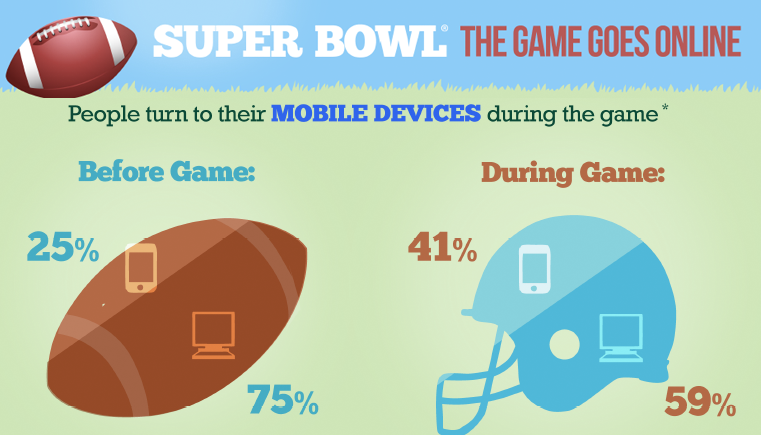
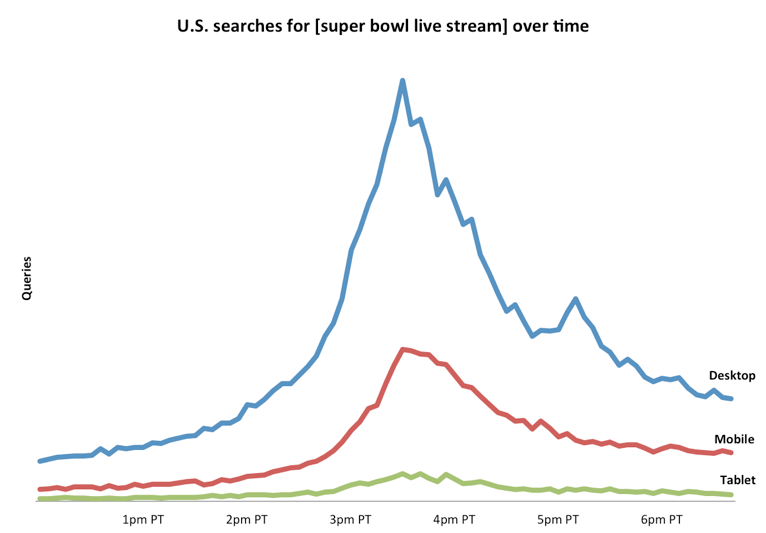
Americans were busy consuming record amounts of chicken wings and dip during yesterday’s big game, but they were also mobile web browsing more than ever before.
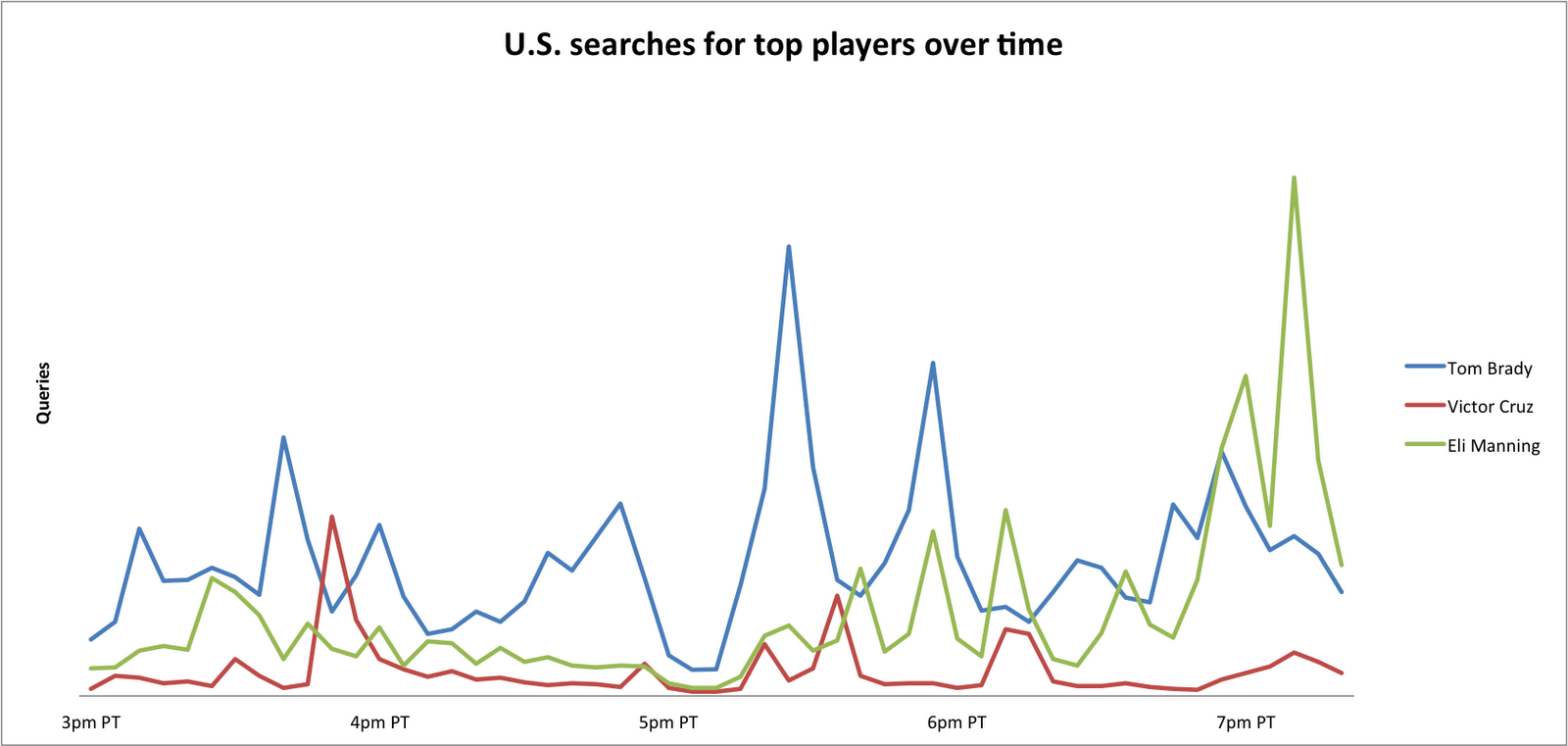
According to an official Google blog post, United States viewers used their tablets and smartphones to Google the Giants and Patriots, halftime acts and the best Super Bowl advertisements.
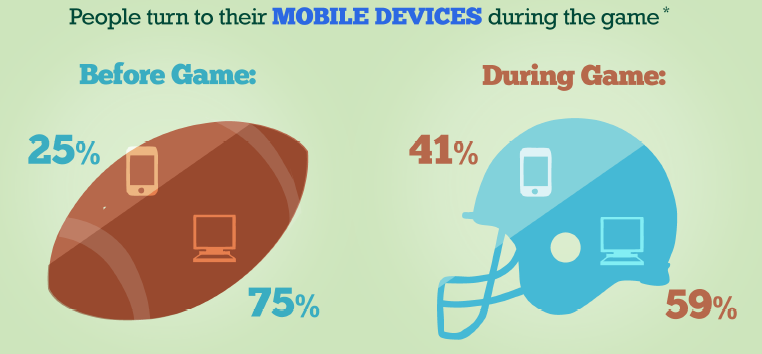
“In fact, around 41 percent of searches related to [Super Bowl ads] that were made during the game came from mobile devices, up from 25 percent for the same time the day prior,” wrote software engineer Jeffrey Oldham.
The Super Bowl XLVI streamed live for the first time this year, and a soaring spike in related searches came with the flagship circumstance. Predominate searches initially came from desktop devices, but mobile devices leaped forward as the four-hour game launched into full swing.


Android 4.0.4 was leaked early for the Verizon Galaxy Nexus, and —of course— in typical fashion, a user at the XDA-Developers Forums made a guide available to install the update. The update will presumably be rolling out over-the-air to the masses soon, but if you are up to the challenge, you can install it early with some trickery. Obviously, it is not for the feint-of-heart.
Android 4.0.4 brings many necessary updates, according to the unofficial change log posted on XDA. The update brings noticeably faster speeds, battery stats bug fixed, new radios, improved signal strength, a new power menu, faster boot time, increased volume, keyboard fixes, improved quick controls in the browser, updated News and Weather app, and much more. You can read the full unofficial change log after the break.
Update: One of our commenters (“Eddy”) gave us more insight into after the install.
I updated to 4.0.4 last night via CWM. I can confirm that, although root is initially broke after the update, you can use Wug’s GNexus Root Toolkit to re-root and flash CWM again.
Google reportedly poached an Apple employee to hire on its own staff. VentureBeat reported that Google hired Apple’s (now former) Senior Director of Product Integrity Simon Prakash for a secret project, where he would work perhaps alongside Google’s cofounder Sergey Brin. Prakash could even work under Motorola Mobility, whom Google is working to acquire, to head hardware projects.
Prakash worked at Apple for over eight years, and was responsible for the product quality across Apple’s products—from iPhones to Macs. To boost his reputation, you may recall that Apple was voted top among product quality in a recent JD Power and Associates Award for the sixth consecutive last year. It is obvious why Google would go after such an employee.
Prakash could be joining Google to work on Google X’s wearable heads up display glasses we showed you in December. Former Apple employee Richard DeVaul, a PhD. scientist from MIT with a focus on building wearable technologies, also left Apple to join Google X’s team. Is Google building up a huge and talented team for such a large product?
We have more iOS device executive departure news forthcoming, so stay tuned.

A report from GigaOM today noted Google is requesting permission from the Federal Communications Commission to test an unknown “entertainment device.” The trials will take place in the homes of Google employees, and see tests of the mystery device connecting to home electronic equipment over Bluetooth or Wi-Fi to test it on home networks in real world situations. Other than that, there is not much we learned from the Google’s filing with the FCC from December (below).
We told you about one yet to be unveiled product we heard Google has in the works with our recent story about the company’s wearable glasses with a heads up display and computer interface. We will have much more on those this coming week…
Google is requesting the trials take place with up to 252 devices from Jan. 17 to July 17 in various locations including Mountain View, New York, Cambridge, Mass., and Los Angeles. Google’s description of the mystery product from the FCC filing is below:

The United States government traditionally prefers BlackBerries for their security features and it is known for barring its employees from sending classified messages using smartphones that do not meet security certifications. That is changing, though, as Uncle Sam is putting forth a test program that will see some U.S. officials, including troops, use smartphones running a modified version of Google’s Android software rather than a commercial one.
This modified Android version will be installed on commercially available phones sporting hardware that meets certain security criteria. According to “people involved in the project” who spoke to CNN, the forked Android version with added security features will let U.S. troops and government workers handle classified government documents over cellular networks. These secure devices will be first deployed to U.S. Army that has been testing touchscreen smartphones and tablets for nearly two years. Later, secure Android phones will arrive to certain federal agencies that will use them to send and receive government cables, the report noted.
European regulators want Google to stop introduction of a new privacy policy that consolidates user information from the search giant’s many services until it investigates possible privacy concerns. The new privacy policy is due to come into effect on March 1. According to Reuters, the Article 29 Working Party, an independent body that brings together data protection authorities from each of the European Union’s 27 countries, and the EU’s executive European Commission, wrote in a letter to Google CEO Larry Page:
Given the wide range of services you offer, and the popularity of these services, changes in your privacy policy may affect many citizens in most or all of the EU member states. We wish to check the possible consequences for the protection of the personal data of these citizens in a coordinated way. In light of the above, we call for a pause in the interests of ensuring that there can be no misunderstanding about Google’s commitments to information rights of their users and EU citizens, until we have completed our analysis.
Google’s woes with the European Union also include the planned acquisition of handset maker Motorola Mobility, pending an antitrust review by the European Commission and another probe over an alleged misuse of its market position.

Google updated its Android stats —as they do every two weeks— revealing how much of each version of Android is installed across devices. Yesterday’s update revealed that Android’s most recent offering, Ice Cream Sandwich, is now installed on 1 percent of devices, which is pretty meh if you ask me. Ice Cream Sandwich saw its first debut on the Galaxy Nexus, and over time, it has seen both official and unofficial installs across many other devices.
Not much else has changed from the last stats refresh. Android 2.3 Gingerbread still holds the most installs with almost 60 percent across every device, while Android 2.2 Froyo follows close behind. Let’s hope Google can deploy Android 4.0 to devices very quick, because we would not want any of you to miss out! You can see the graph below for the full breakdown.
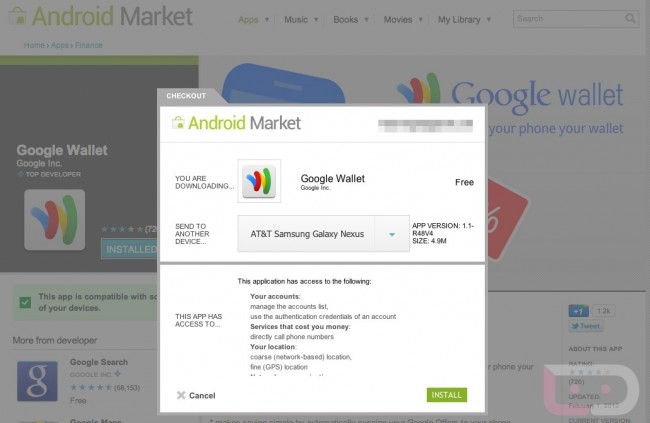
The Sprint version of the Galaxy Nexus is the only variant to officially see Google Wallet. However, a new report from Droid-Life said the GSM Galaxy Nexus with an AT&T SIM card can download and access Google Wallet from the Android Market, which is a sigh of relief for many users. As you can see in the screenshot above, courtesy of Droid-Life, there are not any hoops–just a simple download.
Google Wallet gives users the ability to use the built-in NFC chip to pay for goods. Google Wallet was first introduced on the Sprint Galaxy S, and it saw a quick rollout to many retail outlets.
Last year, we broke news that Verizon Wireless was blocking the use of Google Wallet on its version of the Galaxy Nexus to later push its own payment platform. It was not clear if Sprint and AT&T would do the same. We now know that the Sprint version will come with it officially paired, and it can at least be downloaded on the GSM AT&T variant.

Google is continuing its push on Google TV by rolling out Android 3.2 to Sony’s Google TV while the update to the Logitech Revue is on its way, GigaOm pointed out. The 3.2 update is not too major, but it does bring some nice updates, such as: Google TVs now boast hardware acceleration, HTTP live streaming that helps with HTML 5 live video, changes to the way Google TV identifies channels to make it easier for developers, and lastly a few user interface changes to Google Chrome.
That is all fine and dandy, of course, but what we really want is Ice Cream Sandwich to roll out to Google TVs soon. Android 3.2 will be the last major update before Ice Cream Sandwich operating system lands, but smaller updates will obviously ensue. We should be seeing ICS land by the end of the year, hopefully. Perhaps Google will give us a little more info at their Google I/O conference, so stay tuned!

Research firm comScore is out with its latest numbers for the month of December, giving us a glimpse at the current United States mobile market. The report indicates that mobile sales are up-and-rising for the holiday month. comScore found that Google’s Android is leading with a 47.3-percent OS market share (rising 2.5 points), which brings the company close to a notable 50 percent. Perhaps we will see the feat reached in February or March. On the other hand, Apple’s iOS is in second with a 29.6-percent market share (rising 2.2 points).
When it comes to device market share for both smartphones and non-smartphones on the OEM side, Samsung tops the charts with a 25.3-percent market share, which did not change from the previous month. LG and Motorola place second and third, both losing a small amount of market share during December. All three manufacturers play a crucial role in selling Android devices, which gives Android a large lead. Apple comes in fourth in market share, and now boasts 12.4-percent of total mobile subscribers (rising 2.2 points).
The U.S. still ranks in as one of the world’s most important places for smartphones, with 97.9 million people owning smartphones during Q4 2011. When it comes to worldwide sales, Research Firm IDC yesterday released its estimates for December. They found that Apple passed LG to become the third-largest smartphone manufacturer worldwide, with an 8.7-percent market share in Q4 2011, and a 6 percent market share in 2011 as a whole. Nokia remains in the top spot with 26.6-percent, followed by Samsung who has 22.8-percent. You can check out the graphs after the break for the full run-down:
[youtube=http://www.youtube.com/watch?v=0mbTybHSTvY&feature=player_embedded]
The technology world is abuzz with great minds, great innovators, and great…men?
According to an official Google blog post from this morning, women hold less than one third of the world’s engineering gigs, despite the female sex making up more than half of the global population. Moreover, fewer than 15 percent of United States female students take Advanced Placement computer science tests. The same rule goes for high-tech regions of the world, such as Israel.
The breach between males and females in the technology industry leaves room for controversy, and such dissension reared its head at this year’s Consumer Electronics Show in Las Vegas. The annual event featured scantily clad “booth babes” hired by some companies to promote their —well— booths. The practice led many to wonder if it is an effective marketing strategy or a reflection on gender gaps in technology.
The hot issue further propelled when ZDNet posted a picture of a female developer at CES 2012, but the publication referred to her as “The Saddest Booth Babe In The World” due to her somewhat emotionless face during the moment the photograph was snapped. Critics lambasted the photo caption because the woman looked nothing like a typical show booth babe, but rather a bored developer with no one around for presenting.
A female group of engineers at Google in Israel is determined to resolve this widespread setback in the industry by encouraging women to enter the technology realm. Google initiated the “Mind the Gap!” program in 2008 with the Israeli National Center for Computer Science Teachers to embolden girls with technology, science, and math-centric education. The program establishes monthly school visits to the Google’s Israel office and tech conferences at various universities to help the girls learn technology, computer science, and its applications…
[vodpod id=Video.16032192&w=425&h=350&fv=videoGUID%3D%7B5D778932-8D5E-495F-84C6-CA9ECF2911AB%7D%26amp%3Bplayerid%3D4001%26amp%3BplyMediaEnabled%3D1%26amp%3BconfigURL%3Dhttp%3A%2F%2Fwsj.vo.llnwd.net%2Fo28%2Fplayers%2F%26amp%3BautoStart%3Dfalse]
YouTube boss Salar Kamangar sat down yesterday with AllThingsD’s John Paczkowski at the “D: Dive Into Media” conference to talk content, the future of video entertainment and the big picture. He stressed the apps cable companies are building for Google TV let them control the entire experience, from the interface to delivery methods to monetizing mechanism.
As for YouTube, a global video delivery platform used by over 800 million people, it has the eyeballs and the audience. What it lacks is the minutes, as compared to traditional broadcast. The executive confirmed plans to “channelize” YouTube with more interactive and niche content than available on any other platform.
The website is already moving from individual kitten clips to groups of videos (channels), he said. Moreover, in the near future, YouTube wants to become a platform to enable “game-fying” of video content with six dimensions of entertainment…

[vodpod id=Video.16032223&w=650&h=420&fv=]
Poking fun at Barak Obama’s recent Google hangout and the greater Google Plus, late night comedian Jon Stewart called Google Plus “that thing on top of Gmail that you can’t make go away”.
Google plus, even if it is “that annoying thing on top of Gmail” for some is becoming quite popular it seems. Google Plus also won a Crunchie last night.
Expand
Expanding
Close
[youtube http://www.youtube.com/watch?v=eeTj5qMGTAI&feature=channel_video_title]
We told you last week that President Obama would be joining Google+ users for a live Hangout tonight at 5:30 p.m. ET from the White House. You can tune in to the live stream of the interview and Q&A session above.
Yesterday Google’s Vic Gundotra posted on Google+ about the unusual circumstances of hosting a live hangout from the White House:
“Team is nervous tonight. A lot of unusual circumstances that make this broadcast even more challenging. (You just don’t walk into the West Wing of the +The White House and set up computer equipment!)”
 In order to spread its message and keep developers in the loop, the fabulous Android development team launched an official Android Developers page on Google+. The team said it is launching the new website to connect with developers and build quality apps for the Android ecosystem.
We’re focused on working with you – Android developers – to help make your apps and games successful within the Android ecosystem. We’re looking forward to finding out what you want to hear from us – so let us know how we can best help you build awesome Android apps in the comments below.
The team encourages developers to add the page to their Google+ Circles to keep on top of news and to join Google+ Hangouts.
This is a pretty cool website out of Google. It is neat to see a one-stop place for Android developers to get their news and communicate with others in the similar field. Google also made an Android Developers website as a way to stay on top of code changes and tutorials, but we are sure the Google+ profile will keep all of that aggregated. You can read the full introduction post after the break.

Google dismissed its Kenya Country Lead Olga Arara-Kimani, along with a “technical guy in Zurich,” over the recent Google-Mocality scandal.
The information is not officially confirmed by Google. However, Kenyan blog NairobiTech reported Olga was “picked for the fall,” because a “sacrificial lamb has to be found for the brand name to weather the storm.”
The firings coincide with a Jan. 27 Google+ post by Europe and Emerging Markets Product and Engineering Vice President Nelson Matto:
We’ve concluded our investigation into the serious allegations about our use of data from Mocality’s website in Kenya. We’re very sorry this happened. We’ve taken appropriate action with the people involved and made changes in our operations to ensure this doesn’t occur again.

More information is available below.
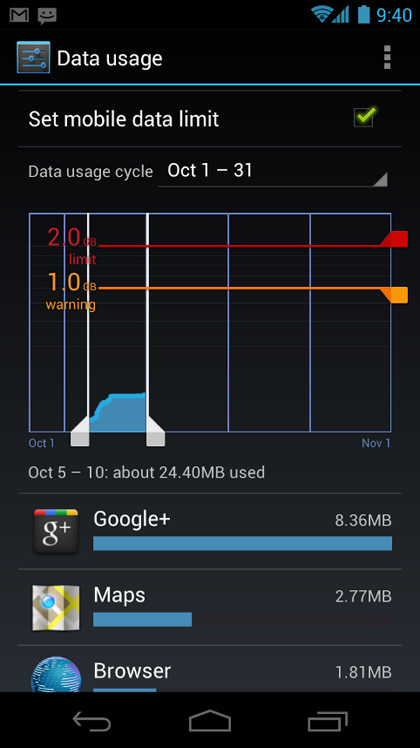
Ever since the original iPhone redefined the smartphone and Android became popular, carriers in the United States were caught flat-footed and they have constantly been whining about an undesired network impact caused by data-hungry owners of iPhones and Android devices.
While U.S. carriers are to blame for their years-long reluctance to upgrade their infrastructure and prepare for the inevitable surge in traffic, wireless operators elsewhere have mostly been able to mitigate the issue. Nevertheless, with 700,000 Android devices being activated each day, and the rising popularity of Google’s platform in Japan, it was only a matter of time before Japanese carriers faced similar hurdles as their U.S. peers.
According to a Reuters report citing a local newspaper story by the business daily Nikkei, Japanese carrier NTT DoCoMo said a recent network outage is to blame for a heavy surge in traffic caused by some data-centric Android apps that move large chunks of bits through its cellular network. Specifically, the carrier made claims that VoIP apps disrupted the service and is now requesting that Google do something about it:
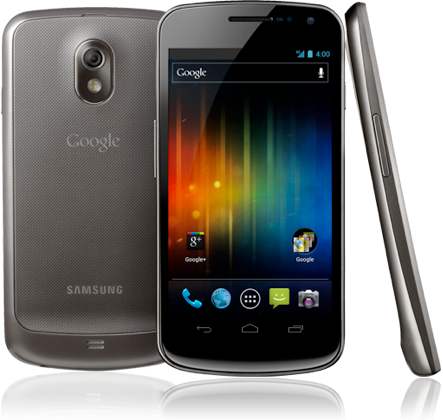
After leaked advertisements and many rumors, Google finally announced on Jan. 9 that Sprint would be the second carrier to host the Galaxy Nexus. Roughly close to a month has passed, and we have not heard anything out of Sprint or Google in terms of launch. However, finally this weekend, Google posted the official sign-up website for those looking to order the Galaxy Nexus on the Now Network.
The Sprint version of the Galaxy Nexus is unlike the Verizon version due to it Google’s Wallet technology and a faster processor. Last month, we exclusively told you that Verizon would not have Wallet because of its own wallet-like technology in development.
As some background, the Galaxy Nexus should be the first LTE device on the Now Network. It will rock 32GB of storage, along with a 4.65-inch 720P HD screen, 5-megapixel camera, 1GB of RAM, and Android 4.0. There is no word on a launch date, but if you are interested—we suggest going ahead and signing up. (via Android Central)
Late last week we told you that the U.S. Justice Department apparently had evidence that Google, along with Apple, Adobe, Intuit, Pixar, Intel, Walt Disney and Lucasfilms, entered “no-poach” agreements as part of an antitrust investigation from 2010. U.S. District Judge Lucy H Koh made a statement yesterday at the U.S. District Court in San Jose, Calif., confirming the companies must face a lawsuit. According to the report from Bloomberg, Koh said she would allow plaintiffs to re-file their complaint even if an initial request by the defendants to dismiss the claims is granted.
Judge Koh’s decision yesterday will result in Google and the other companies having to provide a detailed account of the agreements made with other companies. They must also allow lawyers to take depositions. One lawyer representing the plaintiffs, Joseph Saveri, said, “We get to see what really happened,” claiming the case could result in hundreds of millions of dollars in damages. Google provided statements to Bloomberg claiming they have “always actively and aggressively recruited top talent,” while the others have declined to comment.
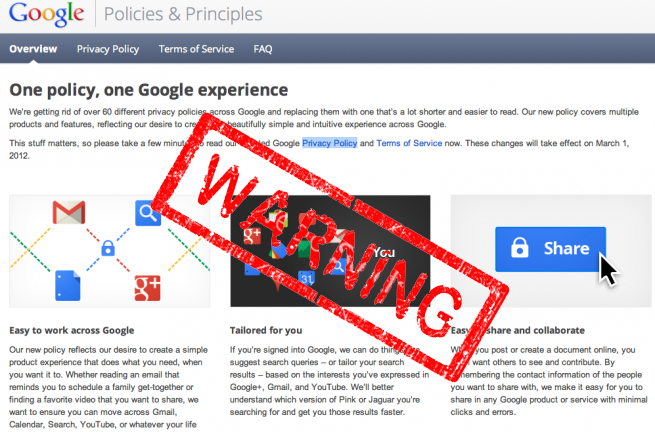
Rep. Edward Markey, a prominent U.S. lawmaker on privacy issues, announced earlier this week he was concerned with Google’s new privacy policy, and he further addressed his worries on Thursday by calling for a probe into Google’s handling of consumer data.
Google’s offerings include its globally popular search engine, Gmail, YouTube, Search plus Your World, Google+, and more, which are streamlined under the merging of 60 privacy policies intended to “mean a simpler, more intuitive Google experience.” The unified policy’s primary objective is to assemble and integrate information from across Google’s products and services as a single throng of data that the Mountain View, Calif.-based Company can use to target advertising dollars.
[youtube=http://youtu.be/KGghlPmebCY]
Markey released a Jan. 26 statement contending that the new policy changes should allot premium consumer control, and in the meantime, he plans to ask the Federal Communications Commission to investigate if such options exists for Google users:
“All consumers should have the right to say no to sharing of their personal information, particularly when young people are involved. Google’s new privacy policy should enable consumers to opt-out if they don’t want their use of YouTube to morph into YouTrack. Consumers – not corporations – should have control over their own personal information, especially for children and teens. I plan to ask the Federal Trade Commission whether Google’s planned changes to its privacy policy violate Google’s recent settlement with the agency.”
More information is available below.
As 9to5Google reported last October, the search Goliath appears to be on a spending spree since 2011. Having reported holiday quarter earnings, the company filed its 10-K with the U.S. Securities and Exchange Commission yesterday. The document, available online at the agency’s website, specifies that Google spent $1.9 billion dollars acquiring 79 companies throughout last year.
The sum includes cash and stock and is nearly double the $1 billion they spent on 48 acquisitions in the previous year. For the entire 2011, the number of full-time employees at the company ballooned 33 percent to 32,467 Googlers. Just do not count on the company satisfying its appetite for acquisitions anytime soon, as the filing reads:
Acquisitions will also remain an important component of our strategy and use of capital, and we expect our current pace of acquisitions to continue.
So, has Google put its acquisition money to good use?
Google’s social network Google+ is now open for teenagers, according to Google’s Vice President of Product Management Bradley Horowitz’s announcement in a post today. Everyone who is old enough for a Google Account (13-years-old and up in most countries) can now sign up for Google+. The executive boasted the many security and privacy features of Google+ that help establish the difference between friends, acquaintances and strangers— a must for underage users.
Between strong user protections and teen-focused content, it’s our hope that young adults will feel at home (and have some fun) on Google+. And of course, we do have at least one thing in common with our newest users: we’re both busy growing up.
The Google+ service, he argued, has “awesome features that teens really want” whilst encouraging safe behavior “through appropriate defaults and in-product help.” In addition, abuse-reporting tools are easy to find and use, Horowitz noted. Details on age requirements on Google Accounts are available here. Teens can also get more information on Google+ safety features in the newly launched Google+ Safety Center, with interesting resources available for educators, teenagers and parents.

It would appear that Android backers are finally giving up their practice of carpet-bombing the market with countless models that offer little differentiation. Thus far, this served the Android camp well as the resulting media coverage diverted spotlight away from Apple’s iPhone and helped mainstream smartphones built around Google’s platform. Earlier this month, Sony Ericsson made public plans to release fewer phones in 2012 and now Taiwan-based handset maker HTC is following suit.
The company will focus on quality and so-called ‘hero’ devices rather than waste time and energy developing a multitude of models, most of which have short shelf lives. This will help cut development cost and boost HTC’s bottom line that took a hit in the crucial holiday quarter amid the iPhone 4S march.
HTC UK chief Phil Roberson told Mobile Magazine today: