Stay up to date on news from Google headquarters. Be the first to learn about plans for Android, Google Plus, Google Apps, and more!
Stay up to date on news from Google headquarters. Be the first to learn about plans for Android, Google Plus, Google Apps, and more!

Google has made a small tweak to their Google News algorithm, which will enable the news aggregator to display featured stories alongside their usual content. A publication can attempt to get their story featured by adding a certain metadata code, and if picked the story will then be recognized by a “featured” tag.
If a publication misuses the tag by adding it to stories more than seven times a week, the algorithm will learn to disregard or sometimes not even recognize the publication. We’d certainly hope they wouldn’t.

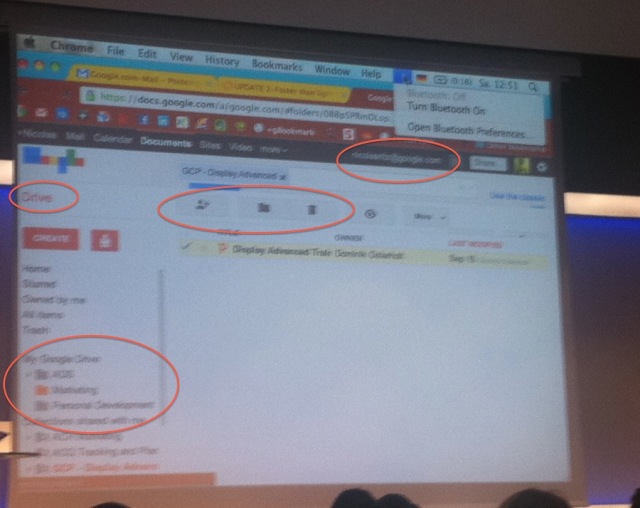
From some slides of an internal presentation given by Google, it appears that where there is now Google Docs, there will soon be ‘Google Drive’. Most of the functionality, like uploading files of any type, of the mythical Google Drive now lies in Docs Hopefully, with this upcoming rebrand, Google allows more storage (let me buy it) and also has some utilities like backing up the home folder on Windows or Mac. Seriously, what better way to get users to adopt your system than to offer to sych your files to the cloud.
Oh, now that we have all of your files, you might as well get a Chomebook.

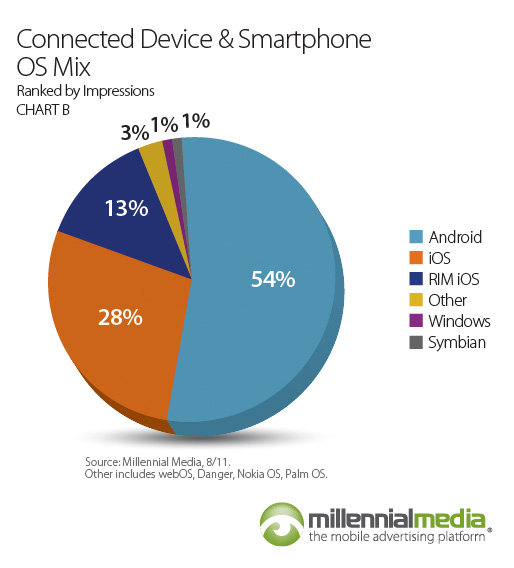
If Google and Apple were to merge, their respective Android and iOS mobile software would seize well over three-quarters of the world’s platform share in smartphones, per latest Millennial Media’s “Mobile Mix” mobile device usage share report. Separately, Android and iOS held 54 percent and 28 percent share in August. Millennial now includes data from smartphones, tablets, e-readers and gaming devices so direct comparison to their smartphone-focused July study is meaningless.
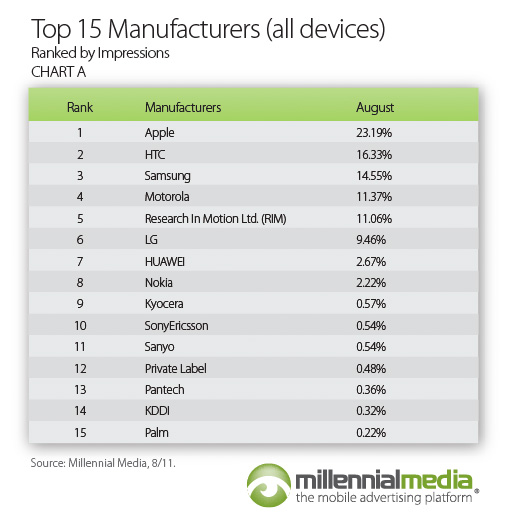
Apple continued to be the leading device manufacturer on our network in August, representing 23% of the Top 15 Manufacturers impression share (Chart A). Apple iPhone maintained the number one position on the Top 20 Mobile Phones ranking with 13% of the impression share.
Nearly one-third of devices on all carriers used wireless hot spots. Verizon Wireless and Sprint had 18 and 14 percent carrier mix, respectively, followed by T-Mobile USA and AT&T with eight percent each. Games, music and entertainment remain the most popular app categories. iOS represented 41 percent of the app platform mix and Android 49 percent. On Android, News apps rose by 26 percent month-over-month. Go past the fold for a bunch of pretty charts and more explanation.
 .
.
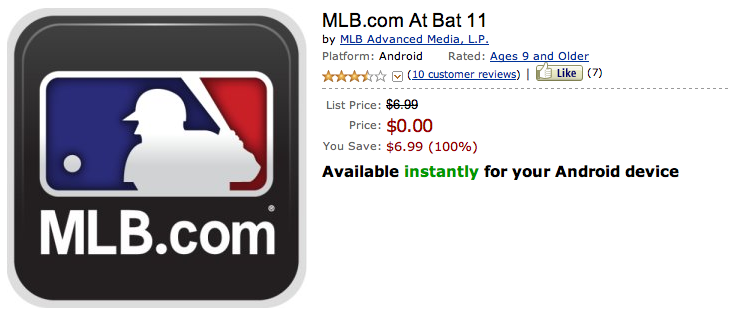
The season is almost over, but Amazon’s Appstore has MLB ’11 for free today only. If you want to catch the home stretch of the season, make sure to get in on this deal. Only the devices belo will be able to stream video…
Expand
Expanding
Close
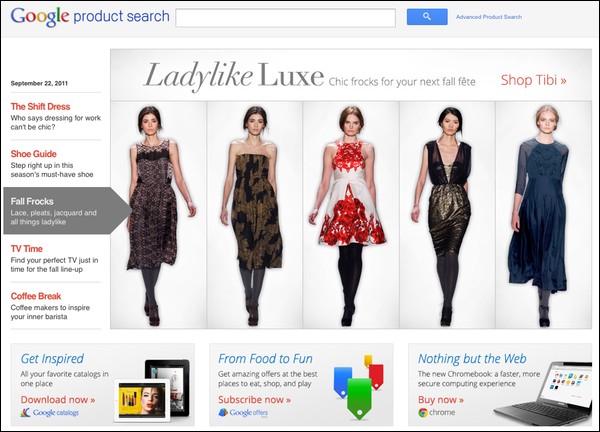
As noted by Search Engine Land, Google has released a new Product Search page — that actually looks pretty good. The main part of the website is dominated by an oversized image that lists promoted products. Besides the promoted products, the search functionality looks fairly familiar and lists prices and stores to buy from.
The new Product Search is taking the place of Google’s recently released Boutique. Google will be closing Boutique October 12th, and will redirect it to the new Product Search. Google also has implemented a new dress search category (seen after the break) that lets you to select color, price, and brand.
Looks stylish, Google.

Paul Allen has released the latest number from his algorithm, which reveals that Google Plus has passed 43 million users. While these numbers are unofficial, Allen has been pretty accurate in the past. Allen’s algorithm is based on Plus surnames.
In the past, according to PlusHeadlines, Allen has been startlingly accurate:
- July 4th – 1.7 million users
- July 9th – 4.5 million users
- July 12 – 10 million users
- September 9th – 28.7 million users
- September 22nd – 43.4 million users
43 million users is certainly great for the young social network, but in comparison Facebook announced today that they get about 500 million users on a busy day. They’ve got some catching up to do. via The Next Web
. .
.
Update: The original source of the images is now saying these are fake.
What you see above is every telecom exec’s nightmare. Google is stepping up the mobile phone value chain once again and making its own SIMs. But it isn’t as drastic as it may seem.
Google Employees in Spain are getting a surprise SIM card with their Nexus S phones these days. What you see above and below is Google’s own SIM card which allows the ‘sorta search monopolist’ to become a MVNO in Spain. While Google doesn’t own its own towers or infrastructure (it buys bulk data from the local telecoms – in this case Telefonica, Vodafone, etc.), the move allows Google to control more of the phone experience. For instance, it can pay one price for bulk data rather than on a per phone basis. It can also dictate which carriers the phones pull in data from based on quality of service or price. Roaming internationally can also be controlled and owned as well.
We’ve heard Spain is first but more European locals will start seeing these soon. MVNOs have gone the way of the Dodo in the US with Sprint buying Virgin and Boost and others departing the market. Perhaps if these do well for employees in Spain, Google will consider bringing back the MVNO to the US for not only its employees, but also Android customers.
Will the telecoms continue to allow Google to climb up the value-chain like this unabated? via Spanish forums. More images below, including a picture of a phone on the “Google_Es” Network:
Apple’s embattled iPhone has had tough time competing against the legions of Android handsets that have flooded the market. That shouldn’t come as a surprise: Carriers are promoting inexpensive Android devices left and right and they are literally everywhere. But how satisfied Android and iPhone users are with their handsets? According to a study of 515 smartphone owners conducted by USB Research (via GigaOM), iPhone is “sticky” like no other phone, with an average retention rate of 89 percent.
It is falling rapidly for other vendors, though, and the next nearest hardware is HTC with a retention rate of 39 percent and 28 percent for Samsung. Android phones in general are at 55 percent. Nokia and Research in Motion are sinking really fast. The former saw its retention rate drop from 42 percent in March 2010 to just 24 percent and the latter dropped from 62 percent to 33 percent.
The survey may not be terribly accurate due to a small sample size, but it helps understand market trends. People are obviously happy with their iPhones and a large portion of users will happily stay within the Apple ecosystem. USB concludes:
Demand for iPhone, iPad and MacBook Pro remains robust, with a leading ecosystem that creates sticky demand.
Truth be told, Android’s low stickiness could be due to its users being more comfortable changing handset manufacturers. Another interesting nugget that bodes well for Apple: Nearly one-third (31 percent) of polled Android users have plans to switch to an iOS device in the future. Also important, more than half the smartphone switchers are in the market for an iPhone while only one in ten iPhone users plan on defecting to other platforms.
Cross-posted on 9to5Mac.com.
The New York Times reports that Google moved uncharacteristically fast integrating the video editing service Magisto into YouTube, just a day following a $5.5 million in second-round funding. “Magisto takes your unedited video and automatically edits it into short, fun clips”, Google says. Vlix, which lets you add video and text effects to your clips, is also part of the YouTube offering now. Both are available at youtube.com/create.
Google also announced over at the YouTube blog new features. You can now convert plain 2D footage into 3D even if it isn’t filmed with two cameras. Just select “Edit Info” and choose “3D Video” at the end of the uploading process . The conversion won’t result in the same perception of the third dimension as working with two cameras, of course. Also, the current upload limit of fifteen minute has been lifted for verified users:
We’re improving upon our previous launch by enabling long uploads for users with a clean track record who complete an account verification and continue to follow the copyright rules set forth in our Community Guidelines.
In order to verify your account with YouTube, you will need to visit this link and give Google your phone number.
It is no secret that HTC is doubling down on software. One example: Recently, their chairwoman Cher Wang contemplated an operating system of their own. HTC also has Sense, an Android user interface skin, and the company has expanded into a cloud-based delivery service for music, television shows and Hollywood entertainment on the go. The latest addition to their arsenal includes cloud-storage service Dropbox, which teamed up with the Taiwanese handset maker to offer folks with select HTC smartphones a bonus three gigabytes of free storage. This is on top of the two gigabytes free storage Dropbox has always had in store for new sign-ups, resulting in five gigabytes of free storage for HTC handset owners. Plus, convincing five friends to sign up for a Dropbox account raises the free limit to a maximum of ten gigabytes of free cloud storage.
Given Dropbox’s popularity, many people will no doubt take advantage of this promotion. Using Dropbox, users can effortlessly sync their files across desktop and mobile devices, regardless of the platform. The service takes care of file system differences between the platforms, resolving conflicts and keeping platform-specific file meta data intact. This promotion is valid from October, Pocket-lint reports. It requires a new HTC handset with the Sense 3.5 software or later, which currently includes only the Rhyme and Sensation XE smartphones.
As of April 2011, more than 25 million people saved a cool 200 million files daily on Dropbox. Eagle-eyed readers could observe that computer maker Hewlett-Packard used to bundle its PlayBook tablet with a 50GB of free cloud storage on Box.net, until they shuttered webOS.

As part of the Senate Judiciary hearings today, former former FTC official (and new Google employee) Suzanne Michel, testified under oath today that Google, Microsoft and Yahoo all bid to become the default search engine on iOS’s Mobile Safari Web Browser. As we know, Google won, and as we can infer, Apple get’s some revenue from Google for making it its default search engine. As we know from Apple being Apple, the quality of the search results was probably as big a part of the decision as the relatively small bits of revenue.
But as part of the testimony, Michel said briefly (before she was cut off) that 2/3rds of mobile search comes from Apple iOS devices. That’s pretty interesting considering the share of Android devices in the market. But not altogether surprising considering the web browser market share which includes those millions and millions of iPads.
[youtube=http://www.youtube.com/watch?v=jrZRPgk1XtA]
Rock in Rio, a series of music festivals held in Rio de Janeiro, Brazil (and later in Portugal, Spain and other countries) will be live-streamed this year on YouTube in 24 different languages, Google made it known in a blog post. Headliners include Metallica, Red Hot Chili Peppers, Katy Perry, Elton John and Stevie Wonder. The rock fest is running from September 23 through October 2 so don’t forget to tune in to a live stream over at the Rock in Rio YouTube channel.
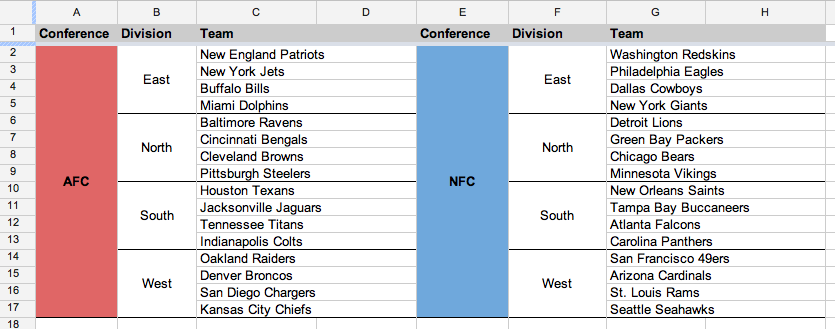
Those of you that crunch numbers using Google Docs: The company has just added a cool new feature to the spreadsheets editor – merging cells vertically. In addition to the existing horizontal merging functionality, this new feature allows for some pretty complex layouts. Just drag the set of cells, hit the down arrow next to the merge icon and select Merge vertically. You can also assign headers to sets of rows. Why would anyone want to merge cells vertically? Google offers an example:
In the spirit of the NFL season, let’s say you want to host a football tournament for your friends. To make it easier for them to cast their votes on the winning team, you organize the NFL teams by conference and division in a Google spreadsheet. After applying vertical merges to all of the conference and division headers and horizontal merges across the team names in each conference, you’re ready to share with your friends for the tournament!
Google Apps customers can now roll revert changes to contacts for up to a month.
Google announced customers who host their domain on Google’s servers are now able to take advantage of the Contacts interface which has been available in consumer Gmail for some time. Users of Google Apps for Enterprise will notice that adding new contact information now defaults to “Work” instead of “Home”. Thanks to the prettified interface, you can quickly add email addresses to groups, and pick from a contact’s multiple email addresses to use on a group-by-group basis. Most importantly, the new Contacts manager lets you undo contacts import and go back in time up to a month in order to salvage deleted or merged contacts.
Add multiple contacts to a group in a snap.
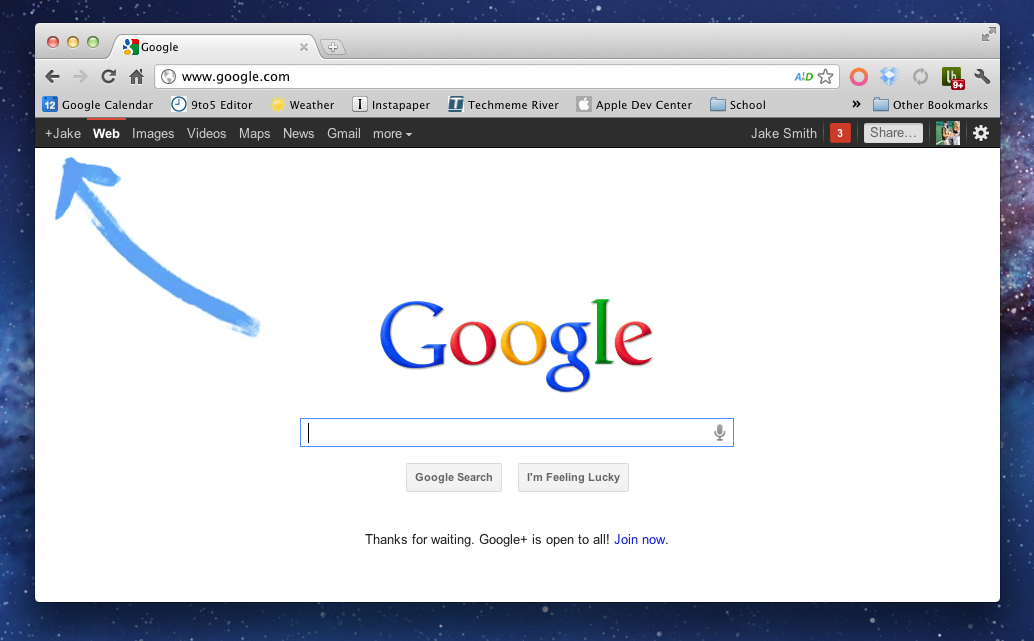
No, we did not photoshop that arrow in. In an effort to push Google Plus, which just went into public beta today, Google is now literally pointing to the Plus link with an arrow. Also, below the search box you will find a link to signup. With Google’s 1,100,000,000 pageviews a day (according to Website Outlook, so we’re not sure how accurate that really is) they’re bound to bring in some traffic. What are you waiting for; sign up!
Google rolled out nine new features pertained to its social thing dubbed Google+. Per the official blog post by Google’s head of engineering Vic Gundotra, the service is no longer in limited beta. Beginning today, everyone can join the party at google.com/+ – no invitation required. Yes, Facebook’s worst nightmare comes true just three months following the service’s introduction.
Next up, Google’s search expertise comes to Google+. The big search box now returns relevant people, posts and web content. The popular Hangout feature has gotten lots of enhancements. For example, developers can now take advantage of the new Google+ Hangouts APIs to write more integrated, immersive apps. Google-created Hangout extras (still rough around the edges) include screensharing, sketchpad, Google Docs integration and named hangouts. Give it a try by clicking the “Try Hangouts with extras” link in the green room.
Even more interesting, it is now possible to broadcast a hangout for the world wide web to see. They call it Hangouts on Air and even though you can broadcast and record your session, there’s still that nagging nine-per-hangout limit. Of course, an unlimited number of people can be spectators of your live broadcast.
Another cool addition: You can join a hangout from your mobile phone, by finding an active hangout in the Stream of the Google+ app and tapping “Join”. This works on Android 2.3+ phones with front-facing cameras, but Google said iOS support is “coming soon”. The aforementioned features will be rolling out globally over the next day (not days, per usual), Google said.
Google released the Hangout API for developers as well.
Last, but not the least, Dave Girouard, a Google Apps guy, announced on Twitter that Google+ is coming to business and education customers soon, indicating that Google+ will be rolled out to Google Apps users. “New stuff on G+ today that biz/edu will love! Working hard to bring G+ to Google Apps in the very near future!”, his tweet reads. In our opinion, this could be a game-changer in the social media landscape, probably putting Facebook on the defensive – especially when Google begins selling and promoting Google+ apps on the Apps Marketplace.
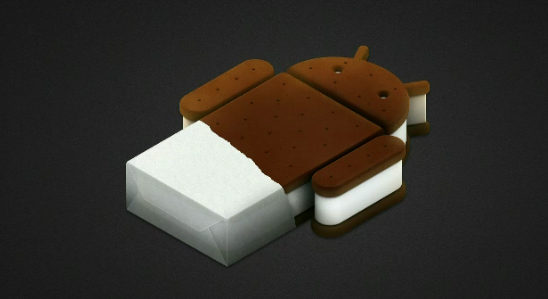
Google has posted more information on their Android Developers Blog this afternoon shedding more light on prepping Honeycomb apps for the release of Ice Cream Sandwich. Ice Cream Sandwich is due out in the coming months, as confirmed by Eric Schmidt. Google outlines the main problem that needs to be addressed is that Honeycomb apps are set to be on a larger screen, and since Ice Cream Sandwich will be on smaller screens there needs to be changes.
So, if you’ve developed a tablet app on Honeycomb, it’s important that your app do one of two things: prevent installation on smaller screens or (preferably) support smaller screens with the same APK.
Obviously, you could choose to only have your app run on a larger screen, but in most cases we’d imagine you’d want it compatible on both a small or big screen. We’ll save you from getting the code from us, so we’ll direct you to Google’s full post.
[youtube=http://www.youtube.com/watch?v=DsaJMhcLm_A]
First they made a video testimonial featuring a bunch of excited developers. Last week brought us a promo clip they first played back to journalists who attended presser in May. Then came the first official Google Wallet commercial featuring Seinfeld’s George Constanza and his exploding wallet. Today, the search company has officially rolled out Wallet, a mobile payment service.
As you can see from the clip we embedded above, it features Google engineers highlighting the many benefits of paying simply by tapping your phone to a terminal. One thing immediately captures attention: The “hundreds of thousands” of points of sale which support Google Wallet, all MasterCard PayPass terminals. Google promised at the May unveiling they would support more smartphones with an NFC chip in the future, not ruling out a next-gen iPhone. Today, the company wrote in a blog post:
Today, Visa, Discover and American Express have made available their NFC specifications that could enable their cards to be added to future versions of Google Wallet.
If you’re a Sprint customer with a Nexus S 4G device, the Google Wallet app will be delivered as an over the air update. Just tap the Wallet app on your home screen, add your Citi MasterCard credit card or set up a Google Prepaid Card and transfer some funds to it from any of your credit cards and off you go.
Early adopters who set up a Google Prepaid Card before the year’s end also get a $10 free bonus. When you see the Google Wallet logo on a poster, simply scan it with your phone to add the advertised offer or coupon to your Google Wallet account. The below walkthrough by TechCrunch lays out everything you need to know about Google Wallet in Layman’s terms. Good-bye wallet, the phone will take it from here and another from ThisIsMyNext…
Expand
Expanding
Close

The image above is from a series of mock ups courtesy of designer Federico Ciccarese
Coming from a potentially reliable, yet somewhat odd source, details regarding the yet to be announced next-gen Nexus have popped up on Twitter, in poem form.
Twitter user @tfleming223 sent out pieces of a poem he alleged hint at specs and release dates for the forthcoming Ice Cream Sandwich powered Google phone.
The poem (below) hints at a November 3rd launch date on Verizon, Ice Cream Sandwich rather than “ filling your belly with candies, jellies”, and the expected worldphone capabilities with a “GSM or wimax radios inside”. The date would line up with an October/November release of Ice Cream Sandwich, which was was recently confirmed by Eric Schmidt.
The poem even takes a stab at Apple’s upcoming iPhone‘s apparent lack of LTE:
Expand
Expanding
Close
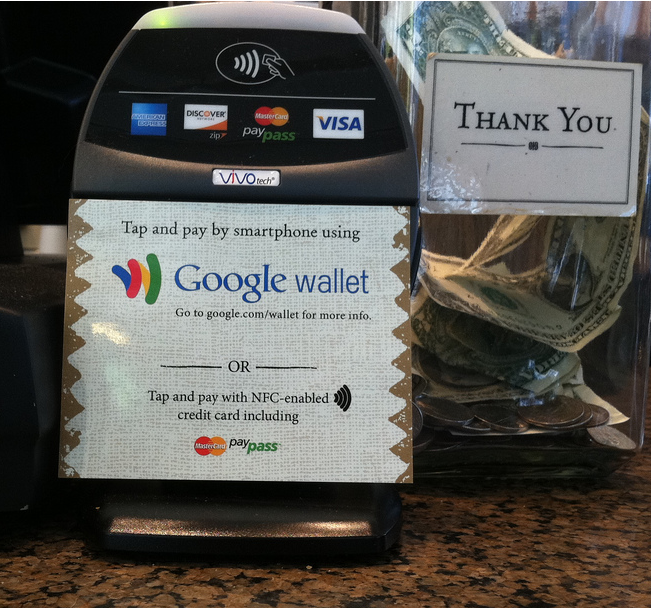
A Peet’s Coffee in San Francisco (what happened to NYC?) is showing a Google Wallet logo beneath its original MasterCard PayPass NFC reader.
It appears that there is minimal upgrade to get Mastercard PayPass systems upgraded to be Google Wallet systems. In fact, from the merchant standpoint, it may just be upgraded signage.
That’s good news for Google and its rollout plans. PayPass locations are all over the place and Google wants to hit the ground running.
As of March 2011, more than 92 million MasterCard PayPass cards and devices have been issued for use at approximately 311,000 merchant locations worldwide, including new acceptance environments such as vending, taxis, tollbooths, transit, football/baseball stadiums and golfing events.
In addition to robust deployments at major merchants in the US such as McDonalds, 7-Eleven, CVS, Duane Reade, Sheetz, Hess, Wegmans, The Home Depot, Best Buy, Gulf Oil, Sports Authority, BJ’s, Meijer’s, Whataburger, Tim Horton’s, Shop-Rite, Foot Locker, Sunoco and BP.PayPass has been rolled out in 37 countries. Outside the US, PayPass speeds consumers through the checkout process at McDonald’s (US, Poland, UK), Burger King (Turkey, UK), 7-Eleven (Australia), Starbucks (Turkey, Malaysia, UK), Petro-Canada (Canada) Tim Horton’s (Canada), Boots (UK), Tesco (UK), Carrefour, Cora and Intermarche (all 3 in France) and in many other types of merchants including supermarkets, cinemas, gas stations, fast food and transit.
Google is expected to release Google Wallet officially today and has created a very amusing ad (if you are a Seinfeld fan), below.
Expand
Expanding
Close

TechCrunch is reporting that Google Wallet will most likely launch tomorrow, citing the above document being sent to partners. Google said Wallet was on its way in the summer, yet we never saw it. Friday, Google also released a teaser for Wallet (seen after the break) that teased the payment service as coming soon. As it says above, Wallet is launching September 19th, most likely to coincide NFC World Congress which kicks off in France tomorrow.
Google Wallet is partnering with MasterCard, Citi Bank, Sprint, and First Data. Wallet will first be available in San Francisco and New York, using NFC and the Wallet app to be able to pay for goods from merchants. Stick with us tomorrow, and we’ll give you all the official details.
Teaser after the break:

An anonymous 4chan user has posted their apparent, and detailed, account with the Samsung Nexus Prime. AndroidandMe has condensed the 4chan post down (seen after the break) to just the interesting key points.
The user says that Verizon apparently passed on the Galaxy S II to sign with Samsung to exclusively offering this next phone, which we expect to be called the Prime. Rumored specs for the device: Samsung’s Exynos dual core CPU clocked at 1.5GHz, 1gb RAM, Super AMOLED Plus 4.65 inch 1280×720 HD display, 16gb internal memory (with sd card slot) is 8.8mm thick, metal body and a 2000mAh battery (the same as the new one that’s being released for the Galaxy S II).
The user also says that the device did feature Ice Cream Sandwich, which he calls nice, but that it is version 2.4.1 and not 4.0. Perhaps they’re holding out on Jellybean?
Check out the other juicy details after the break:
Image courtesy of Engadget
Google Wallet, a mobile payment service announced in May, lets you pay on the go by tapping a phone to an intelligent terminal. If a splashy video tour from Monday is anything to go by, it should forever change – for the better – how we as a society pay for goods and services. Initial implementation requires a MasterCard PayPass terminal which accepts digital receipts and coupons from mobile devices, over the air, and then carries out transactions with financial institutions.
MasterCard today shed more light on a mobile application they’ve been developing in partnership with Google. A quick visit to Engadget which has a cool video tour proves the app works as advertised: Tap a phone to a terminal and that’s it. The app will allow users to set spending limits, set alerts for overseas activity and restrict purchases across categories so, say, your spouse can only pay for dinning, movie tickets and gas, excluding clothes, make up and other impulse purchases.
The app currently works on Sprint’s Nexus S 4G but they are planning on supporting more devices with an NFC chip. The software will also enable MasterCard’s QkR platform for mobile purchasing that supports QR codes, television audio signals encoded with purchase data and even tiny NFC chips embedded into real-world objects, such as fast-food tabletops. These QkR-supported features should be realized across Android, iOS, Windows Phone Mango and BlackBerry platforms, MasterCard promises.
Chrome Web Store, the Google-operated repository of web apps for the Chrome browser, has expaneded to 24 new countries, Google announced in a blog post. The newly supported territories are:
Argentina, Austria, Belgium, Brazil, Czech Republic, Denmark, Finland, France, Germany, Hong Kong, India, Israel, Italy, Japan, Mexico, Netherlands, Norway, Poland, Portugal, Russia, Spain, Sweden, Switzerland and the United Kingdom.
Last month, Google brought Chrome Web Store to sixteen new countries. The nine-month-old store is now available in 55 countries around the world and it hosts web apps which accept in-app payments with a flat five percent fee.